
Your Toyota Camry’s alignment keeps going out when something keeps changing the way the tires meet the road. The usual causes are tire pressure problems, uneven or defective tires, pothole or curb damage, worn tie rods, loose ball joints, worn bushings, weak struts, wheel-bearing play, brake drag, or a bent suspension part. A fresh alignment can only hold if the tires, steering, suspension, and brakes are sound first.
Quick Answer
A Toyota Camry alignment keeps going out when worn steering or suspension parts, impact damage, tire conicity, uneven tire pressure, brake drag, or bent components let the wheel angles shift again after adjustment. Fix the root cause first, then align the car to the exact Toyota specifications for your model year.
Key Takeaways
- A repeated Camry alignment problem is usually a symptom, not the real failure.
- Check tire pressure, tread wear, tire damage, and tire pull before paying for another alignment.
- Loose tie rods, ball joints, bushings, struts, wheel bearings, and bent parts can stop an alignment from holding.
- A shop should inspect the front end, road-test the car, and give you before-and-after alignment readings.
- If the car pulls hard, clunks, wanders, or has a tire bulge, stop driving it and have it inspected.
At a Glance
| Time Required | 15 minutes for basic tire checks; 45–90 minutes for a professional inspection and alignment |
| Difficulty | Basic for tire pressure and tread checks; professional for suspension, steering, brake, and alignment diagnosis |
| Tools Needed | Tire pressure gauge, tread-depth gauge or penny, flashlight, alignment printout, and a professional alignment rack |
| Cost | DIY checks are usually low cost; professional inspection, alignment, tires, and suspension repairs vary by shop, damage, and model year |
Why Camry Alignment Keeps Going Out
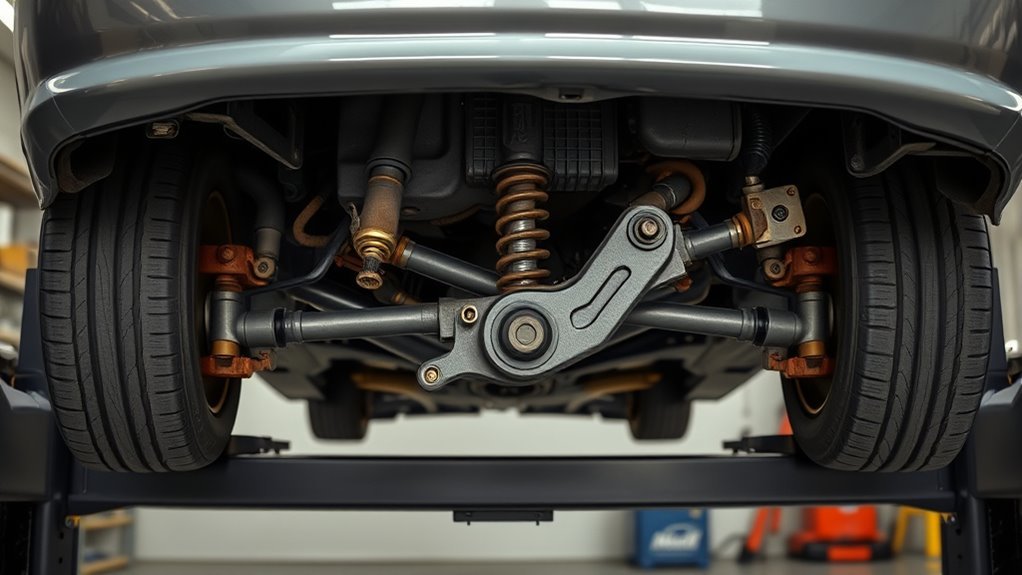
Your Camry’s alignment can keep drifting because the alignment angles are being disturbed after the shop sets them. That can happen from worn parts, tire force, road impact, brake drag, or damage that only shows up when the suspension is loaded on the road.
Toyota’s pull-diagnosis guidance warns that a vehicle pull is often blamed on wheel alignment when the real cause may be tire lateral force, road crown, vehicle damage, worn components, or another condition. That matters because aligning the car before finding the cause can waste money and may even leave the settings wrong for the actual problem. You can review Toyota’s current guidance in Vehicle Pull, Steering Wheel Off Center, and Alignment Best Practices.
The most useful way to think about the problem is simple: alignment is the final adjustment, not the first repair. If the tire, wheel, brake, steering linkage, or suspension is moving in a way it should not, the alignment will not stay correct.
Warning: Do not keep driving a Camry that pulls suddenly, clunks over bumps, has loose steering, shows a tire bulge, makes wheel-bearing noise, or has visible bent suspension parts. Have it inspected before the car is driven at highway speed.
Hitting Potholes or Curbs
Potholes and curb strikes are common reasons a Camry’s alignment suddenly changes. A hard impact can bend a wheel, shift a control arm, damage a strut, loosen a bushing, or knock toe out of range. A light brush against a curb may only move the steering wheel slightly off center, while a square hit at speed can damage parts.
| Impact type | Typical effect |
|---|---|
| Pothole impact | Toe change, bent wheel, tire damage, or strut/control-arm stress |
| Fast impact | Greater chance of bent parts and recurring misalignment |
| Curb strike | One-sided pull, off-center steering wheel, or damaged tire sidewall |
| Rough roads | Repeated stress on bushings, struts, and steering parts |
| After-impact inspection | Check tires, wheels, steering, suspension, and alignment readings |
The U.S. Tire Manufacturers Association notes that striking a pothole or road hazard can cause alignment issues, and misaligned wheels can create rapid uneven tread wear. If your Camry begins pulling after a hit, do not assume the alignment rack alone can fix it. Ask the shop to inspect for bent or loose parts first.
Tire Wear That Mimics Camry Alignment Trouble
Uneven tread wear, mismatched tire pressure, a bent wheel, or tire conicity can make your Camry feel misaligned even when the alignment numbers look acceptable. Before another alignment, check all four tires on level ground when the tires are cold.
Uneven Tread Wear
Look at the inside shoulder, outside shoulder, and center of each tire. Inner-edge wear can point to camber or toe issues. Feathered tread often points to toe problems. Center wear may come from overinflation, while both shoulders wearing faster can come from underinflation or hard cornering.
- Check tire pressure against the driver-door placard, not the number printed on the tire sidewall.
- Compare left and right tread depth on the same axle.
- Look for cupping, feathering, flat spots, cuts, sidewall bubbles, and bent rims.
- Rotate tires according to the maintenance schedule for your Camry’s year and tire type.
NHTSA’s TireWise tire-safety guidance covers treadwear, tire ratings, inflation, and safe tire selection. Toyota’s scheduled maintenance material also recommends regular tire rotation, commonly every 5,000 to 7,500 miles depending on driving habits and road conditions.
Radial Pull Symptoms
Radial pull is often caused by tire conicity, where a tire behaves as if it has a slight cone shape and creates lateral force as it rolls. Bridgestone’s tire terminology identifies conicity as a cause of radial tire pull.
You may feel a steady drift even after an alignment, especially on smooth roads. The steering wheel may feel as if the car wants to walk to one side. This can happen with any tire brand, so avoid blaming the alignment until the tire positions have been tested.
Pro Tip: If the pull changes direction after the two front tires are swapped side to side, suspect tire conicity or a tire/wheel problem before paying for another alignment.
Bad Tie Rods, Bearings, and Ball Joints
Bad tie rods, worn wheel bearings, and loose ball joints can all create alignment problems in a Toyota Camry by adding play to the steering or suspension. When a part moves under load, the wheels may sit one way on the alignment rack and another way when the car is braking, turning, or driving over bumps.
- Tie rods: Worn inner or outer tie rods can shift toe and cause wandering, tire scrub, or an off-center steering wheel.
- Ball joints: Loose ball joints can change suspension geometry and create clunks, uneven tire wear, and vague steering.
- Wheel bearings: Bearing play can mimic alignment drift and may add humming, grinding, or looseness at the hub.
- Bushings: Cracked or soft control-arm bushings can let the wheel move backward, forward, or sideways under load.
Toyota scheduled-maintenance guidance includes checking steering linkage, rack-and-pinion assemblies, ball joints, and dust covers for looseness, damage, deterioration, or leakage. If any of those parts are worn, replace them before the alignment. Otherwise, the new settings may not hold.
[Products Worth Considering]

Monitor tire tread wear with a smart, color-coded depth gauge that shows clear condition ranges at a glance. The bar is range marked for fast, easy readings, helping you maintain safer traction and performance. Each gauge is portable with a pocket clip, and the set includes 20 units for daily use and sharing.

The Ziopetru adjustable magnetic wheel alignment tool helps you check and restore camber and caster positioning after removing and reinstalling undercarriage components. With a clear leveling/bubble measurement system and an easy zeroing adjustment knob, it supports precise horizontal angle checking. The strong magnetic base mounts to metal surfaces for convenient use at home on cars, motorcycles, trucks, vans, and SUVs.

Measure tire tread depth quickly and accurately with this LUMITECO dial gauge that reads in 1/32" increments up to 14/32". The color-coded green/yellow/red zones make it easy to judge tire wear and know when replacement is needed. A rugged, compact design with a protective pouch helps keep the gauge ready for use on cars, trucks, motorcycles, and more.
Suspension Damage That Throws Off Camry Alignment
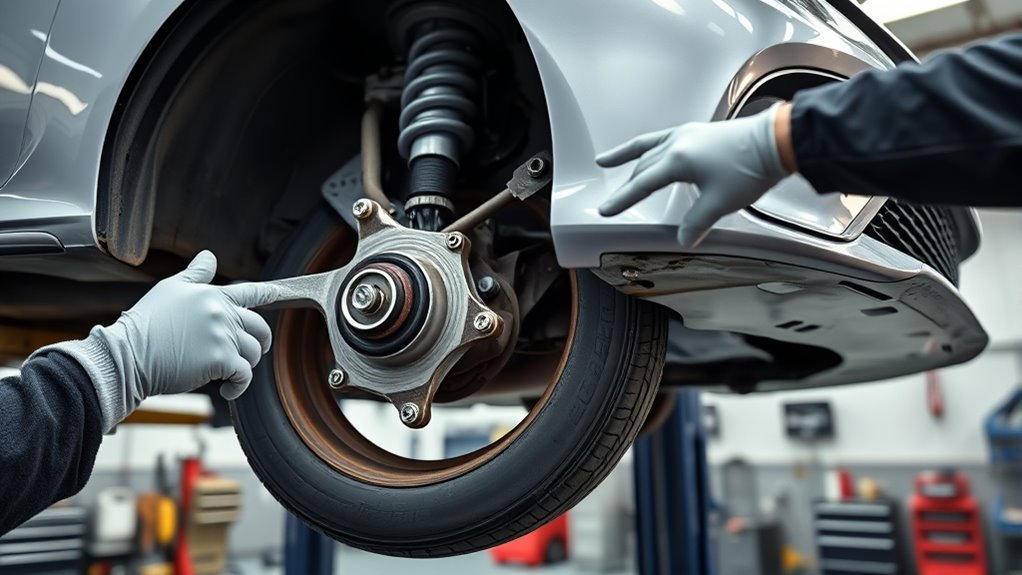
Suspension damage throws off Camry alignment because the wheel angles depend on the shape and position of the strut, control arm, knuckle, bushings, and mounting points. If one part is bent or loose, toe, camber, caster, or steering center can change again after the technician sets the alignment.
Common signs include an off-center steering wheel, uneven tire wear, clunking over bumps, the car sitting lower on one side, steering that feels vague, or a pull that returns soon after service. A leaking strut, shifted spring seat, bent control arm, or damaged knuckle can leave the alignment printout looking close while the car still feels wrong on the road.
Note: If your Camry has been in a collision or hit a curb hard, ask the shop to inspect steering-axis inclination, included angle, thrust angle, wheel runout, and suspension symmetry. Those checks can reveal bent parts that a basic toe adjustment may miss.
[Products Worth Considering]

Keep your tires properly inflated with this analog VONDIOR tire pressure gauge, designed for fast, easy readings without batteries. The swiveling, two-axis hose and large glow dial help you measure at any tire angle with instant visibility. Built with a protective rubber shield, it supports durable, low-maintenance use for cars and trucks.

Accurately measure tire tread depth with a calibrated gauge marked from 0 to 1 inch in 1/32 inch increments. The color-coded bar helps you quickly identify tread condition ranges, supporting safe driving for trucks, motorcycles, automobiles, and passenger vehicles.

The SAFELIFE dial tire tread depth gauge measures tread depth in 1/32 inch increments with clear, easy-to-read 2-inch dial face. Color zones using a traffic light system help you quickly judge whether tread is low, marginal, or ample for safer driving. Built with a durable zinc cast body and a metal detect probe for precise, comfortable use across cars, motorcycles, trucks, and buses.
Why Camry Caster and Camber Are Hard to Adjust
On many Camry models, toe is the main routine alignment adjustment. Camber and caster correction may be more limited and can depend on model year, bolt options, suspension condition, and whether anything is bent. That is why a shop may set toe correctly but still find that a pull remains.
Caster affects straight-line stability and steering return. Camber affects how the tire leans against the road. Toe affects whether the tires point slightly inward or outward. A small toe error can chew tires quickly, but a side-to-side camber or caster difference can also create a pull.
A green alignment printout is not the same as a straight-tracking car. The road test, tire condition, and front-end inspection still matter.
The safest wording is this: if caster or camber is out of range, do not assume the technician can simply “dial it in.” The shop may need to inspect for worn parts, bent parts, shifted mounts, or previous impact damage. Always use the exact repair information for your model year from Toyota Owners manuals and warranties.
When a Dealer Alignment Still Won’t Fix It
If a dealer or alignment shop says the Camry is “within spec” but it still pulls, the next step is not to keep buying the same alignment. The next step is to isolate whether the pull comes from tires, road crown, brakes, steering, suspension, or the alignment angles under real driving conditions.
Hidden Front-End Wear
Hidden front-end wear can make the alignment appear correct on the rack but change under load. Ask the shop to check:
- Tie rod ends for looseness, torn boots, and uneven movement.
- Ball joints and dust covers for play or damage.
- Wheel bearings for hub play or noise.
- Control-arm bushings for cracks, shift, or separation.
- Struts, mounts, and spring seats for leakage, binding, or uneven ride height.
- Wheels and tires for runout, bulges, belt shift, or sidewall damage.
- Brakes for dragging on one side.
Brake drag is easy to overlook. If one caliper sticks, the Camry can pull toward that side even when the alignment is fine. A hot wheel, burning smell, reduced fuel economy, or pull that worsens after braking can point toward brake inspection.
Alignment Specs vs. Reality
A printout should show the before and after numbers for front toe, camber, caster, rear toe, rear camber, and thrust angle when available. Green boxes are helpful, but they do not prove the car is fixed. A good shop should also road-test the car on a flat road and document whether the steering wheel is off center, the vehicle actually pulls, or the car is reacting to road crown.
Toyota’s pull-diagnosis guidance separates a true pull from an off-center steering wheel. A vehicle can go straight while the steering wheel sits crooked, or it can truly move laterally even with the wheel centered. Those are different problems and should not be repaired the same way.
How Tire Swaps Isolate a Pull
Tire swaps help isolate a pull by moving tires from one position to another and checking whether the Camry’s behavior changes. This is one of the best ways to separate tire force from alignment or suspension problems.
- Check tire pressure first. Equalize pressure to the placard specification while the tires are cold.
- Inspect tire size and tread. Make sure the tires match by size, type, load rating, and wear level.
- Road-test on a flat road. Turn off lane-centering driver-assist features if equipped and safe to do so.
- Swap the front tires side to side if appropriate. Do this only if the tires are not directional or staggered in a way that prevents it.
- Road-test again. If the pull reverses, the cause is likely tire-related. If the pull stays the same, look harder at alignment, brakes, or suspension.
Keep notes after each move. Write down whether the pull stayed the same, changed direction, got weaker, or disappeared. Those notes help the technician avoid guessing.
[Products Worth Considering]

This universal wheel alignment tool helps you accurately restore tire tilt angles after tire or suspension repairs using an adjustable camber gauge. It features a powerful magnetic base that firmly attaches to brake rotors for stationary, slip-free readings, improving consistency during measurement. Built from durable PC plastic, it resists wear and corrosion and is compact enough for car, truck, RV, and motorcycle alignment tasks.

This professional wheel and rim brush kit makes it easy to lift brake dust, grime, and dirt from wheels and tires without scratching finishes. The brushes feature soft, metal-free wool heads and a flexible 360-degree rim brush design for reaching hard-to-clean areas. Includes multiple brush types plus accessories for thorough car, motorcycle, and general vehicle detailing.

This heavy-duty tire pressure gauge combines measurement, inflation, and deflation in one compact tool for quick roadside and garage use. Its dual-head chuck helps reach inner and outer dual-wheel positions, while the clear indicator bar makes readings easy to see. Built for durability, it supports a wide pressure range and works across cars, trucks, RVs, SUVs, and motorcycles.
How To Get a Reliable Camry Alignment Check
To get a reliable Camry alignment check, choose a shop that inspects the vehicle before adjusting it. A quick rack setup without a tire, brake, steering, and suspension inspection can miss the reason the alignment keeps returning.
Ask for these items before approving the work:
- Before-and-after alignment printout.
- Front and rear toe, camber, caster, and thrust-angle readings when available.
- Tire pressure and tread-depth notes.
- Suspension and steering inspection notes.
- Brake-drag check if the car pulls to one side.
- Road-test confirmation after the alignment.
- Explanation of any angle that cannot be corrected without parts or body/suspension repair.
Bring your repair history, tire rotation history, and any details about potholes, curb hits, tire replacements, or previous alignments. The more history the shop has, the faster it can separate a simple toe problem from a recurring tire or suspension fault.
Frequently Asked Questions
What is the biggest alignment-related problem with a Toyota Camry?
For alignment symptoms, the biggest problem is usually not the alignment setting itself. It is the root cause behind it, such as tire conicity, impact damage, worn tie rods, bad ball joints, worn bushings, weak struts, wheel-bearing play, brake drag, or bent suspension parts.
How often should you get a wheel alignment on a Toyota Camry?
Do not rely on mileage alone. Have the alignment checked when the Camry pulls, the steering wheel is off center, tires wear unevenly, new tires are installed, suspension parts are replaced, or the car hits a pothole or curb. Tire rotation intervals are separate; Toyota maintenance materials commonly recommend rotation every 5,000 to 7,500 miles, depending on use and road conditions.
Can bad tires make my Camry feel misaligned?
Yes. Uneven tread wear, incorrect pressure, mismatched tires, bent wheels, separated belts, or tire conicity can make a Camry pull even when the alignment is within range. A front tire side-to-side swap can help show whether the pull follows the tire.
Why does my Camry still pull after an alignment?
A Camry can still pull after an alignment if the cause is tire force, road crown, brake drag, worn steering parts, suspension damage, wheel-bearing play, or an angle that cannot be corrected without repairing parts. Ask for a road test and a full front-end inspection, not just another toe adjustment.
Are Camry caster and camber adjustable?
It depends on the model year and the specific angle. Toe is usually the main routine adjustment. Camber and caster correction may be limited and may require special bolts, part replacement, or repair of bent or shifted components. Use the Toyota repair information for your exact Camry year.
Can I drive if my Camry keeps pulling to one side?
A mild drift caused by road crown may not be urgent, but a strong or sudden pull is different. Do not keep driving if you also notice clunking, loose steering, vibration, tire bulges, grinding wheel-bearing noise, brake smell, or visible damage. Have the car inspected before highway driving.
Conclusion
If your Camry alignment keeps going out, do not treat each alignment as a fresh one-time problem. Start with tires and pressure, then inspect for impact damage, brake drag, worn tie rods, loose ball joints, bad bushings, wheel-bearing play, weak struts, and bent suspension parts. Once the real cause is fixed, a proper alignment with documented before-and-after readings is far more likely to hold.
Sources
- Toyota T-SB-0063-20: Vehicle Pull, Steering Wheel Off Center, and Alignment Best Practices — supports tire force, road crown, worn-component, road-test, and tire-swap diagnosis.
- Toyota Scheduled Maintenance Guide — supports tire rotation guidance and steering/suspension inspection items.
- Toyota Owners Manuals and Warranties — supports checking the exact owner and maintenance information for the specific Camry model year.
- NHTSA TireWise — supports tire pressure, tire condition, treadwear, and tire-safety checks.
- U.S. Tire Manufacturers Association Tire Care Essentials — supports pothole/road-hazard alignment issues and uneven rapid tread wear.
- Bridgestone Tire Terminology — supports the definition of tire conicity as a cause of radial tire pull.