
Why Is My Toyota Camry Pulling to One Side? Tire and Alignment Causes

If your Toyota Camry pulls left, do not assume it only needs an alignment. A left pull can come from tire pressure, uneven tire wear, tire conicity, road crown, brake drag, or worn steering and suspension parts. Start with the quick checks you can do safely, then let a qualified shop confirm the fault with a controlled road test and alignment printout if the pull remains.
Quick Answer
A Toyota Camry usually pulls left because one tire has lower pressure, uneven wear, or tire force; the alignment is off; a brake is dragging; or a steering or suspension part is worn. Check cold tire pressure and visible tire damage first, then inspect brakes, suspension, and alignment.
Key Takeaways
- Start with tires: pressure, tread wear, damage, and whether the pull changes after rotation or tire position changes.
- A true pull is different from an off-center steering wheel; a road test on a flat road helps separate them.
- If the car pulls mainly while braking, focus on brake drag, calipers, hoses, pads, and rotor condition before blaming alignment.
- Camber and caster differences are common alignment-related pull causes; toe problems usually show up as tire scrub, wandering, or an off-center wheel.
- Stop driving and get help if the pull is sudden or severe, a tire shows cords or bulges, steering feels loose, or one wheel smells hot after driving.
At a Glance
| Time Required | 10–20 minutes for basic tire checks; 30–60 minutes for a shop road test and inspection. |
| Difficulty | Easy for tire pressure and visual checks; professional level for alignment, brake, steering, and suspension diagnosis. |
| Tools Needed | Tire pressure gauge, tread depth gauge or penny, flashlight, owner’s manual, and a safe flat road for a cautious test drive. |
| Cost | Basic checks may cost $0–$20. Alignment, brake, tire, or suspension repairs vary by model year, tire size, labor rate, and parts needed. |
Warning: Do not keep driving if the Camry suddenly pulls hard left, the steering feels loose, a tire has a bulge or exposed cords, you smell burning brakes, or one wheel is much hotter than the others. Pull over safely and have the vehicle inspected before continuing.
Why Does My Toyota Camry Pull Left?

Your Toyota Camry may pull left because the left and right sides of the car are no longer rolling, braking, or tracking evenly. The most common causes are mismatched tire pressure, uneven tire wear, tire conicity, wheel alignment problems, brake drag, or worn suspension and steering parts.
Start with the simple checks before paying for an alignment. The National Highway Traffic Safety Administration says the correct tire pressure is the vehicle manufacturer’s recommended cold pressure on the tire information label or in the owner’s manual, not the number printed on the tire sidewall. For a Camry, use the tire placard on the driver-side door area or the correct Toyota owner’s manual for your model year.
A professional diagnosis should not jump straight to alignment. Toyota’s service bulletin on vehicle pull and alignment best practices explains that tire lateral force can mimic an alignment pull, so the cause needs to be identified before adjustments are made.
[Products Worth Considering]

EVOULTES heavy duty tire inflator with an integrated gauge delivers accurate pressure readings from 10–120 PSI, helping you inflate, deflate, and check tires in one tool. The 16.5-inch extended dual-head air chuck with swivel base reaches hard-to-access dual wheel valves on trucks and RVs. A brass trigger core and side-mounted air release valve make operation smooth, with standard 1/4" NPT threading and quick-connect compatibility for easy setup.

This portable cordless tire inflator delivers up to 160 PSI with fast 17 L/min airflow to help you quickly top up tires and get back on the road. It features dual power mode, running on a 21V rechargeable battery or a 12V DC adapter for convenient roadside use. An automatic shut-off with digital pressure gauge helps prevent overinflation, and a built-in LED light improves visibility in low-light conditions.

The JACO FlowPro Tire Inflator measures, inflates, and airs down tires up to 100 PSI with battery-free operation and ±2% accuracy after calibration. It features a glowing pressure dial for night visibility, a heavy-duty steel build with a hybrid hose, and a precision push-to-inflate thumb trigger. The patented Lightning Air Chuck locks on for a secure seal, and the kit includes quick-connect hardware for easy inline use with your air compressor.
Check Tire Pressure and Uneven Wear First
Before you chase steering or suspension faults, check tire pressure and wear patterns. A noticeable side-to-side pressure difference can make the Camry drift, especially if one front tire is underinflated or damaged.
- Check all four tires when they are cold, ideally before driving or after the car has been parked for at least three hours.
- Match the pressures to the Camry’s tire placard or model-year owner’s manual.
- Compare the left and right front tires for uneven shoulder wear, feathering, cupping, cracks, bulges, nails, or exposed cords.
- Check that all tires are the same size and type unless your specific setup calls for something different.
- Rotate tires according to your Camry owner’s manual or maintenance guide, and inspect for damage during rotation.
If one tire has a bulge, sidewall damage, visible cords, or fast air loss, do not use it for a test drive. Replace or repair the tire as appropriate before diagnosing alignment.
Pro Tip: If the pull started right after new tires were installed, ask the shop to check tire balance, tire position, directional tire orientation, and road-force or tire conicity before changing alignment settings.
How to Tell If It Is Road Crown, Tire Pull, or Alignment
A Camry that “pulls left” does not always have the same problem. The pattern matters. Notice when the pull happens, whether it changes with road surface, and whether the steering wheel is off-center while the car still tracks straight.
Road Crown vs. True Pull
Many roads slope slightly for drainage. That slope, called road crown, can make a car drift. A true pull is more consistent: the Camry keeps moving left on a flat road and needs steady steering correction.
Use caution during any test drive. Choose a quiet, flat, dry road, keep both hands near the wheel, and do not test in traffic. If your Camry has lane tracing, lane keeping, or similar driver-assist features, do not rely on them to diagnose pull. The goal is to feel what the car does naturally under safe conditions.
Tire Conicity or Radial Pull
Tires can create a side force even when pressure and alignment look acceptable. This is often called tire conicity or radial pull. A shop may switch the left and right front tires if the tires are non-directional and safe to swap. If the pull changes direction after the front tires are switched, the tire is likely part of the problem.
This step matters because an alignment adjustment cannot fix every tire-force issue. In some cases, replacing or repositioning the tire is the real repair.
Alignment Angles That Can Make a Camry Drift Left
Alignment problems can make your Camry drift left, especially after hitting a pothole, curb, or road debris. The key angles are camber, caster, and toe.
- Camber is the inward or outward tilt of the tire when viewed from the front. A side-to-side camber difference can create pull and shoulder wear.
- Caster is the angle of the steering pivot. A caster difference from side to side can affect straight-line tracking and steering return.
- Toe is whether the tires point slightly inward or outward when viewed from above. Bad toe often causes tire scrub, feathered wear, wandering, or an off-center steering wheel.
Ask for the before-and-after alignment printout. If the Camry still pulls after the alignment, the technician should recheck tires, brakes, steering parts, suspension parts, ride height, and whether the vehicle was road-tested after adjustment.
Brake Issues That Can Pull the Car Left
If the Camry pulls mainly when you press the brake pedal, treat it as a brake-specific symptom first. A dragging or sticking brake on one side can create uneven stopping force and tug the car left or right.
A pull that appears mostly during braking points you toward the brake system before the alignment rack.
| Check | What It May Mean |
|---|---|
| Brake caliper | A seized piston or stuck slide pin may keep one pad applied. |
| Brake pads | One side wearing faster can change braking force and point to caliper or hardware trouble. |
| Brake hose | An internal restriction can delay pressure release and leave a brake dragging. |
| Rotor condition | Heavy scoring, heat spots, or pulsation can signal uneven braking or overheating. |
| Wheel heat or smell | A hot-wheel smell after normal driving can indicate brake drag. Do not touch the wheel or rotor directly. |
Toyota’s Camry maintenance guide includes visual brake inspections as part of scheduled maintenance. If the pull is tied to braking, have the brake system inspected before continuing normal driving.
Suspension Parts to Inspect for Damage
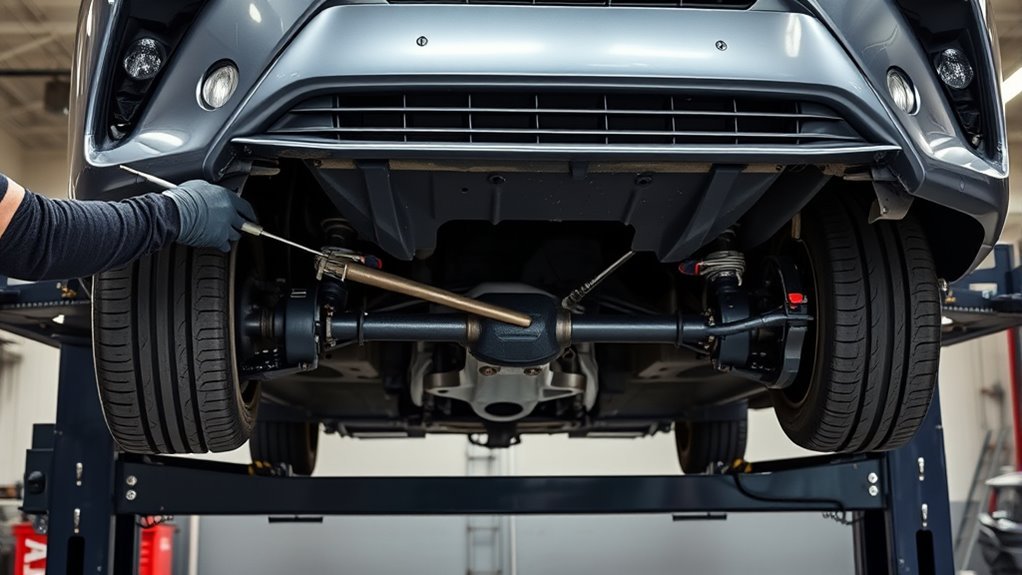
If tire and brake checks do not explain the pull, inspect the steering and suspension. Worn or bent parts can shift wheel position under load, which changes alignment while the car is moving.
| Part | What to Check | Why It Matters |
|---|---|---|
| Control arm bushings | Cracks, separation, oil damage, or shifting | Loose bushings let alignment change under braking or cornering. |
| Ball joints | Play, torn boots, rust, or knocking | A loose joint can reduce steering control and tire contact consistency. |
| Struts and mounts | Leaks, bent housing, broken mount, or uneven ride height | Ride-height or mount problems can change camber and caster. |
| Tie rod ends | Free play, torn boots, rust, or looseness | Toe control depends on tight steering linkage. |
| Sway bar links | Broken links, looseness, or clunks | Failed links can make handling feel uneven, especially during turns. |
[Products Worth Considering]

The AstroAI L7 Air Tire Inflator refills car tires quickly with up to 150PSI max pressure and a fast 1-minute inflation claim. It includes 5 preset modes for car, motorcycle, bicycle, balls, and manual use, along with an auto shutoff to help prevent overinflation. Designed for convenience, it features a digital gauge with unit switching, a top LED light with multiple modes, and USB-C/USB ports for backup power.

This 100-piece tire repair screw plug kit provides a fast, self-service solution for punctures on the road. Choose the correct plug size, insert it into the break, and screw it in to help seal the puncture and temporarily restore tire pressure. Thickened threads and rubber-wrapped plugs improve bite and sealing while remaining compact and easy to carry.
Safe Diagnostic Order for a Camry That Pulls Left
Use this order to avoid replacing good parts or paying for an alignment that does not fix the real cause.
- Confirm the symptom safely. Note whether the Camry pulls at steady speed, while braking, while accelerating, or only on crowned roads.
- Check cold tire pressure. Match all tires to the placard or owner’s manual, unless the manual specifies different front and rear pressures.
- Inspect tires. Look for uneven wear, mismatched tires, sidewall damage, bulges, nails, and tread separation signs.
- Consider tire force. If pressure and tread look acceptable, a shop may switch non-directional front tires to see if the pull changes direction.
- Check for brake drag. A brake-specific pull, hot smell, or one wheel getting unusually hot needs brake inspection.
- Inspect steering and suspension. Worn bushings, tie rods, ball joints, struts, or impact damage can create pull.
- Perform alignment last or after damaged parts are repaired. Ask for the printout and a road test after the adjustment.
Note: If the steering wheel is crooked but the Camry travels straight, that is not the same as a true left pull. It may be an off-center steering wheel or toe adjustment issue rather than a car that is actively drifting left.
When a Mechanic Should Test Drive the Camry
A mechanic should test drive the Camry when the pull is consistent, difficult to describe, or still present after basic tire checks. The road test should reproduce the complaint under controlled conditions and separate tire, brake, alignment, and suspension symptoms.
Verify Pull on Road
The test drive should compare behavior on a flat road and a normal crowned road. The mechanic should note steering wheel angle, speed, road surface, vibration, braking behavior, and whether the car returns to center after a turn.
- Check pull on a safe, flat road first.
- Compare behavior at low speed and normal road speed.
- Note whether the steering wheel is off-center or the vehicle itself drifts.
- Repeat the same route after any correction to confirm the repair.
Note Brake-Specific Pull
When the Camry pulls mainly during braking, the mechanic should inspect the brake system before assuming alignment. The key clues are uneven pad wear, a sticking caliper, brake hose restriction, rotor heat, pulsation, grinding, or a burning smell.
Test After Alignment
After alignment work, the Camry should be road-tested again. The steering wheel should sit straight, the car should track without steady correction on a flat road, and the technician should recheck the vehicle if the pull remains.
Frequently Asked Questions
Could cargo weight make my Camry pull to one side?
Yes. Heavy cargo loaded unevenly can change ride height and weight balance, which may make the car drift. Remove unnecessary cargo or distribute weight evenly, then road-test again. If the pull remains, inspect tires, brakes, alignment, and suspension.
Can road crown cause a Camry to drift?
Yes. Road crown can make a Camry drift slightly because the pavement slopes for drainage. If the car pulls left on a flat road too, or if you must constantly hold steering correction, look for tire, brake, alignment, steering, or suspension problems.
Does tire rotation help stop steering pull?
It can help if uneven tire wear or tire force is causing the pull. Rotation will not fix a sticking brake caliper, bent suspension part, or incorrect alignment. If the pull changes after rotation, that is a useful diagnostic clue.
Will new tires fix a one-sided pull?
Not always. New tires can fix a pull caused by damaged, mismatched, or worn tires, but they will not repair brake drag, worn steering parts, bent suspension, or bad alignment. Check pressure, tire position, and alignment after installation.
Can a bad wheel bearing cause pulling?
Yes, but it is not the first thing to assume. A bad wheel bearing may cause humming, grinding, looseness, vibration, or heat near one wheel. Have it inspected promptly because bearing play can affect steering, braking, and tire wear.
Why does my Camry pull left only when braking?
A braking-only pull usually points to uneven braking force. Common causes include a sticking caliper, seized slide pin, uneven pad wear, brake hose restriction, contaminated pad surface, or rotor problem. Have the brakes inspected before normal driving.
Can lane tracing or lane keeping make the pull feel different?
Yes. Driver-assist steering can mask or change how a pull feels. For diagnosis, follow Toyota’s owner information for your model and have a technician evaluate the vehicle safely without relying on lane-centering assistance.
Conclusion
If your Toyota Camry keeps pulling left, work from the easiest checks to the more involved repairs. Start with cold tire pressure, tread condition, and visible tire damage. Then separate road crown, tire pull, brake drag, alignment, and suspension wear. A careful diagnosis protects your tires, avoids unnecessary alignment changes, and helps restore straight, predictable tracking.
Sources
- NHTSA TireWise: Tire Safety Ratings and Awareness — supports cold tire pressure, tire placard, and tire safety guidance.
- Toyota Manuals and Warranties — official Toyota source for owner’s manuals and model-year guidance.
- 2024 Toyota Camry Warranty & Maintenance Guide — supports tire rotation and brake inspection as scheduled maintenance items.
- Toyota T-SB-0063-20: Vehicle Pull, Steering Wheel Off Center, and Alignment Best Practices — supports road-test guidance, tire conicity diagnosis, and alignment troubleshooting.

Related Articles

Toyota Camry All-Season Tires Explained: What They Can and Can’t Do
In exploring Toyota Camry all-season tires, discover their benefits and limitations—are they really the right choice for your driving needs?
Read More
Toyota Camry Tire Traction in Ice and Snow: A Practical Winter Driving Guide
Learn essential tips for maximizing tire traction on ice and snow in your Toyota Camry, ensuring your winter driving is safe and confident. Discover more now!
Read More
Do Toyota Camry Tires Need Snow Chains? When They Help and When They Don’t
How do snow chains enhance your Toyota Camry's winter driving safety, and when should you avoid using them? Discover the essential details inside!
Read More