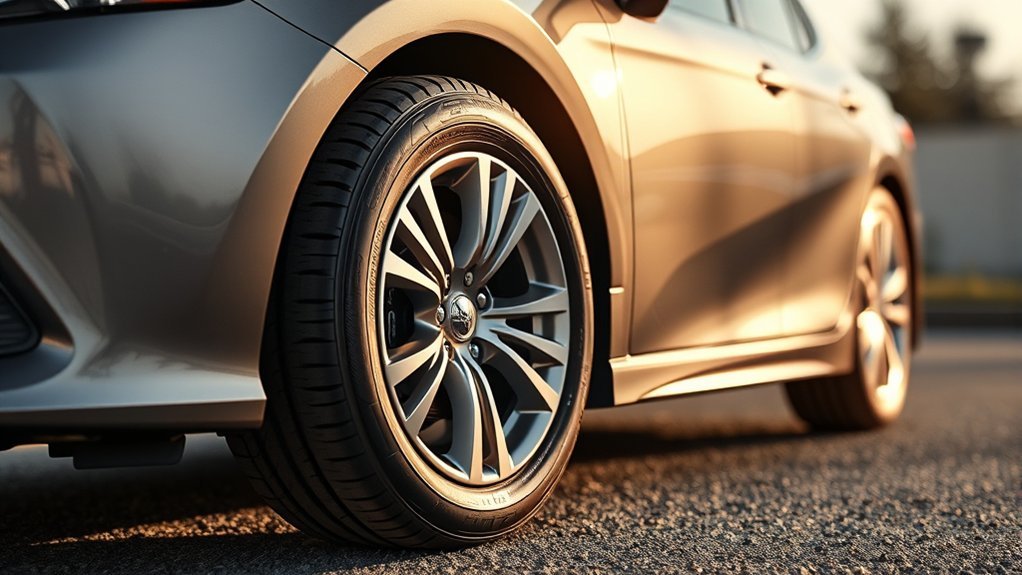
The correct 2025 Toyota Camry tire size depends on the trim and wheel package. Most U.S. 2025 Camry models use one of three common factory sizes: 205/65R16 on LE, 235/45R18 on SE and XLE, and 235/40R19 on XSE. Before you buy tires, always confirm the size and cold tire pressure on your driver-side door label.
Quick Answer
For the 2025 Toyota Camry, the common factory tire sizes are 205/65R16 for LE, 235/45R18 for SE and XLE, and 235/40R19 for XSE. Many fitment references list 35 psi cold front and rear, but your driver-side Tire and Loading Information label is the final authority.
Key Takeaways
- The 2025 Camry U.S. lineup is hybrid-only, so older gas-model tire charts can cause confusion.
- LE commonly uses 205/65R16, SE and XLE commonly use 235/45R18, and XSE commonly uses 235/40R19.
- Use the door placard for the exact tire size, load information, and cold tire pressure for your car.
- Do not choose a different tire size unless it matches Toyota guidance or a qualified tire professional confirms the fitment.
At a Glance
| Time Required | 5 to 10 minutes to confirm tire size and pressure |
| Difficulty | Easy |
| Tools Needed | Tire pressure gauge, flashlight, and your driver-side door label |
| Cost | Free if you already have a gauge; usually low cost if you need to buy one |
2025 Toyota Camry Tire Sizes Overview

The 2025 Toyota Camry changed the old tire-size conversation because the U.S. model became an exclusively hybrid Camry lineup. That means older Camry charts may list sizes that do not match the 2025 LE, SE, XLE, or XSE.
For most shoppers, the easiest way to avoid a mistake is to match the exact size printed on the tire sidewall and on the driver-side Tire and Loading Information label. Current fitment references for the 2025 Toyota Camry tire sizes commonly show these factory sizes:
| 2025 Camry Trim | Common Factory Tire Size | Wheel Size | Pressure Note |
|---|---|---|---|
| LE FWD / LE AWD | 205/65R16 | 16-inch alloy wheel | Check door label; commonly listed around 35 psi cold |
| SE | 235/45R18 | 18-inch alloy wheel | Check door label; commonly listed around 35 psi cold |
| XLE | 235/45R18 | 18-inch alloy wheel | Check door label; commonly listed around 35 psi cold |
| XSE | 235/40R19 | 19-inch alloy wheel | Check door label; commonly listed around 35 psi cold |
Note: The 2025 Camry does not use every tire size found on older Camry models. If you see 215/55R17 or 215/60R16 listed for a 2025 Camry, double-check that the chart is not mixing in older model years or non-U.S. fitments.
Standard Tire Size for the 2025 Camry LE
The 2025 Toyota Camry LE commonly uses 205/65R16 tires. This size gives the LE a taller sidewall than the sport trims, which can help ride comfort on rough pavement and protect the wheel better from smaller road impacts.
When shopping for LE replacement tires, match the full tire code, not only the wheel diameter. For example, 205/65R16 means the tire is 205 millimeters wide, the sidewall height is 65 percent of that width, and the tire fits a 16-inch wheel.
You should also match the load index and speed rating shown on your existing tire or door label. A tire can have the correct size but still be the wrong choice if its load capacity or speed rating is below the vehicle requirement.
SE, XLE, and XSE Tire Specifications
The SE, XLE, and XSE trims use wider tires than the LE. Toyota also separates the sportier XSE with a lower-profile 19-inch setup, while SE and XLE commonly use 18-inch wheels.
[Products Worth Considering]

The Topeak SmartGauge D2 delivers precise digital tire pressure readings for bikes, motorcycles, and sports equipment up to 250 psi (17 bar). Its rotating SmartHead works with both Presta and Schrader valves, so you can check pressure quickly without adapters. The LCD display makes it easy to read results in psi, bar, or kg/cm² with an included CR2032 battery for immediate use.

Monitor tire tread wear with a smart, color-coded depth gauge that shows clear condition ranges at a glance. The bar is range marked for fast, easy readings, helping you maintain safer traction and performance. Each gauge is portable with a pocket clip, and the set includes 20 units for daily use and sharing.

Keep your tires properly inflated with this analog VONDIOR tire pressure gauge, designed for fast, easy readings without batteries. The swiveling, two-axis hose and large glow dial help you measure at any tire angle with instant visibility. Built with a protective rubber shield, it supports durable, low-maintenance use for cars and trucks.
Tire Size for SE Trim
The 2025 Camry SE commonly uses 235/45R18 tires. Toyota says the SE features 18-inch black-finished alloy wheels, so this size fits the sportier wheel package while keeping enough sidewall for everyday use.
This is one of the easiest places to make a buying mistake because some older Camry SE models used different sizes. Do not assume a size from an older Camry SE will fit your 2025 SE.
Tire Size for XLE Trim
The 2025 Camry XLE commonly uses 235/45R18 tires. That gives it the same common tire size as the SE, even though the XLE focuses more on comfort and premium equipment than sporty styling.
If you own an XLE, still check the door label before ordering. Market, package, and wheel changes can affect tire fitment, especially if the car has dealer-installed accessories or replacement wheels.
Tire Size for XSE Trim
The 2025 Camry XSE commonly uses 235/40R19 tires. Toyota describes the XSE as using range-topping 19-inch alloy wheels, and the lower-profile 235/40R19 size gives the XSE its sharper stance.
The tradeoff is simple: the XSE tire can feel more responsive, but the shorter sidewall may be less forgiving over potholes than the LE tire. If you drive on rough roads, inspect XSE tires and wheels more often for bubbles, sidewall cuts, and impact damage.
Warning: Do not install a different tire size just because it fits the wheel diameter. A tire that is too tall, too wide, or too low in load rating can affect braking, steering, speedometer accuracy, tire clearance, and driver-assistance systems.
Why Tire Size Changes by Trim
Toyota uses tire size to tune comfort, handling, appearance, and efficiency. A taller sidewall, like the LE’s 205/65R16 setup, usually gives more cushioning. A wider and lower-profile tire, like the XSE’s 235/40R19 setup, usually gives sharper steering response and a sportier look.
The middle ground is the 235/45R18 size used on the SE and XLE. It gives the Camry a wider contact patch than the LE while keeping more sidewall than the XSE’s 19-inch tire.
These differences do not mean one size is “best” for every driver. The best size is the one Toyota specified for your trim and wheel package unless a qualified tire professional confirms a safe alternate fitment.
Recommended Tire Pressure for 2025 Camry Models
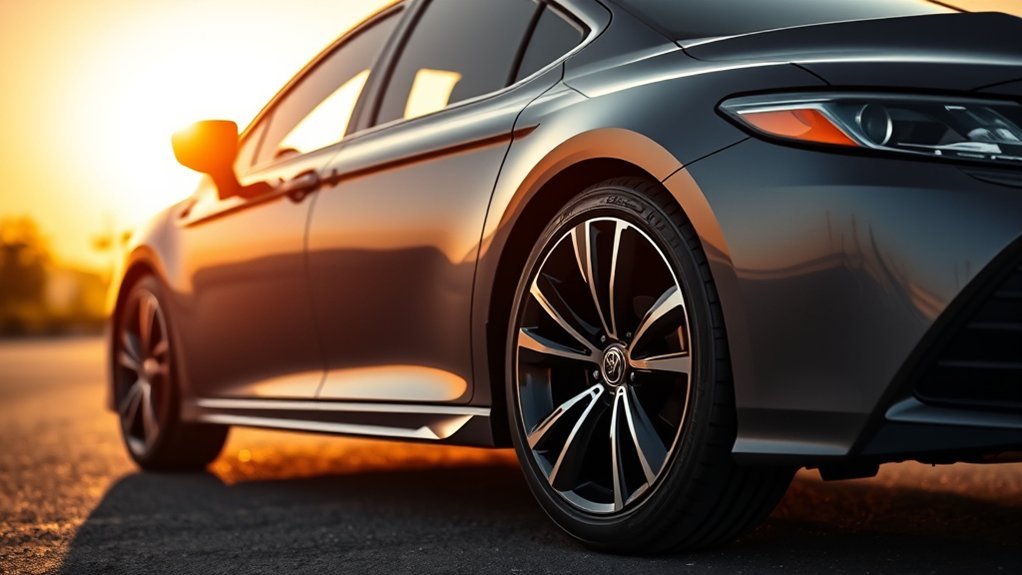
The safest way to confirm 2025 Camry tire pressure is to read the Tire and Loading Information label on the driver-side door edge or doorjamb. NHTSA notes that the correct tire pressure is the vehicle manufacturer’s recommended pressure, not the maximum pressure printed on the tire sidewall.
Many 2025 Camry fitment references list a cold pressure near 35 psi front and rear, but you should treat your own door label as the authority. Check the pressure when the tires are cold, ideally before driving or after the car has been parked for several hours.
- Open the driver-side door and find the Tire and Loading Information label.
- Read the cold PSI value for the front and rear tires.
- Use a reliable gauge to check all four tires.
- Adjust before a long trip, heavy load, or major weather change.
- Recheck after service if tires were rotated, replaced, repaired, or inflated at a shop.
Pro Tip: Tire pressure can drop when temperatures fall. Check pressure monthly and before long trips, even if the tire-pressure warning light has not turned on.
Why OEM Tire Size Matters for Your Camry
OEM tire size matters because Toyota tunes the Camry around a specific tire diameter, load capacity, speed rating, and wheel package. Keeping the correct size helps preserve steering feel, braking response, ride quality, fuel economy, and tire-pressure monitoring behavior.
That does not mean you must buy the same brand that came on the car. It means you should match the correct size and minimum specifications. A replacement tire should fit your trim, match the required load and speed rating, and suit your climate.
Also check whether your tire has an XL marking. XL means extra load. If your current tire or fitment data requires an XL tire, choose a replacement with the same or better load capability.
Best Replacement Tire Types for a 2025 Toyota Camry
The best replacement tire for your 2025 Camry depends on your tire size, climate, and driving style. Start with the correct size, then choose the tire category that fits your roads.
| Tire Type | Best For | What to Check |
|---|---|---|
| Touring all-season | Daily commuting, quiet ride, long tread life, and mild climates | Exact size, load index, speed rating, warranty terms, and wet-braking reviews |
| Performance all-season | SE and XSE drivers who want sharper steering without switching to summer tires | Noise level, treadwear rating, wet traction, and ride comfort |
| All-weather 3PMSF | Drivers who see light to moderate snow but do not want two tire sets | Three-Peak Mountain Snowflake marking and size availability; examples include tires like Pirelli Cinturato WeatherActive when available in the correct size |
| Dedicated winter | Regular snow, ice, freezing rain, and long winter seasons | Exact size, winter certification, and whether current models such as Bridgestone Blizzak IcePeak are available for your wheel size |
If you drive mostly in warm or mild weather, a quality touring all-season tire usually makes the most sense. If you deal with snow and ice every winter, dedicated winter tires remain the safer choice. If your winter is occasional but real, an all-weather tire with the Three-Peak Mountain Snowflake marking can be a practical middle option.
[Products Worth Considering]

These universal tire valve stem caps help protect valve cores from dust, debris, and moisture while helping maintain stable tire pressure. The corrosion-resistant metal construction and sealed design provide reliable protection in road grime, mud, and winter conditions. Twist-on installation makes them quick to fit on cars, SUVs, trucks, and motorcycles.

Measure tire tread depth quickly and accurately with this LUMITECO dial gauge that reads in 1/32" increments up to 14/32". The color-coded green/yellow/red zones make it easy to judge tire wear and know when replacement is needed. A rugged, compact design with a protective pouch helps keep the gauge ready for use on cars, trucks, motorcycles, and more.

Replace your worn or missing TPMS sensors with pre-programmed, direct-fit sensors for compatible Ford, Lincoln, and select Mazda models. Each sensor comes ready to activate with a scan tool, helping restore accurate tire pressure monitoring and trouble-free installation. Built with a long-life CR2032 battery and tested before factory release, this set provides dependable performance with a one-year warranty.
Checking Your Current Tire Size
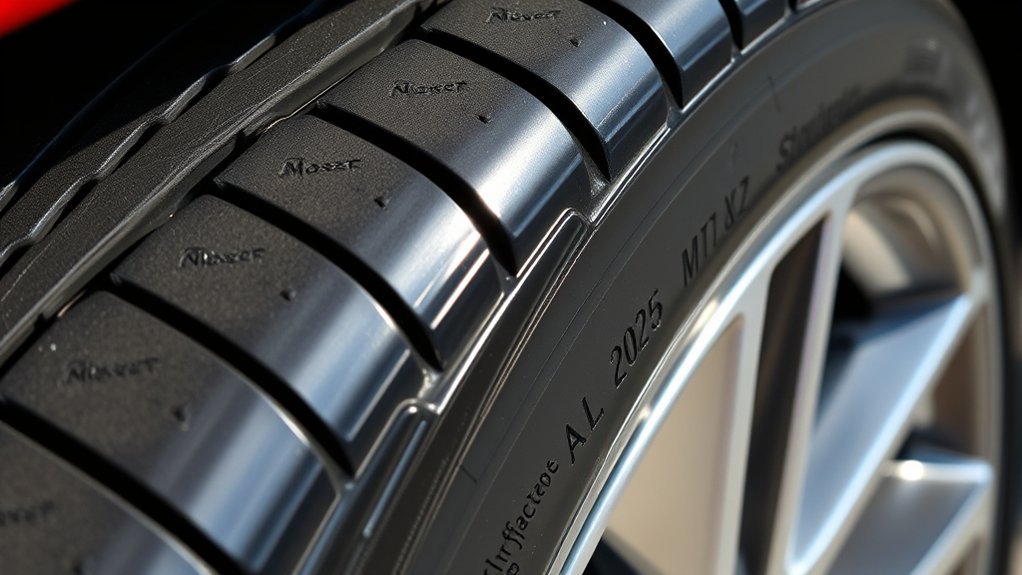
Before you order tires, compare three places: the sidewall, the driver-side door label, and your owner’s manual or service information. If all three match, you can shop with more confidence. If they do not match, use the door label and ask a tire professional to inspect the wheels currently on the car.
Locate the Tire Sidewall Code
The tire size is printed on the sidewall in a format such as 235/45R18. Here is what the code means:
- 235 is the tire width in millimeters.
- 45 is the aspect ratio, meaning the sidewall height is 45 percent of the tire width.
- R means radial construction.
- 18 means the tire fits an 18-inch wheel.
You may also see a load index and speed rating after the size, such as 94V, 95H, or 92V. Do not ignore those markings when buying replacements.
Check the Owner’s Manual and Service Information
Your Camry owner’s manual and Toyota service information help confirm what tire size and pressure Toyota designed for the vehicle. This matters if the car has replacement wheels, aftermarket wheels, or a used-car history you do not fully know.
The owner’s manual also explains tire rotation patterns, tire-pressure monitoring, spare tire use, and warnings about mismatched tires.
Check the Driver-Side Door Sticker
The driver-side Tire and Loading Information label is the most important quick reference. It usually lists:
- Original tire size for the vehicle.
- Cold tire pressure for front and rear tires.
- Vehicle load information that affects safe operation.
- Spare tire information if the vehicle is equipped with one.
If the door label says a different size than the tires currently installed, do not order new tires until you confirm whether the wheels were changed.
Tips for Maintaining Your Camry Tires
Tire maintenance is simple, but it has a big effect on ride comfort, tire life, braking, and fuel economy. Toyota’s 2025 Camry maintenance guide recommends scheduled maintenance every 5,000 miles or six months, whichever comes first, and the maintenance log includes tire rotation at each 5,000-mile interval.
- Check pressure monthly. Use the cold PSI on the door label, not the number molded into the tire sidewall.
- Rotate tires on schedule. Follow Toyota’s maintenance schedule and the owner’s manual rotation pattern.
- Inspect tread depth. NHTSA recommends checking tread when you check pressure and replacing tires when treadwear indicators show the tire is worn.
- Watch for uneven wear. Feathering, cupping, or one-edge wear can point to alignment, balance, suspension, or inflation problems.
- Balance new tires. NHTSA notes that new tires should be balanced when installed.
- Recheck TPMS after service. After tire replacement or rotation, make sure the tire-pressure monitoring system reads correctly.
The right tire is not just the right diameter. It must match the correct size, load rating, speed rating, pressure, and driving conditions for your Camry.
Before You Order New Camry Tires
Use this quick checklist before buying tires for your 2025 Toyota Camry:
- Confirm your trim: LE, SE, XLE, or XSE.
- Read your door label: Write down the exact tire size and cold PSI.
- Match the full sidewall code: Include load index, speed rating, and XL marking if required.
- Choose by climate: All-season for mild weather, all-weather for occasional snow, or dedicated winter tires for regular ice and snow.
- Buy four matching tires when possible: This helps keep handling, braking, and tire wear predictable.
- Schedule installation correctly: Ask for balancing, valve stem or TPMS service as needed, and a pressure check after installation.
If you are considering a non-factory tire size, ask the installer to confirm overall diameter, wheel width, offset, load capacity, speed rating, clearance, and TPMS compatibility before installation.
[Products Worth Considering]

The 22800 wheel stud installer makes replacing wheel studs quick and secure, saving time and effort during tire service. It uses a ratchet or impact wrench to pull new studs firmly into place, helping when existing studs are too long. Compatible with most automotive wheels and light-duty truck wheel studs, it’s designed for easy, tool-assisted installation.

Replace worn or missing TPMS sensors with a pre-programmed 4-pack designed for compatible GM vehicles. These 315MHz sensors provide real-time tire pressure monitoring and alert you if pressure is too high, too low, or if a rapid air leak occurs. Most installations are ready with minimal relearn effort after mounting, helping improve safety and driving confidence.

Steelman white tire marking crayons provide high-contrast, semi-permanent marks for repairing and inspecting tires and equipment. They write on wet or dry, smooth or coarse surfaces including rubber, metal, glass, and wood, making them ideal for puncture location and damage outlining. The lead- and zinc-free crayons resist weather and fading yet wipe away when you no longer need the marks.
Frequently Asked Questions
What tire size does the 2025 Toyota Camry LE use?
The 2025 Toyota Camry LE commonly uses 205/65R16 tires. Always confirm the size on your driver-side door label before ordering replacements.
What tire size does the 2025 Toyota Camry SE use?
The 2025 Toyota Camry SE commonly uses 235/45R18 tires. Do not rely on older Camry SE charts, because some older model years used different sizes.
What tire size does the 2025 Toyota Camry XSE use?
The 2025 Toyota Camry XSE commonly uses 235/40R19 tires. Because this is a lower-profile tire, inspect it often if you drive on rough roads or hit potholes.
Can I use a different tire size on my Camry?
Only use a different size if Toyota approves it for your vehicle or a qualified tire professional confirms the overall diameter, clearance, load rating, speed rating, and wheel fitment. Random size changes can affect handling, braking, and speedometer accuracy.
What PSI should I use for 2025 Camry tires?
Use the cold tire pressure printed on your driver-side Tire and Loading Information label. Many references list around 35 psi for 2025 Camry fitments, but your vehicle label is the final authority.
How often should I replace my Camry tires?
Replace tires based on tread depth, age, damage, uneven wear, and performance, not only mileage. Replace them if treadwear indicators show the tire is worn, if the sidewall is damaged, or if a tire professional finds unsafe wear.
Are all-season tires suitable for a 2025 Camry?
All-season tires work well for mild climates and normal commuting. If you drive in regular snow, ice, or freezing rain, consider dedicated winter tires or all-weather tires with the Three-Peak Mountain Snowflake marking.
How do I know if my tires are properly balanced?
Common signs of tire imbalance include vibration through the steering wheel, seat, or floor at certain speeds. Have the tires balanced when new tires are installed and whenever vibration appears after tire service.
Conclusion
The right 2025 Toyota Camry tire size depends on your trim. LE commonly uses 205/65R16, SE and XLE commonly use 235/45R18, and XSE commonly uses 235/40R19. Confirm the exact size and cold PSI on your driver-side door label before buying, then choose a tire type that matches your weather, road quality, and driving style.
When in doubt, stay with the OEM size and a tire that meets or exceeds the original load and speed rating. That simple step helps protect ride comfort, safety, fuel economy, and long-term tire life.
Sources
- Toyota USA Newsroom — backs up the 2025 Camry hybrid-only U.S. lineup and AWD availability.
- Goodyear 2025 Toyota Camry Tire Fitment — backs up common 2025 Camry tire sizes by trim.
- NHTSA TireWise — backs up door-label tire size, proper cold tire pressure, tread checks, balancing, and rotation guidance.
- Toyota 2025 Camry Warranty & Maintenance Guide — backs up scheduled maintenance intervals and tire rotation checks.
- Bridgestone Blizzak IcePeak Announcement — backs up current winter tire freshness information.
- Pirelli Cinturato WeatherActive — backs up all-weather 3PMSF tire guidance and manufacturer-stated warranty information.