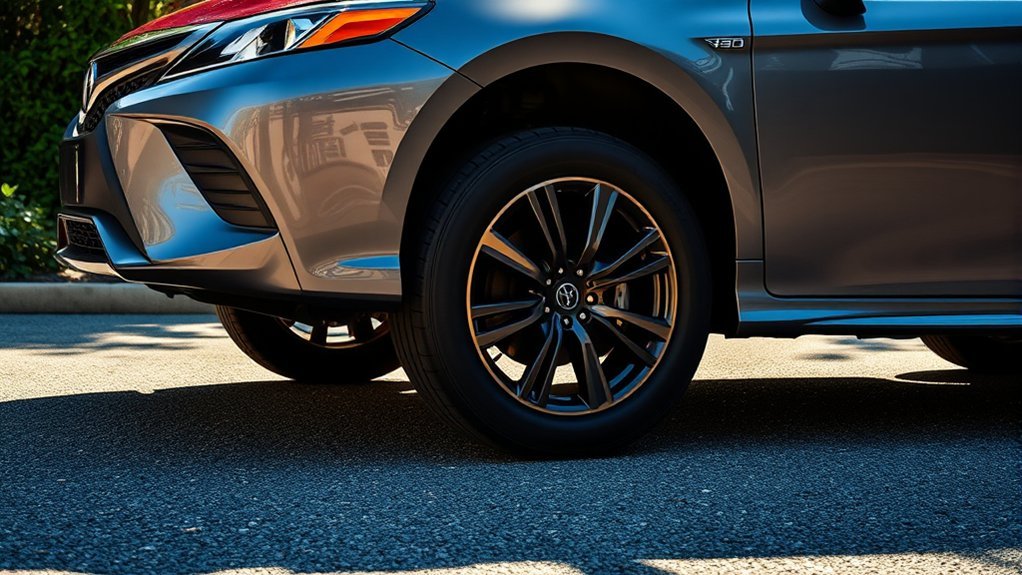
Plus-size tires can make your Toyota Camry look sharper and feel more planted, but the fit has to be measured before you buy. The safest approach is to start with the tire size on your driver-door placard, keep the new overall diameter close to that size, match or exceed the original load rating, and test inner and outer clearance before driving normally.
Quick Answer
To fit plus-size tires on a Toyota Camry without rubbing, keep the new tire diameter within about 3% of the original size, stay close to the factory offset, match the original load and speed ratings, and test clearance at full steering lock and full suspension compression before regular driving.
Key Takeaways
- Use your Camry’s driver-door tire placard as the starting point, not a generic online size chart.
- For many 2018–2024 Camry models, 235/45R18 and 235/40R19 are safer factory-style reference sizes than 225/40R18.
- A lower-profile 19-inch tire may improve steering response, but it can also make the ride firmer on rough roads.
- Offset, wheel width, hub bore, brake clearance, and load rating matter as much as tire size.
- After installation, check for rubbing during turns, over bumps, and with passengers or cargo in the car.
At a Glance
| Time Required | 30 to 60 minutes to measure and compare sizes before ordering |
| Difficulty | Moderate, because clearance, offset, and load rating all need to match |
| Tools Needed | Tape measure, flashlight, tire size calculator, straightedge, tire placard, owner’s manual, and torque wrench if wheels are removed |
| Cost | Free to measure, usually higher tire and wheel cost if moving to 18-inch or 19-inch packages |
How to Properly Fit Plus-Size Tires on Your Toyota Camry
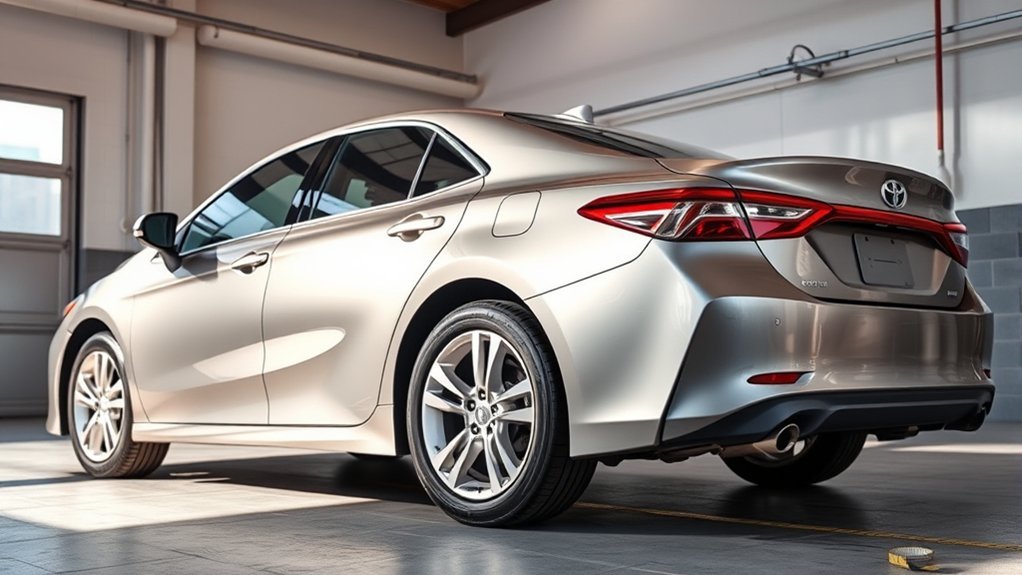
Start with the tire size printed on your Camry’s driver-door tire placard. The NHTSA tire safety guidance explains that the placard and owner information are the right places to confirm recommended tire size, load information, and cold tire pressure. You can also check your model’s manual through Toyota’s owner manual portal.
Once you know the original size, compare the new size by overall diameter. A plus-size setup uses a larger wheel with a lower-profile tire so the total tire height stays close to stock. This helps protect speedometer accuracy, ABS behavior, traction control behavior, and fender clearance.
Warning: Do not install a wheel or tire package that rubs the strut, brake hose, fender liner, or outer fender. Also avoid any tire with a lower load index or speed rating than your original equipment tire unless a qualified tire professional confirms it is safe for your exact Camry.
Use this basic formula when you compare sizes:
- Sidewall height: tire width × aspect ratio
- Overall diameter: wheel diameter + two sidewalls
- Target: keep the new diameter close to the original, ideally within about 3%
For example, a 235/45R18 tire is about 26.3 inches tall. A 235/40R19 tire is also about 26.4 inches tall, so it keeps a very close diameter. By comparison, a 225/40R18 tire is about 25.1 inches tall, which is too small for many 2018–2024 Camry setups unless your original size is much smaller.
[Products Worth Considering]

The Trivd Frol 1/2" air impact wrench delivers high performance torque up to 1500 ft-lbs with a twin hammer impact mechanism for strong, balanced blows. It features an ergonomic grip, compact lightweight design, and quick-stop control with 3 forward speeds up to 8000 RPM plus a reverse speed. Built for demanding automotive repair and tire shop work, the rear exhaust helps keep debris away from the surface.

Upgrade your wheels with MIKKUPPA M12x1.5 mag seat lug nuts built for secure, corrosion-resistant performance. These closed-end chrome lug nuts are a direct replacement for select Toyota models, including Camry, Corolla, RAV4, Sienna, Avalon, Highlander, Matrix, Venza, and Prius. Triple-chromium plating and cold-forged, heat-treated steel help deliver strength for daily driving and replacement needs.

Keep your tires properly inflated with this analog VONDIOR tire pressure gauge, designed for fast, easy readings without batteries. The swiveling, two-axis hose and large glow dial help you measure at any tire angle with instant visibility. Built with a protective rubber shield, it supports durable, low-maintenance use for cars and trucks.
Essential Specifications for Upgrading to Plus-Size Tires
Good fitment depends on more than tire width. Before buying plus-size tires for your Toyota Camry, confirm these specifications:
- Original tire size: Use the driver-door placard as your baseline.
- Overall diameter: Keep the new setup close to stock to limit speedometer and clearance problems.
- Wheel width: Match the tire to a wheel width approved by the tire manufacturer.
- Offset: Stay close to the factory offset unless you have measured inner and outer clearance.
- Bolt pattern: Confirm the wheel’s bolt pattern matches your exact Camry model year.
- Center bore: Use the correct hub bore or quality hub-centric rings when the wheel bore is larger than the hub.
- Load rating: The tire and wheel must meet or exceed the vehicle’s load needs.
- Brake clearance: Test the wheel design, not just the diameter, because spoke shape can hit the caliper.
Note: The 2018–2024 Camry is the eighth-generation XV70 in North America. The 2025 and newer Camry is a different generation, so 2025+ owners should verify their own placard size before using older fitment advice.
Best Plus-Size Tire Options for the Eighth-Generation Camry
For many 2018–2024 Toyota Camry models, the safest plus-size choices stay close to factory-style diameters. Exact factory sizes vary by trim and market, so use the table as a planning guide, then confirm against your own tire placard.
| Wheel Size | Tire Size to Consider | Fitment Notes |
| 16-inch | 205/65R16 | Comfort-focused factory-style size on many base trims. Good ride quality and pothole protection. |
| 17-inch | 215/55R17 or 225/50R17 | Balanced ride and handling. 225/50R17 is slightly smaller than 235/45R18, so compare against your original size. |
| 18-inch | 235/45R18 | Strong factory-style upgrade reference for many Camry trims. Usually safer than 225/40R18 for diameter. |
| 19-inch | 235/40R19 or 245/40R19 | Sportier look and sharper steering. 245/40R19 needs careful offset and fender clearance checks. |
If your Camry is lowered, has worn suspension bushings, carries heavy passengers often, or uses aggressive aftermarket wheels, choose the conservative size first. A setup that clears on flat ground can still rub when the suspension compresses over a driveway, pothole, or highway dip.
[Products Worth Considering]

This professional wheel and rim brush kit makes it easy to lift brake dust, grime, and dirt from wheels and tires without scratching finishes. The brushes feature soft, metal-free wool heads and a flexible 360-degree rim brush design for reaching hard-to-clean areas. Includes multiple brush types plus accessories for thorough car, motorcycle, and general vehicle detailing.

This professional wheel and rim cleaning brush set lifts brake dust, grime, and dirt with soft, scratch-free microfiber and synthetic wool fibers. The rim brush bends up to 360 degrees for easy access to hard-to-reach areas around spokes, lips, and faces. Ideal for thorough cleaning of car, truck, motorcycle, bicycle, RV, and more wheel and tire surfaces.

Measure tire tread depth quickly and accurately with this LUMITECO dial gauge that reads in 1/32" increments up to 14/32". The color-coded green/yellow/red zones make it easy to judge tire wear and know when replacement is needed. A rugged, compact design with a protective pouch helps keep the gauge ready for use on cars, trucks, motorcycles, and more.
Avoiding Rubbing: Clearance and Offset
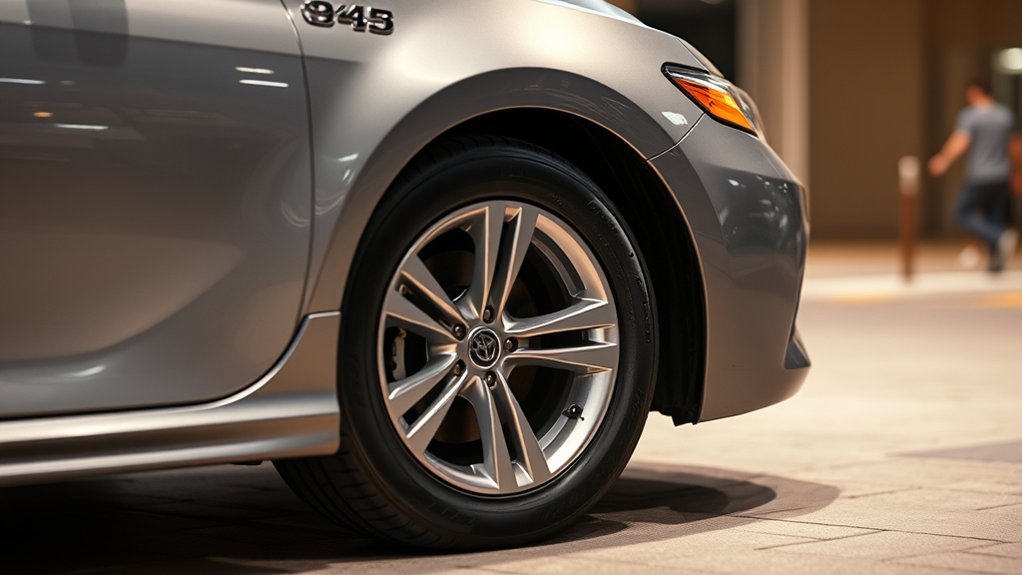
Rubbing usually comes from one of three problems: the tire is too tall, the tire is too wide, or the wheel offset places the tire too far inward or outward. A wider tire on the wrong offset can rub the strut on the inside or the fender lip on the outside.
Check clearance in this order:
- Inner clearance: Look behind the tire for space near the strut, spring perch, brake hose, and inner liner.
- Outer clearance: Check the fender lip and bumper tab area, especially on the front wheels.
- Full steering lock: Turn the wheel fully left and fully right while checking both front tires.
- Loaded clearance: Recheck with passengers or cargo if the car often carries weight.
- Suspension compression: Watch for rubbing after bumps, dips, and angled driveway entries.
Pro Tip: If you want a flush look, change offset in small steps. A wheel that moves outward may look better, but it can rub the fender sooner during turns and suspension travel.
Fender rolling should be a last step, not the plan from the start. It can damage paint if done poorly, and it does not solve inner strut clearance, brake clearance, or incorrect load rating.
Popular Wheel and Tire Combinations: What Works Best?
The best Toyota Camry wheel and tire combination depends on whether you want comfort, a factory sport look, or the widest practical street setup. These combinations are common starting points, but your final choice should match your exact model year, trim, suspension height, and wheel specs.
[Products Worth Considering]

This 3-piece wheel and tire brush set makes it easy to clean light, medium, and heavy dirt from wheels, rims, tires, and exterior surfaces. It includes both soft and stiff bristle options for gentle scrubbing and tough grime removal, helping lift brake dust and road buildup. The long-handle design supports comfortable cleaning across cars, trucks, SUVs, RVs, motorcycles, and more, with simple care instructions to restore brush shape.

This universal wheel alignment tool helps you accurately restore tire tilt angles after tire or suspension repairs using an adjustable camber gauge. It features a powerful magnetic base that firmly attaches to brake rotors for stationary, slip-free readings, improving consistency during measurement. Built from durable PC plastic, it resists wear and corrosion and is compact enough for car, truck, RV, and motorcycle alignment tasks.

This 3-piece wheel brush set makes it easy to clean wheels and tires with soft, scratch-free brushes designed for lifting brake dust and grime. The flexible rim brush bends up to 360 degrees to reach hard-to-access areas for a thorough clean, while the comfortable grip helps control during detailing. A dedicated detailing brush supports gentle cleaning for sensitive surfaces, including interior use.
Ideal Tire Sizes
For an eighth-generation Camry, 235/45R18 is a practical 18-inch reference size because it keeps the diameter close to many factory setups while giving a wider contact patch than base 16-inch tires. For a 19-inch setup, 235/40R19 is the conservative sport-size reference. A 245/40R19 can work on some cars with the right wheel width and offset, but it needs careful clearance testing.
For older Camry models that came with 15-inch wheels, do not copy eighth-generation sizes without checking diameter and wheel-well space. Older setups such as 205/65R15, 215/55R16, or 215/50R17 can be closer in diameter depending on the original placard size.
Wheel Offset Considerations
Wheel offset is the distance between the wheel’s mounting face and its centerline. More positive offset pulls the wheel inward. Less positive offset pushes the wheel outward. Either direction can cause problems if taken too far.
A Camry usually works best with a street-friendly offset that stays close to the factory wheel position. Aggressive low-offset wheels can create fender poke and outer rubbing. Very high-offset wheels can move the tire toward the strut, spring perch, or inner liner.
Popular Brand Options
Choose wheels from brands that publish complete specs: diameter, width, offset, bolt pattern, center bore, wheel load rating, and brake-clearance notes. Choose tires from manufacturers that publish approved rim-width ranges, load index, speed rating, treadwear information, and warranty terms.
Avoid buying wheels based only on appearance. A wheel can have the right diameter and bolt pattern but still fit poorly because of spoke shape, center bore, load rating, or offset.
Impact of Larger Tires on Performance and Ride Quality
Plus-sizing changes how your Camry feels. The result is not automatically better or worse. It depends on tire quality, wheel weight, sidewall height, and road conditions.
- Handling: A wider performance tire can improve dry grip and steering response.
- Ride comfort: A lower-profile sidewall usually gives less cushion over potholes and rough pavement.
- Noise: Wider tires and aggressive tread patterns can create more road noise.
- Fuel economy: Heavier wheels and wider tires can increase rolling resistance.
- Wheel damage risk: Shorter sidewalls give less protection against pothole impacts.
Bigger wheels often look better, but the best daily-driver setup is the one that keeps safe diameter, load rating, clearance, and ride quality in balance.
Independent testing by Car and Driver found that larger wheel packages can affect acceleration, fuel economy, braking, and ride quality. That is why you should compare the whole package, not just the tire width.
Expert Tips for Ensuring a Smooth Fitment Experience
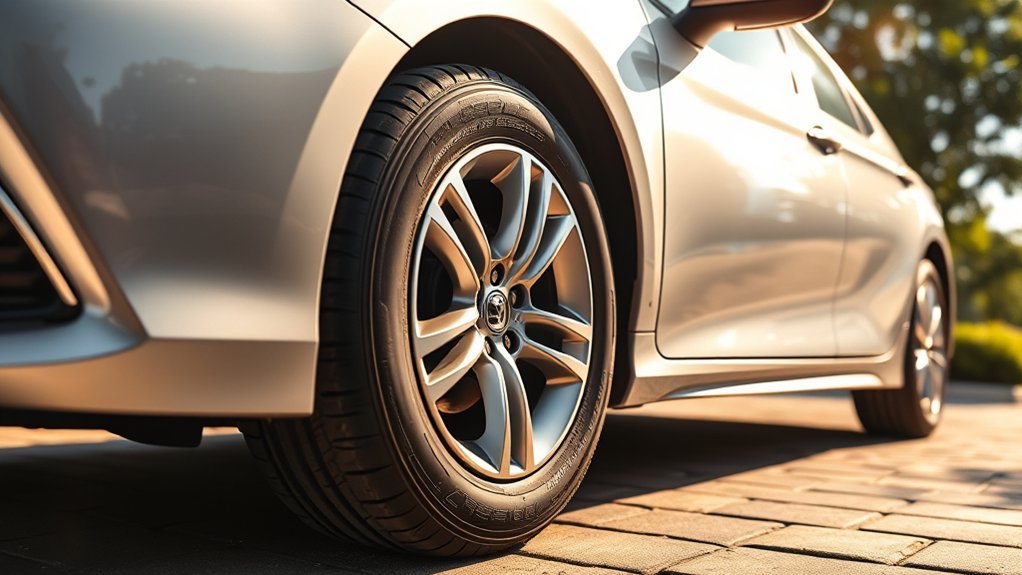
Before ordering tires, write down your current tire size, wheel size, offset, and tire pressure from the placard. Then compare your planned size against the original diameter and check whether the tire manufacturer approves that tire for your wheel width.
After installation, do these checks before normal driving:
- Confirm each tire is mounted in the correct direction if it has directional tread.
- Confirm the tire load index and speed rating meet or exceed the original requirement.
- Make sure the TPMS light is off after the system resets or sensors are registered.
- Turn the steering wheel fully left and right and check for rubbing.
- Drive slowly over a driveway entrance and listen for liner or fender contact.
- Recheck lug-nut torque after the installer’s recommended break-in distance.
- Get an alignment if the car was lowered, pulls to one side, or shows uneven tire wear.
Note: Use the cold tire pressure on the placard as your starting point. If you change tire size, load range, or construction, ask a qualified tire shop to confirm the right inflation pressure for the new setup.
What to Avoid When Plus-Sizing a Camry
Some fitment mistakes are common because a size looks close online but behaves differently on the car. Avoid these issues:
- Going too small in diameter: A 225/40R18 can be too short for many 2018–2024 Camry setups.
- Assuming wider is always better: A 245mm tire can rub if the wheel offset is wrong.
- Ignoring wheel weight: Heavy wheels can hurt ride quality and acceleration.
- Skipping load rating: A tire that fits physically can still be unsafe if its load index is too low.
- Using universal lug hardware: Lug-seat style and thread engagement must match the wheel and vehicle.
- Forgetting winter clearance: Snow buildup can reduce wheel-well space around wider tires.
Frequently Asked Questions
Can you tell if larger Camry tires will rub before installing them?
You can reduce the risk by comparing diameter, tire width, wheel width, offset, and inner and outer clearance. Still, the final answer comes from a test fit because suspension height, tire brand, tread shape, alignment, and wheel design can change real clearance.
What tires are compatible with a Toyota Camry?
Compatible tires depend on your model year, trim, wheel size, and tire placard. Common eighth-generation Camry reference sizes include 205/65R16, 215/55R17, 235/45R18, and 235/40R19, but you should confirm your original size before choosing a plus-size option.
Is 225/40R18 a good plus-size tire for a Camry?
Usually not for a 2018–2024 Camry that started near a 26.3-inch tire diameter. A 225/40R18 is much shorter than common factory-style 18-inch and 19-inch Camry sizes, which can affect speedometer accuracy, wheel gap, and ride quality.
Do I need an alignment after installing larger tires?
You should get an alignment if the Camry was lowered, pulls to one side, has uneven tire wear, or uses a wider setup that makes small alignment issues more noticeable. Even with stock suspension, an alignment check helps protect new tires.
Will plus-size tires make my Camry ride harder?
They can. Moving to a larger wheel usually means using a shorter tire sidewall. That can sharpen steering response, but it can also make potholes, expansion joints, and rough pavement feel harsher.
Conclusion
Upgrading to plus-size tires on your Toyota Camry can improve stance and steering feel, but the safest fit starts with measurement. Use your tire placard as the baseline, keep the new diameter close to stock, stay sensible with offset, match the original load and speed ratings, and test for rubbing before daily driving. For many 2018–2024 Camry owners, factory-style 18-inch and 19-inch sizes are a better starting point than aggressive short-sidewall guesses.
Sources
- NHTSA Tire Safety — supports tire placard, pressure, and safety-first tire selection guidance
- Toyota Owner Manuals and Warranty Guides — supports checking the exact owner’s manual and vehicle-specific information
- Car and Driver: Effects of Upsized Wheels and Tires Tested — supports performance and ride-quality tradeoffs from larger wheel packages
- The Tire and Rim Association — supports using tire and rim standards for approved rim-width and load information