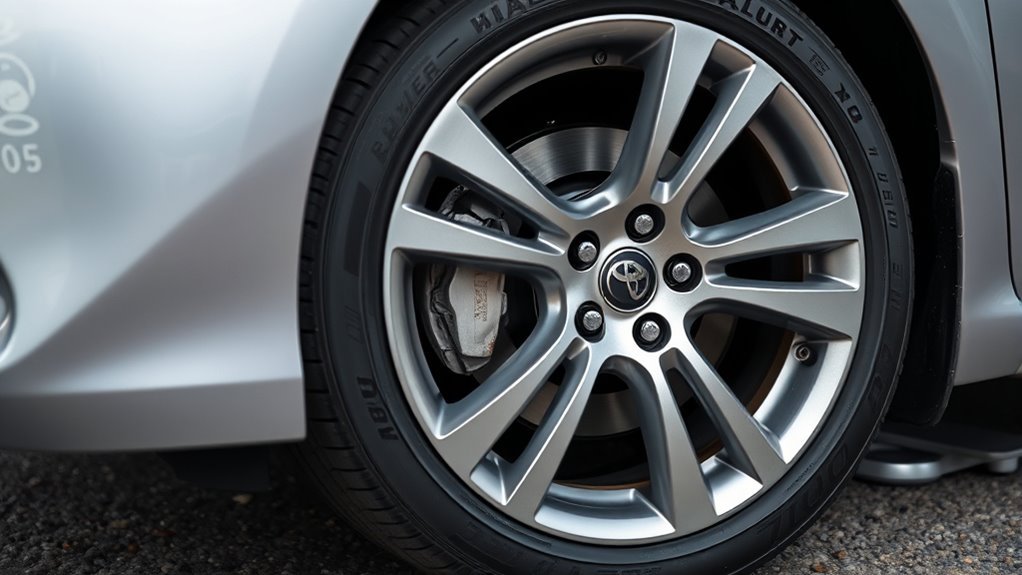
Your Camry’s tire-and-wheel package affects more than appearance. The complete assembly is both unsprung mass that the suspension must control and rotating mass that the powertrain and brakes must speed up or slow down. A lighter package may improve response and compliance, but wheel diameter alone does not determine the result. Tire construction, sidewall height, width, pressure, alignment, fitment, and suspension tuning also matter.
Quick Answer
Lower tire-and-wheel weight can help a Camry’s suspension follow rough pavement and reduce rotational inertia, but diameter alone does not determine performance. Choose the lightest practical assembly that preserves Toyota-approved tire sizing, adequate load capacity, brake clearance, proper offset, TPMS compatibility, and safe installation.
Key Takeaways
- Compare the weight of the complete mounted tire-and-wheel assembly, not wheel diameter alone.
- A larger wheel often comes with a shorter tire sidewall, which may affect ride comfort more noticeably than a small weight change.
- There is no reliable rule that one pound of unsprung weight equals ten pounds of body weight.
- Fuel-economy changes depend on tire rolling resistance, width, pressure, alignment, driving conditions, and assembly mass.
- Verify every replacement by model year, trim, drivetrain, tire placard, load capacity, offset, and brake clearance.
What Is Unsprung Mass on a Camry?
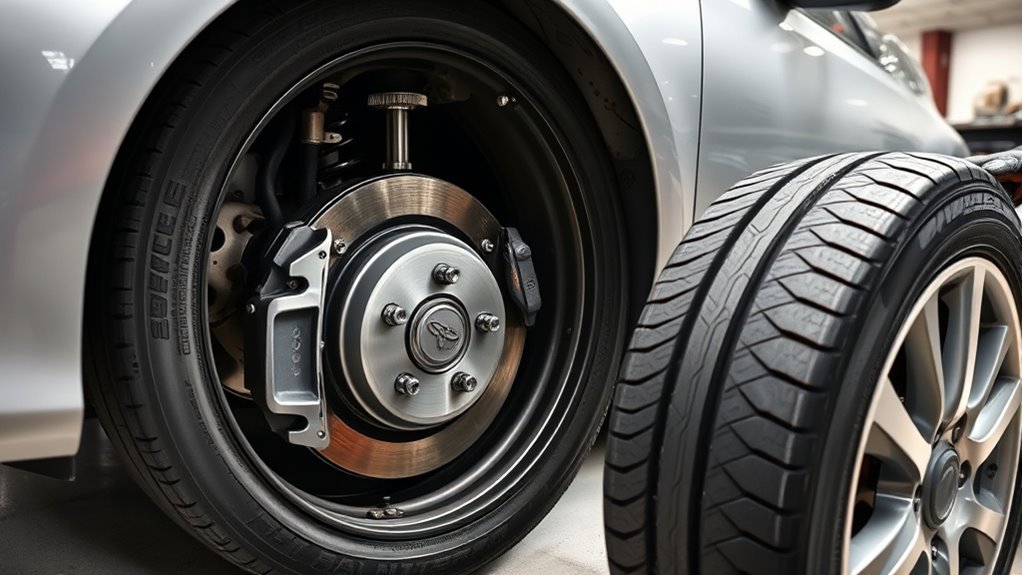
Unsprung mass is the part of a vehicle that moves with the road rather than being fully supported by the suspension springs. On a Camry, it includes the wheels, tires, brake rotors, calipers, hubs, and portions of the suspension links and axles.
The suspension must control this mass whenever the tire passes over a bump or dip. More unsprung mass can change wheel movement, vibration, and the way tire load varies over broken pavement. Engineering research also shows that the effect depends on where the added mass is located and how the suspension is tuned, so the outcome cannot be reduced to one universal weight ratio. An SAE study involving Toyota engineers identifies increased unsprung mass as a ride-comfort challenge, particularly in specific vibration ranges.
Note: Unsprung mass and rotating mass overlap, but they describe different effects. The wheel and tire are unsprung because the suspension controls them, and they are rotating because the drivetrain and brakes must change their rotational speed.
Why Camry Wheel Weight Changes Feel
Changing wheel weight can affect how quickly the suspension, steering, drivetrain, and brakes respond. The size of the difference depends on the total assembly weight, where the mass is located, the tires used, and the road surface.
Unsprung Mass Effects
A lighter wheel-and-tire assembly gives the suspension less mass to control. On rough pavement, that may help the wheel move through its travel with less force and may improve the suspension’s ability to manage rapid road changes.
That does not mean every lighter wheel automatically improves grip. Tire compound, tread design, pressure, alignment, damper tuning, and road conditions remain critical. A light wheel paired with an unsuitable tire can perform worse than a slightly heavier, well-matched OEM package.
Rotational Inertia Changes
Rotational inertia describes how strongly a rotating object resists changes in speed. Weight placed farther from the hub has a greater effect than the same weight close to the center because rotational inertia increases with the square of the distance from the axis.
This is why two wheels with the same scale weight can behave differently. A design with more material near the outer barrel may require more energy to accelerate than one that concentrates mass nearer the hub. Published wheel weight is useful, but it does not describe the full mass distribution.
Ride and Handling Feel
A heavier assembly may make steering transitions feel less immediate and can increase the forces the suspension must manage over rough roads. However, wheel weight is only one part of the driving feel.
- A shorter tire sidewall usually transmits sharp impacts more directly.
- A wider tire may increase steering effort, tramlining, or road noise.
- A different tire compound can change grip and response even when weight stays similar.
- Incorrect offset can change steering geometry and bearing loads.
- Improper tire pressure can overwhelm any benefit from a lighter wheel.
When comparing two packages, evaluate the complete specification rather than assuming that the larger or more expensive option will handle better.
Why Tire Weight Matters Too
The tire is part of both the unsprung and rotating mass. Because much of its mass is near the outside of the assembly, a tire-weight change can be at least as important as a similar wheel-weight change.
| Variable | Possible Effect | What to Check |
|---|---|---|
| Tire weight | Changes unsprung and rotating mass | Manufacturer-listed weight for the exact size |
| Sidewall height | Changes impact absorption and steering feel | Tire size and approved wheel-width range |
| Tire width | May affect grip, drag, noise, and steering | Clearance, rim width, and manufacturer approval |
| Construction and compound | Affects rolling resistance, comfort, traction, and wear | Tire category, test data, and intended use |
A heavier tire does not automatically have higher rolling resistance. The U.S. Environmental Protection Agency explains that tire materials, construction, tread design, and flexing influence energy loss. Inflation pressure and alignment also matter.
How Rotational Mass Affects Acceleration
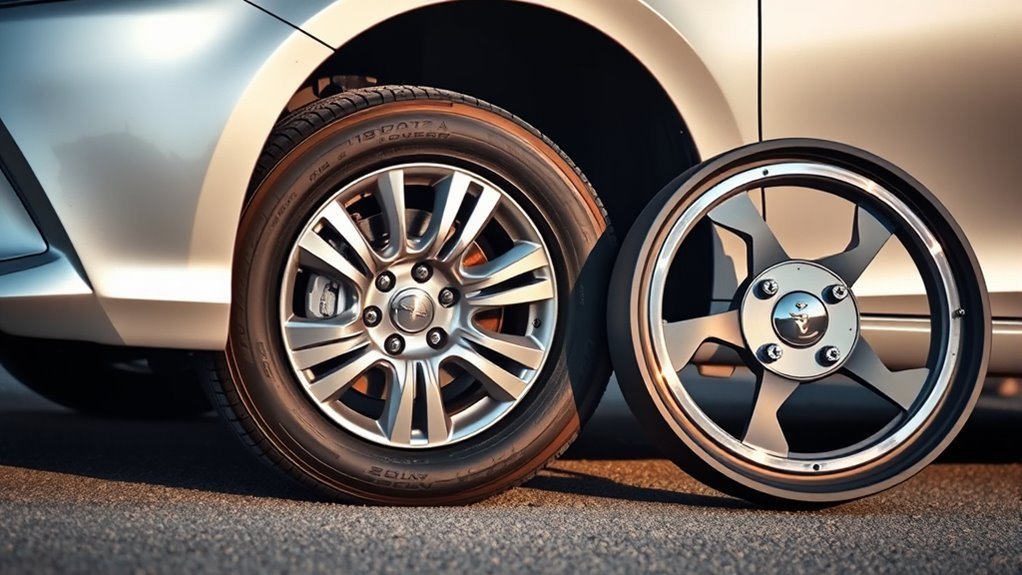
The engine or hybrid drive system must accelerate both the vehicle and every rotating component connected to it. Reducing wheel-and-tire inertia can lower the energy needed to increase wheel speed, particularly during repeated starts and speed changes.
The effect is usually more noticeable when:
- the weight difference is substantial at all four corners;
- much of the removed mass was near the outer edge of the assembly;
- the vehicle repeatedly accelerates and decelerates;
- the replacement tires do not add back the weight saved by the wheels.
There is no accurate universal formula saying that one pound removed from a wheel equals a fixed number of pounds removed from the body. The result changes with wheel geometry, tire size, vehicle speed, gearing, drivetrain, and the acceleration test being considered.
Compare complete mounted assemblies. A wheel that is five pounds lighter provides no assembly-weight saving if its replacement tire is five pounds heavier.
How Heavier Wheels Affect Braking
The brakes must remove the vehicle’s forward kinetic energy and the rotational energy stored in its wheels and tires. A package with greater rotational inertia can therefore require the brake system to absorb more energy during a stop.
In normal road use, the practical difference may be small, moderate, or difficult to isolate because tire traction, road condition, brake temperature, ABS operation, and driver input have much larger effects. On uneven pavement, added unsprung mass may also affect how the tire follows the surface.
Do not assume that lighter wheels guarantee shorter stopping distances. A lighter package fitted with tires that have weaker wet or dry traction can take longer to stop than a heavier package using better tires.
How Wheel Weight Changes Ride Quality
Added unsprung mass can change the forces transmitted through the suspension, but tire sidewall height often creates the most obvious ride difference when moving between wheel diameters.
- A smaller wheel with a taller sidewall generally provides more tire compliance.
- A larger wheel with a shorter sidewall generally transmits sharp edges more directly.
- A lighter large wheel may still ride more firmly than a heavier small wheel because the tire has less sidewall deflection.
- Inflation pressure, tire construction, and suspension tuning can change the result substantially.
Note: When a 19-inch package feels harsher than a 17- or 18-inch package, do not attribute the entire change to wheel weight. The shorter sidewall, tire construction, width, and pressure may be more influential.
What Camry OEM Wheel Sizes and Weights Tell You
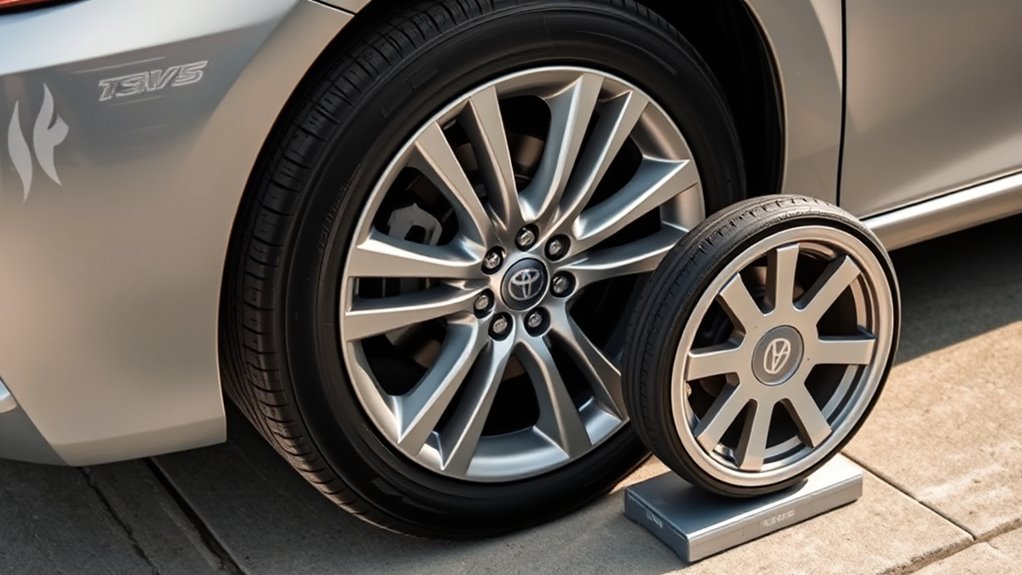
Camry wheel sizes vary by generation, model year, trim, drivetrain, market, and option package. Always verify your vehicle rather than relying on a size listed for another Camry.
Camry OEM Wheel Sizes
For a current example, Toyota’s 2026 U.S. Camry lineup lists the following standard wheel diameters:
| 2026 Camry Trim | Standard Wheel Diameter |
|---|---|
| LE | 16 inches |
| SE | 18 inches |
| Nightshade | 19 inches |
| XLE | 18 inches |
| XSE | 19 inches |
This current lineup should not be applied to older Camrys. Earlier model years may use different diameters, widths, offsets, tire sizes, and load requirements.
Factory Wheel Weight Trends
Factory wheel diameter has generally increased on appearance- and performance-oriented trims, but diameter does not reveal exact weight. Spoke design, barrel construction, width, material, and manufacturing method can make one 19-inch wheel lighter than another 18-inch wheel.
Toyota’s consumer trim pages identify wheel size and design but do not provide a complete weight for every mounted assembly. To establish a reliable baseline, weigh your removed wheel and inflated tire together or obtain documented weights for the exact OEM part number and tire size.
What Weight Changes Mean
Calculate the difference per corner and across all four wheels. For example, if a proposed mounted assembly is three pounds lighter than the existing assembly, the vehicle loses twelve pounds of total wheel-and-tire mass. That calculation is accurate as scale weight, but it still does not predict an exact acceleration, braking, or MPG improvement.
Record these details for both packages:
- mounted assembly weight;
- wheel diameter and width;
- tire size and load index;
- tire model and listed weight;
- offset and center bore;
- documented wheel capacity;
- cold inflation pressure specified for the vehicle or approved conversion.
How to Measure and Compare Camry Wheel and Tire Weight
- Confirm your baseline specifications. Check the driver-side Tire and Loading Information Label, owner’s manual, trim, drivetrain, and VIN-specific parts information.
- Weigh the existing assembly. Remove one wheel safely and weigh the inflated wheel and tire together on a suitable scale.
- Find the proposed assembly weight. Add documented wheel and tire weights, then allow for the valve, TPMS sensor, and balancing weights. A mounted measurement is more reliable.
- Compare fitment as well as weight. Verify wheel width, offset, bolt pattern, center bore, lug-seat type, brake clearance, and tire clearance.
- Compare tire specifications. Check the tire’s approved rim-width range, load index, speed rating, overall diameter, and intended use.
- Evaluate the goal. Decide whether comfort, efficiency, steering response, appearance, winter use, or tire cost matters most.
Pro Tip: Photograph the tire placard and write down the current wheel and tire part numbers before shopping. This prevents specifications from a different Camry year or trim from being applied to your car.
[Products Worth Considering]

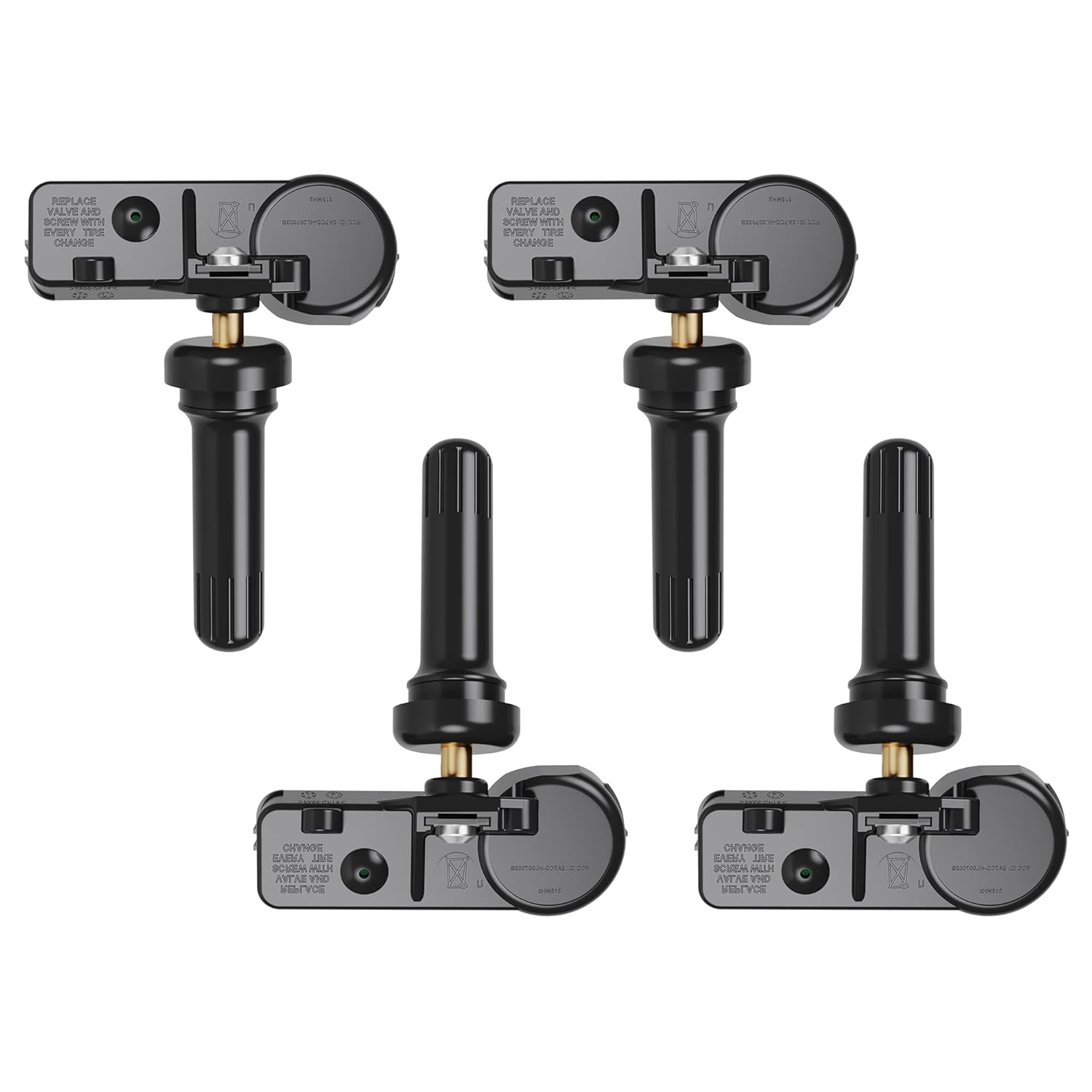
Replace your worn or missing TPMS sensors with pre-programmed, direct-fit sensors for compatible Ford, Lincoln, and select Mazda models. Each sensor comes ready to activate with a scan tool, helping restore accurate tire pressure monitoring and trouble-free installation. Built with a long-life CR2032 battery and tested before factory release, this set provides dependable performance with a one-year warranty.

This metal-free wheel and tire cleaning brush uses dense, fluffy synthetic wool to safely clean rims, spokes, fenders, and engine areas without worrying about damaging surfaces. Its flexible, comfortable design helps you reach detailed areas while maintaining durability, and the extra absorbent fibers work well with wheel spray cleaners for faster cleanup. Reusable and washable performance helps prevent grime and build-up for cleaner vehicles and easier maintenance at home.

Upgrade your wheels with MIKKUPPA M12x1.5 mag seat lug nuts built for secure, corrosion-resistant performance. These closed-end chrome lug nuts are a direct replacement for select Toyota models, including Camry, Corolla, RAV4, Sienna, Avalon, Highlander, Matrix, Venza, and Prius. Triple-chromium plating and cold-forged, heat-treated steel help deliver strength for daily driving and replacement needs.
Which Lighter Wheel Options Make Sense for a Camry?
The best option is not automatically the smallest, lightest, forged, or most expensive wheel. It is the package that meets your objective while preserving safe fitment and documented capacity.
| Priority | Practical Direction | Main Tradeoff |
|---|---|---|
| Ride comfort | Use an approved smaller diameter with a taller-sidewall tire | Less aggressive appearance and possible brake-clearance limits |
| Steering response | Choose a rigid, reasonably light wheel and responsive tire | Firmer ride or more road noise |
| Fuel efficiency | Limit assembly weight and use an appropriate low-rolling-resistance tire | Traction or steering feel may differ by tire model |
| Appearance | Use a larger approved diameter with carefully matched tire sizing | Less sidewall protection, higher cost, and possible added mass |
Cast, flow-formed, and forged wheels can all be suitable when correctly engineered. Forging often allows a favorable strength-to-weight design, but the manufacturing label alone does not prove that a wheel is light, durable, or correctly rated for your Camry. Compare the exact model’s published weight, capacity, testing information, and fitment.
Warning: Never select a wheel by weight and diameter alone. An incorrect offset, center bore, lug-seat design, load capacity, or brake clearance can cause vibration, interference, fastener problems, bearing stress, or loss of control. Have uncertain fitments verified by a qualified wheel-and-tire professional.
[Products Worth Considering]

This 62-inch extra-long car wash brush kit makes it easy to clean hard-to-reach areas on cars, trucks, SUVs, and RV roofs with lightweight, sturdy poles. It includes soft, non-scratch microfiber and bristles with protective bumpers to help prevent scratches while cleaning effectively. A rubber squeegee helps remove water stains quickly, plus a wheel/tire brush and absorbent towels for complete exterior detailing.
Black Magic Intense Foam Wheel & Tire Cleaner uses a high-foaming action to lift away dirt, grime, and brake dust without scrubbing. The color-changing formula helps show contaminants being dissolved as foam turns from white to brown. Safe for all wheel types and even wheel wells, it leaves a like-new, slick finish with a fresh cherry scent.

Suds Lab WB Premium Detailing Wheel Brush delivers a scratch-free clean using ultra-soft microfiber bristles that lift brake dust, dirt, and grime without swirling. The ergonomic non-slip handle helps you deep-clean rims, wheels, and tires with reduced hand fatigue while reaching tight contours. It’s reusable and machine washable for long-term detailing, and works across cars, trucks, SUVs, and motorcycles plus multi-purpose cleaning tasks.
How Wheel Weight Affects Fuel Economy
A lighter rotating assembly can reduce the energy needed during acceleration, but wheel weight is only one part of fuel economy. At steady speed, tire rolling resistance and aerodynamics may matter more than a modest wheel-weight difference.
The National Highway Traffic Safety Administration estimates that a 10% reduction in tire rolling resistance can improve vehicle fuel economy by about 1% to 2%. That estimate applies to rolling resistance, not directly to wheel weight.
A tire’s compound, construction, pressure, width, and alignment can erase or exceed the efficiency change produced by a modest reduction in wheel weight.
Toyota lists different EPA-estimated fuel-economy figures across Camry trims with different wheel sizes, but those trims also differ in tires, equipment, styling, drivetrain availability, and suspension tuning. Their ratings should not be treated as a controlled wheel-weight test.
For a meaningful before-and-after comparison, measure fuel use over several tanks on the same routes, maintain the correct cold tire pressure, and account for weather, traffic, driving style, and seasonal fuel changes.
How to Compare Camry Wheel Weight and Load Ratings
Weight savings never override capacity and fitment. Both the wheel and tire must safely support the vehicle under real passenger, cargo, cornering, braking, and road-impact loads.
[Products Worth Considering]

Replace worn or malfunctioning GM TPMS sensors with this 433MHz pre-programmed sensor set designed for compatibility with many Chevrolet, Buick, GMC, and Cadillac models. It includes guidance for proper OBDII relearning/pairing after installation and supports reliable long-term operation with a high-performance CR2032 battery. Quality tested for durability and performance to help restore accurate tire pressure monitoring.

The 22800 wheel stud installer makes replacing wheel studs quick and secure, saving time and effort during tire service. It uses a ratchet or impact wrench to pull new studs firmly into place, helping when existing studs are too long. Compatible with most automotive wheels and light-duty truck wheel studs, it’s designed for easy, tool-assisted installation.

This professional wheel and rim brush kit makes it easy to lift brake dust, grime, and dirt from wheels and tires without scratching finishes. The brushes feature soft, metal-free wool heads and a flexible 360-degree rim brush design for reaching hard-to-clean areas. Includes multiple brush types plus accessories for thorough car, motorcycle, and general vehicle detailing.
Wheel Weight Versus Load Rating
There is no universal 1,500–1,700 kg wheel-rating requirement for every Camry. Use the documented load capacity of the exact wheel model and confirm that it is approved for the vehicle application. Do not infer strength from appearance, diameter, spoke thickness, or manufacturing method.
- Check the wheel manufacturer’s documented capacity.
- Confirm the rating applies to the exact diameter, width, and bolt pattern being purchased.
- Reject wheels with missing, ambiguous, or unverifiable specifications.
- Do not assume that a lighter wheel has less capacity or that a heavier wheel has more.
Match Rating to Use
Passenger load, luggage, rough roads, potholes, and repeated high-load use all affect the demands placed on a wheel and tire. A suitable package must retain the required load margin without rubbing or placing the tire outside its approved rim-width range.
| Construction | Typical Design Goal | What Still Requires Verification |
|---|---|---|
| Cast alloy | Cost-effective mass production | Exact weight, capacity, testing, and fitment |
| Flow-formed | Reduced barrel mass with controlled strength | Exact model specifications and application |
| Forged | High strength-to-weight potential | Actual capacity, design, certification, and fitment |
Verify Tire and Wheel Pairing
NHTSA advises owners to use the tire size shown in the owner’s manual or on the driver-side Tire and Loading Information Label, unless another size is recommended for the vehicle. Replacement tires must also have adequate load capacity.
- Verify the exact Camry model year, trim, drivetrain, and brake package.
- Confirm wheel diameter, width, bolt pattern, offset, center bore, and lug-seat design.
- Confirm brake-caliper and suspension clearance through the full steering and suspension range.
- Use a tire approved for the wheel width.
- Meet or exceed the required tire load index and use an appropriate speed rating.
- Preserve a suitable overall tire diameter and adequate fender clearance.
- Confirm TPMS sensor compatibility and installation.
- Have the assembly balanced and the fasteners tightened to Toyota’s specified procedure and torque.
Warning: Use the cold inflation pressure specified on the vehicle placard or in approved manufacturer guidance. The maximum pressure molded on a tire sidewall is not automatically the correct operating pressure for your Camry.
Frequently Asked Questions
Is more unsprung weight better?
Not as a general rule. More unsprung mass gives the suspension more mass to control and can change vibration, compliance, and tire-load variation on rough pavement. However, the lightest component is not automatically the best if it lacks adequate strength, fitment, or durability.
What is the problem with unsprung mass?
Unsprung mass moves directly with road inputs, so added mass can make the suspension work harder during rapid bumps and dips. Its effect depends on the suspension, tire, road surface, speed, and where the mass is located.
How noticeable is a five-pound reduction per wheel?
A five-pound reduction at each corner removes twenty pounds from the complete vehicle, all of it unsprung and some of it rotating. The difference may be noticeable in response or compliance, but there is no universal acceleration, braking, or MPG gain because tire design, mass distribution, and driving conditions vary.
Are 19-inch Camry wheels always heavier?
No. A larger wheel often weighs more, but construction, width, spoke design, and barrel thickness can reverse that pattern. Compare documented wheel weight and the complete mounted assembly rather than diameter alone.
Can every Camry use 17-inch wheels?
No. Compatibility varies by model year, trim, drivetrain, brake package, wheel width, offset, and tire size. A 17-inch wheel must clear the brakes and meet every other fitment and load requirement for the exact vehicle.
Are forged wheels always the best choice?
No. Forging can provide a strong and light design, but quality, capacity, testing, fitment, price, and repairability still matter. A well-engineered cast or flow-formed wheel may be the better choice for a daily-driven Camry.
Conclusion
Tire and wheel weight can affect a Camry’s suspension response, rotational inertia, braking workload, ride, and efficiency, but the result cannot be predicted from diameter or scale weight alone. Tire sidewall height, construction, pressure, alignment, wheel geometry, and suspension tuning may be equally important.
Start with the specifications for your exact model year and trim. Compare complete mounted assembly weights, preserve the required load capacity, verify every fitment dimension, and choose a tire that suits your roads and priorities. A properly engineered lighter package can improve response without sacrificing safety, while an unsuitable lightweight package can create far more problems than it solves.
Sources
- Toyota — 2026 Camry — current U.S. trim, wheel-size, and fuel-economy information.
- Toyota — Camry Owner’s Manual and Vehicle Specifications — manufacturer specifications and owner guidance.
- National Highway Traffic Safety Administration — TireWise — tire sizing, inflation, loading, maintenance, and rolling-resistance guidance.
- NHTSA — FMVSS No. 110 Tire Placard Interpretation — tire-size, pressure, and loading information requirements.
- U.S. Environmental Protection Agency — Vehicle Efficiency Technologies — tire construction and rolling-resistance information.
- SAE International — Unsprung Mass and Ride Comfort Study — engineering evidence on unsprung-mass vibration effects.