Heavier tires can reduce your Toyota 4Runner’s fuel economy, but tire weight alone does not determine the loss. Rolling resistance, tread design, tire diameter, width, wheel weight, inflation pressure, gearing, route, and speedometer calibration all matter. The best way to protect MPG is to compare the exact tire specifications, choose only the load capacity you need, and measure fuel use before and after the change.
Quick Answer
A heavier 4Runner tire usually lowers MPG by a small but measurable amount, especially in stop-and-go driving. However, there is no reliable “MPG per pound” rule. Larger diameter, aggressive tread, higher rolling resistance, underinflation, and uncorrected odometer error can affect the result as much as—or more than—tire weight.
Key Takeaways
- More tire mass increases the energy needed to accelerate, but it does not make the entire vehicle require the same percentage more energy.
- Rolling resistance, tread, diameter, width, pressure, and wheel weight can matter as much as tire weight.
- Load Range E tires are not always heavier than Load Range C tires; compare the exact manufacturer stock number.
- A larger tire can make displayed distance and hand-calculated MPG inaccurate unless the system is recalibrated or the distance is corrected.
- Check the door-jamb placard, owner’s manual, wheel width, load capacity, clearance, and TPMS requirements before changing size or construction.
Why Heavier Tires Can Reduce 4Runner MPG
A heavier tire affects fuel use in several ways. First, the engine must accelerate more total vehicle mass. Second, it must spin more rotating mass. Third, many heavy light-truck tires also use deeper tread, stiffer construction, and compounds that may create more rolling resistance.
These effects overlap, which is why a tire swap cannot be judged by weight alone. A light but aggressive mud-terrain tire may still use more fuel than a heavier highway tire if its tread and compound waste more energy as heat. A heavier tire with a similar diameter and low rolling resistance may cause a smaller change than expected.
The Four Main MPG Factors
| Factor | What Changes | When It Matters Most |
|---|---|---|
| Tire and wheel weight | More energy is needed to accelerate both the vehicle and the rotating assembly. | City driving, hills, towing, and frequent speed changes. |
| Rolling resistance | The tire loses energy as it flexes at the contact patch. | All driving, including steady highway travel. |
| Diameter and gearing | A taller tire changes effective gearing and can require more throttle or more downshifts. | Acceleration, grades, headwinds, and heavy loads. |
| Pressure and alignment | Low pressure or poor alignment increases drag and uneven wear. | Every trip, especially as temperatures change. |
How Rotational Inertia Affects Fuel Use
Rotational inertia describes how strongly an object resists a change in rotational speed. Adding mass to a tire increases the energy required to spin it up. Mass near the outer tread has more effect than the same mass near the hub because it sits farther from the axis of rotation.
A common mistake is to compare a 28-pound tire with a 43-pound tire and conclude that the 4Runner needs 54% more energy to accelerate. The tire is about 54% heavier, and its rotational inertia may rise by a similar percentage if its shape and diameter stay the same. However, the tire is only one part of a vehicle that weighs several thousand pounds. The total vehicle-energy increase is far smaller than 54%.
A 54% increase in one tire’s mass is not a 54% increase in the 4Runner’s total acceleration energy.
Regenerative braking on a hybrid can recover some braking energy, but it cannot erase rolling-resistance losses or recover all the extra energy used during acceleration. Gas and hybrid 4Runners may therefore respond differently to the same tire change.
Tire Size or Weight: Which Hurts MPG More?
Neither factor always wins. Tire size and tire weight often change together, and the tread pattern may change at the same time. That makes casual before-and-after comparisons difficult.
- Weight mainly affects acceleration, braking response, and suspension control.
- Diameter changes effective gearing and the number of wheel revolutions per mile.
- Width can increase aerodynamic drag and may change rolling resistance.
- Tread and compound affect how much energy the tire loses as it flexes.
- Wheel weight adds rotating and unsprung mass, so compare the full tire-and-wheel package.
Pro Tip: Compare the exact tire stock number, listed weight, overall diameter, tread depth, maximum load, approved wheel width, and revolutions per mile. Size labels alone do not show the full MPG impact.
[Products Worth Considering]

Vigorder rubber cement glue delivers superior adhesion and cures quickly within about 30 seconds for seamless rubber bonding. Once cured, it helps provide a strong, durable, waterproof seal that holds up to vehicle weight, pressure, and heat. Suitable for cars, motorcycles, trucks, bicycles, and off-road tires, it’s designed for emergency patch and maintenance repairs.

Keep your tires properly inflated with this analog VONDIOR tire pressure gauge, designed for fast, easy readings without batteries. The swiveling, two-axis hose and large glow dial help you measure at any tire angle with instant visibility. Built with a protective rubber shield, it supports durable, low-maintenance use for cars and trucks.

Monitor tire tread wear with a smart, color-coded depth gauge that shows clear condition ranges at a glance. The bar is range marked for fast, easy readings, helping you maintain safer traction and performance. Each gauge is portable with a pocket clip, and the set includes 20 units for daily use and sharing.
Larger Tires Can Distort MPG Calculations
A taller tire travels farther per revolution. If the vehicle is not recalibrated, the speedometer and odometer may underreport speed and distance. That can make hand-calculated MPG look worse than it really is.
Use the manufacturer’s revolutions-per-mile specification when available. A simple estimate is:
Corrected distance = displayed distance × old tire revolutions per mile ÷ new tire revolutions per mile
Then divide the corrected distance by gallons added. GPS distance over a repeated route can provide a useful cross-check, but a proper vehicle calibration is better when supported.
What MPG Drop Should 4Runner Owners Expect?
There is no controlled, universal 4Runner test showing that every 15-pound increase per tire causes a specific MPG loss. Published owner figures often mix different tire diameters, tread types, wheel weights, pressures, lifts, roof racks, weather, fuel blends, and driving routes.
Use the guide below as a direction-of-change tool rather than a guaranteed MPG forecast.
| Change | Likely MPG Effect | Main Reason |
|---|---|---|
| Same size, similar tread, a few pounds heavier | Usually small and difficult to isolate | Added mass without a major gearing or tread change |
| Same size, highway tire to aggressive LT all-terrain | Small to moderate | Weight, tread flex, compound, and rolling resistance |
| Larger, wider, heavier all-terrain or mud-terrain tire | Often noticeable | Combined weight, gearing, drag, tread, and calibration effects |
| Underinflated or poorly aligned tire | Avoidable ongoing loss | Higher rolling resistance and scrub |
Note: The 4Runner changed generations for the 2025 model year. A 2010–2024 fifth-generation 4Runner and a 2025–2026 sixth-generation gas or hybrid model do not share the same powertrain, factory tire package, or fuel-economy baseline. Compare results only with the same model year, trim, drivetrain, and route.
How to Measure Your Real MPG Change
- Build a baseline. Record at least three full tanks before the tire change. Use the same fuel grade and, when practical, the same pump and route.
- Record the setup. Note tire model, stock number, weight, wheel weight, cold pressure, outside temperature, and roof or cargo changes.
- Correct the distance. Recalibrate for the new tire size or correct the odometer distance with revolutions-per-mile data.
- Use several tanks. One tank is easily distorted by idling, wind, short fills, towing, or a different driving mix.
- Compare similar conditions. Seasonal fuel, winter temperatures, traffic, and speed can overwhelm a small tire-weight effect.
Driving Style and Route
Extra rotating mass is most noticeable when speed changes often. City traffic, steep grades, and repeated acceleration can expose the difference more than steady cruising. On the highway, rolling resistance, wind, speed, tire pressure, and aerodynamic accessories may matter more.
Smooth acceleration, moderate speed, and early coasting reduce fuel use with any tire. They do not remove the tire penalty, but they make the result more consistent and easier to measure.
E-Rated vs. C-Rated Tires: What the Load Range Really Means
Load Range C and Load Range E describe different load-and-pressure capabilities for an LT tire. They do not guarantee a fixed weight difference. Construction varies by brand, tire family, size, and stock number.
For example, Nitto lists both the LT285/70R17 C and LT285/70R17 E Ridge Grappler at 57.89 pounds, even though their maximum-load and pressure specifications differ. In another tire family or size, the E-rated version may be heavier. The only reliable method is to compare the exact specifications.
| Question | Correct Approach |
|---|---|
| Is an E-rated tire always heavier? | No. Check the exact stock-number weight. |
| Does E rating automatically improve MPG or trail use? | No. It adds load capacity, but ride, grip, durability, and efficiency depend on the full design. |
| Should an E-rated tire be inflated to its sidewall maximum? | No. The sidewall value is not a universal target pressure. |
| Which rating should a 4Runner use? | Use a tire with adequate load capacity for the vehicle, cargo, towing, and terrain, while following the owner’s manual and professional load-table guidance. |
Warning: Do not inflate an LT tire to the maximum pressure molded on the sidewall just because it is Load Range E. Use the vehicle placard for the factory size. For a nonfactory size or construction, have a qualified tire professional determine the correct cold pressure from load tables, actual axle loads, and the tire maker’s guidance.
[Products Worth Considering]

The VEHLIVE SU-50448 II TPMS relearn tool provides a fast activation reset to restore accurate tire pressure monitoring after sensor replacement or tire rotation. It supports 315 MHz and 433 MHz GM series sensors and helps clear dashboard pressure warnings. With simple two-button operation and horn-confirmed relearning order, you can reprogram sensors conveniently at home.
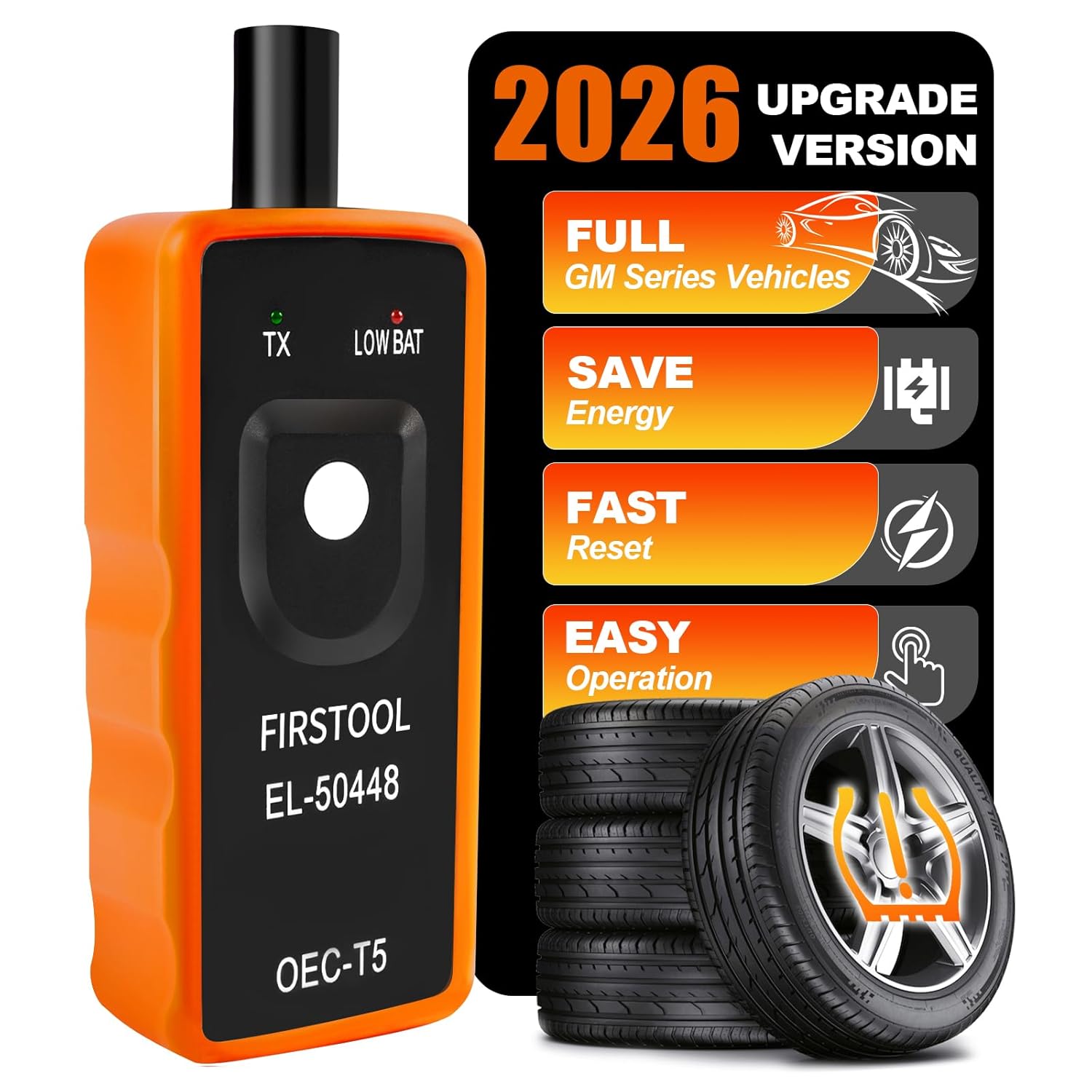
This TPMS relearn tool helps you quickly activate, match, and reset GM tire pressure sensors to keep the vehicle monitoring system working properly. It clears tire pressure alarms and dashboard warning lights after sensor replacement or tire rotation, and supports learning for common 315/433 MHz TPMS sensors. Designed for simple one-button operation, it can help you avoid unnecessary trips to repair shops.

This car emergency kit keeps essential roadside tools organized in a durable, portable bag so you can respond quickly during common driving emergencies. It includes battery jumper cables, a bright LED headlight, first aid supplies, a tire pressure gauge, and safety essentials like gloves and an emergency poncho. Designed for trunk or storage use, it helps you be prepared for dead batteries, minor malfunctions, and unexpected roadside issues.
When a Higher Load Range Makes Sense
A higher load range may be appropriate for sustained heavy cargo, towing within the vehicle’s ratings, commercial use, or severe off-road conditions where added construction is useful. It is not automatically the best choice for a lightly loaded daily driver.
More capacity than the vehicle can safely use does not increase the 4Runner’s payload or towing rating. Those limits are set by the vehicle manufacturer and include the chassis, brakes, axles, cooling system, and tires.
Daily-Driving Trade-Offs
Some LT tires have stiffer sidewalls and deeper tread than standard passenger-metric tires. Depending on the exact product and pressure, that can change ride comfort, steering feel, braking response, noise, and fuel use. Again, compare the exact tire rather than assuming every E-rated option behaves the same way.
How to Choose a Lighter Tire Without Giving Up Capability
The best MPG-friendly tire is not simply the lightest tire on the shelf. It must also fit the wheel, carry the load, clear the suspension and body, work with the TPMS, and match how you use the 4Runner.
- Verify the vehicle first. Use the VIN, model year, trim, drivetrain, door-jamb tire label, and owner’s manual. Factory packages changed significantly for 2025 and newer models.
- Match the load requirement. Choose a load index and construction that safely support the vehicle’s real use without buying unnecessary capacity.
- Compare exact weights. Use the manufacturer’s specification for the exact size and stock number.
- Keep diameter reasonable. A modest diameter change reduces gearing, clearance, and calibration complications.
- Choose tread for real terrain. A mild all-terrain often suits mixed road and trail use better than a heavy mud-terrain tire.
- Include wheel weight. A lighter wheel can offset part of a heavier tire, but strength and load rating still matter.
- Check clearance under load. Test steering lock, suspension compression, spare-tire fit, brake clearance, and chain restrictions where applicable.
Toyota equips some 2025–2026 off-road trims with factory 33-inch tires, but that does not mean the same package fits an older 4Runner without changes. Factory suspension, wheel offset, gearing, body clearance, and software calibration differ by generation and trim.
[Products Worth Considering]
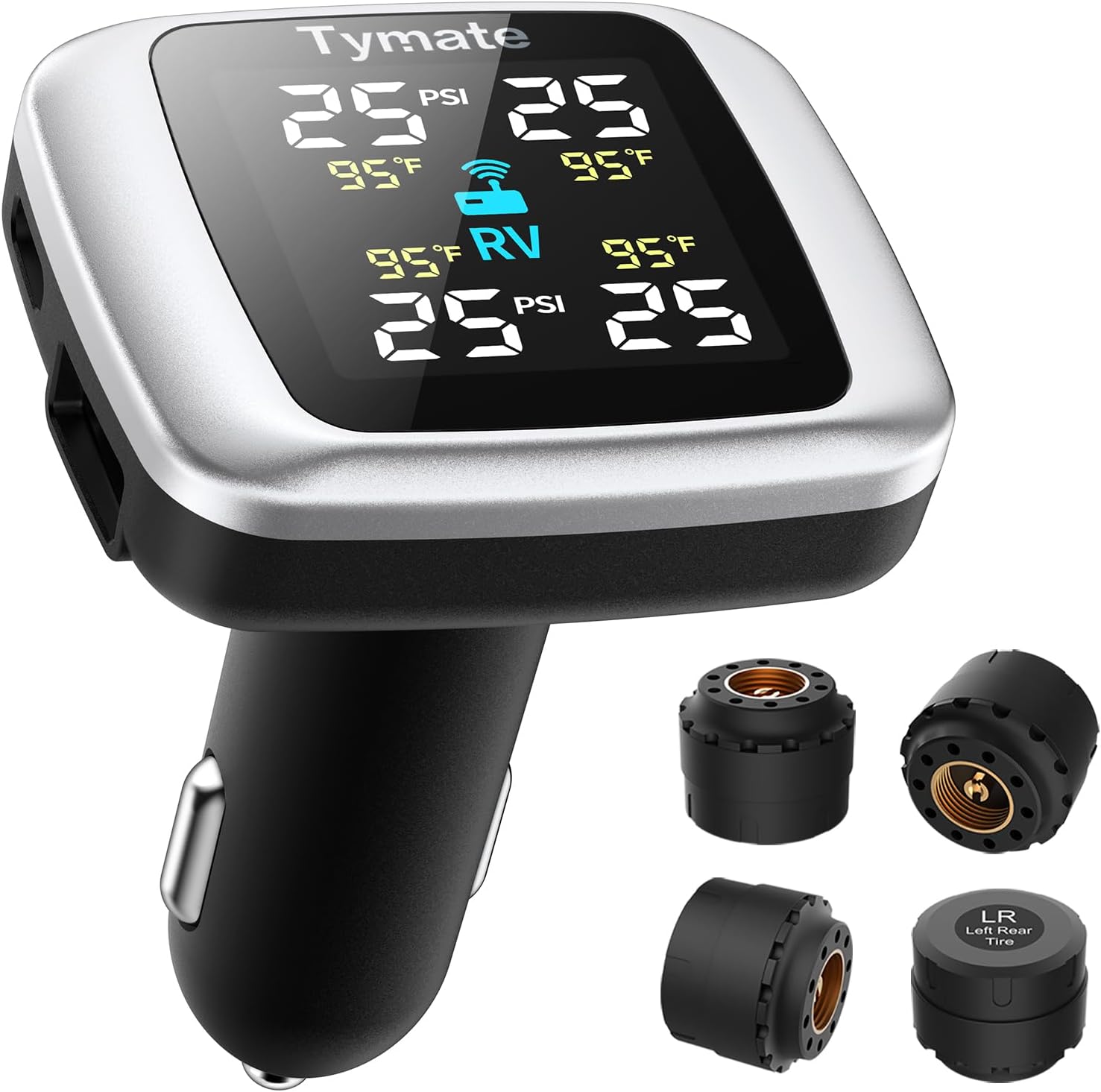
Tymate TM7 is a wireless tire pressure monitoring system that delivers real-time pressure and temperature readings for safer driving. It includes four external sensors, a bright color LCD display with adjustable backlight, and six alarm modes for high/low pressure, fast leakage, high temperature, and sensor signal or battery issues. The system covers a wide 0–144 PSI range and plugs into your vehicle’s cigarette lighter socket for quick DIY setup.

Measure tire tread depth quickly and accurately with this LUMITECO dial gauge that reads in 1/32" increments up to 14/32". The color-coded green/yellow/red zones make it easy to judge tire wear and know when replacement is needed. A rugged, compact design with a protective pouch helps keep the gauge ready for use on cars, trucks, motorcycles, and more.
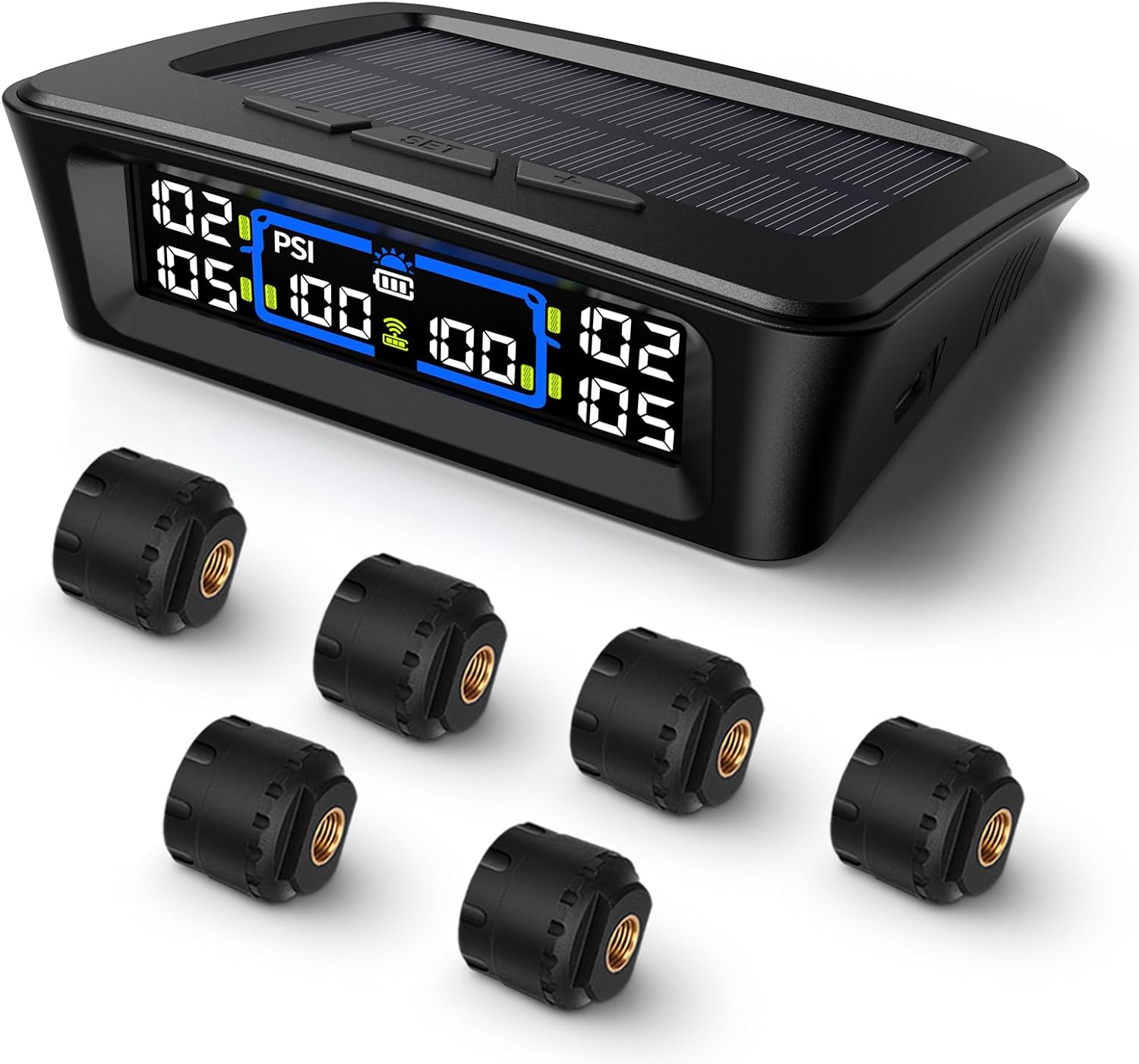
The Tymate TM12 RV TPMS delivers real-time tire pressure and temperature monitoring with a stable 433Hz display for safer long-distance driving. It supports simultaneous monitoring across vehicle and trailer zones, includes six alarm modes for pressure, temperature, leakage, battery, and signal loss, and features easy DIY installation with auto calibration. Power is supplied via USB-C charging or solar recharging, with a wide 0–144 PSI range and up to 50 ft signal coverage for RVs and towable trailers.
How to Protect MPG After a Tire Change
- Check cold pressure monthly. Use the correct target pressure, not the tire’s sidewall maximum.
- Keep the vehicle aligned. Toe error can increase scrub and wear.
- Balance the assemblies. Vibration wastes energy and can damage tires and suspension parts.
- Recalibrate when needed. Correct the speedometer, odometer, TPMS settings, and navigation tire-change calibration where supported.
- Rotate on schedule. Even wear helps maintain predictable rolling behavior.
- Remove unrelated drag. Roof racks, cargo, lifts, and high speed can hide or magnify the tire-related change.
- Track several tanks. Use corrected distance and comparable driving conditions.
Frequently Asked Questions
How much does tire weight affect MPG on a Toyota 4Runner?
There is no dependable MPG-per-pound rule. More tire and wheel mass increases acceleration energy, but rolling resistance, diameter, tread, pressure, route, and calibration also affect the result. A same-size swap may produce a small change, while a larger aggressive LT package is more likely to create a noticeable loss.
Do 285/70R17 tires always reduce 4Runner MPG?
They do not reduce MPG by the same amount on every 4Runner. The result depends on the original size, tire weight, tread, rolling resistance, wheel weight, pressure, gearing, model year, powertrain, and whether the speedometer and odometer were corrected.
Are E-rated tires always heavier than C-rated tires?
No. Load range describes load-and-pressure capability, not a guaranteed tire weight. Some C- and E-rated versions of the same tire and size weigh the same, while other products differ. Check the exact manufacturer stock number.
Should E-rated 4Runner tires be inflated to 80 PSI?
No. A sidewall pressure is tied to the tire’s maximum-load specification and is not a universal operating target. Follow the door placard for the factory tire size. For an aftermarket LT size, use a qualified tire professional and the correct load tables to set cold pressure.
Can larger tires make the MPG reading inaccurate?
Yes. A taller tire travels farther per revolution. Without recalibration, the vehicle may underreport speed and distance, which can make hand-calculated MPG appear lower. Use a supported calibration or correct distance with manufacturer revolutions-per-mile data.
Conclusion
Heavier tires can lower 4Runner MPG, but the original “pounds equal a fixed MPG loss” idea is too simple. The full tire-and-wheel package, rolling resistance, diameter, tread, pressure, calibration, model year, and driving conditions determine the result. Choose the lightest properly rated tire that fits your real use, verify the exact specifications, and measure several corrected tanks before judging the change.
Sources
- NHTSA TireWise — replacement tire sizing, load safety, pressure, rotation, and maintenance guidance.
- U.S. Department of Energy: Fuel-Economy Tips — the fuel-economy effect of proper tire inflation.
- Toyota: 2026 4Runner — current-generation powertrains, EPA highway estimates, and factory 33-inch tire packages on selected trims.
- Toyota 4Runner Owner’s Manual: Tire-Change Calibration — larger or smaller tire diameters can affect systems that use tire-rotation data.
- Nitto Ridge Grappler Specifications — exact tire weight, dimensions, load, and pressure data by stock number.
- SAE Technical Paper 810168 — measured relationship between tire rolling resistance and vehicle fuel consumption.