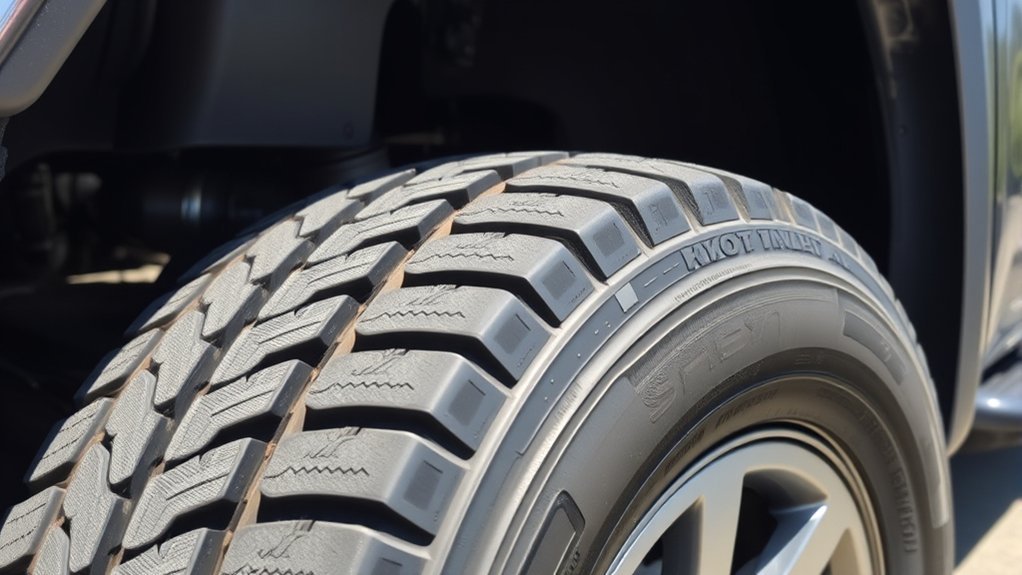
Uneven wear on your Toyota Tundra’s passenger front tire is a warning sign, but the tread pattern alone does not prove that the truck needs an alignment. Incorrect tire pressure, missed rotations, wheel imbalance, damaged wheels, worn steering or suspension parts, and altered ride height can produce similar wear. Start by comparing tread depth across all four tires, then verify pressure and inspect the front end before replacing parts.
Quick Answer
Uneven wear on a Toyota Tundra’s passenger front tire most often comes from incorrect toe or camber, wrong cold tire pressure, missed rotations, wheel imbalance, or worn steering and suspension parts. Read the tread pattern first, check pressure at the door placard, and get a measured alignment and front-end inspection.
Key Takeaways
- Wear on one shoulder usually points toward alignment, suspension, mounting, or cornering forces rather than pressure alone.
- Feathered or sawtooth tread commonly indicates an incorrect toe setting.
- Use the cold pressure printed on the driver-door tire placard, not a generic PSI range or the tire’s sidewall maximum.
- An alignment cannot restore tread that has already worn away. It only helps prevent the pattern from continuing.
- Inspect wheel balance, bearings, shocks, bushings, ball joints, and tie rods if alignment or pressure does not explain the wear.
At a Glance
| Time Required | 10–20 minutes for the initial pressure and tread inspection; professional diagnosis time varies. |
| Difficulty | Easy for visual checks; professional equipment is required for accurate alignment, balance, runout, and bearing tests. |
| Tools Needed | Accurate tire-pressure gauge, tread-depth gauge, flashlight, and a way to record measurements. |
| Cost | The home inspection costs nothing if you own the gauges. Alignment or repair cost depends on the measured fault. |
Warning: Stop normal driving and have the tire inspected immediately if you see exposed cords, a bulge, deep cuts, rapid air loss, severe vibration, or tread worn flush with the wear bars. Do not inspect wheel play while the truck is supported only by a jack.
Common Signs of Uneven Tire Wear on Tundras
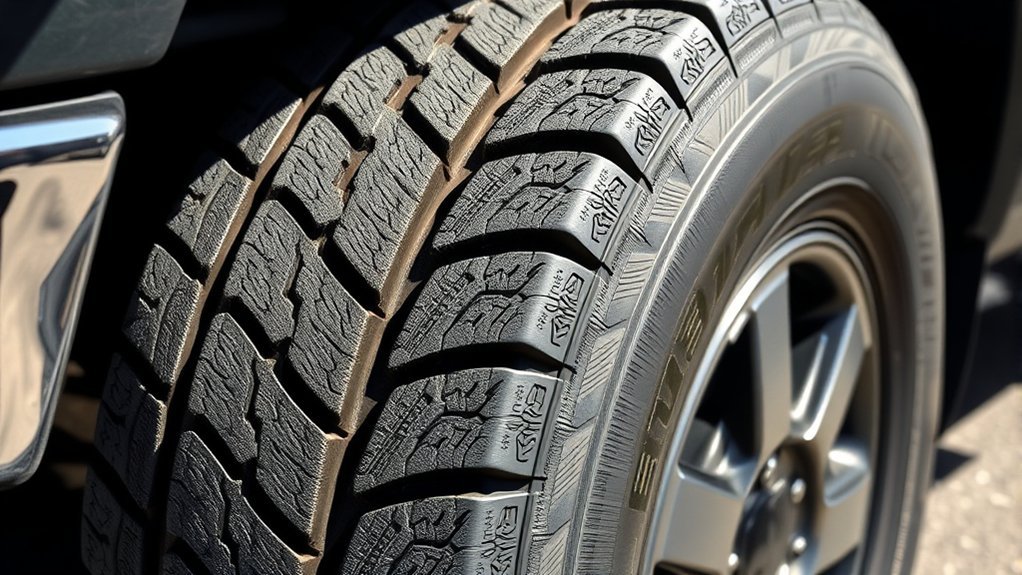
Inspect the passenger front tire under good light and compare it with the driver-side front tire and both rear tires. Measure the inner shoulder, center, and outer shoulder at three points around each tire. A difference that keeps increasing between rotations shows that the underlying cause is still active.
Run your hand lightly across the tread in both directions. A smooth surface in one direction and sharp tread-block edges in the other is called feathering or sawtooth wear. Michelin identifies this pattern as a common sign of incorrect toe alignment. Never place your hand near exposed steel cords or sharp tire damage.
| Wear pattern | Likely causes | Next check |
|---|---|---|
| Outer or inner shoulder only | Camber, toe, worn suspension parts, hard cornering, mounting, or altered ride height | Alignment printout and steering/suspension inspection |
| Both shoulders | Pressure too low for the vehicle and load, overloading, or extended low-pressure driving | Cold pressure, leaks, load, and placard specification |
| Center tread | Pressure too high for the load, tire construction, or drive-tire torque effects | Cold pressure and correct tire application |
| Feathered or sawtooth edges | Incorrect toe or looseness in steering and suspension parts | Toe measurement and front-end inspection |
| Cupped or scalloped patches | Wheel imbalance, worn shocks, bearing looseness, runout, or damaged wheel | Balance, wheel runout, shock, hub, and bearing tests |
| One isolated flat spot | Hard braking, tire damage, prolonged storage, or brake fault | Tire and brake inspection |
How to Diagnose Passenger Front Tire Wear
1. Measure and Record the Tread
Measure the inner, center, and outer portions of every tire. Record the readings and mileage instead of relying on appearance alone. This shows whether the passenger front tire is wearing faster across the whole tread or only on one shoulder.
If the tread is already at the wear bars, has exposed material, or has a severe difference across its width, have a tire professional decide whether it remains safe to rotate or use.
2. Check the Cold Tire Pressure
Check all four tires before driving or after the truck has been parked for at least three hours. Inflate factory-size tires to the cold pressure shown on the driver-door tire-and-loading label. Do not use the maximum pressure molded into the tire sidewall as your everyday target.
If your Tundra has non-factory tire sizes or a different load range, ask a qualified tire professional to confirm the pressure needed to support the vehicle and expected load. Do not assume that a higher-load-range tire should always be inflated to its sidewall maximum.
3. Review the Rotation History
Toyota’s 2026 Tundra Warranty and Maintenance Guide schedules maintenance every 5,000 miles or six months, whichever comes first, and lists tire rotation at each 5,000-mile interval in its chart. Check the guide for your exact model year because schedules and rotation procedures can differ.
A missed rotation can leave the front tires carrying steering and braking forces in the same position for too long. Rotation may distribute future wear, but it cannot replace tread that is already gone or correct a mechanical fault.
4. Request a Measured Alignment
Ask the shop for a before-and-after printout showing left and right toe, camber, and caster. The values must match the specifications for your Tundra’s model year, configuration, tire size, ride height, and suspension setup.
Tell the technician about curb strikes, potholes, collisions, lift or leveling kits, aftermarket upper control arms, new springs, towing, or persistent steering pull. These details can change the inspection order or explain why the alignment cannot be centered with the existing parts.
5. Inspect Steering, Suspension, and Wheel Parts
An alignment should not be performed as a substitute for repairing loose or damaged parts. Have the technician inspect the ball joints, tie-rod ends, control-arm bushings, shocks, wheel and tire runout, wheel balance, hub bearing, steering components, and wheel condition.
If the tire makes a humming or grinding noise that changes during turns, or if the wheel has measurable looseness, the hub bearing needs closer inspection. Tire wear alone cannot confirm a failed bearing.
Pro Tip: Photograph each tire and record three tread-depth readings before every rotation. Your measurements will show whether the repair stopped the wear instead of forcing you to judge by memory.
How Proper Alignment Extends Tire Longevity
Wheel alignment positions the tires at the angles specified by Toyota. Correct alignment helps the tread contact the road evenly and supports stable steering. The three main alignment angles affect the truck differently:
- Toe: Describes whether the front edges of the tires point slightly inward or outward. Incorrect toe scrubs the tread sideways and often creates feathering.
- Camber: Describes the inward or outward tilt of the wheel when viewed from the front. Excessive positive or negative camber can wear one shoulder.
- Caster: Describes the steering-axis tilt when viewed from the side. Caster mainly affects straight-line stability, steering return, and pull rather than directly causing a simple shoulder-wear pattern.
Alignment prevents new abnormal wear, but it cannot rebuild tread that has already been scrubbed away.
After alignment, remeasure the tread at regular intervals. If the passenger front tire continues to lose tread faster than the others, return with the printout and measurements. The remaining cause may be a worn component, wheel or tire runout, imbalance, load condition, or alignment that shifts while driving.
[Products Worth Considering]

The Ziopetru adjustable magnetic wheel alignment tool helps you check and restore camber and caster positioning after removing and reinstalling undercarriage components. With a clear leveling/bubble measurement system and an easy zeroing adjustment knob, it supports precise horizontal angle checking. The strong magnetic base mounts to metal surfaces for convenient use at home on cars, motorcycles, trucks, vans, and SUVs.

Measure tire tread depth quickly and accurately with this LUMITECO dial gauge that reads in 1/32" increments up to 14/32". The color-coded green/yellow/red zones make it easy to judge tire wear and know when replacement is needed. A rugged, compact design with a protective pouch helps keep the gauge ready for use on cars, trucks, motorcycles, and more.

Monitor tire tread wear with a smart, color-coded depth gauge that shows clear condition ranges at a glance. The bar is range marked for fast, easy readings, helping you maintain safer traction and performance. Each gauge is portable with a pocket clip, and the set includes 20 units for daily use and sharing.
How to Adjust Driving Habits to Reduce Tire Wear
A Tundra is heavy and can place substantial force on its front tires during braking and cornering. Smooth steering, gradual braking, and controlled acceleration reduce tread scrub and heat. Repeated fast right turns can increase load on the passenger-side front tire, but driving style should not be blamed before pressure, alignment, and suspension are checked.
Avoid hitting curbs, potholes, and road edges when possible. Have the alignment inspected after a hard impact if the steering wheel moves off-center, the truck starts pulling, or new wear appears.
Stay within the vehicle’s payload and axle limits. Heavy cargo, trailer tongue weight, accessories, and uneven loading can change ride height and tire loading. Secure the load and follow the pressure and loading instructions for your exact truck and tires.
Why Tire Pressure Matters for Your Truck
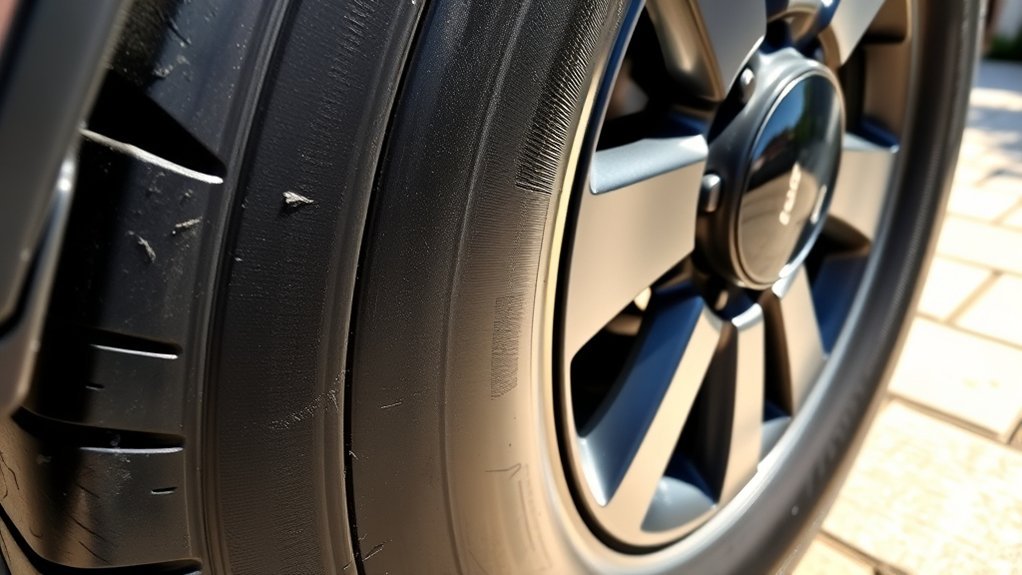
Correct pressure helps each tire support its share of the vehicle’s load, maintain its intended shape, and keep the tread in stable contact with the road. Incorrect pressure can shorten tread life, affect handling, and increase heat.
Optimal Pressure Levels
Your Tundra does not have one correct pressure that applies to every year, trim, tire, and load. Use the recommended cold pressure on the driver-side tire-and-loading label when the truck has the specified factory-size tires.
NHTSA recommends checking all tires, including the spare when applicable, at least monthly while cold. TPMS is a warning system, not a replacement for regular gauge checks, because the warning may not appear until a tire is already significantly underinflated.
Impact on Tire Longevity
Pressure that is too low for the load can flex the sidewalls excessively and increase wear toward both shoulders. Pressure that is too high for the load can concentrate wear toward the center. Real-world patterns may also be influenced by alignment, wheel position, tire construction, load, and driving conditions, so pressure should be measured rather than diagnosed only from appearance.
Handling and Stability Effects
Incorrect pressure can change steering response, braking, traction, and heat buildup. Check pressure before towing, carrying a heavy load, or taking a long trip. Follow the vehicle and tire guidance for the actual load rather than adding air without a load-based reason.
Note: Pressure normally rises after driving as the tire warms. Do not release air from a warm tire simply to return it to the cold specification.
Identifying Suspension Problems That Lead to Uneven Tire Wear
Loose or damaged steering and suspension parts can allow the wheel angle to change while the truck moves. A static alignment may look acceptable, yet the tire can still scrub under braking, bumps, or turns.
Ask for a front-end inspection if you notice any of these symptoms:
- Clunking over bumps or during braking
- Steering wander or delayed response
- A steering wheel that will not stay centered
- Excessive bouncing after a bump
- Cupped or scalloped tread
- Humming or grinding that changes while turning
- Visible cracking, displacement, or looseness in bushings or joints
- Alignment readings that cannot be adjusted into specification
Common inspection points include ball joints, tie rods, control-arm bushings, shocks, wheel bearings, hubs, steering components, wheels, and tires. A bent wheel, damaged steering knuckle, or excessive wheel runout can also create irregular wear and vibration.
If the truck has a lift or leveling kit, confirm that the parts and alignment range suit the final ride height. Correcting only toe may not solve the problem if camber, caster, component travel, or damaged adjustment hardware remains outside specification.
[Products Worth Considering]

The Topeak SmartGauge D2 delivers precise digital tire pressure readings for bikes, motorcycles, and sports equipment up to 250 psi (17 bar). Its rotating SmartHead works with both Presta and Schrader valves, so you can check pressure quickly without adapters. The LCD display makes it easy to read results in psi, bar, or kg/cm² with an included CR2032 battery for immediate use.

The SAFELIFE dial tire tread depth gauge measures tread depth in 1/32 inch increments with clear, easy-to-read 2-inch dial face. Color zones using a traffic light system help you quickly judge whether tread is low, marginal, or ample for safer driving. Built with a durable zinc cast body and a metal detect probe for precise, comfortable use across cars, motorcycles, trucks, and buses.

This universal wheel alignment tool helps you accurately restore tire tilt angles after tire or suspension repairs using an adjustable camber gauge. It features a powerful magnetic base that firmly attaches to brake rotors for stationary, slip-free readings, improving consistency during measurement. Built from durable PC plastic, it resists wear and corrosion and is compact enough for car, truck, RV, and motorcycle alignment tasks.
Specific Maintenance Tips to Prevent Tire Wear
- Check cold tire pressure at least monthly and before towing or carrying a heavy load.
- Use the driver-door placard for factory-size tires rather than a generic 36–42 PSI range.
- Follow the tire-rotation interval and pattern in your exact model-year Toyota guide.
- Inspect and record inner, center, and outer tread depth during every rotation.
- Request an alignment check when the truck pulls, the steering wheel sits off-center, or one edge begins wearing faster.
- Have wheel balance checked when vibration develops or when new tires are installed.
- Inspect steering and suspension parts before aligning a truck with looseness, noise, or unstable handling.
- Choose replacement tires with the correct size, load capacity, wheel compatibility, and intended use. Do not select Load Range E only as a cure for uneven wear.
- Recheck tread measurements after repairs to confirm that the wear rate has stabilized.
[Products Worth Considering]

Accurately measure tire tread depth with a calibrated gauge marked from 0 to 1 inch in 1/32 inch increments. The color-coded bar helps you quickly identify tread condition ranges, supporting safe driving for trucks, motorcycles, automobiles, and passenger vehicles.

Milton S-921 pencil tire pressure gauge helps you maintain optimal tire pressure for passenger cars with accurate readings in PSI and kPa. It features a built-in deflator valve for convenient pressure adjustments, plus a single chuck head and nylon indicator bar for easy use on the go. Built from durable plated brass and designed for reliable performance, it’s a practical road trip and cold-weather maintenance tool.

These aluminum alloy tire valve stem caps with an O-ring seal help protect valve stems from corrosion while adding a clean, stylish look to your vehicle. The universal fit works across cars, trucks, motorcycles, bicycles, and more, making them an easy upgrade for everyday driving and off-road use. Installation is quick, and the included four-pack keeps all your tires dressed and protected.
Frequently Asked Questions
What’s the worst year for a Toyota Tundra?
Toyota and government safety agencies do not designate one official “worst” Tundra year. Reliability rankings depend on the problem, data source, mileage, maintenance, and number of vehicles studied. For tire wear, diagnose the individual truck’s pressure, alignment, tires, wheels, and suspension instead of relying on a model-year label.
What is the most common problem with a Toyota Tundra?
No reliable source establishes one universal problem across every Tundra generation and trim. For uneven front-tire wear, the first checks should be cold pressure, tread measurements, rotation history, alignment, wheel balance, and steering or suspension condition.
Could a bad wheel bearing cause uneven tire wear?
Yes. Excessive hub or bearing looseness can let the wheel move and contribute to irregular wear. A failing bearing may also produce humming, grinding, vibration, or noise that changes during turns. Tire wear alone cannot confirm the diagnosis, so the hub and bearing should be measured by a technician.
Why does only the passenger front tire wear on the outside?
Possible causes include excessive positive camber, incorrect toe, worn bushings or joints, altered ride height, mounting issues, frequent hard right turns, or an impact that shifted the alignment. Compare both front tires and request a full printout rather than adjusting one angle by guesswork.
Will an alignment fix a tire that is already worn unevenly?
An alignment can stop or slow additional abnormal wear when incorrect wheel angles caused the problem. It cannot restore missing tread. A tire professional should decide whether the remaining tread is safe and whether the tire can be rotated or must be replaced.
Can tire rotation correct uneven wear?
Rotation can redistribute future wear after the underlying cause is corrected. It does not repair damaged tread, fix alignment, balance a wheel, or tighten worn suspension parts. Severe shoulder wear, exposed cords, bulges, or unsafe tread depth require professional evaluation before rotation.
Conclusion
Uneven wear on a Toyota Tundra’s passenger front tire deserves a measured diagnosis rather than a quick pressure or alignment guess. Compare tread depth, set factory-size tires to the placard’s cold pressure, review the rotation history, and obtain a complete alignment and front-end inspection. Correct the cause before installing new tires, then track tread measurements to confirm that the repair worked.
Sources
- Toyota 2026 Tundra Warranty and Maintenance Guide — scheduled maintenance and tire-rotation intervals.
- Toyota: Wheel Alignment and Why It Matters — toe, camber, caster, stability, and even tire wear.
- National Highway Traffic Safety Administration: TireWise — cold pressure, placard guidance, tread inspection, rotation, and tire safety.
- Michelin: Sawtooth or Feathered Tread Edges — feathering and toe-related alignment problems.
- Michelin Tire Care FAQs — one-sided wear, inflation, alignment, suspension, and tire-inspection guidance.