
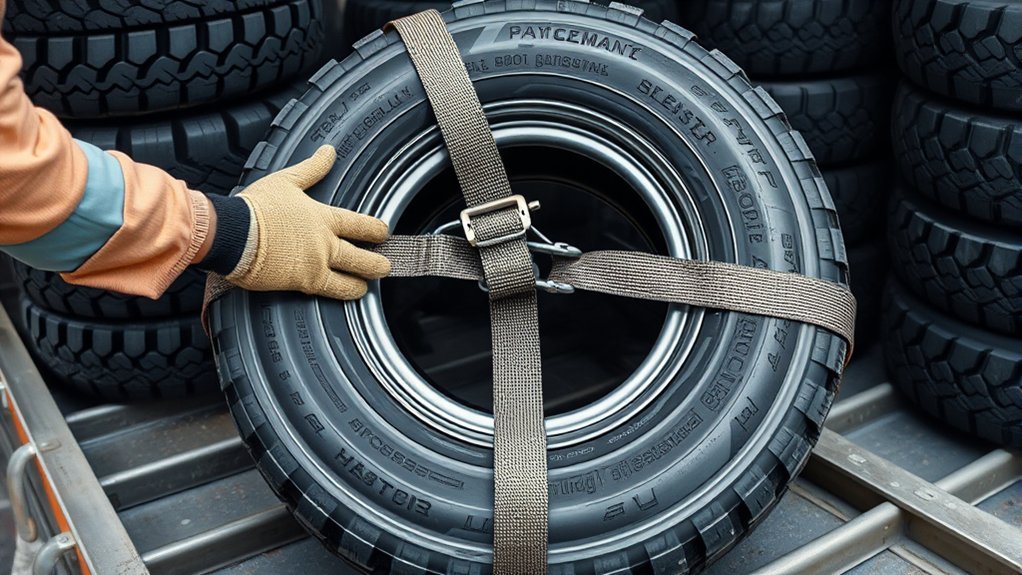
Loose tires can roll, slide, or bounce during a sudden stop, so simply placing them in a truck bed or trailer is not enough. You need to position the tires securely, block rolling movement, use rated vehicle anchor points, and tighten suitable ratchet straps from more than one direction. This guide covers safe transport and storage for both mounted and unmounted passenger tires.
Quick Answer
To tie down tires, place them in a compact stack or stable cradle, block any rolling movement, and secure them to rated vehicle anchor points with undamaged ratchet straps. Use at least two opposing restraints for practical redundancy, tighten without deforming the tires, shake-test the load, and recheck it after driving.
Key Takeaways
- Use properly rated ratchet straps and sound factory anchor points. Never exceed the vehicle, anchor, or strap limits.
- Block or cradle upright tires so they cannot roll, even if straps temporarily lose tension.
- A low, compact stack is usually easier to control than several loose upright tires in a pickup bed.
- Federal commercial tiedown rules depend on cargo length, weight, blocking, and strap routing. They are not a universal formula for private pickups.
- Store mounted tires stacked or hung. Store unmounted tires upright in a clean, cool, dry indoor location.
At a Glance
| Time Required | About 15 to 30 minutes for a typical set of four passenger tires |
| Difficulty | Easy to moderate |
| Tools Needed | Rated ratchet straps, gloves, non-slip mat, wheel chocks or a cradle, and approved vehicle anchor points |
| Cost | No added cost if you already own suitable straps and blocking equipment; otherwise the cost varies by rating and quality |
Choose the Best Tire Tie-Down Method
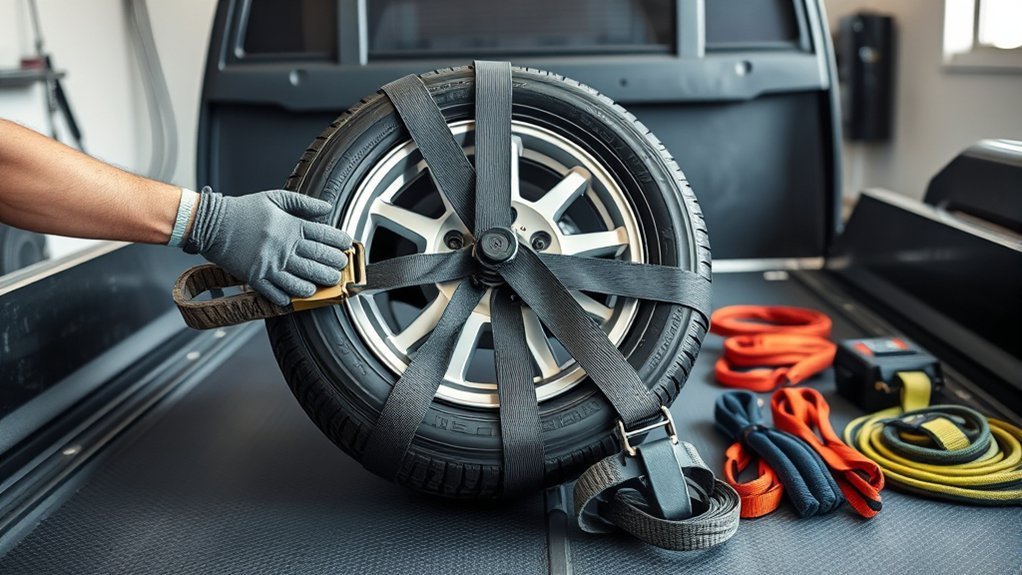
The safest arrangement depends on whether the tires are mounted on wheels, how many you are moving, and whether you are using a pickup bed, utility trailer, van, or enclosed cargo area. Your goal is to prevent forward, rearward, sideways, vertical, and rolling movement.
[Products Worth Considering]

ROBLOCK rubber wheel chocks help prevent vehicle rolling with a non-slip grip for trucks, trailers, RVs, and small aircraft. The chocks include three yellow reflective strips to improve visibility in low-light parking and outdoor use. Lightweight and portable design makes them easy to place in front of or behind a tire during camping, loading, or maintenance.

Secure your load with this 4-pack reflective ratchet tie down strap set designed for towing and transporting cars, trucks, and UTVs. The reflective polyester webbing helps improve nighttime visibility, while the ratchet with chain anchors and D-rings provides dependable tensioning. Heavy-duty build offers a high break strength for added confidence, and the included storage bag makes it easy to organize and carry.

Secure your vehicle during transport with this 4-pack of heavy-duty tire tie down straps designed for trailers and hauling. The ratchet system with flat hooks and D-rings helps you tension the straps quickly, while the wheel-friendly design protects tires. With high break strength and corrosion-resistant hardware, these straps provide reliable, confidence-inspiring tie-down security for cars, trucks, and UTVs.
Flat Stack in a Pickup Bed
For a normal set of passenger tires, a low stack lying flat is often easier to control than several loose upright tires. Center the weight between the vehicle’s sides and keep the stack as low as possible. Place a clean non-slip mat below the stack, then secure it to proper bed anchor points from opposing directions.
You may position the stack near the front of the bed to reduce movement, but do not rely on the front wall or closed tailgate as the only restraint. The straps must still hold the tires if you brake, turn, or hit a bump.
Upright Tires
Upright tires need a cradle, chocks, secure blocking, or another method that physically prevents rolling. Group the tires tightly together and restrain them both across the group and toward the vehicle floor. Do not leave gaps that allow individual tires to gain momentum.
Mounted Wheel-and-Tire Assemblies
Mounted assemblies are heavier and may contain delicate wheel finishes, valve stems, and tire-pressure sensors. Use soft strap sleeves or suitable padding where necessary. Do not route hooks or abrasive webbing against valve stems, sharp wheel edges, brake components, or painted surfaces.
Load security is separate from choosing a tire that matches your driving style and location. Make sure each tire remains safe to reinstall after transport.
Warning: Do not rely on bungee cords, a loose tarp, the tailgate, tire weight, or friction alone. Bungee cords can stretch or release, while a tarp contains lightweight debris but does not replace a rated tiedown system.
Clean and Inspect Tires Before Securing
Clean tires are easier to inspect, handle, label, and store. Wash off road grime, salt, mud, and brake dust with water and a mild tire-safe cleaner. Avoid petroleum-based dressings or harsh solvents, then let each tire dry completely before bagging or storing it.
Inspect the full tread, sidewalls, beads, and mounted wheels. Look for:
- Bulges, bubbles, deep cracks, or exposed cords
- Cuts, punctures, damaged beads, or separated rubber
- Uneven or excessive tread wear
- Bent or cracked wheels
- Loose debris embedded in the tread
- Leaking valve stems or visible pressure loss on mounted assemblies
A tire with serious structural damage should not be treated as safe for reuse simply because it survived transport. Isolate it from tires you plan to reinstall and have a qualified tire professional inspect it.
Mark each tire’s former position, such as front left or rear right, before storage. This makes future rotation and reinstallation easier. Inflation checks apply only to tires mounted on wheels. An unmounted tire has no operating storage pressure. Before reinstalling mounted tires, set them to the pressure specified by the vehicle manufacturer.
If inspection shows that replacement is necessary, compare tread life and overall value rather than judging a tire by tread appearance alone.
Pro Tip: Label both the tire position and the vehicle it came from. Similar-looking tires from different vehicles may have different sizes, load ratings, wear patterns, or wheel offsets.
Strap Tires Down for Transport
Use the following sequence to secure a typical set of tires in a pickup bed or trailer. Heavy commercial loads, oversized tires, and specialized carriers may require additional equipment or professional procedures.
- Park on a level surface. Apply the parking brake, switch off the engine, and keep unnecessary people away from the loading area.
- Check the vehicle limits. Confirm that the tires, wheels, straps, and other cargo will not exceed the vehicle payload, axle ratings, trailer rating, or hitch rating.
- Inspect the anchor points. Use factory or professionally installed cargo anchors. Do not hook straps to plastic trim, thin sheet metal, tailgate cables, or an unidentified bracket.
- Inspect each strap. Reject straps with cuts, melted fibers, heavy abrasion, damaged stitching, bent hooks, corrosion, a faulty ratchet, or an unreadable rating when a known rating is required.
- Position the tires. Use a low flat stack where practical. If the tires remain upright, place them in a secure cradle or block them so they cannot roll.
- Route opposing restraints. Run the straps through the tire openings or over the load so they pull downward and toward strong anchor points. Use different directions so one strap limits forward and rearward movement while another limits sideways movement.
- Protect the webbing. Remove twists and use edge protection wherever the strap could rub against a sharp or abrasive surface.
- Tighten evenly. Remove slack gradually from each strap. The tires should not move, but you should not tighten so hard that you deform the tire, damage a wheel, or overload an anchor point.
- Lock and secure the ratchets. Close each ratchet handle fully and tie back loose strap tails so they cannot flap, tangle, or contact the road.
- Perform a shake test. Push and pull the load from several directions. If any tire rolls, lifts, slides, or separates from the group, reposition it and add restraint.
- Recheck the load. Inspect the straps after a short initial drive and at every safe stop. Stop immediately if you hear movement, rattling, or strap noise.
The working load limit is not the same as the strap’s breaking strength. Follow the strap manufacturer’s instructions and never exceed the rating of the weakest strap, hook, anchor point, rack, trailer, or vehicle component.
For U.S. interstate commercial motor vehicles, 49 CFR 393.106 requires cargo likely to roll to be restrained by chocks, wedges, a cradle, or an equivalent method. It also requires the aggregate working load limit to be calculated under the regulation and to equal at least one-half the cargo weight. These federal rules do not replace state requirements for private vehicles.
If the tires show different wear patterns after transport or storage, review their consistent wear and have alignment or suspension concerns checked before reinstalling them.
NHTSA reports that crashes involving objects in the road kill about 850 people and injure nearly 19,000 people each year. A tire that leaves a vehicle can become a severe road hazard.
[Products Worth Considering]

MaxxHaul solid rubber wheel chocks provide dependable vehicle stabilization for cars, trucks, trailers, and RVs across driveways, slopes, garages, and campsites. The molded non-slip traction surface helps prevent tire movement on pavement, gravel, and smooth floors, while the solid rubber resists cracking, crushing, deformation, and weather wear. A built-in handle enables quick, tool-free placement and removal for convenient use in all seasons.

This professional wheel and rim brush kit makes it easy to lift brake dust, grime, and dirt from wheels and tires without scratching finishes. The brushes feature soft, metal-free wool heads and a flexible 360-degree rim brush design for reaching hard-to-clean areas. Includes multiple brush types plus accessories for thorough car, motorcycle, and general vehicle detailing.

The Kurgo Seasonal Tire Tote helps protect your car interior, clothes, and garage from tire grime, brake dust, and residue during seasonal tire changes. Its universal design fits most passenger tires between 22" and 31" in diameter, making storage and transport simpler with less mess. Built for rugged, repeated use, it’s machine washable for easy care and comes with a lifetime warranty.
Store Tires in a Cool, Dry Place
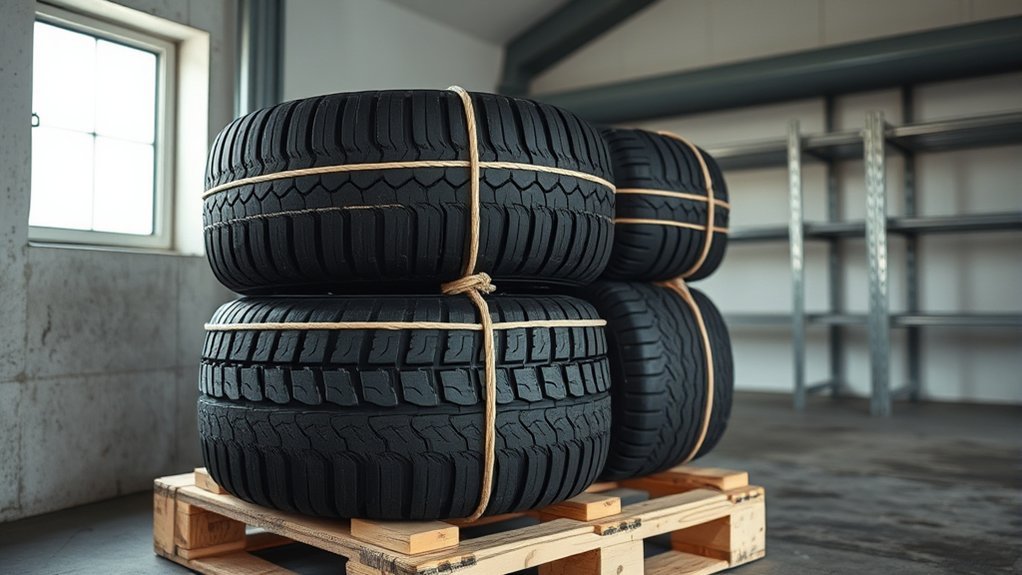
According to the U.S. Tire Manufacturers Association, tires should be stored in a clean, cool, dry, well-ventilated location away from direct sunlight, temperature extremes, petroleum products, corrosive substances, and ozone-producing equipment.
Keep tires away from gasoline, oil, solvents, battery chargers, generators, electric motors, welding equipment, hot pipes, flames, and sharp objects. Make sure the tires are fully dry before placing them in storage.
[Products Worth Considering]

This 7-piece car wheel brush kit delivers gentle, scratch-free cleaning with extra-soft, metal-free brush heads designed to lift brake dust, dirt, and grime. The brushes bend up to 360 degrees for hard-to-reach wheel areas, while the included tire shine applicator pad helps apply tire dressing evenly with less build-up. An organizer bag is included for convenient storage, making it ideal for regular wheel and tire detailing.

Secure your trailer or RV tires with a scissor-style wheel chock stabilizer that applies opposing force to help prevent wheel shift. It fits tight wheel gaps from 3.5 inches up to 12 inches and works for travel trailers, campers, fifth wheels, toy haulers, and heavy-duty trucks. The surface uses new electrophoretic technology to help prevent rust for reliable travel use.
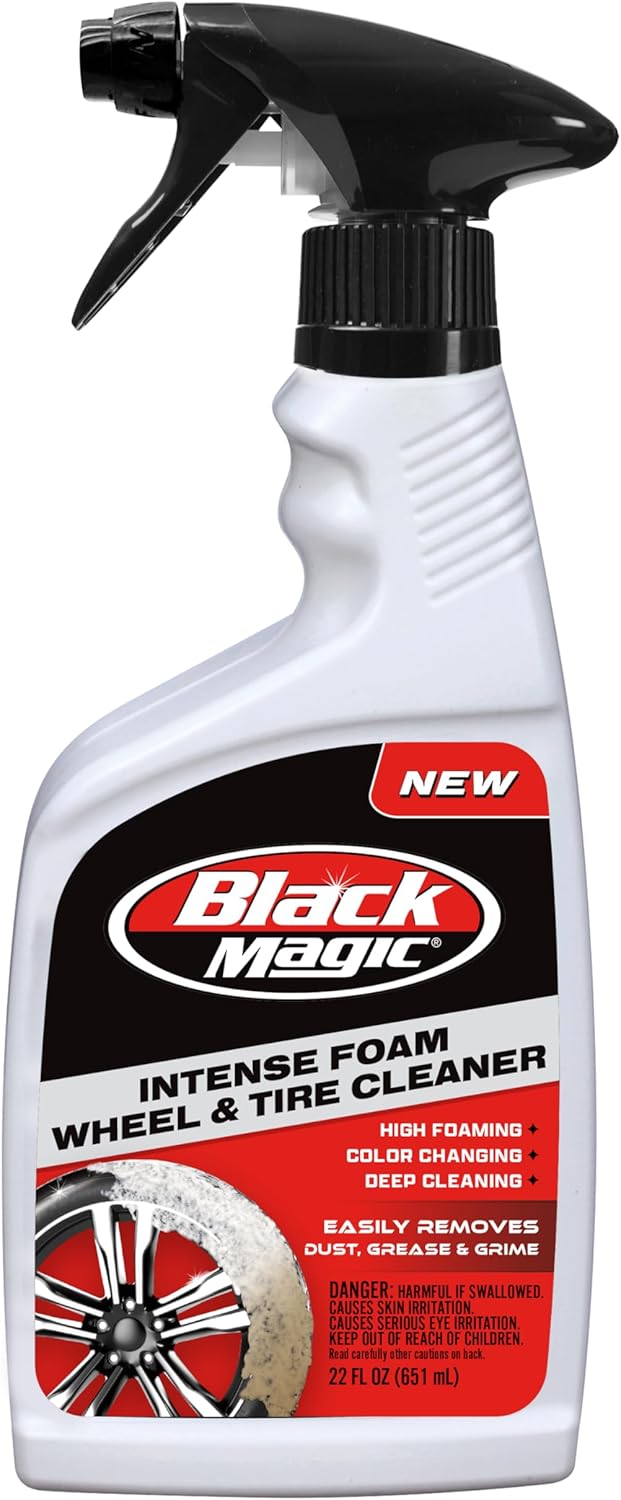
Black Magic Intense Foam Wheel & Tire Cleaner uses a high-foaming action to lift away dirt, grime, and brake dust without scrubbing. The color-changing formula helps show contaminants being dissolved as foam turns from white to brown. Safe for all wheel types and even wheel wells, it leaves a like-new, slick finish with a fresh cherry scent.
How to Store Tires Mounted on Rims
Mounted tires can be stacked flat or hung securely by the wheel. Do not suspend the assembly by the rubber tire itself. Keep the stack stable, avoid placing unrelated heavy objects on top, and protect finished wheel surfaces from scratching.
Check the tire or vehicle manufacturer’s pressure guidance before storage and again before reinstallation. Always restore the vehicle manufacturer’s recommended cold inflation pressure before driving.
How to Store Unmounted Tires
Store unmounted tires standing upright on their tread. Do not hang them, and avoid long-term horizontal stacking because the weight can distort the lower tire or bead area. Shift or rotate their resting position occasionally during long storage periods.
Using Storage Bags
A clean, dry tire may be placed in a sealed plastic tire bag to reduce exposure to air and ozone. Remove as much air as practical before closing the bag. Never seal a wet tire, because trapped moisture can encourage corrosion on mounted wheels and create poor storage conditions.
Temporary Outdoor Storage
Indoor storage is preferable. If tires must remain outside briefly, raise them off the ground and use a waterproof cover with ventilation openings. Do not leave them in direct sunlight or wrap wet tires under a non-ventilated tarp.
Label seasonal sets clearly, especially when storing dedicated winter tires that must return to the correct vehicle and wheel position.
Check Local Tire Transport Laws
NHTSA states that all 50 U.S. states and Washington, D.C. have laws covering unsecured loads. The details and penalties vary, so drivers using private pickups or trailers should check the rules for every state or jurisdiction on their route.
Federal Motor Carrier Safety Regulations mainly govern qualifying commercial motor vehicles. They should not be presented as a universal tiedown formula for every private pickup. However, they provide useful safety principles for immobilizing rolling cargo, choosing suitable tiedowns, and checking working load limits.
| U.S. interstate CMV situation | General minimum under 49 CFR 393.110 when cargo is not blocked forward |
| Article 5 feet or shorter and 1,100 pounds or lighter | At least one tiedown, plus compliance with all other securement requirements |
| Article 5 feet or shorter and heavier than 1,100 pounds | At least two tiedowns |
| Article longer than 5 feet but no longer than 10 feet | At least two tiedowns, regardless of weight |
| Article longer than 10 feet | Two tiedowns for the first 10 feet, plus one for each additional 10 feet or fraction |
| Article blocked against forward movement | At least one tiedown for each 10 feet of length or fraction |
Review the complete text of 49 CFR 393.110 before applying these commercial rules. Commodity-specific regulations, employer procedures, local laws, and vehicle instructions may impose additional requirements.
Legal load securement also does not replace routine checks for tire longevity and maintenance before the tires return to service.
Before Driving and Unloading
- Confirm that the tailgate, trailer gate, doors, and latch systems are fully closed.
- Check that straps cannot contact the exhaust, wheels, suspension, driveshaft, road surface, or sharp edges.
- Make sure no tire blocks lights, the license plate, mirrors, or the driver’s view.
- Verify the load again after a short initial drive and during every safe stop.
- Reduce speed and avoid abrupt steering, braking, or acceleration.
- When unloading, park level and release strap tension slowly.
- Stand clear of upright tires and compressed loads while opening the ratchet.
- Never cut a tensioned strap unless an emergency procedure specifically requires it and the load has been safely supported.
Frequently Asked Questions
How do you properly store unmounted tires?
Clean and dry the tires, then store them standing upright on their tread in a cool, dry, clean indoor location. Keep them away from sunlight, heat, ozone-producing equipment, fuel, oil, and solvents. Do not hang unmounted tires or leave them stacked horizontally for long periods.
How do you secure tires in a truck bed?
Place the tires in a low, compact stack on a non-slip mat or block upright tires in a cradle. Attach rated ratchet straps to proper truck-bed anchors from opposing directions. Tighten evenly, shake-test the load, close the tailgate, and recheck the straps after driving.
How do you secure one tire?
Lay the tire flat where practical, place it on a non-slip surface, and use rated restraints that pull it down and prevent movement in more than one direction. If it must remain upright, place it in a cradle or between secure chocks before applying the straps.
How should tires be stacked for storage?
Tires mounted on rims may be stacked flat or hung securely by the wheel. Bare unmounted tires should not be stacked for long-term storage. Store them upright on their tread and shift their resting position occasionally.
How many straps do you need for tires?
A typical personal-vehicle tire load benefits from at least two opposing restraints, but the correct number depends on the load, strap routing, anchor points, vehicle, and local law. Commercial motor vehicles must follow the applicable tiedown count and working-load-limit rules in 49 CFR Part 393.
Can bungee cords secure tires for transport?
Bungee cords should not serve as the primary restraint for tires. They stretch, can lose tension, and may release unexpectedly. Use properly rated ratchet straps attached to suitable anchor points, along with blocking or chocks when the tires can roll.
Sources
- National Highway Traffic Safety Administration: Secure Your Load — unsecured-load risks, driver responsibility, and state-law coverage
- Federal Motor Carrier Safety Administration: Cargo Securement Rules — tiedown condition, securement systems, cargo movement, and edge protection
- Electronic Code of Federal Regulations: 49 CFR 393.106 — rolling restraint and aggregate working load limit requirements for applicable commercial vehicles
- Electronic Code of Federal Regulations: 49 CFR 393.110 — federal commercial tiedown-count rules
- U.S. Tire Manufacturers Association: Tire Facts — recommended tire-storage environment and substances to avoid
- Michelin: Storing My Tires — cleaning, storage bags, and mounted-versus-unmounted storage methods
Conclusion
Secure tires by controlling both sliding and rolling movement. Use proper anchor points, undamaged rated straps, blocking or a cradle, and restraints that pull from opposing directions. Check the load before departure, inspect it again after driving, and follow the laws that apply to your vehicle and route. For storage, keep tires clean, dry, indoors, and protected from sunlight, heat, ozone, oils, and solvents. Stack or hang mounted tires, but keep unmounted tires standing upright.
