
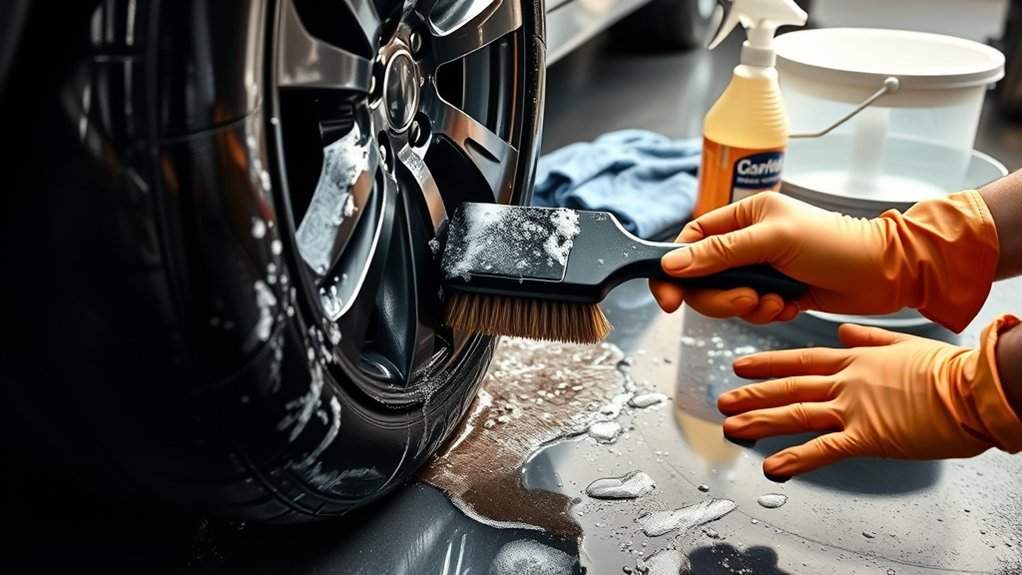
Old tire dressing can leave sidewalls slick, patchy, or unnaturally glossy. The fastest safe way to remove it is to work on cool tires, use a cleaner approved for rubber, scrub with a nylon tire brush, and rinse before the product dries. Heavy silicone buildup may need two or three passes, but stronger is not always safer.
Quick Answer
To remove tire shine fast, clean one cool tire at a time with a dedicated non-petroleum tire cleaner. Let it work only as long as the label allows, scrub the sidewall with a stiff nylon brush, and rinse thoroughly. Repeat on glossy spots instead of using household oils, solvents, or excessive drill-brush pressure.
Key Takeaways
- Work on tires and wheels that are cool to the touch and out of direct sun.
- Use a dedicated tire cleaner or a manufacturer-approved all-purpose cleaner; follow that product’s exact dilution and dwell instructions.
- Scrub with a stiff nylon tire brush first. Use a drill brush only on low speed and with light, controlled pressure.
- Rinse before the cleaner dries, inspect the sidewall, and repeat only where gloss remains.
- Avoid petroleum-based cleaners, oily household products, and dressing on the tread or brake surfaces.
At a Glance
| Time Required | 15–30 minutes for four tires; longer for layered silicone dressing |
| Difficulty | Easy |
| Tools Needed | Tire-safe cleaner, hose or pressure sprayer, stiff nylon tire brush, gloves, eye protection, and microfiber towels |
| Cost | About $10–$30 if you need to buy cleaner and a brush |
How to Remove Tire Shine Fast
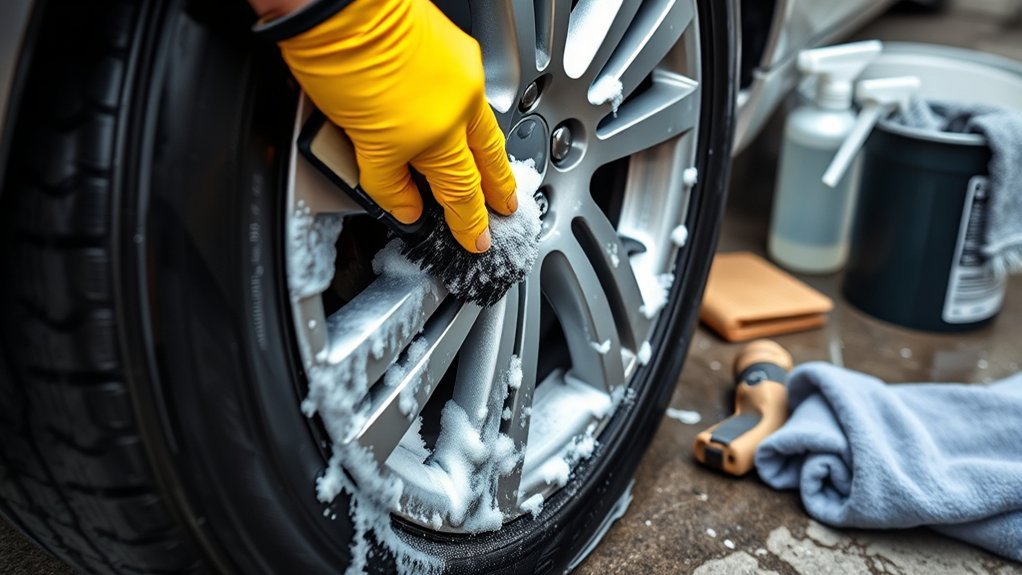
Park in the shade, allow the tires and wheels to cool, and clean one tire at a time. Rinse away loose dirt first. Spray a tire-safe cleaner evenly over the sidewall, keeping the product from drying on the rubber or wheel. Let it dwell for the label’s stated time, scrub the textured rubber and raised lettering, then rinse until the runoff is clear.
- Cool and rinse the tire. Remove loose grit that could scratch the wheel or interfere with the cleaner.
- Apply the cleaner. Cover the sidewall evenly without flooding the tread, brake rotor, or surrounding pavement.
- Allow a short dwell. Many products need only seconds to one or two minutes. Never let the cleaner dry.
- Scrub the sidewall. Use firm, overlapping passes with a nylon tire brush.
- Rinse and inspect. A clean sidewall should look evenly satin or matte when wet and remain even after drying.
- Repeat if needed. Two controlled passes are safer than one overly aggressive pass.
Warning: Wear gloves and eye protection, follow the cleaner’s label and safety data sheet, and do not mix cleaning chemicals. Keep tire dressing, oils, and slippery residue off the tread, brake parts, pedals, and walking surfaces.
For product-specific directions, Adam’s says to use its wheel-and-tire cleaner on cool surfaces, scrub the sidewall, rinse thoroughly, and prevent the cleaner from drying. Super Clean’s wheel-care instructions also call for working on cool, dry tires, allowing a short dwell, brushing if needed, and rinsing thoroughly. See the current manufacturer directions before changing concentration or dwell time.
Choose the Right Tire Cleaner
A dedicated, non-petroleum tire cleaner is the safest starting point because it is designed to remove road film, old dressing, and brown residue from rubber. Michelin advises using non-petroleum products or plain soap and water and warns that petroleum-based tire cleaners can deplete protective agents in the rubber. Choose a cleaner that is also compatible with your wheel finish, especially if the wheels are bare aluminum, polished, anodized, matte, or aftermarket.
[Products Worth Considering]

Black Magic Tire Wet delivers a deep wet-look shine that makes tires appear dark, rich, and freshly detailed. Its long-lasting formula helps resist rain, dust, and road grime for weeks of glossy protection, not days. Apply by spraying onto clean, dry tires—no buffing or wiping required—with a low-sling design to reduce splatter on paint and wheels.

This oesee 8-piece wheel care kit helps you clean, scrub, and dry wheels safely with purpose-built brushes and towels. The scratch-free microfiber wheel brush lifts brake dust and grime, while the stiff pro-grip tire brush removes tire browning and embedded dirt. A twist loop microfiber drying towel and an applicator help achieve a streak-free finish and cleaner, more even product application.

Adam’s Pro Tire Hex Grip applicators are molded foam sponges designed for precise, even tire dressing application. The ergonomic grip helps you spread product without overapplying, reducing sling that can splash onto paint and helping keep your hands clean during wheel and trim detailing. They’re durable, washable, and reusable for repeated detailing sessions.
Strong Tire Cleaners
Strong does not mean uncontrolled. Current examples include Adam’s Wheel & Tire Cleaner, Meguiar’s Non-Acid Wheel & Tire Cleaner, and Original Super Clean used according to its wheel-care directions. Meguiar’s ready-to-use D143 bottle requires no mixing, while concentrated versions and other cleaners may have different instructions.
- Best first choice: a dedicated tire or wheel-and-tire cleaner approved for your wheel finish
- For routine residue: mild soap and water or a diluted product used exactly as labeled
- For layered dressing: repeat a label-compliant cleaning cycle rather than jumping to household solvents
- For delicate wheels: protect the wheel face, spot-test, and use a separate brush for the tire
- For unknown products: check the label, technical sheet, or manufacturer directions before use
A good cleaner should loosen the coating so the brush can lift it. It should not require you to grind the sidewall, soak the tire for an extended period, or leave chemical residue behind.
Proper Dilution Ratios
Dilution ratios are product-specific. Do not copy a ratio from one cleaner to another, and do not assume that “4:1” is written the same way on every bottle. In detailing, it commonly means four parts water to one part concentrate, but the product label is the final authority.
| Cleaner type | How to mix or use it |
|---|---|
| Ready-to-use tire cleaner | Use as supplied; do not add water unless the label permits it |
| Concentrated tire cleaner | Use the dilution printed on the current label or technical sheet |
| Original Super Clean for tires | Follow the manufacturer’s current wheel instructions and confirm the ratio notation on your package |
| Plain soap and water | Use a mild automotive soap when heavy stripping power is not needed |
Start with the least aggressive label-approved strength that can do the job. If the first pass leaves a patchy gloss, rinse completely and repeat. Increasing dwell time or concentration beyond the label can stain wheels, irritate skin, or leave difficult residue.
Dedicated Rubber Cleaners
Dedicated rubber cleaners are useful because they target oily dressing, road film, and the brown surface residue often called tire blooming. Apply the product to a cool sidewall, agitate with a nylon brush, and rinse thoroughly. The goal is to remove surface contamination, not to extract every protective ingredient from the rubber.
- Foam changes from white to brown as soil and old dressing loosen
- Raised letters and fine sidewall texture become easier to clean
- Runoff becomes lighter with each pass
- The dry sidewall looks even rather than slick or blotchy
- No oily film transfers to a clean microfiber towel
Cleaning improves appearance and prepares the sidewall for a fresh tire-specific dressing, but it does not repair cracks, bulges, cuts, or aging damage. Have a tire professional inspect any structural concern.
Let the Cleaner Dwell
Dwell time gives the cleaner a chance to soften old dressing before you scrub. The correct time depends on the formula, surface temperature, and buildup. Some products call for only a brief pause; others allow one or two minutes. Follow the label and rinse immediately if the cleaner begins to dry.
Dwell Time Matters
A short, controlled dwell can reduce the amount of scrubbing needed. Work one tire at a time so you can watch the surface and keep the cleaner wet. On warm or windy days, use less product at once and rinse sooner.
- Cleaner remains visibly wet across the sidewall
- Foam begins to discolor as residue lifts
- Glossy patches soften before brushing
- The brush moves through the film without excessive force
- Rinse water carries away loosened soil
Do not let the product dry, and do not extend the dwell simply because the tire is very dirty. A second safe pass is a better choice.
Let Cleaner Work
After coating the sidewall, pause only for the time allowed by the manufacturer. Silicone-rich dressings may need repeated cleaning because the coating can sit in lettering and texture. Keep the process controlled instead of soaking the whole vehicle at once.
| Condition | Dwell approach | Next step |
|---|---|---|
| Light dressing | Use the label’s minimum recommended dwell | Brush and rinse |
| Heavy or layered dressing | Keep the cleaner wet for the label-approved time | Repeat after a full rinse |
| Warm, windy, or sunny conditions | Do not proceed until the tire is cool and shaded | Move the vehicle or wait |
Hot water is not necessary. A normal hose rinse is usually safer and easier to control. The cleaner and brush should do the work.
Scrub the Sidewall Thoroughly
Use a stiff nylon tire brush with a comfortable handle. Scrub in short, overlapping passes around the full sidewall, including grooves and raised lettering. Keep the brush on the rubber and away from delicate wheel finishes. Rinse the brush as it loads with old dressing.
The goal is an evenly clean sidewall—not a sidewall scrubbed so aggressively that lettering, finish, or rubber is abraded.
- Use enough pressure to flex the bristles, not gouge the rubber
- Pay extra attention to textured bands and raised letters
- Rinse away dirty foam before it dries
- Inspect the inner and outer sidewalls for cracks, cuts, or bulges
- Stop and seek professional inspection if damage is visible
There is no need to clean aggressively every few weeks. Wash as needed, and use mild soap and water for routine upkeep once the old dressing is gone.
Use Drill Brushes on Stubborn Buildup
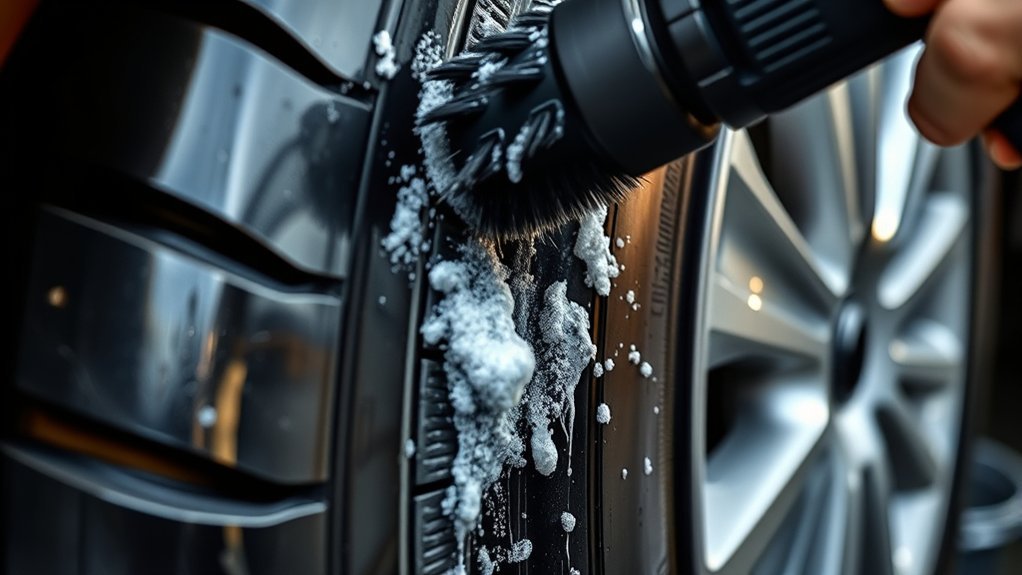
A drill brush can speed up removal on a heavily coated sidewall, but it is optional and should not be the first tool you reach for. Choose a nylon attachment intended for automotive tire cleaning, set the drill to low speed, and keep the brush flat against the sidewall. Use light pressure and constant movement.
Pro Tip: Test the drill brush on a small section first. If it scuffs raised lettering, splatters cleaner onto the wheel, or generates heat, stop and return to a hand brush.
Keep the rotating brush away from the valve stem, wheel lip, balancing weights, tread, and any damaged rubber. Do not hold it in one place. After a brief pass, rinse the tire and inspect it before continuing. Controlled agitation is faster than hand work only when it does not create new damage.
[Products Worth Considering]

P&S Dressed Tire Finish is a premium, water-based tire dressing that delivers a deep, rich high-gloss look without the greasy residue. Its polymer blend is designed to mimic the durability and shine of traditional solvent-based dressings while staying non-hazardous and eco-friendly. Apply with a brush or spray bottle for even coverage and a professional, factory-fresh finish.

Clean wheels and rims with soft feathered bristles that safely remove dirt and road grime while helping restore original luster. The short non-slip handle makes it easy to scrub in tight wheel wells, and the brush is suitable for vehicles and hard-to-reach areas. It can also be soaked and rubbed to help restore bristles to their shape after use.
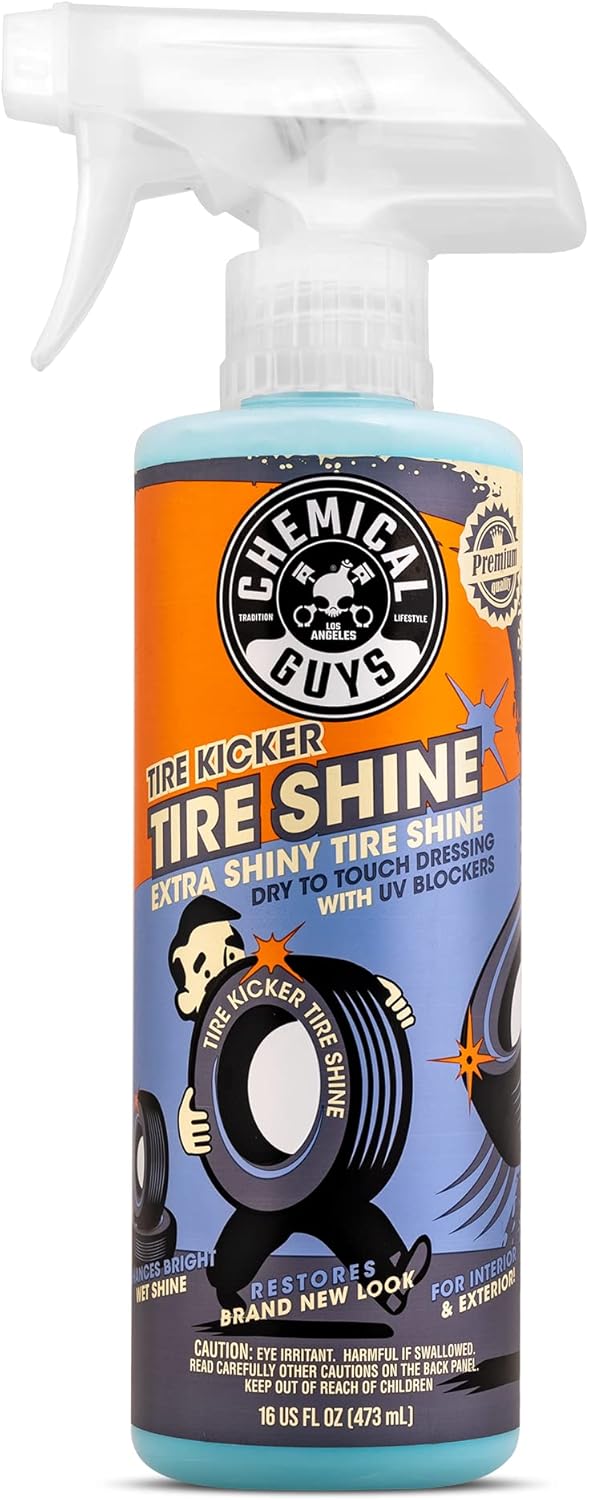
Chemical Guys Tire Kicker Sprayable Extra Glossy Tire Shine restores a deep, wet look on tires, rubber, vinyl, and plastic trim. It delivers a rich showroom shine that enhances color and luster while helping protect against fading, cracking, and discoloration. The spray application dries to the touch with a streak-free finish and no greasy sling, for fast results on cars, trucks, motorcycles, RVs, and boats.
Repeat the Cleaning if Shine Remains
If glossy patches remain after the tire dries, repeat the same safe process rather than immediately doubling the cleaner strength. Re-wet the tire, apply the product, use the label-approved dwell, scrub the affected areas, and rinse thoroughly. Layered silicone dressing may take two or three cycles.
- Let the tire dry before judging the finish
- Look for even color around the full sidewall
- Check raised lettering and textured bands for trapped dressing
- Use a clean microfiber towel to test for oily transfer
- Stop escalating once the sidewall is clean and even
A slightly satin appearance can be the natural look of the rubber. Chasing a perfectly flat black finish with stronger chemicals can do more harm than good.
Use a Strong APC for Heavy Residue
A manufacturer-approved all-purpose cleaner can help with heavy residue, but it must be used according to the current label. Super Clean’s official wheel directions say to work on cool, dry tires, apply Original Super Clean at the specified wheel-care concentration, wait briefly, brush if needed, and rinse thoroughly. Do not assume the same ratio applies to every APC.
Protect nearby wheel finishes, painted calipers, and bare metal from prolonged contact. If you are unsure whether an APC is suitable for your tire or wheel, use a dedicated tire cleaner instead. Never combine an APC with bleach, acids, solvents, or another cleaner.
Note: Cleaning the sidewall does not improve tread depth, wet grip, or tire structure. It is cosmetic maintenance. Tire pressure, tread condition, age, and damage still determine whether the tire is safe to use.
[Products Worth Considering]

Black Magic Tire Wet delivers a wet, black, glossy finish with just one quick spray. Its weather and rinse-resistant formula helps maintain shine for weeks, not days, and dries quickly to reduce sling. A self-healing formula fills small scuffs to defend the look, leaving no white, powdery residue.

Turtle Wax Hybrid Solutions Hyper Foam Wheel and Tire Cleaner uses an advanced high-foaming formula that clings to wheels and tires to dissolve tough road grime, embedded brake dust, and light iron deposits. It helps restore black tires while prepping surfaces for tire shine or protective coatings. The pH-balanced cleaner is safe for all wheel finishes and includes corrosion-repellent polymers that reduce future contaminant build-up.

This VIKING tire shine applicator brush delivers an even, precise tire dressing with ultra-soft, dense bristles that glide over lettering and raised designs. The ergonomic handle makes it comfortable to use across different tire profiles. A matching storage stand is included to protect the bristles and keep your detailing kit organized.
Why Tire Shine Comes Back
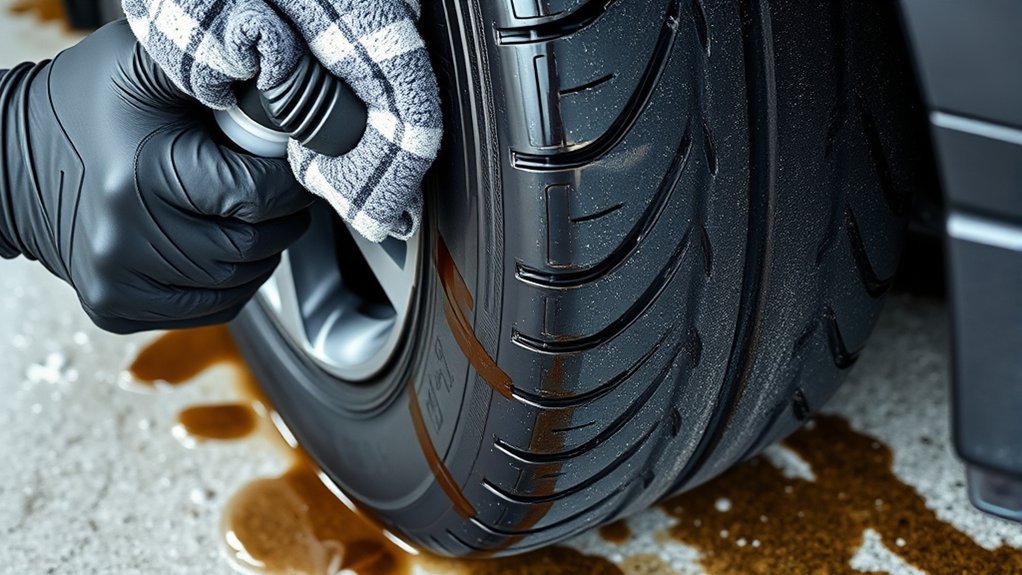
A tire can look brown or glossy again even after cleaning. One reason is leftover dressing trapped in sidewall texture. Another is road film and brake dust sticking to an oily coating. Michelin also explains that anti-ozone agents in tire rubber can migrate to the surface and leave a normal brownish dust, often called blooming. That discoloration is not automatically a tire defect.
- Old silicone dressing remains in grooves and lettering
- Fresh dirt sticks to an oily or tacky surface
- Uneven application creates shiny and dull patches
- Antiozonant migration produces normal brown surface residue
- Cleaner was not fully rinsed or the tire was dressed before it dried
Do not keep stripping the sidewall solely because mild blooming returns. Clean it with mild soap and water or a tire-safe cleaner, inspect for actual damage, and accept that some browning is a normal surface process.
Keep Tires Clean Longer
Once the old shine is removed, routine washing should be easier. Rinse road salt and chemicals promptly, wash with mild automotive soap or a tire-safe cleaner, and dry the sidewall before applying any new product. If you want a dressed look, choose a tire-specific water-based product, apply a thin coat to the sidewall only, and wipe off excess.
| Step | Action | Result |
|---|---|---|
| 1 | Rinse loose dirt | Reduces scratching and muddy foam |
| 2 | Use mild soap or tire-safe cleaner | Removes routine road film |
| 3 | Brush only as needed | Lifts residue without needless abrasion |
| 4 | Rinse and dry completely | Prevents cleaner residue and streaks |
| 5 | Apply a thin tire-specific dressing if desired | Creates an even finish with less sling and buildup |
Regular light cleaning is better than frequent heavy stripping. It keeps the sidewall presentable while reducing the need for harsh products or repeated high-pressure scrubbing.
Troubleshooting Common Problems
The Tire Still Looks Shiny After Two Passes
Allow it to dry fully before judging it. If only the lettering or textured bands remain glossy, spot-clean those areas with a hand brush. If the entire sidewall is still oily, confirm that the cleaner is intended to strip dressing and that you used the correct label dilution.
The Sidewall Turns Brown Again
Brown residue may be road film, old dressing, brake dust, or normal antiozonant migration. Wash it gently. Do not assume that stronger chemicals are required, and do not treat surface browning as proof that the tire is damaged.
The Wheel Develops Spots or Streaks
Stop using the product, rinse immediately, and consult the wheel manufacturer’s care instructions. Strong alkaline cleaners can be unsuitable for some bare, polished, anodized, or damaged finishes.
The Tire Has Cracks, Cuts, or a Bulge
Cleaning cannot correct structural damage. Do not apply dressing to hide it. Have the tire inspected promptly; a sidewall bulge or exposed cords require immediate professional attention.
Frequently Asked Questions
How do you get tire shine off tires fast?
Work on one cool tire at a time. Apply a dedicated non-petroleum tire cleaner, let it dwell only as long as the label permits, scrub with a stiff nylon tire brush, and rinse thoroughly before it dries. Repeat after the tire dries if glossy patches remain.
Will WD-40 clean your tires?
WD-40 Multi-Use Product may loosen oily residue, but it is not a good routine tire cleaner. Michelin advises avoiding petroleum-based tire-cleaning products because they can deplete protective agents in the rubber. Use plain soap and water or a dedicated non-petroleum tire cleaner instead.
What does vinegar do to tires?
Vinegar can cut some mineral film, but tire manufacturers do not generally recommend it as a standard sidewall cleaner. Its acidity can also be a concern for nearby wheel finishes. A tire-safe cleaner or mild automotive soap is the more predictable choice.
How long does it take for tire shine to wear off?
It can take several days to several weeks, depending on the dressing formula, number of coats, weather, washing, and driving conditions. A water-based dressing usually fades sooner than a durable solvent- or silicone-rich coating. Cleaning removes it faster than waiting for natural wear.
Can dish soap remove tire shine?
Dish soap may remove light, fresh dressing, but it may not strip layered silicone residue and is not designed for every wheel finish. Mild automotive soap or a dedicated tire cleaner gives more predictable results.
Can repeated cleaning damage a tire?
Frequent use of overly strong chemicals, petroleum-based cleaners, excessive dwell time, or aggressive brushing can be harmful. Follow the product label, rinse completely, and switch to mild soap and water for normal maintenance once the old coating is removed.
Should you reapply tire dressing after cleaning?
It is optional. Let the tire dry completely, then apply a thin coat of a tire-specific product to the sidewall only. Wipe off excess to reduce sling and buildup, and never apply dressing to the tread or brake surfaces.
Conclusion
To remove tire shine fast, use a tire-safe cleaner on a cool sidewall, allow only the approved dwell time, scrub with a nylon brush, and rinse before the product dries. Repeat controlled passes for stubborn buildup. Avoid petroleum-based household products, protect the wheel finish, and treat cracks, cuts, or bulges as safety issues—not cosmetic cleaning problems.
Sources
- Michelin USA Tire Care FAQs — guidance on non-petroleum cleaners, mild soap and water, and normal brown antiozonant residue.
- Adam’s Wheel & Tire Cleaner Directions — cool-surface use, brushing, rinsing, and preventing the product from drying.
- Meguiar’s Non-Acid Wheel & Tire Cleaner — current ready-to-use directions and supported surfaces.
- Super Clean Wheel and Tire Directions — one-tire-at-a-time cleaning, short dwell, brushing, and thorough rinsing.
- Michelin Visual Tire Inspection — signs of sidewall damage that require inspection.

