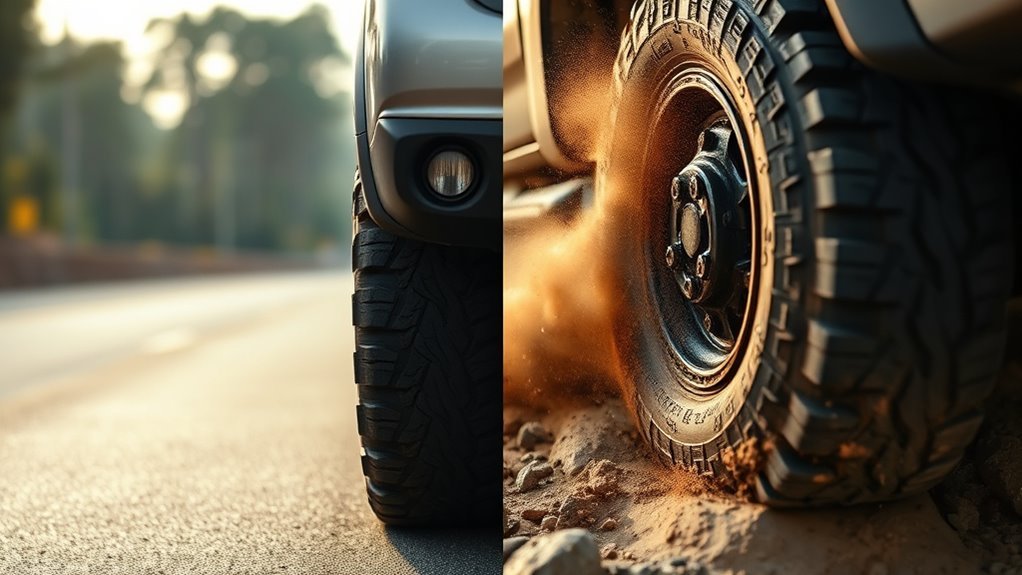
Your Toyota 4Runner can sound noticeably different when its tires move from smooth pavement to coarse asphalt, gravel, dirt, or rock. The change usually comes from the interaction between the road surface and your tire’s tread pattern. However, a new growl, rhythmic thump, vibration, or sudden increase in noise may point to uneven wear or a mechanical problem.
Quick Answer
4Runner tire noise changes because tread design, road texture, speed, inflation, wear, and loose debris affect how vibration reaches the cabin. A consistent hum from aggressive all-terrain tires can be normal. A new growl, pulsing sound, steering vibration, or noise that changes sharply while turning needs inspection.
Key Takeaways
- Aggressive all-terrain and mud-terrain tread usually produces more road hum than highway-oriented tread.
- Road texture can change both the volume and pitch of tire noise, so one road may sound much louder than another.
- Cupping, feathering, imbalance, incorrect pressure, and embedded stones can create rhythmic or irregular sounds.
- Use the cold pressure on your driver-side door placard for normal road driving, not a universal PSI recommendation.
- Stop and arrange an inspection if noise comes with grinding, loose steering, strong vibration, heat, tire damage, or an ABS warning.
Why Your 4Runner Hums on Pavement But Roars on Dirt

Your 4Runner’s tire tread repeatedly contacts, flexes against, and releases from the driving surface. Large tread blocks and wide grooves can move air and create vibration as they meet the road. That vibration travels through the wheels, suspension, body, and cabin as a hum or drone.
The sound changes when the surface changes. Smooth pavement may create a steady tone because each tread block follows a regular contact pattern. Coarse asphalt, grooved concrete, gravel, and broken pavement can create a rougher or more irregular sound. The Federal Highway Administration notes that pavement texture affects tire-pavement noise and the noise heard inside a vehicle.
Dirt and gravel do not always make tires quieter. Loose stones can strike the tread, wheel wells, skid plates, and underbody. Mud can fill tread voids, while dry gravel may create a sharp crackling sound. Speed, moisture, tire construction, vehicle load, and the exact trail surface all influence what you hear.
Note: A road that suddenly sounds louder does not automatically mean something failed. Compare the sound again on a familiar, smooth road before drawing a conclusion.
Is That Humming Normal? How to Spot Real Problems
Normal all-terrain tire noise is usually consistent and closely related to road speed and surface texture. It may become gradually louder as the tread wears, but it should not suddenly produce strong vibration, grinding, clunking, or unstable steering.
Warning: Stop driving as soon as it is safe if you find a tire bulge, exposed cords, severe pressure loss, a loose wheel, strong steering shake, grinding, smoke, or excessive heat near a wheel. Have the vehicle inspected before continuing.
Speed-Related Noise Patterns
Tire noise often rises with speed because the tread contacts the road more frequently. A steady hum that follows vehicle speed can come from the tread pattern, but speed alone cannot identify the source.
Test the sound on a safe, familiar road without making abrupt maneuvers. Note whether it changes with:
- Vehicle speed
- Road surface
- Gentle left or right curves
- Acceleration versus a steady throttle
- A recent tire rotation
- Passenger or cargo load
A rhythmic thump may point to a flat spot, damaged tire, separated belt, or out-of-round assembly. A vibration concentrated in the steering wheel may involve a front tire, wheel, balance, or suspension issue. A vibration felt mainly through the seat or floor may come from a rear tire, wheel, driveline, or another rotating component.
Tire Wear Indicators
Inspect all four tires in good light. Run your hand carefully across the tread after confirming that no sharp metal or glass is present.
- Cupping or scalloping: Alternating high and low areas can create a helicopter-like or drumming sound.
- Feathering: Tread edges that feel smooth in one direction and sharp in the other may indicate an alignment issue.
- Center wear: Excess wear near the center can be associated with incorrect inflation or an unsuitable tire setup.
- Shoulder wear: Wear on both shoulders may indicate prolonged underinflation, overloading, or frequent hard cornering.
- Embedded debris: Stones trapped in wide all-terrain grooves can click against pavement.
- Damage: Cuts, cracks, punctures, bulges, exposed cords, or tread separation require prompt professional attention.
Check pressure when the tires are cold and compare it with the Tire and Loading Information label on the driver-side door jamb. The National Highway Traffic Safety Administration recommends monthly pressure and tread checks and advises drivers to have unusual tire noise or vibration evaluated.
Bearing Versus Tire Sounds
Tire noise usually changes noticeably when the pavement changes. A worn wheel bearing may produce a hum, growl, or grinding sound that continues across different surfaces and may change as the vehicle follows a gentle curve. However, this behavior is not a conclusive driveway test.
A technician may use a lift, chassis-listening equipment, or a mechanic’s stethoscope while following proper safety procedures. Do not crawl under a running vehicle, place tools near rotating parts, or spin driven wheels on an improvised support.
Also consider the driveline. Differential, driveshaft, universal-joint, or axle problems can create sounds that change under acceleration, deceleration, or load. A technician should check these components if tire inspection, rotation, and balancing do not change the noise.
SKF’s wheel-bearing guidance lists unusual noise, vibration, and heat as warning signs that bearing integrity may be compromised.
Pro Tip: Record where the tires are mounted before rotation. If the sound moves or changes after rotation, the tires or wheels become more likely sources. If the sound stays in the same corner, inspect the hub, bearing, brake, and suspension at that location.
How Your Tread Pattern Makes 4Runner Noise Change
A tire designed for mud, rocks, and loose soil needs open spaces that can clear debris and edges that can bite into the surface. Those same features can create more air movement and vibration on pavement.
| Tread Feature | Likely Road-Noise Effect | Main Tradeoff |
|---|---|---|
| Large blocks and wide voids | More noticeable hum, air movement, and tread impact | Better clearing and bite in mud or loose terrain |
| Tightly spaced center blocks | Usually smoother and quieter on pavement | May pack with mud more easily |
| Variable block sizes and spacing | Can spread noise across different tones instead of one strong drone | Effect varies by tire model and size |
| Cupped or irregular tread | Rhythmic humming, pulsing, or drumming | Requires correction of the wear cause and possibly tire replacement |
Tire construction matters too. Load range, sidewall stiffness, tread compound, size, wheel width, and vehicle weight can affect ride comfort and noise. Compare exact tire models in your required size rather than assuming every tire within one category will sound the same.
[Products Worth Considering]

Orange Seal regular formula tubeless sealant quickly seals punctures and forms a durable bond inside your tire to help reduce flats. Made with natural latex, it adheres effectively to rubber and seals from the inside out, including the critical bead-to-rim interface for a reliable ride. It seals punctures up to 1/4 inch, slices up to 3/4 inch, and performs in temperatures as low as 11°F across MTB, road, cyclocross, gravel, and e-bike applications.

Monitor tire tread wear with a smart, color-coded depth gauge that shows clear condition ranges at a glance. The bar is range marked for fast, easy readings, helping you maintain safer traction and performance. Each gauge is portable with a pocket clip, and the set includes 20 units for daily use and sharing.
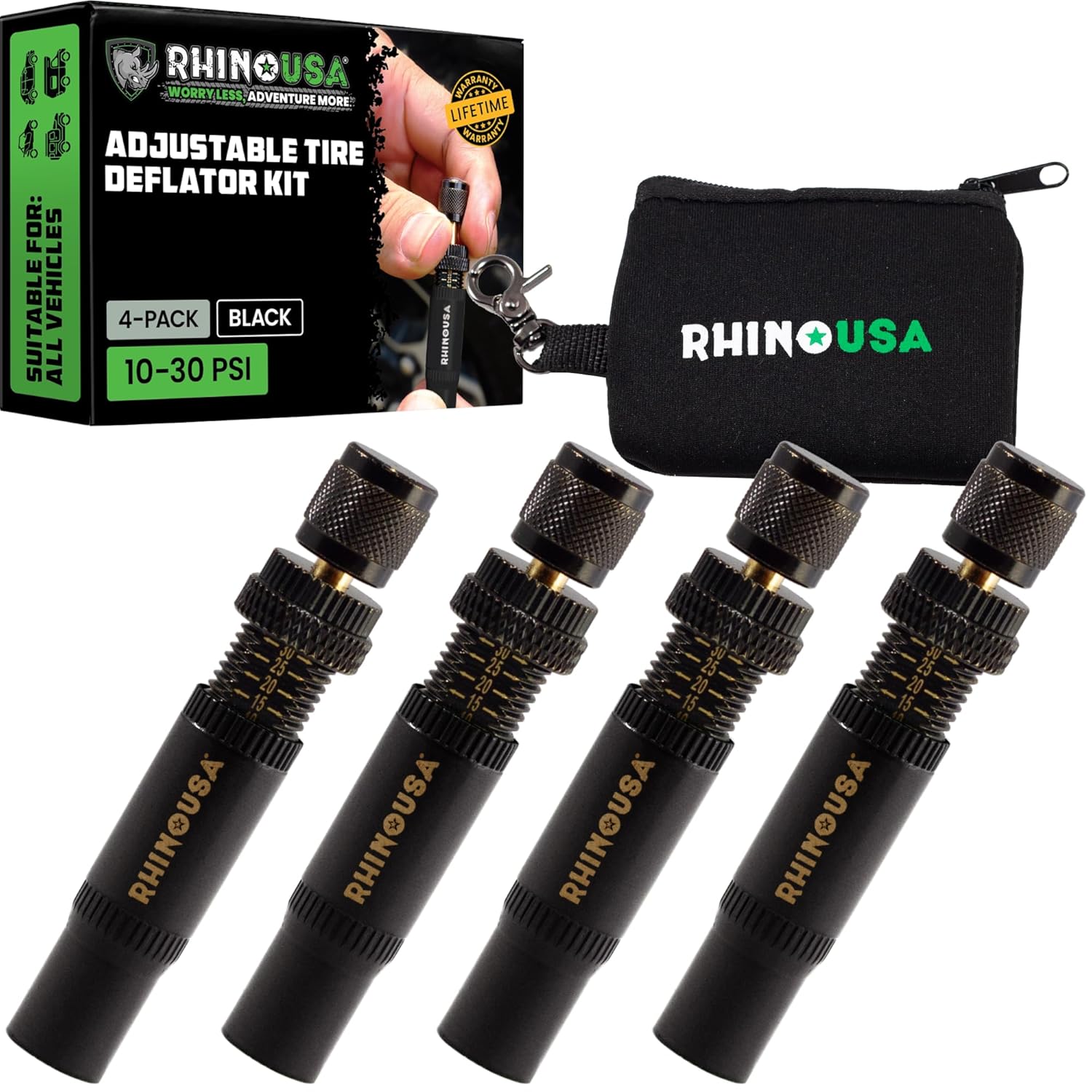
Use the Rhino USA adjustable tire deflators to air down all four tires at once by screwing one deflator onto each valve stem, letting you step away while the tires reach your preset pressure. Each deflator independently adjusts across a 10–30 PSI range with laser-etched indicators for quick setup and verification, making it ideal for beach, sand, and rocky off-road trails.
Why Trail Noise Gets Louder and What It Means for Your 4Runner
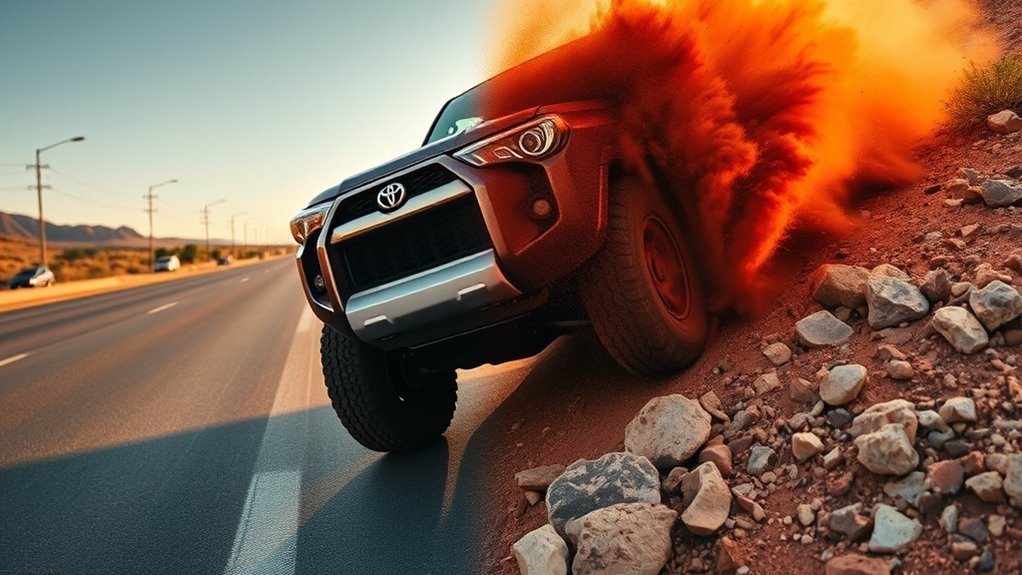
Trail noise can come from much more than the tire tread. Gravel may strike the wheel wells and skid plates. Mud can build up inside a wheel and create imbalance. Rocks may lodge between tread blocks. A loose liner, heat shield, spare-tire carrier, recovery tool, or cargo item can rattle as the suspension moves.
Cold tires may also feel firmer during the first few miles. A temporary thump after the vehicle has been parked can sometimes fade as the tires warm. A sound that remains, worsens, or comes with vibration needs inspection rather than continued testing.
More noise on a loose trail can be normal when it appears only on that surface and disappears on clean pavement. It should not automatically be treated as proof of good traction. Check the tires and underbody after the trail, especially after deep mud, sharp rocks, or a hard impact.
A familiar tread hum is usually predictable. A new sound that pulses, vibrates, grinds, or remains after the surface changes deserves inspection.
5 Ways to Cut Trail Noise Without Losing Grip
You can reduce unnecessary noise while keeping useful off-road traction. Focus on correct pressure, even wear, clean tires, an appropriate tread design, and controlled driving.
[Products Worth Considering]

Steelman white tire marking crayons provide high-contrast, semi-permanent marks for repairing and inspecting tires and equipment. They write on wet or dry, smooth or coarse surfaces including rubber, metal, glass, and wood, making them ideal for puncture location and damage outlining. The lead- and zinc-free crayons resist weather and fading yet wipe away when you no longer need the marks.

Measure tire tread depth quickly and accurately with this LUMITECO dial gauge that reads in 1/32" increments up to 14/32". The color-coded green/yellow/red zones make it easy to judge tire wear and know when replacement is needed. A rugged, compact design with a protective pouch helps keep the gauge ready for use on cars, trucks, motorcycles, and more.

Upgrade your 2024-2026 Tesla Model 3 Highland with REEVAA all-weather mud flaps designed for seamless fit along the original body lines. The set of four delivers strong splash protection against mud, gravel, and road debris while using OEM-grade durable materials. Installation is non-destructive with original hole positions and snap-in clips, and the aerodynamic design helps minimize impact on efficiency.
1. Adjust Tire Pressure Safely
Use the cold pressure on the driver-side door placard for normal road use. Do not use the maximum pressure molded on the tire sidewall as your everyday target.
Some drivers temporarily lower pressure on slow off-road routes to help the tread conform to rocks, sand, or washboard surfaces. However, a fixed 24–28 PSI target is not correct for every 4Runner. The safe setting depends on tire size, construction, wheel design, vehicle load, terrain, and speed.
If you air down:
- Use an accurate pressure gauge.
- Reduce speed and avoid abrupt steering.
- Watch for excessive sidewall bulging.
- Inspect for rim contact and sidewall damage.
- Carry a compressor capable of reinflating all four tires.
- Restore the correct road pressure before returning to normal pavement speeds.
ARB’s off-road guidance notes that useful pressure depends on the vehicle and terrain and warns that going too low can allow a tire bead to slip from the wheel.
2. Correct Rotation, Balance, and Alignment Problems
Irregular wear often becomes louder with time. Follow the rotation schedule and pattern in the manual for your exact model year and tire setup. NHTSA advises following the vehicle manufacturer’s guidance and notes that, when recommended, many tires are rotated every 5,000–8,000 miles or sooner if uneven wear appears.
Have the wheels balanced if you feel a speed-related vibration. Request an alignment inspection if the 4Runner pulls, the steering wheel is off-center, or the tread shows feathering or one-sided wear.
3. Remove Stones, Mud, and Debris
After a trail, inspect the tread grooves and remove loose stones with a suitable blunt tool while the vehicle is parked securely. Do not use your fingers around sharp debris.
Wash packed mud from the inside of the wheels. A heavy mud deposit can disturb balance and create vibration. Check wheel-well liners, skid plates, heat shields, mud flaps, and the spare-tire area for loose parts.
4. Choose a Tread Pattern That Matches Your Driving
If most of your mileage is on pavement, consider a mild all-terrain or highway-terrain tire with stable center blocks and less open spacing. Keep aggressive shoulder blocks if you still need traction on dirt, snow, or rocky trails.
If the 4Runner spends most of its time in mud or technical terrain, some pavement noise may be an acceptable tradeoff. Compare exact tires in the correct size, load rating, and speed rating. Also check whether the manufacturer publishes road-noise or comfort information for that model.
5. Control Speed and Secure the Vehicle
Higher speed can make tread impact and gravel strike more noticeable. Slow down on washboard roads, sharp rock, and loose gravel. This can reduce noise while also protecting tires, wheels, suspension, and underbody components.
Secure recovery equipment, tools, cargo boxes, the jack, and the spare-tire hardware. A loose item in the cargo area can sound surprisingly similar to a tire or suspension problem.
Quieter Tire Swaps for 4Runner Daily Driving
A tire swap can make a meaningful difference when aggressive tread is the confirmed source of the noise. Avoid choosing from category names alone. Two all-terrain tires can have very different block patterns, compounds, casing stiffness, and road manners.
| Tire Category | Typical Road-Noise Tendency | Best Fit | Main Compromise |
|---|---|---|---|
| Mud-terrain | Usually the most noticeable hum on pavement | Frequent mud, rock, or technical off-road use | Road noise, ride firmness, and possible wear tradeoffs |
| Aggressive all-terrain | Moderate to pronounced, depending on design | Mixed use with regular trail driving | More noise than a mild all-terrain or highway tire |
| Mild or touring all-terrain | Usually quieter than aggressive A/T tread | Daily driving with occasional dirt, gravel, or snow | Less clearing and bite in deep mud |
| Highway-terrain | Generally the quietest and smoothest option | Mostly paved-road use | Reduced capability in demanding loose terrain |
Before replacing a complete set, confirm that the current noise is not caused by pressure, cupping, wheel balance, alignment, a loose component, or a bearing problem. New tires will not correct an unresolved mechanical cause and may develop the same wear pattern.
[Products Worth Considering]

This ALL-TOP auto-stop tire deflator valve kit lets you air down off-road tires quickly without watching pressure, automatically stopping when your preset PSI is reached. Each valve is individually calibrated for reliable performance with an acceptable +/- 2 PSI tolerance. The adjustable deflator range covers 10 to 30 PSI and includes four valves plus valve caps and a zipper pouch for easy setup on trucks, SUVs, RVs, UTVs, and powersports.
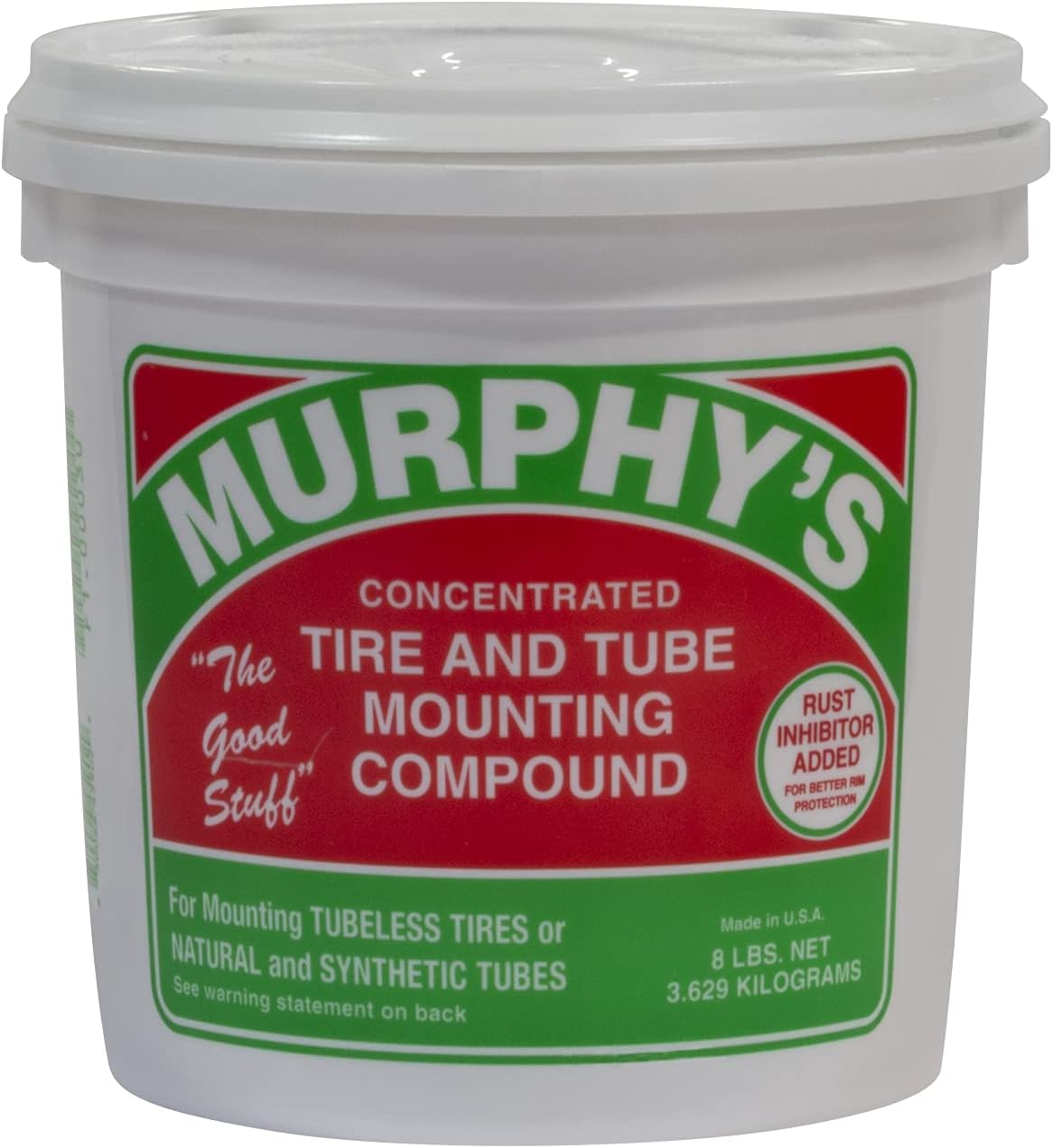
A concentrated tire and tube mounting compound designed to help simplify mounting rubber tires and tubes on passenger, semi truck, construction, and OTR applications. Its ultra-thick formula packs beads effectively and includes rust inhibitors to help protect against corrosion during use.

This professional wheel and rim cleaning brush set lifts brake dust, grime, and dirt with soft, scratch-free microfiber and synthetic wool fibers. The rim brush bends up to 360 degrees for easy access to hard-to-reach areas around spokes, lips, and faces. Ideal for thorough cleaning of car, truck, motorcycle, bicycle, RV, and more wheel and tire surfaces.
Frequently Asked Questions
Why do my tires sound different on different roads?
Roads have different textures, groove patterns, aggregate sizes, and levels of roughness. These differences change how the tread blocks flex, move air, and transmit vibration. Gravel and dirt can also strike the wheel wells and underbody, creating sounds that do not occur on clean pavement.
Is a humming sound normal with all-terrain tires?
A consistent speed-related hum can be normal, especially with large tread blocks and wide grooves. Inspect the vehicle when the sound is new, rapidly worsening, rhythmic, limited to one corner, or accompanied by vibration, abnormal wear, loose steering, grinding, or heat.
Can incorrect tire pressure make my 4Runner louder?
Yes. Incorrect inflation changes the contact patch, tire flex, heat buildup, wear pattern, handling, and vibration. Check pressure cold and use the specification on the driver-side door placard or in the owner’s manual for road driving.
How can I tell tire noise from a bad wheel bearing?
Tire noise commonly changes with the road surface and may change after rotation. Bearing noise may remain across different surfaces and can change during gentle curves as the wheel load shifts. These patterns are not definitive, so arrange a professional inspection if the sound persists or comes with vibration, looseness, grinding, heat, or an ABS warning.
What is the lawsuit against the Toyota 4Runner?
There is no single lawsuit that applies to every 4Runner or explains every tire-noise complaint. Lawsuits, recalls, and service campaigns are tied to specific allegations, components, and model years. Tire hum alone does not prove a hidden defect. Check your VIN through the official NHTSA recall lookup and ask a Toyota dealer about campaigns that apply to your vehicle.
Sources
- National Highway Traffic Safety Administration: TireWise — tire pressure, tread, rotation, alignment, noise, vibration, and replacement guidance.
- Toyota Manuals and Warranties — model-year-specific owner’s manuals, pressure information, and maintenance guidance.
- Federal Highway Administration: Pavement Surface Texture — how pavement texture influences tire-pavement and in-vehicle noise.
- ARB Off-Roading 101 — terrain-specific airing-down principles and bead-retention cautions.
- SKF Wheel-Bearing Inspection Guidance — unusual noise, vibration, and heat as possible bearing warning signs.
Conclusion
Your 4Runner’s tire sound will naturally change with tread pattern, speed, pavement texture, gravel, mud, and tire wear. A steady and familiar all-terrain hum may be normal. Focus on changes: a new rhythmic thump, growl, vibration, grinding sound, pressure loss, or noise that remains across every surface needs attention.
Start with cold pressure, tread condition, trapped debris, wheel balance, and alignment. If those checks do not explain the sound, have the wheel bearings, brakes, suspension, and driveline inspected. Choosing a tire that matches how you actually drive can reduce cabin noise without giving up the traction you need.