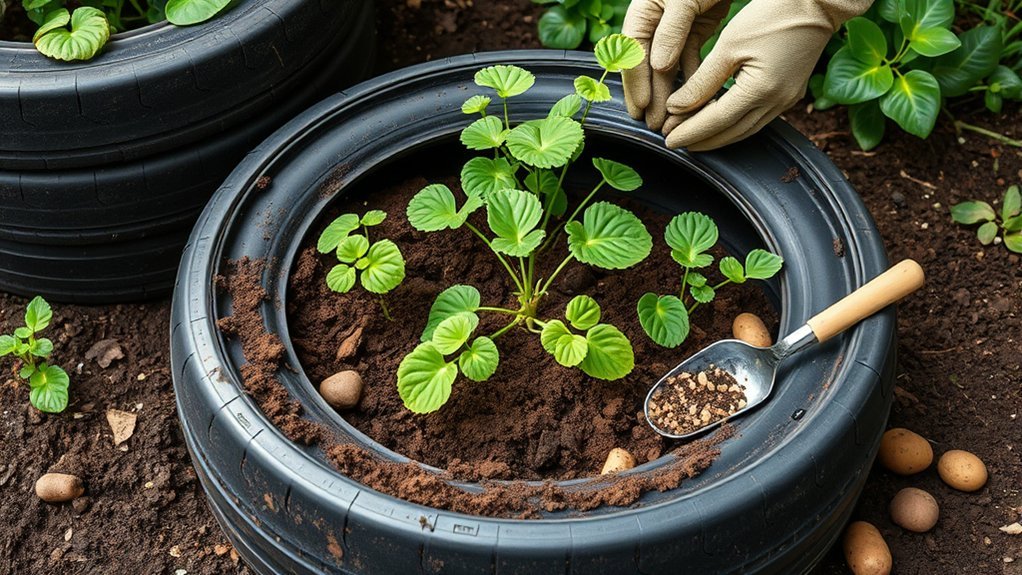
Growing potatoes in tires is a space-saving DIY method, but it needs a more careful setup than a regular container because used tires can heat up, hold water, and raise food-safety questions. If you choose this method, use a clean tire, keep the soil from touching the rubber when possible, plant certified seed potatoes, hill gradually, and harvest only sound, non-green tubers.
Quick Answer
Yes, you can grow potatoes in a stack of tires, but the lower-risk choice is a food-grade container or grow bag. If you still use tires, choose a clean, intact tire, line the growing area, add loose well-draining soil, plant certified seed potatoes, hill as shoots grow, water evenly, and harvest when the foliage dies back.
Key Takeaways
- Use tires only if they are clean, intact, odor-free, and not oily, cracked, or heavily weathered.
- For edible crops, reduce contact between soil and rubber by using a food-safe liner or placing a grow bag inside the tire.
- Plant certified seed potatoes in loose, compost-rich, well-draining soil once the soil is at least about 50°F.
- Use 2 to 3 seed pieces in a standard car tire, then add soil gradually as stems grow.
- Keep the stack evenly moist, avoid standing water, and harvest after the tops yellow, brown, and die back.
At a Glance
| Time Required | 30 to 45 minutes to set up, then about 70 to 120 days to grow depending on variety |
| Difficulty | Easy to moderate |
| Tools Needed | Clean tire, food-safe liner or grow bag, potting mix, compost, certified seed potatoes, watering can, gloves, hand trowel |
| Cost | Low if you already have a clean tire; usually $10 to $35 for seed potatoes, liner, and soil mix |
Before You Start: Tire Safety and Food-Growing Risk
Warning: Used tires are not food-grade containers. NC State Extension notes that tires contain metals and chemical additives, and the U.S. EPA warns that used tires can leach pollutants when poorly managed. For the lowest-risk edible garden, use a grow bag, food-grade bucket, or untreated raised bed instead.
If you still want to grow potatoes in a tire, treat the tire as an outer support rather than the main food-contact container. The safest practical setup is to place a heavy-duty food-safe grow bag or liner inside the tire so the soil does not sit directly against the rubber. Keep the tire on level ground, away from runoff, petroleum spills, and areas where water collects.
Reject any tire that is crumbly, cracked, oily, sticky, strongly scented, heavily weathered, or from an unknown industrial use. Do not cut or grind the tire, because that creates more exposed rubber surface and dust. When the season ends, dispose of unwanted tires through a local tire recycling or waste program instead of leaving them in the garden.
Choose a Tire and Drainage Spot
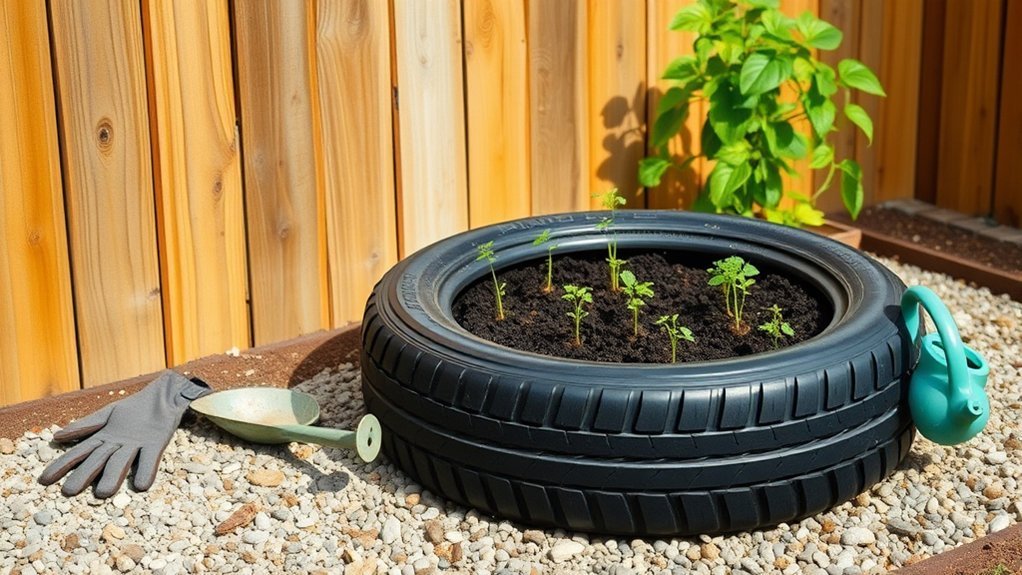
Choose one clean, intact passenger-car tire for the first layer. Set it where the plants will get at least 6 hours of direct sun, but avoid the hottest reflected-heat spots beside asphalt, brick, or metal siding. Tires can warm quickly in summer, so afternoon shade can help in very hot climates.
Place the tire on level ground with good drainage. A gravel pad, pavers with gaps, or a firm garden bed can work well because water can leave the bottom of the planter. Avoid placing a tire where rainwater sits inside the rim or around the base.
Note: Do not let tires collect standing rainwater. Stagnant water can attract mosquitoes, and waterlogged potato soil can rot seed pieces before they sprout.
[Products Worth Considering]

The Chemical Guys Gerbil Wheel & Rim Brush is designed to safely clean wheels, rims, exhaust tips, tires, and engine bay components without scratching delicate finishes. Its soft natural bristles help lift brake dust, grime, and buildup while conforming to tight spaces and intricate contours. A comfort grip handle delivers control for extended detailing sessions.

The SPTA wheel and tire brush kit makes it easy to remove dirt from wheels, rims, and hard-to-reach areas without needing a high pressure washer. Ergonomic handles and soft, chemical-resistant bristles help you clean faster while reducing the risk of scratching. The set is versatile for cars, trucks, motorcycles, bicycles, RVs, boats, and more.

This tire valve adapter kit lets you connect a 3/4-inch garden hose to tire valves to fill tires with air or liquid. It includes two adapters for standard bore and large bore valves plus a convenient bleeder valve to release trapped air. Designed for tractor tire tubes and compatible air/water valves and extensions, it’s a practical repair tool for getting back on the road or field quickly.
What You Need
- 1 to 3 clean, intact tires
- Food-safe grow bag or heavy-duty liner sized to fit inside the tire stack
- Certified seed potatoes
- Loose potting mix or garden soil blended with finished compost
- Perlite, coarse sand, or fine bark to improve drainage if the mix is heavy
- Straw or leaf mulch
- Balanced vegetable fertilizer or potato fertilizer
- Watering can or hose with a gentle spray setting
- Gloves and a hand trowel
[Products Worth Considering]
This flat-free TICONN wheelbarrow tire features durable polyurethane foam construction that never needs inflation, helping prevent punctures and reducing maintenance on rough outdoor terrain. With a 300 lb max load capacity and stable steel rim design, it supports safer transport for yard work and hauling tasks. An adapter kit with ball bearings and nylon spacers is included for easier fit and customization across common wheelbarrow and cart axle setups.

This metal-free wheel and tire cleaning brush uses dense, fluffy synthetic wool to safely clean rims, spokes, fenders, and engine areas without worrying about damaging surfaces. Its flexible, comfortable design helps you reach detailed areas while maintaining durability, and the extra absorbent fibers work well with wheel spray cleaners for faster cleanup. Reusable and washable performance helps prevent grime and build-up for cleaner vehicles and easier maintenance at home.
Tymate TM7 is a wireless tire pressure monitoring system that delivers real-time pressure and temperature readings for safer driving. It includes four external sensors, a bright color LCD display with adjustable backlight, and six alarm modes for high/low pressure, fast leakage, high temperature, and sensor signal or battery issues. The system covers a wide 0–144 PSI range and plugs into your vehicle’s cigarette lighter socket for quick DIY setup.
Prep Seed Potatoes and Soil Mix
Start with certified seed potatoes, not grocery-store potatoes. Certified seed is less likely to bring disease into your container. Choose varieties that match your climate and harvest goal: early types are good for small containers and quick harvests, while maincrop types need more time and space.
[Products Worth Considering]

Clean wheels and rims with soft feathered bristles that safely remove dirt and road grime while helping restore original luster. The short non-slip handle makes it easy to scrub in tight wheel wells, and the brush is suitable for vehicles and hard-to-reach areas. It can also be soaked and rubbed to help restore bristles to their shape after use.

Cristal Products Untouchable Tire Shine Spray delivers a deep, wet-look gloss that enhances your vehicle’s tires. It’s quick-drying and spreads smoothly for consistent, streak-free coverage, while forming a protective coating against UV rays, road grime, and weather. Suitable for all tire types, it helps restore dull, faded tires to a showroom-quality finish.

These lavender steam eye masks provide a warm, self-heated compress to relieve eye fatigue, dryness, and puffiness while helping reduce the look of dark circles. The mask releases fine moist steam for a relaxing 20 to 30 minute eye spa experience that can be used at home, in the office, or while traveling. Soft, elastic ear hooks help it fit comfortably for naps, sleep, or screen-time breaks.
Choosing Seed Potatoes
Use firm seed potatoes with healthy eyes and no soft spots, mold, or rot. If the tubers are small, plant them whole. If they are large, cut them into pieces about 2 ounces each, with at least one strong eye per piece. Let cut pieces heal in a cool, airy place for a day or two before planting if conditions are damp.
Mixing Potting Soil
Potatoes grow best in loose, fertile, well-drained soil. For a tire planter, mix 2 parts quality potting mix or loose garden soil with 1 part finished compost. If the mix feels dense, add perlite, coarse sand, or fine bark so water drains freely and roots can spread.
Do not pack the soil down hard. Potatoes need air spaces in the growing medium, and compacted soil can lead to poor tuber shape, weak roots, and wet pockets.
Moistening Before Planting
Moisten the soil before planting so it feels like a wrung-out sponge. It should hold together lightly when squeezed but should not drip water. Plant when the soil is at least about 50°F and not cold, sticky, or waterlogged.
Pro Tip: If spring soil is slow to warm, place the empty tire and soil mix in the sun for a few days before planting. Check moisture before planting because dark tire walls can dry the mix faster than a normal bed.
Plant Seed Potatoes in the First Tire
Place the lined tire on its final site before filling it. Add 4 to 6 inches of prepared soil mix to the bottom. For a standard car tire, plant 2 to 3 seed potato pieces. For a very large tire or wide container, 4 pieces may fit, but crowding reduces airflow and can lead to smaller tubers.
Set Seed Pieces Eyes Up
Place each seed piece with the eyes facing up. Space the pieces evenly so each plant has room to grow. Cover them with 2 to 4 inches of soil mix, then water gently until the mix is evenly moist.
Keep the Top Open and Draining
Do not fill the whole stack at planting time. Potatoes benefit from gradual hilling as stems grow. Leave space above the first soil layer so you can add more mix later without burying all the leaves.
Stack Tires as Plants Grow
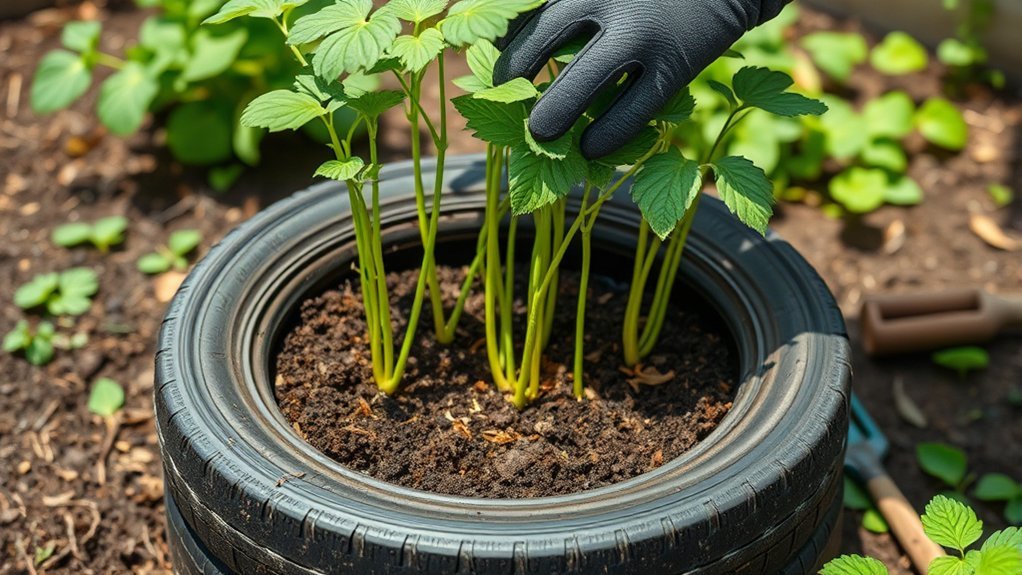
When the potato shoots reach about 6 to 8 inches tall, add several inches of soil around the stems, leaving the top leaves exposed. This is called hilling or earthing up. Hilling potatoes helps keep developing tubers covered so they do not turn green from light exposure.
Add the second tire only when the plants are tall enough to need more hilling space. Continue adding soil in stages, never burying the whole plant. For most home setups, one to three tires total is enough. Very tall stacks are harder to water evenly and can become hot, dry, or compacted.
The goal is not to build the tallest stack possible. The goal is to keep stems supported, tubers covered, and the soil evenly moist.
Water and Feed Your Tire Garden
Keep the soil evenly moist from sprouting through tuber formation. Potatoes generally need about 1 to 2 inches of water per week, but tire planters can dry faster than garden beds. Check moisture by pushing a finger 2 inches into the soil. If it feels dry at that depth, water deeply.
Avoid frequent light sprinkling. Water slowly so moisture moves down through the stack, then let excess water drain out. Uneven watering can cause knobby, cracked, or poorly formed potatoes.
Feed lightly. If your potting mix already contains compost, use a balanced vegetable fertilizer or potato fertilizer at label rate after plants are established. Avoid heavy nitrogen feeding because it can create lush leaves while delaying tuber growth.
Mulch the top with straw, shredded leaves, or clean untreated grass clippings to reduce drying and moderate heat. Keep mulch loose around stems so air can still move.
Fix Common Tire-Growing Problems
If your tire potato bed struggles, check moisture, heat, drainage, and plant health first. Small containers change quickly, so catching stress early matters.
- Shoots fail to emerge: the seed pieces may have been planted in cold, wet soil or rotted. Replant with firm certified seed pieces in warmer, better-drained soil.
- Plants wilt in hot weather: the tire may be overheating or drying out. Add mulch, water deeply, and consider afternoon shade.
- Leaves yellow early: check for soggy soil, nutrient shortage, or natural maturity. If the plant is still young, improve drainage and feed lightly.
- Leaves have holes or orange egg clusters: inspect for Colorado potato beetles and remove eggs or larvae by hand when possible.
- Dark spots or blighted leaves appear: remove badly affected foliage, water at soil level, improve airflow, and avoid saving tubers from diseased plants for seed.
- Tubers are green: they were exposed to light. Do not eat green potatoes; hill more carefully next time.
- Soil smells sour: the stack is too wet. Stop watering until the mix dries slightly, and improve drainage before continuing.
Harvest Potatoes From the Tire Stack
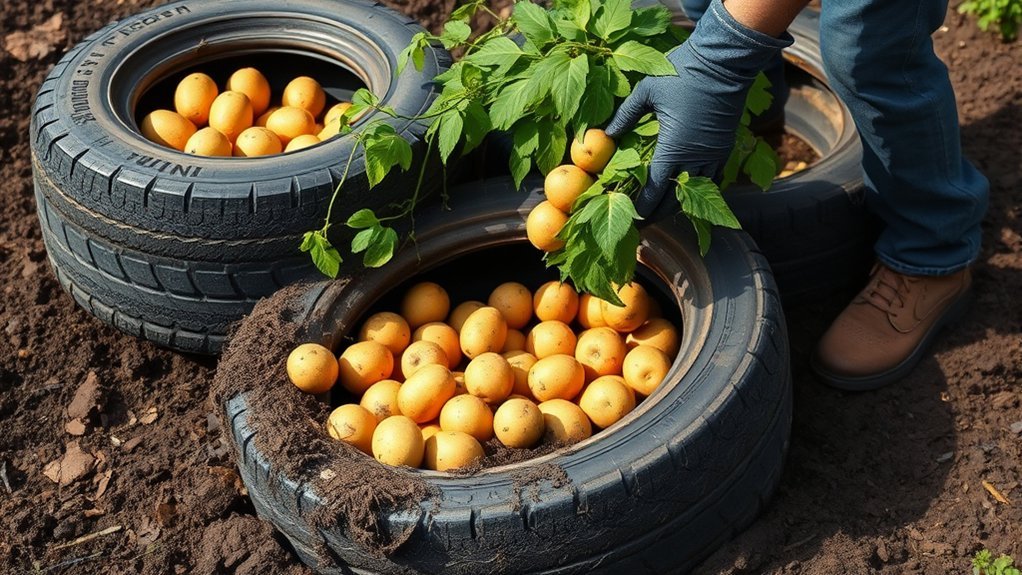
You can harvest a few small “new potatoes” after flowering, but the main harvest comes when the foliage yellows, browns, and dies back. Stop watering once the tops are dying so the skins can firm up and the soil is easier to handle.
To harvest, remove the top tire first and gently loosen the soil with your hands. Work down one layer at a time. If you use a fork or trowel, keep it away from the center of the plant so you do not spear the tubers.
- Harvest on a dry day if possible.
- Brush off loose soil instead of washing storage potatoes.
- Set aside any cut, bruised, soft, or green potatoes.
- Use damaged potatoes first; do not store them.
- Cure sound potatoes in a dark, ventilated place before long storage.
Note: Potato fruits and green potatoes should not be eaten. The RHS advises discarding green potatoes because they may be poisonous.
Frequently Asked Questions
Can you grow potatoes in a stack of tires?
Yes, potatoes can grow in a tire stack, but tires are not food-grade containers. For edible crops, the lower-risk choice is a grow bag or food-safe container. If you use tires, line the inside, avoid damaged or oily tires, prevent standing water, and keep the stack modest.
How many seed potatoes should I plant in one tire?
Plant 2 to 3 seed potato pieces in a standard car tire. A larger tire or wide container may fit 4 pieces, but crowding can reduce airflow and produce smaller potatoes. Each piece should have at least one healthy eye.
How do you grow potatoes in stacked containers?
Start with 4 to 6 inches of loose soil mix, plant seed pieces eyes up, cover with 2 to 4 inches of soil, and water gently. As stems grow, add more soil around them while keeping the top leaves exposed. Continue until the container is full, then maintain even moisture until harvest.
Is October too late to plant potatoes?
In cold and temperate climates, October is usually too late for outdoor potatoes because frost can kill the plants before tubers mature. In mild, frost-free regions, fall or winter planting may work if the variety has enough time to mature and the soil drains well.
How do you plant potatoes in a tire?
Set a clean, lined tire on level, well-drained ground. Add 4 to 6 inches of loose soil mix, place 2 to 3 certified seed potato pieces eyes up, cover with 2 to 4 inches of soil, and water. Add more soil as stems grow, leaving the leaves exposed.
Are potatoes grown in tires safe to eat?
There is no simple guarantee because used tires vary in age, condition, and exposure history. If you want the lowest-risk edible crop, use a food-grade container. If you use tires anyway, line the planter, avoid direct soil-rubber contact, and do not use damaged or contaminated tires.
Conclusion
Old tires can work as a low-cost outer frame for growing potatoes, but they should not be treated like ordinary food-grade planters. For the safest edible harvest, choose a grow bag or food-safe container. If you still use a tire stack, pick only clean intact tires, line the inside, provide drainage, plant certified seed potatoes, hill gradually, water evenly, and harvest only sound, non-green tubers. A careful setup gives your potato plants a better chance while reducing the avoidable risks of tire gardening.
Sources
- NC State Extension — There Are Better Options Than Using Tires in the Garden — tire garden safety concerns and alternative raised-bed materials
- U.S. EPA — Used Tires Quick Start Guide — used-tire risks, leaching, mosquito water, and tire management
- U.S. EPA — Environmental and Health Impacts of Tires — tire pollutants, tire particles, and environmental context
- University of Minnesota Extension — Growing Potatoes in Home Gardens — hilling, watering, pests, diseases, harvest, and storage
- Utah State University Extension — How to Grow Potatoes in Your Garden — soil, seed pieces, planting temperature, watering, and fertilizer
- Royal Horticultural Society — Growing Potatoes in Containers — container planting, earthing up, harvest, and green-potato warning