Airing down your Toyota 4Runner can improve traction, flotation, and ride comfort on rough trails, but there is no single PSI that is safe for every vehicle. Tire construction, wheel width, cargo weight, terrain, speed, and steering input all affect how low you can go before the bead, sidewall, or wheel is at risk.
Quick Answer
On conventional, non-beadlock 4Runner wheels, 20 PSI is a cautious starting point for slow off-road driving. Lower pressure may be suitable in soft sand, but only at very low speed and after confirming tire load capacity. Do not treat 12 or 15 PSI as a universal safe floor.
Key Takeaways
- There is no universal minimum PSI for every 4Runner, tire, wheel, load, or terrain.
- Start near 20 PSI on conventional wheels and lower pressure only in 2 PSI steps when the terrain requires it.
- Pressure below 20 PSI should be limited to low-speed off-road travel, gentle steering, and careful monitoring.
- Add pressure immediately if the sidewall folds, steering becomes vague, the rim strikes obstacles, or a tire loses air.
- Reinflate to the vehicle-appropriate road pressure before sustained pavement or highway driving.
At a Glance
| Time Required | About 10–20 minutes to inspect, air down, test, and recheck four tires |
| Difficulty | Easy, but requires careful judgment and repeated pressure checks |
| Tools Needed | Accurate pressure gauge, deflator, portable compressor, full-size spare, valve caps, and basic recovery equipment |
| Cost | No direct cost if you already carry a gauge and compressor; equipment cost varies by quality and capacity |
Warning: Air-down pressures are temporary off-road settings. Do not use them for sustained pavement or highway driving. Significantly underinflated tires can overheat, handle poorly, suffer internal damage, or lose their seal against the wheel.
The Lowest Safe PSI for Airing Down Your 4Runner
The safest answer is not one fixed number. According to BFGoodrich’s off-road guidance, the correct pressure depends on the tire, terrain, and vehicle weight. Too little pressure can unseat the tire from the wheel.
BFGoodrich separately lists 20 PSI as its normal minimum recommendation for passenger and light-truck tires. It allows lower pressure for off-road flotation only when speed stays below 15 mph and the tire can still support the vehicle’s load.
For a 4Runner on conventional wheels, use 20 PSI as a cautious first test rather than immediately dropping to 12 or 15 PSI. Drive a short distance at low speed, evaluate traction and steering, and reduce pressure in 2 PSI steps only when more flotation or conformity is genuinely needed.
Note: Twenty PSI is a conservative starting point, not a Toyota specification or a guarantee against tire damage. Your tire manufacturer’s instructions and load-and-inflation data take priority.
What Changes Your Safe Air-Down Pressure?
Two 4Runners can use the same tire size and still need different trail pressures. Check these factors before choosing a target:
- Tire construction: A stiff LT tire may need more pressure reduction than a softer P-metric tire to produce the same footprint.
- Sidewall height: A taller sidewall generally has more room to flex than a low-profile tire on a large wheel.
- Wheel width: A tire mounted near the edge of its approved wheel-width range may retain its bead differently from the same tire on another wheel.
- Vehicle load: Passengers, drawers, armor, rooftop gear, water, and camping equipment increase the load each tire must carry.
- Terrain: Soft sand rewards flotation, while sharp rocks demand more protection against rim contact and sidewall damage.
- Speed and steering: Speed, abrupt turns, side-hilling, and lateral impacts increase the chance of rolling the tire away from the bead seat.
- Tire and wheel condition: Damaged beads, bent wheels, corrosion, cuts, or previous impact damage reduce the safety margin.
Use the pressure on the driver-door Tire and Loading Information label for normal road travel. The National Highway Traffic Safety Administration explains that the vehicle placard or owner’s manual—not the maximum molded on the tire sidewall—provides the correct normal road pressure. Toyota makes model-specific manuals available through its 4Runner owner resources.
Safe Airing-Down Starting Points by Terrain
The following figures are conservative field starting points for conventional wheels, suitable tires, moderate vehicle loads, and low-speed off-road use. They are not Toyota specifications and should not override tire-manufacturer guidance.
| Terrain | Cautious Starting Range | Adjustment Guidance |
|---|---|---|
| Dirt and washboard | 24–28 PSI | Use enough pressure to smooth small impacts without creating heavy sidewall roll. |
| Rocky trails | 20–24 PSI | Add pressure if the rim contacts rocks, the sidewall folds, or the vehicle is heavily loaded. |
| Firm sand | 20–22 PSI | Maintain steady momentum and avoid abrupt steering before lowering further. |
| Soft or deep sand | 18–20 PSI | Lower only in 2 PSI steps. Pressure below 20 PSI requires very low speed and closer bead monitoring. |
| Mud | 20–24 PSI | Results depend heavily on tread design and mud depth. Add pressure if steering control becomes poor. |
Pressures below these starting ranges may be useful for a suitable setup in exceptional conditions, but the risk rises as pressure falls. A lightly loaded 4Runner with tall-sidewall LT tires may behave differently from a heavily equipped vehicle on short-sidewall highway tires.
Pro Tip: Stop reducing pressure as soon as the vehicle moves through the terrain without excessive wheelspin or harsh impacts. The goal is adequate traction at the highest pressure that works—not the lowest number your gauge can display.
[Products Worth Considering]

TireJect Off-Road Tire Sealant Kit provides 5-in-1 sealing to help fix tread punctures up to 3/8", sidewall punctures up to 3/8", bead leaks, slow leaks, and minor dry rot on low-speed tires. It permanently seals with liquid rubber, recycled tire particles, and Aramid fibers, making it ideal for flats caused by thorns, nails, and screws. The included dispensing cap attaches to the valve stem for a no-mess installation, along with a metal valve core remover tool and valve stem cap. This kit is for off-road use only.
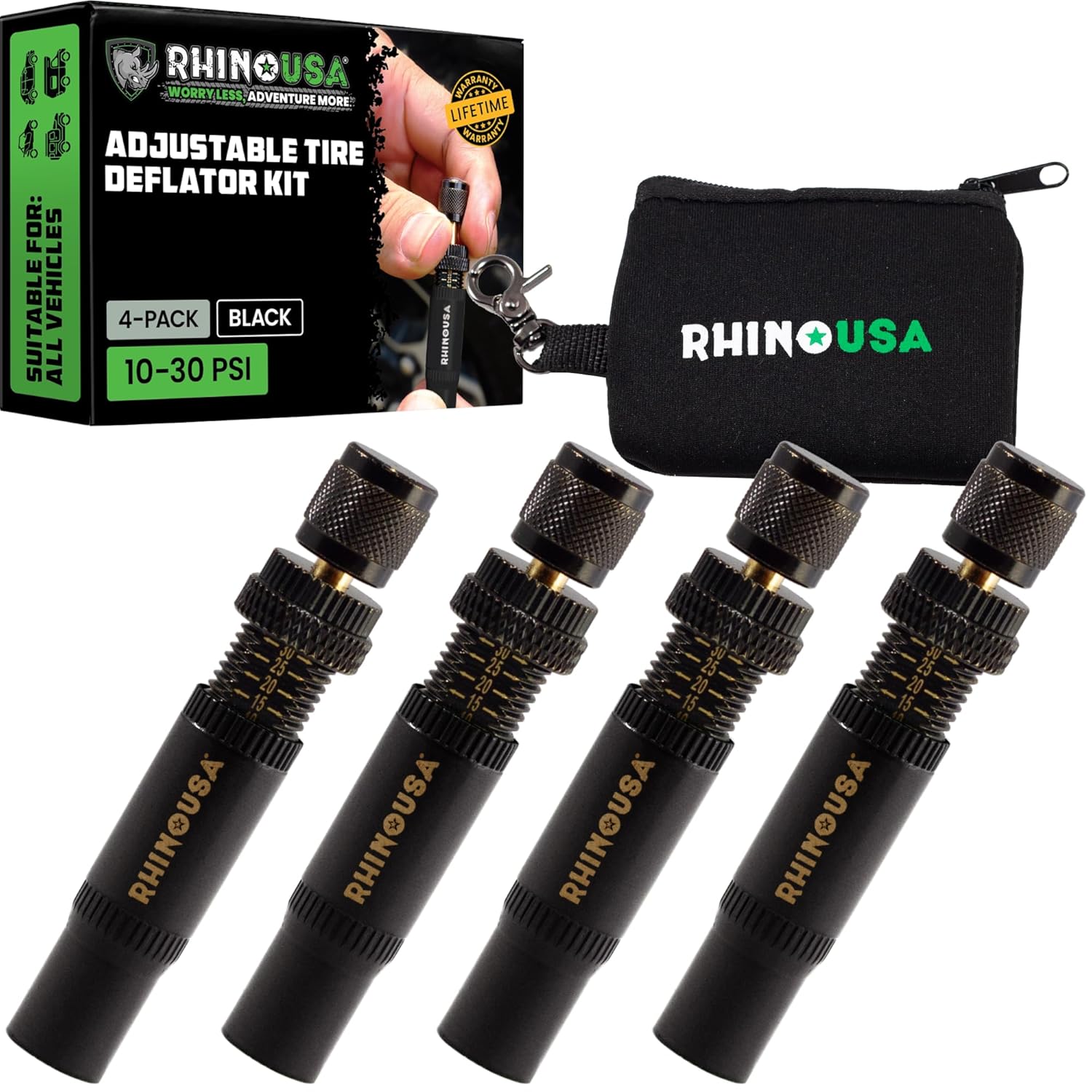
Use the Rhino USA adjustable tire deflators to air down all four tires at once by screwing one deflator onto each valve stem, letting you step away while the tires reach your preset pressure. Each deflator independently adjusts across a 10–30 PSI range with laser-etched indicators for quick setup and verification, making it ideal for beach, sand, and rocky off-road trails.

This ALL-TOP auto-stop tire deflator valve kit lets you air down off-road tires quickly without watching pressure, automatically stopping when your preset PSI is reached. Each valve is individually calibrated for reliable performance with an acceptable +/- 2 PSI tolerance. The adjustable deflator range covers 10 to 30 PSI and includes four valves plus valve caps and a zipper pouch for easy setup on trucks, SUVs, RVs, UTVs, and powersports.
How to Air Down a 4Runner Safely
- Inspect all four tires and wheels. Look for cuts, bulges, exposed cords, damaged valve stems, bead damage, bent wheel lips, or objects in the tread.
- Confirm the road-pressure baseline. Read the driver-door placard and note the current pressure in each tire with an accurate gauge.
- Consider your load. Use more pressure when the 4Runner carries passengers, armor, recovery equipment, camping gear, water, or a trailer tongue load.
- Deflate evenly. Begin near 20 PSI for demanding terrain or higher for graded dirt. Keep left and right pressures on the same axle closely matched.
- Test at low speed. Drive a short distance with gentle steering. Listen and feel for rim impacts, sidewall roll, vibration, or vague response.
- Adjust in 2 PSI steps. Lower pressure only if traction or flotation remains inadequate. Recheck every tire after each adjustment.
- Stop at the first warning sign. Add air if a sidewall folds sharply, a bead leaks, the wheel contacts terrain, or steering response becomes unstable.
- Reinflate before the road. Use a compressor to restore the vehicle-appropriate pressure before sustained pavement driving.
- Inspect again. Check tread, sidewalls, beads, wheels, valves, and pressure after leaving the trail and again when the tires are cold.
The safest trail pressure is the highest pressure that provides the traction and ride compliance you need.
[Products Worth Considering]

The 22800 wheel stud installer makes replacing wheel studs quick and secure, saving time and effort during tire service. It uses a ratchet or impact wrench to pull new studs firmly into place, helping when existing studs are too long. Compatible with most automotive wheels and light-duty truck wheel studs, it’s designed for easy, tool-assisted installation.

This tire inflator with pressure gauge delivers long-lasting performance with a durable rubber-protected gauge and sturdy build. The longer hose and 360 swivel air chuck help you seal the valve securely and keep your hands free while measuring, inflating, or deflating. It’s battery-free for reliable use and provides ±2 PSI accuracy in the mid-range for most typical tires, with universal compatibility for 1/4 NPT compressor outputs.
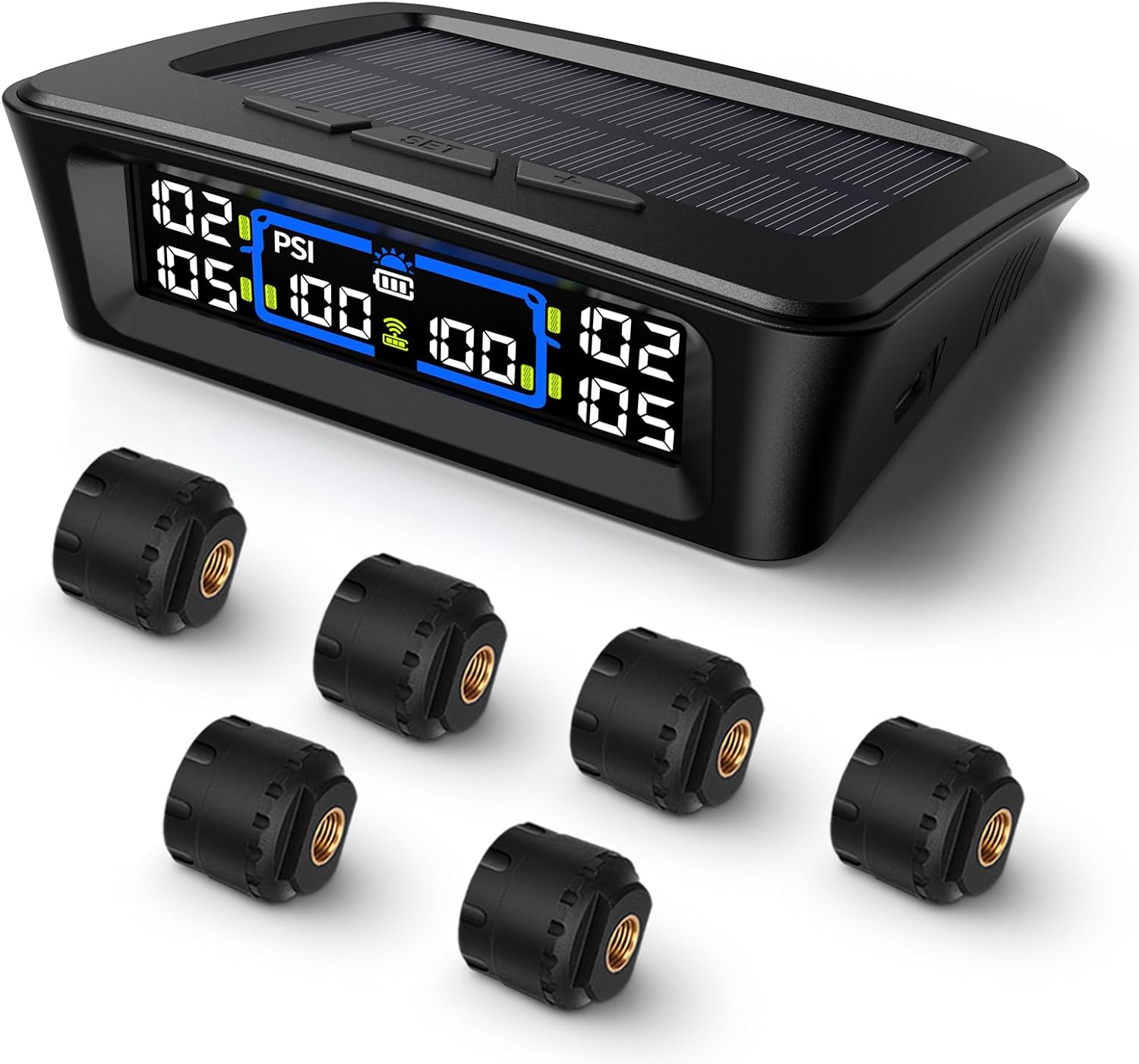
The Tymate TM12 RV TPMS delivers real-time tire pressure and temperature monitoring with a stable 433Hz display for safer long-distance driving. It supports simultaneous monitoring across vehicle and trailer zones, includes six alarm modes for pressure, temperature, leakage, battery, and signal loss, and features easy DIY installation with auto calibration. Power is supplied via USB-C charging or solar recharging, with a wide 0–144 PSI range and up to 50 ft signal coverage for RVs and towable trailers.
How De-Beading Happens at Very Low Pressure
De-beading occurs when part of the tire bead moves away from the wheel’s bead seat and allows air to escape. Low pressure reduces the force holding the bead in place, but pressure alone does not determine when it happens.
Risk increases when several conditions occur together:
- The tire is running at very low pressure.
- The driver turns sharply or applies a heavy lateral load.
- The tire is pushed sideways by a rut, rock, or side slope.
- The sidewall folds far enough to pull on the bead.
- The tire and wheel widths are poorly matched.
- The wheel lip, bead, or bead-seat surface is damaged.
- The vehicle is heavily loaded.
- The vehicle is moving too fast for the pressure and terrain.
A tire may first “burp” a small amount of air instead of separating completely. Stop immediately if one tire loses pressure, the bead looks displaced, or dirt and sand enter the bead area. Continuing can damage the tire and wheel.
If the bead will not hold pressure or appears damaged, install the spare or seek professional tire service. Do not continue driving merely because the tire can be temporarily reinflated.
Sidewall Puncture and Rim Risks
Airing down can help a tire conform around smaller obstacles, but excessive deflection creates new hazards. The sidewall may bulge farther into sharp rocks, and the wheel can strike an obstacle through the compressed tire.
Watch for these signs that the pressure is too low:
- Sharp sidewall folds: A smooth bulge is expected, but a deep crease or folded shoulder shows excessive deformation.
- Frequent rim contact: Metallic impacts or fresh marks on the wheel mean the tire is not providing enough protection.
- Vague or delayed steering: The tire is rolling under the wheel instead of responding predictably.
- New pressure loss: A drop may indicate a bead leak, puncture, valve problem, or wheel damage.
- Bulges, cuts, or exposed material: Stop using a visibly damaged tire and have it inspected.
- Unusual heat or odor: Excessive flex can generate damaging heat, especially as speed increases.
Toyo Tires warns that underinflation and overloading create excessive stress and heat that can lead to tire failure. Low trail pressure should therefore be paired with low speed, modest steering inputs, and frequent inspection.
Ground Clearance Your 4Runner Loses at Low Pressure
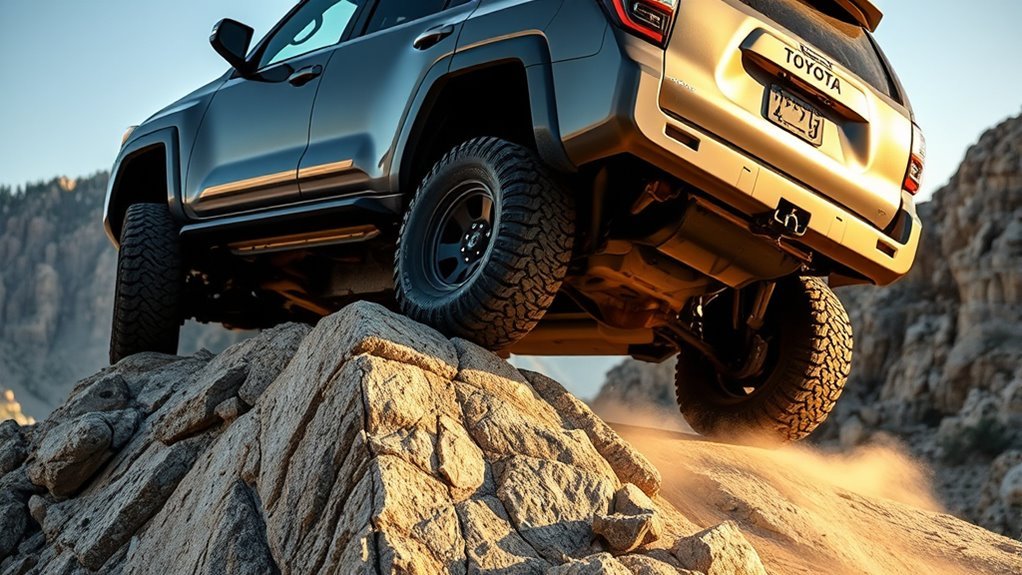
Airing down reduces the tire’s loaded radius—the distance from the wheel hub to the ground. That lowers the axle, differential, and other components supported by the tires. The exact loss cannot be predicted from PSI alone because tire size, construction, temperature, and axle load change the result.
You can measure the real change on your vehicle:
- Park on firm, level ground with the normal trail load aboard.
- At normal road pressure, measure vertically from the center of a wheel hub to the ground.
- Air that tire down to the intended trail pressure.
- Roll the vehicle forward several feet so the carcass settles.
- Measure from the same hub center to the ground again.
- Subtract the second measurement from the first. The difference is approximately how much axle-level clearance you lost at that corner.
Note: Body-mounted bumpers and sliders do not necessarily lose the same amount of usable clearance as the axle and differential. Identify the lowest component that matters for the obstacle you are crossing.
Speed, Heat, and TPMS at Trail Pressure
Lower pressure allows more carcass movement. That improves compliance but also increases flex and heat. Keep speed low and reduce it further as pressure drops. BFGoodrich’s guidance permits pressure below 20 PSI only during off-road use below 15 mph and when the tire still has adequate load-carrying capacity.
Your Tire Pressure Monitoring System may illuminate while the tires are intentionally aired down. Do not ignore it without manually confirming every tire with a gauge. NHTSA states that TPMS is not a substitute for regular pressure checks and may not warn until a tire is already significantly underinflated.
After reinflating, compare all four readings. A tire that continues losing pressure needs inspection even if the warning light later turns off.
Troubleshooting Low Trail Pressure
| Symptom | Likely Concern | What to Do |
|---|---|---|
| Steering feels slow or vague | Excessive sidewall roll | Add 2–4 PSI and retest at low speed. |
| Wheel repeatedly strikes rocks | Insufficient rim protection | Add pressure, slow down, and choose a cleaner line. |
| One tire loses pressure | Puncture, valve leak, bead leak, or wheel damage | Stop, inspect, and install the spare if the tire will not hold pressure reliably. |
| Vehicle bogs in soft sand | Insufficient flotation, excessive wheelspin, or poor momentum | Straighten the wheels, reduce wheelspin, and lower pressure only in 2 PSI steps if the setup allows it. |
| Tire becomes unusually hot | Excessive flex, speed, load, or internal damage | Stop, allow it to cool, inspect it, and add pressure before continuing. |
[Products Worth Considering]

Replace worn or malfunctioning GM TPMS sensors with this 433MHz pre-programmed sensor set designed for compatibility with many Chevrolet, Buick, GMC, and Cadillac models. It includes guidance for proper OBDII relearning/pairing after installation and supports reliable long-term operation with a high-performance CR2032 battery. Quality tested for durability and performance to help restore accurate tire pressure monitoring.

This Dr.Roc tire valve stem puller tools set helps install or remove snap-in tubeless valve stems safely and efficiently. It includes ozone-resistant EPDM snap-in valve stems, a valve stem installer, and a valve core remover for quick core removal or installation during tire service. Designed for reliable tubeless tire repair on motorcycles, ATVs, lawn equipment, cars, and trucks.

Replace your worn or missing TPMS sensors with pre-programmed, direct-fit sensors for compatible Ford, Lincoln, and select Mazda models. Each sensor comes ready to activate with a scan tool, helping restore accurate tire pressure monitoring and trouble-free installation. Built with a long-life CR2032 battery and tested before factory release, this set provides dependable performance with a one-year warranty.
Reinflate and Inspect Before Driving Home
Carry a compressor capable of reinflating all four tires without overheating. Before entering sustained pavement:
- Inflate each tire to the pressure appropriate for normal road use.
- Check all four tires with the same handheld gauge.
- Inspect the tread, shoulders, sidewalls, beads, valve stems, and wheels.
- Make sure no tire is losing pressure while the others remain stable.
- Recheck the tires when cold and adjust them to the driver-door placard or the approved pressure for your replacement-tire setup.
Do not release air from a warm tire merely to match the cold placard pressure. Pressure normally rises as the tire warms. Recheck and make the final adjustment after the vehicle has been parked long enough for a cold reading.
Frequently Asked Questions
Is 40 PSI too much for low-profile tires?
It can be. Tire profile alone does not determine the correct pressure. For road driving, use the pressure on the vehicle’s driver-door label unless a qualified tire professional has calculated a different pressure for an approved replacement tire. Do not use the maximum sidewall pressure as your routine target.
Is 26 PSI dangerously low for a 4Runner?
Twenty-six PSI may be a reasonable setting for graded dirt or washboard, but it may be underinflated for normal road use. Compare it with your driver-door placard, tire specifications, load, and driving conditions. Reinflate before sustained pavement travel when 26 PSI is below the approved road pressure.
Can I drive on the highway after airing down?
No. Reinstate the vehicle-appropriate road pressure before highway or sustained pavement driving. Low trail pressure increases tire flex, heat, stopping distance, and steering response while reducing the tire’s ability to carry its rated load.
Is 15 PSI safe on stock 4Runner wheels?
It is not universally safe. Fifteen PSI is below the conservative 20 PSI baseline and leaves less margin for sharp turns, side-hilling, heavy loads, rim strikes, and bead leakage. Use it only when the tire manufacturer permits it, the load remains adequately supported, speed is very low, and the tires are monitored closely.
Do beadlock wheels make any low pressure safe?
No. Bead-retention hardware can reduce one type of bead-separation risk, but it does not prevent sidewall cuts, internal heat damage, rim impacts, tread punctures, overload, or loss of steering control. Follow the wheel and tire manufacturers’ installation, torque, inspection, and pressure instructions.
What equipment should I carry when airing down?
Carry an accurate gauge, controlled deflator, compressor, full-size spare, jack, wheel tools, valve caps, and appropriate recovery equipment. A tread-puncture kit can help with some repairable tread punctures, but it is not a safe permanent repair for a damaged sidewall or bead.
Conclusion
There is no pressure at which every 4Runner tire is guaranteed to remain seated and undamaged. Start conservatively, lower pressure in small steps, and stop as soon as the vehicle has enough traction for the terrain. Add air whenever steering, sidewall shape, rim protection, temperature, or pressure retention becomes questionable.
Most importantly, treat air-down pressure as a temporary, low-speed trail setting. Reinflate before sustained pavement driving, inspect the tires and wheels after the trail, and investigate any tire that loses air or shows new damage.
Sources
- National Highway Traffic Safety Administration — TireWise — vehicle placard pressure, cold-pressure checks, TPMS limitations, and underinflation safety.
- Toyota 4Runner Owner Resources — model-specific owner’s manuals and vehicle guidance.
- BFGoodrich Off-Road Tire Selection Guide — benefits of airing down, variables affecting pressure, and bead-unseating risk.
- BFGoodrich Tire FAQ — 20 PSI general minimum and conditions for lower-pressure off-road operation.
- Continental Off-Road Driving Guide — tire selection, pressure checks, sidewall inspection, and emergency preparation.
- Toyo Tires Safety Information — heat, load, underinflation, damage inspection, and road-pressure safety.