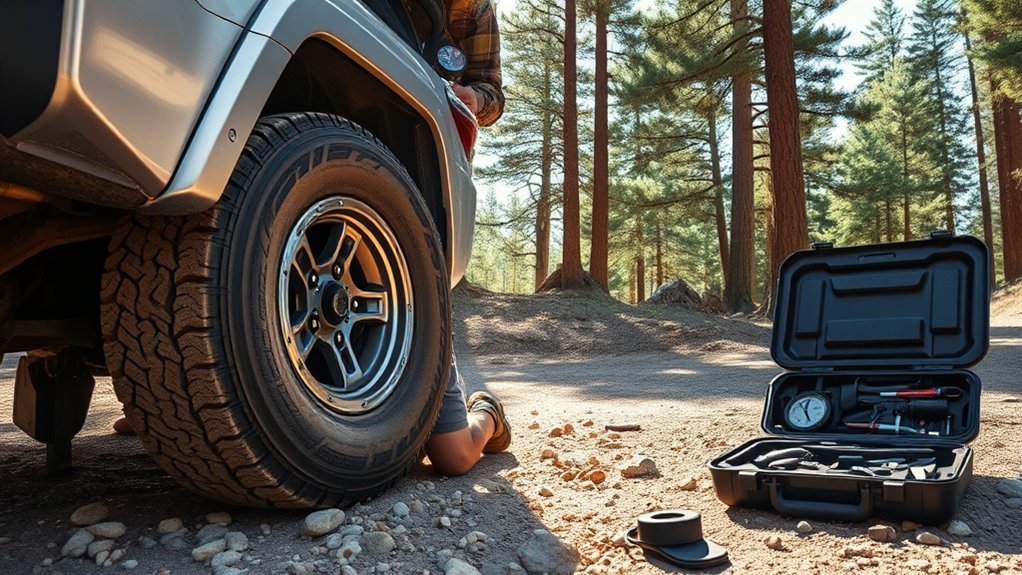
Airing down your 4Runner tires means lowering tire pressure after you leave pavement so the tires can flex more, spread the vehicle’s weight over a larger footprint, and grip loose or uneven terrain better. The safe target depends on terrain, tire size, wheel type, vehicle load, and speed, so treat any PSI number as a starting point—not a permanent rule.
Quick Answer
For most 4Runners on non-beadlock wheels, start around 18–22 PSI for mixed dirt and rocks, 15–18 PSI for sand or mud, and only go lower in very soft terrain if you drive slowly and understand the bead-loss risk. Always air back up to the door-placard pressure before highway driving.
Key Takeaways
- Use your 4Runner’s driver-door tire placard or owner’s manual as the on-road baseline, not the tire sidewall maximum.
- Airing down helps traction, flotation, and ride comfort off-road, but it is for low-speed trail use only.
- Lower pressure increases the risk of debeading, sidewall damage, heat buildup, and poor handling if you drive too fast or turn sharply.
- Carry a tire gauge, deflator, valve caps, and a compressor before you air down.
- Reinflate all four tires to the recommended road pressure before returning to pavement or higher speeds.
At a Glance
| Time Required | 5–10 minutes to air down; 10–25 minutes to air back up depending on compressor size. |
| Difficulty | Easy, but pressure choice requires judgment. |
| Tools Needed | Accurate tire gauge, tire deflator, valve caps, portable compressor, gloves, and a tire repair kit. |
| Cost | $10–$60 for a gauge/deflator; $80–$400+ for a compressor depending on speed and duty cycle. |
Understanding the Importance of Airing Down for Off-Roading
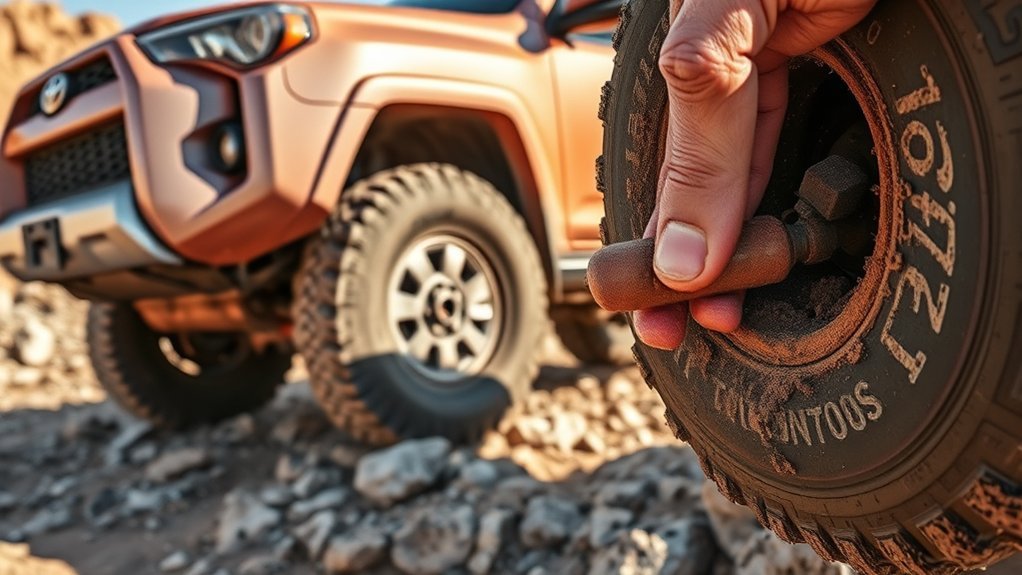
Airing down helps because a lower tire pressure lets the tire flex and lengthen its contact patch. On loose surfaces, that bigger footprint can help the tire float instead of digging down. On rocks, a softer tire can conform around small edges and reduce harsh impacts through the suspension.
That does not mean lower is always better. Too little pressure can make the tire over-flex, build heat, leak air at the bead, or come off the wheel during a sharp turn. Tire manufacturer guidance also warns that reduced inflation for off-road flotation or traction should be limited to low-speed use and followed by reinflation before highway or higher-speed driving.
Warning: Do not drive highway speeds on aired-down tires. Low pressure can cause poor handling, heat buildup, tire damage, and blowout risk. Air back up to the tire placard or owner’s manual pressure before returning to pavement.
When to Air Down Tires for Optimal Traction?
Air down after you leave paved roads and before the trail becomes loose, rocky, sandy, muddy, or washboarded. Avoid driving long pavement sections at trail pressure. If the trail includes only a short dirt road at normal speeds, you may not need to air down at all.
Terrain-Specific Conditions
Use the chart below as a starting point for a typical 4Runner on all-terrain tires and standard non-beadlock wheels. Adjust based on tire load range, tire size, wheel width, vehicle weight, cargo, and your comfort level.
| Terrain | Conservative Starting PSI | Why It Helps | Caution |
| Gravel, washboard, mild dirt | 22–26 PSI | Smooths the ride and improves grip without going very low. | Still avoid high-speed pavement at reduced pressure. |
| Rocks and mixed trails | 18–22 PSI | Lets the tire wrap around small rocks and reduces bouncing. | Too low can expose sidewalls and wheels to damage. |
| Sand | 15–18 PSI | Increases flotation so the 4Runner is less likely to dig in. | Avoid sharp turns and sudden throttle; bead loss is more likely at low PSI. |
| Mud | 16–20 PSI | Adds grip and helps the tire maintain forward movement. | Mud can hide rocks and roots; protect sidewalls. |
| Deep snow | 16–20 PSI; lower only with experience | Can improve flotation in soft snow. | Packed snow or ice may not benefit from very low pressure; drive slowly and carefully. |
Timing for Off-Roading
The best time to air down is at the trailhead or immediately after leaving pavement. Park on level ground, set the parking brake, and choose a target pressure before touching the valve stems. Do not wait until the tires are already spinning in sand or mud; airing down works best before the obstacle, not after you are stuck.
- Before the trail: Check your road pressure and choose a safe target.
- On the trail: Recheck if the ride feels harsh, the tires look too flat, or traction changes.
- Before pavement: Reinflate all four tires to the pressure shown on your 4Runner’s tire placard or owner’s manual.
Ideal Tire Pressures for Different Off-Road Conditions
There is no single ideal PSI for every 4Runner. A lightly loaded 4Runner on stock-size tires may need a different trail pressure than a loaded overland build with heavy bumpers, cargo, passengers, and LT tires. Start conservative, test the vehicle, then adjust in small 2 PSI steps.
For mixed dirt and rocks, 18–22 PSI is a smart first target. For sand, 15–18 PSI often gives a noticeable improvement in flotation. For very soft sand or deep snow, some drivers go lower, but pressures near or below 12–15 PSI on standard wheels increase the chance of unseating the tire bead.
Note: The tire sidewall usually lists a maximum pressure, not the recommended operating pressure for your 4Runner. For road use, use the driver-door placard or owner’s manual.
Step-by-Step Guide to Deflating Tires Safely
Deflating tires is simple, but the goal is even, controlled pressure—not guessing by tire appearance. Use a gauge every time.
- Park safely. Stop on level ground away from traffic, set the parking brake, and keep the valve stems accessible.
- Check current pressure. Use an accurate tire gauge on all four tires before deflating.
- Pick a target PSI. Choose a conservative number for the terrain, tire setup, and load.
- Use a tire deflator. Remove the valve cap and deflate slowly, or use preset deflators if they are calibrated.
- Verify with a gauge. Check each tire and make the pressures match within about 1 PSI.
- Reinstall valve caps. Valve caps help keep dirt and moisture out of the valve stem.
- Do a short test drive. Drive slowly for a few minutes and check ride feel, steering, and sidewall shape.
- Adjust if needed. Drop or add air in small steps rather than making a big change all at once.
[Products Worth Considering]

This tire inflator with pressure gauge delivers long-lasting performance with a durable rubber-protected gauge and sturdy build. The longer hose and 360 swivel air chuck help you seal the valve securely and keep your hands free while measuring, inflating, or deflating. It’s battery-free for reliable use and provides ±2 PSI accuracy in the mid-range for most typical tires, with universal compatibility for 1/4 NPT compressor outputs.
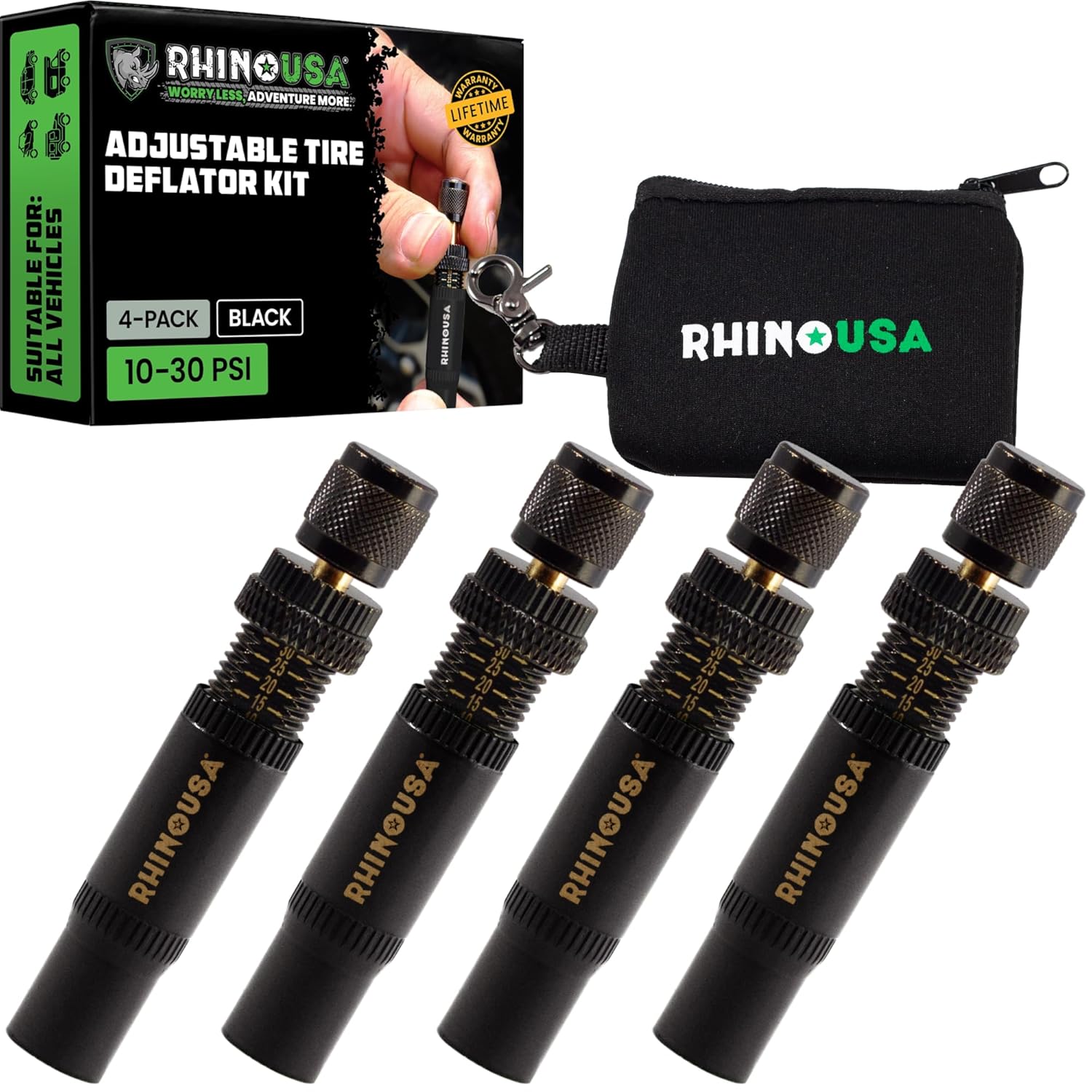
Use the Rhino USA adjustable tire deflators to air down all four tires at once by screwing one deflator onto each valve stem, letting you step away while the tires reach your preset pressure. Each deflator independently adjusts across a 10–30 PSI range with laser-etched indicators for quick setup and verification, making it ideal for beach, sand, and rocky off-road trails.

This ALL-TOP auto-stop tire deflator valve kit lets you air down off-road tires quickly without watching pressure, automatically stopping when your preset PSI is reached. Each valve is individually calibrated for reliable performance with an acceptable +/- 2 PSI tolerance. The adjustable deflator range covers 10 to 30 PSI and includes four valves plus valve caps and a zipper pouch for easy setup on trucks, SUVs, RVs, UTVs, and powersports.
Necessary Tools Required
At minimum, carry a reliable tire pressure gauge and a way to air back up. A tire deflator makes the job faster, but it does not replace a gauge. For longer trails, add a portable compressor, tire repair kit, valve core tool, spare valve caps, gloves, and a work light.
- Tire pressure gauge: Use this before, during, and after deflation.
- Tire deflator: Speeds up controlled air-down work.
- Portable compressor: Required before you return to pavement.
- Tire repair kit: Useful for punctures, valve issues, and slow leaks.
- Gloves and kneeling pad: Helpful in mud, rocks, snow, or hot sand.
Recommended PSI Levels
For a stock or lightly modified 4Runner, start with moderate trail pressures first. Try 22–26 PSI for gravel or washboard roads, 18–22 PSI for rocks and mixed trails, and 15–18 PSI for soft sand. Only go lower when conditions require it, speeds are low, and you accept the higher bead-loss risk.
Pro Tip: Write down the PSI that works for your tire size, load, and terrain. Your own notes will be more useful than a generic chart after a few trips.
Essential Tools for Airing Down and Reinflating Tires
A good air-down setup should do two jobs: let air out accurately and put air back in safely. Do not air down unless you have a realistic way to reinflate all four tires before highway driving.
- Accurate gauge: Choose one that is easy to read in low light and covers the PSI range you use.
- Single-tire or four-tire deflator kit: A single deflator is simple; a four-tire system helps equalize pressure across all tires.
- Portable air compressor: Match compressor size to your tire size. Larger all-terrain or LT tires take longer to fill.
- Air hose and chuck: Long hoses make it easier to reach all four tires without moving the compressor.
- Valve core tool and caps: Small parts can save a trip if a valve core leaks or a cap disappears in the dirt.
- Tire plug kit: A plug kit can handle many tread punctures until a proper repair is made.
[Products Worth Considering]
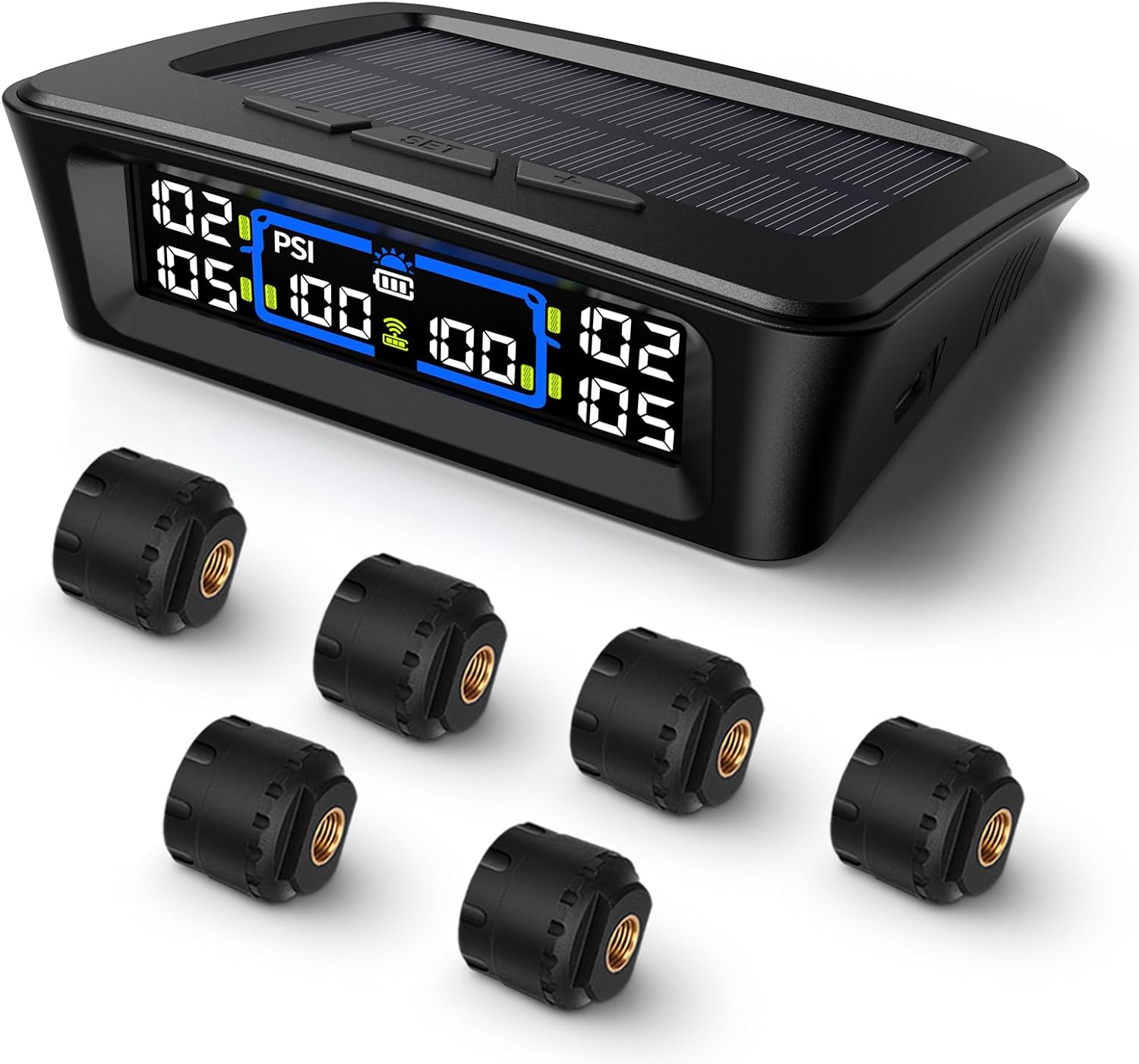
The Tymate TM12 RV TPMS delivers real-time tire pressure and temperature monitoring with a stable 433Hz display for safer long-distance driving. It supports simultaneous monitoring across vehicle and trailer zones, includes six alarm modes for pressure, temperature, leakage, battery, and signal loss, and features easy DIY installation with auto calibration. Power is supplied via USB-C charging or solar recharging, with a wide 0–144 PSI range and up to 50 ft signal coverage for RVs and towable trailers.

The JACO FlowPro Tire Inflator measures, inflates, and airs down tires up to 100 PSI with battery-free operation and ±2% accuracy after calibration. It features a glowing pressure dial for night visibility, a heavy-duty steel build with a hybrid hose, and a precision push-to-inflate thumb trigger. The patented Lightning Air Chuck locks on for a secure seal, and the kit includes quick-connect hardware for easy inline use with your air compressor.

The TYAMATE TM8 solar-powered wireless TPMS delivers real-time tire pressure and temperature monitoring with six alarm modes for safer driving. A vibrant color LCD display shows readings clearly while windshield mounting keeps it hands-free and easy to read. With a wide 0–87 PSI range, strong 433.92 MHz signal transmission, and quick sensor pairing, it’s ideal for RV, sedan, SUV, MPV, and truck use.
Risks of Over Deflation and How to Avoid Them
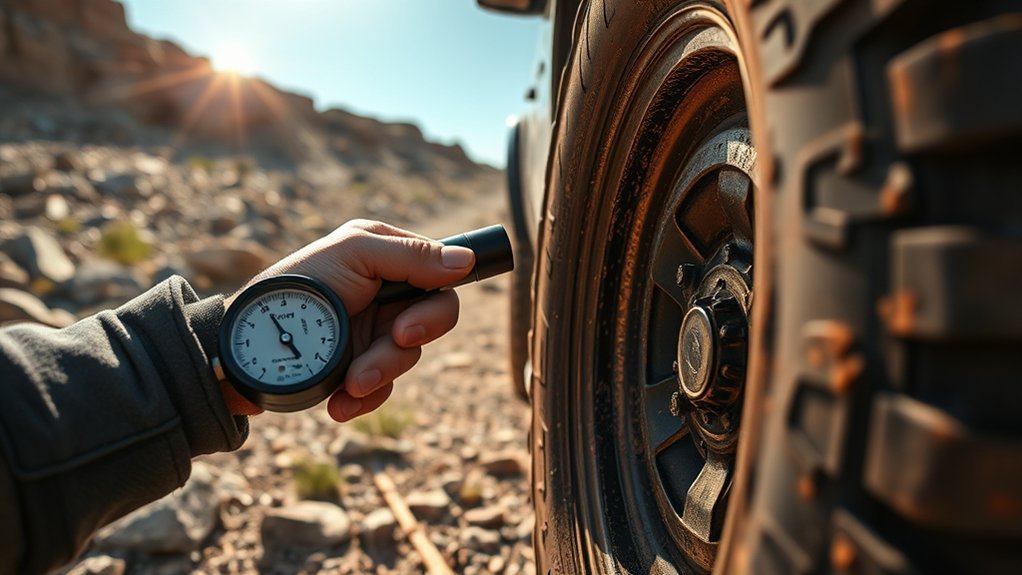
Over-deflation happens when pressure drops below what your wheel, tire, load, speed, and terrain can safely handle. The tire may look impressive when it bulges, but that bulge means the sidewall is flexing more and carrying more stress.
The main risks are bead unseating, sidewall cuts, wheel damage, air leaks between the tire and wheel, poor steering response, overheating, and blowouts. These risks rise quickly when you combine low PSI with speed, heavy cargo, sharp turns, or sudden throttle.
- Avoid sharp steering inputs. Sudden turns can pull the bead away from the wheel.
- Drive slowly. Aired-down tires are for low-speed trail use.
- Watch the sidewalls. If the sidewall folds heavily or the wheel gets close to rocks, add air.
- Do not copy another rig blindly. Beadlocks, tire size, load range, and vehicle weight change the safe PSI.
- Air up before pavement. Low pressure and speed are a bad combination.
How to Adjust Tire Pressure for Off-Roading
Start with the highest pressure that gives you the traction and ride comfort you need. If the 4Runner still hops over rocks or digs in sand, drop 2 PSI and test again. If steering feels vague, sidewalls fold too much, or the wheel feels exposed, add air.
Use this simple adjustment method:
- Choose a conservative starting point. For example, 20 PSI on mixed rock or 18 PSI in sand.
- Drive a short section slowly. Pay attention to steering, wheelspin, ride harshness, and sidewall shape.
- Adjust by 2 PSI. Small changes are easier to judge and safer than big drops.
- Keep all four tires even. Uneven pressure can make the 4Runner pull or handle unpredictably.
- Recheck after terrain changes. Sand, rocks, snow, and hardpack need different compromises.
[Products Worth Considering]

AstroAI AIRUN H is a compact 12V tire inflator designed for fast, convenient inflation with an easy-to-read digital pressure gauge. Set your target pressure with programmable controls and let the auto shut-off turn off the pump when the preset is reached. It also includes a backlit screen and LED flashlight for nighttime use, with a ToughUltra durability design for longer service life.

Get back on the road fast with this compact tire plug repair kit for tubeless tires. It includes self-vulcanizing rubber plugs, T-handle rasp and insert tools, and a storage box that fits in your glove compartment for easy access. Also included are a 4-way valve steam tool set with valve cores and caps for added roadside convenience.
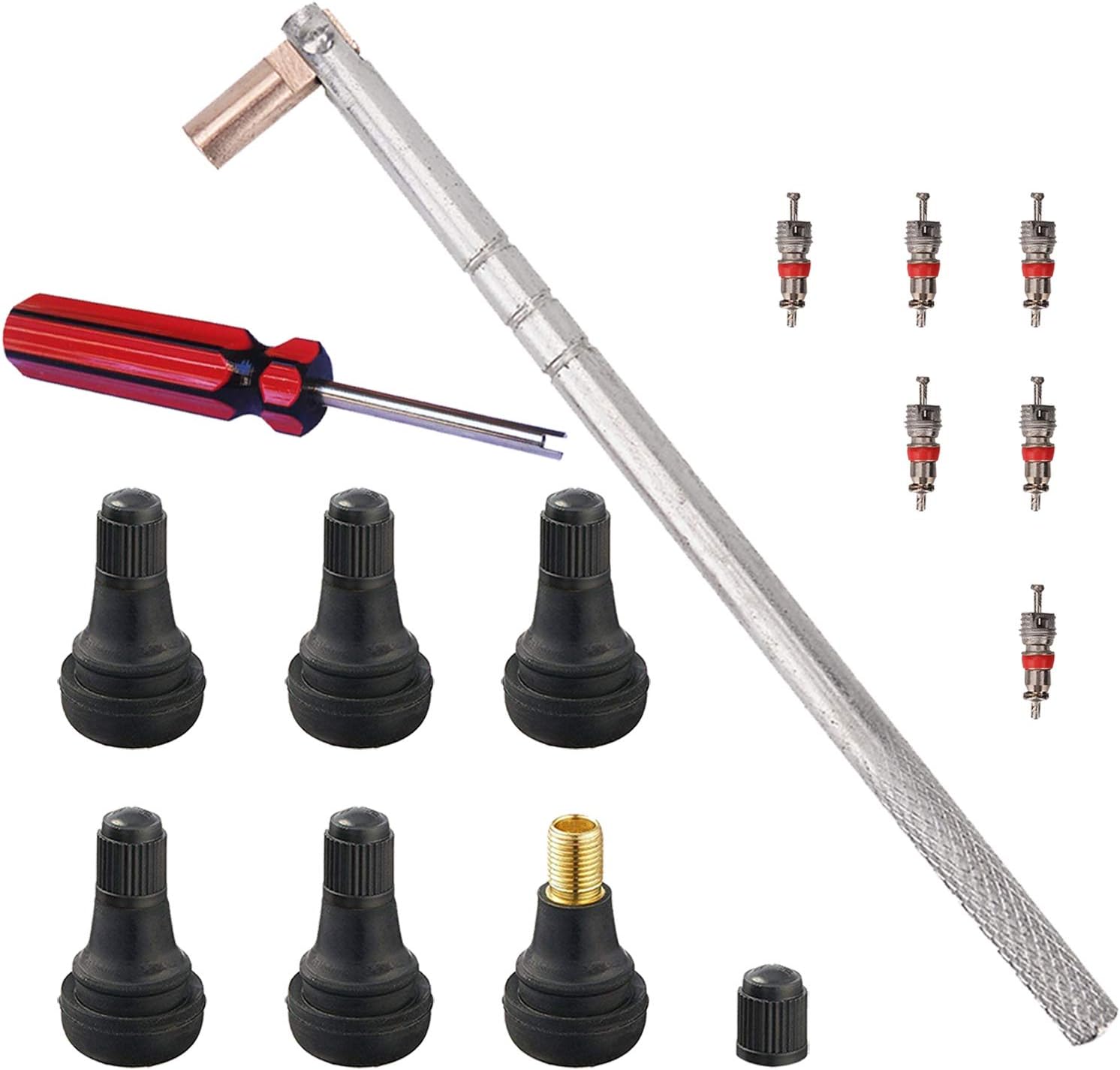
This FEBRYTOLD tire valve stem tool set makes it easy to remove and install standard 0.453 inch snap-in valve stems for tubeless tires. It includes valve stem cores and a single-head valve core remover/installer tool to help you complete repairs quickly. Designed to help avoid scratching wheels and damaging valve stems during service.
Best Practices for Monitoring Tire Pressure During Off-Roading
Check pressure before you air down, after you air down, and before you air back up. A Tire Pressure Monitoring System can warn about low pressure, but it is not a substitute for a hand gauge on the trail. Toyota’s TPMS warning light is designed to alert you when the system senses seriously low tire pressure; it should not be treated as a precise off-road tuning tool.
- Use a gauge, not tire appearance alone. Different sidewalls bulge differently.
- Check when conditions change. Temperature, elevation, and hard driving can change pressure readings.
- Inspect for damage. Look for cuts, exposed cords, missing valve caps, and rocks wedged near the bead.
- Give the compressor breaks. Small compressors can overheat during a four-tire air-up.
- Confirm road pressure before leaving. Do not rely on memory after a long trail day.
Tips From Fellow 4runner Off-Roaders
Experienced 4Runner drivers usually learn that tire pressure is a tuning tool. Small changes can make a big difference in comfort and grip, especially with heavier builds or LT-rated tires.
- Start higher than you think. It is safer to drop more air later than to begin too low.
- Mark your gauge or notes. Keep a record of what worked for sand, rocks, mud, and snow.
- Listen to the tires. Spinning, hopping, or digging can mean pressure, throttle, or line choice needs adjustment.
- Carry your own compressor. Do not depend on another vehicle unless you are traveling as a planned group.
- Practice at home. Learn your deflator and compressor before using them in rain, dark, wind, or snow.
Frequently Asked Questions
Why and when should you air down your tires for a 4Runner?
Air down after leaving pavement when you need better traction, flotation, or ride comfort on sand, rocks, mud, snow, or washboard roads. Do not air down for normal highway driving, and always reinflate before returning to pavement or higher speeds.
What PSI should I air down my 4Runner tires to for sand?
A good starting point for many 4Runners is 15–18 PSI in soft sand. If the vehicle still digs, you can lower pressure carefully in small steps, but going too low on standard wheels increases the chance of unseating the bead.
How low can I go on stock 4Runner wheels?
For stock non-beadlock wheels, many drivers stay above about 15 PSI unless the terrain demands more flotation and speeds are very low. Tire size, wheel width, tire stiffness, cargo weight, and driving style all affect the safe limit.
Can I drive on the highway after airing down?
No. Aired-down tires are for low-speed off-road driving. Before highway use, reinflate all four tires to the cold pressure listed on the driver-door placard or in the owner’s manual.
Will airing down trigger the TPMS light?
Yes, it can. The TPMS may warn when pressure drops below its threshold. Use a gauge to manage trail pressure, then air back up and verify that all tires are at the recommended road pressure before driving at speed.
Do I need beadlock wheels to air down?
No, you can air down on standard wheels if you stay conservative. Beadlocks allow lower pressures with less bead-loss risk, but they are not required for normal trail airing down.
Should I air down all four tires evenly?
Yes. Keep all four tires close to the same pressure unless you have a specific advanced reason not to. Uneven pressure can affect steering, braking, and stability.
Conclusion
Airing down your 4Runner tires is one of the simplest ways to improve low-speed off-road traction, flotation, and comfort. The key is balance: use conservative PSI starting points, adjust slowly, watch the sidewalls, and never treat trail pressure as road pressure. Carry the right tools, use a gauge, and air back up before pavement so your 4Runner is ready for both the trail and the drive home.
Sources
- Toyota 4Runner Manuals and Warranties — backs up using the owner’s manual and vehicle-specific tire information.
- Toyota Tire Inflation Pressure Guidance — backs up proper inflation, handling, blowout, wheel, and tire-damage warnings.
- Toyota TPMS Support — backs up TPMS warning behavior.
- NHTSA TireWise — backs up tire safety, maintenance, and TPMS context.
- NHTSA Tire Pressure Maintenance Report — backs up handling, stopping-distance, blowout, and tread-separation risks from improper pressure.
- Yokohama Tire Pressure Guidance — backs up low-pressure off-road use cautions and the need to reinflate before highway or higher-speed driving.