How to Check Toyota Camry Wheel Alignment: Signs It’s Off & What to Do
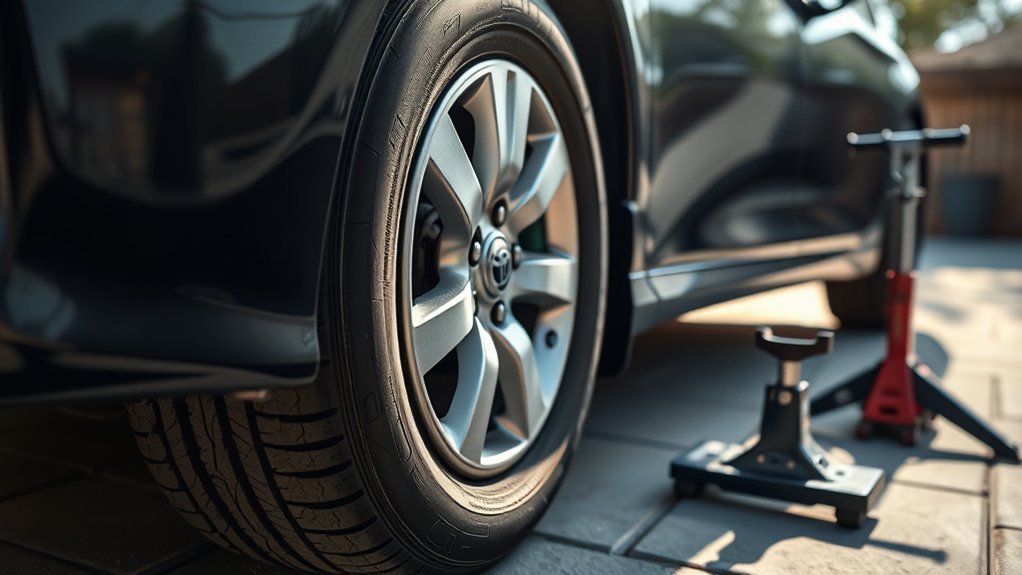
If your Toyota Camry pulls to one side, wears tires unevenly, or has a steering wheel that sits crooked while you drive straight, the alignment may need to be checked. Do not treat one symptom as proof, though. Low tire pressure, wheel imbalance, road crown, worn suspension parts, tire damage, or brake drag can feel similar, so the safest approach is to inspect the basics first and then book a professional alignment check if the problem continues.
Quick Answer
Your Toyota Camry may need alignment if it consistently pulls on a flat road, the steering wheel is off-center, the tires show feathering or one-edge wear, or handling feels loose. Check tire pressure first, inspect the tread, and see a technician after pothole hits, curb impacts, new tires, or suspension work.
Key Takeaways
- The most common Toyota Camry alignment symptoms are pulling, uneven tread wear, an off-center steering wheel, and vague steering.
- Steering-wheel vibration can come from alignment, but it is often related to tire balance, tire damage, wheel issues, or worn suspension parts.
- Always check cold tire pressure and obvious tire damage before assuming the wheels are out of alignment.
- A home check can spot warning signs, but only an alignment machine can measure camber, caster, and toe against Toyota specifications.
- Book service promptly after a hard pothole hit, curb strike, collision, new tires, or steering/suspension repair.
At a Glance
| Time Required | 10–20 minutes for a basic driveway check; longer if you inspect all tires carefully. |
| Difficulty | Easy for symptom checks; professional equipment is required for final alignment measurements. |
| Tools Needed | Tire pressure gauge, tread-depth gauge or penny, flashlight, notebook or phone photos. |
| Cost | DIY inspection is free. Professional alignment pricing varies by shop, location, and whether parts or repairs are needed. |
Signs Your Toyota Camry Needs Alignment
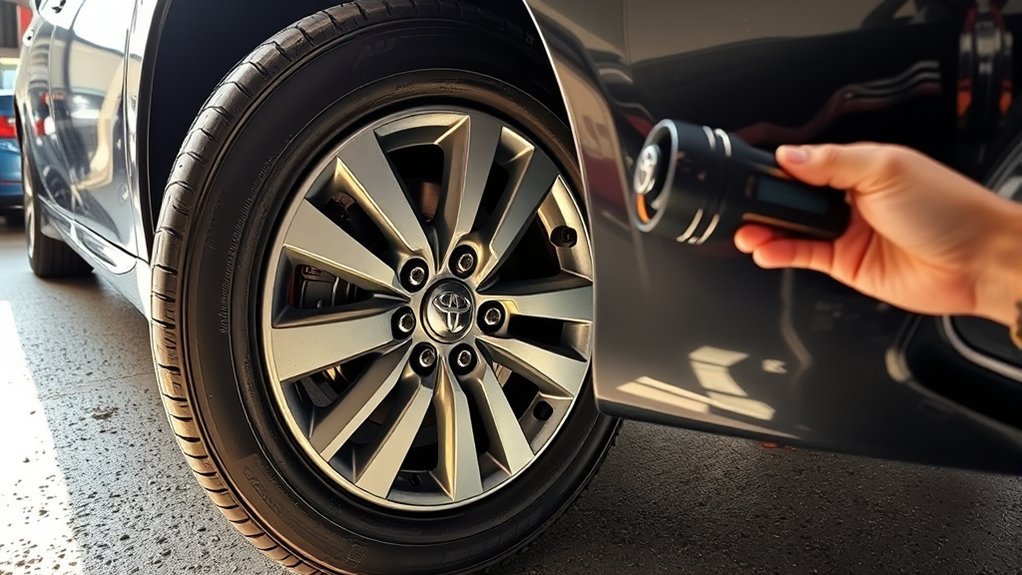
A Toyota Camry that is out of alignment usually feels different before the tires look badly worn. The key is to look for a pattern, not one isolated clue. According to Bridgestone tire alignment guidance, common indicators include uneven tread wear, pulling left or right, an off-center steering wheel, and steering-wheel vibration.
- The car pulls or drifts on a flat road. A steady pull may point to alignment, but tire pressure, road crown, tire conicity, brake drag, or worn parts can also cause it.
- The steering wheel is crooked while driving straight. If the Camry tracks straight but the wheel is not centered, the alignment or steering-wheel centering may need adjustment.
- The tires show uneven edge wear. Heavy wear on the inner or outer shoulder is a classic warning sign.
- The steering feels loose, vague, or wandering. This may involve alignment, but it can also indicate worn steering or suspension components.
- The steering wheel shakes. Vibration can be alignment-related, but wheel balance, bent wheels, tire damage, or suspension wear should also be checked.
Note: Wheel alignment is not an adjustment of the tire itself. It is an adjustment of suspension angles so the tires contact the road correctly. The main angles are camber, caster, and toe.
[Products Worth Considering]

EVOULTES heavy duty tire inflator with an integrated gauge delivers accurate pressure readings from 10–120 PSI, helping you inflate, deflate, and check tires in one tool. The 16.5-inch extended dual-head air chuck with swivel base reaches hard-to-access dual wheel valves on trucks and RVs. A brass trigger core and side-mounted air release valve make operation smooth, with standard 1/4" NPT threading and quick-connect compatibility for easy setup.

The JACO FlowPro Tire Inflator measures, inflates, and airs down tires up to 100 PSI with battery-free operation and ±2% accuracy after calibration. It features a glowing pressure dial for night visibility, a heavy-duty steel build with a hybrid hose, and a precision push-to-inflate thumb trigger. The patented Lightning Air Chuck locks on for a secure seal, and the kit includes quick-connect hardware for easy inline use with your air compressor.

This portable cordless tire inflator delivers up to 160 PSI with fast 17 L/min airflow to help you quickly top up tires and get back on the road. It features dual power mode, running on a 21V rechargeable battery or a 12V DC adapter for convenient roadside use. An automatic shut-off with digital pressure gauge helps prevent overinflation, and a built-in LED light improves visibility in low-light conditions.
How to Check Alignment Symptoms at Home
You can spot warning signs at home, but you cannot confirm the actual alignment angles without shop equipment. Use these checks to decide whether a professional inspection is needed.
1. Check Cold Tire Pressure First
Before blaming alignment, check all four tires with a gauge when the tires are cold. Toyota recommends checking tire pressure regularly and using the pressure listed on the driver’s door jamb sticker or in the owner’s manual. Low or uneven tire pressure can cause pulling, poor handling, extra heat, and premature wear.
2. Inspect Each Tire for Damage and Wear
Use a flashlight and look across the full tread width. Check for inner-edge wear, outer-edge wear, feathering, cupping, bald spots, bulges, cracks, punctures, and sidewall damage. The NHTSA TireWise tire safety guide recommends checking tire pressure and tire condition because tire maintenance affects safety, fuel use, and tire life.
3. Road-Test Only If It Is Safe
On a quiet, flat, straight road, hold the wheel lightly and see whether the Camry needs constant correction. Do not remove your hands from the wheel in traffic. Turn off lane-centering or lane-tracing assistance during any diagnostic road test only if road conditions are safe and you know how to re-enable it.
Warning: Do not keep driving normally if the steering feels unstable, the car pulls suddenly, a tire has a bulge or exposed cords, or vibration becomes severe. Slow down, avoid highway speeds, and have the Camry inspected as soon as possible.
4. Compare the Steering Wheel Position
When the car is traveling straight, the steering wheel should sit close to center. If the car goes straight but the wheel is tilted, that is different from a true pull. Toyota’s alignment best-practices bulletin separates “steering wheel off center” from “vehicle pulls to one side,” so describe the symptom clearly when you book service.
5. Note When the Symptom Started
Write down whether the issue started after a pothole, curb strike, tire replacement, rotation, suspension repair, accident, or seasonal tire change. That timeline helps the technician decide whether to inspect alignment, tire balance, tire condition, brakes, or suspension parts first.
How to Check for Uneven Tire Wear on Your Camry
Tire wear is one of the clearest clues because alignment problems often leave a pattern. Inspect all four tires, not just the front pair. Rear alignment or worn rear suspension parts can also affect handling and tire wear.
Inspect Tire Shoulders Regularly
Look at the inside and outside shoulders of each tire. If one edge is much smoother than the other, the tire may be scrubbing because of toe or camber problems. If both shoulders are worn, the tire may have been underinflated. If the center wears faster, the tire may have been overinflated.
Check Tread Depth Evenness
Use a tread-depth gauge for the best reading. Measure the inner edge, center, and outer edge of each tire. A penny can help as a quick visual check, but a gauge gives a clearer comparison from side to side.
- More wear on the inner edge can point to camber or toe issues.
- More wear on the outer edge can point to camber, toe, cornering loads, or underinflation.
- Feathered tread blocks can point to toe problems.
- Cupped or scalloped wear often points to balance, worn shocks/struts, or suspension issues.
Monitor Wear Patterns Closely
Take photos of suspicious wear and compare them every few weeks. If the same edge keeps wearing faster after tire pressure is corrected and tires are rotated according to your model-year maintenance guide, schedule a professional inspection.
Pro Tip: Toyota’s 2024 Camry maintenance guide lists tire rotation at 5,000-mile or 6-month service intervals. Your model year may differ, so use the maintenance guide for your exact Camry.
Understanding Vehicle Pulling: Causes and Solutions
A Camry that pulls left or right may need alignment, but pulling is not a one-cause symptom. Toyota’s alignment best-practices bulletin explains that pulling can be related to tire lateral force, vehicle damage, road crown, worn components, or alignment. A crowned road can make a car drift even when the suspension is within specification.
Common causes include:
- Uneven tire pressure
- Road crown or sloped pavement
- Tire conicity or tire construction differences
- Worn steering or suspension parts
- Bent wheel or tire damage after an impact
- Dragging brake caliper
- Incorrect toe, camber, or caster settings
- Aftermarket wheels, suspension changes, or collision damage
Before ordering an alignment, ask the shop to inspect tire pressure, tire wear, wheel damage, steering components, suspension components, and brakes. A good alignment report should show the before-and-after measurements for camber, caster, and toe.
Why Your Steering Wheel Might Be Shaking?

A shaking steering wheel needs attention, but alignment is only one possibility. Michelin explains that wheel alignment and wheel balancing are different services: alignment controls wheel angles and tire contact, while balancing controls how smoothly the tire-and-wheel assembly rotates at speed.
Common Causes Of Vibration
- Wheel imbalance: Often felt at highway speeds and may change with speed.
- Bent wheel or damaged tire: Often appears after a pothole, curb strike, or road debris impact.
- Cupped tire wear: May come from imbalance, worn shocks/struts, or suspension issues.
- Worn suspension or steering parts: Can create looseness, shaking, or clunking.
- Alignment problems: May contribute to uneven tire wear that later creates vibration.
Signs Of Misalignment Issues
Vibration is more suspicious for alignment when it appears with other signs: the steering wheel is off-center, the vehicle pulls on a flat road, or one tire edge is wearing faster than the rest of the tread.
Importance Of Professional Diagnosis
A technician can put the Camry on an alignment rack, inspect tires and wheels, check for loose steering/suspension parts, and balance the wheels if needed. This prevents replacing the wrong part or aligning a vehicle that actually has a tire, wheel, or brake issue.
What a Loose Steering Feel Says About Alignment
A loose or wandering steering feel can happen when alignment is off, especially if toe settings are incorrect. However, it can also point to worn tie rods, ball joints, control-arm bushings, struts, wheel bearings, or steering components. Treat loose steering as a safety symptom, not just an alignment complaint.
Watch for these warning signs:
- The Camry wanders and needs constant small corrections.
- The steering wheel feels delayed or vague.
- The car darts after bumps.
- You hear clunks while turning or driving over rough pavement.
- Uneven tire wear appears with the loose steering feel.
If steering looseness appears suddenly, avoid high-speed driving and schedule service quickly.
[Products Worth Considering]
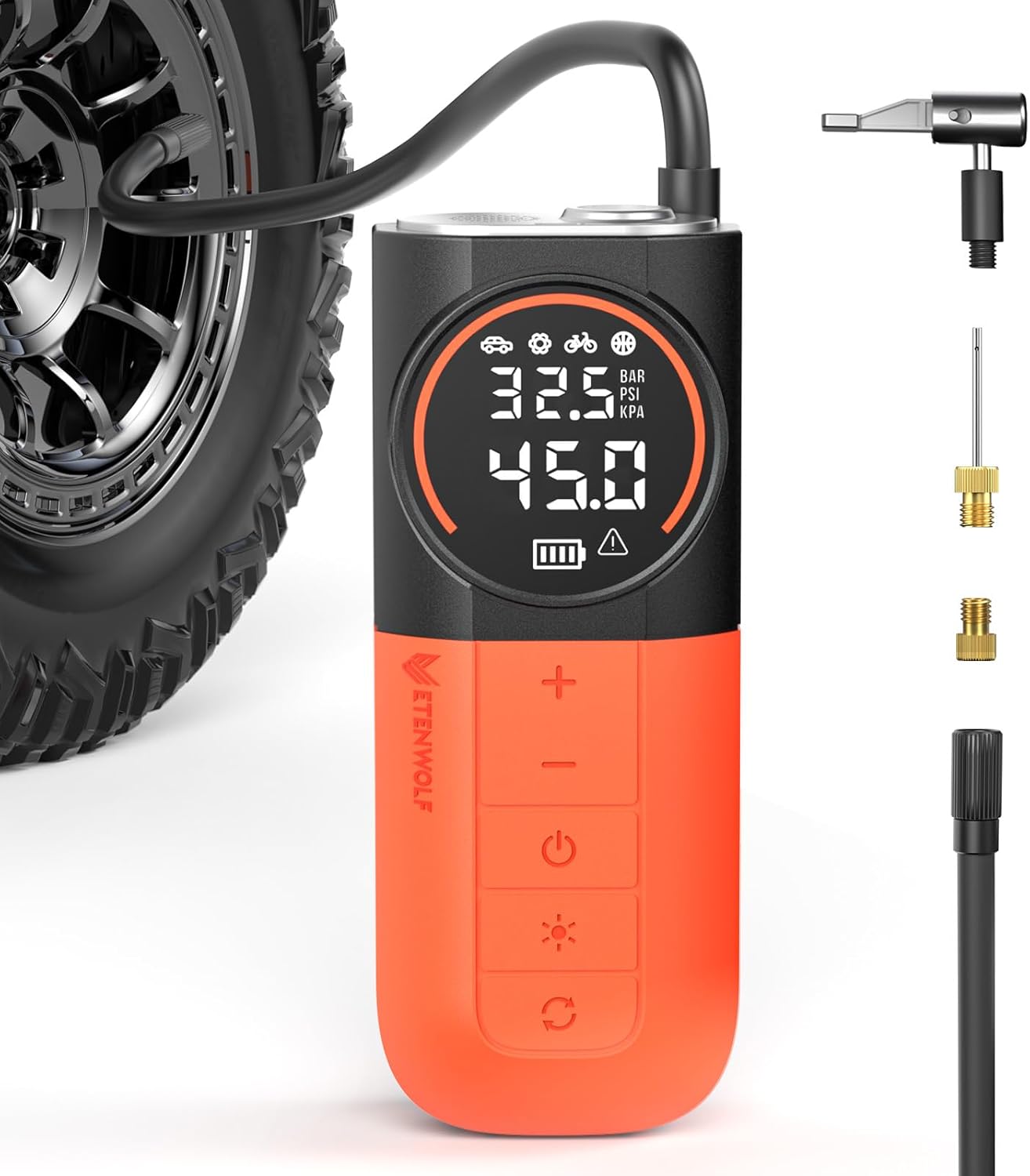
The ETENWOLF S1 cordless tire inflator delivers ultra-fast inflation with up to 160 PSI and a 20 L/min airflow for quicker tire top-offs. Its 5200mAh battery and cooling system support inflating many tires and sports balls on a single charge, while the digital pressure gauge and multi-unit display help you reach the right pressure accurately. With preset modes, pressure memory, an auto-stop feature, and an LED flashlight, it’s built for easy roadside and everyday use.

This roadside assistance kit helps drivers and passengers in urgent situations after an accident or breakdown, providing practical support while waiting for help. It includes a lightweight, compact tire inflator for fast inflation of standard vehicle tires, plus reinforced jumper cable protection for safer handling. Ideal for winter weather, road trips, camping, and travel, with everything stowed neatly in a trunk bag.
What to Do If You Suspect Alignment Issues?
If you suspect a Toyota Camry alignment problem, use this order:
- Check cold tire pressure against the driver’s door jamb sticker or owner’s manual.
- Inspect all tires for edge wear, feathering, cupping, bulges, cracks, and punctures.
- Think back to recent impacts such as potholes, curbs, road debris, or collision damage.
- Drive only in a safe area to confirm whether the car pulls on a flat road.
- Record the symptoms with photos and notes.
- Schedule a professional inspection if symptoms remain after pressure is corrected.
Tire maintenance is a safety issue, not just a tire-life issue. NHTSA reports that proper inflation, rotation, balance, and alignment help improve tire life, fuel use, and vehicle safety.
Why Regular Alignment Checks Matter for Your Toyota Camry

Regular alignment checks matter because a small angle problem can make the tires scrub instead of roll cleanly. That can shorten tire life, reduce comfort, affect fuel economy, and make the car feel less stable.
You should consider an alignment check:
- After hitting a pothole, curb, or road debris hard
- After replacing tires
- After steering or suspension repairs
- After a collision or wheel impact
- When tire wear is uneven
- When the steering wheel is off-center
- When the Camry pulls after tire pressure has been corrected
| Benefit | Impact on Performance | Cost Impact |
|---|---|---|
| More even tire wear | Helps the tread contact the road correctly | May delay premature tire replacement |
| Better straight-line tracking | Reduces constant steering correction | Can reduce stress on tires and suspension |
| Improved ride comfort | Helps reduce wandering and uneven tire scrub | May prevent repeat tire or steering complaints |
| Safer handling feel | Keeps the car more predictable during normal driving | Helps catch related suspension or tire issues early |
When to Seek Professional Help for Alignment Problems?
Seek professional help when symptoms are repeatable, tire wear is visible, or the Camry recently hit something hard. A shop can measure camber, caster, and toe and compare the numbers to Toyota specifications. Ask for a printout of the before-and-after readings.
Book service soon if you notice:
- Persistent pulling after tire pressure is corrected
- A steering wheel that stays off-center
- Uneven shoulder wear on one or more tires
- Steering vibration that appears at speed
- Loose, wandering, or clunking steering
- A recent pothole, curb strike, or collision
- New tires wearing unevenly soon after installation
Professional alignment cost varies by location, shop, vehicle condition, and whether the Camry needs a two-wheel or four-wheel alignment. If worn parts are found, those repairs usually need to be completed before the final alignment can hold.
Frequently Asked Questions
How much does it cost to get an alignment at Toyota?
Toyota alignment pricing is not the same everywhere. It depends on the dealer or repair shop, your region, whether a four-wheel alignment is needed, and whether worn parts must be repaired first. Ask for a written quote and request a before-and-after alignment printout.
How often should you get a wheel alignment on a Toyota Camry?
There is no single mileage rule that fits every Camry. Check alignment when you notice pulling, uneven tire wear, off-center steering, or steering instability. Also check it after hard impacts, new tires, steering or suspension work, or collision repairs. Follow your model-year owner’s manual and maintenance guide for tire rotation and inspection intervals.
Can I still drive my car if the alignment is off?
You may be able to drive short distances if the symptoms are mild, but you should not ignore them. Bad alignment can wear tires quickly and make the car harder to control. If the Camry pulls strongly, vibrates severely, has a damaged tire, or feels unstable, avoid highway driving and get it inspected quickly.
Can I check Toyota Camry alignment at home?
You can check symptoms at home by inspecting tire pressure, tire wear, steering-wheel position, and pulling on a safe flat road. You cannot accurately measure factory alignment angles at home without alignment equipment. Use home checks to decide when to schedule service.
What is the difference between alignment and balancing?
Alignment adjusts suspension angles so the tires point and contact the road correctly. Balancing corrects uneven weight in the tire-and-wheel assembly so it spins smoothly. Pulling and edge wear often point toward alignment; speed-related vibration often points toward balance, wheel damage, or tire issues.
Can low tire pressure feel like bad alignment?
Yes. Uneven or low tire pressure can cause pulling, sluggish handling, extra heat, and uneven wear. Check pressure when the tires are cold and use the pressure listed on your Camry’s door jamb sticker or owner’s manual before diagnosing alignment.
Conclusion
Keeping your Toyota Camry aligned helps the tires wear evenly, keeps steering predictable, and makes the car easier to control. The main warning signs are pulling, uneven tire wear, an off-center steering wheel, vibration, and loose steering feel. Start with tire pressure and a careful tread inspection, then schedule professional service if the symptoms remain. A proper diagnosis matters because the same symptoms can come from alignment, balance, tire damage, road crown, brakes, or worn suspension parts.
Sources
- Toyota — How to Check Tire Pressure — supports tire pressure checks, cold-pressure measurement, and pressure-label guidance.
- Toyota 2024 Camry Warranty & Maintenance Guide — supports Camry maintenance and tire rotation interval references.
- Toyota T-SB-0063-20 via NHTSA — Vehicle Pull, Steering Wheel Off Center, and Alignment Best Practices — supports road-crown, tire force, and diagnostic cautions.
- NHTSA TireWise — supports tire safety, inflation, rotation, balance, and alignment importance.
- Michelin — Wheel Alignment & Balancing Explained — supports alignment vs. balancing distinctions and vibration guidance.
- Bridgestone — What You Need to Know About Tire Alignment — supports common alignment symptoms and camber/toe/caster basics.

Related Articles

Toyota Camry All-Season Tires Explained: What They Can and Can’t Do
In exploring Toyota Camry all-season tires, discover their benefits and limitations—are they really the right choice for your driving needs?
Read More
Toyota Camry Tire Traction in Ice and Snow: A Practical Winter Driving Guide
Learn essential tips for maximizing tire traction on ice and snow in your Toyota Camry, ensuring your winter driving is safe and confident. Discover more now!
Read More
Do Toyota Camry Tires Need Snow Chains? When They Help and When They Don’t
How do snow chains enhance your Toyota Camry's winter driving safety, and when should you avoid using them? Discover the essential details inside!
Read More