Toyota Camry Wheel Alignment: How Often It’s Needed and What It Involves
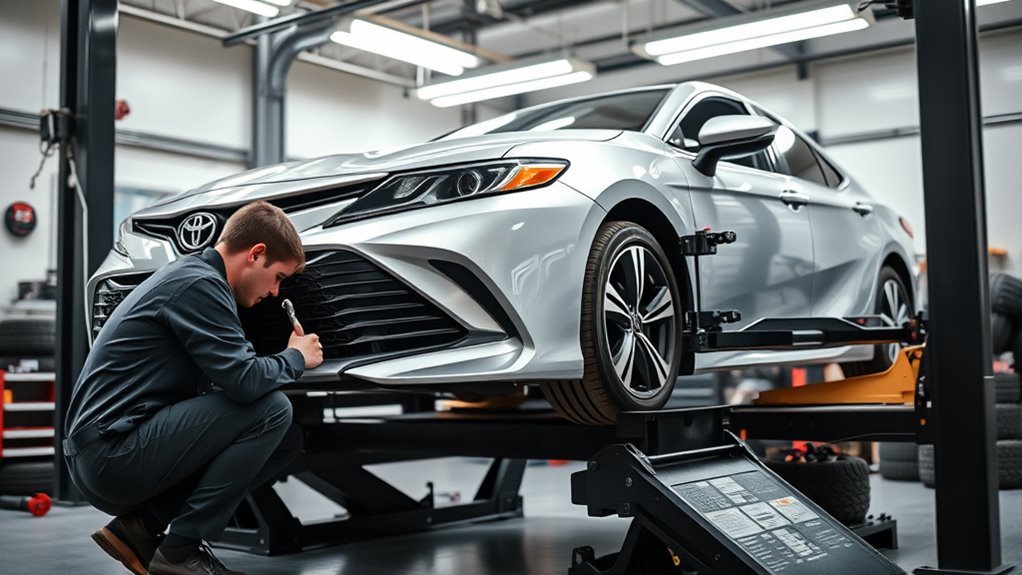
You should have your Toyota Camry’s wheel alignment checked when it pulls on a straight, level road, the steering wheel sits off-center, the tires develop directional or one-edge wear, or the car has had a hard pothole or curb impact, steering or suspension work, or new tires after abnormal wear. Alignment is not the same as tire rotation or balancing: rotation changes tire positions, balancing corrects weight differences in the tire-and-wheel assembly, and alignment measures wheel angles against Toyota specifications.
Last updated: August 18, 2026
Quick Answer
Have your Camry’s alignment checked if it pulls left or right on a straight, level road, the steering wheel is off-center, the tires show abnormal directional wear, or a pothole, curb hit, or suspension repair may have changed the wheel angles. An alignment check measures the angles; an adjustment is only needed when a reading is outside Toyota’s specification and that angle is adjustable. Highway-speed vibration usually calls for a tire, wheel, and balance inspection first.
Key Takeaways
- Check Camry alignment after pulling, uneven directional tire wear, an off-center steering wheel, a hard road impact, or steering or suspension work.
- Toyota schedules regular Camry maintenance and tire rotation, but wheel alignment is a separate measurement and adjustment performed when the vehicle’s condition calls for it.
- Highway-speed vibration is more commonly a reason to inspect tire balance, tire condition, and wheel condition first; alignment should also be checked when other alignment symptoms are present.
- With new tires, request an alignment check when the old tires wore unevenly or the Camry had pulling, steering, impact, or suspension issues. Adjustment is unnecessary if the readings are already within specification.
- The 2025 U.S. Camry warranty guide covers wheel alignment and wheel balancing for 12 months or 12,000 miles, whichever comes first, when the concern qualifies under Toyota’s Basic Warranty.
At a Glance
| Time Required | Often about 30–60 minutes for a straightforward passenger-car alignment; diagnosis, worn parts, or difficult adjustments can take longer |
| Difficulty | Professional service; not a driveway adjustment |
| Tools Needed | Alignment rack, wheel sensors, manufacturer specifications, and trained technician |
| Cost | As a June 18, 2026 planning benchmark, RepairPal lists about $159–$233 for many 2015–2026 Camry model years before taxes and fees; older years and local shop prices can differ |
How Often Does a Camry Need Alignment?
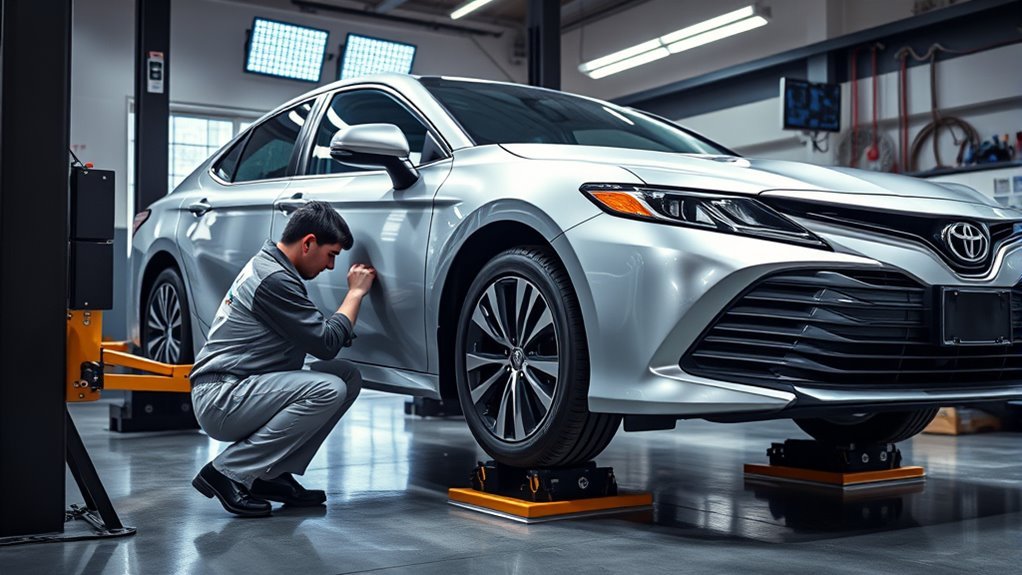
A Toyota Camry does not have a universal fixed wheel-alignment mileage interval in the verified maintenance schedule. Toyota’s 2025 Camry Warranty & Maintenance Guide recommends scheduled maintenance every 5,000 miles or six months, while Toyota’s maintenance logs include regular tire rotation. Alignment is a different service that measures wheel geometry against the specification for the vehicle.
A practical rule is to check alignment whenever there is a reason to suspect a problem: after a hard pothole hit, curb impact, steering or suspension repair, new tires following abnormal wear, or a visible change in the tread pattern. If you regularly drive on rough roads, use tire-service visits to inspect wear and steering behavior rather than treating alignment as an automatic annual adjustment.
Note: Tire rotation and wheel alignment are different services. Toyota’s Camry maintenance log includes tire rotation at regular service intervals, but rotating tires does not correct camber, caster, or toe. For the broader schedule, see the Toyota Camry tire maintenance guide.
The U.S. Tire Manufacturers Association recommends rotating tires based on the vehicle owner’s manual and says that, when no period is specified, 5,000 to 8,000 miles is a common rotation interval. It also notes that striking a pothole or other road hazard can cause alignment issues and that misaligned wheels can create uneven, rapid tread wear.
[Products Worth Considering]

This professional wheel and rim cleaning brush set lifts brake dust, grime, and dirt with soft, scratch-free microfiber and synthetic wool fibers. The rim brush bends up to 360 degrees for easy access to hard-to-reach areas around spokes, lips, and faces. Ideal for thorough cleaning of car, truck, motorcycle, bicycle, RV, and more wheel and tire surfaces.

The Ziopetru adjustable magnetic wheel alignment tool helps you check and restore camber and caster positioning after removing and reinstalling undercarriage components. With a clear leveling/bubble measurement system and an easy zeroing adjustment knob, it supports precise horizontal angle checking. The strong magnetic base mounts to metal surfaces for convenient use at home on cars, motorcycles, trucks, vans, and SUVs.

Upgrade your wheels with MIKKUPPA M12x1.5 mag seat lug nuts built for secure, corrosion-resistant performance. These closed-end chrome lug nuts are a direct replacement for select Toyota models, including Camry, Corolla, RAV4, Sienna, Avalon, Highlander, Matrix, Venza, and Prius. Triple-chromium plating and cold-forged, heat-treated steel help deliver strength for daily driving and replacement needs.
Signs Your Camry Needs an Alignment
Even if your Camry was aligned recently, one hard impact or a worn steering or suspension part can change how the wheels track. Watch for these warning signs:
- Uneven directional tire wear: One shoulder wears faster than the rest, or the tread feels feathered across the blocks.
- Pulling left or right: The car consistently drifts on a straight, level road after cold tire pressure and obvious tire problems have been ruled out.
- Off-center steering wheel: The wheel sits crooked while the car is traveling straight.
- Highway-speed vibration: Start with tire balance, tire damage, wheel damage, or runout. Add an alignment check if the Camry also pulls, has a crooked steering wheel, or shows directional tread wear.
- Tire squeal or scrub: Unusual tire noise during normal turning can justify an inspection, but pressure, tire condition, and suspension issues can produce similar symptoms.
- Recent impact: You hit a pothole, curb, road debris, or a deep dip hard enough to feel a clear change through the steering or ride.
Warning: Do not ignore a sudden strong pull, severe vibration, pressure loss, a tire bulge, or visible wheel or tire damage after an impact. Have the tires, wheels, steering, and suspension inspected before highway or long-distance driving.
Is It Alignment or Another Tire Problem?
| Symptom | Check First | When Alignment Moves Up the List |
|---|---|---|
| Pulling left or right | Cold tire pressure, tire condition, road crown, brake drag, and steering/suspension condition | The pull remains on a straight, level road with tire pressure correct |
| Highway vibration | Wheel balance, bent wheel, tire damage, runout, and uneven wear | Vibration appears with pulling, an off-center wheel, or directional tread wear |
| One-edge or feathered wear | Pressure, rotation history, and loose or worn suspension parts | Wear pattern points to the tire not tracking squarely against the road |
| After a pothole or curb hit | Tire sidewall, wheel, pressure, steering, and suspension damage | The steering wheel moves off-center, the car pulls, or abnormal wear starts |
| New tires | Old tire wear pattern and recent steering, impact, or suspension history | Old tires wore unevenly or the Camry already had alignment symptoms |
If your main complaint is pulling, the dedicated guide on why a Toyota Camry pulls to one side covers tire pressure, tire force, brakes, road crown, steering, suspension, and alignment in more diagnostic detail.
What Causes Camry Alignment Problems?
Your Camry’s alignment changes when the suspension or steering geometry no longer holds the wheels at the intended angles. Road impacts are common triggers, but wear, damaged parts, and previous repairs can also contribute.
Road Impacts and Potholes
Hitting a pothole, curb, raised road edge, or other hazard can jolt the wheel, steering, or suspension hard enough to change alignment. After a strong impact, inspect the tire sidewalls and tread, then schedule an alignment check if the steering wheel is off-center, the car pulls, or the tires begin wearing abnormally.
- A sharp hit is followed by a new steering or handling change.
- One tire begins wearing faster along an inner or outer shoulder.
- The Camry no longer tracks the same way on a straight, level road.
Suspension Wear and Damage
As suspension parts wear, your Camry’s alignment can drift because worn bushings, ball joints, control arms, struts, or mounts may no longer hold the wheel in its intended position. Rust, collision damage, and bent or loose parts can make the problem worse.
A good alignment shop should inspect for loose or damaged parts before making adjustments. If a component is bent, worn, or loose, the alignment may not hold until that part is repaired.
Steering and Tire Issues
Not every steering complaint is caused by alignment. Low tire pressure, mismatched tires, tire conicity, worn steering parts, brake drag, wheel imbalance, and tire or wheel damage can create similar symptoms. Start with tire pressure and visible tire condition, then move to steering, suspension, balance, and alignment checks based on the symptom.
- Feathered or one-edge tread wear can justify an alignment and suspension inspection.
- A steering wheel angled while traveling straight is a strong reason to measure alignment.
- Vibration felt mainly at road speed should put tire balance and tire/wheel condition high on the diagnostic list.
Pro Tip: Before paying for an alignment adjustment, ask the shop to confirm tire pressure, inspect for tire and wheel damage, and check for loose steering or suspension parts. Alignment cannot fix a bent wheel, damaged tire, or worn ball joint.
Alignment vs. Tire Rotation vs. Balancing
These services are often mentioned together, but they solve different problems. For a deeper explanation of vibration and balance service, see how Toyota Camry tire balancing works.
| Service | What It Does | When You Need It |
|---|---|---|
| Alignment | Measures wheel geometry and adjusts applicable angles such as camber, caster, and toe to manufacturer specifications. | Pulling, off-center steering, directional wear, impact, steering/suspension repair, or new tires after abnormal wear. |
| Rotation | Moves tires to different positions to even out normal wear. | At the interval in your owner’s manual or maintenance guide. |
| Balancing | Corrects weight imbalance in the tire-and-wheel assembly. | Highway-speed vibration, new tire installation, remounting, or a suspected lost wheel weight. |
What Happens During a Camry Wheel Alignment?

During a Camry wheel alignment, a technician places the car on an alignment rack, attaches sensors to the wheels, measures the current angles, and compares them with Toyota specifications for the exact model year, trim, drivetrain, suspension setup, and applicable service procedure.
| Angle | Simple Meaning | Why It Matters |
|---|---|---|
| Camber | How much the tire tilts inward or outward when viewed from the front. | Affects edge wear and how the tire contacts the road. |
| Caster | The forward or backward tilt of the steering axis. | Affects steering stability and return-to-center feel. |
| Toe | Whether the tires point slightly inward or outward when viewed from above. | Affects straight tracking, feathering, and rapid tread wear. |
Ask for the alignment printout. It should let you answer three questions: Which angles were outside Toyota’s range before service? Which readings changed after adjustment? Is any remaining out-of-range reading non-adjustable or evidence that a part is worn, loose, or bent? If an angle cannot be brought into range, the shop should explain why before replacing parts.
Do You Need an Alignment After New Tires?
You do not automatically need an alignment adjustment simply because new tires were installed. You should have the alignment checked when the old tires had uneven directional wear, the Camry pulls, the steering wheel is off-center, there has been suspension or steering work, or the vehicle recently took a hard impact.
The National Highway Traffic Safety Administration distinguishes wheel alignment from balancing and says new tires should be balanced when installed. Alignment is a separate geometry check. If your alignment measurements are already inside Toyota’s specification, there is nothing to gain from adjusting angles that are already correct.
- Correct alignment helps the new tread contact the road evenly.
- A centered steering wheel and proper geometry support predictable straight-line tracking.
- Correct toe reduces unnecessary tread scrub.
Skipping an alignment check is most risky when the previous tires already showed abnormal wear or the vehicle had steering, suspension, or impact symptoms. For help identifying the old pattern, see the guide to Toyota Camry uneven tire wear.
[Products Worth Considering]

This universal wheel alignment tool helps you accurately restore tire tilt angles after tire or suspension repairs using an adjustable camber gauge. It features a powerful magnetic base that firmly attaches to brake rotors for stationary, slip-free readings, improving consistency during measurement. Built from durable PC plastic, it resists wear and corrosion and is compact enough for car, truck, RV, and motorcycle alignment tasks.

Measure tire tread depth quickly and accurately with this LUMITECO dial gauge that reads in 1/32" increments up to 14/32". The color-coded green/yellow/red zones make it easy to judge tire wear and know when replacement is needed. A rugged, compact design with a protective pouch helps keep the gauge ready for use on cars, trucks, motorcycles, and more.

The Tymate TM12 RV TPMS delivers real-time tire pressure and temperature monitoring with a stable 433Hz display for safer long-distance driving. It supports simultaneous monitoring across vehicle and trailer zones, includes six alarm modes for pressure, temperature, leakage, battery, and signal loss, and features easy DIY installation with auto calibration. Power is supplied via USB-C charging or solar recharging, with a wide 0–144 PSI range and up to 50 ft signal coverage for RVs and towable trailers.
Should You Choose 2-Wheel or 4-Wheel Alignment?
For many Camrys, asking the shop to measure all four wheels is the most useful starting point. That does not mean every angle on all four wheels will be adjustable. The technician should use the Toyota procedure for your exact model year and adjust only the readings that are both outside specification and adjustable.
2-Wheel Alignment Basics
A two-wheel alignment, often called a front-end alignment, focuses on front-wheel measurements and adjustments. It may be appropriate when the vehicle’s rear geometry is fixed, undamaged, and already tracking within specification. The decision should be based on the vehicle design and measurements, not simply on the fact that the Camry is front-wheel drive.
4-Wheel Alignment Benefits
A four-wheel measurement evaluates the front and rear relationship together. This can reveal rear readings or thrust-line problems that influence how straight the vehicle tracks. If the rear is in specification, the shop may only need front adjustments. If a rear reading is out of specification, the technician should determine whether it is adjustable on that exact Camry or whether a worn or damaged part is responsible.
Note: Alignment procedures and adjustable angles vary by Camry model year, trim, drivetrain, and suspension design. Ask for measurements and a before-and-after printout rather than choosing the service solely from a label such as “front-wheel drive.”
How Long Camry Alignments Take and Cost
A straightforward passenger-car alignment often takes about 30 to 60 minutes. Diagnosis, damaged or worn parts, seized hardware, repeated measurements, or additional repairs can extend the appointment.
Cost varies by location, shop, model year, and whether steering or suspension repairs are needed. For a current planning benchmark, RepairPal’s estimate updated June 18, 2026 lists about $159 to $233 for many 2015–2026 Camry model years before taxes and fees. Older Camry years in its table can differ substantially, so use a local written estimate for your exact vehicle.
Before approving work, ask for:
- A written estimate
- A before-and-after alignment printout
- Confirmation that tire pressure and tire condition were checked first
- An explanation of any part that prevents an angle from being brought into specification
- Whether the shop guarantees the alignment for a set time or mileage
If you are replacing tires, ask whether the shop offers an alignment check with installation. The important distinction is measurement versus adjustment: if all readings are already within specification, an additional adjustment is not necessary.
Are Camry Alignments Worth It?
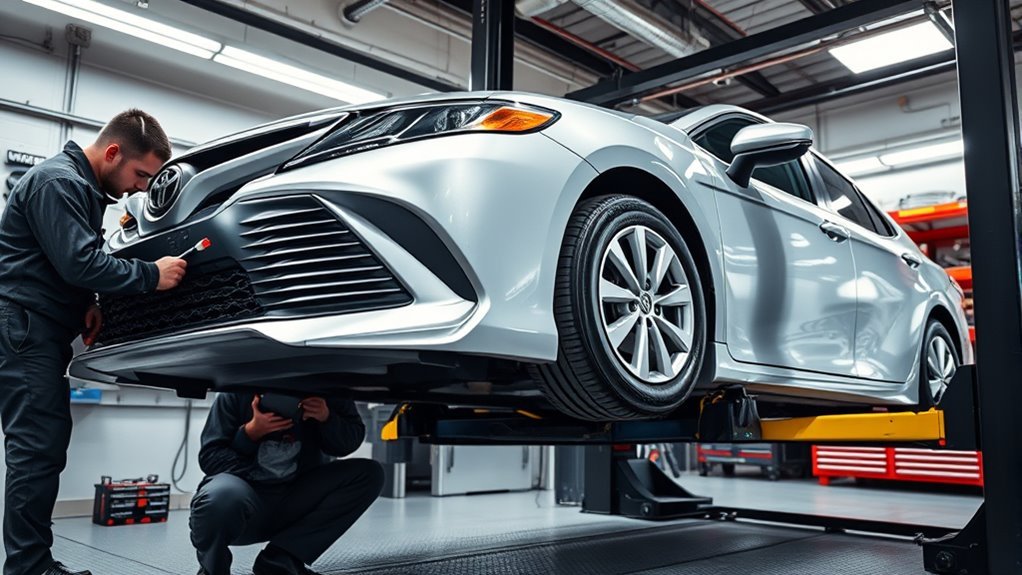
Yes, a Camry wheel alignment is worth paying for when the measurements show the vehicle needs one. Correct alignment helps reduce abnormal tire wear, supports stable steering, and keeps the car tracking as designed. It can also reduce unnecessary tire scrub.
Check alignment before a tire-wear problem becomes expensive: after a significant impact, when old tires show directional wear, or as soon as the steering wheel no longer sits straight while the car tracks straight.
Alignment is not a cure for every steering or tire complaint. It will not fix a bent wheel, damaged tire, worn bearing, loose ball joint, or damaged control arm. When the steering and suspension are sound and the measured wheel angles are outside specification, alignment is the correct service.
Frequently Asked Questions
How often should you get a wheel alignment on a Toyota Camry?
Toyota’s Camry maintenance schedule uses regular service intervals for items such as tire rotation, but it does not establish a universal fixed wheel-alignment mileage interval. Check alignment when the Camry pulls, the steering wheel is off-center, directional tire wear appears, after steering or suspension work, or after a hard pothole or curb impact.
How much is an alignment on a Camry?
The price depends on location, shop, model year, and whether repairs are needed first. As a June 18, 2026 planning benchmark, RepairPal lists about $159 to $233 for many 2015–2026 Camry model years before taxes and fees, while older model years can differ. Get a written local estimate for your exact car.
What are the signs of poor alignment?
Common signs include directional or one-edge tire wear, pulling on a straight, level road, and an off-center steering wheel. Vibration is less specific and should first prompt checks for tire balance, tire damage, wheel damage, and runout.
Is Toyota alignment under warranty?
Toyota’s 2025 U.S. Camry Warranty & Maintenance Guide states that wheel alignment and wheel balancing are covered for 12 months or 12,000 miles, whichever comes first, under the Basic Warranty when the concern qualifies. Damage or conditions excluded by the warranty remain the owner’s responsibility.
Do I need an alignment after hitting a pothole?
Have the tire, wheel, steering, suspension, and alignment inspected if the impact was hard or the Camry now pulls, the steering wheel is crooked, or abnormal wear appears. If there is a bulge, pressure loss, severe vibration, or visible wheel damage, inspect the vehicle before highway driving.
Can I drive with bad alignment?
A mild alignment issue may still allow a short trip to a repair shop, but strong pulling, severe vibration, visible tire damage, pressure loss, or rapidly worsening handling deserves immediate inspection. Continuing to drive can accelerate tire wear and make the vehicle harder to control.
Do new Toyota Camry tires need an alignment?
New tires do not automatically require an alignment adjustment. Have the alignment checked if the old tires wore unevenly, the Camry pulls, the steering wheel is off-center, or there has been suspension work or a hard impact. Adjust only readings that are outside specification and adjustable.
Is vibration a wheel alignment or balancing problem?
Highway-speed vibration more often points to wheel balance, tire damage, wheel damage, or runout than alignment alone. Alignment becomes more likely when the vibration appears with pulling, an off-center steering wheel, or directional tire wear.
Conclusion
Check your Camry’s wheel alignment when the vehicle gives you a reason: pulling on a straight, level road, an off-center steering wheel, directional tire wear, a significant road impact, or steering or suspension work. With new tires, measure alignment when the old wear pattern or vehicle history suggests a problem rather than assuming an adjustment is automatically required. Ask for the before-and-after printout, review which readings were actually out of specification, and repair worn or damaged parts before expecting an alignment to hold.
Sources
- Toyota – Wheel Alignment & Why It Matters – explains caster, camber, toe, alignment symptoms, balancing differences, and alignment fundamentals.
- Toyota 2024 Camry Warranty & Maintenance Guide – supports scheduled tire rotation and maintenance-log context.
- Toyota 2025 Camry Warranty & Maintenance Guide – supports the 5,000-mile/six-month maintenance rhythm and the 12-month/12,000-mile wheel alignment and balancing warranty limitation.
- U.S. Tire Manufacturers Association – Tire Care Essentials – supports pothole/alignment issues, tire rotation guidance, pressure checks, and uneven tread-wear warnings.
- NHTSA TireWise – supports tire safety, balancing versus alignment, tread, pressure, rotation, and new-tire balancing guidance.
- RepairPal – Toyota Camry Wheel Alignment Cost Estimate – provides the June 18, 2026 model-year cost benchmark and location-dependent estimate context.
- AAA – Wheel Alignment or Tire Balance – supports typical passenger-car alignment timing and the distinction between alignment and balance symptoms.
- FuelEconomy.gov – Keeping Your Vehicle in Shape – provides tire-maintenance and efficiency context.
[Products Worth Considering]

Black Magic Intense Foam Wheel & Tire Cleaner uses a high-foaming action to lift away dirt, grime, and brake dust without scrubbing. The color-changing formula helps show contaminants being dissolved as foam turns from white to brown. Safe for all wheel types and even wheel wells, it leaves a like-new, slick finish with a fresh cherry scent.

Steelman white tire marking crayons provide high-contrast, semi-permanent marks for repairing and inspecting tires and equipment. They write on wet or dry, smooth or coarse surfaces including rubber, metal, glass, and wood, making them ideal for puncture location and damage outlining. The lead- and zinc-free crayons resist weather and fading yet wipe away when you no longer need the marks.

This manual duck head tire changer kit makes tire installation and removal simpler by letting you embed the duck head into the tire with applied pressure. The integrated design and durable steel construction help reduce friction and improve efficiency and safety during use. Suitable for 16–21 inch wheels, it’s convenient for cars, trucks, SUVs, and ATV tires, with 24-hour after-sales support.

Related Articles

Toyota Camry All-Season Tires Explained: What They Can and Can’t Do
In exploring Toyota Camry all-season tires, discover their benefits and limitations—are they really the right choice for your driving needs?
Read More
Toyota Camry Tire Traction in Ice and Snow: A Practical Winter Driving Guide
Learn essential tips for maximizing tire traction on ice and snow in your Toyota Camry, ensuring your winter driving is safe and confident. Discover more now!
Read More
Do Toyota Camry Tires Need Snow Chains? When They Help and When They Don’t
How do snow chains enhance your Toyota Camry's winter driving safety, and when should you avoid using them? Discover the essential details inside!
Read More