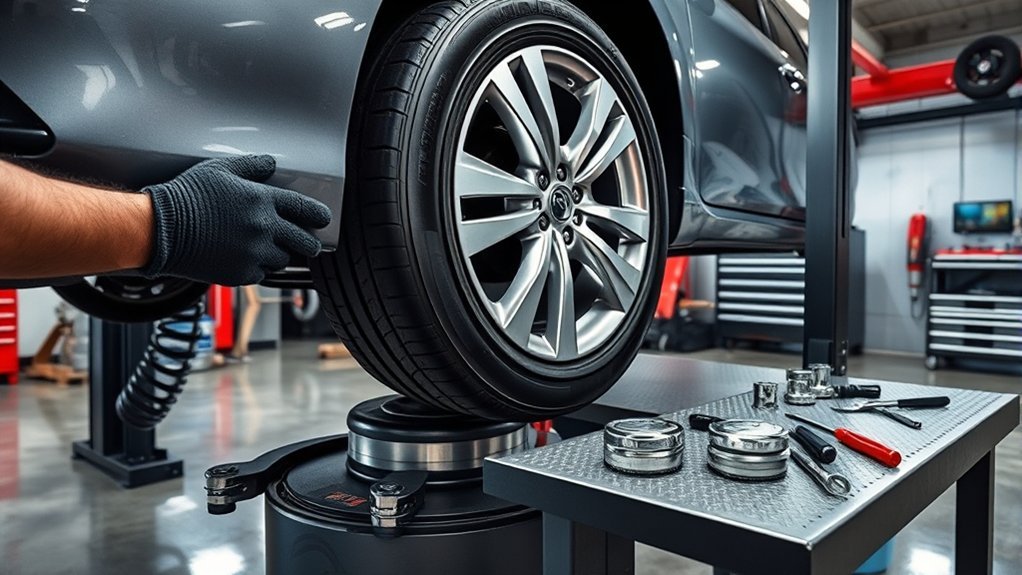
Balancing the tires on your Toyota Camry means correcting small weight differences in each tire-and-wheel assembly so the wheel rotates smoothly at road speed. You can do a basic balance at home only if you have the right tire balancer and safety equipment, but most Camry owners will get a more accurate result from a shop with a dynamic computer balancer.
Quick Answer
To balance Toyota Camry tires, remove each wheel safely, mount it on a tire balancer, identify the light and heavy spots, add the correct wheel weights, then recheck until the assembly spins evenly. For the smoothest highway ride, use a professional dynamic balancer, especially if vibration continues after a basic DIY balance.
Key Takeaways
- Balance is different from alignment and rotation: balancing corrects weight distribution, alignment corrects wheel angles, and rotation changes tire positions.
- New tires should be balanced when installed, and existing tires should be checked if you feel vibration, see uneven wear, lose a wheel weight, or repair/remount a tire.
- Always use jack stands, wheel chocks, the correct jacking points, and a torque wrench when removing and reinstalling Camry wheels.
- If a wheel is bent, a tire has a bulge, or vibration remains after balancing, stop troubleshooting at home and have a qualified technician inspect it.
At a Glance
| Time Required | About 15–30 minutes per wheel after setup; longer if you are learning or troubleshooting vibration. |
| Difficulty | Moderate to advanced DIY. Professional service is recommended for highway-speed vibration or road-force issues. |
| Tools Needed | Wheel chocks, jack, jack stands, lug wrench, torque wrench, tire pressure gauge, tire balancer, chalk or marker, and correct wheel weights. |
| Cost | DIY costs vary by equipment. Professional balancing is commonly priced per tire, often around $10–$50 per tire depending on shop, location, wheel size, and service type. |
Why Tire Balancing Matters for Your Toyota Camry
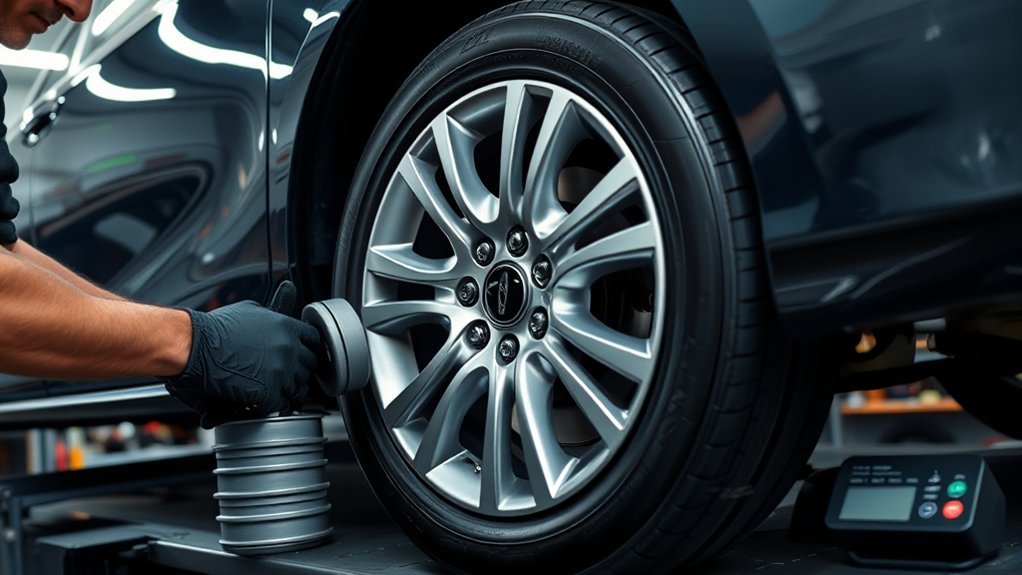
Tire balancing helps your Toyota Camry ride smoothly by evening out the weight around each wheel and tire. Even a small imbalance can make the wheel hop or shake as speed increases, which is why many drivers first notice the problem on the highway.
According to the National Highway Traffic Safety Administration, tire balancing helps wheels rotate properly and helps prevent shaking or vibration. NHTSA also notes that tire pressure, tread, rotation, balance, and alignment all affect tire safety and tire life.
Balanced tires can help with:
- Smoother steering and less cabin vibration
- More even tread wear
- Less stress on wheel bearings, shocks, struts, and steering parts
- Better ride comfort at highway speeds
- Longer tire life when combined with proper pressure, rotation, and alignment
A tire balance problem is usually felt as vibration. A tire alignment problem is more likely to show up as pulling, a crooked steering wheel, or edge wear.
What Happens If You Do Not Balance Tires?
When you ignore tire balancing, the vibration usually gets worse instead of better. You may feel shaking in the steering wheel, floorboard, or seat. You may also notice uneven tire wear, cupping, scalloped edges, or a humming road noise that was not there before.
Unbalanced tires can also make other problems harder to diagnose. A bent wheel, separated tire belt, worn suspension part, bad wheel bearing, or alignment issue can feel similar from the driver’s seat. That is why persistent vibration should not be dismissed as “just a balance issue.”
Warning: Do not keep driving on a tire with a sidewall bulge, exposed cords, deep cracks, tread separation, or a wheel that looks bent. Balancing will not make a damaged tire safe.
Tire Balancing vs. Alignment vs. Rotation
These three services are often mentioned together, but they fix different problems:
| Service | What It Fixes | Common Signs You Need It |
| Tire balancing | Uneven weight in the tire-and-wheel assembly | Vibration, shaking, missing wheel weight, uneven or cupped wear |
| Wheel alignment | Incorrect wheel and suspension angles | Car pulls left or right, steering wheel is off-center, edge wear |
| Tire rotation | Uneven wear caused by tire position | Front and rear tires wearing at different rates |
The 2025 Toyota Camry Warranty & Maintenance Guide lists scheduled maintenance every 5,000 miles or six months and includes tire rotation in the maintenance log. That does not mean every Camry must be balanced at every rotation, but it is a good time to ask for a balance check if you feel vibration or see uneven wear.
[Products Worth Considering]

Measure tire tread depth quickly and accurately with this LUMITECO dial gauge that reads in 1/32" increments up to 14/32". The color-coded green/yellow/red zones make it easy to judge tire wear and know when replacement is needed. A rugged, compact design with a protective pouch helps keep the gauge ready for use on cars, trucks, motorcycles, and more.

Keep your tires properly inflated with this analog VONDIOR tire pressure gauge, designed for fast, easy readings without batteries. The swiveling, two-axis hose and large glow dial help you measure at any tire angle with instant visibility. Built with a protective rubber shield, it supports durable, low-maintenance use for cars and trucks.

This professional wheel and rim brush kit makes it easy to lift brake dust, grime, and dirt from wheels and tires without scratching finishes. The brushes feature soft, metal-free wool heads and a flexible 360-degree rim brush design for reaching hard-to-clean areas. Includes multiple brush types plus accessories for thorough car, motorcycle, and general vehicle detailing.
Essential Tools for DIY Tire Balancing
To balance tires on your Toyota Camry at home, you need more than a jack and a set of wheel weights. You need safe lifting equipment, a way to measure imbalance, and the correct weights for your wheel type.
[Products Worth Considering]

Monitor tire tread wear with a smart, color-coded depth gauge that shows clear condition ranges at a glance. The bar is range marked for fast, easy readings, helping you maintain safer traction and performance. Each gauge is portable with a pocket clip, and the set includes 20 units for daily use and sharing.

The Trivd Frol 1/2" air impact wrench delivers high performance torque up to 1500 ft-lbs with a twin hammer impact mechanism for strong, balanced blows. It features an ergonomic grip, compact lightweight design, and quick-stop control with 3 forward speeds up to 8000 RPM plus a reverse speed. Built for demanding automotive repair and tire shop work, the rear exhaust helps keep debris away from the surface.

This 3-piece wheel and tire brush set makes it easy to clean light, medium, and heavy dirt from wheels, rims, tires, and exterior surfaces. It includes both soft and stiff bristle options for gentle scrubbing and tough grime removal, helping lift brake dust and road buildup. The long-handle design supports comfortable cleaning across cars, trucks, SUVs, RVs, motorcycles, and more, with simple care instructions to restore brush shape.
Necessary Equipment Checklist
- Wheel chocks: Keep the car from rolling while you lift one corner.
- Jack and jack stands: Use the jacking points listed in your Camry owner’s manual. Never rely on the jack alone while working near or under the vehicle.
- Lug wrench or breaker bar: Loosen lug nuts slightly before lifting the wheel off the ground.
- Torque wrench: Reinstall lug nuts to the specification in your owner’s manual, using a crisscross pattern.
- Tire pressure gauge: Set cold tire pressure to the number on the driver-side door placard or owner’s manual, not the maximum pressure printed on the tire sidewall.
- Tire balancer: A static bubble balancer can help with basic correction, but a dynamic computer balancer is more accurate for highway-speed vibration.
- Wheel weights: Use clip-on or adhesive weights that match your wheel design and finish.
- Chalk or marker: Mark heavy spots and weight locations before making adjustments.
Safety Gear Requirements
Wear safety glasses, work gloves, and sturdy shoes. Work on flat, solid ground. Put the transmission in Park, set the parking brake, and chock the wheels that stay on the ground. If you are not comfortable lifting the car or torquing lug nuts correctly, use a tire shop instead.
Note: A basic home balance may reduce minor shake, but it may not catch road-force variation, a bent wheel, or a tire with internal belt damage. Those problems need professional equipment.
Static vs. Dynamic Balancing
Static balancing corrects up-and-down imbalance. It can be useful for a basic DIY setup, but it is limited. Dynamic balancing checks imbalance across both sides of the wheel while the assembly spins. This is what most tire shops use because it better matches real driving conditions.
AAA explains that a technician mounts the wheel on a dynamic computer balancer, the machine spins the assembly, and the balancer shows how much weight is needed and where to place it.
Step-by-Step Guide to Balancing Your Tires
Properly balancing your tires is essential for maintaining the performance and safety of your Toyota Camry. Follow these steps only if you have the correct tools and a safe work area.
- Prepare the car: Park on level ground, set the parking brake, chock the wheels, and slightly loosen the lug nuts before lifting.
- Lift and secure the vehicle: Lift the Camry at the correct jacking point and place it securely on a jack stand. Do not work from the jack alone.
- Remove the wheel: Remove the lug nuts and wheel. Keep the lug nuts in a clean place so dirt does not get into the threads.
- Inspect before balancing: Look for missing wheel weights, bent rims, cracked wheels, uneven tread, nails, bubbles, or separated tread. If you see damage, stop and have the tire inspected.
- Set tire pressure: Check cold tire pressure and adjust it to the Camry’s door placard or owner’s manual specification.
- Mount the wheel on the balancer: Center the wheel carefully. A wheel that is not centered on the balancer will give a bad reading.
- Find the heavy spot: Spin or release the wheel according to your balancer’s instructions. Mark the heavy point or the location where weight is needed.
- Add wheel weights: Install the correct clip-on or adhesive weights in the amount and position shown by the balancer.
- Recheck the balance: Spin or retest the assembly. Keep adjusting until the wheel is balanced according to the balancer.
- Reinstall the wheel: Hand-thread the lug nuts first, snug them in a crisscross pattern, lower the vehicle, and then torque the lug nuts to the specification in your owner’s manual.
- Test drive carefully: Drive at low speed first, then at normal road speed. If vibration remains, have the wheel checked on a professional dynamic or road-force balancer.
Pro Tip: If the vibration began right after hitting a pothole, do not assume weights are the only issue. A bent rim, shifted belt, or damaged suspension part can feel like an out-of-balance tire.
Signs You Need Tire Balancing
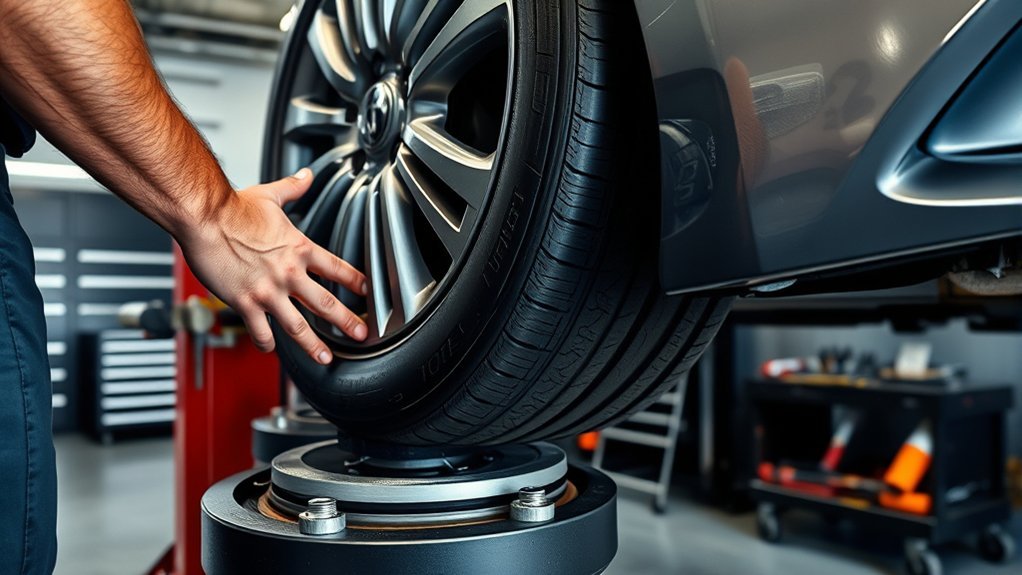
If you notice vibrations in the steering wheel, floorboard, or seat while driving, your tires may need balancing. Tire balance problems often become easier to feel as speed increases, but the exact speed varies by tire, wheel, and road surface.
Vibration While Driving
Steering wheel vibration often points to a front tire or wheel issue. Seat or floor vibration can point to the rear tires, although this is not a perfect rule. A vibration that appears only at a certain speed range is a classic sign that a tire-and-wheel assembly should be checked.
Have the tires balanced if:
- The steering wheel shakes at road or highway speed.
- The seat, floor, or body vibrates even on smooth pavement.
- The vibration started after tire installation, tire repair, a pothole hit, or a curb strike.
- You can see that a wheel weight is missing.
Uneven Tire Wear
Uneven tire wear can be a sign of imbalance, alignment trouble, wrong tire pressure, worn suspension parts, or a tire defect. Look for bald spots, cupping, scalloped edges, feathered edges, or one side of the tread wearing faster than the other.
NHTSA recommends checking tread at least once a month when you check tire pressure and replacing tires when tread is worn to 2/32 inch. If your Camry shows uneven wear before the tires are worn out, do not just rotate the tires and ignore the cause.
Decreased Fuel Efficiency
Unbalanced tires can contribute to wasted energy because the tire is not rolling as smoothly as it should. Still, fuel economy is usually affected more clearly by tire pressure, alignment, tire design, driving style, and road conditions.
The safest wording is this: proper tire maintenance can support fuel efficiency, but balancing alone should not be promised as a large MPG gain. NHTSA notes that proper inflation, rotation, balance, and alignment help with safety, tire life, and savings. Continental also explains how pressure, alignment, balance, and rolling resistance affect fuel consumption.
When to Get Professional Tire Balancing
Get professional tire balancing when you install new tires, repair or remount a tire, feel vibration, see uneven wear, lose a wheel weight, or hit a pothole hard enough to suspect wheel damage. NHTSA says new tires should always be balanced when installed.
A shop is also the better choice if your Camry has:
- Vibration that remains after a DIY balance
- Large wheels, low-profile tires, or aftermarket wheels
- Repeated loss of wheel weights
- A suspected bent rim
- Noise or vibration that changes during braking or turning
- Cupped tire wear that may point to worn suspension parts
Ask for road-force balancing if the tires look balanced on a normal machine but the car still shakes at highway speed. Road-force balancing presses a roller against the tire to find stiffness variation, out-of-round tires, or wheel/tire match issues that a basic spin balance may miss.
Note: If your Camry is still within the early new-vehicle period, check your warranty booklet. Toyota’s 2025 Camry Warranty & Maintenance Guide lists wheel balancing under the limited 12-month/12,000-mile exception for certain items.
[Products Worth Considering]

This professional wheel and rim cleaning brush set lifts brake dust, grime, and dirt with soft, scratch-free microfiber and synthetic wool fibers. The rim brush bends up to 360 degrees for easy access to hard-to-reach areas around spokes, lips, and faces. Ideal for thorough cleaning of car, truck, motorcycle, bicycle, RV, and more wheel and tire surfaces.

The Topeak SmartGauge D2 delivers precise digital tire pressure readings for bikes, motorcycles, and sports equipment up to 250 psi (17 bar). Its rotating SmartHead works with both Presta and Schrader valves, so you can check pressure quickly without adapters. The LCD display makes it easy to read results in psi, bar, or kg/cm² with an included CR2032 battery for immediate use.

This heavy-duty tire pressure gauge combines measurement, inflation, and deflation in one compact tool for quick roadside and garage use. Its dual-head chuck helps reach inner and outer dual-wheel positions, while the clear indicator bar makes readings easy to see. Built for durability, it supports a wide pressure range and works across cars, trucks, RVs, SUVs, and motorcycles.
Maintenance Tips for Keeping Your Tires Balanced
To maintain balanced tires on your Toyota Camry, combine tire balancing with basic tire care. Balancing is only one part of keeping the car smooth and safe.
- Check tire pressure monthly: Use the cold pressure listed on the driver-side door placard or owner’s manual. Do not use the maximum pressure printed on the tire sidewall as your target.
- Rotate tires on schedule: Follow your Camry maintenance guide. Many late-model Toyota maintenance schedules use 5,000-mile or six-month service intervals, with tire rotation included.
- Balance new tires: Balance every new tire when it is installed, even if you replace only one tire.
- Inspect for missing weights: Adhesive weights can fall off after wheel cleaning, pothole impacts, or poor installation.
- Wash out mud, snow, and gravel: Debris stuck inside a wheel can create a temporary imbalance.
- Fix alignment issues promptly: Pulling, crooked steering, and edge wear are not usually solved by balancing alone.
- Do not ignore recurring vibration: Repeated balancing may not fix a bent wheel, bad tire, wheel bearing issue, or worn suspension part.
Frequently Asked Questions
What is the average cost of balancing a tire?
A standard tire balance commonly costs about $10–$50 per tire, depending on your location, wheel size, shop type, and whether you need standard spin balancing or road-force balancing. Some shops include balancing when you buy new tires, while dealerships and road-force services may cost more.
What can throw Toyota Camry tires out of balance?
Common causes include normal tread wear, a lost wheel weight, pothole impact, curb impact, improper tire mounting, mud or ice stuck inside the wheel, a bent rim, a tire repair, or a tire that has been removed and reinstalled on the wheel.
Can I balance Toyota Camry tires at home?
Yes, but only with the right equipment. A static balancer can help with simple corrections, but a professional dynamic balancer is usually more accurate for modern passenger cars. If your Camry shakes at highway speed, a shop balance is the better choice.
How do I know if I need balancing or alignment?
Balancing is more likely if the main symptom is vibration or shaking at speed. Alignment is more likely if the Camry pulls to one side, the steering wheel is off-center, or the tire edges wear unevenly. You can need both services at the same time.
How often should Camry tires be balanced?
Balance new tires when installed and rebalance when you feel vibration, repair or remount a tire, lose a wheel weight, or see uneven wear. Toyota’s maintenance schedule supports regular tire rotation, but balancing is usually symptom-based unless your tire shop or tire manufacturer recommends it at each rotation.
Conclusion
Balancing your Toyota Camry tires helps reduce vibration, protect ride comfort, and support even tire wear. A careful DIY balance can help if you have the right equipment, but professional dynamic balancing is the safer and more accurate choice for most highway-speed vibration. Keep up with tire pressure checks, rotation, alignment inspections, and prompt tire repairs so your Camry stays smooth, safe, and predictable on the road.
Sources
- Toyota 2025 Camry Warranty & Maintenance Guide — scheduled maintenance, tire rotation, and wheel-balancing warranty context.
- Toyota Owners Manuals and Warranties — owner’s manual reference for model-specific jacking points, tire pressure, and wheel-service specifications.
- NHTSA TireWise Tire Safety — tire pressure, tread checks, balance, alignment, rotation, and tire safety guidance.
- AAA: Wheel Alignment or Balance — explanation of wheel balancing, alignment, vibration symptoms, and dynamic computer balancing.
- Continental Tires: Tire Maintenance and Fuel Efficiency — how pressure, alignment, balance, and rolling resistance affect fuel use.