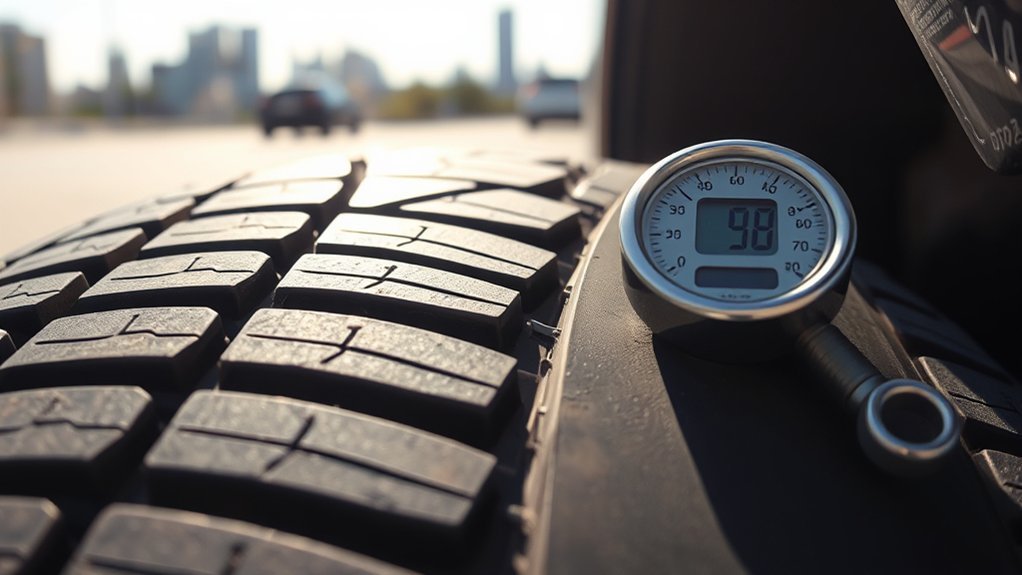
Temperature changes can make your Toyota Camry’s tire-pressure reading rise or fall even when no air has been intentionally added or released. Cold weather contracts the air inside a tire, while warmer weather and normal driving heat increase its pressure. Knowing which reading to trust helps you avoid underinflation, unnecessary adjustments, uneven wear, and confusing TPMS warnings.
Last reviewed: July 17, 2026.
Quick Answer
Temperature can change your Toyota Camry’s tire pressure by about 1 to 2 PSI for every 10°F shift. Check all tires cold, at least monthly, and inflate them to the pressure on the driver-door Tire and Loading Information label. Do not use the tire sidewall’s maximum PSI or bleed air from warm tires.
Key Takeaways
- Your Camry’s correct pressure is the cold PSI printed on the driver-door placard, not a universal 32–35 PSI figure.
- Tire pressure commonly changes by about 1 to 2 PSI for every 10°F change in ambient temperature.
- Check pressure before driving or after the car has been parked for at least three hours.
- A solid TPMS light usually points to low pressure. A flashing light followed by steady illumination usually signals a system malfunction.
- If one tire repeatedly loses more pressure than the others, have it inspected for a puncture, leaking valve, bead leak, wheel damage, or sensor problem.
What Tire Pressure Should a Toyota Camry Have?
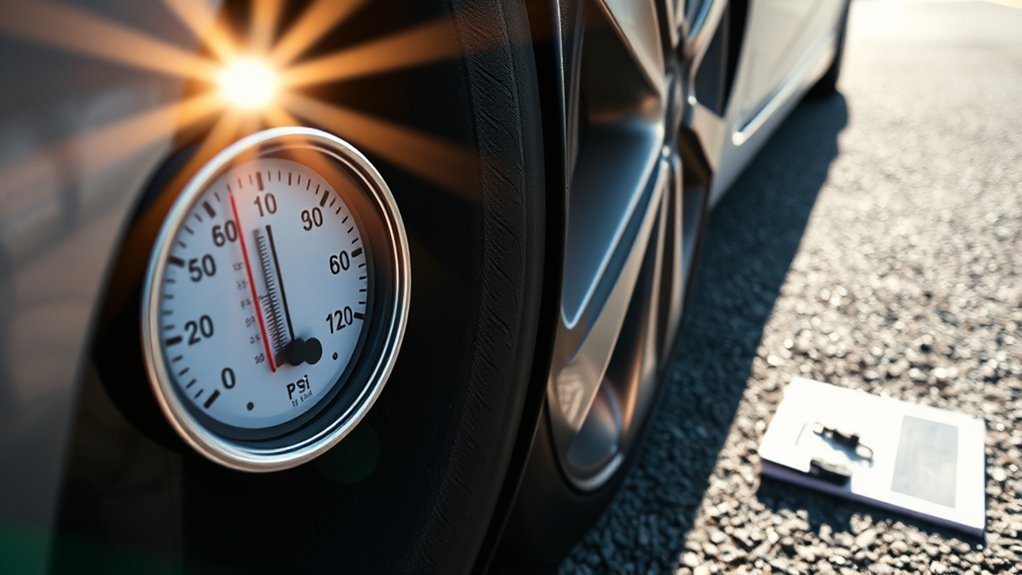
Toyota Camry tire pressure is not identical across every year, trim, wheel size, or tire package. Although many Camrys list a cold pressure somewhere in the low-to-mid 30 PSI range, you should never rely on a generic figure when servicing your own vehicle.
Find the correct cold pressure on the Tire and Loading Information label attached to the driver-side doorjamb or door edge. You can also confirm it in the owner’s manual for your exact model year. NHTSA identifies the vehicle placard and owner’s manual as the correct sources for recommended pressure.
| Pressure Information | How to Use It |
|---|---|
| Driver-door placard | Use this cold PSI for normal driving unless Toyota provides different instructions for a specific load or tire setup. |
| Owner’s manual | Use it to confirm pressure, TPMS procedures, spare-tire information, and model-specific warnings. |
| Tire sidewall | Do not use the molded maximum pressure as your normal target. It is not the Camry’s recommended operating pressure. |
Note: The front and rear specifications may differ on some vehicles. Follow each axle’s placard value rather than assuming all four tires require the same PSI.
How Temperature Affects Camry Tire Pressure
Air contracts as it cools and expands as it warms. As a practical rule, tire pressure may change by approximately 1 to 2 PSI for every 10°F change in ambient temperature. USTMA recommends checking tires cold at least monthly and paying extra attention when the weather changes sharply.
This temperature effect does not necessarily mean your tire has gained or lost a large amount of air. The gauge is measuring how the air inside the tire responds to its current temperature. A real leak may be present when one tire loses pressure faster than the others or continues falling after you refill it.
A 30°F seasonal temperature drop can lower a tire’s reading by roughly 3 to 6 PSI, even without a puncture.
| Temperature Change | Possible Pressure Change | What to Do |
|---|---|---|
| 10°F colder | About 1–2 PSI lower | Check the tires cold and add air only as needed to reach the placard pressure. |
| 20°F colder | About 2–4 PSI lower | Recheck all tires instead of waiting for the TPMS light. |
| 20°F warmer | About 2–4 PSI higher | If the tires were set correctly while cold, do not release air solely because the weather warmed. |
Cold Weather Effects on Tire Pressure
A sudden cold spell can lower all four readings enough to trigger your Camry’s TPMS light. This often happens overnight when the pressure was already close to the warning threshold. The light may disappear after the tires warm during driving, but you should still check them with a gauge when they are cold.
Continued underinflation can cause excess flexing and heat inside the tire. It may also contribute to:
- Slower steering response and less stable handling
- Uneven wear along the tire shoulders
- Higher rolling resistance and reduced fuel economy
- Greater vulnerability to damage from potholes and road hazards
- Heat buildup during extended or high-speed driving
Do not intentionally lower pressure for more winter traction. Underinflation does not turn an all-season tire into a winter tire and may weaken handling. Inflate each tire to Toyota’s specified cold pressure.
How Summer Heat Affects Tire Pressure

Higher outdoor temperatures raise the pressure reading, and driving adds more heat through tire flex and road friction. It is normal for a warm tire to read several PSI above the cold specification.
A warm reading above the door-label figure does not automatically mean the tire is dangerously overinflated. The placard value is a cold inflation specification. Vehicle and tire engineers expect normal pressure growth after driving.
Warning: Do not bleed air from a recently driven or sun-heated tire simply to bring it down to the cold placard number. The pressure may fall below the correct level after the tire cools. Recheck and adjust it cold.
Summer heat can still expose existing problems. Inspect a tire promptly if it is visibly damaged, repeatedly loses pressure, develops a bulge, vibrates, or becomes abnormally hot compared with the others.
How to Properly Check Your Camry’s Tire Pressure
You can check and adjust your Camry’s pressure in about 10 minutes. The most important requirements are a reliable gauge, a cold tire, and the correct door-placard specification.
At a Glance
| Time Required | About 10 minutes |
| Difficulty | Easy |
| Tools Needed | Accurate tire-pressure gauge and access to an air compressor |
| Cost | Usually no service fee if you already own a gauge and have access to air |
[Products Worth Considering]

The TYAMATE TM8 solar-powered wireless TPMS delivers real-time tire pressure and temperature monitoring with six alarm modes for safer driving. A vibrant color LCD display shows readings clearly while windshield mounting keeps it hands-free and easy to read. With a wide 0–87 PSI range, strong 433.92 MHz signal transmission, and quick sensor pairing, it’s ideal for RV, sedan, SUV, MPV, and truck use.
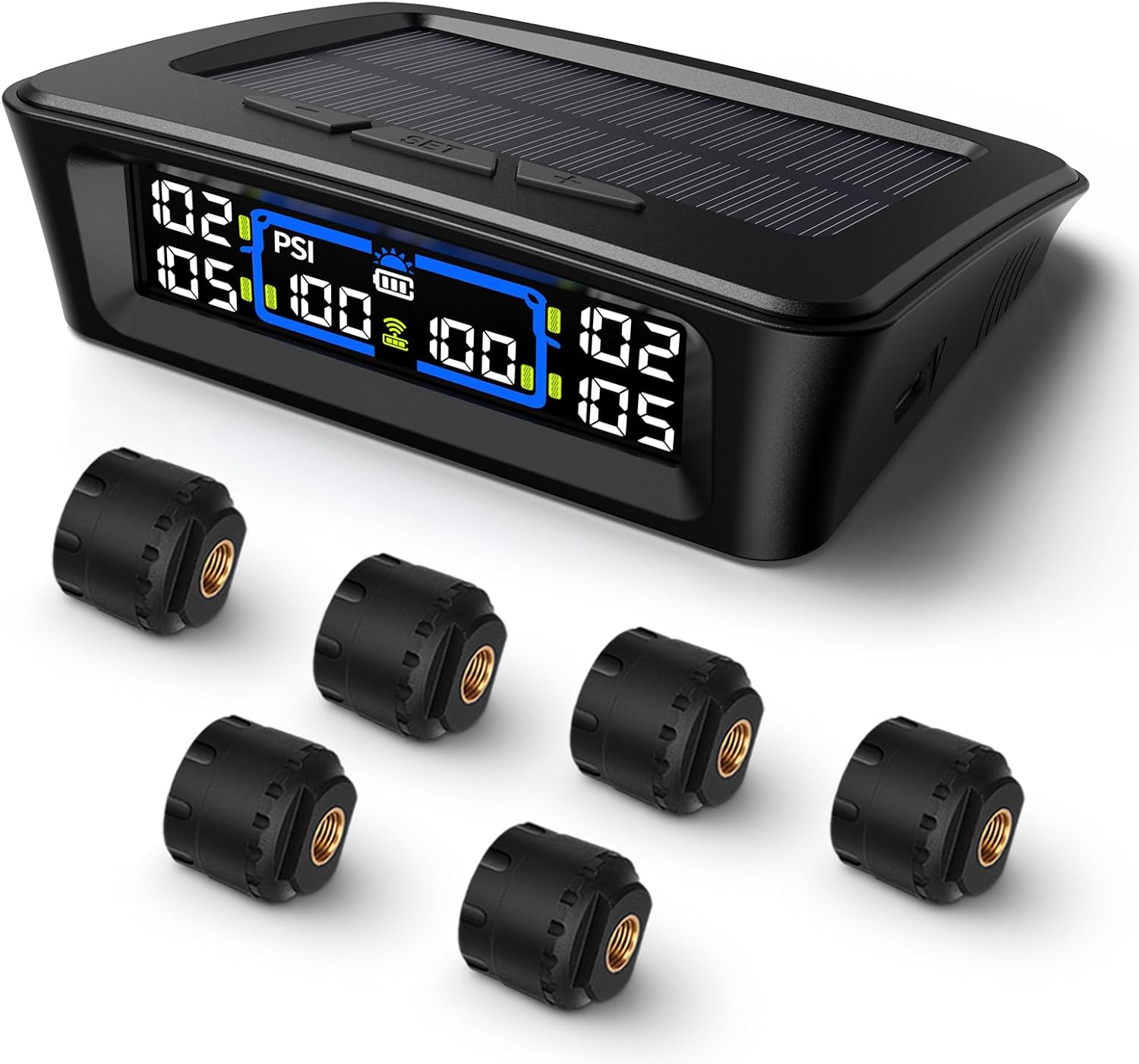
The Tymate TM12 RV TPMS delivers real-time tire pressure and temperature monitoring with a stable 433Hz display for safer long-distance driving. It supports simultaneous monitoring across vehicle and trailer zones, includes six alarm modes for pressure, temperature, leakage, battery, and signal loss, and features easy DIY installation with auto calibration. Power is supplied via USB-C charging or solar recharging, with a wide 0–144 PSI range and up to 50 ft signal coverage for RVs and towable trailers.

Keep your tires properly inflated with this analog VONDIOR tire pressure gauge, designed for fast, easy readings without batteries. The swiveling, two-axis hose and large glow dial help you measure at any tire angle with instant visibility. Built with a protective rubber shield, it supports durable, low-maintenance use for cars and trucks.
Recommended Tools
- A digital, dial, or pencil-style tire-pressure gauge
- A portable compressor or service-station air pump
- Your Camry’s driver-door pressure label
- A small flashlight if the valve stems are difficult to see
A digital gauge is often easiest to read, but any undamaged gauge that gives repeatable measurements can work. If its readings seem unusual, compare it with another trusted gauge.
Step-by-Step Pressure Check
- Let the tires cool. Check before driving or after the Camry has been parked for at least three hours. NHTSA uses three hours as the standard cold-check condition.
- Read the driver-door placard. Note the specified front and rear cold pressure.
- Remove the first valve cap. Keep it somewhere clean so it does not collect dirt.
- Press the gauge firmly onto the valve stem. A brief hiss is normal. Reposition the gauge if air continues escaping.
- Compare the reading with the placard. Add air when the reading is low. Release small amounts only when a cold tire is above the specified pressure.
- Measure again. Continue until the cold reading matches the placard.
- Replace the valve cap. Repeat the process for every road tire.
- Check the spare or repair equipment. Some Camry configurations have a spare, while others may use a tire-repair kit. Follow the equipment instructions for your vehicle.
Pro Tip: Record the four readings before adding air. If one tire is consistently several PSI lower than the others, the pattern can help a tire technician locate a slow leak.
Seasonal Tire Pressure Adjustments
You do not need separate winter and summer target pressures unless Toyota provides a special instruction for your exact vehicle or operating condition. The target remains the placard’s cold pressure. What changes is how often you may need to check and adjust it.
- During autumn and winter: Check after significant temperature drops and before long trips.
- During spring and summer: Check cold pressure rather than judging pressure after driving in hot weather.
- After a major weather change: Measure all four tires with the same gauge under similar conditions.
- Before carrying a heavy load: Follow the load and pressure instructions in the owner’s manual and door label. Do not guess or use the tire’s sidewall maximum.
Michelin recommends checking all tires monthly and before long trips, even when the vehicle has TPMS.
[Products Worth Considering]
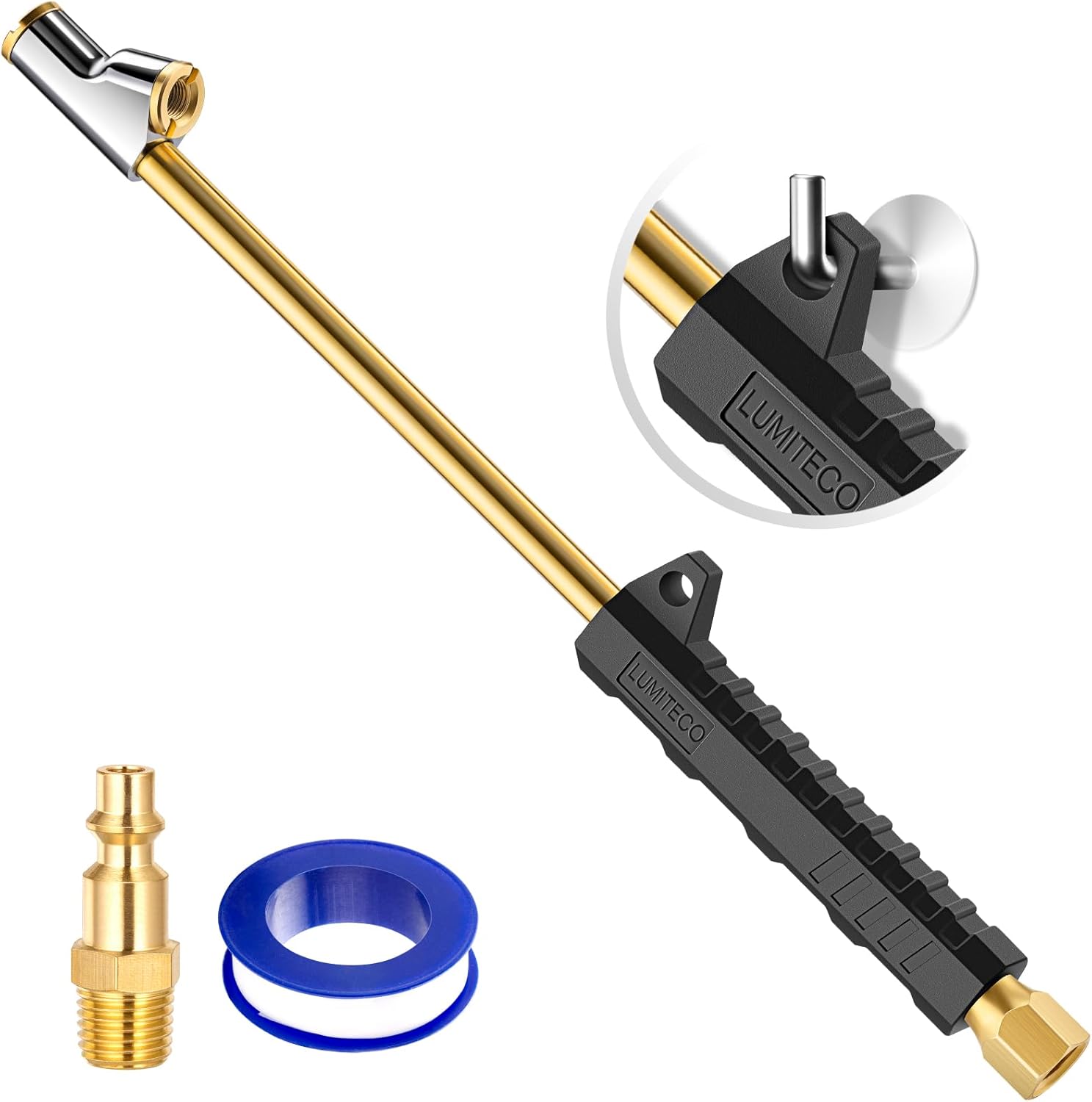
The LUMITECO 12" extended reach dual head air chuck is designed for hard-to-reach truck, RV, and bus dual wheels, making tire inflation quick and easier. It features a straight foot lock-on chuck for inner tires and a 30° reverse chuck for outer valves, with a closed-flow design that only allows air when engaged. Built with a brass body and ergonomic rubber grip, it connects easily using a 1/4" FNPT thread plus a standard quick plug for compressor-ready inflation.

Replace worn or malfunctioning GM TPMS sensors with this 433MHz pre-programmed sensor set designed for compatibility with many Chevrolet, Buick, GMC, and Cadillac models. It includes guidance for proper OBDII relearning/pairing after installation and supports reliable long-term operation with a high-performance CR2032 battery. Quality tested for durability and performance to help restore accurate tire pressure monitoring.
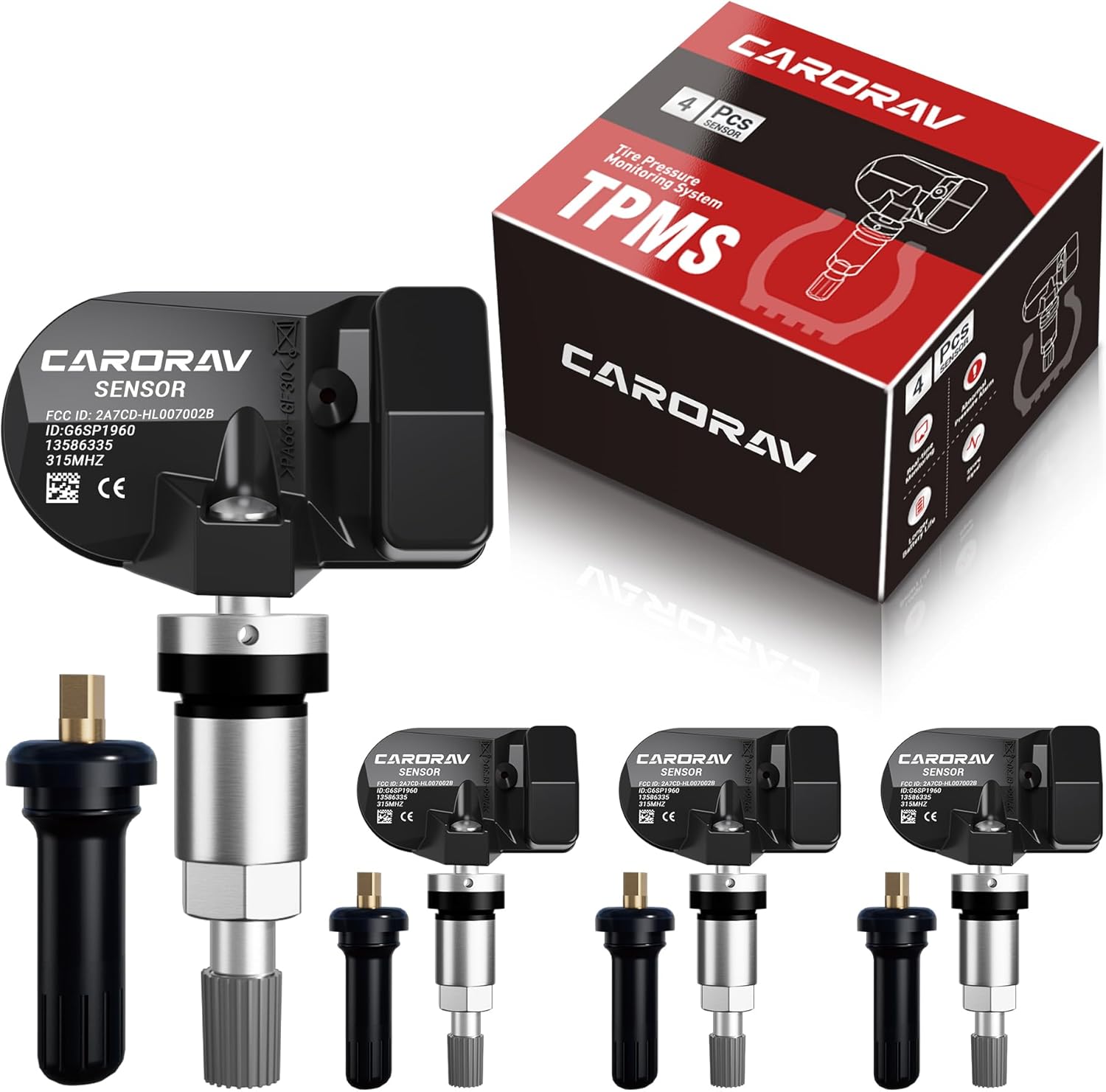
Replace worn or missing TPMS sensors with CARORAV pre-programmed GM-compatible sensors for a smoother installation experience. These 315MHz replacement sensors help monitor tire pressure in real time with long battery life, and they are designed to withstand harsh temperatures. Manual or OBDII relearn may be required to reset the system for proper recognition.
Troubleshooting Your Camry’s TPMS Light
Your Tire Pressure Monitoring System is a warning system, not a replacement for a gauge. It may alert you when a tire is significantly underinflated, but it does not prove that every tire is at the exact placard pressure.
| TPMS Behavior | Likely Meaning | Recommended Action |
|---|---|---|
| Solid light | At least one monitored tire may be significantly underinflated. | Slow down, inspect the tires, and measure all of them as soon as it is safe. |
| Light appears on a cold morning and later turns off | Pressure may be close to the warning threshold and temporarily rise as the tires warm. | Check and correct the tires cold. Do not ignore the pattern. |
| Flashes for about a minute, then stays on | The TPMS may have a sensor, registration, receiver, or system malfunction. | Check pressure manually and arrange diagnosis if the behavior continues. |
| Light stays on after inflation | A tire may still be low, pressure may have been checked warm, the system may need time to update, or initialization may be required. | Recheck cold and follow the exact owner’s-manual procedure for your model year. |
[Products Worth Considering]
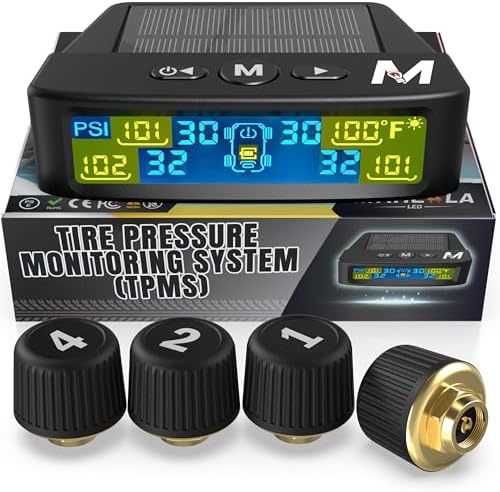
Marcala’s TPMS set of four sensors helps you monitor tire pressure and temperature in real time while driving, with updates every second. The bright color LCD uses auto-dimming for easy viewing, powered by dual solar and USB charging, and offers six alarm modes. Built for trailers, RVs, campers, trucks, and towing setups, the sensors support monitoring 1-4 wheels up to 98 PSI with IP67 waterproof protection.
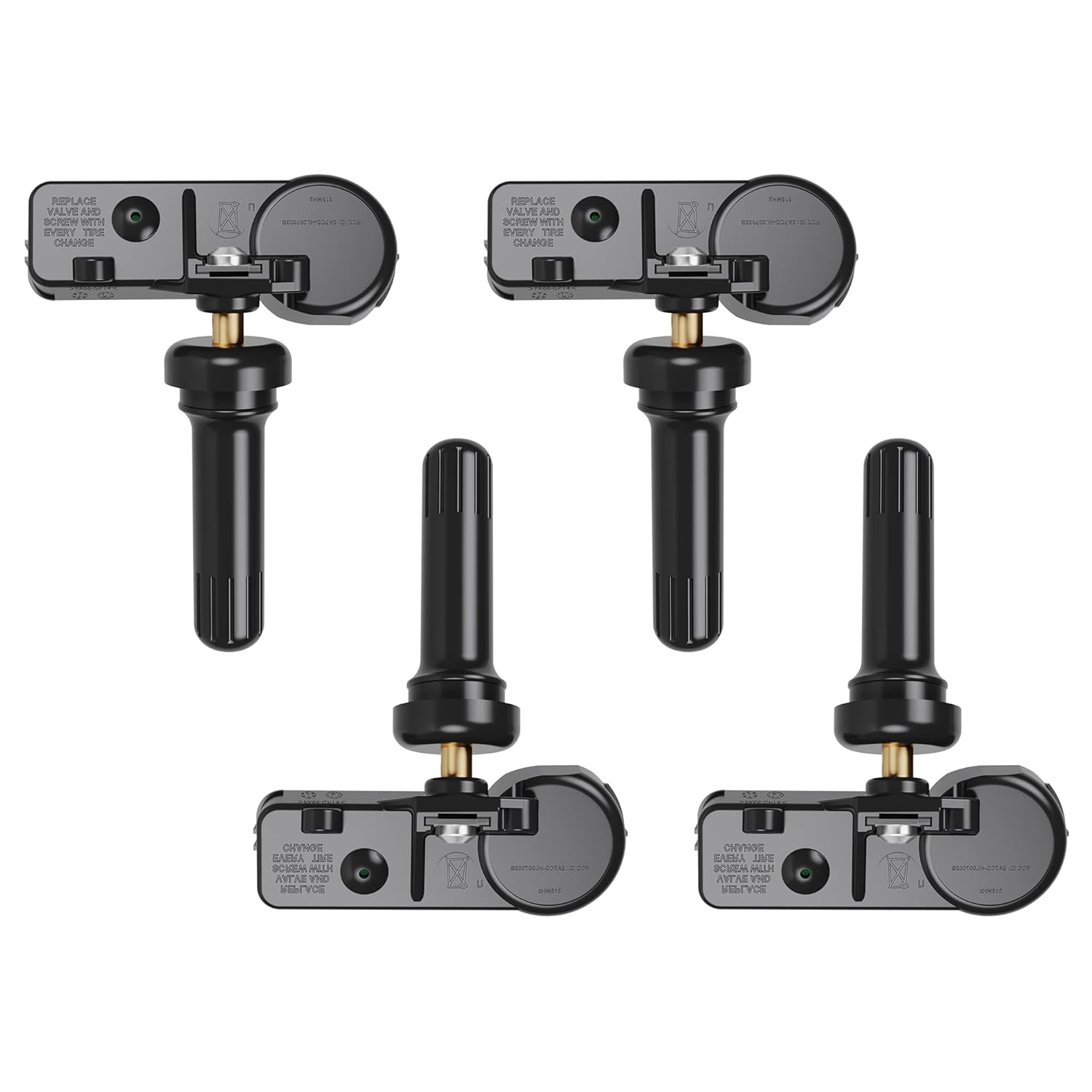
Replace worn or faulty TPMS sensors with this brand new 315MHz GM-compatible replacement set for select Chevy, GMC, Buick, Cadillac, and similar vehicles. These sensors are pre-programmed for your make/model/year and typically only require activation with a scan tool. Built for long service life with a high-temperature battery, they help maintain reliable tire pressure monitoring for safer driving.

Upgrade your Toyota tire setup with these corrosion-resistant, leak-proof valve stem caps designed to help protect the valve core from water, snow, and road grime. The caps feature a snug rubber seal and durable copper alloy construction to resist rust and oxidation while maintaining stable tire pressure. Ideal for replacing worn original caps and keeping your wheels looking clean and stylish.
Common TPMS Issues
- A seasonal pressure drop affecting several tires
- A nail, screw, or small tread puncture
- A leaking valve core or damaged valve stem
- Corrosion or leakage where the tire seals against the wheel
- A damaged wheel following a pothole impact
- A weak or failed TPMS sensor battery
- A replacement sensor whose identification code was not registered
- Incorrect initialization after rotating, replacing, or changing wheels
If a tire is visibly flat, has sidewall damage, makes unusual noise, or causes the vehicle to pull or vibrate, stop driving as soon as you can do so safely. A TPMS cannot reliably detect every sudden tire failure.
Resetting or Initializing the TPMS
First, adjust every tire to the correct cold placard pressure. Do not initialize the system while a tire is intentionally underinflated, because the system may accept the wrong pressure as its reference.
The remaining procedure depends on your Camry’s model year and equipment. Some older models use a physical reset switch. Other models use steering-wheel controls, the multi-information display, or a vehicle-settings menu. Replacement sensors may also require identification-code registration.
Use the Toyota Owners manual library to select your exact Camry year and follow its tire-pressure warning-system instructions. Do not disconnect the battery merely to extinguish the warning. Battery disconnection does not repair a leak, correct inflation, register an incompatible sensor, or replace a failed sensor.
When One Tire Keeps Losing Pressure
Temperature changes usually move all four readings in the same general direction. A single tire that repeatedly drops several PSI deserves inspection.
- Inflate it to the correct cold pressure.
- Record the reading and date.
- Recheck it cold the next day and again within several days.
- Inspect the tread for nails, screws, cuts, or embedded objects.
- Have a tire professional inspect the tread, valve, bead, wheel, and sensor if the loss continues.
Do not remove an embedded object before reaching a repair facility unless you are trained and equipped to handle the resulting air loss. The object may be slowing the leak.
Benefits of Maintaining Proper Tire Pressure
Correct inflation supports predictable steering, braking, ride quality, and tire durability. It also reduces unnecessary rolling resistance.
- Fuel efficiency: The U.S. Department of Energy reports an average fuel-economy improvement of about 0.6%, with improvements of up to 3% in some cases when tires are kept properly inflated.
- Tire life: NHTSA reports that proper tire maintenance can extend average tire life by approximately 4,700 miles.
- Even tread wear: Correct pressure helps the tread carry the vehicle’s weight as intended.
- Handling: Properly inflated tires respond more consistently during steering, braking, and emergency maneuvers.
- Damage prevention: Correct pressure reduces excess flexing and helps protect the tire from heat-related structural stress.
These figures are general estimates, not guarantees. Tire construction, alignment, driving style, road conditions, load, climate, and maintenance all affect the final result.
Frequently Asked Questions
Do I need to add air when the temperature drops?
Add air when a cold measurement is below the pressure printed on your Camry’s driver-door label. Do not add a fixed number of PSI simply because winter has arrived. Measure first, then adjust each tire to the placard specification.
Why is my Camry’s tire-pressure light on when the tires look fine?
A tire can be significantly underinflated without looking flat. Cold weather may also lower a marginal tire below the warning threshold. Check every tire with a gauge. If the light flashes before staying on, or remains after correct inflation, the TPMS may need diagnosis or model-specific initialization.
Is 30 PSI too low for a Toyota Camry?
It depends on your door-placard specification. If your Camry requires 32, 35, or another pressure above 30 PSI, then a cold reading of 30 PSI is low. Compare the reading with your own vehicle label rather than a generic online range.
Should I inflate my Camry to the maximum PSI on the tire sidewall?
No. The sidewall figure is a tire limit associated with its rated load, not the vehicle manufacturer’s normal operating recommendation. Use the cold PSI on the Camry’s driver-door Tire and Loading Information label.
Should I add extra PSI above the placard during winter?
Normally, no. Inflate to the placard pressure while the tires are cold. Check them more often during falling temperatures so they do not drift below that specification. Follow Toyota’s manual if it gives a special instruction for your vehicle or operating load.
Does nitrogen prevent seasonal tire-pressure changes?
No. Nitrogen-filled tires still respond to temperature changes and can still lose pressure through leaks or normal permeation. Check them with the same monthly cold-pressure routine used for tires filled with ordinary compressed air.
Conclusion
Temperature can move your Toyota Camry’s pressure readings several PSI between seasons, but the correct target does not come from the weather, a generic online range, or the maximum number molded into the tire. It comes from your vehicle’s driver-door placard.
Check the tires cold at least once a month, after major temperature changes, and before long trips. Avoid releasing air from warm tires, investigate any tire that loses pressure faster than the others, and use your exact model-year Toyota manual when the TPMS requires initialization or sensor registration.
Sources
- Toyota Owners Manuals and Warranties — model-specific tire-pressure and TPMS procedures.
- National Highway Traffic Safety Administration TireWise — cold-pressure checks, vehicle placards, TPMS behavior, tire safety, and tire-life guidance.
- U.S. Tire Manufacturers Association Tire Care Essentials — monthly inspections and temperature-related pressure changes.
- U.S. Department of Energy — fuel-economy effects of correct tire inflation.
- Michelin Tire Pressure Guide — cold checking, natural pressure loss, and tire-inflation procedure.