Weather can change your Toyota Camry tire pressure faster than you may expect. Cold air lowers PSI, heat raises it, and wet or humid conditions can make slow leaks harder to spot. For the safest reading, check your tires when they are cold, compare each tire with the driver-door placard, and treat the TPMS light as a warning to verify pressure with a gauge.
Quick Answer
Cold weather can lower Camry tire pressure, while heat from warm weather or driving can raise it. Check pressure when the tires are cold, use the PSI on the driver-door label or owner’s manual, and do not rely on TPMS alone because it usually warns only after pressure is already significantly low.
Key Takeaways
- Cold temperatures can make your Camry’s tire pressure drop, so check PSI more often during fall and winter.
- Heat from summer pavement and driving can raise pressure, but you should still set PSI from a cold reading.
- The correct number is on your Toyota Camry’s driver-door tire label or in the owner’s manual, not on the tire sidewall.
- TPMS helps, but it does not replace a monthly manual pressure check with a reliable gauge.
- Repeated pressure loss, bulges, cracks, valve leaks, or a flashing TPMS warning need a tire technician.
At a Glance
| Time Required | About 5 to 10 minutes for all four tires |
| Difficulty | Easy DIY check |
| Tools Needed | Accurate tire pressure gauge, valve caps, and an air compressor if pressure is low |
| Cost | Usually low cost if you already own a gauge; station air or a new gauge may cost extra |
Last reviewed: July 7, 2026. This guide uses safety guidance from Toyota, NHTSA, FuelEconomy.gov, Michelin, Bridgestone, and federal TPMS rules.
Why Tire Pressure Matters in a Camry
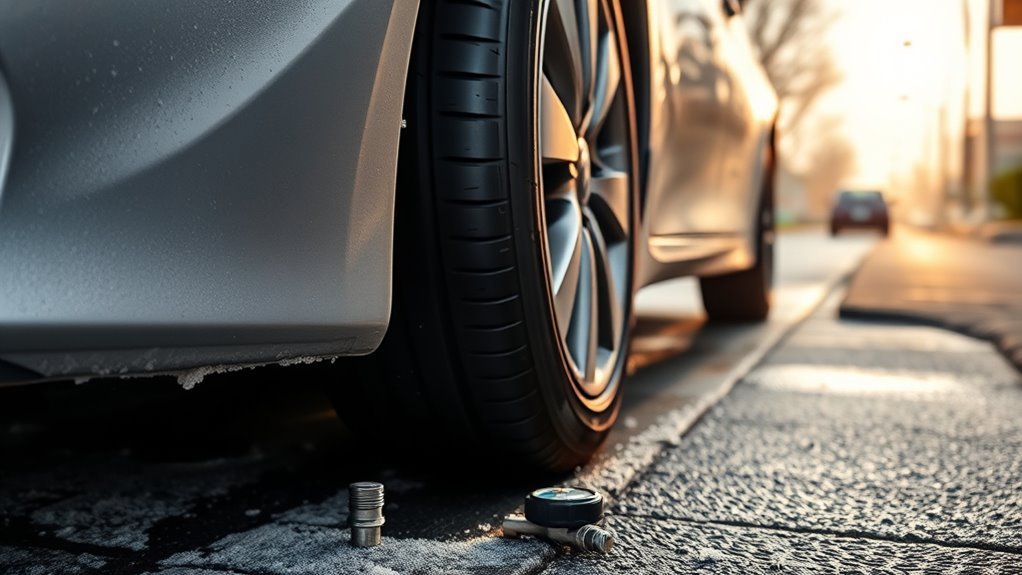
Proper tire pressure matters in your Toyota Camry because it affects grip, braking, steering response, tread life, and fuel use. A tire that is too low flexes more than it should. That extra flex creates heat, increases rolling resistance, and can wear the outer tread shoulders faster.
A tire that is too high can ride harder and may wear more in the tread center. It can also reduce the tire’s contact patch, especially on rough or wet roads. That is why you should use the Camry’s recommended cold tire pressure, not a guess.
The National Highway Traffic Safety Administration says proper tire pressure affects safety, durability, and fuel consumption. It also says the correct PSI is listed on the Tire and Loading Information Label on the driver’s side door edge or in the owner’s manual.
Fuel use matters too. FuelEconomy.gov says under-inflated tires can lower gas mileage by about 0.2% for every 1 PSI drop in the average pressure of all tires. Keeping tires properly inflated can improve mileage by 0.6% on average, and up to 3% in some cases.
Find the Right PSI for Your Camry
Your Toyota Camry’s correct pressure depends on the model year, trim, tire size, and load rating. Many Camry models fall near the low-to-mid 30 PSI range, but you should not treat 32 to 35 PSI as a universal rule.
Open the driver’s door and look for the Tire and Loading Information Label on the door jamb or door edge. That label lists the factory tire size and the recommended cold inflation pressure for the front and rear tires. If your tire size has changed, ask a tire professional or Toyota service department to confirm the correct pressure.
You can also use Toyota’s owner manual lookup to find model-year-specific tire information. This is useful if the label is damaged, missing, or hard to read.
Warning: Do not inflate your Camry tires to the maximum PSI printed on the tire sidewall unless that number also matches Toyota’s placard guidance. The sidewall number is a tire limit, not your vehicle’s normal target pressure.
How Weather Changes Camry Tire Pressure
Weather affects tire pressure because the air inside a tire expands when it warms and contracts when it cools. A common rule of thumb is about 1 PSI for every 10°F temperature change. That means a cold snap can make your Camry look underinflated overnight, while summer heat can push readings higher.
| Condition | Effect | Best Action |
|---|---|---|
| Cold morning | PSI may drop | Check before driving |
| Hot afternoon | PSI may rise | Recheck when cold |
| After highway driving | Tires heat up | Avoid judging by hot readings alone |
| Wet or humid weather | Leaks and corrosion may be harder to spot | Inspect valve stems, rims, and tread |
Driving also warms the tire, so a reading taken at a gas station after several miles may be higher than the true cold pressure. For the most accurate result, check before you drive or after the car has been parked long enough for the tires to cool.
What Cold Weather Does to Tire Pressure
Cold weather lowers tire pressure because the air inside your tires contracts. If the temperature drops sharply overnight, your Camry’s PSI can fall enough to trigger the TPMS light, especially if the tires were already close to the warning threshold.
Low pressure can reduce steering response, increase tire heat, and wear the tire edges faster. On wet, icy, or cold pavement, that loss of pressure can also reduce the tire’s ability to keep a steady contact patch.
Check pressure in the morning before you drive. If one tire is much lower than the others, do not assume weather caused it. A nail, damaged valve stem, rim leak, or bead leak may be involved.
Pro Tip: Recheck pressure after the first hard freeze of the season. A Camry tire that was fine in mild fall weather may need air after a 30°F or 40°F temperature swing.
Why Heat Can Raise Camry Tire Pressure
Heat raises tire pressure because warm air expands inside the tire. Summer pavement, direct sunlight, long highway drives, and heavy loads can all warm your tires. That is why a hot-tire reading may sit several PSI above the cold placard number.
Do not bleed air from a hot tire just because the reading is higher after driving. If you remove too much air while the tire is hot, the tire may become underinflated after it cools. When possible, wait for a cold reading and adjust from there.
Heat Expands Tire Air
As temperature rises, the air inside your Toyota Camry’s tires expands and pressure increases. This is normal, but it can still matter if your tires were already overfilled when cold.
Overinflation can make the ride harsher and may increase center tread wear. It can also make the tire less forgiving when you hit potholes or road seams. Keep the cold reading at the placard pressure so normal heat rise has room to happen safely.
Summer Roads Raise Pressure
Summer pavement can hold a lot of heat. After your Camry sits in direct sun or rolls across hot asphalt, the tire casing warms and the internal pressure rises. You may also notice more road noise or a firmer ride when pressure starts too high.
The safe routine is simple: check early in the morning, adjust to the door-jamb PSI, and inspect tread wear during hot months. If your tires repeatedly rise far above normal or one tire behaves differently, have a technician check the tire, valve stem, and wheel.
Driving Can Increase PSI
Driving heats your Camry’s tires through flexing and road friction. That heat raises PSI, which is why a reading after a short drive may not match the cold specification.
| Condition | What It Means |
|---|---|
| Cold tire | Best baseline for adjustment |
| Short drive | Reading may be slightly higher |
| Long highway drive | Reading may be noticeably higher |
| Hot pavement | Heat rise may be stronger |
| Repeated pressure loss | Possible leak or valve issue |
Bridgestone defines cold tires as tires on a vehicle parked for at least three hours or driven less than about 1 mile at moderate speed. Use that timing whenever you can.
How Humidity Affects Camry Tires
Humidity does not change tire pressure as directly as temperature does. The main pressure driver is still heat or cold. However, humid and wet conditions can create related tire-care problems, especially if moisture gets into compressed air or water sits around valve stems and wheel edges.
Moisture can make rim corrosion or bead leaks harder to notice until one tire starts losing pressure faster than the others. Wet roads can also hide tread wear, cuts, or sidewall damage during a quick visual check.
Humidity and Tire Pressure
High humidity may make pressure readings feel inconsistent when temperature is also changing, but humidity alone is rarely the main cause of a large PSI swing. If your Camry loses several PSI in one tire, look for a leak instead of blaming damp weather.
Check all four tires with the same gauge. If one tire is consistently lower, inspect the tread for punctures and listen for air near the valve stem. A small leak can be easy to miss in wet weather.
Moisture Effects on Tires
Moisture matters most around the wheel, valve, and tire bead. Over time, corrosion around the rim can weaken the seal between the tire and wheel. That can lead to slow pressure loss, especially on older wheels or vehicles that see road salt.
Michelin notes that nitrogen is dry air with oxygen removed, but it also warns that leaks can still happen at the tire/rim interface, valve, valve/rim interface, or wheel. In other words, no inflation gas replaces regular checks.
Camry Tire Care Tips
Good tire care stays the same in dry, wet, hot, or cold weather. Use a gauge, check when cold, and compare each tire with the placard. Then inspect the tire and wheel before you drive away.
- Look for nails, screws, cracks, cuts, bulges, and exposed cords.
- Check valve caps and replace missing caps to help keep dirt and moisture away from the valve core.
- Watch for uneven tread wear, especially center wear from overinflation or edge wear from underinflation.
- Have the tire inspected if the same tire keeps losing pressure.
Rotate and align your tires according to your Toyota maintenance schedule. Proper inflation works best when the tire, wheel, suspension, and alignment are all healthy.
Winter Tire Pressure Signs to Watch For
Winter can make pressure problems show up quickly. Your first clue may be a TPMS light on a cold morning. You may also notice a softer-looking tire, heavier steering, reduced fuel economy, or extra road noise.
Use the gauge before you drive, then add air to match the cold placard pressure. If the TPMS light turns off after proper inflation, keep monitoring it for the next few days. If it comes back, one tire may have a slow leak.
- Check PSI after major temperature drops.
- Check before long winter drives.
- Inspect tread depth and sidewalls while you check pressure.
- Do not ignore a TPMS light that keeps returning.
Summer Signs of Overinflated Tires
When summer heat pushes tire pressure above the recommended range, your tires can show clear overinflation signs. You may feel a harsher ride, hear more tire slap over road seams, or see faster wear down the center of the tread.
Set tire pressure from a cold reading. A hot reading after driving can be several PSI higher and should not be your main adjustment target.
- Firmer ride quality over bumps
- More road noise than usual
- Center tread wearing faster than both shoulders
- Less confident grip on rough or wet pavement
If the cold pressure is above the placard number, release air slowly and recheck with your gauge. If the pressure is only high after driving, wait for the tires to cool before making a final adjustment.
How to Check Camry Tire Pressure Correctly
To get an accurate Toyota Camry tire-pressure reading, check the tires when they are cold. The best time is before your first drive of the day. You can also check after the car has been parked for at least three hours.
| Step | Action |
|---|---|
| 1 | Park on level ground and find the PSI on the driver-door tire label. |
| 2 | Remove the valve cap and press the gauge squarely onto the valve stem. |
| 3 | Record each tire’s PSI, including the spare if your Camry has one. |
| 4 | Add air if the tire is low, or release air slowly if it is high. |
| 5 | Recheck with the gauge and reinstall every valve cap. |
Use the same gauge each time if possible. Some station gauges are worn or inaccurate, so a personal gauge can give you more consistent readings. If your gauge reading and TPMS display disagree, trust the gauge first, then confirm with a second gauge or tire shop if needed.
Note: If you must add air when the tires are hot, add enough to avoid driving on a low tire, then recheck and adjust again when the tires are cold.
[Products Worth Considering]

The Tymate TM12 RV TPMS delivers real-time tire pressure and temperature monitoring with a stable 433Hz display for safer long-distance driving. It supports simultaneous monitoring across vehicle and trailer zones, includes six alarm modes for pressure, temperature, leakage, battery, and signal loss, and features easy DIY installation with auto calibration. Power is supplied via USB-C charging or solar recharging, with a wide 0–144 PSI range and up to 50 ft signal coverage for RVs and towable trailers.

Keep your tires properly inflated with this analog VONDIOR tire pressure gauge, designed for fast, easy readings without batteries. The swiveling, two-axis hose and large glow dial help you measure at any tire angle with instant visibility. Built with a protective rubber shield, it supports durable, low-maintenance use for cars and trucks.

Milton S-921 pencil tire pressure gauge helps you maintain optimal tire pressure for passenger cars with accurate readings in PSI and kPa. It features a built-in deflator valve for convenient pressure adjustments, plus a single chuck head and nylon indicator bar for easy use on the go. Built from durable plated brass and designed for reliable performance, it’s a practical road trip and cold-weather maintenance tool.
What TPMS Can and Cannot Tell You
Your Camry’s Tire Pressure Monitoring System is a useful safety feature, but it is not a replacement for manual checks. Under federal rules, TPMS is designed to warn drivers about significant under-inflation. It may not warn you when a tire is only a few PSI low.
The federal TPMS standard requires a low-pressure telltale when pressure reaches the required under-inflation threshold. The same rule also explains that the warning light may flash for about a minute and then stay on when the system detects a malfunction.
If your TPMS light comes on, check all tires as soon as you can. If it flashes and then stays on, the system itself may need service. Do not keep driving for days with an active tire warning, especially in cold, hot, wet, or high-speed conditions.
When to Add Air or Get Help
Add air when a cold tire is below the PSI listed on your Camry’s tire label. Release air slowly if a cold tire is above the placard number. Always recheck after adjusting, because a short burst from an air compressor can change pressure quickly.
Get help from a tire technician if one tire keeps losing pressure, the TPMS warning returns after proper inflation, the tire has a bulge or crack, or the valve stem leaks. Also get help if the wheel is bent, corroded, or damaged from a pothole.
- A pressure drop in all four tires after a cold snap usually points to weather.
- A pressure drop in one tire usually points to a leak or valve problem.
- A flashing TPMS warning may mean a system malfunction.
- A bulge, exposed cord, or sidewall cut means the tire needs immediate professional inspection.
[Products Worth Considering]

Monitor tire tread wear with a smart, color-coded depth gauge that shows clear condition ranges at a glance. The bar is range marked for fast, easy readings, helping you maintain safer traction and performance. Each gauge is portable with a pocket clip, and the set includes 20 units for daily use and sharing.

Upgrade your Toyota tire setup with these corrosion-resistant, leak-proof valve stem caps designed to help protect the valve core from water, snow, and road grime. The caps feature a snug rubber seal and durable copper alloy construction to resist rust and oxidation while maintaining stable tire pressure. Ideal for replacing worn original caps and keeping your wheels looking clean and stylish.

Measure tire tread depth quickly and accurately with this LUMITECO dial gauge that reads in 1/32" increments up to 14/32". The color-coded green/yellow/red zones make it easy to judge tire wear and know when replacement is needed. A rugged, compact design with a protective pouch helps keep the gauge ready for use on cars, trucks, motorcycles, and more.
Seasonal Camry Tire Pressure Checklist
Use this quick checklist whenever the weather changes sharply. It helps you catch pressure problems before they affect handling, tread wear, or fuel economy.
| Season | What to Check | Why It Matters |
|---|---|---|
| Fall | Check after the first cold mornings | Pressure may drop quickly |
| Winter | Check before long trips and after deep freezes | Low PSI can reduce control |
| Spring | Inspect for pothole damage and uneven wear | Winter roads can damage tires and wheels |
| Summer | Check cold PSI before road trips | Heat and load stress tires |
[Products Worth Considering]

The SAFELIFE dial tire tread depth gauge measures tread depth in 1/32 inch increments with clear, easy-to-read 2-inch dial face. Color zones using a traffic light system help you quickly judge whether tread is low, marginal, or ample for safer driving. Built with a durable zinc cast body and a metal detect probe for precise, comfortable use across cars, motorcycles, trucks, and buses.

This tire inflator with pressure gauge delivers long-lasting performance with a durable rubber-protected gauge and sturdy build. The longer hose and 360 swivel air chuck help you seal the valve securely and keep your hands free while measuring, inflating, or deflating. It’s battery-free for reliable use and provides ±2 PSI accuracy in the mid-range for most typical tires, with universal compatibility for 1/4 NPT compressor outputs.

The TYAMATE TM8 solar-powered wireless TPMS delivers real-time tire pressure and temperature monitoring with six alarm modes for safer driving. A vibrant color LCD display shows readings clearly while windshield mounting keeps it hands-free and easy to read. With a wide 0–87 PSI range, strong 433.92 MHz signal transmission, and quick sensor pairing, it’s ideal for RV, sedan, SUV, MPV, and truck use.
Frequently Asked Questions
Does heat and humidity affect tire pressure?
Yes, heat affects tire pressure directly because warm air expands inside the tire. Humidity has a smaller and more indirect effect. Damp conditions can make corrosion, valve leaks, and slow tire leaks harder to notice, but temperature is still the main reason PSI rises or falls day to day.
Is 40 PSI OK for winter tires on a Toyota Camry?
Usually, no. Use the cold PSI listed on your Camry’s driver-door label or in the owner’s manual. If that label does not say 40 PSI, do not use 40 PSI as your normal winter target. Overinflation can reduce ride comfort and affect tread wear.
Should I add air when my TPMS light turns on in cold weather?
Check the pressure first with a gauge. If one or more tires are below the placard PSI, add air to the recommended cold pressure. If the light stays on after proper inflation, or if it flashes before staying on, have the TPMS and tires inspected.
Should I lower tire pressure in summer?
Do not lower pressure below Toyota’s cold placard PSI just because it is summer. Check the tires cold, set them to the label number, and let normal heat rise happen while driving. Only release air if the cold reading is above the recommended PSI.
How often should I check Camry tire pressure?
Check at least once a month, before long trips, and whenever the weather changes sharply. Also check if the TPMS light comes on, if the car pulls, or if one tire looks lower than the others.
Conclusion
You need to watch your Camry’s tire pressure as weather changes because small PSI shifts can affect handling, fuel economy, tread wear, and safety. Cold air can lower pressure, heat can raise it, and wet or humid weather can make leaks harder to notice.
The safest routine is simple: check tires cold, use the driver-door placard PSI, inspect all four tires, and respond quickly to TPMS warnings. If one tire keeps losing air or the warning light returns, get professional help before a small leak becomes a roadside problem.
Sources
- NHTSA TireWise Tire Safety — tire pressure, tire label, monthly checks, TPMS limits, tire safety facts.
- FuelEconomy.gov: Keeping Your Vehicle in Shape — fuel economy impact from under-inflated tires and proper PSI location.
- Toyota Manuals and Warranties — model-year-specific Toyota owner manual lookup.
- 49 CFR § 571.138: Tire Pressure Monitoring Systems — federal TPMS warning and malfunction requirements.
- Michelin Tire Pressure Guide — monthly checks, cold pressure, driver-door sticker, nitrogen and leak points.
- Bridgestone: How to Check Tire Pressure — cold tire definition and pressure-check steps.