Toyota Camry TPMS helps warn you when tire pressure drops low enough to affect safety, tire life, and fuel economy. The system type depends on your model year: early Camrys used indirect TPMS, while most Camrys from 2006 onward use direct sensors mounted at the wheels. The right reset or programming step depends on which system your Camry has.
Quick Answer
Most Toyota Camry models from February 2006 onward use direct TPMS with tire pressure warning valves and transmitters. Camry models from 2004 to early 2006 generally used indirect TPMS through wheel-speed data. A solid light usually means low pressure; a flashing light followed by a steady light usually means a TPMS fault.
Key Takeaways
- 2004 to early February 2006 Camrys generally use indirect TPMS, while February 2006 and newer Camrys generally use direct TPMS.
- A TPMS reset stores the correct cold tire pressure as the benchmark; it does not register new sensor IDs.
- New direct TPMS sensors need the correct ID codes registered with the vehicle before the system can read them properly.
- A flashing TPMS light that later stays on points to a system malfunction, not just low tire pressure.
- TPMS does not replace monthly cold-pressure checks with a tire gauge.
At a Glance
| Time Required | 10 to 30 minutes for a normal reset; longer if sensor IDs need shop programming. |
| Difficulty | Easy for pressure reset; moderate to professional for sensor replacement and ID registration. |
| Tools Needed | Tire pressure gauge, air source, owner’s manual, and a TPMS scan tool or Toyota Techstream for sensor ID work. |
| Cost | Usually free for a pressure reset; shop programming and sensor replacement costs vary by sensor, labor rate, and model year. |
What Toyota Camry TPMS Is

Toyota Camry TPMS is the tire pressure monitoring system that warns you when one or more tires may be significantly under-inflated. On direct systems, tire pressure warning valves and transmitters measure tire pressure at the wheel and send data to the vehicle. On indirect systems, the car estimates pressure loss by watching wheel-speed changes through the ABS system.
TPMS matters because low tire pressure can create extra heat, shorten tire life, reduce fuel economy, and hurt handling. The system gives you an early warning, but it does not replace regular manual pressure checks. The proper cold pressure for your Camry is listed on the tire and loading information label, usually on the driver-side door jamb, and in your owner’s manual.
Warning: Do not ignore a TPMS light. Stop in a safe place, check all tires with a gauge, and inspect for damage. If a tire is losing air quickly, install the spare safely or call roadside assistance.
Which Camry Models Use Direct or Indirect TPMS
The easiest way to separate Toyota Camry TPMS types is by model year and build period. According to ATEQ’s Toyota Camry TPMS diagnostic guide, Camry began using TPMS in 2004 with an indirect system, then switched to direct TPMS in February 2006. Always confirm with your owner’s manual, VIN, or a TPMS scan tool because equipment can vary by market, trim, and production date.
| Camry Year / Build Period | Likely TPMS Type | What It Means for You |
|---|---|---|
| 2004 to early February 2006 | Indirect TPMS | No in-tire pressure sensors. The system uses ABS wheel-speed data and needs calibration after pressure changes. |
| February 2006 to 2013 | Direct TPMS | Each road wheel uses a pressure valve/transmitter. New sensors need ID registration. |
| 2014 to 2019 | Direct TPMS, low-line or high-line | Some trims show only a warning light; others can display individual tire pressures. |
| 2020 and newer | Direct TPMS | Many models use steering-wheel controls and the multi-information display for TPMS settings. |
How to Tell Which TPMS Your Camry Has
You can often identify your Camry’s TPMS type without removing a tire. Start with the model year, then confirm through the dash display, owner’s manual, and valve-stem hardware.
- Check the model year and production date: Open the driver-side door and read the compliance label. Early 2006 cars can vary, so the production month matters.
- Look at the display: A high-line direct system may show individual tire pressures on the multi-information display. A low-line direct system may show only the warning light.
- Use a TPMS scan tool: A tire shop can trigger each sensor and read its ID, pressure, temperature, and battery status on direct systems.
- Inspect after tire service: If a shop replaced a sensor, ask whether it registered the new ID codes in the tire pressure warning computer.
- Confirm with the manual: Toyota manuals describe whether the vehicle uses tire pressure warning valves and transmitters.
Note: A rubber valve stem does not always prove the system is indirect. Some direct TPMS sensors use rubber snap-in valve stems, while others use metal stems.
How the Toyota Camry TPMS Light Works
When you start your Camry, the tire pressure warning light should turn on briefly during the bulb check and then go out if the system sees no issue. A solid TPMS light usually means one or more tires are below the stored pressure threshold. A flashing light that later stays on usually means the TPMS has a malfunction.
| Light Behavior | Likely Meaning | What to Do |
|---|---|---|
| Turns on briefly, then goes out | Normal bulb check | No action needed unless the light returns while driving. |
| Stays solid | One or more tires may be low | Check all tires cold, inflate to the door-jamb label, then reset if your manual calls for it. |
| Flashes for about one minute, then stays on | System fault or missing/unregistered sensor | Have the system scanned. Resetting pressure alone may not fix it. |
| Comes on after rotation or new tires | Pressure not initialized, wrong sensor, or unregistered ID | Confirm cold pressure, initialize the system, and verify sensor IDs if the light flashes. |
Federal TPMS rules require covered vehicles to warn drivers when tire pressure is significantly under-inflated and to indicate TPMS malfunctions. You can review the U.S. rule background in the Federal Register TPMS rule.
Reset vs Relearn vs Sensor Programming
These terms are easy to mix up, but they do different jobs. A normal reset or initialization teaches the TPMS what pressure level to use as the new benchmark. A relearn may teach an indirect system how the tires roll after pressure adjustment. Sensor programming or ID registration stores new direct-sensor ID codes in the TPMS computer.
- Reset / initialization: Use this after correcting tire pressure, rotating tires, changing tire size, or following your owner’s manual instructions.
- Indirect relearn: Use this on indirect systems after all tires are set correctly so the ABS-based logic can learn the normal wheel-speed pattern.
- Sensor ID registration: Use this when a direct TPMS sensor, wheel, tire pressure warning valve, transmitter, or ECU-related part has been replaced.
Pro Tip: If the light flashes after new sensors were installed, ask the shop to confirm the sensor frequency, part compatibility, and ID registration. A pressure reset cannot fix an unregistered sensor ID.
How to Reset Toyota Camry TPMS
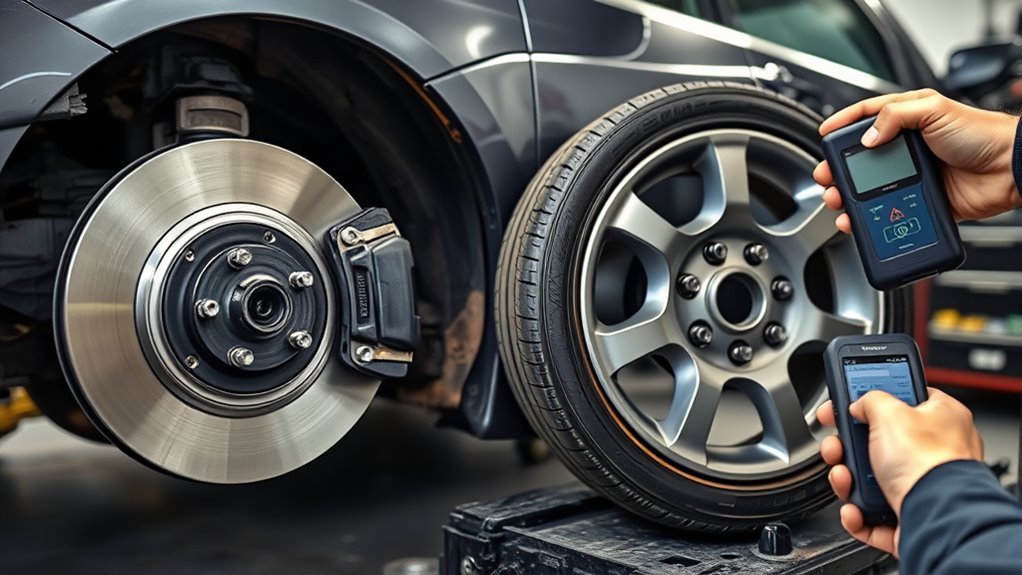
Before any reset, park safely and set every tire to the specified cold tire pressure on the tire and loading information label. Do not use the maximum pressure printed on the tire sidewall. Toyota’s 2015 Camry owner’s manual explains that initialization stores the current tire pressure as the benchmark pressure, so starting with the wrong pressure can create wrong warnings later.
[Products Worth Considering]
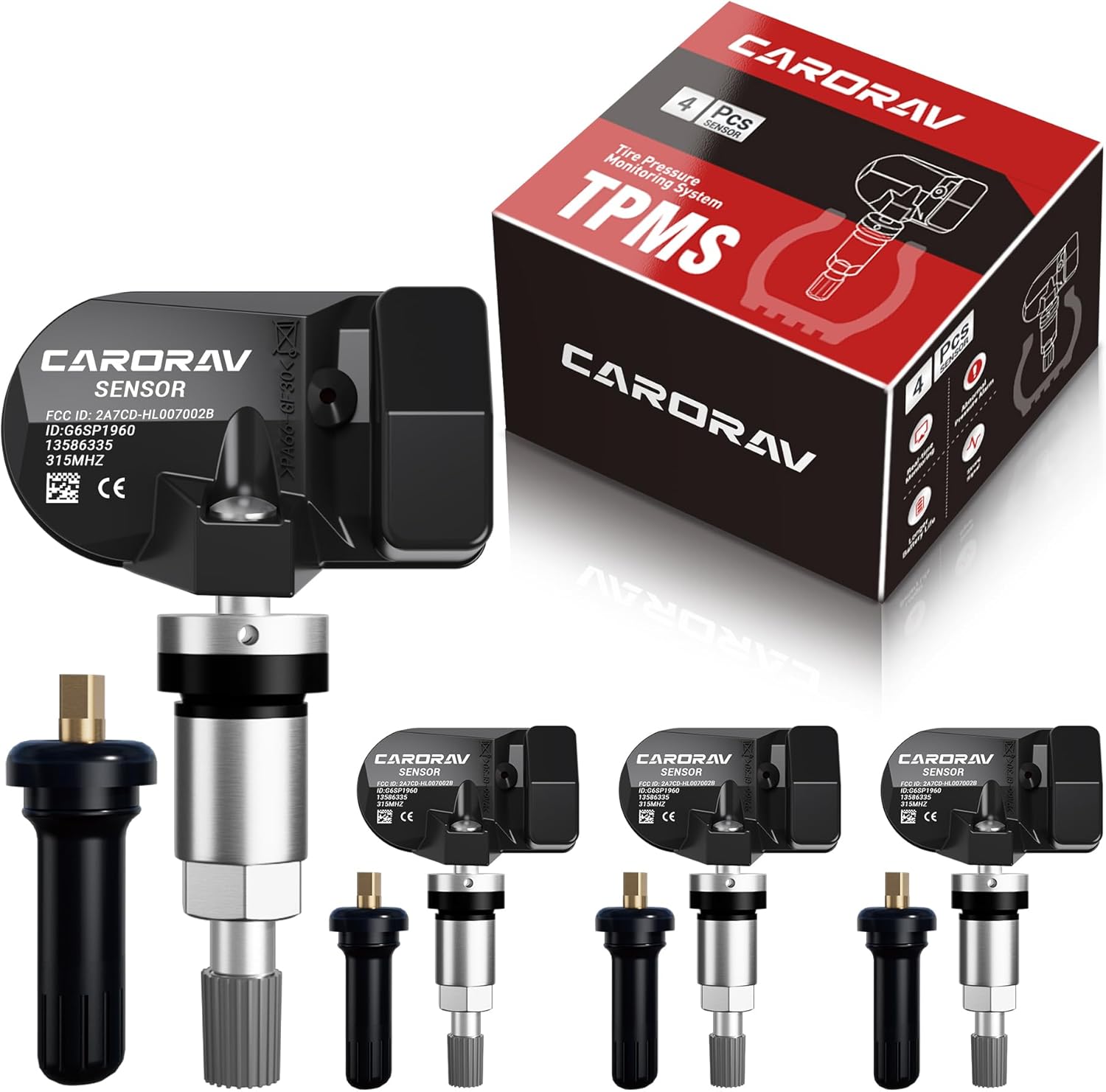
Replace worn or missing TPMS sensors with CARORAV pre-programmed GM-compatible sensors for a smoother installation experience. These 315MHz replacement sensors help monitor tire pressure in real time with long battery life, and they are designed to withstand harsh temperatures. Manual or OBDII relearn may be required to reset the system for proper recognition.

The VEHLIVE SU-50448 II TPMS relearn tool provides a fast activation reset to restore accurate tire pressure monitoring after sensor replacement or tire rotation. It supports 315 MHz and 433 MHz GM series sensors and helps clear dashboard pressure warnings. With simple two-button operation and horn-confirmed relearning order, you can reprogram sensors conveniently at home.

Replace your worn or missing TPMS sensors with pre-programmed, direct-fit sensors for compatible Ford, Lincoln, and select Mazda models. Each sensor comes ready to activate with a scan tool, helping restore accurate tire pressure monitoring and trouble-free installation. Built with a long-life CR2032 battery and tested before factory release, this set provides dependable performance with a one-year warranty.
Reset Direct TPMS With a SET Button
- Park in a safe place and turn the vehicle off.
- Adjust all road tires to the specified cold pressure.
- Turn the ignition or power switch to ON without moving the vehicle.
- Press and hold the tire pressure warning reset switch until the warning light blinks slowly three times.
- Drive at about 25 mph or more for roughly 10 minutes when your manual calls for a drive cycle.
- Recheck the light. If it flashes for about one minute and then stays on, scan the TPMS for faults.
Reset Newer Camry TPMS Through the MID
Newer Camrys may use the multi-information display instead of a simple SET-button reset. Toyota’s 2025 Camry Quick Reference Guide shows a TPWS setting menu with options for setting by specified pressure or current pressure.
- Use the steering-wheel controls to open the vehicle settings menu on the multi-information display.
- Select the TPWS or tire pressure setting menu.
- Choose the pressure-setting option shown for your vehicle.
- Confirm the setting and watch for the tire pressure warning light to blink slowly three times.
- Drive normally and confirm that tire pressure values or messages return as expected.
Reset Indirect TPMS on Older Camry Models
On older indirect TPMS Camrys, the system does not read pressure inside each tire. It compares wheel-speed patterns after you set the correct pressure. Inflate all tires to the placard pressure, start the calibration with the TPMS reset button or manual procedure, then drive so the system can learn the new baseline.
Set the tire pressure first, then reset the system. Resetting before correcting pressure can teach the TPMS the wrong baseline.
Toyota Camry TPMS Sensor Replacement and Programming
Direct TPMS sensors are not universal across every Camry. Match sensors by model year, frequency, part number, build market, and whether your car uses a low-line or high-line system. Toyota manuals state that when tire pressure warning valves and transmitters are replaced, the new ID codes must be registered in the tire pressure warning computer.
| Step | Action | Why It Matters |
|---|---|---|
| 1 | Confirm the exact sensor type before installation. | Wrong sensors may not transmit correctly or may show no pressure data. |
| 2 | Install genuine Toyota or verified compatible sensors. | Compatible sensors help the TPMS receiver read pressure reliably. |
| 3 | Register each new sensor ID with a scan tool or Toyota Techstream. | The ECU must know which sensor IDs belong to your vehicle. |
| 4 | Initialize the system after registration and pressure adjustment. | Initialization stores the correct cold-pressure baseline. |
| 5 | Verify pressure readings or confirm the light clears after the drive cycle. | This confirms the vehicle can receive and use the new sensor data. |
A qualified tire shop or Toyota dealer can usually complete sensor ID registration faster because they can trigger each sensor, read IDs, check TPMS diagnostic trouble codes, and confirm data through the OBD-II port.
[Products Worth Considering]

Replace worn or malfunctioning GM TPMS sensors with this 433MHz pre-programmed sensor set designed for compatibility with many Chevrolet, Buick, GMC, and Cadillac models. It includes guidance for proper OBDII relearning/pairing after installation and supports reliable long-term operation with a high-performance CR2032 battery. Quality tested for durability and performance to help restore accurate tire pressure monitoring.

This TPMS sensor training and relearn reset tool is customized for Ford, Lincoln, and Mercury vehicles to help activate tire pressure programming after sensor replacement or tire rotation. It can activate individual tire pressure sensors with one-button operation, helping prevent TPMS warning light illumination. It is not a sensor programming tool and cannot program replacement sensors—use it to trigger/activate sensors only.
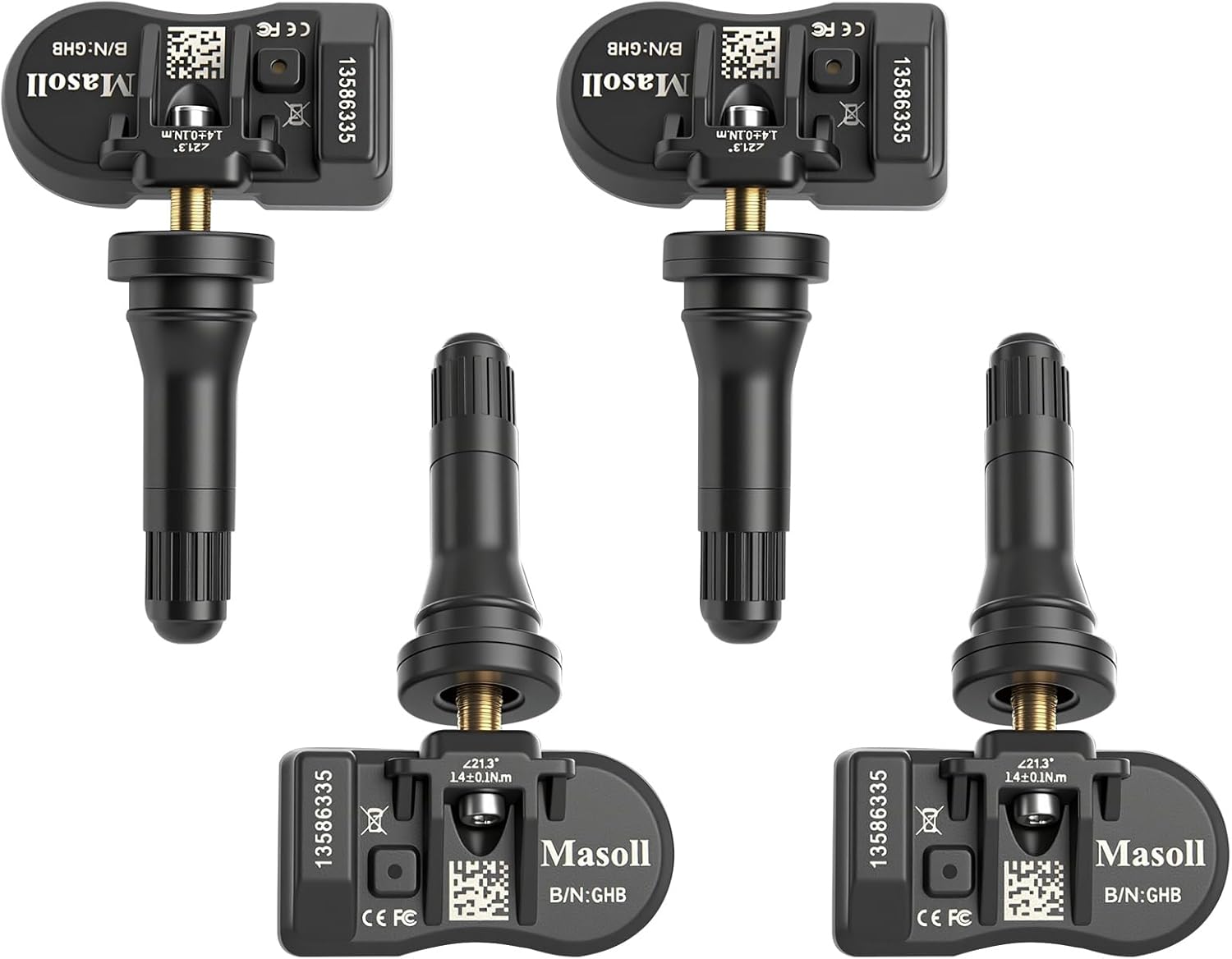
Masoll TPMS sensors are designed for most GM vehicles after 2006, helping you clear tire pressure warnings with OEM-level 315/433MHz compatibility. The 4-pack includes pre-programmed sensors, but re-learning is required after installation using a GM TPMS relearn tool or scan tool. Built with a dual-antenna design and a long-life CR2050 battery, these sensors deliver reliable performance in extreme temperatures with corrosion-resistant valve construction.
Common Toyota Camry TPMS Problems and Fixes
If your Camry TPMS light will not clear, do not keep pressing reset without checking the cause. The problem may be pressure, a failed sensor battery, a missing sensor, an unregistered sensor ID, an incompatible wheel, or radio interference.
| Problem | Likely Cause | Best Fix |
|---|---|---|
| Light stays solid after cold-pressure adjustment | Pressure still wrong, slow leak, or system not initialized | Recheck all tires cold, inspect for leaks, then initialize correctly. |
| Light flashes for about one minute, then stays on | TPMS malfunction, failed sensor, missing sensor, or unregistered ID | Scan the system and register or replace the affected sensor. |
| Light appears after tire rotation | Baseline pressure not initialized or wheel positions not learned | Set cold pressure, initialize, and confirm your model’s position-learning process. |
| Light appears after seasonal wheel swap | Winter/summer sensors not registered or incompatible | Register the active wheel set or use a tool that supports your Camry’s sensor set. |
| Pressure readings show dashes or 0 PSI | Sensor signal missing, wrong high-line/low-line sensor, or communication issue | Verify sensor compatibility and scan live TPMS data. |
[Products Worth Considering]

Marsflex brand TPMS replacement sensors help restore tire pressure monitoring for compatible Toyota, Lexus, Scion, and Pontiac models. Each sensor is pre-programmed for the vehicle application and includes a long-life battery for up to 8 years of normal use. Designed to replace common OE numbers and requires relearning using a TPMS scan tool after installation.
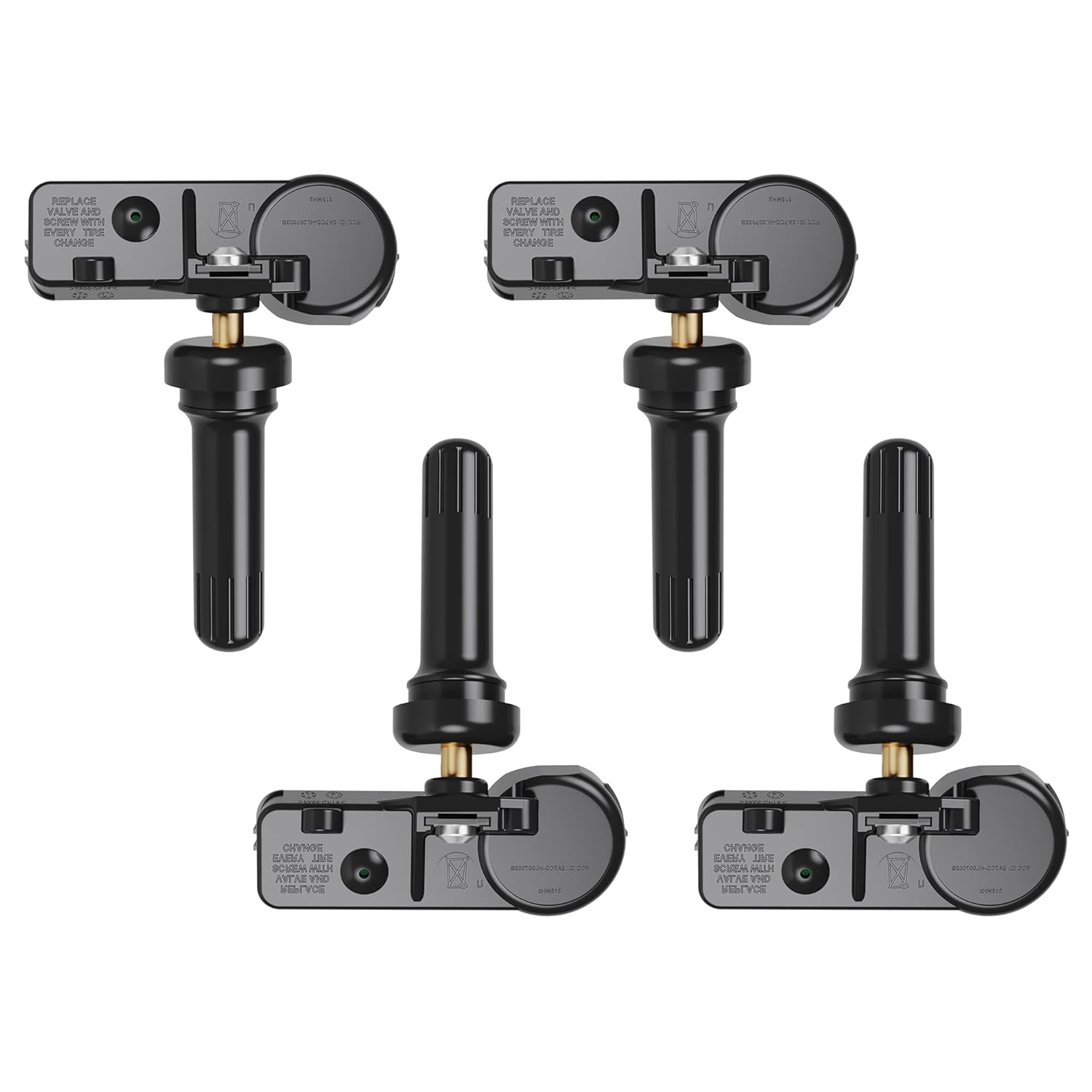
Replace worn or faulty TPMS sensors with this brand new 315MHz GM-compatible replacement set for select Chevy, GMC, Buick, Cadillac, and similar vehicles. These sensors are pre-programmed for your make/model/year and typically only require activation with a scan tool. Built for long service life with a high-temperature battery, they help maintain reliable tire pressure monitoring for safer driving.

Masoll M13 TPMS monitors tire pressure across RV and trailer applications and helps protect safety on the road. Set your reference pressure for auto alarm triggers, while the system automatically calibrates as you inflate or deflate. Solar charging with intelligent sleep/wake keeps operation efficient, and the color LCD provides clear readings in day or night driving.
TPMS Limitations You Should Know
TPMS gives you a safety warning, but it cannot prevent every tire problem. Toyota manuals note that sudden air loss may not trigger the warning immediately, and conditions such as incompatible tires, non-genuine wheels, snow or ice around wheel housings, and radio-wave interference can affect operation.
For better safety, check your tire pressure at least monthly and before long trips. FuelEconomy.gov says proper inflation can improve gas mileage, help tires last longer, and improve safety. The NHTSA TPMS effectiveness report also links underinflation with heat buildup, sluggish handling, longer stopping distances, and tire failure risk.
Frequently Asked Questions
Does Toyota Camry use direct or indirect TPMS?
Toyota Camry used indirect TPMS on many 2004 to early February 2006 models. From February 2006 onward, Camry models generally use direct TPMS with pressure sensors mounted at the wheels. Confirm your exact system by model year, production date, owner’s manual, and TPMS scan data.
What are the two types of TPMS sensors?
The two TPMS system types are direct and indirect. Direct TPMS uses wheel-mounted pressure sensors. Indirect TPMS does not use in-tire pressure sensors; it estimates low pressure through wheel-speed differences from the ABS system.
What are the disadvantages of indirect TPMS?
Indirect TPMS cannot measure actual air pressure. It may need calibration after tire rotation, tire replacement, pressure adjustment, or tire-size changes. It can also be affected by tire wear, mixed tire sizes, road conditions, and driving patterns.
Why is my Toyota Camry TPMS light flashing?
A flashing TPMS light that stays on after about one minute usually means the system has detected a malfunction. Common causes include a dead sensor battery, missing sensor, incompatible replacement sensor, unregistered sensor ID, or TPMS receiver issue.
Do I need to program TPMS sensors after replacing Camry tires?
You usually do not need new sensor ID programming for a simple tire replacement if the original direct TPMS sensors stay installed and undamaged. You do need ID registration if a TPMS sensor, valve/transmitter, wheel set, or TPMS-related control part is replaced.
Conclusion
Toyota Camry TPMS is simple once you separate the system type from the service step. Older indirect systems need calibration after pressure changes, while direct systems need correct cold pressure, proper initialization, and sensor ID registration when sensors are replaced. Check the door-jamb pressure label, reset the system only after inflation is correct, and treat a flashing TPMS light as a fault that needs diagnosis.
Sources
- Toyota 2015 Camry Owner’s Manual — backs up direct TPMS valves/transmitters, reset steps, ID-code registration, and TPMS limitations.
- Toyota 2025 Camry Quick Reference Guide — backs up newer MID-based TPMS reset settings.
- Federal Register: FMVSS No. 138 TPMS Rule — backs up low-pressure warning and malfunction-light behavior.
- NHTSA TPMS Effectiveness Report — backs up tire-pressure safety, handling, stopping-distance, and heat-related risks.
- FuelEconomy.gov Tire Inflation Guidance — backs up fuel-economy and tire-life benefits of proper inflation.
- ATEQ Toyota Camry TPMS Diagnostic Information — backs up Camry direct/indirect TPMS year-range guidance and low-line/high-line notes.