Connected tire sensors are wheel- or tire-based sensing systems that monitor tire condition and send data to the vehicle, a phone, or a fleet platform. Basic systems focus on pressure; more advanced intelligent-tire systems can also track temperature, motion, tread wear, load-related behavior, and tire-road conditions, helping drivers and fleets act earlier on underinflation, heat, abnormal wear, and maintenance needs.
Last updated: August 18, 2026
Affiliate disclosure: As an Amazon Associate, we earn from qualifying purchases. If product links appear on this page, we may earn a commission at no extra cost to you.
Quick Answer
Connected tire sensors collect tire-health data and transmit it to a vehicle, app, or fleet system. Direct TPMS measures pressure at the wheel, while more advanced smart-tire platforms may add temperature, motion, tread-wear, load, and road-condition data. The practical value is earlier detection of low pressure, unusual heat, abnormal wear, and service needs.
Key Takeaways
- Basic TPMS is an underinflation warning system; connected smart-tire platforms can add pressure history, temperature, motion, tread, and fleet analytics.
- Direct TPMS measures pressure at the wheel, while indirect TPMS infers pressure changes from wheel-speed behavior.
- Proper inflation can improve fuel economy by about 0.6% on average and up to 3% in some cases, according to FuelEconomy.gov.
- Advanced features are product-dependent: tread estimation, road-condition sensing, cloud dashboards, and predictive maintenance are not standard on every TPMS.
- The main trade-offs are compatibility, service cost, sensor battery life, alert quality, data access, and privacy when tire data is combined with telematics.
What Connected Tire Sensors Are and Why They Matter
Connected tire sensing includes both dedicated wheel or in-tire sensors and vehicle-based estimation. Direct systems place a sensor at the wheel or inside the tire and can transmit measured tire data to a vehicle computer, dashboard, smartphone, gateway, or cloud fleet platform. Indirect TPMS is different: it uses existing wheel-speed data to infer pressure changes without a dedicated pressure sensor inside each tire.
The most common dedicated wheel-sensor design is a direct tire pressure monitoring system, or direct TPMS. A direct TPMS measures tire pressure at the wheel and can trigger a warning when pressure falls below the system’s required threshold. In the United States, Federal Motor Vehicle Safety Standard No. 138 sets performance requirements for covered TPMS to warn drivers about significant underinflation.
More advanced connected tire systems go beyond the basic TPMS warning light. Depending on the product, they may monitor tire temperature, acceleration or wheel motion, battery status, tread wear, load-related behavior, vibration, or tire-road conditions. Fleet platforms can combine tire data with vehicle and service records to prioritize maintenance, while current systems such as Continental ContiConnect Pro show how pressure, temperature, mileage, tread data, alerts, dashboards, and system integration can be combined in one tire-management workflow.
Note: A dashboard TPMS light does not replace manual tire checks. It is a warning system, not a complete tire inspection. You should still check cold tire pressure, tread depth, sidewall condition, and visible damage regularly.
How Sensor Data Is Collected and Transmitted
Connected tire data starts at the wheel. The sensor measures one or more physical conditions, packages that measurement electronically, and sends it through a short-range wireless signal to a receiver. The receiver may be the vehicle’s electronic control unit, a dedicated gateway, a smartphone, or a fleet telematics device.
Sensor Types Overview
Most connected-tire and TPMS designs fall into four broad categories:
- Valve-mounted sensors: These are attached to the valve stem or mounted inside the wheel near the valve. They are common in direct TPMS and usually measure pressure and temperature.
- In-tire sensors: These are attached inside the tire or integrated into the tire structure. They may capture richer data, but installation and replacement are more specialized.
- Wheel-mounted sensors: These attach to the wheel and may measure pressure, temperature, acceleration, vibration, or wheel movement.
- Indirect systems: These do not measure tire pressure directly. Instead, they use wheel-speed data from ABS or stability-control sensors to infer when a tire may be underinflated.
Direct systems measure pressure at the wheel. Indirect systems use existing wheel-speed sensors instead of a dedicated pressure sensor in each tire, so they infer pressure changes rather than reading pressure directly. Reset or recalibration requirements vary by vehicle and may apply after tire rotation, tire replacement, inflation changes, or wheel-size changes.
Wireless Transmission Methods
Getting data from a rotating wheel to the vehicle is the core engineering challenge. Traditional TPMS sensors often use low-power radio-frequency transmission. Newer designs may use Bluetooth Low Energy, especially when the sensor needs to connect with simplified vehicle electronics or a nearby device. Bosch’s SMP290 TPMS sensor, for example, integrates a pressure sensor, temperature sensor, accelerometer, battery-voltage sensor, microcontroller, and Bluetooth Low Energy interface in a single TPMS-focused package.
For the driver, the wireless method matters less than reliability. A good system should pair securely, send data consistently, resist interference, and alert you quickly enough to take action. For fleets, it should also support clean data export, role-based access, and maintenance-history integration.
Main Sensor Types: Pressure, Temperature, Tread, and Road Surface
Not every connected tire system measures the same things. A basic TPMS may only warn you about low pressure. A more advanced system can combine several sensor types to give a fuller picture of tire condition and road behavior.
[Products Worth Considering]
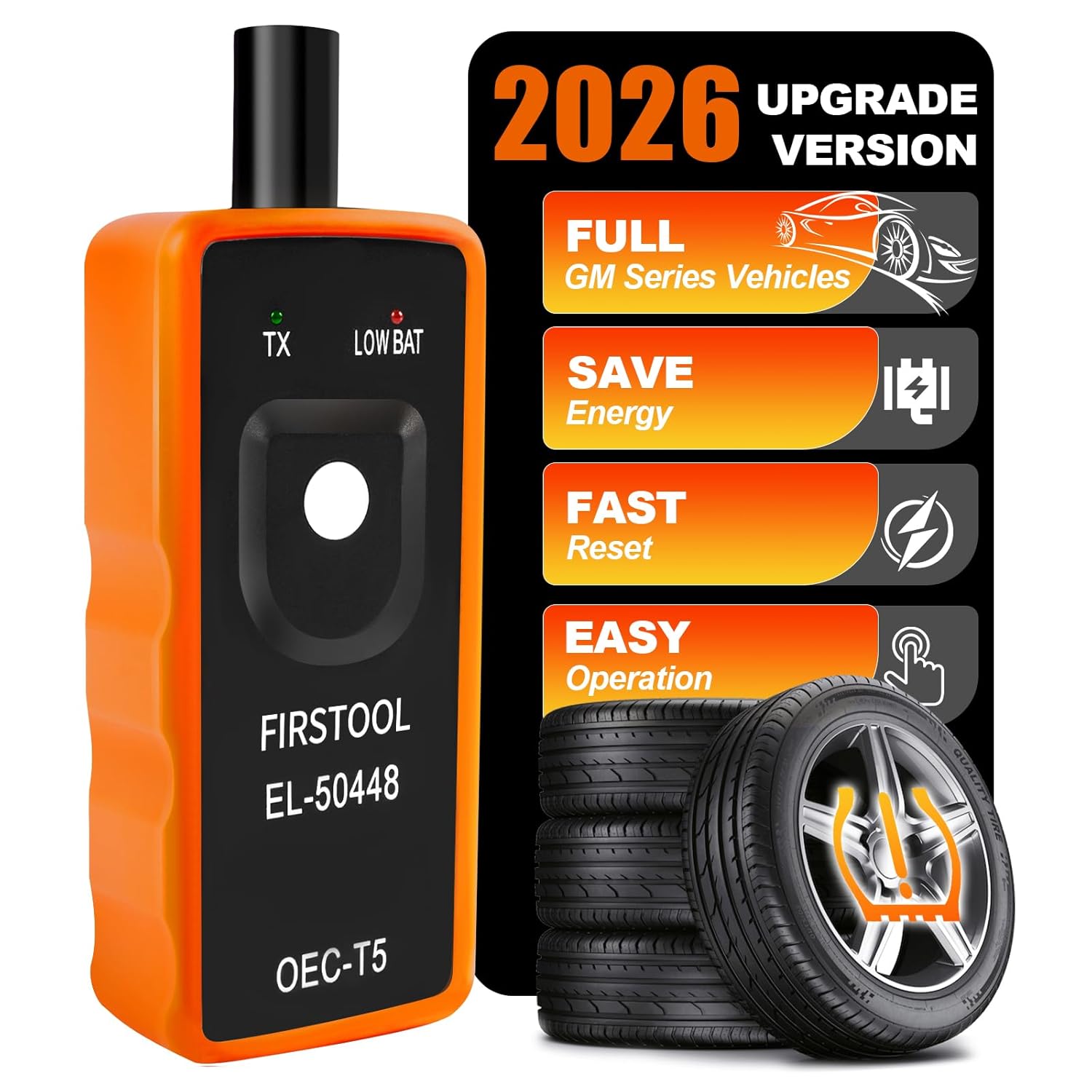
This TPMS relearn tool helps you quickly activate, match, and reset GM tire pressure sensors to keep the vehicle monitoring system working properly. It clears tire pressure alarms and dashboard warning lights after sensor replacement or tire rotation, and supports learning for common 315/433 MHz TPMS sensors. Designed for simple one-button operation, it can help you avoid unnecessary trips to repair shops.
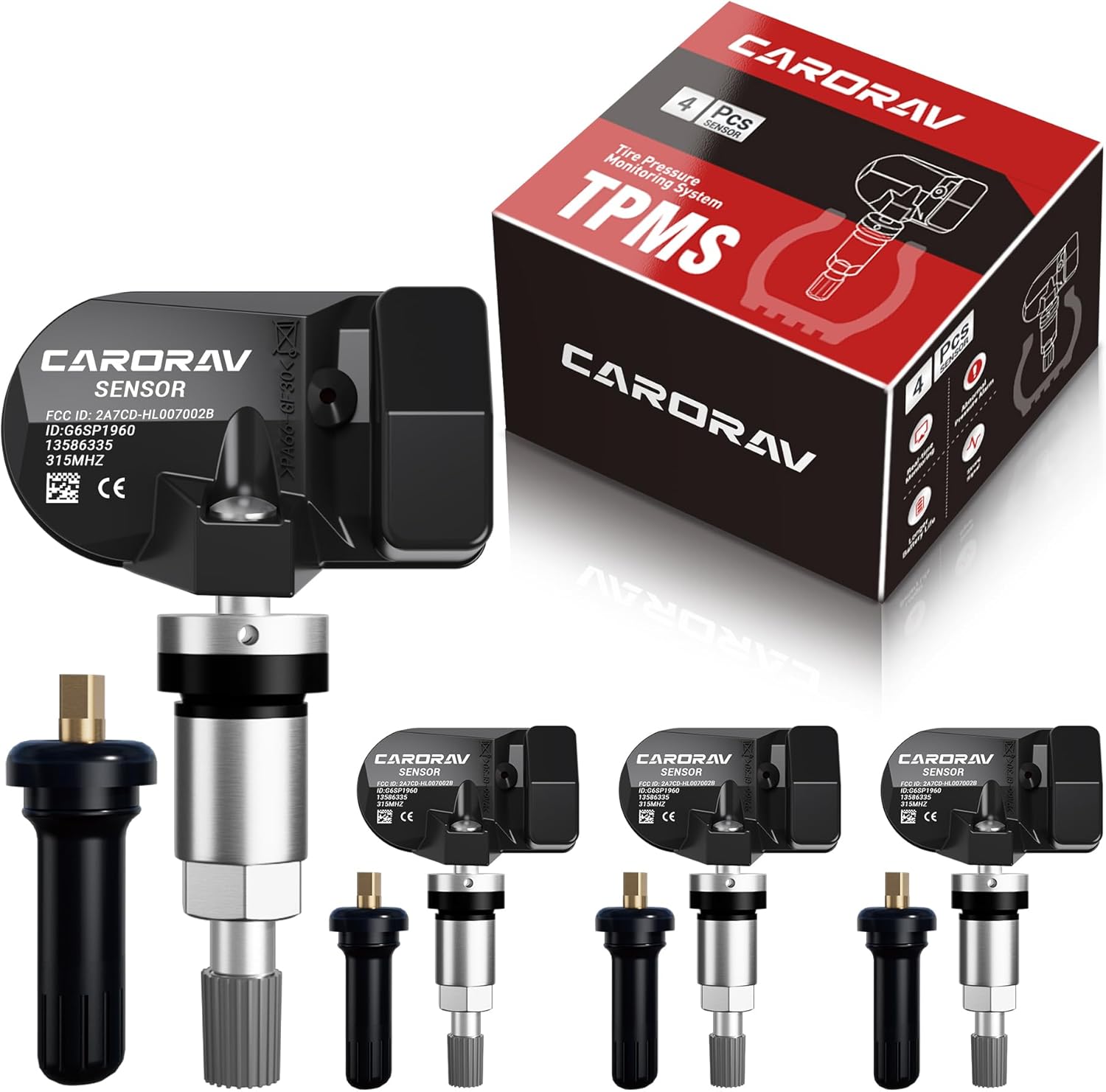
Replace worn or missing TPMS sensors with CARORAV pre-programmed GM-compatible sensors for a smoother installation experience. These 315MHz replacement sensors help monitor tire pressure in real time with long battery life, and they are designed to withstand harsh temperatures. Manual or OBDII relearn may be required to reset the system for proper recognition.

Replace worn or malfunctioning GM TPMS sensors with this 433MHz pre-programmed sensor set designed for compatibility with many Chevrolet, Buick, GMC, and Cadillac models. It includes guidance for proper OBDII relearning/pairing after installation and supports reliable long-term operation with a high-performance CR2032 battery. Quality tested for durability and performance to help restore accurate tire pressure monitoring.
What Connected Tire Data Can and Cannot Tell You
| Signal | Useful For | What It Cannot Prove by Itself |
|---|---|---|
| Pressure | Underinflation, overinflation, slow or rapid pressure loss | The exact cause of the leak or damage |
| Temperature | Spotting unusual heat trends | Whether the cause is pressure, load, brake heat, speed, or another issue |
| Acceleration / vibration | Wheel motion, tire behavior, and data used by advanced condition algorithms | A specific mechanical fault without further diagnosis |
| Tread-wear estimate | Tracking wear trends and planning tire service on supported systems | A substitute for physical inspection of cuts, bulges, exposed cords, or localized damage |
| Road / friction estimate | Advanced traction, braking, and driver-assistance inputs | A universal feature of standard consumer TPMS |
Tire Pressure Monitoring
Pressure is the most important and most common measurement. Underinflated tires can heat up, wear unevenly, reduce handling performance, and increase rolling resistance. FuelEconomy.gov says keeping tires inflated to the proper pressure can improve gas mileage by 0.6% on average and up to 3% in some cases. It also states that underinflated tires can lower gas mileage by about 0.2% for every 1 psi drop in the average pressure of all tires.
Pressure sensors help by giving the driver or fleet operator a warning before the tire becomes severely underinflated. Some systems only show a warning light, while others show individual tire pressure values in psi, bar, or kPa.
Temperature and Heat Management
Tire temperature matters because heat can speed up tire degradation and can be a warning sign of underinflation, overloading, harsh duty cycles, brake heat, or high-speed operation. Temperature sensors help identify abnormal heat buildup before it becomes a larger safety issue.
In fleet use, temperature trends can also help technicians spot repeated problems on the same axle, route, vehicle, or driver pattern. That is more useful than a one-time reading because it shows whether a tire is consistently running hotter than expected.
Warning: Do not ignore a tire-pressure or tire-temperature warning and keep driving at highway speed. Pull over safely, inspect the tire, and follow the vehicle owner’s manual. A tire that is very low, damaged, overloaded, or overheated can fail suddenly.
Tread Depth and Wear
Tread monitoring is less common than pressure monitoring, but it is now a real fleet-focused capability in some intelligent-tire systems. Continental’s current ContiConnect Pro materials list tire pressure, temperature, mileage, tread depth, alerts, and predictive service functions. For any vehicle, sensor-based tread estimates should complement, not replace, a physical check; see the TubeTyre tire tread depth guide for manual inspection methods.
This matters because tread wear is not always even. Underinflation, overinflation, misalignment, worn suspension parts, hard cornering, overloading, and abrasive road surfaces can all contribute to abnormal wear. Pressure, temperature, mileage, and tread trends can help narrow likely contributors or show that wear is progressing faster than expected, but the cause still needs physical inspection and, when appropriate, alignment or suspension diagnosis.
Road-Surface and Traction Sensing
Some intelligent-tire systems and development platforms can estimate tire-road condition, slip, vibration, or grip changes. Continental, for example, describes smart-sensor concepts that monitor tire and road temperature alongside tire-health data. These signals can become additional inputs for traction, braking, and advanced driver-assistance systems.
For everyday drivers, road-condition sensing remains far beyond the typical TPMS warning light and should not be assumed to be present unless the vehicle or tire platform explicitly supports it. Its strongest near-term value is in fleet analytics, vehicle-control integration, and advanced driver-assistance use cases.
Direct vs. Indirect TPMS
There are two main types of tire pressure monitoring systems: direct and indirect. Both are designed to warn about underinflation, but they work in different ways.
| TPMS Type | How It Works | Strengths | Limitations |
|---|---|---|---|
| Direct TPMS | Uses a pressure sensor at each wheel to measure tire pressure directly. | Measures pressure at the wheel and may provide individual tire readings and temperature data. | Dedicated sensors require compatible hardware, correct registration or relearn, and eventual service or replacement. |
| Indirect TPMS | Uses wheel-speed behavior from ABS or stability-control sensors to infer pressure changes. | Uses existing wheel-speed hardware and has no dedicated pressure sensor to replace at each wheel. | Infers pressure change rather than measuring pressure directly; reset behavior and displayed information vary by vehicle. |
If you want individual tire pressure values, choose a vehicle or aftermarket system that explicitly provides direct pressure readings. If your vehicle uses indirect TPMS, it can still provide the intended underinflation warning function, but follow the owner’s manual for reset or calibration procedures.
How Fleets and Vehicles Use Connected Tire Sensor Data
Fleet operators use connected tire data to move from reactive tire repair to planned tire maintenance. Instead of waiting for a driver to report a problem or for a roadside failure, a fleet manager can see which tire is low, which tire is overheating, and which vehicle needs attention first.
Common fleet uses include:
- Pre-trip inspections: Tire data can help drivers and maintenance teams spot low pressure before leaving the yard.
- Predictive maintenance: Repeated low-pressure events, high heat, or abnormal wear can trigger a planned service visit.
- Downtime reduction: Repairing a slow leak during scheduled service is usually cheaper than responding to a roadside tire failure.
- Fuel management: Correct tire inflation helps control rolling resistance and protects fuel economy.
- Driver and route review: Repeated pressure, temperature, or vibration patterns can prompt a closer look at operating conditions, loading, routes, or driving behavior.
- Warranty and lifecycle tracking: Tire history helps fleets understand which tires, routes, and vehicles deliver the best value.
For individual drivers, the use case is simpler: receive a clear warning, check the tire, inflate it to the correct cold pressure, and inspect for punctures or damage.
Real-World Benefits: Safety, Fuel, and Maintenance Savings
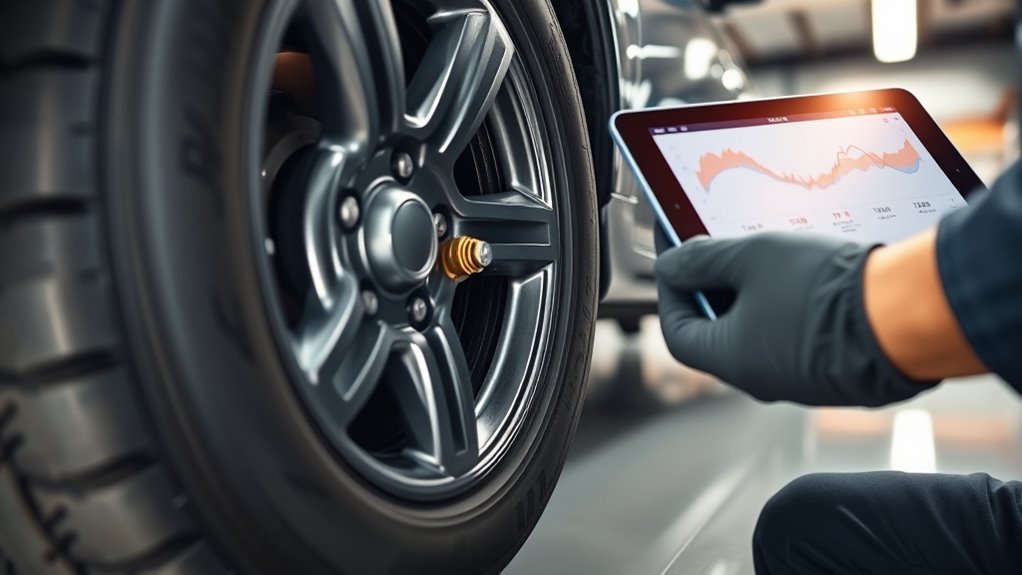
The strongest benefits of connected tire sensors come from catching small tire problems early. A slow leak, uneven wear pattern, or high-temperature trend is easier to fix before it turns into a blowout, ruined tire, missed delivery, or unsafe trip.
Fuel economy context: FuelEconomy.gov reports that keeping tires at the proper pressure can improve gas mileage by 0.6% on average and up to 3% in some cases.
| Benefit | Mechanism | Practical Impact |
|---|---|---|
| Safety | Low-pressure and heat alerts | Earlier warning before serious tire problems |
| Fuel economy | Better inflation control | Lower rolling resistance and less wasted fuel |
| Maintenance | Trend tracking and alerts | More planned service and fewer surprise repairs |
| Tire life | Better pressure and wear management | More even tread wear and fewer premature replacements |
| Fleet uptime | Remote monitoring | Faster prioritization of vehicles that need service |
Common Limitations, Privacy, and Data Risks
Connected tire sensors are useful, but they are not perfect. Before you choose a system, consider the technical, financial, and privacy trade-offs.
- Warnings need interpretation: Cold weather can create a real pressure drop, while a weak battery, failed sensor, pairing problem, or calibration issue can create a system fault. Check the tire first, then diagnose the sensor if pressure is correct.
- Sensor battery life: Many direct TPMS sensors use sealed batteries. When the battery fails, the sensor often must be replaced rather than recharged.
- Installation errors: Incorrect torque, poor sealing, damaged valve stems, or failed pairing can cause leaks or communication problems.
- Compatibility issues: Not every aftermarket sensor works with every vehicle, wheel, app, or fleet platform.
- Data overload: Fleets need clear alert rules. Too many low-priority warnings can cause drivers and dispatchers to ignore important ones.
- Privacy and data ownership: Tire readings alone do not provide location, but a fleet or app platform may combine them with telematics, route, driver, and maintenance data. Check what the service collects, retains, exports, and shares.
- Cybersecurity: Connected systems should use secure pairing, encrypted communication where appropriate, controlled access, and update protections.
Pro Tip: For fleet systems, choose alerts that are actionable. A good dashboard should tell you which vehicle, which tire, how severe the issue is, and what action is recommended.
Choosing the Right Connected Tire System: Fleet vs. Consumer
The right connected tire system depends on how much data you need, how many vehicles you manage, and how quickly someone can act on the alert.
[Products Worth Considering]

Replace your worn or missing TPMS sensors with pre-programmed, direct-fit sensors for compatible Ford, Lincoln, and select Mazda models. Each sensor comes ready to activate with a scan tool, helping restore accurate tire pressure monitoring and trouble-free installation. Built with a long-life CR2032 battery and tested before factory release, this set provides dependable performance with a one-year warranty.

The AICEL TPMS relearn tool helps you quickly reset or relearn tire pressure sensors after replacement, tire rotation, or resolving tire pressure alarms. It provides an activation reset function so your vehicle’s TPMS can operate optimally, saving time and money on frequent visits to an auto shop. Designed for easy use on most vehicles, it works by placing the tool near the valve stem and using the learn button.

Monitor tire tread wear with a smart, color-coded depth gauge that shows clear condition ranges at a glance. The bar is range marked for fast, easy readings, helping you maintain safer traction and performance. Each gauge is portable with a pocket clip, and the set includes 20 units for daily use and sharing.
Best for Individual Drivers
Most individual drivers need a simple system that gives clear pressure alerts and is easy to maintain. Look for:
- Compatibility with your vehicle make, model, and year
- Individual tire pressure readings if you want more detail than a warning light
- Clear app or dashboard alerts
- Easy sensor replacement and local service availability
- Transparent privacy settings if the system uses an app or cloud account
Best for Fleets
Fleets should focus on data quality, workflow integration, and maintenance response. Look for:
- Centralized dashboards for all vehicles
- Severity-based alerts for pressure, temperature, and repeated events
- Maintenance-ticket integration or exportable reports
- Driver, dispatcher, and technician access controls
- API or telematics compatibility
- Clear data retention, privacy, and cybersecurity policies
- Support for the tire sizes, duty cycles, and vehicle classes in your operation
Questions to Ask Before Buying
- Does the system show real pressure values or only warning lights?
- Does it measure temperature, tread, load, vibration, or only pressure?
- How are sensors powered, and how long do they typically last?
- Can sensors be replaced separately from the tire?
- Does the system work with my vehicle’s ECU, app, or telematics platform?
- Who owns the data, and can I export it?
- Are firmware updates supported, and how are they secured?
- What happens if the app, gateway, or cloud service is discontinued?
Installation, Maintenance, and Lifecycle Cost Factors
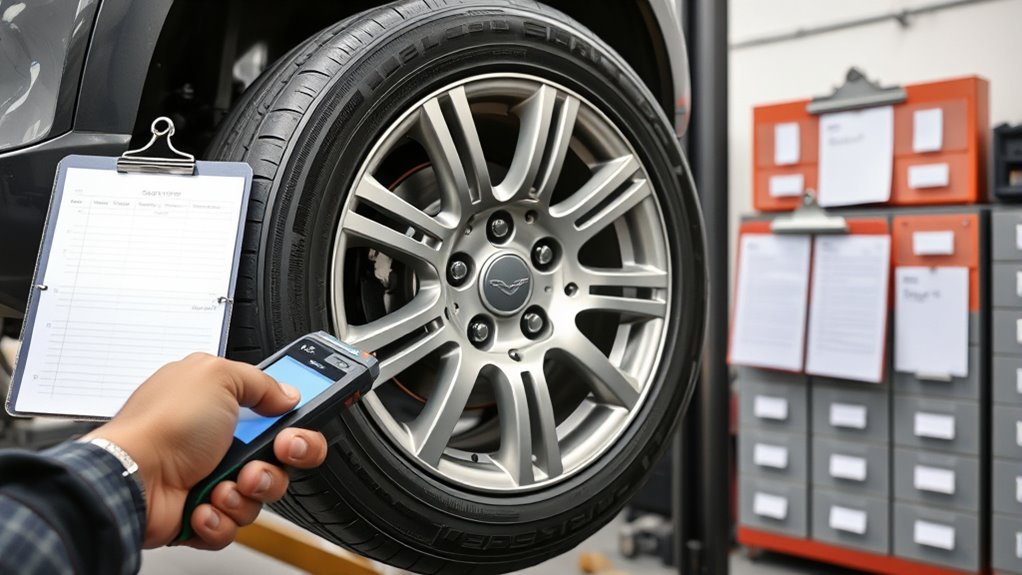
Installation depends on the sensor type. External cap-style sensors can be simple, but internal valve-mounted and in-tire sensors usually require tire dismounting, correct valve hardware, proper torque, sealing, balancing, and electronic pairing.
Typical cost factors include:
- Sensor hardware: Pressure-only sensors cost less than advanced multi-sensor units.
- Labor: Internal sensors require tire service and may require wheel balancing.
- Programming and relearn: Some vehicles need a scan tool or relearn procedure after sensor replacement or rotation.
- Battery and sensor replacement: Many direct TPMS sensors use sealed batteries, so a depleted battery often means replacing the sensor. Service life varies by sensor design; for more detail, see the TubeTyre TPMS sensor battery-life guide.
- Subscription fees: Fleet systems may charge for dashboards, cloud analytics, data storage, or telematics integration.
- Downtime: The value of avoiding a roadside failure may be much higher than the sensor price for commercial vehicles.
For consumers, the best value usually comes from a reliable TPMS that is easy to service locally. For fleets, the best value comes from matching sensor cost to the savings from fewer tire failures, better fuel control, longer tire life, and less unplanned downtime.
[Products Worth Considering]
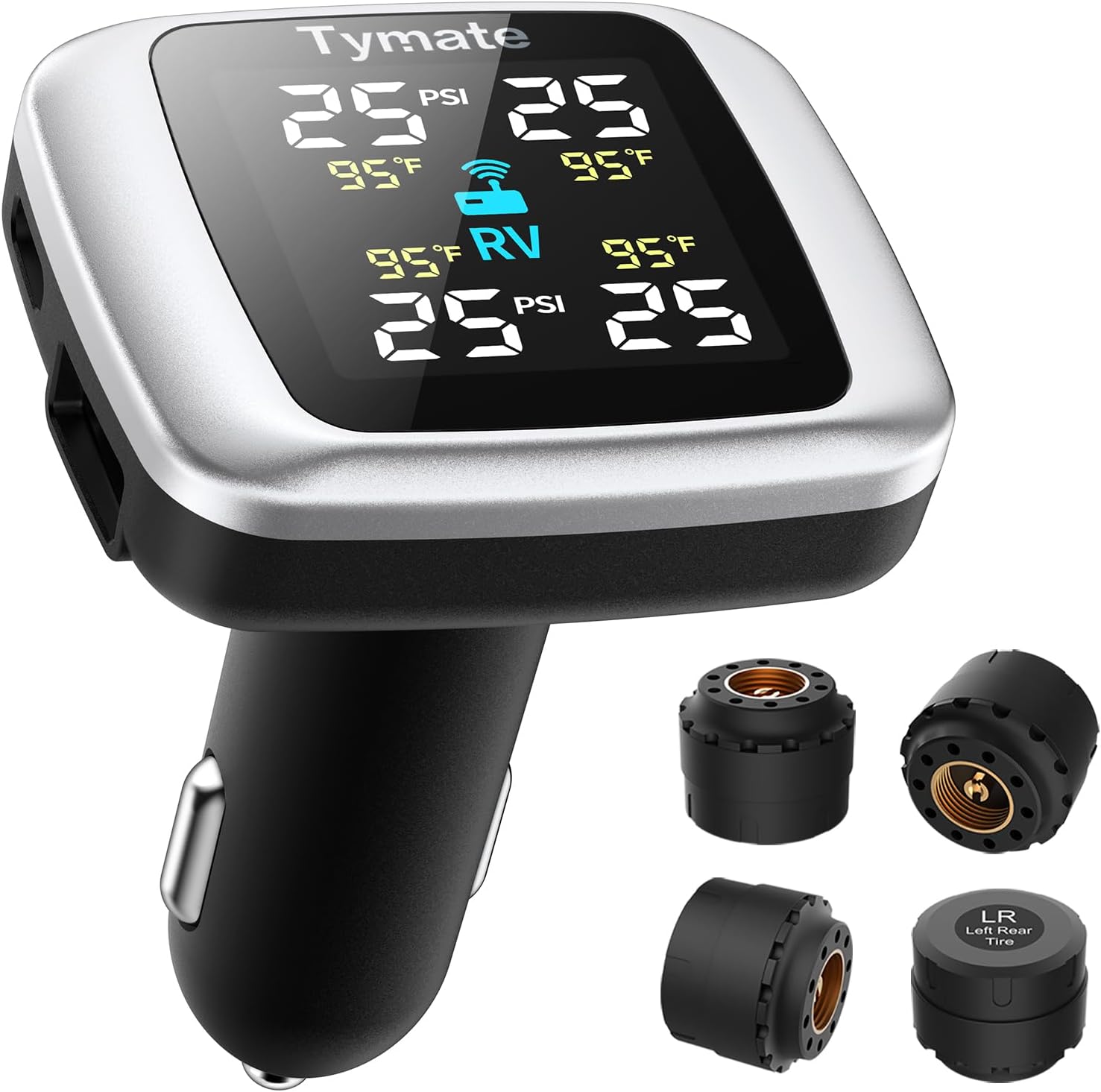
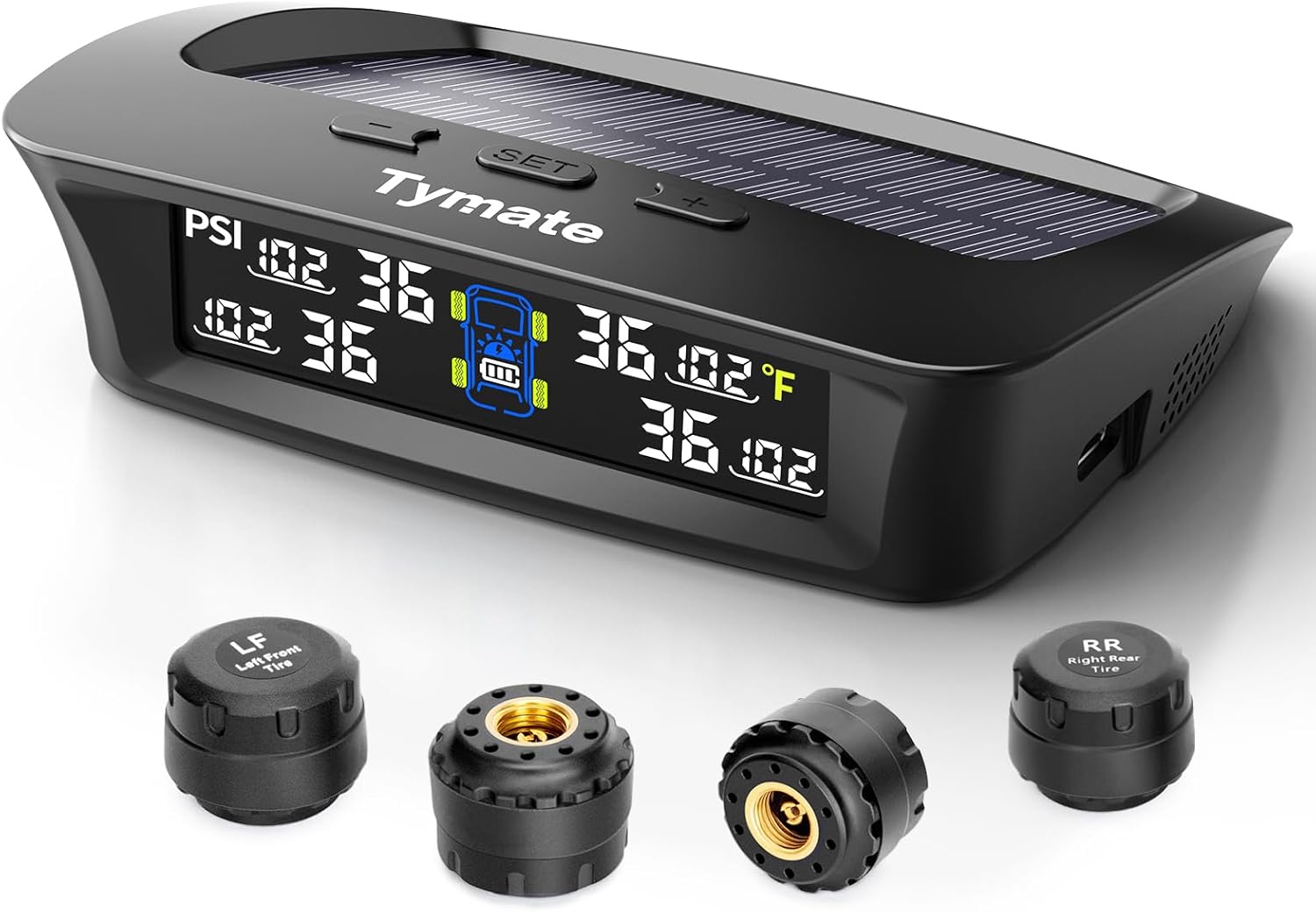
Tymate TM7 is a wireless tire pressure monitoring system that delivers real-time pressure and temperature readings for safer driving. It includes four external sensors, a bright color LCD display with adjustable backlight, and six alarm modes for high/low pressure, fast leakage, high temperature, and sensor signal or battery issues. The system covers a wide 0–144 PSI range and plugs into your vehicle’s cigarette lighter socket for quick DIY setup.

Accurately measure tire tread depth with a calibrated gauge marked from 0 to 1 inch in 1/32 inch increments. The color-coded bar helps you quickly identify tread condition ranges, supporting safe driving for trucks, motorcycles, automobiles, and passenger vehicles.

The TYAMATE TM8 solar-powered wireless TPMS delivers real-time tire pressure and temperature monitoring with six alarm modes for safer driving. A vibrant color LCD display shows readings clearly while windshield mounting keeps it hands-free and easy to read. With a wide 0–87 PSI range, strong 433.92 MHz signal transmission, and quick sensor pairing, it’s ideal for RV, sedan, SUV, MPV, and truck use.
Maintenance Tips for Connected Tire Sensors
Connected tire sensors work best when they are treated as part of the tire-maintenance routine, not as a set-it-and-forget-it device.
- Check cold tire pressure monthly and before long trips.
- Use the pressure listed on the driver-side door placard or owner’s manual, not the maximum pressure printed on the tire sidewall.
- Inspect valve stems for corrosion, cracking, leaks, or missing caps.
- Relearn or recalibrate the TPMS after tire rotation, tire replacement, wheel replacement, or sensor service when your vehicle requires it.
- Do not use tire sealant unless it is approved for your vehicle and TPMS sensor type.
- Replace damaged sensors, leaking valve hardware, or sensors with weak batteries.
- For fleets, review pressure and temperature trends instead of relying only on emergency alerts.
Emerging Trends: AI Analytics, OTA Updates, and AV Integration
Smart tire technology is moving from simple warning lights toward richer vehicle data. The biggest trends are AI analytics, over-the-air software updates, and integration with advanced driver-assistance and autonomous-vehicle systems.
- AI-driven maintenance: Fleet platforms can use pressure, temperature, mileage, tread, and service history to prioritize abnormal patterns and predict service needs on supported systems.
- Sensor fusion: Tire data can be combined with vehicle load, speed, route, weather, and road condition data.
- Remote software updates: Software-defined vehicle and fleet platforms may update analytics, diagnostics, or alert logic remotely when the architecture supports it.
- ADAS and automated-driving support: Tire and road-condition data can provide extra context for traction, braking, and vehicle-control systems when the platform is designed to use those signals.
- Lower-power sensors: Newer sensor designs aim to reduce power use, extend battery life, and simplify vehicle integration.
The future is not just a smarter tire. It is a vehicle that understands tire condition as part of the whole driving environment.
Frequently Asked Questions
What is the difference between TPMS and connected smart tire sensors?
TPMS is primarily an underinflation warning system. Direct TPMS measures pressure at the wheel, while indirect TPMS infers pressure changes from wheel-speed data. Connected smart-tire systems can go further by adding temperature, motion, tread-wear, mileage, load-related, or road-condition data plus app or fleet analytics, depending on the product.
How do connected tire sensors send data?
A direct sensor measures tire data at the wheel and transmits it wirelessly to a vehicle receiver, gateway, display, phone, or fleet platform. Traditional TPMS commonly uses low-power radio, while newer designs can use Bluetooth Low Energy. The exact communication path depends on the vehicle and sensor system.
How long do connected tire sensor batteries last?
Battery life depends on the sensor design, power strategy, temperature, use, and transmission behavior. Many direct TPMS sensors use sealed batteries and are replaced when the battery is depleted. As one current example, Bosch says its SMP290 design targets a sensor lifespan of up to 10 years, but you should check the specification for your exact sensor rather than assume one universal lifespan.
Can connected tire sensors measure tread depth?
Some advanced systems can estimate or monitor tread wear, but this is not a standard TPMS feature. Continental’s current connected-fleet materials list tread depth among the tire-health data available in supported ContiConnect systems. Confirm the exact feature set before buying or relying on automated tread monitoring.
Can smart tires detect road conditions?
Some intelligent-tire systems and development platforms can estimate tire-road conditions or use tire and road temperature, slip, vibration, and friction-related signals. This is an advanced capability, not something you should expect from a normal consumer TPMS unless the manufacturer specifically says it is supported.
Are connected tire sensors worth it?
They are most valuable when an alert leads to action. Individual drivers mainly benefit from clear pressure information and earlier warnings. Fleets can gain more from centralized pressure and temperature monitoring, trend data, service prioritization, and integration with maintenance workflows. The system is less useful if it is incompatible, produces unactionable alerts, or locks data into a platform you cannot export.
Conclusion
Connected tire sensors help drivers and fleets see tire problems earlier, but the feature set varies widely. Basic TPMS warns about significant underinflation. Advanced intelligent-tire platforms can add temperature, motion, tread, mileage, and tire-road data that supports more proactive maintenance and vehicle-control decisions.
Before choosing a system, confirm four things: what the sensor actually measures, whether it is compatible with your vehicle or fleet platform, how alerts and data are delivered, and how the sensor is serviced. Then keep manual pressure, tread, sidewall, and damage checks in the routine, because connected sensing is an early-warning layer, not a complete tire inspection.
Sources
- eCFR — 49 CFR § 571.138, Tire Pressure Monitoring Systems — TPMS purpose and federal performance requirements.
- FuelEconomy.gov — Gas Mileage Tips — tire inflation and fuel-economy figures.
- NHTSA TireWise — tire pressure, tread, TPMS, and tire-care guidance.
- Bosch Semiconductors — SMP290 TPMS Sensor — current example of a pressure, temperature, acceleration, battery-voltage, and Bluetooth Low Energy TPMS sensor.
- Bosch Semiconductors — SMP290 MEMS Sensor Story — BLE integration and a stated sensor lifespan of up to 10 years for the SMP290 design.
- Continental — ContiConnect Pro — current fleet tire-health data, alerts, tread-related functions, dashboards, and system integration.
- Continental — The Tire of the Future Has Smart Sensors — examples of intelligent-tire sensing for pressure, tread, temperature, and road conditions.