Smart tire technology is moving well beyond the familiar low-pressure warning light. In 2026, connected tire systems can combine pressure and temperature data with mileage, load, tread-wear estimates, road-friction information, and predictive analytics. Some of these tools are already used by fleets and vehicle manufacturers, while airless and actively adaptive tires remain at very different stages of development.
Quick Answer
Smart tires use sensors, vehicle data, and software to provide more information than a basic TPMS. Current systems can monitor tire pressure and temperature, support predictive maintenance, and estimate wear or road conditions. Airless, self-sealing, and adaptive tires are related trends, but many of their most ambitious features are still prototypes or concepts.
Key Takeaways
- Smart tire technology can go beyond pressure warnings by combining tire sensors with vehicle data, cloud platforms, and predictive software.
- Pressure and temperature monitoring are already widely practical, while automated tread prediction and real-time friction estimation are developing quickly.
- EVs and fleets can benefit from better tire data because load, tire wear, rolling resistance, uptime, and energy use directly affect operating cost and range.
- Self-sealing tires are already available, while passenger-car airless tires are still much less common and should not be confused with self-sealing or run-flat designs.
- Adaptive tire concepts exist, but production tires that autonomously reshape their tread blocks and sipes for changing weather are not yet mainstream.
- NASA-developed shape-memory-alloy tire research is being commercialized by The SMART Tire Company, but its METL bicycle tire remains in a pre-launch stage in 2026.
What Are Smart Tires?
Smart tires, also called intelligent or connected tires, use sensor data and software to give the vehicle or operator a clearer picture of tire condition. Depending on the system, that information can include tire pressure, temperature, mileage, load, tire identification, tread-wear estimates, and information about the tire-road interface.
The important distinction is that not every smart tire directly measures every value. Pressure and temperature may come from physical sensors inside the tire, while tread wear, remaining life, load, or road friction can be estimated by algorithms that combine tire data with information from the vehicle.
This makes smart tire technology broader than a conventional Tire Pressure Monitoring System. TPMS mainly warns you about inflation problems. Tire intelligence attempts to turn several streams of data into maintenance, safety, and vehicle-control information.
Note: A smart-tire alert does not replace normal tire inspections. You still need to check tread condition, visible damage, inflation requirements where applicable, wheel alignment, and other maintenance items recommended by the tire and vehicle manufacturers.
How Smart Tires Work
A modern tire-intelligence system usually has three layers: sensing, connectivity, and analysis. Sensors gather data at or near the tire. The vehicle, a telematics unit, or another receiver then transfers the information. Software turns those signals into warnings, estimates, or maintenance recommendations.
For example, an in-tire sensor may continuously monitor pressure and casing temperature. Software can combine those readings with mileage and vehicle information to identify abnormal pressure loss, excessive heat, or unusual operating conditions before they become more serious.
More advanced systems can also estimate tread condition, tire load, or the friction potential between the tire and road. That information can be sent to a driver display, fleet dashboard, maintenance platform, or vehicle-control system.
The real shift is not simply adding another sensor. It is turning tire data into information that a driver, fleet manager, or vehicle-control system can use.
TPMS vs. Smart Tire Technology
| Feature | Basic TPMS | Connected Tire Intelligence |
|---|---|---|
| Pressure monitoring | Yes | Yes |
| Temperature monitoring | Available on some direct systems | Common in advanced in-tire systems |
| Tread-wear estimation | No | Available or under development on some platforms |
| Load estimation | No | Possible on some platforms |
| Road-friction information | No | Being developed and deployed in selected intelligent-tire applications |
| Fleet analytics | Usually limited | Yes, on commercial platforms |
| Predictive maintenance | Limited | A core use case for several current systems |
What Smart Tire Technology Is Available in 2026?
One of the biggest mistakes in discussions about future tires is treating every prototype as if it were already available at a tire shop. In reality, smart tire technology exists on a spectrum from commercial fleet products to experimental concepts.
| Technology | 2026 Status | What It Does |
|---|---|---|
| Connected pressure and temperature monitoring | Commercially available | Tracks inflation and temperature and can send remote alerts. |
| Fleet predictive tire maintenance | Commercially available | Uses connected data and algorithms to identify pressure problems and maintenance needs earlier. |
| Goodyear SightLine | Available in selected applications | Supports tire wear, load, inflation, temperature, road-condition, and vehicle-integration use cases. |
| Continental ContiConnect | Commercial fleet platform | Monitors tire pressure, temperature, mileage, and other tire-condition data. |
| AI-based tread prediction | Developing | Continental is developing a Gen3 in-tire sensor whose data can support AI tread-wear prediction. |
| Passenger-car self-sealing tires | Commercially available on selected tires | Uses an internal sealant layer to close certain tread punctures. |
| Passenger-car airless tires | Prototype / limited testing | Replaces compressed air with a load-bearing structure. |
| Actively adaptive tire shape | Concept / development | Research concepts can change pressure or contact-patch characteristics for different surfaces. |
A particularly fresh example came on September 2, 2026, when Michelin Connected Fleet announced an integration combining Doran tire-pressure and temperature monitoring hardware with Michelin Smart Predictive Tire. The system is designed to give fleets connected tire data and predictive maintenance insights through the Platform Science ecosystem.
[Products Worth Considering]

This tire inflator with pressure gauge delivers long-lasting performance with a durable rubber-protected gauge and sturdy build. The longer hose and 360 swivel air chuck help you seal the valve securely and keep your hands free while measuring, inflating, or deflating. It’s battery-free for reliable use and provides ±2 PSI accuracy in the mid-range for most typical tires, with universal compatibility for 1/4 NPT compressor outputs.

Replace worn or malfunctioning GM TPMS sensors with this 433MHz pre-programmed sensor set designed for compatibility with many Chevrolet, Buick, GMC, and Cadillac models. It includes guidance for proper OBDII relearning/pairing after installation and supports reliable long-term operation with a high-performance CR2032 battery. Quality tested for durability and performance to help restore accurate tire pressure monitoring.

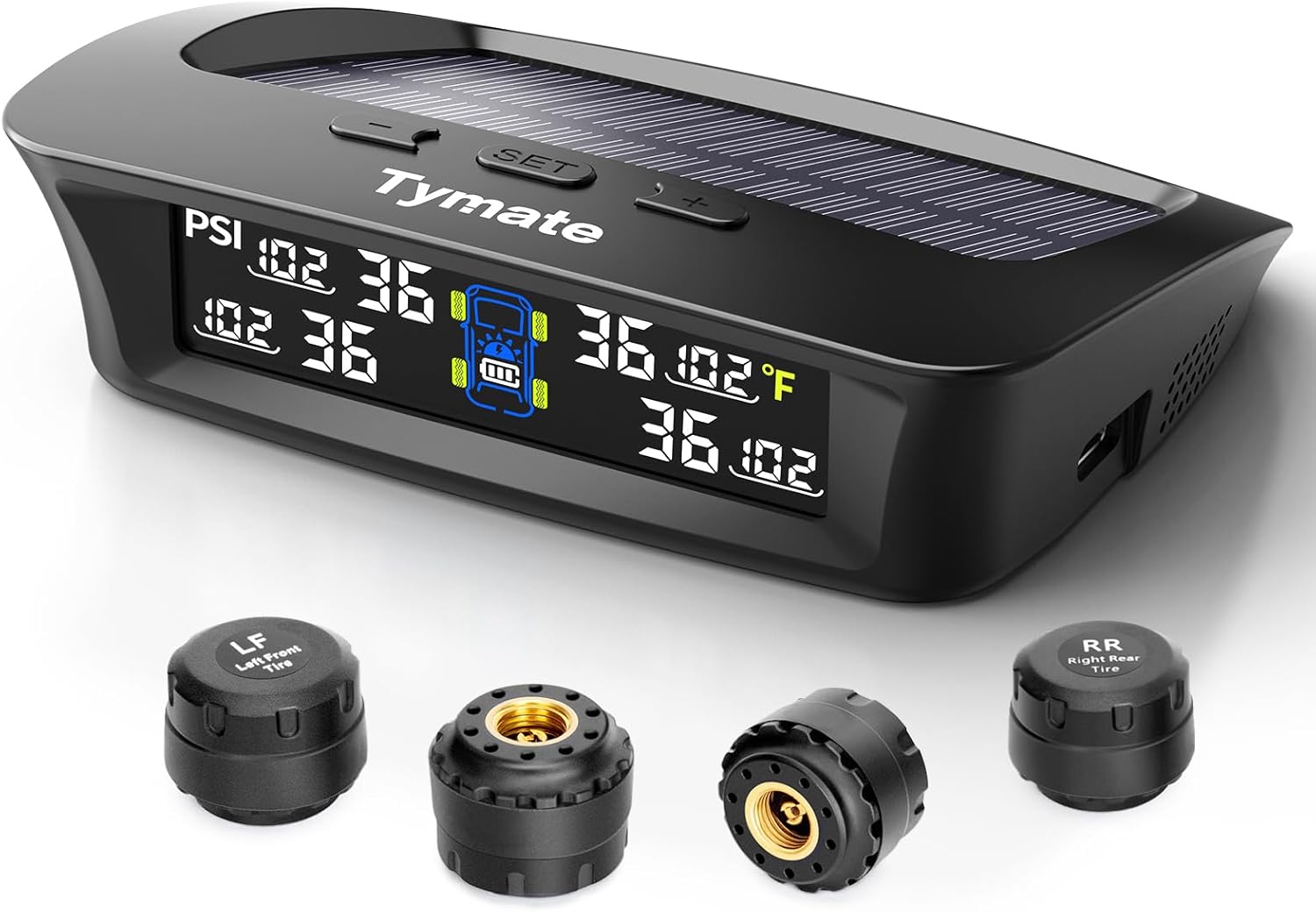
The TYAMATE TM8 solar-powered wireless TPMS delivers real-time tire pressure and temperature monitoring with six alarm modes for safer driving. A vibrant color LCD display shows readings clearly while windshield mounting keeps it hands-free and easy to read. With a wide 0–87 PSI range, strong 433.92 MHz signal transmission, and quick sensor pairing, it’s ideal for RV, sedan, SUV, MPV, and truck use.
Why Smart Tires Matter Now
Smart tires matter because tire condition affects more than whether you get a flat. Inflation, heat, tread condition, load, rolling resistance, and grip all influence how efficiently and predictably a vehicle operates.
A conventional warning light usually tells you that a threshold has already been crossed. A connected system can provide more context, such as a gradual pressure-loss trend, unusually high temperature, or recurring problems on one wheel position.
Safety and Predictive Alerts
Pressure loss and overheating are two of the clearest applications for connected monitoring. Tire-mounted sensors can provide frequent readings, while software can flag abnormal patterns and give drivers or fleet managers time to investigate.
More advanced tire-intelligence systems are also being tested as inputs for braking, stability, and automated-driving functions. Goodyear, for example, has demonstrated tire-road friction estimation and has worked with vehicle-system companies on integrating tire intelligence into ABS, automatic emergency braking, and chassis-control systems.
That does not mean a tire independently takes control of the vehicle. The more accurate description is that tire intelligence can provide additional information to the systems that control braking, steering, suspension, or automated driving.
Efficiency for Modern Driving
Rolling resistance converts some of a vehicle’s energy into heat as the tire deforms. According to NHTSA guidance, an estimated 10% reduction in tire rolling resistance can improve vehicle fuel economy by roughly 1% to 2%.
Better tire information cannot eliminate rolling resistance, but it can help keep inflation and maintenance closer to the conditions the tire was designed to operate under.
Smart tire systems can therefore support efficiency by helping operators identify underinflation, unusual heat, or maintenance problems. For an EV, those losses matter because energy spent overcoming unnecessary resistance comes directly from the battery.
Smart Tires for EVs and Fleets
Electric vehicles are an especially important use case for smart tire technology. EV tire design often has to balance vehicle weight, high torque, tread wear, range, load capacity, and cabin noise. Tire data can help drivers and vehicle systems understand whether the tires are operating as expected.
For fleets, the value is easier to scale. Instead of waiting for a driver to notice a tire problem, a fleet platform can monitor many vehicles and prioritize the ones that need attention.
Current fleet systems can provide pressure and temperature alerts, compare tire behavior across vehicles, support maintenance scheduling, and reduce the amount of manual data collection needed for routine tire management.
Pro Tip: For fleet use, the real value comes from connecting tire alerts to the maintenance workflow. An alert that automatically reaches the person responsible for inspection or service is more useful than another dashboard nobody checks.
[Products Worth Considering]
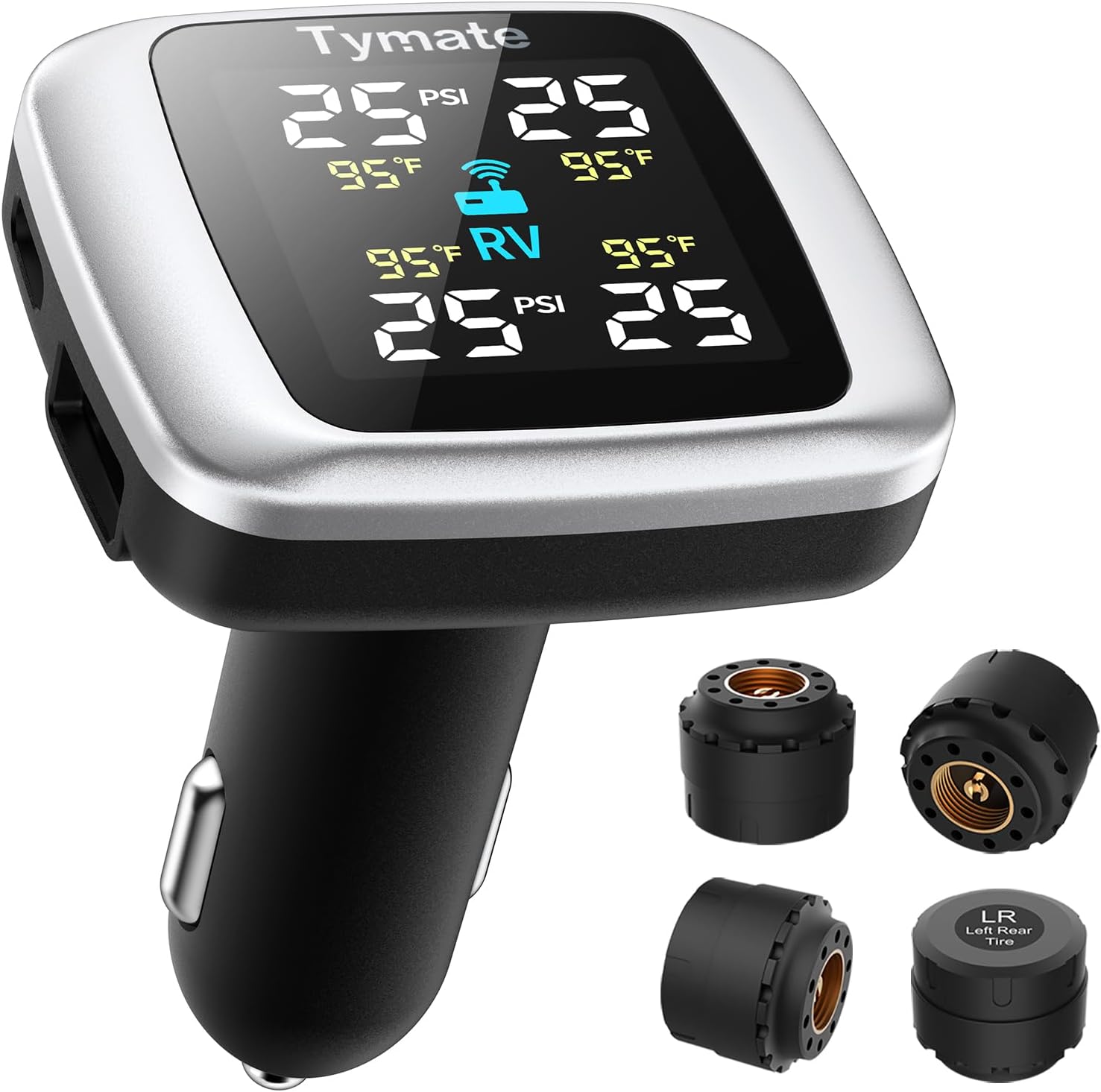
Tymate TM7 is a wireless tire pressure monitoring system that delivers real-time pressure and temperature readings for safer driving. It includes four external sensors, a bright color LCD display with adjustable backlight, and six alarm modes for high/low pressure, fast leakage, high temperature, and sensor signal or battery issues. The system covers a wide 0–144 PSI range and plugs into your vehicle’s cigarette lighter socket for quick DIY setup.
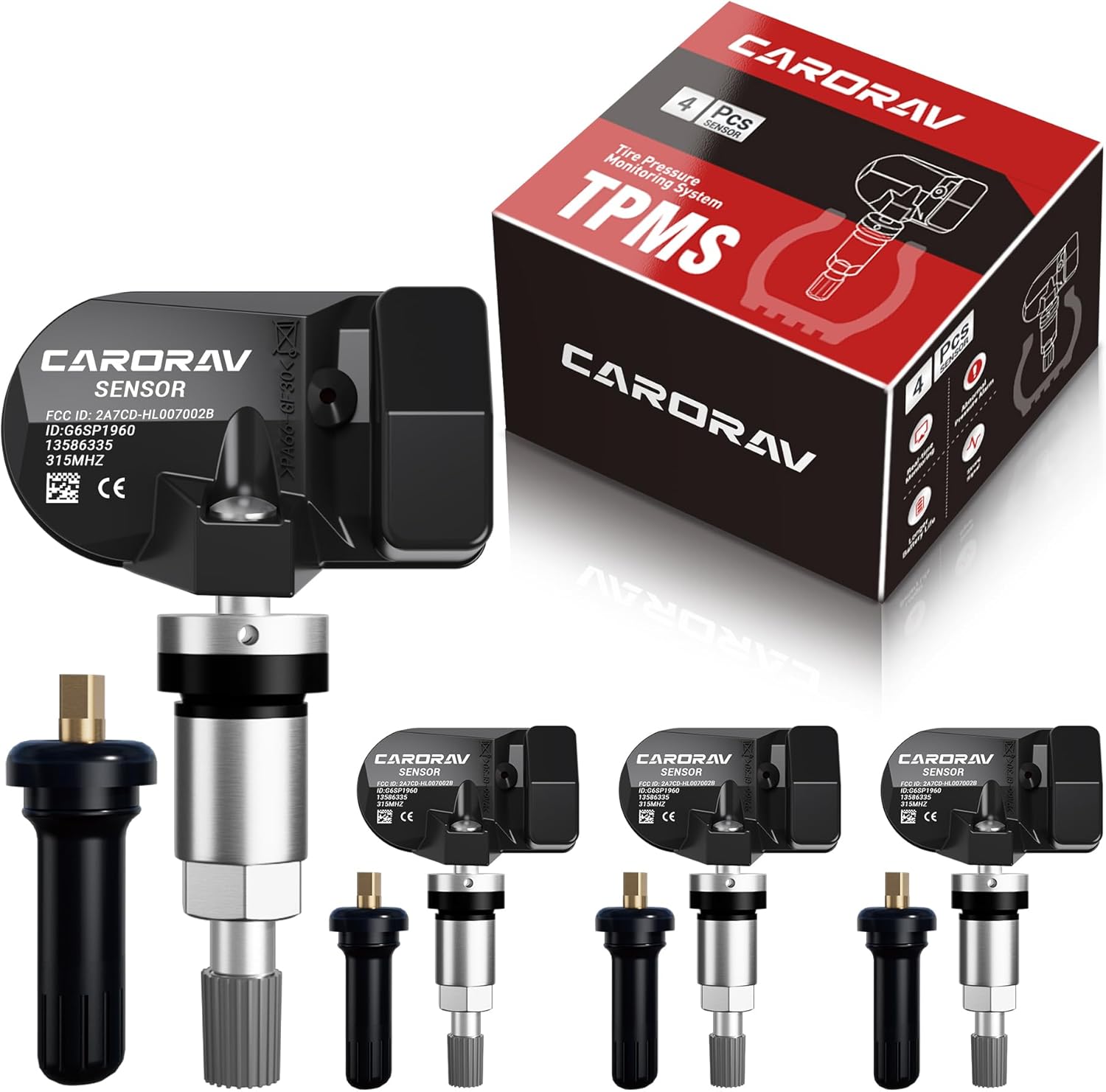
Replace worn or missing TPMS sensors with CARORAV pre-programmed GM-compatible sensors for a smoother installation experience. These 315MHz replacement sensors help monitor tire pressure in real time with long battery life, and they are designed to withstand harsh temperatures. Manual or OBDII relearn may be required to reset the system for proper recognition.
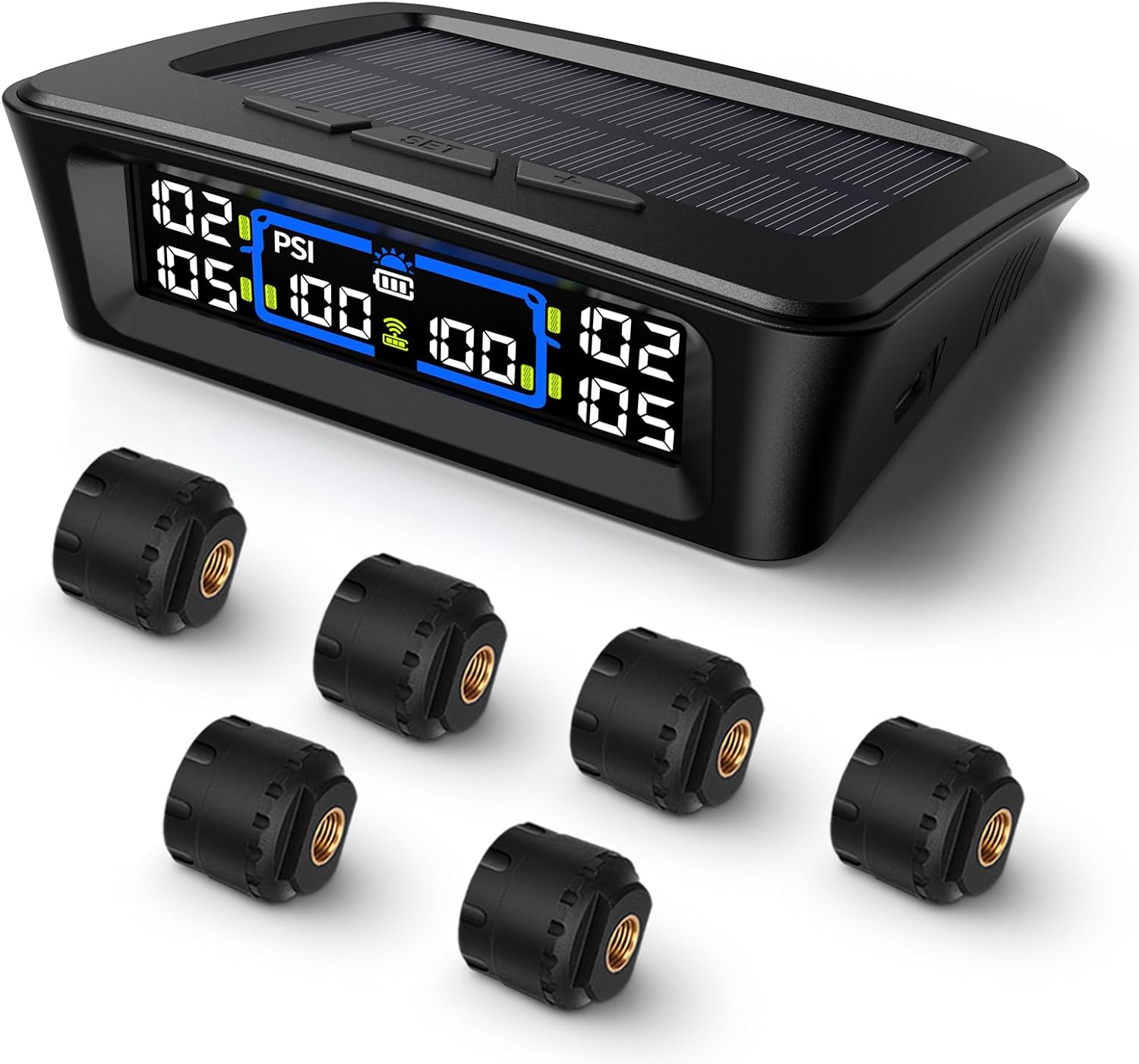
The Tymate TM12 RV TPMS delivers real-time tire pressure and temperature monitoring with a stable 433Hz display for safer long-distance driving. It supports simultaneous monitoring across vehicle and trailer zones, includes six alarm modes for pressure, temperature, leakage, battery, and signal loss, and features easy DIY installation with auto calibration. Power is supplied via USB-C charging or solar recharging, with a wide 0–144 PSI range and up to 50 ft signal coverage for RVs and towable trailers.
Airless, Self-Sealing, and Run-Flat Tires Are Different
Airless, self-sealing, and run-flat tires are often grouped together because all three aim to reduce disruption from tire damage. They achieve that goal in very different ways.
| Type | How It Works | Main Limitation |
|---|---|---|
| Airless / non-pneumatic | Uses a load-bearing structure instead of compressed air. | Passenger-car availability remains limited, and tread and structural inspections are still required. |
| Self-sealing | Uses sealant inside the tread area to close certain punctures. | Only handles punctures within specified size and location limits. |
| Run-flat | Uses reinforced construction so the tire can temporarily support the vehicle after pressure loss. | Driving distance and speed are limited after pressure loss. |
[Products Worth Considering]

Replace worn or missing TPMS sensors with a pre-programmed 4-pack designed for compatible GM vehicles. These 315MHz sensors provide real-time tire pressure monitoring and alert you if pressure is too high, too low, or if a rapid air leak occurs. Most installations are ready with minimal relearn effort after mounting, helping improve safety and driving confidence.

The Trivd Frol 1/2" air impact wrench delivers high performance torque up to 1500 ft-lbs with a twin hammer impact mechanism for strong, balanced blows. It features an ergonomic grip, compact lightweight design, and quick-stop control with 3 forward speeds up to 8000 RPM plus a reverse speed. Built for demanding automotive repair and tire shop work, the rear exhaust helps keep debris away from the surface.

Replace your worn or missing TPMS sensors with pre-programmed, direct-fit sensors for compatible Ford, Lincoln, and select Mazda models. Each sensor comes ready to activate with a scan tool, helping restore accurate tire pressure monitoring and trouble-free installation. Built with a long-life CR2032 battery and tested before factory release, this set provides dependable performance with a one-year warranty.
Airless Tire Benefits
An airless tire cannot lose inflation pressure because it does not contain compressed air. That removes pressure-related flats and eliminates routine inflation checks.
The structure still has to support the vehicle, absorb impacts, maintain traction, dissipate heat, and survive repeated loading. That engineering challenge is one reason airless passenger tires have taken longer to commercialize than the idea might suggest.
Michelin already sells its TWEEL airless products for selected off-road and industrial applications. Its UPTIS passenger-car system, however, continues to be described by Michelin as a prototype rather than a broadly available replacement tire for normal passenger vehicles.
Airless also does not mean maintenance-free. Tread wear, debris, alignment, load capacity, damage, and general condition still need attention.
Self-Sealing Puncture Protection
Self-sealing tires are much closer to conventional pneumatic tires. They still contain air, but a sealant layer inside the tire can surround certain objects or close a hole in the tread area.
For example, Michelin says its Selfseal technology is designed to seal most summit-tread punctures caused by nails and screws up to about 6 mm in diameter. Other manufacturers use similar concepts with their own limits.
This can prevent an immediate roadside stop, but it does not turn every puncture into a permanent repair.
Warning: A self-sealing tire that has been punctured should still be inspected according to the tire manufacturer’s instructions. Sidewall damage, large punctures, cuts, and damage outside the repairable tread area may require replacement.
The Materials Powering Future Tires
Future tire development is not only about electronics. Materials determine how much a tire can deform, how quickly it recovers, how much heat it creates, how long the tread lasts, and how much raw material is required.
One of the most unusual examples is nickel-titanium shape memory alloy, often called NiTi or Nitinol. NASA’s Glenn Research Center has developed non-pneumatic tire structures that use shape-memory-alloy elements because they can withstand large deformation and recover their shape much better than conventional metal spring structures.
The SMART Tire Company uses the name NiTinol+ for the shape-memory-alloy material associated with its commercial tire development. The company’s METL bicycle-tire design combines a metal load-bearing structure with replaceable tread material.
According to The SMART Tire Company, METL’s replaceable tread uses about 50% less rubber than a conventional bicycle tire. That figure should be treated as a manufacturer claim until broader independent lifecycle data are available.
| Material or Design Approach | Potential Role |
|---|---|
| Nickel-titanium shape memory alloy | Large reversible deformation in non-pneumatic structures |
| Replaceable tread layers | Extend structural life while replacing only worn tread material |
| Recycled and renewable tire materials | Reduce dependence on virgin raw materials |
| Advanced polymers and composites | Balance load support, flexibility, heat management, and durability |
Adaptive Tire Technology: What Is Real Today?
The idea of a tire that changes itself for rain, snow, dry pavement, or rough roads is real as a research direction, but the production reality is more limited than some futuristic descriptions suggest.
Continental demonstrated its ContiAdapt concept using micro-compressors and an adjustable-width rim to change tire pressure and the size of the tire’s contact patch for different road conditions. It was paired conceptually with ContiSense sensing technology.
That is different from saying today’s smart tires can automatically deepen their sipes, reshape tread blocks, or transform from a summer tread into a winter tread while driving. Those more dramatic forms of active tread transformation remain development concepts rather than normal production features.
In the near term, the more realistic form of adaptation is likely to come from tire data influencing the vehicle. If the car has better information about tire load, grip, pressure, and road friction, its braking, steering, suspension, and stability systems can respond more intelligently.
NASA’s Superelastic Tire and The SMART Tire Company
NASA’s role in this story needs to be described carefully. Engineers at NASA’s Glenn Research Center developed a Superelastic Tire using shape memory alloys for future lunar and Martian rover applications. The technology evolved from earlier spring-tire research and was designed to tolerate large deformation without the permanent damage seen in conventional metal spring structures.
The SMART Tire Company later licensed NASA-derived technology for terrestrial commercialization. Its consumer-facing brand is SMART, short for Shape Memory Alloy Radial Technology, and its first planned consumer product is the METL bicycle tire.
In other words, METL is a SMART Tire Company product based on NASA-developed technology; it is not a retail tire manufactured or sold by NASA.
The company also received significant media recognition. TIME named SMART Tire one of its Best Inventions of 2023.
The launch status needs additional context in 2026. The SMART Tire Company homepage says METL tires will be available to order in Q3 2026, while the company’s current FAQ says it expects to launch the product in Q4 2026. The company’s website still promotes a waitlist, so it is safer to describe METL as a pre-launch product rather than a broadly available bicycle tire.
Limits and Adoption Barriers
Smart tire technology has clear potential, but adoption depends on more than whether a sensor can collect useful data.
- Cost: Sensors, connectivity, software platforms, and specialized tire construction add cost that must deliver measurable value.
- Sensor life: Tire-mounted electronics have batteries, temperature limits, installation requirements, and replacement considerations.
- Compatibility: Tire data must work with different vehicles, telematics systems, maintenance platforms, and service procedures.
- Accuracy: A directly measured value such as pressure is different from an algorithmic estimate such as remaining tread life or friction potential.
- Maintenance: Connected monitoring reduces manual checking in some situations but does not eliminate physical inspection.
- Data and security: Connected tires add another stream of vehicle data that manufacturers and fleets must transmit, store, secure, and manage responsibly.
- Commercialization: A successful prototype still has to meet durability, manufacturing, cost, service, regulatory, and customer-acceptance requirements.
What Smart Tires May Do Next
The next phase of smart tire development is likely to be less about a tire that physically transforms itself and more about deeper integration between the tire and the vehicle’s software.
Expect continued development in tread-wear prediction, pressure-loss forecasting, load estimation, road-friction estimation, tire identification, and automated maintenance planning.
For software-defined vehicles, tire information can become another input alongside cameras, radar, wheel-speed sensors, suspension data, and weather information. That can help braking, chassis, stability, and automated-driving systems understand the actual tire-road interface more accurately.
Fleet systems are also likely to become more automated. A pressure-loss trend or predicted maintenance issue could move directly from the tire platform into a maintenance ticket, service schedule, or parts workflow.
Airless tires will continue developing in parallel, but their path to passenger-car adoption depends on ride quality, heat control, durability, manufacturing cost, repair procedures, and large-scale production. The same caution applies to actively adaptive tread designs: promising prototypes are not the same thing as mainstream availability.
Frequently Asked Questions
What happened to The SMART Tire Company after Shark Tank?
The SMART Tire Company appeared on Shark Tank in January 2022 but did not receive a deal from the Sharks. The company continued developing its technology, raising money through crowdfunding and promoting its METL airless bicycle tire. As of September 2026, the company’s website still shows METL in a pre-launch or waitlist stage.
Will tire prices go down in 2026?
There is no reliable rule that tire prices as a whole will fall in 2026. Prices vary by tire size, brand, raw materials, manufacturing costs, vehicle type, tariffs, distribution costs, and demand. Advanced connected or airless designs may also carry a premium while production volumes remain relatively low.
What is new about vehicle tire technology in 2026?
The strongest 2026 trend is connected tire intelligence rather than a completely new tire shape. Fleet and vehicle systems increasingly combine pressure, temperature, mileage, wear estimates, and predictive software. Developers are also working on friction estimation, smarter integration with vehicle controls, airless structures, and more sustainable materials.
How much will airless tires cost?
There is no universal passenger-car airless-tire price yet. Commercial airless products exist for certain off-road and industrial applications, but major passenger-car systems such as Michelin UPTIS are still described as prototypes. The SMART Tire Company also describes METL as a premium product but has not established a simple mainstream passenger-car retail price.
Are smart tires the same as TPMS?
No. TPMS mainly monitors tire inflation and warns about significant pressure loss. Smart tire or tire-intelligence systems can add temperature, mileage, tire identification, tread-wear estimates, load information, predictive maintenance, fleet connectivity, and road-condition analysis.
Are airless tires maintenance-free?
No. Airless tires eliminate inflation-pressure maintenance and pressure-related flats, but the tread and structure can still wear or become damaged. You still need to inspect tread condition, debris, alignment, load requirements, and other items specified by the tire manufacturer.
Conclusion
Smart tires are already moving beyond basic pressure warnings, but the most useful way to understand the technology is to separate what exists today from what is still being developed. Connected pressure and temperature monitoring, fleet analytics, predictive maintenance, self-sealing tires, and selected tire-intelligence systems are real 2026 technologies.
Airless passenger tires, fully adaptive tread patterns, and widespread autonomous tire actuation are much earlier in the adoption cycle. NASA-derived shape-memory-alloy structures such as the technology behind The SMART Tire Company’s METL show how different future tires may become, but commercialization still depends on manufacturing, durability, cost, and real-world testing.
For drivers, EV owners, and fleets, the near-term benefit is simpler: better information about the only parts of the vehicle that actually touch the road. Used correctly, that information can support safer maintenance decisions, better uptime, and more efficient vehicle operation.
Sources
- National Highway Traffic Safety Administration, TireWise — tire pressure, tire maintenance, and rolling-resistance guidance.
- Goodyear SightLine and Goodyear technology materials — connected tire intelligence, wear, load, pressure, temperature, road-friction, and vehicle-system integration.
- Continental ContiConnect and ContiAdapt materials — connected fleet monitoring, developing tread-prediction technology, and adaptive contact-patch concepts.
- Michelin Connected Fleet — September 2, 2026 Smart Predictive Tire and Doran integration announcement.
- NASA Technology Transfer Program — Superelastic Tire and shape-memory-alloy tire technology developed at NASA Glenn Research Center.
- The SMART Tire Company and TIME — current METL commercialization status, manufacturer sustainability claims, and 2023 Best Inventions recognition.