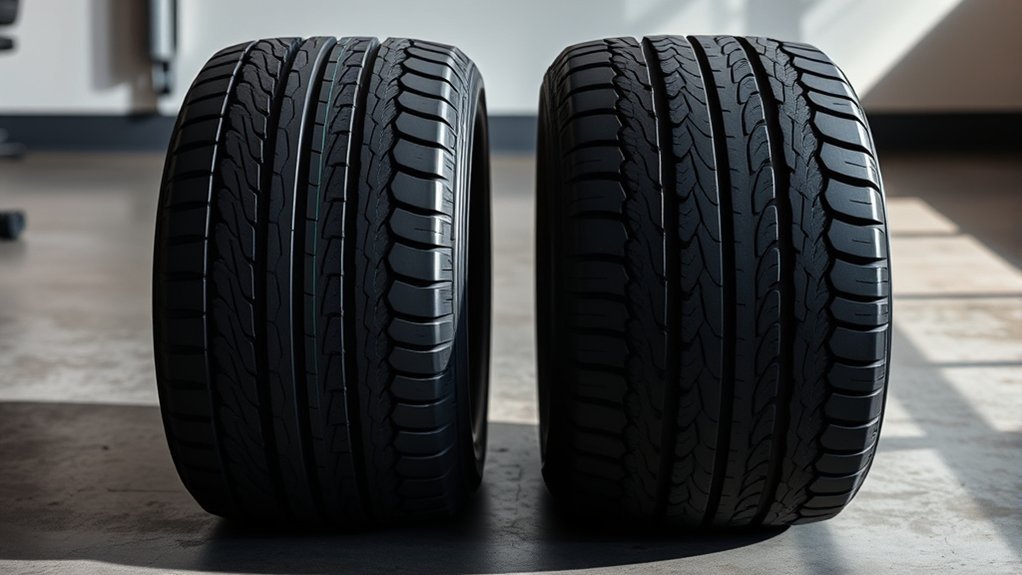
Choosing between 265/70R17 and 275/70R17 tires for your Toyota 4Runner comes down to fitment, ride comfort, load rating, and how much off-road use you plan. The 275/70R17 is wider and about half an inch taller overall, but the real-world difference is smaller than many owners expect. For most daily-driven 4Runners, 265/70R17 is the safer, easier fit. For a slightly tougher stance and a small clearance gain, 275/70R17 can work when your wheels, alignment, and tire model leave enough room.
Quick Answer
Choose 265/70R17 if you want the closest-to-stock fit, smoother daily ride, lower fitment risk, and simpler tire shopping. Choose 275/70R17 if you want a slightly wider look, about 0.28 inch more axle clearance, and you are willing to verify rubbing, load rating, wheel offset, and spare-tire fit.
Key Takeaways
- 265/70R17 is the easier choice for many 4Runners with factory 17-inch wheels because it stays closer to the OE size used on several fifth-gen trims.
- 275/70R17 is about 0.55 inch taller overall, which adds only about 0.28 inch of axle ground clearance.
- Rubbing is not decided by tire size alone. Wheel offset, tire shoulder shape, caster, mud flaps, fender liner position, and suspension condition all matter.
- Load range E is not automatically better for a daily-driven 4Runner. It can add weight and stiffness, so compare the exact tire model and load index.
- Always check your door placard, owner’s manual, and installer guidance before changing tire size, pressure, or load rating.
Comparing 265/70R17 and 275/70R17: Key Differences to Consider
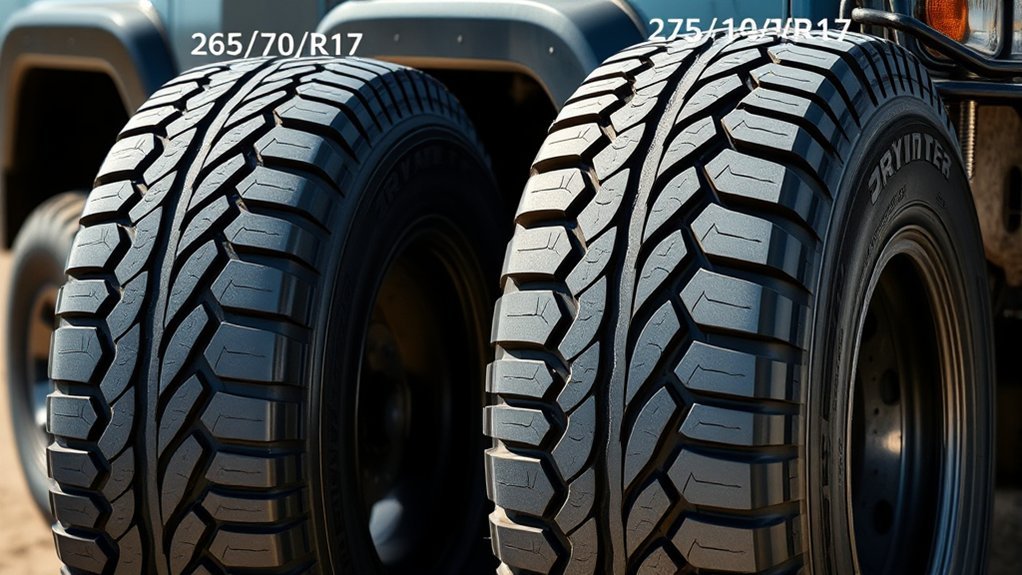
The 265/70R17 and 275/70R17 sizes use the same 17-inch wheel diameter and the same 70-series sidewall ratio. The difference comes from width. A 275 tire is 10 mm wider than a 265 tire, so its sidewall is also slightly taller because the sidewall height equals 70% of the section width.
Many fifth-gen Toyota 4Runners with 17-inch wheels came with P265/70R17 tires listed by Toyota. A 275/70R17 tire is a mild upsizing step, not a huge jump. Still, mild does not mean automatic. You should confirm the exact tire’s measured width, tread shape, load index, and approved rim range before buying.
| Feature | 265/70R17 | 275/70R17 |
|---|---|---|
| Nominal section width | 265 mm, about 10.4 in | 275 mm, about 10.8 in |
| Nominal diameter | About 31.6 in | About 32.2 in |
| Clearance change | Baseline | About 0.28 in more axle clearance |
| Speedometer effect | Closer to factory calibration on many 17-inch 4Runner trims | About 1.7% taller, so indicated speed may read slightly low |
| Fitment risk | Lower | Higher, especially with aggressive tread or low-offset wheels |
| Best for | Daily driving, comfort, easy fitment, lower weight options | Slightly larger stance, mild trail clearance, wider appearance |
What the Size Numbers Mean for Clearance and Speed
The size code tells you the tire’s nominal width, sidewall ratio, construction, and wheel diameter. In 265/70R17, the tire is 265 mm wide, the sidewall is 70% of that width, the “R” means radial construction, and the tire fits a 17-inch wheel. Tire makers explain aspect ratio this way: a 70-series tire has a sidewall height equal to 70% of its width, which is why the 275/70R17 ends up taller than the 265/70R17.
The 275/70R17 size adds about 0.55 inch of total tire diameter, but only half of that becomes extra ground clearance at the axle. That means the clearance gain is about 0.28 inch. You may notice the visual change more than the trail-performance change.
Note: Tire dimensions are nominal. Two tires with the same printed size can measure differently because of tread depth, sidewall design, rim width, and manufacturer construction.
Will 275/70R17 Fit a Stock 4Runner?
A 275/70R17 tire can fit some stock fifth-gen 4Runners, especially on factory-style 17-inch wheels, but you should not treat it as a guaranteed no-rub size. The exact answer depends on your tire model, wheel offset, alignment, front mud flaps, fender liner, suspension sag, and how much the tire’s shoulder sticks out.
Before you buy, turn the steering wheel lock-to-lock and inspect the front fender liner, mud flap area, upper control arm clearance, and body-mount area. After installation, test again on flat ground and while backing up at full steering lock. Light rubbing during reverse turns is one of the most common issues when upsizing.
Warning: Do not choose a tire size by forum fitment alone. Follow your Toyota door placard and owner’s manual for the original size and pressure, then ask a qualified tire installer to verify load index, rim width, clearance, and inflation needs for any alternate size.
[Products Worth Considering]

Measure tire tread depth quickly and accurately with this LUMITECO dial gauge that reads in 1/32" increments up to 14/32". The color-coded green/yellow/red zones make it easy to judge tire wear and know when replacement is needed. A rugged, compact design with a protective pouch helps keep the gauge ready for use on cars, trucks, motorcycles, and more.

Monitor tire tread wear with a smart, color-coded depth gauge that shows clear condition ranges at a glance. The bar is range marked for fast, easy readings, helping you maintain safer traction and performance. Each gauge is portable with a pocket clip, and the set includes 20 units for daily use and sharing.

Keep your tires properly inflated with this analog VONDIOR tire pressure gauge, designed for fast, easy readings without batteries. The swiveling, two-axis hose and large glow dial help you measure at any tire angle with instant visibility. Built with a protective rubber shield, it supports durable, low-maintenance use for cars and trucks.
Compatibility With Lift Kits and Vehicle Modifications
A lift kit can create more vertical clearance, but it does not solve every rubbing issue. Wider or lower-offset wheels can push the tire outward and make the tire contact the fender liner or mud flap during turns. More caster can help pull the tire away from the rear of the front wheel well, but alignment settings must stay within a safe range.
[Products Worth Considering]

Black Magic Tire Wet delivers a deep wet-look shine that makes tires appear dark, rich, and freshly detailed. Its long-lasting formula helps resist rain, dust, and road grime for weeks of glossy protection, not days. Apply by spraying onto clean, dry tires—no buffing or wiping required—with a low-sling design to reduce splatter on paint and wheels.

Upgrade your 2024-2026 Tesla Model 3 Highland with REEVAA all-weather mud flaps designed for seamless fit along the original body lines. The set of four delivers strong splash protection against mud, gravel, and road debris while using OEM-grade durable materials. Installation is non-destructive with original hole positions and snap-in clips, and the aerodynamic design helps minimize impact on efficiency.

Replace worn or missing TPMS sensors with a pre-programmed 4-pack designed for compatible GM vehicles. These 315MHz sensors provide real-time tire pressure monitoring and alert you if pressure is too high, too low, or if a rapid air leak occurs. Most installations are ready with minimal relearn effort after mounting, helping improve safety and driving confidence.
Lift Kit Compatibility
With a mild lift, 275/70R17 usually becomes easier to fit than it is on a stock suspension. Even then, tire model matters. An all-terrain tire with square shoulders may rub sooner than a highway tire in the same printed size. A lifted 4Runner with sagging springs, heavy armor, or aftermarket wheels may still need liner adjustment or mud-flap trimming.
Wheel Modification Considerations
Wheel width and offset can change fitment as much as tire size. Factory-style 17-inch wheels usually keep the tire tucked in better. Wheels with less positive offset or more poke can improve stance, but they can also increase rubbing at the front liner and body-mount area.
- Check wheel width: Use the tire maker’s approved rim-width range for the exact tire.
- Check offset: More poke may look better but can increase rubbing.
- Check alignment: Caster affects where the tire sits in the wheel opening.
- Check the spare: A smaller spare can stress the drivetrain if used for long distances on a 4WD vehicle.
- Check TPMS: New wheels may need compatible sensors or sensor relearn.
What You Need to Know About Tire Weight and Load Ratings
Tire weight is not fixed by size. A 265/70R17 passenger or SL all-terrain can be much lighter than an LT 265/70R17 Load Range E tire. A 275/70R17 can also vary widely depending on whether it is P-metric, SL, XL, LT C, LT D, or LT E.
This matters because heavier tires increase rotating mass. You may feel slower acceleration, longer braking feel, firmer ride quality, and a small drop in fuel economy. Heavier LT tires can be useful for sharp rocks, towing, or heavier builds, but they are not always the best match for a mostly stock daily driver.
[Products Worth Considering]

The SPTA wheel and tire brush kit makes it easy to remove dirt from wheels, rims, and hard-to-reach areas without needing a high pressure washer. Ergonomic handles and soft, chemical-resistant bristles help you clean faster while reducing the risk of scratching. The set is versatile for cars, trucks, motorcycles, bicycles, RVs, boats, and more.

This TPMS sensor training and relearn reset tool is customized for Ford, Lincoln, and Mercury vehicles to help activate tire pressure programming after sensor replacement or tire rotation. It can activate individual tire pressure sensors with one-button operation, helping prevent TPMS warning light illumination. It is not a sensor programming tool and cannot program replacement sensors—use it to trigger/activate sensors only.
Black Magic Intense Foam Wheel & Tire Cleaner uses a high-foaming action to lift away dirt, grime, and brake dust without scrubbing. The color-changing formula helps show contaminants being dissolved as foam turns from white to brown. Safe for all wheel types and even wheel wells, it leaves a like-new, slick finish with a fresh cherry scent.
Weight Differences Explained
Do not compare “265 versus 275” by weight alone. Compare the exact tire model and service description. For example, one 265/70R17 tire may be a lighter standard-load tire, while another 265/70R17 may be a heavy LT tire with a stronger carcass. The same applies to 275/70R17 tires.
Pro Tip: Before buying, compare the exact tire SKU for weight, load index, max load, approved rim width, tread depth, and warranty. The printed tire size tells only part of the story.
Load Ratings Overview
The load index tells you how much weight a tire can carry when properly inflated. Load range, such as C or E, describes construction strength, but it does not replace the load index. A higher load range can add durability, yet it can also make the ride stiffer on a lighter SUV.
For a 4Runner that spends most of its time on pavement, a lighter P-metric, SL, or XL tire may ride better. For frequent rocky trails, heavy gear, towing, or overlanding weight, an LT tire may make sense. Use load and inflation tables or a tire professional when an alternate tire size is not listed on your Toyota placard.
Performance Impact: Handling and Road Noise With 275/70R17 Tires
Switching to 275/70R17 tires can make your 4Runner feel slightly taller and heavier, especially if you choose an LT all-terrain tire. Steering may feel a bit slower, and the engine may work a little harder because of the taller effective gearing and extra rotating weight.
Road noise depends more on tread pattern than on the 10 mm width increase. A mild highway-terrain 275 can be quieter than an aggressive mud-terrain 265. For long highway drives, pay close attention to tread design, tire weight, and load range instead of size alone.
The 275/70R17 can also make the speedometer read slightly low. As a simple example, when the speedometer shows 60 mph with calibration based on the smaller tire, your actual speed may be about 61 mph after moving to 275/70R17. The exact result depends on your vehicle calibration and the tire’s measured diameter.
Traction and Off-Road Performance
A wider tire can create a wider footprint shape, but it does not guarantee better traction. Tire compound, tread design, air pressure, terrain, and driver control matter more. A high-quality 265/70R17 all-terrain can outperform a lower-quality 275/70R17 tire on wet roads, snow, gravel, or rock.
The 275/70R17 size gives you a small clearance gain and a slightly larger contact area shape, which can help in some trail conditions. The tradeoff is added weight and a higher chance of rubbing. For deep snow, mud, and rocky terrain, choose the tire model first, then choose the size that fits your 4Runner cleanly.
Aesthetic Appeal: Which Tire Size Looks Better?
The 265/70R17 size keeps a clean, factory-style look with more wheel-well breathing room. It works well for owners who want a balanced daily-driver setup without trimming or fitment guesswork.
The 275/70R17 size gives the 4Runner a fuller stance. The tire fills the wheel opening a little more and can look more rugged, especially with an all-terrain tread. The change is noticeable, but it is not dramatic. Owners who want a much larger visual jump usually move beyond 275/70R17, which brings more fitment work and more compromises.
Real User Experiences With 265/70R17 vs. 275/70R17 Tires
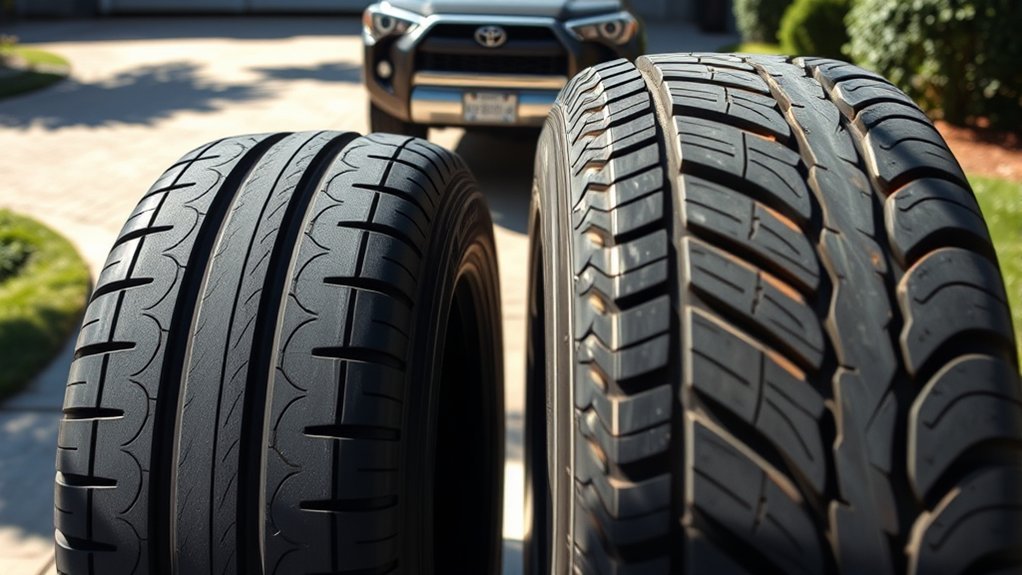
Many 4Runner owners who stay with 265/70R17 like the simple fit, lighter tire options, and predictable ride. This size works especially well when you drive daily, carry normal cargo, and want fewer chances of rubbing.
Owners who move to 275/70R17 often like the slightly larger look and mild clearance gain. The most common complaints are added tire weight, slightly slower road feel, possible highway noise with aggressive all-terrains, and occasional rubbing depending on wheel and alignment setup.
The best lesson from real-world feedback is simple: size matters, but the exact tire model matters more. A lighter 275 can feel better than a heavy 265, and a quiet 265 highway tire can feel completely different from a rugged LT all-terrain in the same size.
Choosing the Best Tire Size for Your Needs
Choose 265/70R17 if your 4Runner is mostly stock, you value ride comfort, and you want the simplest fit. This is also the better choice when you want to keep fuel economy, braking feel, and steering response close to factory behavior.
Choose 275/70R17 if you want a slightly taller and wider tire, you like the fuller wheel-well look, and you are ready to check clearance carefully. This size makes the most sense when you already have a mild lift, factory-style wheel offset, or a known no-rub setup with the same tire model.
| Your Priority | Better Choice | Why |
|---|---|---|
| Easy stock fit | 265/70R17 | Closer to the common factory 17-inch size on many fifth-gen 4Runner trims |
| Daily comfort | 265/70R17 | More lighter-load options and lower fitment risk |
| Fuller stance | 275/70R17 | Slightly wider and taller look |
| Mild trail clearance | 275/70R17 | Adds about 0.28 inch of axle clearance |
| Lowest rubbing risk | 265/70R17 | Leaves more room near the liner, mud flap, and body mount |
Maintenance Tips for Long-Lasting Tire Performance
Good maintenance matters with either size. Check tire pressure cold, using the pressure listed on your Tire and Loading Information Label or owner’s manual for OE tires. For alternate sizes, ask your tire installer to confirm a safe inflation pressure based on the tire’s load capacity and your vehicle’s weight.
- Check tire pressure at least once a month and before long trips.
- Inspect tread depth monthly. Replace tires when they reach 2/32 inch, or sooner when traction becomes poor for your driving conditions.
- Rotate tires according to your owner’s manual. If your manual allows it, many tire-safety guides recommend rotation around every 5,000 to 8,000 miles.
- Balance new tires during installation and rebalance if you feel vibration.
- Get an alignment after a lift, suspension work, or uneven tire wear.
- Use a matching full-size spare when possible, especially for 4WD trail use.
Frequently Asked Questions
Will 275/70R17 fit on a stock 4Runner?
It can fit some stock fifth-gen 4Runners, especially with factory-style wheels, but it is not guaranteed. Tire model, tread shoulder shape, wheel offset, alignment, mud flaps, and fender-liner position all affect rubbing.
How much taller is 275/70R17 than 265/70R17?
A 275/70R17 tire is about 0.55 inch taller in nominal diameter. Since only half the added diameter raises the axle, the ground-clearance gain is about 0.28 inch.
Do I need a lift for 275/70R17 tires?
Not always. Some setups fit without a lift, but a mild lift can help. A lift does not fix every clearance issue because rubbing often happens during steering near the liner, mud flap, or body-mount area.
Will 275/70R17 tires affect my speedometer?
Yes, slightly. Compared with 265/70R17, the 275/70R17 size is about 1.7% taller. Your speedometer may read a little low, so an indicated 60 mph may be close to 61 mph in real speed.
Is Load Range E better for a 4Runner?
Load Range E can be better for heavy loads, sharp rocks, towing, or overlanding weight, but it can feel stiff and heavy on a mostly stock daily driver. Compare the exact load index, tire weight, and construction before choosing.
Conclusion
For most 4Runner owners, 265/70R17 is the best all-around choice because it fits more easily, rides closer to stock, and keeps your setup simple. The 275/70R17 size makes sense when you want a slightly larger stance and a small clearance gain, but it requires more fitment checking.
Before you buy, compare the exact tire model, not just the size printed on the sidewall. Check load index, tire weight, rim-width range, pressure guidance, spare-tire match, and rubbing clearance. That extra homework helps you get the look and performance you want without hurting safety, comfort, or drivability.
Sources
- Toyota 2024 4Runner eBrochure — supports factory P265/70R17 tire fitment on several 2024 4Runner trims.
- NHTSA TireWise — supports tire placard guidance, tire pressure checks, tread depth, balance, alignment, and rotation safety.
- Bridgestone: Determining Tire Size — supports tire width, aspect ratio, rim diameter, load index, and load range explanations.
- Toyo Tires Load & Inflation Tables — supports using load and inflation tables for optional tire sizes not listed on the vehicle placard.
- Toyo Open Country A/T III Specs — supports the point that tire construction, load ID, and exact size specifications vary by tire model.