
4Runner Tire Setup for Long Highway Commutes
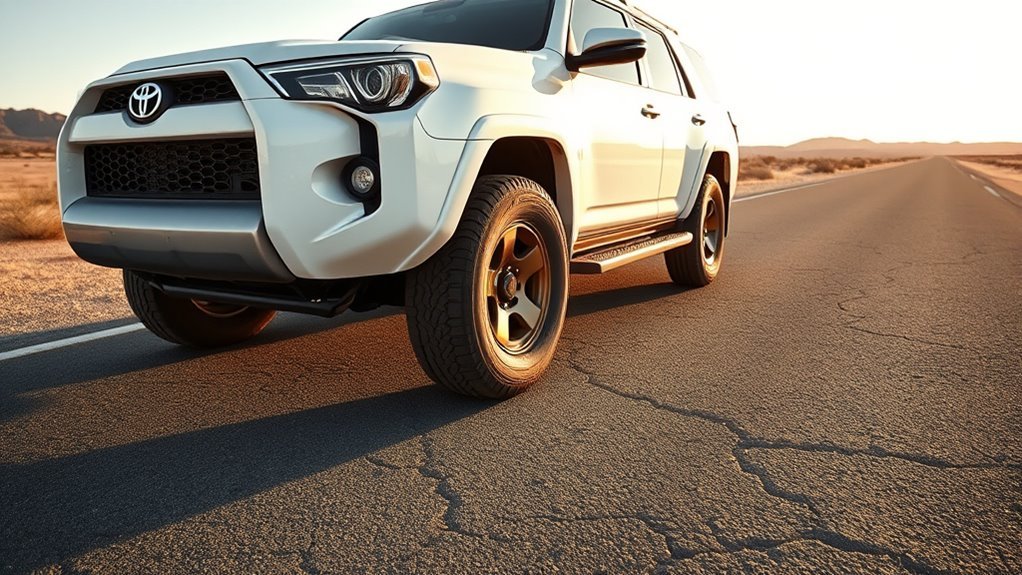
For a Toyota 4Runner that spends most of its life on the highway, the best tire is usually not the most aggressive-looking one. A quiet highway all-season or mild all-terrain tire will ride smoother, waste less fuel, and wear more evenly than a heavy mud-terrain tire, while still giving you enough grip for gravel roads, rain, light snow, and weekend trail access.
Quick Answer
For mostly highway driving, choose a P-metric, SL, or XL tire with the correct load index for your 4Runner. The Michelin Defender LTX M/S2 is the quietest highway-focused pick, while the Cooper Discoverer AT3 4S and Toyo Open Country A/T III are better choices if you want mild all-terrain capability without a harsh mud-terrain ride.
Key Takeaways
- For highway comfort, start with a highway all-season or mild all-terrain tire before considering aggressive all-terrain or mud-terrain tread.
- Use the driver-door tire placard as your pressure and size baseline; do not use the tire’s maximum sidewall pressure as your daily target.
- P-metric, SL, or XL tires usually ride better than LT Load Range E tires on an unloaded daily-driver 4Runner.
- A 17-inch wheel with a taller sidewall usually absorbs bumps better than a 20-inch wheel with a shorter sidewall.
- If you tow, haul heavy gear, run rocky trails, or upsize tires, confirm load index, clearance, speedometer error, and spare-tire fit before buying.
At a Glance
| Time Required | 10–20 minutes to check your placard, current tire size, load index, and driving needs before shopping. |
| Difficulty | Easy for stock-size replacement; moderate if changing wheel size, tire diameter, or LT load range. |
| Tools Needed | Tire-pressure gauge, driver-door tire placard, owner’s manual, and the tire’s size/load-index information. |
| Cost | No cost to check specs; tire cost varies by brand, size, load range, road-hazard coverage, and installation. |
How Off-Road Tire Upgrades Ruin Highway Comfort
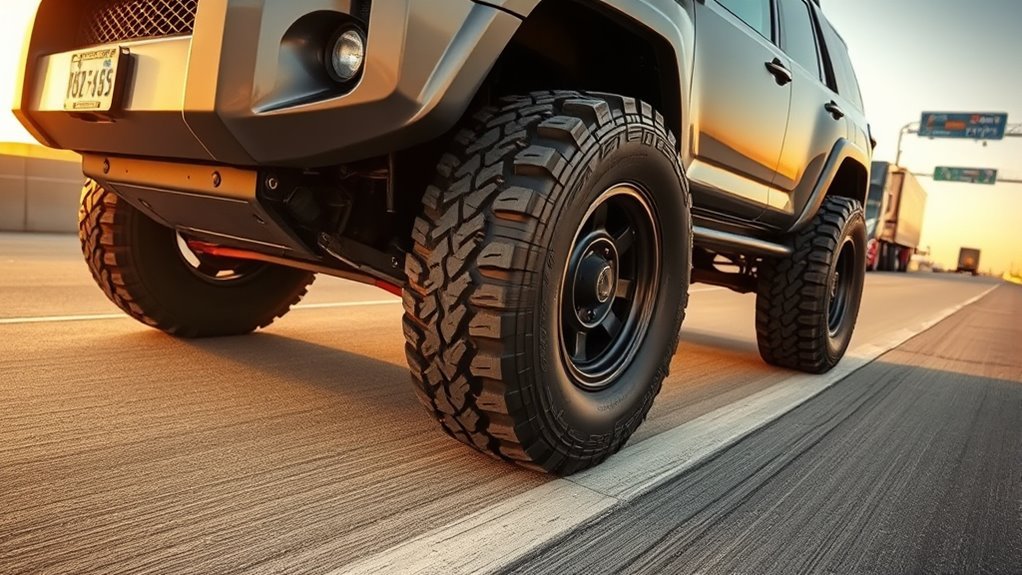
Aggressive off-road tires can look right at home on a 4Runner, but they often make daily highway driving worse. Large tread voids, heavy construction, and stiff sidewalls can add road noise, steering wander, braking distance, and vibration compared with a highway all-season or mild all-terrain tire.
The biggest comfort trade-off comes from tread design. Mud-terrain tires are built to clear mud and bite into loose surfaces. That same open tread pattern can create more pattern noise on pavement. Rugged-terrain and aggressive all-terrain tires sit in the middle: better trail grip than a highway tire, but usually less quiet than a touring-style tire.
Warning: Do not choose a tire only by appearance. A heavier LT or mud-terrain tire can reduce ride comfort and fuel economy, and it may require a different inflation strategy than your stock tire. Always confirm load index, speed rating, and pressure guidance before switching construction.
For a highway commuter, the sweet spot is usually a tire with a continuous center section, moderate tread voids, and enough siping for wet roads. That design keeps the tire stable on pavement while still giving you traction for gravel, forest roads, and mild trails.
[Products Worth Considering]

EVOULTES heavy duty tire inflator with an integrated gauge delivers accurate pressure readings from 10–120 PSI, helping you inflate, deflate, and check tires in one tool. The 16.5-inch extended dual-head air chuck with swivel base reaches hard-to-access dual wheel valves on trucks and RVs. A brass trigger core and side-mounted air release valve make operation smooth, with standard 1/4" NPT threading and quick-connect compatibility for easy setup.

The JACO FlowPro Tire Inflator measures, inflates, and airs down tires up to 100 PSI with battery-free operation and ±2% accuracy after calibration. It features a glowing pressure dial for night visibility, a heavy-duty steel build with a hybrid hose, and a precision push-to-inflate thumb trigger. The patented Lightning Air Chuck locks on for a secure seal, and the kit includes quick-connect hardware for easy inline use with your air compressor.
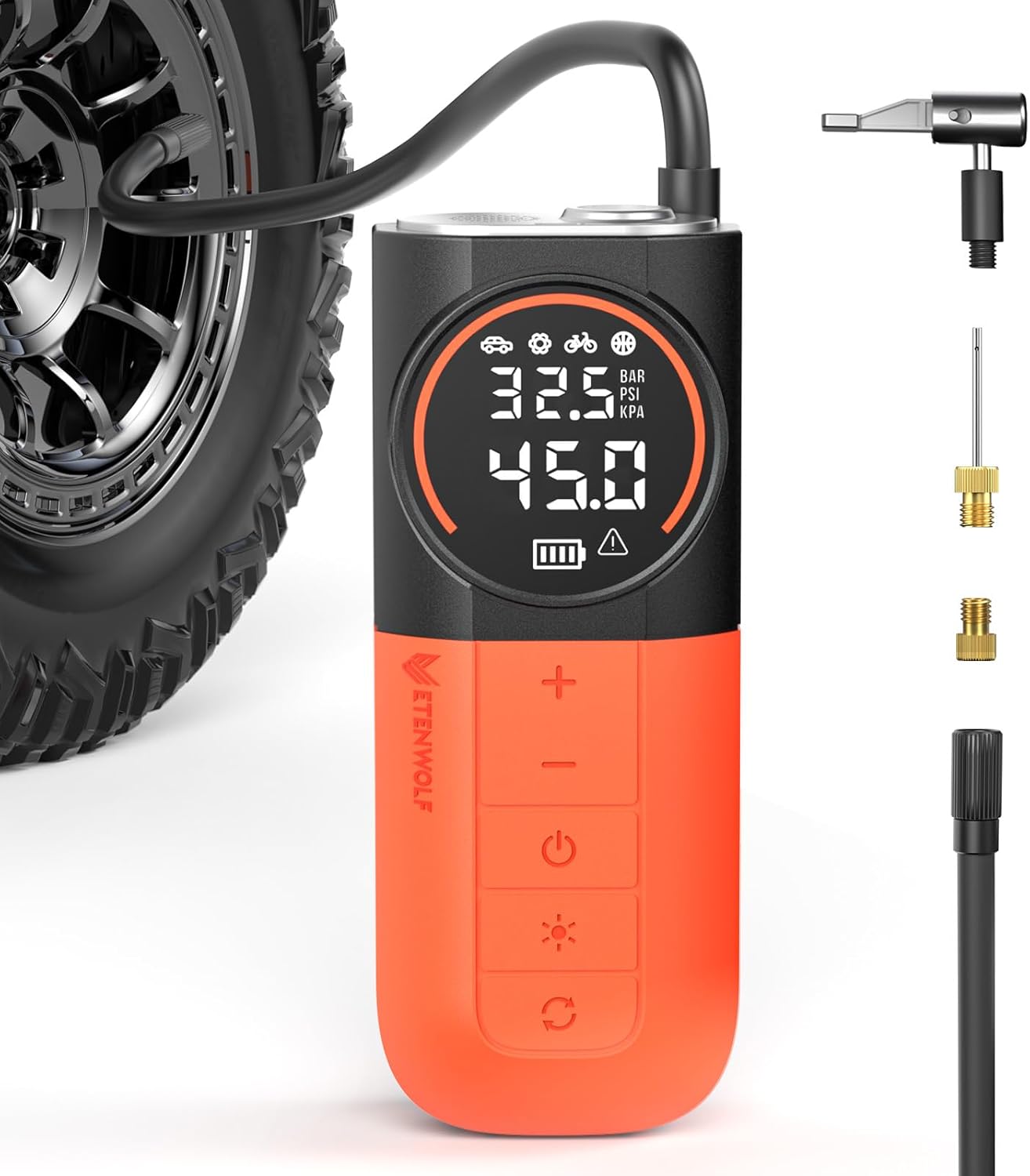
The ETENWOLF S1 cordless tire inflator delivers ultra-fast inflation with up to 160 PSI and a 20 L/min airflow for quicker tire top-offs. Its 5200mAh battery and cooling system support inflating many tires and sports balls on a single charge, while the digital pressure gauge and multi-unit display help you reach the right pressure accurately. With preset modes, pressure memory, an auto-stop feature, and an LED flashlight, it’s built for easy roadside and everyday use.
P-Rated vs. Load Range: Picking 4Runner Tires for Daily Driving
The tire letters and load range matter as much as the tread pattern. Many stock 4Runner sizes are P-metric or passenger-style sizes. These are designed to carry the vehicle safely when they match the required load index, while also keeping the ride more compliant than a heavy-duty LT tire.
For daily highway use, a P-metric, SL, or XL tire is usually the best starting point. These tires tend to ride softer, weigh less, and create less rolling resistance than LT Load Range E tires. That matters when your 4Runner is mostly commuting, running errands, and taking long highway trips without a heavy trailer or constant cargo load.
LT tires still have a place. Choose an LT tire when you regularly tow, carry heavy gear, drive sharp rocky trails, or need extra sidewall strength. The trade-off is that LT tires often weigh more and ride firmer. On an unloaded 4Runner, that can make the cabin feel busier over expansion joints and broken pavement.
Pro Tip: When replacing tires, match or exceed the original load index and speed rating unless a qualified tire professional confirms the change is safe. The NHTSA TireWise guide recommends using the tire placard, owner’s manual, or tire sidewall information when choosing replacement tires.
| Tire Type | Best For | Highway Trade-Off |
| Highway all-season | Quietest daily driving, rain, long trips, fuel economy | Less off-road bite than an all-terrain tire |
| Mild all-terrain | Best balance for commuters who use gravel, dirt, snow, or campsites | Slightly more noise and weight than a highway tire |
| Aggressive all-terrain | More trail traction and tougher shoulders | More road noise, weight, and steering feel |
| Mud-terrain | Mud, rocks, deep ruts, and dedicated off-road use | Usually the loudest and firmest highway option |
| Winter tire | Cold climates, ice, packed snow, winter commuting | Not ideal for warm-weather year-round use |
Quietest All-Terrain 4Runner Tires for Highway Miles
The quietest 4Runner tire for highway miles is usually a highway all-season, not an all-terrain. But if you want an all-terrain that still behaves well on pavement, look for moderate tread blocks, full-depth siping, a strong mileage warranty, and manufacturer language that emphasizes on-road stability or a quiet ride.
Good highway-friendly options include:
- Michelin Defender LTX M/S2: Best for owners who want a quiet, long-wearing highway tire with all-season traction. Michelin lists a 70,000-mile warranty for applicable sizes.
- Cooper Discoverer AT3 4S: A mild all-terrain choice for drivers who want a more capable tread than a highway tire without jumping to a harsh mud-terrain setup.
- Toyo Open Country A/T III: A balanced all-terrain tire that Toyo positions around wet performance, durability, treadwear life, on-road handling, and a quiet ride.
Do not assume every tire in the same family rides the same. A P-metric version and an LT version of the same model can feel different. The LT version may have a stiffer casing, deeper tread, more weight, and a different warranty. Check the exact size and load range before you compare prices.
Note: If your 4Runner is a 2025 or newer sixth-generation model, do not assume fifth-generation tire sizes apply. Check the driver-door placard and the Toyota owner’s manual portal for your exact year and trim.
Tire Pressure Tips for 4Runner Highway MPG
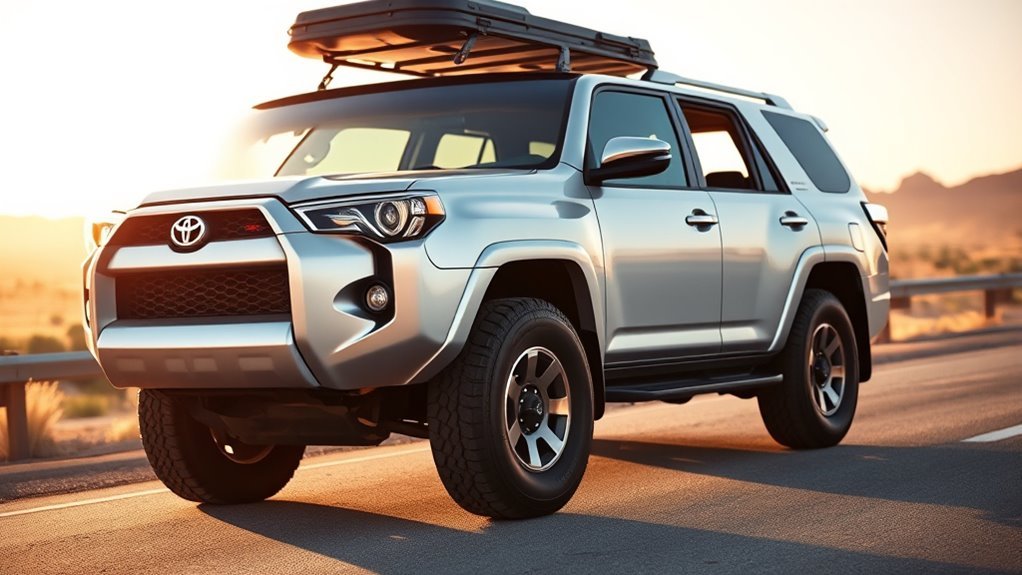
Tire pressure is one of the cheapest ways to improve highway comfort, tire life, and fuel economy. Start with the pressure listed on your driver-door tire placard for your stock tire size. For many stock fifth-generation 4Runner setups, that placard pressure is commonly around 32 psi cold, but your own placard is the authority.
According to FuelEconomy.gov, keeping tires inflated to the proper pressure can improve gas mileage by 0.6% on average and up to 3% in some cases. Under-inflated tires can lower gas mileage by about 0.2% for every 1 psi drop in the average pressure of all tires.
The correct takeaway is not “add more air for more MPG.” The correct takeaway is “run the pressure Toyota specifies for your tire size and load, then check it consistently.”
Use this simple routine:
- Check pressure cold: Measure before driving or after the vehicle has been parked for several hours.
- Check monthly: NHTSA recommends checking tire pressure regularly, at least once a month, including the spare.
- Reinflate after trails: If you air down for dirt, sand, rocks, or washboard roads, return to highway pressure before sustained pavement driving.
- Do not rely only on TPMS: The tire-pressure warning system is a backup, not a substitute for a gauge.
- Do not use sidewall max pressure as your daily target: The sidewall number is a maximum pressure/load reference, not the normal 4Runner highway setting.
How Wheel Size Affects Your 4Runner’s Highway Tire Performance
Wheel size changes how much sidewall is available to absorb bumps. A 17-inch wheel paired with a taller tire sidewall usually gives a smoother highway ride than a 20-inch wheel with a shorter sidewall. That is why many daily-driven and trail-used 4Runners stay with 17-inch wheels.
[Products Worth Considering]

The AstroAI L7 Air Tire Inflator refills car tires quickly with up to 150PSI max pressure and a fast 1-minute inflation claim. It includes 5 preset modes for car, motorcycle, bicycle, balls, and manual use, along with an auto shutoff to help prevent overinflation. Designed for convenience, it features a digital gauge with unit switching, a top LED light with multiple modes, and USB-C/USB ports for backup power.

This portable cordless tire inflator delivers up to 160 PSI with fast 17 L/min airflow to help you quickly top up tires and get back on the road. It features dual power mode, running on a 21V rechargeable battery or a 12V DC adapter for convenient roadside use. An automatic shut-off with digital pressure gauge helps prevent overinflation, and a built-in LED light improves visibility in low-light conditions.
Ride Comfort Trade-offs
More sidewall gives the tire more room to flex over expansion joints, potholes, gravel chatter, and rough concrete. That extra cushion can make the cabin feel calmer on long highway drives. Shorter sidewalls on 20-inch wheels can sharpen steering response, but they also pass more impact harshness into the suspension and cabin.
For a commuter, comfort usually matters more than the small steering response gain from a shorter sidewall. If you drive rough highways or spend time on dirt roads, 17-inch wheels are often the better daily setup.
Sidewall Height Impact
A common fifth-generation 4Runner size such as 265/70R17 has a taller sidewall than a 245/60R20 setup. That difference is noticeable in ride quality. The 20-inch setup can look cleaner on pavement-focused trims, but the 17-inch setup is more forgiving when roads get broken, snowy, or unpaved.
| Wheel Size | Highway Feel | Best Use Case |
| 17-inch | More sidewall cushion, better bump absorption, better trail tolerance | Long commutes, mixed pavement, gravel, mild trails |
| 18-inch | Middle ground between comfort and sharper road feel | Balanced street use with occasional dirt roads |
| 20-inch | Sharper steering feel, less sidewall cushion, firmer impacts | Mostly paved driving where appearance and steering response matter most |
Weight And Handling
Tire and wheel weight affect acceleration, braking feel, suspension response, and fuel economy. A heavier LT all-terrain on a heavy wheel can make a 4Runner feel slower and less settled over rough pavement. A lighter P-metric or XL tire in the correct load rating usually feels more relaxed for daily highway use.
Before upsizing, check four things: front fender and mud-flap clearance, upper control-arm clearance, spare-tire fitment, and speedometer change. A tire that fits while parked may still rub when turning, braking, reversing, or articulating off-road.
What Daily Commuters Actually Run on Their 4Runners
Daily commuters usually choose one of three setups: a highway all-season for maximum quietness, a mild all-terrain for a balanced look and light trail ability, or an aggressive all-terrain when off-road durability matters more than silence.
Quiet Highway Tires
If your 4Runner is mostly a road-trip and commuting vehicle, a highway all-season tire is the most comfortable choice. The Michelin Defender LTX M/S2 is a strong example because it is built for SUVs and light trucks and carries a manufacturer mileage warranty in applicable sizes. It will not look as aggressive as a mud-terrain, but it is the better match for quiet interstate miles.
Choose this path if your priorities are:
- Low highway noise
- Stable wet-road braking and handling
- Long treadwear warranty
- Better ride comfort
- Lower rolling resistance than heavy off-road tires
Fuel Efficiency Balance
Tires affect fuel economy through inflation pressure, tread design, casing stiffness, diameter, and weight. The easiest win is proper pressure. The next win is avoiding more tire than you need. A Load Range E mud-terrain may look tough, but it is usually overkill for a 4Runner that is unloaded on pavement most days.
For occasional gravel and campsite access, a mild all-terrain such as the Cooper Discoverer AT3 4S or Toyo Open Country A/T III gives a better balance. You keep a more capable tread than a highway tire without accepting the full noise and weight penalty of a mud-terrain.
Longevity Priorities
Long tire life comes from the right tire category plus disciplined maintenance. Pick a tire with a real manufacturer treadwear warranty, rotate it on schedule, keep it inflated correctly, and fix alignment issues early. Uneven wear from low pressure, worn suspension, or bad alignment can ruin even an expensive tire.
For the best cost per mile, follow this checklist:
- Stay near stock diameter unless you have a clear reason to upsize.
- Match or exceed the original load index.
- Use a mild tread if highway miles are the priority.
- Rotate tires regularly, including a full-size matching spare if you use a five-tire rotation.
- Check alignment after suspension work, impact damage, or uneven wear.
Frequently Asked Questions
Can I drive my 4Runner in 4 High on the freeway?
On a part-time 4WD 4Runner, use 4 High only when the road surface allows tire slip, such as snow, ice, dirt, gravel, or loose surfaces. Do not use part-time 4 High on dry pavement for normal highway cruising because drivetrain binding can occur. Full-time 4WD models are different, so follow the instructions for your exact year and transfer case.
What are the best highway tires for a 4Runner?
For maximum highway comfort, choose a highway all-season tire such as the Michelin Defender LTX M/S2. For a quiet all-terrain balance, consider the Cooper Discoverer AT3 4S or Toyo Open Country A/T III in the correct size and load rating for your 4Runner.
Should I choose P-metric or LT tires for daily driving?
Most daily-driven 4Runners are happier on P-metric, SL, or XL tires that meet the required load index. Choose LT tires if you regularly tow, haul heavy cargo, or drive sharp rocky trails. LT tires can be tougher, but they often ride firmer and weigh more.
What tire pressure should I run for highway MPG?
Use the cold tire pressure listed on your driver-door placard for the tire size and load your 4Runner is using. Proper pressure helps fuel economy, tire life, and safety. Do not inflate to the maximum pressure printed on the sidewall unless that pressure is specifically required for the load and tire setup.
Are all-terrain tires louder than highway tires?
Usually, yes. Mild all-terrain tires can be quiet enough for daily use, but a highway all-season tire is normally the quietest option. The more open and aggressive the tread pattern gets, the more likely it is to add road noise and vibration on pavement.
Conclusion
The best highway tire setup for a 4Runner is the one that matches how you actually drive. If your miles are mostly pavement, choose a quiet highway all-season or mild all-terrain tire in the correct size, load index, and pressure range. Keep 17-inch wheels if ride comfort and trail flexibility matter more than a street-focused look.
For most commuters, the winning setup is simple: correct placard pressure, stock or near-stock diameter, a P-metric/SL/XL tire when load requirements allow, and a tread pattern that is honest about your trail use. That combination gives your 4Runner better highway manners without giving up the practical capability that makes the truck worth owning.
Sources
- Toyota Owners Manuals and Warranties — owner’s manual lookup for exact model-year tire, pressure, and 4WD guidance.
- NHTSA TireWise — tire replacement, tire safety, tire ratings, and maintenance guidance.
- FuelEconomy.gov: Keeping Your Vehicle in Shape — tire pressure and fuel-economy impact.
- Michelin Defender LTX M/S2 — current highway-focused SUV/light-truck tire information and warranty details.
- Cooper Discoverer AT3 4S — mild all-terrain tire specifications and product information.
- Toyo Open Country A/T III — all-terrain tire product information, on-road handling, durability, and quiet-ride positioning.

Related Articles

Best Toyota 4Runner Tires Under $150 2026 – Top Budget All-Terrain Tires
You use your Toyota 4Runner for a mix of highway miles and off-road adventures, so choosing capable all‑terrain tires that cost less than $150…
Read More
Best Budget Tires for Toyota 4Runner 2026 – Top Affordable Performance Tires
You rely on your Toyota 4Runner for a mix of daily driving and weekend adventures, and the tires you choose shape safety, comfort, and…
Read More
Best On Road All Terrain Tires for Toyota 4Runner 2026 – Top Highway-Friendly A/T Tires
You want all-terrain tires that let your 2026 Toyota 4Runner feel planted and quiet on the highway while still offering capable off-road traction when…
Read More