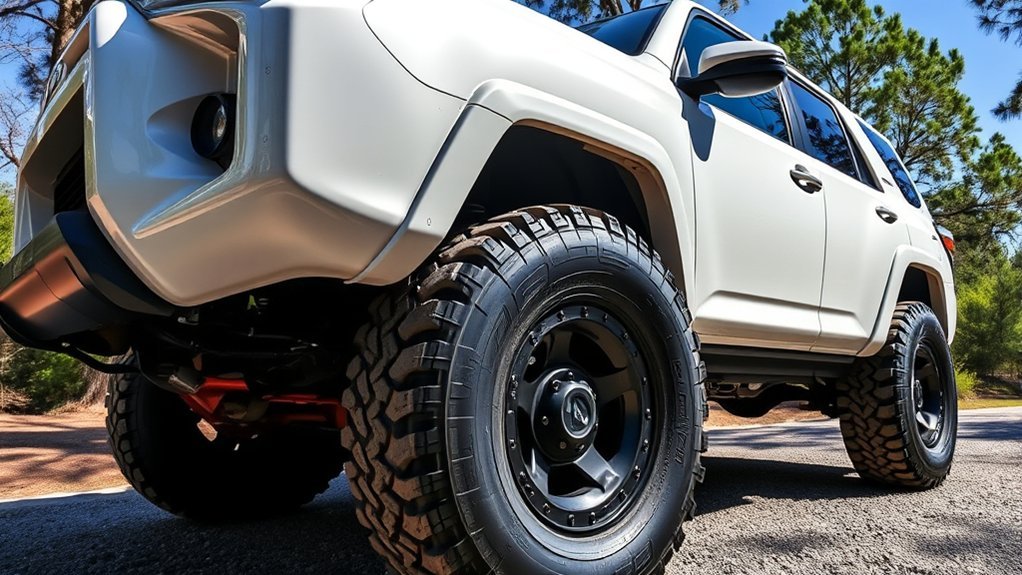
The biggest tire you can usually run on a stock Toyota 4Runner without a lift depends on the generation, trim, wheel offset, and tire model. For many stock 2010–2024 5th-gen 4Runners, 265/70R17 is the safest no-mod size, while 275/70R17 may fit with careful checking. A 285/70R17, often called a 33-inch tire, is closer to 32.7 inches nominally and often needs trimming or clearance work.
Quick Answer
For a stock 2010–2024 Toyota 4Runner, the safest no-lift tire size is usually 265/70R17. A 275/70R17 can work on some trucks with minor clearance checks. A 285/70R17 often rubs and may require trimming, alignment changes, or other fitment work.
Key Takeaways
- 265/70R17 is the best low-risk upgrade size for many stock 5th-gen 4Runners.
- 275/70R17 gives a slightly taller, fuller look but may rub depending on tire shape and wheel offset.
- 285/70R17 is not a true 33-inch tire, but it is large enough to cause rubbing on many stock setups.
- The 2025+ 6th-gen 4Runner is different, so do not apply 5th-gen fitment advice without checking your exact trim and manual.
- Always match the right load rating, check cold tire pressure, and inspect clearance at full steering lock before driving hard.
At a Glance
| Time Required | 15–30 minutes to check clearances after the tires are mounted |
| Difficulty | Moderate, because rubbing checks require turning, reversing, and inspecting multiple areas |
| Tools Needed | Flashlight, tire pressure gauge, tape measure, helper, and a flat test area |
| Cost | Free for a clearance check; extra cost only if trimming, alignment, or parts are needed |
Understanding Stock 4Runner Tire Size Limitations
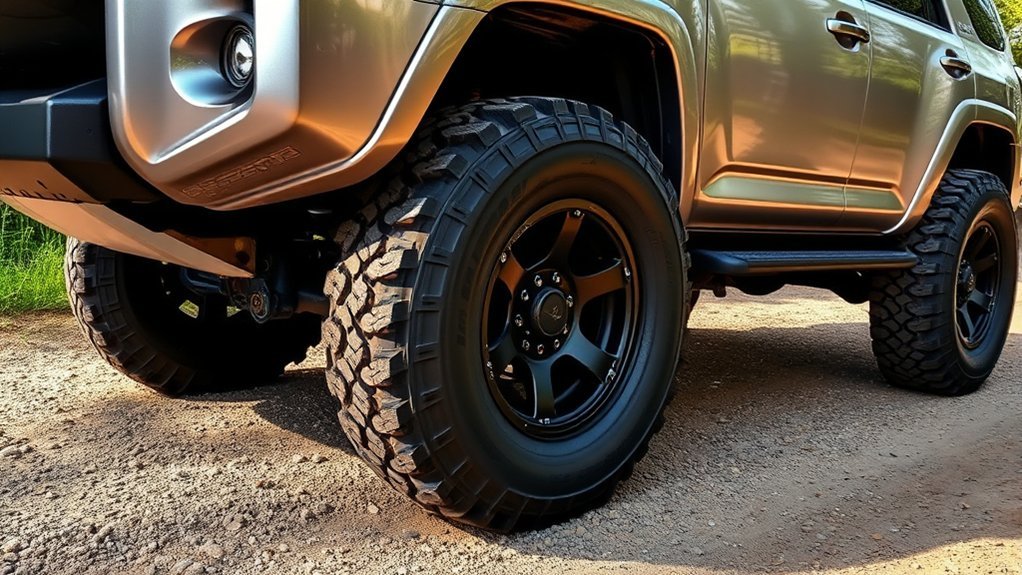
On many 2010–2024 5th-generation Toyota 4Runners, the factory 17-inch tire size is 265/70R17, which is about 31.6 inches tall by nominal tire-size math. Some Limited models use 245/60R20, which is also about 31.6 inches tall but mounted on a 20-inch wheel.
The main fitment issue is not just diameter. A tire can rub because of its section width, tread shoulder shape, wheel offset, caster setting, and how the suspension compresses while turning. Two tires with the same printed size can measure differently once mounted, inflated, and loaded.
Warning: Do not choose tires by diameter alone. Use the Tire and Loading Information Label on the driver-side door area, your owner’s manual, and the tire manufacturer’s load-rating data before buying. The National Highway Traffic Safety Administration advises using the correct tire size and proper cold inflation pressure for your vehicle.
What Tire Sizes Fit Best on a Stock 4Runner?
The table below gives a practical fitment guide for a stock 5th-gen 4Runner. Treat it as a starting point, not a guarantee, because tire brand, tread design, and wheel specs can change the result.
| Tire Size | Nominal Diameter | Stock Fitment Risk | Best For |
| 245/60R20 | ~31.6 in | Low on trims designed for it | Limited-style 20-inch wheel setups |
| 265/70R17 | ~31.6 in | Lowest-risk upgrade path | Daily driving, mild trails, no-mod fitment |
| 275/70R17 | ~32.2 in | Medium; may rub at full lock | Slightly taller stance with minimal changes |
| 285/70R17 | ~32.7 in | High; often needs trimming or clearance work | Owners willing to test fit and modify if needed |
If you want the simplest answer, choose 265/70R17. If you want the largest tire that might fit with very minor changes, consider 275/70R17. If you want a 285-wide tire, plan for rubbing checks before assuming it will work on a fully stock setup.
Note: The 2025 Toyota 4Runner is a different sixth-generation vehicle. Toyota says the 2025 Trailhunter uses 33-inch Toyo Open Country A/T tires with factory overlanding hardware, so 5th-gen no-lift advice should not be applied to every 2025+ 4Runner.
[Products Worth Considering]
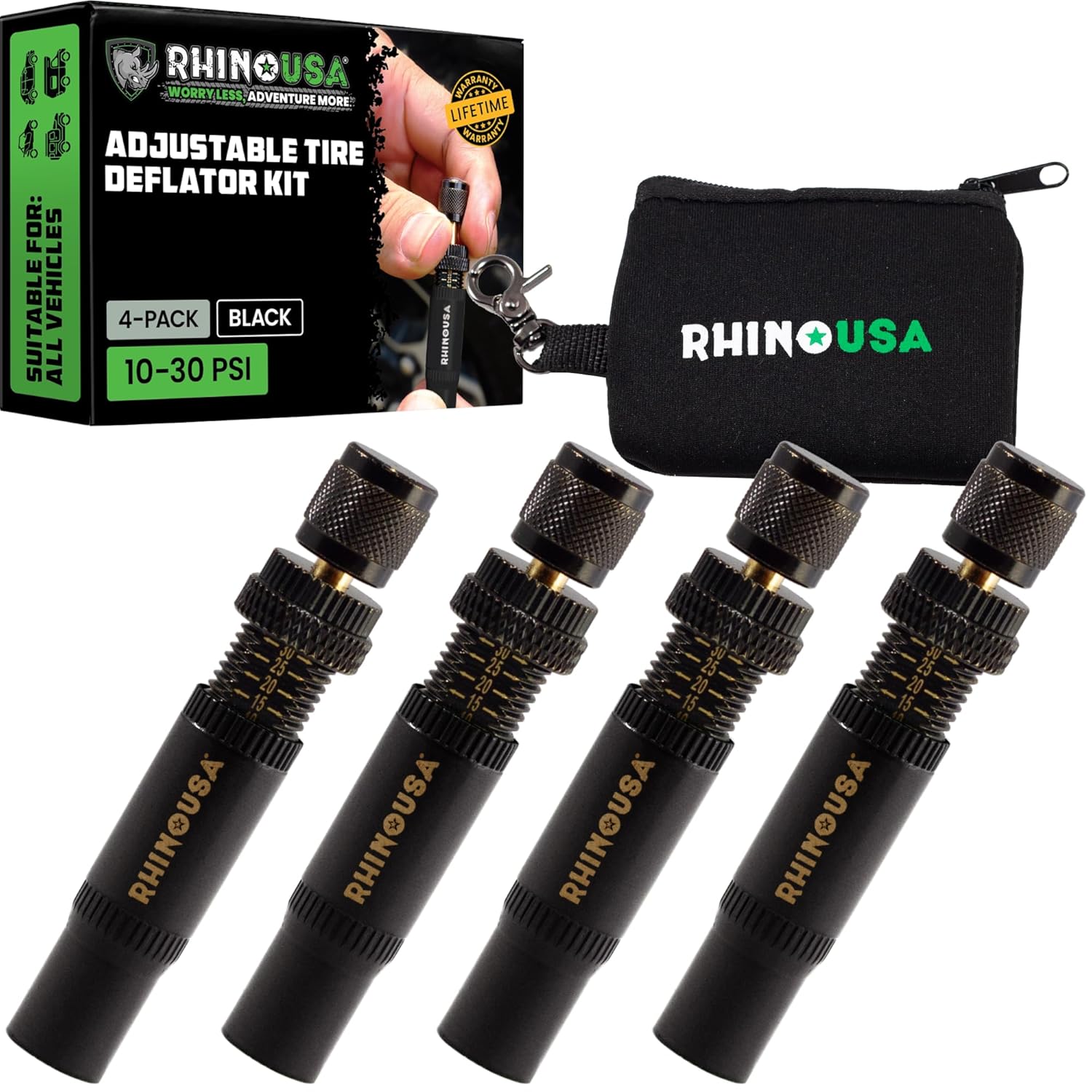
Use the Rhino USA adjustable tire deflators to air down all four tires at once by screwing one deflator onto each valve stem, letting you step away while the tires reach your preset pressure. Each deflator independently adjusts across a 10–30 PSI range with laser-etched indicators for quick setup and verification, making it ideal for beach, sand, and rocky off-road trails.

Keep your tires properly inflated with this analog VONDIOR tire pressure gauge, designed for fast, easy readings without batteries. The swiveling, two-axis hose and large glow dial help you measure at any tire angle with instant visibility. Built with a protective rubber shield, it supports durable, low-maintenance use for cars and trucks.

Upgrade your 2024-2026 Tesla Model 3 Highland with REEVAA all-weather mud flaps designed for seamless fit along the original body lines. The set of four delivers strong splash protection against mud, gravel, and road debris while using OEM-grade durable materials. Installation is non-destructive with original hole positions and snap-in clips, and the aerodynamic design helps minimize impact on efficiency.
Rubbing Issues: What to Expect and How to Fix Them
Rubbing usually shows up during full steering lock, reverse turns, driveway angles, or suspension compression. You may hear scraping first, but you should not wait for noise to confirm fitment. Inspect the common contact points before taking the truck off-road.
[Products Worth Considering]

The Big Rig Defense Tire Thumper is a truck tire pressure checker that lets you quickly check multiple tires by giving them a firm whack. Listen for a reassuring thump and feel the stick bounce when a tire is fully inflated, helping you get back on the road safely. It features a comfortable, glove-friendly handle and a secure wrist strap for confident use on busy routes.

Measure tire tread depth quickly and accurately with this LUMITECO dial gauge that reads in 1/32" increments up to 14/32". The color-coded green/yellow/red zones make it easy to judge tire wear and know when replacement is needed. A rugged, compact design with a protective pouch helps keep the gauge ready for use on cars, trucks, motorcycles, and more.

Monitor tire tread wear with a smart, color-coded depth gauge that shows clear condition ranges at a glance. The bar is range marked for fast, easy readings, helping you maintain safer traction and performance. Each gauge is portable with a pocket clip, and the set includes 20 units for daily use and sharing.
Common Rubbing Areas
When you move from 265/70R17 to 275/70R17 or 285/70R17, check these areas first:
- Front fender liner: often the first place to touch during tight turns.
- Mud flaps and splash guards: easy to contact with wider or more aggressive tires.
- Front bumper edge: can rub when the tire is turned and compressed.
- Body mount area: a common issue with larger 285-width setups.
- Upper control arm clearance: depends heavily on wheel offset and tire width.
- Spare tire location: a larger spare may be harder to fit under the rear.
Mitigation Strategies
Start with the least invasive fix. Many minor rubbing problems can be reduced by adjusting the fender liner, removing mud flaps, or trimming a small plastic edge. More serious rubbing may require alignment changes, different wheels, aftermarket upper control arms, or body-mount clearance work.
Wheel spacers and negative-offset wheels can create a stronger stance, but they can also push the tire into the bumper and body mount area. Do not assume spacers fix rubbing. They can move the problem to a different contact point.
Pro Tip: Before buying 285/70R17 tires, ask the tire shop to test fit one front tire, turn the steering wheel fully both directions, reverse slowly, and inspect the liner, mud flap, bumper edge, and body mount area with a flashlight.
Why Choosing the Right Tire Size Matters for Performance and Looks
The right tire size can improve your 4Runner’s stance and trail confidence without making daily driving worse. The wrong size can cause rubbing, heavier steering, slower acceleration, incorrect speedometer readings, and extra wear on suspension and braking parts.
A 275/70R17 is only about 1.7% taller than a 265/70R17, while a 285/70R17 is about 3.5% taller. That small-looking difference can be enough to change rubbing, gearing feel, and speedometer accuracy.
Larger tires can help with ground clearance and off-road bite when paired with the right tread. They can also add weight and rolling resistance. For a daily-driven 4Runner, the best tire is not always the largest tire. It is the largest tire that clears safely, keeps the correct load rating, and matches how you actually drive.
How to Enhance Performance With the Right Tires
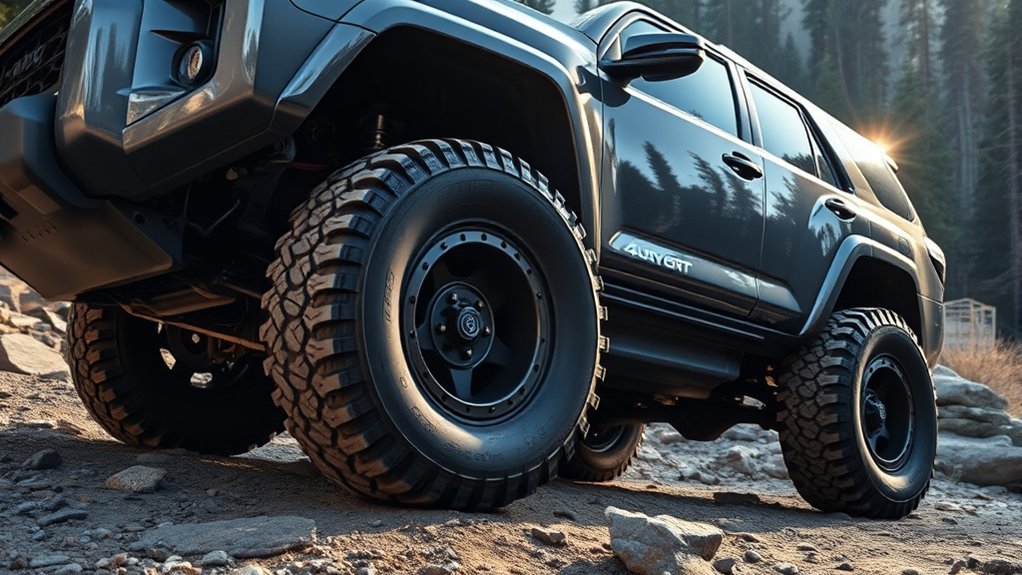
Tire performance is about more than size. A mild all-terrain tire in 265/70R17 can drive better on pavement than a heavy mud-terrain tire in 285/70R17. Match the tread to your use before choosing the biggest size available.
[Products Worth Considering]

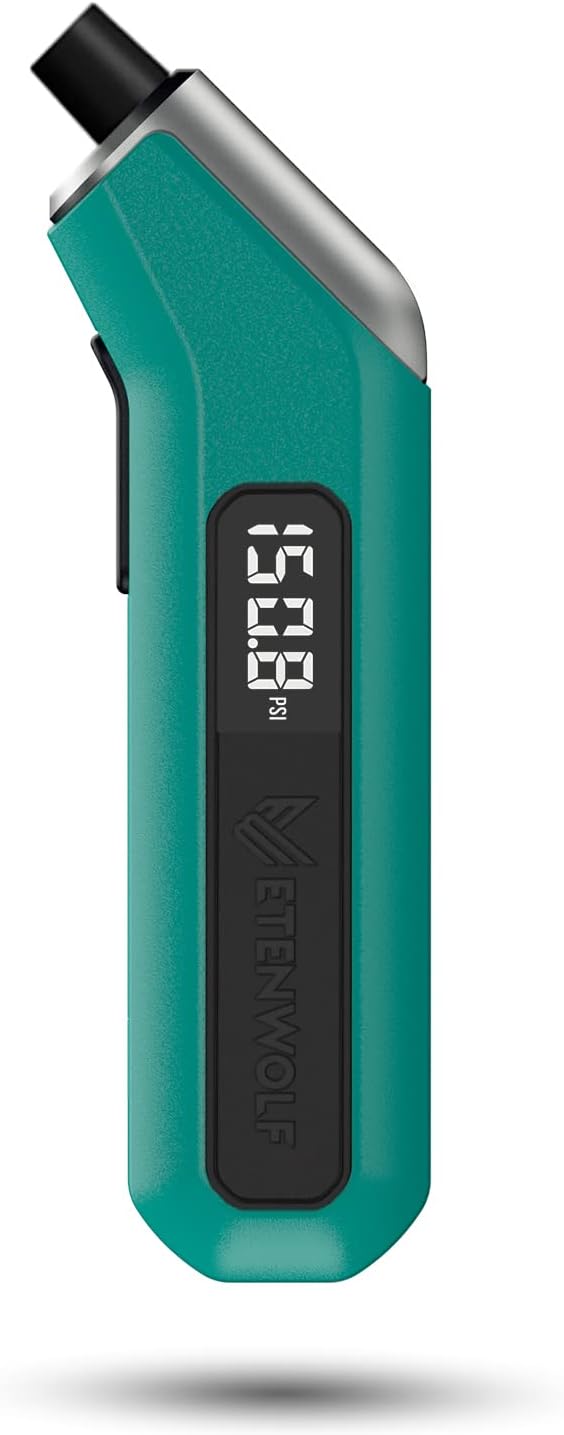
ETENWOLF T300 is a calibrated digital tire pressure gauge for accurate readings from 3 to 200 PSI across light and heavy-duty vehicles. It includes thermal compensation for reliable performance in extreme cold or heat, with an auto shut-off to extend battery life and an LED for easier reading. The sturdy design supports rugged everyday use, making it ideal for pickups, RVs, and industrial applications.

The Topeak SmartGauge D2 delivers precise digital tire pressure readings for bikes, motorcycles, and sports equipment up to 250 psi (17 bar). Its rotating SmartHead works with both Presta and Schrader valves, so you can check pressure quickly without adapters. The LCD display makes it easy to read results in psi, bar, or kg/cm² with an included CR2032 battery for immediate use.

Secure a full-size spare on your trailer with this powder-coated steel spare tire mount bracket. It fits most 4-, 5-, and 6-lug wheel bolt patterns and mounts to trailer tongues up to 4 in wide and 5 in tall. Built for reliable carry with a max 150 lb load rating and includes zinc-plated hardware for straightforward installation.
Tire Selection Criteria
- Driving surface: highway, snow, gravel, mud, rocks, and sand all need different tread priorities.
- Load index: choose a tire that meets or exceeds the required load rating for your 4Runner.
- Weight: heavier LT tires can be tougher, but they may reduce ride comfort and fuel economy.
- Actual measurements: compare real mounted diameter and section width, not just the printed size.
- Wheel offset: stock wheels and aftermarket wheels can create different rubbing patterns.
- Spare fitment: confirm the spare tire can be carried safely if you upsize all five tires.
Off-Road Performance Benefits
A slightly larger tire can improve ground clearance under the differential and help the tread contact obstacles more confidently. All-terrain tires are often a good balance for a 4Runner because they offer off-road grip without the noise and weight of many mud-terrain tires. The NHTSA TireWise guide notes that all-terrain tires are mainly used on four-wheel-drive vehicles and provide a compromise between on-road driving and off-road capability.
If your 4Runner spends most of its time on pavement, a lighter all-terrain in 265/70R17 or 275/70R17 may feel better than a heavier 285/70R17. If you regularly drive rocky or muddy trails, the extra width and stronger construction of some larger tires may be worth the fitment work.
How to Install Your New Tires Without Issues
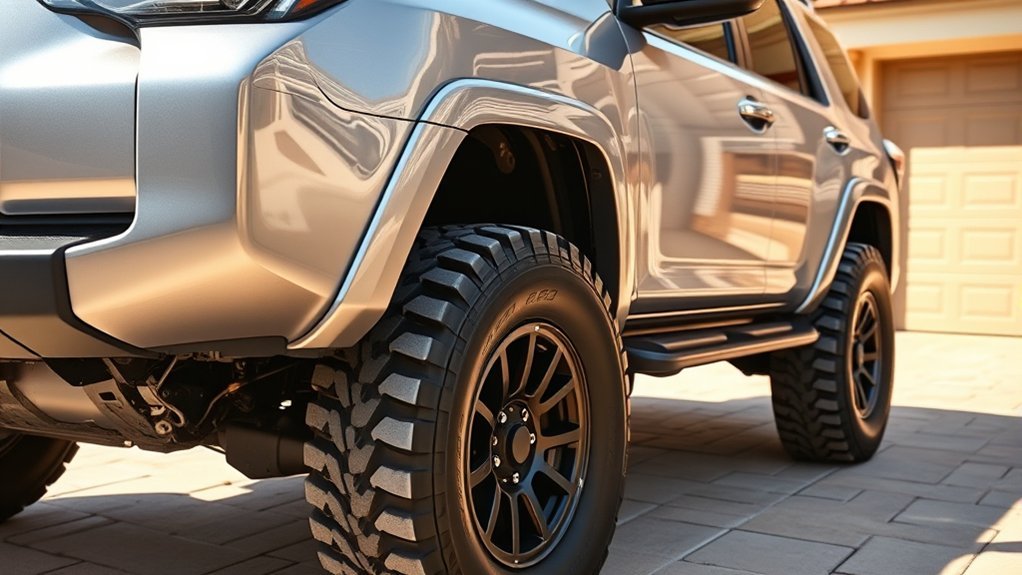
After mounting new tires, do not leave the shop until basic clearance checks are complete. A tire can look fine while parked straight and still rub badly when the wheel is turned or the suspension moves.
- Confirm the size and load rating against your door placard, owner’s manual, and tire manufacturer data.
- Set cold tire pressure according to the Tire and Loading Information Label, not the maximum pressure printed on the tire sidewall.
- Turn the steering wheel fully left and right while someone watches the inner liner, mud flap, bumper edge, and body mount area.
- Reverse slowly at full lock in both directions to check for rubbing that only appears in reverse.
- Drive over a small curb cut or driveway angle at low speed to simulate mild suspension compression.
- Check the spare tire fit if you bought a matching spare.
- Recheck after 50–100 miles because fresh rub marks may appear after real driving.
If the tire contacts metal, wiring, brake lines, or suspension parts, stop and fix the clearance issue before driving at highway speed or off-road.
Frequently Asked Questions
Can I use 33-inch tires without a lift on my 4Runner?
On many stock 2010–2024 5th-gen 4Runners, a true 33-inch tire is likely to rub and may need trimming, alignment changes, or lift-related clearance. A 285/70R17 is often called a 33, but it is about 32.7 inches nominally. The 2025+ 4Runner is different, and the factory Trailhunter is a special case with 33-inch tires and factory hardware.
What is the safest no-lift tire size for a stock 4Runner?
For many 2010–2024 5th-gen 4Runners with 17-inch wheels, 265/70R17 is the safest no-lift, no-trim size. It keeps the truck close to factory diameter while still allowing strong all-terrain tire choices.
Will 275/70R17 tires rub on a stock 4Runner?
They can. A 275/70R17 is about 32.2 inches tall, so it is only a mild step up from 265/70R17, but rubbing can still happen at full lock or in reverse. Tire shoulder shape, tread aggressiveness, and wheel offset make a big difference.
Will changing tire pressure fix rubbing?
No. Tire pressure should not be used as a clearance fix. Underinflating a tire can hurt safety, handling, fuel economy, and tire life. Set cold pressure according to the Tire and Loading Information Label or owner’s manual, then fix rubbing with proper clearance work.
How do I choose a tire tread pattern for my 4Runner?
Choose highway-terrain tires for quiet road use, all-terrain tires for mixed pavement and trail use, and mud-terrain tires only if you need aggressive off-road traction and can accept more noise, weight, and possible rubbing. For most 4Runner owners, an all-terrain tire is the best balance.
Are there weight limits for larger tires on a stock 4Runner?
Yes. The tire must meet the load requirements for your vehicle. Do not choose a tire only because it fits the wheel well. Check the tire’s load index, your door placard, and your owner’s manual. When in doubt, ask a qualified tire shop to verify the correct size and rating.
Conclusion
For most stock 2010–2024 Toyota 4Runner owners, 265/70R17 is the safest no-lift tire size. If you want a fuller look, 275/70R17 is the next practical step, but you should still check for rubbing. A 285/70R17 can look great, but it is much more likely to need trimming or other clearance work. Before you buy, confirm your model year, wheel specs, load rating, cold tire pressure, spare fit, and full-lock clearance.
Sources
- NHTSA TireWise — backs tire size, tire pressure, load-rating, tread, and maintenance safety guidance.
- Toyota USA Newsroom: 2025 Toyota 4Runner Refines Adventure Ready Heritage — backs the 2025+ generation note and Trailhunter 33-inch tire exception.
- Toyota Owners Manuals and Warranties — backs checking the correct model-year owner’s manual for exact tire and pressure information.