
Winter Driving Tips for 4Runner Owners: Tire Edition
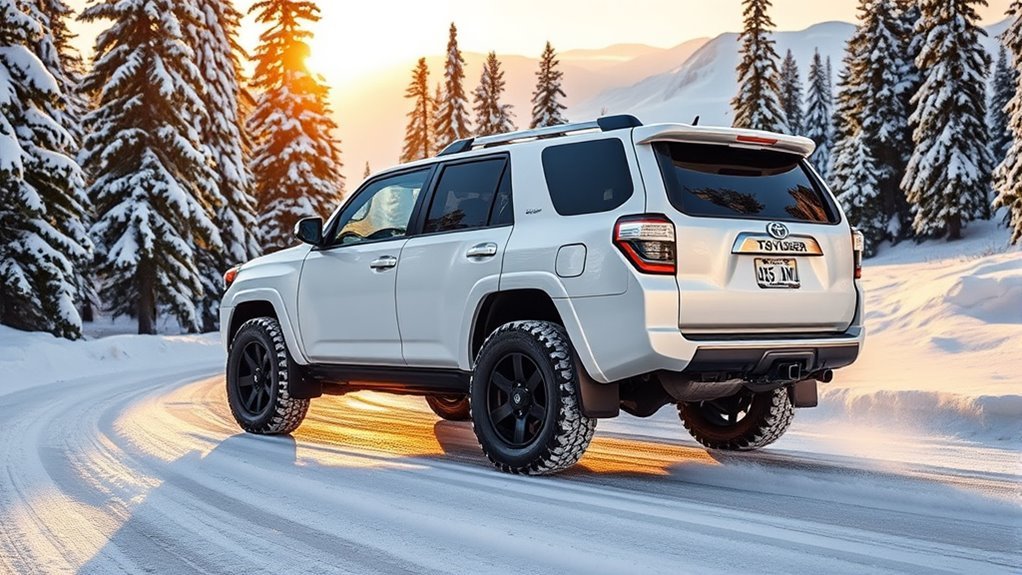
A safe Toyota 4Runner winter tire setup starts with the tire itself, not the 4WD badge. Four-wheel drive helps you move, but winter-rated rubber, correct cold tire pressure, enough tread depth, a usable spare, and the right traction devices help you stop, steer, and recover when snow or ice gets serious.
Quick Answer
For most snowy climates, the best 4Runner winter setup is a complete set of 3PMSF-rated winter tires or severe-snow-rated all-terrain tires, inflated to the cold PSI on your door placard. Keep at least 5/32″ to 6/32″ tread for winter performance, inspect the full-size spare, and carry chains where required.
Key Takeaways
- Choose tires with the Three-Peak Mountain Snowflake symbol if you regularly drive in snow, mountain passes, or below-freezing weather.
- Do not use a random lower PSI for winter highway driving. Use the cold tire pressure listed on your 4Runner’s door placard or owner’s manual.
- A tread-depth gauge is better than the penny test for winter. Plan around 5/32″ to 6/32″ minimum for snow performance.
- Your spare needs the same pressure, age, tread, and damage checks as the four tires on the ground.
- Verify tire size by model year and trim before buying; 5th-gen and 6th-gen 4Runners do not all use the same stock sizes.
At a Glance
| Time Required | 20–30 minutes for inspection; 1–2 hours for mounting and balancing at a tire shop |
| Difficulty | Easy for inspection; professional installation recommended for mounting and balancing |
| Tools Needed | Tire pressure gauge, tread-depth gauge, flashlight, gloves, torque wrench, tire inflator, and compatible chains or traction devices |
| Cost | About $0–$40 for inspection tools; commonly $800–$1,600+ for four winter tires, depending on size, brand, and wheel choice |
AT, MT, or Winter Tire? Picking Right Tread for Your 4Runner
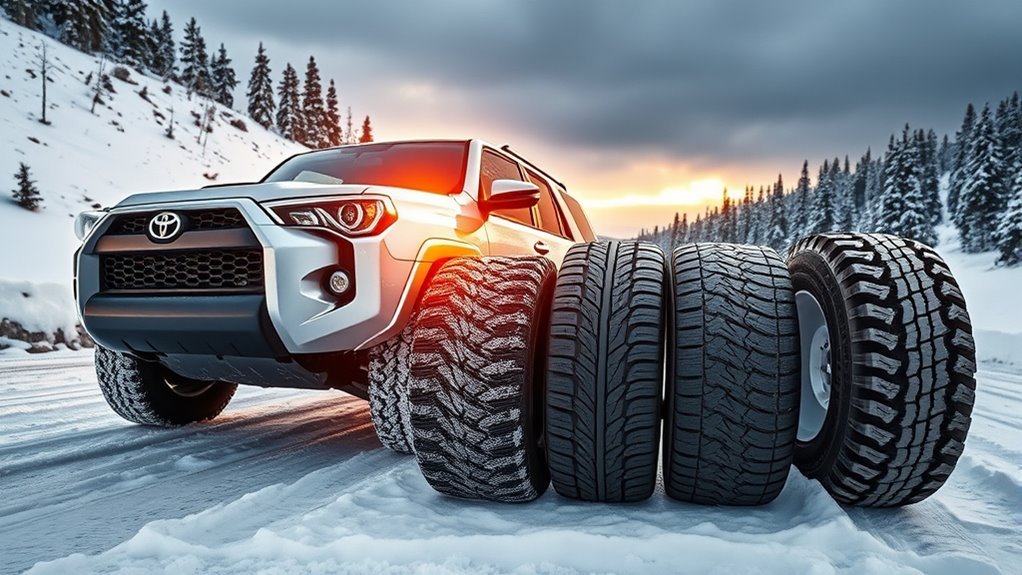
Your 4Runner can put power to the ground well, but the tread and rubber compound decide how much grip you actually have. In winter, the best tire choice depends on your climate, road surface, and how often you leave pavement.
| Tire Type | Best For | Winter Notes |
| Dedicated winter tire | Packed snow, ice, mountain highways, daily winter driving | Best cold-weather choice for stopping and steering. Swap out when warm weather returns. |
| 3PMSF all-terrain tire | Mixed pavement, trails, gravel, occasional storms | Good compromise for 4Runner owners who need trail durability and legal winter capability in many areas. |
| All-weather tire | Mild winters, rain, light snow, year-round use | Look for 3PMSF. Better winter choice than basic all-season tires, but not equal to a premium winter tire on ice. |
| Mud-terrain tire | Mud, rocks, loose dirt, aired-down trail use | Usually poor on ice and packed snow unless specifically winter-rated. Big lugs can slide on hard, slick surfaces. |
For a winter daily driver, a dedicated winter tire is the strongest choice. For a 4Runner that sees both snow-covered roads and off-road trails, a 3PMSF-rated all-terrain tire is often the most practical compromise.
[Products Worth Considering]

EVOULTES heavy duty tire inflator with an integrated gauge delivers accurate pressure readings from 10–120 PSI, helping you inflate, deflate, and check tires in one tool. The 16.5-inch extended dual-head air chuck with swivel base reaches hard-to-access dual wheel valves on trucks and RVs. A brass trigger core and side-mounted air release valve make operation smooth, with standard 1/4" NPT threading and quick-connect compatibility for easy setup.

RVMATE dual-axle RV tire covers help shield your tires from sunlight, snow, rust, and dirt to keep them in better condition in harsh weather. Made with heavy-duty waterproof, UV-resistant 420D Oxford fabric, they provide strong shading and help reduce wear. They install easily by placing the cover on the wheel and fastening the rope for a stable fit.

Universal magnetic jack pad with aluminum grooved design to protect vehicle pinch welds during lifting. Durable nylon pad inserts are upgraded and secured with screws to resist damage and keep in place. Designed to fit most single vehicle pinpoint welds for safer, stable jacking when changing tires, repairs, or performing oil changes.
The 3PMSF Symbol: Why It Beats M+S on Snow
The Three-Peak Mountain Snowflake symbol matters because it is tied to a severe-snow-use performance definition. M+S by itself is mostly a tread-design marking; it does not prove the tire met the same severe-snow traction standard.
Severe Snow Certification
A 3PMSF tire is designed for severe snow conditions and must meet a snow-grip performance threshold. That makes the symbol a better winter filter than M+S alone when you are comparing tires for a 4Runner that will see mountain roads, packed snow, and freezing commutes.
Still, do not treat 3PMSF as magic. It is a snow-traction indicator, not a guarantee that every tire with the symbol will brake equally well on glare ice, wet pavement, or slush. Compare independent tests, tire type, size, load rating, and your real driving conditions before buying.
Rubber Compound Differences
Winter tires use rubber compounds and siping designed to stay more flexible in cold conditions. That flexibility helps the tread conform to rough snow and ice surfaces. Many all-terrain and mud-terrain tires use tougher compounds for trail durability, but toughness alone does not equal cold-weather grip.
Note: If you drive mostly on icy pavement, a premium dedicated winter tire is usually a safer choice than an aggressive all-terrain tire, even when both carry the 3PMSF symbol.
Check Tread Depth Before Your First Winter Drive
Winter tread depth needs more attention than summer tread depth. The legal wear bar is not the same as the point where a tire still performs well in snow. For winter driving, use a tread-depth gauge and start planning replacement when snow tires or all-terrain tires approach 5/32″ to 6/32″.
Do not rely on the penny test for winter readiness. The penny test is useful for spotting tires near the 2/32″ legal minimum, but winter traction can fade well before that. A tread-depth gauge is cheap, more accurate, and gives you a real number for each groove.
- Check the center, inner shoulder, and outer shoulder of each tire.
- Look for uneven wear that may point to alignment, suspension, or inflation problems.
- Inspect for cuts, punctures, sidewall bubbles, cracking, or exposed cords.
- Replace tires in sets of four when possible so your 4WD system works with matching diameter and traction.
- Do the same inspection on the spare before winter starts.
A 4Runner with worn tires is still traction-limited. Four-wheel drive can help you start moving, but tread depth and rubber compound decide how well you stop and turn.
Inspect Your Spare Tire: Don’t Get Stranded
Your 4Runner’s spare tire is part of the winter setup. A flat, cracked, mismatched, or underinflated spare can turn a simple puncture into a long roadside problem, especially when the shoulder is icy or the temperature is dropping.
Check Spare Pressure
Do not assume your 4Runner spare requires 60 psi. Many 4Runners use a full-size spare, and full-size spares usually follow the pressure listed for that tire size on the vehicle placard or in the owner’s manual. Temporary compact spares are different, so always check the placard, sidewall, and manual for your exact model.
- Check the spare pressure when the tire is cold.
- Confirm the spare tire size matches your installed tires closely enough for safe 4WD use.
- Inspect the valve stem for cracking or leaking.
- Make sure the spare can be lowered from its carrier before you need it in a storm.
- Carry the correct jack, lug wrench, wheel-lock key, and gloves.
Inspect For Damage
Run your hand and flashlight across the spare’s tread and sidewall. Look for cuts, dry cracking, bulges, uneven wear, nails, or exposed cords. A spare can age even if it has never touched the road, especially if it has been exposed to heat, ozone, road salt, and moisture.
Replace Old Tires
Check the DOT date code on every tire, including the spare. The last four digits show the week and year the tire was made. For example, “2521” means the 25th week of 2021. If a tire is old, cracked, or damaged, replace it even if the tread looks deep.
Warning: A mismatched spare can affect braking, handling, and 4WD operation. If you must use a different-size spare in an emergency, drive slowly, avoid 4WD binding when possible, and repair or replace the main tire as soon as you can.
How Cold Weather Drops Your 4Runner’s Tire Pressure
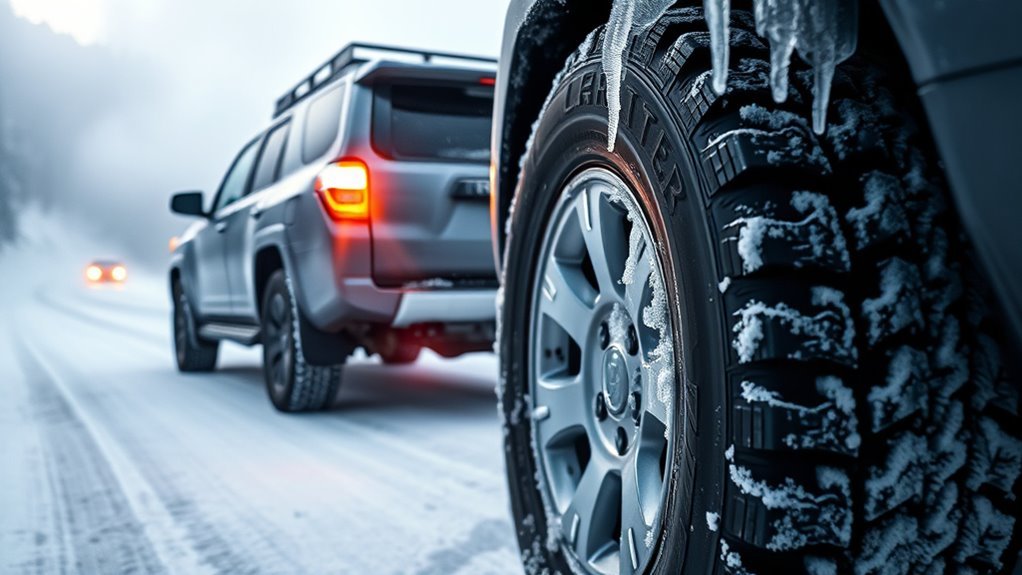
Cold weather lowers tire pressure. A common rule of thumb is about 1 psi for every 10°F drop in temperature, and tires can also lose pressure slowly over time. That means a tire set correctly in mild fall weather may be underinflated after the first hard freeze.
Check pressure in the morning before driving, when the tires are cold. Use the cold PSI on your 4Runner’s driver-door placard or owner’s manual, not the maximum pressure molded into the tire sidewall. The sidewall number is a maximum tire rating, not the recommended pressure for your vehicle.
- Check all four tires and the spare at least monthly.
- Check before long winter trips or mountain passes.
- Recheck after major temperature swings.
- Do not ignore a TPMS light just because it turns off after the tires warm up.
- Use the same gauge consistently for more repeatable readings.
4Runner Tire PSI: Should You Lower Pressure for Snow?
For normal winter road driving, keep your 4Runner tires at the manufacturer’s recommended cold PSI. Lowering pressure for highway snow can increase heat buildup, reduce stability, trigger TPMS warnings, hurt fuel economy, and overload the tire.
Airing down can help in specific low-speed off-road situations, such as deep loose snow on a trail, because it lengthens the contact patch. That is different from driving at road speed. If you air down off-road, stay slow, avoid sharp impacts, carry a compressor, and reinflate before returning to pavement.
Pro Tip: Write your winter “cold PSI” target on a small card and keep it with your tire gauge. It prevents guessing when you are checking pressure in the dark or cold.
Steel or Alloy Wheels? Mounting Your Winter Setup
A separate winter wheel-and-tire package makes seasonal swaps easier and protects your primary wheels from salt, potholes, and chain damage. Both steel and alloy wheels can work, but the right choice depends on budget, brake clearance, chain clearance, and the tire size you plan to run.
[Products Worth Considering]

The JACO FlowPro Tire Inflator measures, inflates, and airs down tires up to 100 PSI with battery-free operation and ±2% accuracy after calibration. It features a glowing pressure dial for night visibility, a heavy-duty steel build with a hybrid hose, and a precision push-to-inflate thumb trigger. The patented Lightning Air Chuck locks on for a secure seal, and the kit includes quick-connect hardware for easy inline use with your air compressor.

This portable cordless tire inflator delivers fast, efficient inflation for cars, motorcycles, bikes, and sports balls with a digital pressure gauge. Use the one-click PSI preset with auto shut-off for accurate, hands-free topping to your target pressure up to 150 PSI. It’s compact and rechargeable with a built-in emergency LED light plus valve adapters and accessories for quick, ready-to-go use.
Steel Wheels Benefits
- Lower cost: Steel wheels are often cheaper, which helps when building a dedicated winter set.
- Durability: Steel can bend instead of cracking after certain pothole impacts.
- Winter practicality: Cosmetic damage from salt and gravel matters less on a utility wheel.
- Chain confidence: A dedicated winter wheel can reduce the worry of scuffing expensive factory alloys.
Alloy Wheels Drawbacks
Alloy wheels are lighter and usually look better, but winter can be hard on finishes. Road salt, hidden potholes, and chain contact can cause corrosion or cosmetic damage. If you use alloys in winter, rinse them often, inspect the bead area for corrosion, and confirm the wheel has enough brake and chain clearance.
Before buying any winter wheel, verify bolt pattern, center bore, offset, load rating, lug-seat type, brake clearance, and TPMS compatibility for your exact 4Runner generation and trim.
When Your 4Runner Actually Needs Snow Chains
A 4Runner may still need chains even with 4WD and winter tires. Chain rules depend on posted road controls, state law, tire type, tread depth, and storm severity. In some mountain areas, 4WD vehicles with snow tires may be allowed through only if they carry chains; in the strictest controls, chains can be required on all vehicles.
Toyota’s current 4Runner guidance says to install tire chains on the rear tires, tighten them as much as possible, and retighten after driving a short distance. Always follow the chain manufacturer’s instructions and your owner’s manual for your exact tire size.
- Practice installing chains at home before the first storm.
- Carry waterproof gloves, a kneeling pad, headlamp, and a small tarp.
- Use chains or cables that match your tire size and wheel clearance.
- Drive slowly with chains and avoid sudden steering, braking, or acceleration.
- Remove chains on bare pavement to protect tires, wheels, and drivetrain parts.
Warning: Never assume 4WD exempts you from chain controls. Check road-agency requirements before mountain travel and carry approved traction devices when conditions may require them.
Winter Tire Sizes That Fit 4Runner Stock Wheels
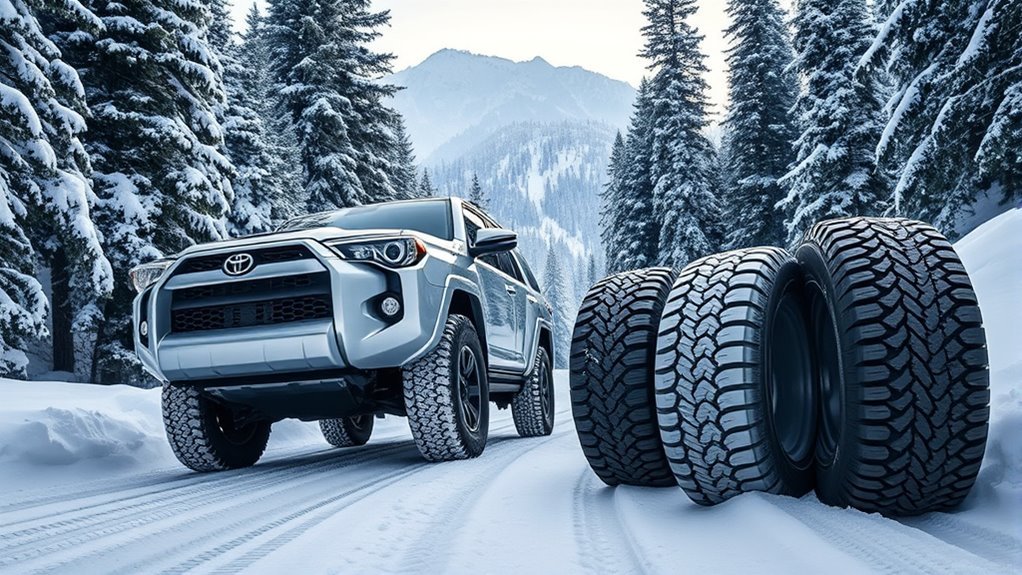
Before choosing a tire brand, confirm your stock size. The 4Runner changed generations, and tire sizes vary by trim. Use the tire placard on the driver’s door jamb as the final authority.
| Model Years | Common Stock Sizes | Notes |
| 2010–2024 4Runner | 265/70R17 on many trims; 245/60R20 on Limited/TRD Sport-style 20″ wheel trims | Many winter and 3PMSF all-terrain options exist in 265/70R17. Check load and speed rating. |
| 2025–2026 4Runner | 245/70R17, 265/70R18, or 265/55R20 depending on trim | Do not assume older 17″ 4Runner fitment applies. Verify brake clearance and offset before buying winter wheels. |
Popular dedicated winter SUV/light-truck tire families often include options from Bridgestone Blizzak, Michelin X-Ice, Nokian Hakkapeliitta, General Grabber Arctic, and Firestone Winterforce lines. For 3PMSF all-terrain setups, compare tires from BFGoodrich, Falken, Toyo, Goodyear, General, and Yokohama in your exact size.
When comparing options, match these details:
- Exact tire size from the door placard or approved alternate size
- Load index equal to or higher than the original tire
- Speed rating appropriate for your use
- 3PMSF symbol for severe snow use
- Wheel width range approved by the tire maker
- Clearance for suspension, fenders, mud flaps, and chains
Regional Tire Picks: Budget to Premium by Climate
Your winter tire choice should match where the 4Runner actually drives. A tire that works well in wet city slush may not be the best pick for steep icy passes, and an aggressive all-terrain tire may be overkill for mild coastal winters.
| Climate | Best Tire Direction | Why |
| Severe cold and frequent snow | Dedicated winter tire | Best balance of cold flexibility, braking, and steering on winter roads. |
| Mountain passes and mixed trail use | 3PMSF all-terrain tire | Adds sidewall toughness and trail durability while meeting severe snow marking requirements. |
| Mild winters with rain and occasional snow | All-weather 3PMSF tire | Avoids seasonal swaps while improving snow capability over basic all-season tires. |
| Deep off-road snow at low speed | 3PMSF all-terrain plus recovery gear | Aired-down traction, shovel, boards, compressor, and recovery points matter as much as tread choice. |
First-Storm Checklist for Your 4Runner
- Confirm all four tires match in size, type, and wear.
- Verify 3PMSF marking if you need severe snow capability.
- Measure tread depth with a gauge, not just a visual glance.
- Set cold PSI to the door placard or owner’s manual value.
- Check spare pressure, age, tread, and carrier operation.
- Test-fit chains or cables on the correct tires before travel.
- Pack gloves, flashlight, blanket, shovel, traction boards, air compressor, and basic recovery gear.
- Recheck local road conditions and chain controls before mountain passes.
Frequently Asked Questions
What are the 3 P’s of winter driving?
For a 4Runner tire setup, think of the 3 P’s as Preparation, Pressure, and Practice. Prepare with winter-rated tires and recovery gear, set pressure to the cold placard PSI, and practice slow braking, steering, and chain installation before a storm.
Do I need winter tires if my 4Runner has 4WD?
Yes, if you regularly drive in snow, ice, or below-freezing temperatures. 4WD helps acceleration, but it does not shorten stopping distance by itself. Winter tires improve the grip your brakes, steering, ABS, and stability control can use.
Are all-terrain tires good enough for snow?
Some all-terrain tires are good in snow, especially if they carry the 3PMSF symbol. However, dedicated winter tires usually perform better on icy pavement and cold road surfaces. For trail-heavy use, a 3PMSF all-terrain tire can be a practical compromise.
What PSI should I run in my 4Runner tires during winter?
Use the cold tire pressure listed on your driver-door placard or in the owner’s manual. Check it before driving, especially after temperature drops. Do not use the tire sidewall maximum as your target pressure.
Where do tire chains go on a Toyota 4Runner?
Toyota’s current 4Runner guidance says chains go on the rear tires and should be retightened after a short distance. Always confirm with your exact owner’s manual and the chain manufacturer’s instructions because tire size and clearance matter.
When should I replace winter tires on a 4Runner?
Replace them when tread depth, age, cracking, damage, or winter grip becomes questionable. For snow performance, start planning replacement around 5/32″ to 6/32″ rather than waiting for the 2/32″ legal wear bars.
Conclusion
Your 4Runner’s winter capability depends on the rubber, pressure, tread depth, spare, chains, and fitment working together. Choose tires with the 3PMSF symbol for serious snow use, set pressure from the door placard, keep enough tread for winter conditions, and verify your spare before the first storm. Toyota built the 4Runner for rough conditions, but winter still rewards preparation over confidence.
Sources
- NHTSA Tire Safety Ratings and Awareness — cold tire pressure, placard PSI, tread inspection, TPMS, and tire maintenance guidance
- NHTSA Winter Weather Driving Tips — winter tire pressure, tire inspection, age, tread, and spare-tire safety
- USTMA TISB 37 Severe Snow Conditions Definition — 3PMSF severe-snow-use marking and snow-grip criteria
- Toyota Support: Recommended Tire Pressure — Toyota guidance to use the owner’s manual or tire information placard
- Toyota 4Runner Tire Specifications — current 4Runner tire and full-size spare specifications
- Caltrans Chain Requirements — chain-control levels and 4WD chain-carry requirements

Related Articles

Best Toyota 4Runner Tires Under $150 2026 – Top Budget All-Terrain Tires
You use your Toyota 4Runner for a mix of highway miles and off-road adventures, so choosing capable all‑terrain tires that cost less than $150…
Read More
Best Budget Tires for Toyota 4Runner 2026 – Top Affordable Performance Tires
You rely on your Toyota 4Runner for a mix of daily driving and weekend adventures, and the tires you choose shape safety, comfort, and…
Read More
Best On Road All Terrain Tires for Toyota 4Runner 2026 – Top Highway-Friendly A/T Tires
You want all-terrain tires that let your 2026 Toyota 4Runner feel planted and quiet on the highway while still offering capable off-road traction when…
Read More