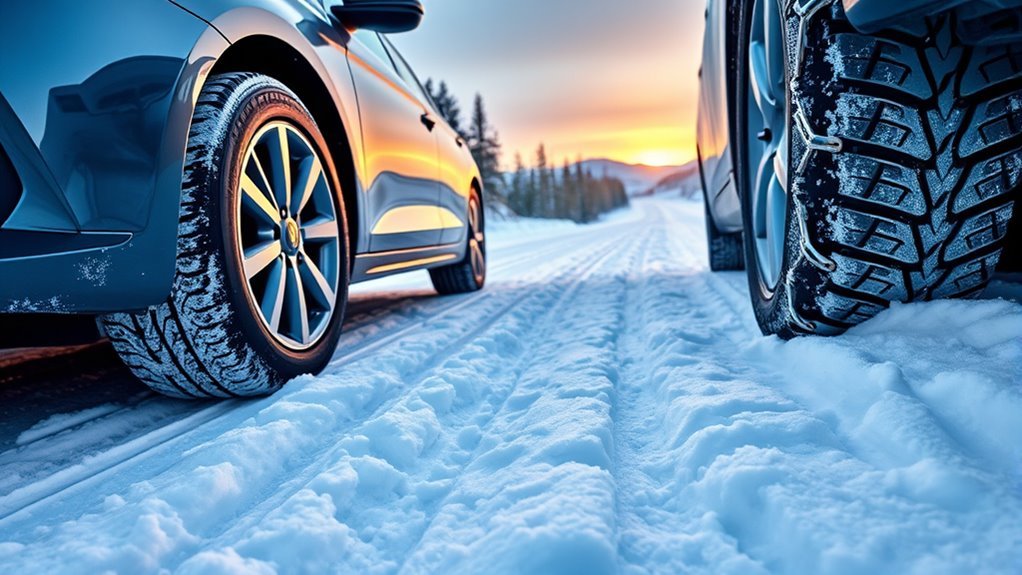
Winter tires and tire chains solve different winter driving problems. Winter tires are the better everyday choice when roads are cold, wet, snowy, or slushy for much of the season. Tire chains are a short-term traction tool for steep grades, deep snow, glazed ice, mountain passes, or roads where signs legally require them.
Quick Answer
Choose winter tires for regular cold-weather driving because they stay flexible below about 7°C/45°F and provide steady braking, steering, and comfort. Use tire chains only for short, severe conditions such as deep snow, steep icy roads, or chain-control zones where signs require them.
Key Takeaways
- Winter tires are best for daily winter driving because their rubber and tread are built for cold pavement, snow, slush, and ice.
- Tire chains give the strongest bite in deep snow or glazed ice, but they are noisy, slow, and stressful on the vehicle if used incorrectly.
- Chains are not a replacement for winter tires if you drive in cold weather for weeks or months.
- Legal rules vary by region. Some mountain routes require chains or approved traction devices when chain controls are active.
- Fit matters. Always match tire size, chain clearance, and your owner’s manual before buying or installing winter equipment.
At a Glance
| Best Everyday Choice | Dedicated winter tires |
| Best Emergency Tool | Properly fitted tire chains or approved traction devices |
| Typical Chain Speed | Follow posted signs and chain maker limits; often 25–30 mph |
| Main Safety Check | Tire tread depth, air pressure, chain fit, and vehicle clearance |
Winter Tires or Tire Chains: Which Should You Choose?
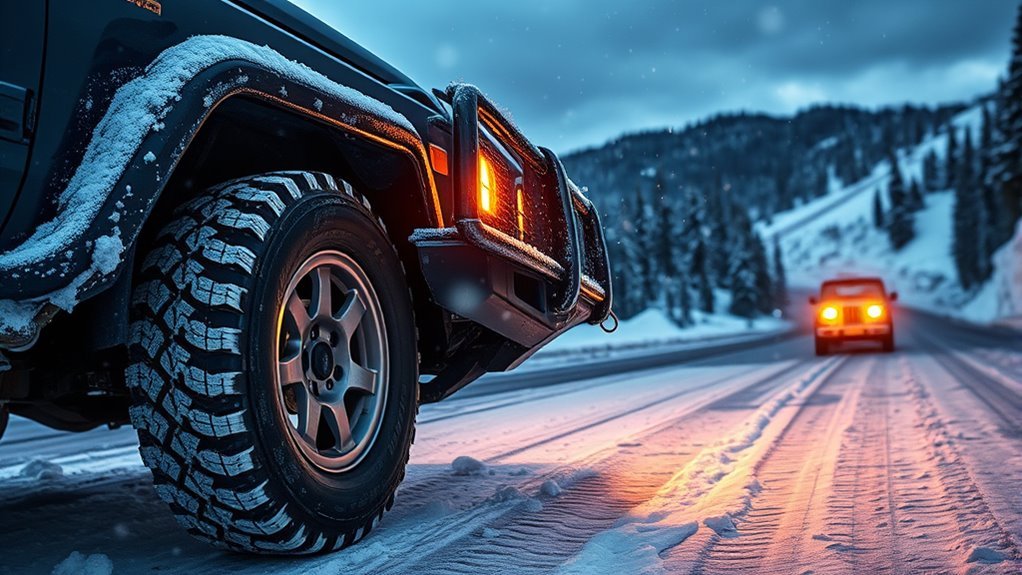
Choose winter tires if you regularly drive in cold weather, even when the road is only wet or dry. At temperatures below about 7°C/45°F, all-season and summer tires begin to lose elasticity, while winter tires are designed to keep grip at much lower temperatures.
Choose tire chains when you need short-term mechanical bite in severe conditions: deep snow, steep icy grades, mountain passes, or a posted chain-control area. Chains can help a vehicle keep moving when tires alone are slipping, but they come with limits: low speed, vibration, careful installation, and possible damage if they are loose or used on bare pavement.
| Driving Situation | Better Choice | Why |
|---|---|---|
| Daily cold-weather commuting | Winter tires | They provide steady grip, braking, and steering without stopping to install equipment. |
| Packed snow, slush, and cold rain | Winter tires | Sipes and grooves move water and slush while the rubber stays flexible. |
| Deep snow or steep icy hills | Chains, often with winter tires | Metal links dig into the surface when rubber traction is not enough. |
| Posted chain-control zones | Follow the signs | Local rules override general advice and may require chains or approved traction devices. |
Note: All-wheel drive helps you accelerate, but it does not shorten stopping distance on ice. Tires and traction devices are what connect the vehicle to the road.
[Products Worth Considering]

Milton S-921 pencil tire pressure gauge helps you maintain optimal tire pressure for passenger cars with accurate readings in PSI and kPa. It features a built-in deflator valve for convenient pressure adjustments, plus a single chuck head and nylon indicator bar for easy use on the go. Built from durable plated brass and designed for reliable performance, it’s a practical road trip and cold-weather maintenance tool.

Monitor tire tread wear with a smart, color-coded depth gauge that shows clear condition ranges at a glance. The bar is range marked for fast, easy readings, helping you maintain safer traction and performance. Each gauge is portable with a pocket clip, and the set includes 20 units for daily use and sharing.

The SAFELIFE dial tire tread depth gauge measures tread depth in 1/32 inch increments with clear, easy-to-read 2-inch dial face. Color zones using a traffic light system help you quickly judge whether tread is low, marginal, or ample for safer driving. Built with a durable zinc cast body and a metal detect probe for precise, comfortable use across cars, motorcycles, trucks, and buses.
How Winter Tires Work: Rubber, Tread, and Cold Grip
Winter tires work in two ways: the rubber compound stays softer in the cold, and the tread pattern creates many biting edges for snow, slush, and ice. This makes them more predictable than all-season tires when the temperature stays low.
Rubber Compound Properties
Rubber hardens as temperatures fall. Winter tires use specialized compounds that remain more flexible in cold weather, so the tread can conform to rough pavement and maintain contact with the road. That improves acceleration, braking, and cornering in winter conditions.
Look for the Three-Peak Mountain Snowflake symbol on the sidewall when buying winter tires. Tires with this symbol meet specific snow traction performance requirements and are designed for severe snow conditions.
Tread and Sipe Design
Winter tire tread has deeper grooves and many small cuts called sipes. The grooves help clear snow, water, and slush. The sipes create extra edges that bite into packed snow and ice.
As tread wears down, snow traction drops. Transport Canada advises not using tires worn close to 4 mm or 5/32 inch tread depth on snow-covered roads. NHTSA also recommends checking tire tread, sidewalls, pressure, and age before winter travel.
Pro Tip: Install winter tires in a set of four. Mixing tire types, sizes, or tread patterns can make the vehicle less stable, especially when braking or turning on ice.
How Tire Chains Work and When They Excel
Tire chains wrap metal links or cables around the tire so the links can dig into snow or ice. Instead of relying only on rubber friction, chains create direct mechanical grip. This is why they can work so well in deep snow, on steep grades, and on glazed ice.
Chains are most useful when:
- Road signs require chains or approved traction devices.
- Snow is too deep for tires alone.
- The road is steep, icy, and slow-speed travel is unavoidable.
- You need temporary traction to get through a pass, driveway, worksite, or mountain road.
Chains are not ideal for normal-speed driving. Caltrans says the speed limit when chains are required is typically 25 or 30 miles per hour, and chain makers often set similar limits. Go slower if the road, weather, or chain instructions require it.
Warning: Do not drive fast on chains, do not use damaged chains, and do not keep chains on dry pavement longer than necessary. Loose or broken chains can damage brake lines, fenders, suspension parts, and the road surface.
[Products Worth Considering]

Measure tire tread depth quickly and accurately with this LUMITECO dial gauge that reads in 1/32" increments up to 14/32". The color-coded green/yellow/red zones make it easy to judge tire wear and know when replacement is needed. A rugged, compact design with a protective pouch helps keep the gauge ready for use on cars, trucks, motorcycles, and more.

Accurately measure tire tread depth with a calibrated gauge marked from 0 to 1 inch in 1/32 inch increments. The color-coded bar helps you quickly identify tread condition ranges, supporting safe driving for trucks, motorcycles, automobiles, and passenger vehicles.

Cristal Products Untouchable Tire Shine Spray delivers a deep, wet-look gloss that enhances your vehicle’s tires. It’s quick-drying and spreads smoothly for consistent, streak-free coverage, while forming a protective coating against UV rays, road grime, and weather. Suitable for all tire types, it helps restore dull, faded tires to a showroom-quality finish.
Performance Comparison: Snow, Ice, Slush, Packed Roads
If you want predictable control across mixed winter roads, winter tires are usually the safer everyday choice. Chains can beat tires for raw bite in extreme snow and ice, but only at low speeds and only when properly fitted.
| Surface | Winter Tires | Tire Chains |
|---|---|---|
| Cold dry pavement | Good grip and normal ride quality | Not appropriate; remove chains when no longer needed |
| Slush and wet snow | Strong, predictable traction | Can help in deeper buildup, but rougher and slower |
| Packed snow | Very good for daily driving | Excellent bite if the road is steep or slippery |
| Glazed ice | Better than all-season tires, but still limited | Often better low-speed bite, depending on chain type |
| Deep snow | Good until snow depth overwhelms clearance | Best short-term tool for getting moving |
Winter tires are for the season. Tire chains are for the moment when conditions exceed what tires can safely handle.
Installation: Swapping Winter Tires vs. Fitting Chains
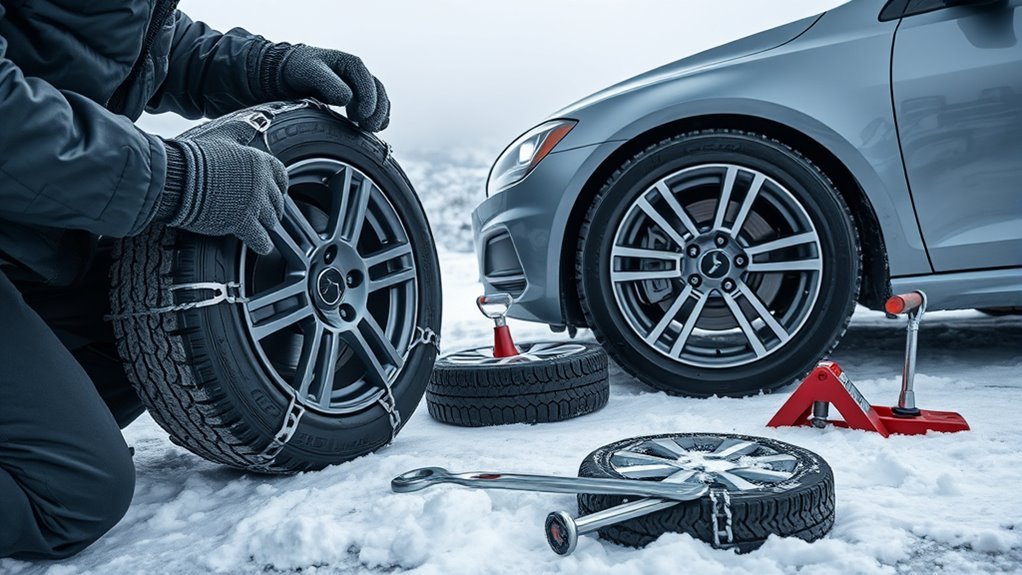
Installing winter tires is a planned seasonal job. You can mount them on a second set of wheels or have a shop swap them onto your existing wheels. Once installed, they work every time you drive without roadside setup.
Fitting chains is different. Chains are installed only when needed, often in snow, wind, and traffic. That makes practice important. Test-fit chains at home before winter so you know they clear the brakes, suspension, and bodywork.
Winter Tire Installation Checks
- Install a full set of four matching winter tires.
- Use the size and load rating approved for your vehicle.
- Check air pressure when the tires are cold.
- Torque wheel nuts to the vehicle specification.
- Inspect tread depth, sidewalls, valve stems, and tire age.
Chain Installation Checks
- Confirm your owner’s manual allows chains or traction devices.
- Match the chain size to the exact tire size on the sidewall.
- Install chains on the correct axle according to the manual.
- Pull completely off the roadway before installing or removing chains.
- Drive a short distance, stop safely, and recheck chain tension if the chain instructions call for it.
Note: Some vehicles have limited wheel-well clearance and require low-clearance traction devices, often called Class S chains or cables. Some vehicles do not allow chains at all.
Cost, Lifespan, and Maintenance: Chains vs. Winter Tires
Winter tires cost more upfront, but they deliver season-long traction and reduce wear on your warm-weather tires while they are stored. With proper rotation, pressure checks, alignment, and storage, many drivers get several winter seasons from a set.
Chains cost less upfront, but they are not built for continuous road use. They can wear quickly on bare pavement, rust if stored wet, and fail if links or tensioners are damaged.
| Item | Maintenance | Main Risk |
|---|---|---|
| Winter tires | Check pressure, rotate, inspect tread, store cool and dry | Poor grip if worn, aged, underinflated, or used in warm weather |
| Tire chains | Clean, dry, inspect links, check tensioners, replace damaged parts | Vehicle damage or chain failure if loose, mismatched, or overdriven |
Safety Trade-Offs: Speed, Handling, and Vehicle Wear
Winter tires preserve normal ride quality and handling better than chains. They are designed for steady steering, braking, and lane changes in cold weather. Chains change how the vehicle feels: more vibration, more noise, slower response, and more stress on components.
The safety tradeoff is simple. Chains can provide more bite in the worst conditions, but they also add risk if used at the wrong speed or on the wrong surface. Winter tires provide less extreme bite than chains, but they are safer and more predictable for routine driving.
- Speed: Winter tires allow normal winter-speed driving for the road conditions; chains require low-speed operation.
- Handling: Winter tires maintain smoother steering; chains can feel rough and uneven.
- Braking: Winter tires improve cold-weather braking; chains can improve low-speed braking on severe snow or ice.
- Wear: Winter tires wear faster in warm weather; chains wear fast on bare pavement and can damage the vehicle if loose.
Legal Rules: Where Chains or Studded Tires Are Required or Banned
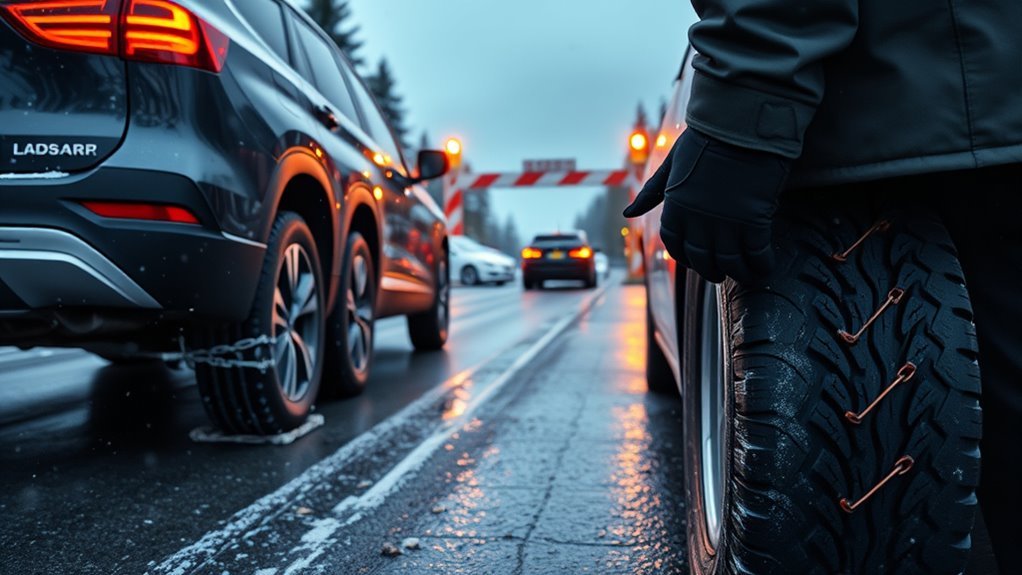
Winter tire, chain, and studded tire rules change by country, state, province, route, and road condition. Check local transportation rules before travel, especially if you will cross mountain passes or drive in another region.
Regional Chain Mandates
In California, Caltrans uses chain-control levels. Under R-1, chains are required on many vehicles, with exceptions for certain snow-tire-equipped passenger vehicles. Under R-2, chains or traction devices are required on most vehicles, with limited exemptions for four-wheel-drive or all-wheel-drive vehicles with snow-tread tires. Under R-3, chains or traction devices are required on all vehicles.
In Colorado, the passenger vehicle traction law can be activated during winter storms or hazardous conditions. Colorado DOT says traction-law compliance can include suitable tires with required tread depth, chains, or approved alternative traction devices. When the passenger vehicle chain law is active, every vehicle must have chains or an approved alternative traction device.
Studded Tire Restrictions
Studded tire laws also vary. Québec requires winter-ready vehicles from December 1 to March 15 for vehicles registered in Québec, with certain exceptions, and permits studded tires on eligible vehicles from October 15 to May 1. British Columbia requires winter tires or chains on most designated routes from October 1 to April 30, with some routes ending March 31.
Because rules change and road signs can override general advice, check current official transportation sources before driving. This is especially important for rental vehicles, out-of-province trips, mountain highways, and roads with chain-control checkpoints.
Warning: Do not assume that winter tires exempt you from carrying chains. Some chain-control areas require vehicles using winter tires to carry chains, and some conditions require chains on all vehicles.
When to Use Tires, Chains, or Both: A Practical Decision Guide
Use winter tires when cold weather is regular. Use chains when conditions are temporary but severe. Use both when you drive in mountains, steep rural roads, or areas where chain laws can activate quickly.
- Long cold commutes: Install winter tires before temperatures stay near or below 7°C/45°F.
- Mountain travel: Drive on winter tires and carry chains that fit your tire size.
- Rare snow exposure: Chains or approved traction devices may be enough for emergency use if your tires are otherwise suitable and local laws allow it.
- Steep icy driveway or private road: Chains can help at very low speed, but remove them when you return to clear pavement.
- Urban light snow: Winter tires or quality all-weather tires may be more practical than chains.
What About All-Weather Tires and Snow Socks?
All-weather tires with the Three-Peak Mountain Snowflake symbol can be a practical middle ground for mild winter areas. They are not the same as dedicated winter tires, but they are usually better than standard all-season tires in cold and light snow.
Snow socks are fabric traction devices that may be easier to install and approved in some regions, but they wear quickly and are usually for short, low-speed use. Always check whether snow socks are legal where you plan to drive.
Buying Checklist: Sizing, Materials, and Fit for Your Car
Before buying winter tires or chains, confirm your tire size, vehicle clearance, local rules, and driving needs. A good product in the wrong size can be unsafe.
[Products Worth Considering]

This tire inflator with pressure gauge delivers long-lasting performance with a durable rubber-protected gauge and sturdy build. The longer hose and 360 swivel air chuck help you seal the valve securely and keep your hands free while measuring, inflating, or deflating. It’s battery-free for reliable use and provides ±2 PSI accuracy in the mid-range for most typical tires, with universal compatibility for 1/4 NPT compressor outputs.

This manual duck head tire changer kit makes tire installation and removal simpler by letting you embed the duck head into the tire with applied pressure. The integrated design and durable steel construction help reduce friction and improve efficiency and safety during use. Suitable for 16–21 inch wheels, it’s convenient for cars, trucks, SUVs, and ATV tires, with 24-hour after-sales support.

The 22800 wheel stud installer makes replacing wheel studs quick and secure, saving time and effort during tire service. It uses a ratchet or impact wrench to pull new studs firmly into place, helping when existing studs are too long. Compatible with most automotive wheels and light-duty truck wheel studs, it’s designed for easy, tool-assisted installation.
Correct Tire Size
Read the tire size on the sidewall, such as 215/65R16. Match that size exactly when buying chains, cables, or snow socks. For winter tires, use a size approved by your vehicle manufacturer or tire professional.
- Width: The first number, such as 215, is tire width in millimeters.
- Aspect ratio: The second number, such as 65, is sidewall height as a percentage of width.
- Wheel diameter: The final number, such as 16, is the wheel diameter in inches.
- Load and speed rating: These must be suitable for your vehicle.
- Chain clearance: Check the owner’s manual for chain restrictions before buying.
Material Durability
Winter tires use flexible rubber compounds and tread blocks designed for cold roads. Chains use steel links, cables, or composite traction elements designed to bite into snow and ice. Choose based on how often you will use them.
| Component | Best Material Priority | What to Inspect |
|---|---|---|
| Winter tires | Cold-flexible rubber and 3PMSF snow rating | Tread depth, cracking, uneven wear, sidewall damage, date code |
| Metal chains | Strong links, corrosion resistance, secure tensioning | Broken links, rust, loose cross chains, worn tensioners |
| Cables or socks | Low clearance and easy installation | Fraying, worn traction surface, connector damage, fit |
Pro Tip: Keep chains, gloves, a kneeling mat, a flashlight, and a small plastic bag in the vehicle. Wet chains are messy, and roadside installation is much easier when your hands and knees are protected.
Frequently Asked Questions
Are snow chains better than winter tires?
Snow chains are better for short, severe conditions such as deep snow, steep icy roads, or chain-control areas. Winter tires are better for everyday winter driving because they provide consistent grip, steering, braking, and comfort across cold pavement, snow, slush, and ice.
What is the 7/7 rule for winter tires?
The 7/7 rule means installing winter tires when the daily temperature stays near or below 7°C, or 45°F, for about seven days. It is a practical reminder not to wait for the first snowfall because tire rubber starts losing cold-weather grip before roads are fully snow-covered.
Can I use tire chains on winter tires?
Yes, if your vehicle allows chains and the chains fit the tire size and clearance. Many drivers use winter tires for regular winter driving and carry chains for mountain passes, chain-control zones, steep roads, or severe storms.
Do all-wheel-drive vehicles still need winter tires or chains?
Yes. All-wheel drive helps with acceleration, but it does not create extra tire grip for braking or turning. In cold regions, winter tires still improve control. In chain-control areas, AWD vehicles may still need to carry or install chains depending on the posted rule.
How fast can you drive with tire chains?
Follow the lowest limit from the road signs, your owner’s manual, and the chain manufacturer. In many chain-control areas, the posted limit is 25 or 30 mph. Driving faster can damage the chains, tires, vehicle, and road surface.
Conclusion
Choose winter tires for consistent cold-weather traction, smoother handling, and safer daily driving. Choose tire chains for short, severe situations where you need extra bite or where chain-control signs require them. The safest plan for mountain or heavy-snow travel is often both: drive on proper winter tires and carry correctly sized chains or approved traction devices.
Before winter starts, check tire pressure, tread depth, age, and sidewall condition. Before a storm trip, check the route rules, practice installing chains, and confirm your vehicle has enough clearance. Good preparation gives you more control and less risk when roads turn icy.
Sources
- Transport Canada — Using winter tires — winter tire markings, 7°C guidance, tread depth, and installing four matching winter tires.
- NHTSA — Winter Weather Driving Tips — tire pressure, tread inspection, tire damage checks, and winter vehicle preparation.
- Caltrans — Chain Controls / Chain Installation — California chain-control levels, installation safety, and 25–30 mph chain-control speed limits.
- Colorado Department of Transportation — Passenger Vehicle Traction and Chain Laws — traction-law and chain-law requirements for passenger vehicles.
- Gouvernement du Québec — Requirements for winter tires — Québec winter tire dates, compliance rules, fines, and studded tire period.
- Province of British Columbia — Designated Winter Tire & Chain Routes — B.C. winter tire and chain route dates and enforcement notes.