
Toyota Hilux Tire Safety Tips Every Driver Should Know
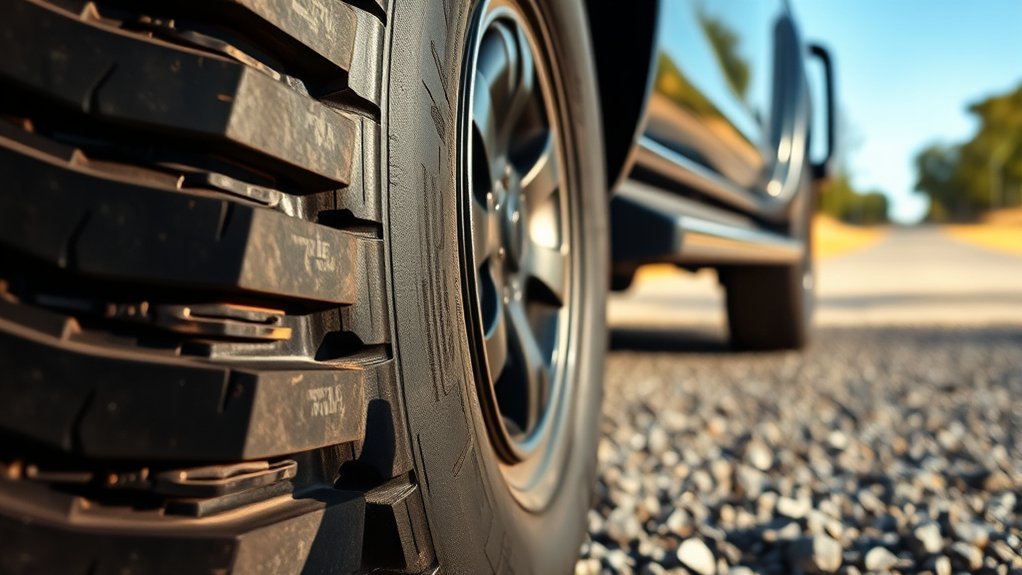
Your Toyota Hilux depends on four small contact patches for steering, braking, carrying loads, and maintaining traction on wet roads, gravel, mud, and snow. Good tire care starts with the pressure listed for your exact truck, regular tread and damage checks, correct rotation, and tires that match the vehicle’s size and load requirements.
Quick Answer
Check your Hilux tire pressure when the tires are cold and use the driver-door placard or owner’s manual, not a universal 30 psi figure. Inspect tread, sidewalls, and the spare monthly. Rotate tires at the model-specific interval, replace damaged or legally worn tires, and match replacement size, load rating, and tire type.
Key Takeaways
- Use the cold pressure on your Hilux placard or owner’s manual. Pressure can differ by model, tire size, axle, and load.
- Check pressure, tread, sidewalls, valve stems, and the spare at least monthly and before long, loaded, towing, or off-road trips.
- Treat bulges, exposed cords, deep cuts, rapid air loss, and strong vibration as stop-and-inspect problems.
- Follow the rotation pattern and interval for your exact Hilux, especially if it has directional tires, different wheel types, or a full-size spare.
- Choose replacement tires that meet the specified size, load capacity, construction, and intended road and weather conditions.
At a Glance
| Time Required | About 10 to 15 minutes for a monthly inspection |
| Difficulty | Easy for inspection; moderate and safety-critical for a roadside wheel change |
| Tools Needed | Accurate pressure gauge, tread-depth gauge, flashlight, and the factory jack kit |
| Cost | Usually no service cost for inspection if you already own the gauges |
Warning: Do not drive on a visibly flat tire, a tire with exposed cords or a bulge, or a wheel that feels loose. If the roadside location is unsafe, stay away from traffic and call roadside assistance instead of attempting a wheel change.
Why Tire Safety Is Crucial for Your Toyota Hilux

Tire condition affects how your Hilux responds when you brake, turn, carry a payload, tow, or cross loose and uneven surfaces. Underinflation can create excess heat and shoulder wear, while overinflation can reduce the tire’s ability to absorb impacts and may encourage center wear. Either condition can reduce predictable handling.
A monthly inspection helps you catch slow leaks, irregular wear, punctures, cuts, cracking, and impact damage before they become larger problems. The National Highway Traffic Safety Administration also advises checking the spare, because an unused spare can lose pressure and age while stored.
Payload matters on a pickup. The pressure and tire capacity needed for an unloaded commute may not be the same as the requirement for a heavily loaded tray or trailer. Keep the vehicle within its axle, tire, and gross weight limits, and use the pressure specified for the actual load.
[Products Worth Considering]

EVOULTES heavy duty tire inflator with an integrated gauge delivers accurate pressure readings from 10–120 PSI, helping you inflate, deflate, and check tires in one tool. The 16.5-inch extended dual-head air chuck with swivel base reaches hard-to-access dual wheel valves on trucks and RVs. A brass trigger core and side-mounted air release valve make operation smooth, with standard 1/4" NPT threading and quick-connect compatibility for easy setup.

This portable cordless tire inflator delivers up to 160 PSI with fast 17 L/min airflow to help you quickly top up tires and get back on the road. It features dual power mode, running on a 21V rechargeable battery or a 12V DC adapter for convenient roadside use. An automatic shut-off with digital pressure gauge helps prevent overinflation, and a built-in LED light improves visibility in low-light conditions.

The JACO FlowPro Tire Inflator measures, inflates, and airs down tires up to 100 PSI with battery-free operation and ±2% accuracy after calibration. It features a glowing pressure dial for night visibility, a heavy-duty steel build with a hybrid hose, and a precision push-to-inflate thumb trigger. The patented Lightning Air Chuck locks on for a secure seal, and the kit includes quick-connect hardware for easy inline use with your air compressor.
How to Check Your Tire Pressure Effectively
The correct pressure is not automatically 30 psi. Hilux specifications vary by production year, market, wheel and tire package, body style, and load. Toyota advises owners to use the tire placard and owner’s manual, and to check pressure when the tires are cold.
Find the Correct Hilux Tire Pressure
- Locate the placard: Check the driver’s door opening, door pillar, or the location stated in your owner’s manual.
- Confirm the operating condition: Some Hilux versions specify different front and rear pressures or separate values for unloaded and loaded driving.
- Use the vehicle value: Do not use the maximum pressure molded on the tire sidewall as the normal inflation target.
- Check the spare: A full-size or temporary spare may require a different pressure from the road tires.
Toyota Australia’s maintenance guidance recommends checking with a gauge at least monthly, checking the spare, and taking the reading when the tires are cold.
Cold-Pressure Check Steps
| Step | Action | Why It Matters |
|---|---|---|
| 1 | Park for at least three hours before checking, when practical. | Driving heats the tire and raises the measured pressure. |
| 2 | Remove the valve cap and press the gauge squarely onto the valve. | A complete seal gives a more reliable reading. |
| 3 | Compare the reading with the placard value for the axle and load. | Front and rear targets may differ. |
| 4 | Add air in short bursts or release a small amount, then recheck. | Small adjustments reduce overshooting. |
| 5 | Inspect the valve, refit the cap, and repeat for every tire and the spare. | A missing cap allows dirt and moisture around the valve. |
Pro Tip: Keep a quality gauge in the truck and compare it occasionally with a known-good gauge. A dashboard tire-pressure warning is useful, but it may not alert you until a tire is already significantly underinflated.
If you must add air while a tire is warm, bring it close to the vehicle’s specified cold pressure and recheck it after the truck has cooled. Do not bleed a warm tire down simply because the reading is higher than the cold specification.
Why Tread Depth Matters for Tire Safety
Tread grooves help move water, mud, slush, and loose material away from the contact patch. As tread becomes shallow, wet grip and resistance to hydroplaning can decline. Tread depth is only one part of tire health, so also inspect age, damage, wear pattern, and air retention.
Legal Tread Depth Requirements
A single legal limit does not apply worldwide. In the United States, NHTSA says tires should be replaced at 2/32 inch. In the United Kingdom, cars and light vans must have at least 1.6 mm across the central three-quarters of the tread and around the full circumference. Check the law where the truck is registered and driven.
The built-in treadwear indicators are a better universal reference than a country-specific coin test. When the tread is level with an indicator bar, replace the tire. A tread-depth gauge gives a more precise reading across the inner, center, and outer grooves.
| Measured Tread | Practical Action |
|---|---|
| About 6/32 in (4.8 mm) or more | Continue regular checks; damage and uneven wear can still make a tire unsafe. |
| Near 5/32 in (4 mm) | Review winter needs. Snow traction is reduced as tread wears, and winter guidance may call for earlier replacement. |
| Around 3/32 in (2.4 mm) | Plan replacement promptly, especially before a wet season, long trip, or heavy-load use. |
| 2/32 in (1.6 mm) or at the wear bars | Replace the tire. This is the U.S. replacement threshold and matches the 1.6 mm legal minimum used in several jurisdictions. |
Impact on Traction
- Wet roads: Shallow grooves move less water and can increase hydroplaning risk.
- Snow and slush: Winter traction often becomes inadequate before the tire reaches the legal minimum.
- Loose surfaces: Worn or damaged tread blocks provide less bite on gravel, mud, and steep tracks.
- Braking: Reduced grip can lengthen stopping distance, especially in poor weather.
Measure several grooves across each tire. A single acceptable reading does not cancel out a bald shoulder, localized damage, or exposed reinforcement.
Identifying Tire Wear and Damage
Inspect each tire in good light and turn the front wheels when parked so you can see more of the tread. Look across the full width and circumference, including the inner shoulder when accessible.
Common Wear Patterns and What They May Suggest
| Pattern | Possible Cause | Next Step |
|---|---|---|
| Both shoulders wearing faster | Repeated underinflation, overloading, or both | Verify cold pressure and actual load; inspect for heat damage. |
| Center wearing faster | Pressure may be too high for the load or tire | Compare with the placard and have the tire inspected. |
| One edge wearing faster | Alignment, ride-height, steering, or suspension issue | Arrange an alignment and suspension check. |
| Cupped or scalloped tread | Balance, shock absorber, bearing, or suspension problem | Have the wheel and suspension professionally inspected. |
Remove stones from grooves only when the vehicle is safely parked, but do not pull out a nail or screw before a repair shop evaluates it. The object may be slowing the leak. A sidewall bulge, deep cut, exposed cord, split, or rapid pressure loss requires immediate professional attention and often replacement.
Check Tire Age and the Spare
Tires age from heat, sunlight, storage, flexing, and environmental exposure. Where a DOT Tire Identification Number is present, its final four digits show the production week and year. For example, 1824 means the 18th week of 2024.
Do not treat ten years as a guaranteed service life. NHTSA notes that some vehicle and tire manufacturers recommend replacement between six and ten years regardless of tread. Follow the tire maker and Toyota guidance for your market, and include the spare in the age inspection.
Choosing the Right Tires for Your Driving Conditions
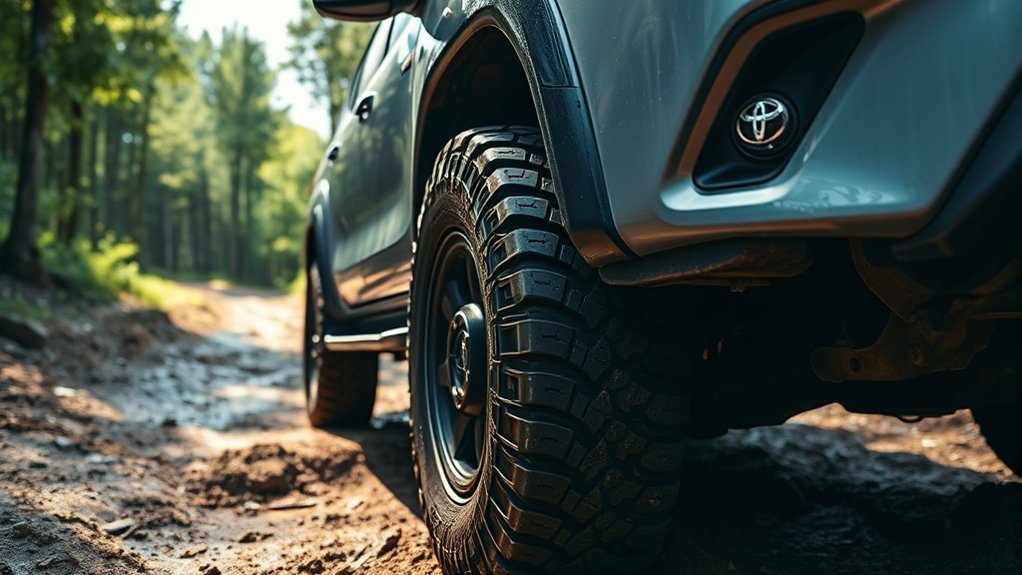
Start with the size, load capacity, construction, and wheel specifications listed on the placard and in the owner’s manual. A Hilux used for commercial loads, towing, or remote travel may need a different tire specification from a lightly used urban truck.
Match Size, Load, and Construction
- Size: Use an approved size that maintains clearance, gearing, speedometer accuracy, and safe operation of driver-assistance systems.
- Load capacity: Choose a load index or load rating that meets or exceeds the vehicle requirement. Never use the tire’s maximum capacity to justify overloading the truck.
- Speed rating: Follow the vehicle and tire manufacturer’s replacement guidance.
- Construction and type: Do not mix radial and bias construction or mix summer, all-season, all-terrain, and winter categories across the vehicle unless Toyota specifically permits it.
- Four-wheel drive compatibility: Keep rolling circumference and tread wear closely matched to reduce driveline stress and unpredictable handling.
Terrain-Specific Tire Selection
- Mainly paved roads: Highway-terrain or suitable all-season tires usually favor road noise, wet braking, steering response, and fuel economy.
- Mixed road and gravel: All-terrain tires add tread strength and loose-surface traction, but may increase noise and rolling resistance.
- Mud, rock, and severe trails: More aggressive off-road tires may improve bite and sidewall protection, but can trade away wet-road braking, comfort, and quietness.
- Heavy loads and towing: Prioritize verified load capacity, heat management, and the pressure specified for the load.
Seasonal Tire Considerations
For severe snow, look for the three-peak mountain snowflake symbol rather than relying on an M+S marking alone. Transport Canada says tires with this symbol meet specific snow-traction performance requirements and recommends installing winter tires as a set of four.
Summer tires suit warm conditions but are not intended for snow or freezing weather. All-season and all-weather products vary widely, so compare verified winter markings, load ratings, and manufacturer guidance instead of judging only by the tread’s appearance.
Note: Lowering tire pressure for sand, rock, or corrugations is not a universal setting. Use vehicle, tire, and off-road guidance, reduce speed, avoid sharp steering, and reinflate to the correct road pressure before higher-speed paved driving.
When to Rotate Your Tires for Optimal Performance

Rotate your tires at the interval and in the pattern specified for your exact Hilux. A current Toyota Hilux manual for one market specifies rotation every 10,000 km, while Toyota’s broader owner guidance tells drivers to follow the vehicle-specific manual. Severe use, frequent towing, rough roads, or visible irregular wear may justify an earlier inspection.
The correct pattern depends on whether the tires are directional, whether front and rear sizes match, and whether the spare uses the same wheel and tire type. Do not automatically switch every tire to the opposite corner.
- Record the odometer reading and current tread depth at each position.
- Inspect for punctures, bulges, cuts, cracking, and uneven wear before rotating.
- Use the pattern shown in the owner’s manual or tire manufacturer’s instructions.
- Set every tire to the correct front or rear cold pressure after rotation.
- Reset or relearn the tire-pressure monitoring system if your Hilux requires it.
- Have wheel-nut torque checked to the exact model specification.
Alignment is not automatically an annual service. Have it checked when the truck pulls on a level road, the steering wheel sits off-center, wear is one-sided, or the vehicle has struck a curb, pothole, or obstacle.
[Products Worth Considering]

This portable cordless tire inflator delivers fast, efficient inflation for cars, motorcycles, bikes, and sports balls with a digital pressure gauge. Use the one-click PSI preset with auto shut-off for accurate, hands-free topping to your target pressure up to 150 PSI. It’s compact and rechargeable with a built-in emergency LED light plus valve adapters and accessories for quick, ready-to-go use.

This spare tire tool kit is designed for the 2004 to 2018 Ford F-150 to help you loosen and tighten wheel lug nuts and manage the spare tire and provided jack functions from underneath the vehicle. It includes the lug nut wrench and extension pieces plus a convenient storage carrying case for organized transport. The jack itself is not included.
Step-by-Step Guide to Changing a Flat Tire in Your Hilux
Use the instructions and jacking diagrams for your exact model. The following sequence covers the main safety steps, but the owner’s manual controls the jack point, wheel-nut sequence, torque, spare restrictions, and tire-pressure monitoring procedure.
Prepare the Truck Safely
- Move to firm, level ground as far from traffic as possible. Turn on the hazard lights.
- Apply the parking brake, select Park on an automatic or an appropriate gear on a manual, switch off the engine, and remove passengers from the danger area.
- Place a wheel chock diagonally opposite the flat tire. Use more chocks if the surface or slope requires them.
- Remove the spare and tools. Confirm that the spare is inflated and suitable for the vehicle.
Remove and Install the Wheel
- With the flat wheel still on the ground, loosen each wheel nut about one turn. Do not remove the nuts yet.
- Position the factory jack only at the designated point shown in the manual. Raise the truck just enough for the tire to clear the ground.
- Remove the nuts and wheel. Keep hands, feet, and your body away from beneath the truck.
- Clean loose dirt from the wheel’s mounting face. Fit the spare and hand-tighten the correct nuts with their seating surfaces facing the correct direction.
- Lower the truck until the tire contacts the ground, then tighten the nuts gradually in the manual’s sequence. Lower the truck fully.
- Use a torque wrench or have a workshop promptly verify the exact wheel-nut torque specified for your model. Store the flat tire, jack, and tools securely.
Warning: Never place any part of your body under a Hilux supported only by its emergency jack. Do not use the jack on soft, sloped, or unstable ground. If the correct jack point is unclear, call roadside assistance.
Toyota’s current Hilux instructions tell drivers to stop on firm, level ground, apply the parking brake, chock the wheel, use the designated jack points, and avoid going beneath a jack-supported vehicle. After fitting the spare, follow any speed, distance, TPMS, or repair restrictions stated in your manual.
Best Tires for Mountain Driving in Your Hilux
The best mountain tire depends on the surface and season rather than the word “mountain” alone. A tire that works well on dry paved switchbacks may not suit snow, sharp rock, deep mud, or a heavily loaded remote-area trip.
- Paved mountain roads: Choose a road-focused tire with strong wet braking, stable handling, and the correct load rating.
- Snow and ice: Use four properly sized winter tires with the three-peak mountain snowflake symbol where conditions justify them.
- Gravel and forestry roads: A quality all-terrain tire can add tread durability and loose-surface traction.
- Rocky or remote tracks: Consider stronger sidewall construction, suitable load capacity, and a full-size spare, while accepting possible noise and road-comfort tradeoffs.
The safest Hilux tire is the one that matches the truck’s approved specification, actual load, terrain, climate, and maintenance condition.
Before a mountain trip, check cold pressure, tread depth, spare pressure, wheel-nut security, and visible damage. After sharp rocks or deep potholes, inspect both sidewalls and watch for vibration or pressure loss.
Why Professional Help Is Key to Keeping Your Tires Healthy
Routine pressure and visual checks are suitable owner tasks, but several conditions need professional equipment and judgment. A qualified technician can remove the tire to inspect internal damage, determine whether a puncture is repairable, balance the assembly, measure alignment, diagnose suspension wear, and torque the wheel correctly.
Arrange an inspection when you notice:
- a bulge, exposed cord, deep sidewall cut, split, or repeated pressure loss;
- steering pull, a new vibration, thumping, or a steering wheel that no longer sits straight;
- rapid or one-sided tread wear;
- damage after a curb, pothole, rock strike, or overloaded trip;
- a puncture near the shoulder or sidewall;
- a TPMS warning that returns after correct inflation; or
- uncertainty about tire size, load rating, wheel fitment, rotation pattern, or jack points.
Professional help is also valuable after installing non-standard wheels, suspension lifts, or heavier accessories because these changes can affect clearance, alignment, load distribution, and the suitability of the original tire specification.
Frequently Asked Questions
What tire pressure should a Toyota Hilux use?
Use the cold pressure on the driver’s-door placard or in the owner’s manual for your exact year, market, tire size, axle, and load. Do not assume every Hilux uses 30 psi, and do not use the sidewall maximum as the normal target.
How often should Hilux tires be rotated?
Follow the vehicle-specific manual. One current Toyota Hilux manual specifies 10,000 km, but the correct interval and pattern can vary by market, tire type, spare-wheel design, and operating conditions.
When should I replace Hilux tires?
Replace a tire when it reaches the legal limit or wear bars, has a bulge, exposed cord, deep cut, unrepairable puncture, serious irregular wear, or can no longer hold pressure. Wet, snow, commercial, and off-road use may justify replacement before the legal minimum.
Can I mix different tires on a Toyota Hilux?
Avoid mixing different sizes, constructions, seasonal categories, or widely different tread depths unless Toyota explicitly approves the combination. Matching tires is especially important on four-wheel-drive models because rolling-circumference differences can affect handling and the driveline.
Does the TPMS replace manual pressure checks?
No. A TPMS warning may appear only after pressure has dropped significantly, and some Hilux versions or markets may use different systems. Check every road tire and the spare with a gauge at least monthly.
What is the weakness of the Toyota Hilux?
No single tire-related weakness applies to every Hilux. Problems usually come from the wrong pressure for the load, mismatched replacement tires, neglected alignment, overloading, impact damage, or aggressive off-road use. Correct setup and regular inspections matter more than a generic model weakness.
Sources
- Toyota Australia FAQs and maintenance guidance – tire pressure, cold checks, rotation, and replacement-wheel compatibility.
- Toyota Hilux digital owner’s manuals – model-specific tire inspection, rotation, pressure, TPMS, jacking, and wheel-change instructions.
- NHTSA TireWise – pressure, tread, tire age, damage, alignment, rotation, and spare-tire safety.
- UK Highway Code, vehicle maintenance annex – inflation requirements and the 1.6 mm tread rule for cars and light vans.
- Transport Canada winter-tire guidance – three-peak mountain snowflake marking, winter tread, and four-tire fitment.
Conclusion
Safe Hilux tire care is built around the correct placard pressure, monthly inspection, enough tread for the conditions, matched replacement tires, and model-specific rotation and wheel-change procedures. Check the spare and load requirements before long trips, and act quickly when you find a bulge, cut, vibration, rapid leak, or irregular wear. When the correct repair, jack point, fitment, or torque is uncertain, use a qualified tire professional.

Related Articles
Toyota Hilux Run-Flat Tires: What You Need to Know
Take control of your safety with Toyota Hilux run-flat tires; discover their benefits and hidden costs that could change your driving experience forever.
Read More
Effects of Underinflated Tires on the Toyota Hilux
Inadequate tire pressure in your Toyota Hilux can lead to serious safety issues and costly repairs; discover how to avoid these pitfalls.
Read More
The Risks of Overinflating Toyota Hilux Tires
Overinflating your Toyota Hilux tires can lead to dangerous blowouts and uneven wear, but understanding the risks is crucial for your safety.
Read More