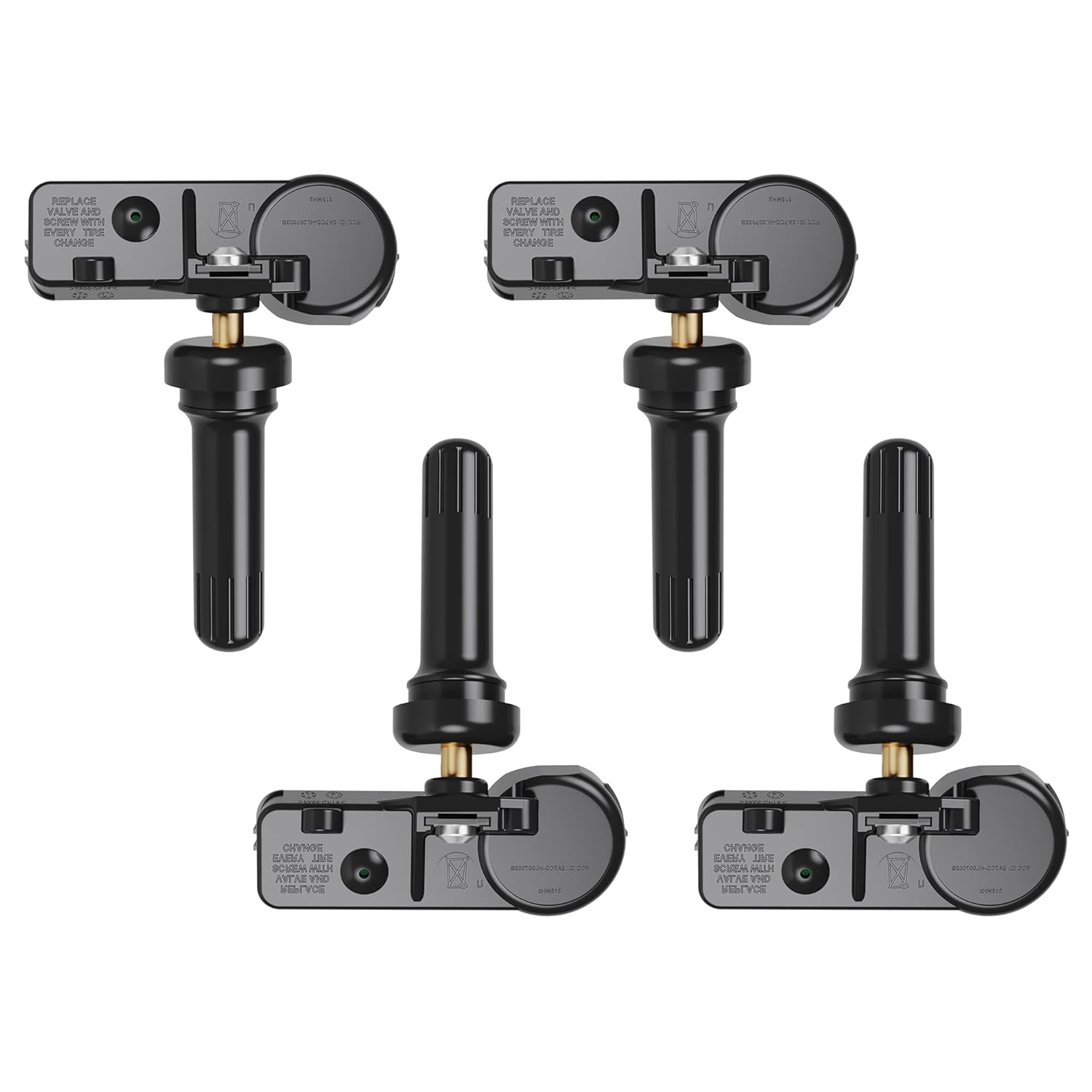
Run-flat tires can give your Toyota Hilux temporary mobility after a loss of air pressure, but they are not an automatic upgrade for every model, wheel, load, or driving pattern. Before buying, you need to confirm tire size, load capacity, speed rating, wheel compatibility, and a functioning Tire Pressure Monitoring System (TPMS). For remote or off-road travel, keeping a usable spare is often the safer plan.
Quick Answer
Run-flat tires may suit a Toyota Hilux used mainly on paved roads, but only when the exact tire is approved for the vehicle’s size and load requirements and the Hilux has working TPMS. A common pressure-loss limit is 50 miles at 50 mph, but the tire sidewall and manufacturer instructions always control.
Key Takeaways
- A run-flat tire must match your Hilux’s placard size, load index, speed rating, and intended use.
- A functioning TPMS is essential because a run-flat can look and feel usable after losing pressure.
- The often-quoted 50-mile and 50-mph limit is common, not universal. Follow the exact tire’s marked limit.
- Use the cold pressure on the driver’s-door placard or owner’s manual, not a generic PSI range.
- Run-flats may reduce roadside tire changes, but they can cost more, ride firmer, and be harder to replace in remote areas.
- After pressure loss, drive gently to the nearest safe tire service and have the tire removed for an internal inspection.
Why Choose Run-Flat Tires for Your Hilux?
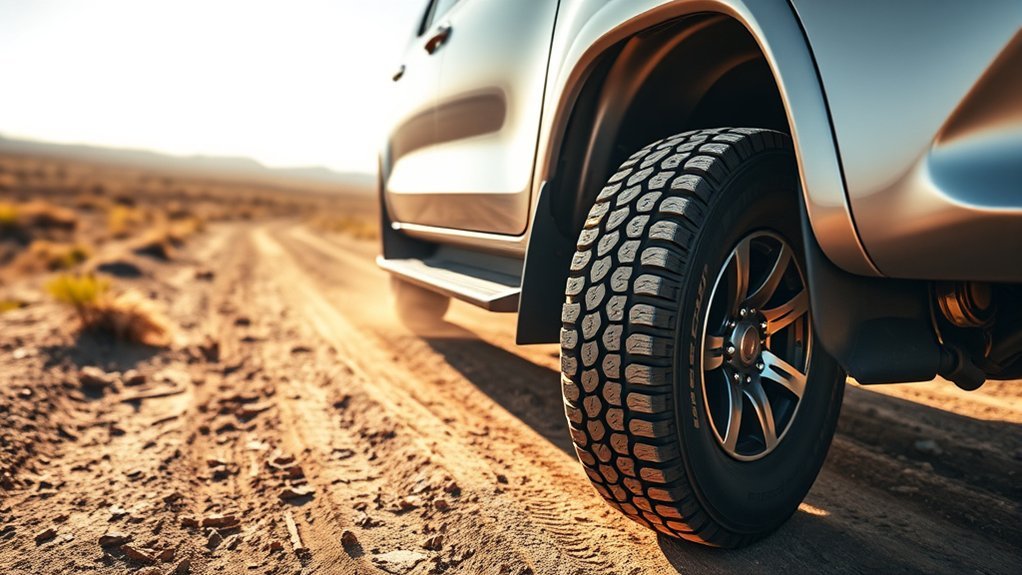
A self-supporting run-flat uses reinforced sidewalls to support the vehicle for a limited distance after substantial pressure loss. This can help you leave a hazardous shoulder, avoid changing a tire beside fast traffic, and reach a nearby tire shop.
Many common designs permit up to 50 miles at a maximum of 50 mph after pressure loss. However, Bridgestone explains that the sidewall, owner’s manual, tire design, load, road, temperature, and driving conditions can change the usable distance. Treat the stated range as an emergency maximum, not a guaranteed travel distance.
Run-flats can also reduce your dependence on an immediate roadside tire change. That convenience matters on busy roads and during routine urban travel. It does not make the tire puncture-proof, prevent all blowouts, or guarantee that you can finish a long trip.
Are Run-Flat Tires Compatible With a Toyota Hilux?
Compatibility depends on the exact Hilux year, trim, wheel, axle load, payload, towing use, and market specification. A tire that fits the wheel diameter can still be unsafe if its load index or construction is below Toyota’s requirement.
Before fitting run-flat tires, verify all of the following:
- Tire size: Match the size on the driver’s-door tire placard unless Toyota or a qualified tire engineer approves an alternative.
- Load index and construction: The replacement must meet or exceed the original load-carrying requirement. Some Hilux variants use commercial or light-truck specifications that many passenger-focused run-flats do not match.
- Speed rating: Use the vehicle or tire manufacturer’s approved rating.
- Wheel approval: Confirm that the run-flat model is approved for your wheel width and rim profile.
- TPMS: The system must be functioning and compatible with the tire and wheel setup.
- Driving use: Tell the installer if you tow, carry heavy loads, drive off-road, or travel far from tire service.
The U.S. Tire Manufacturers Association recommends matching the vehicle manufacturer’s size, load index, and speed rating and never choosing a tire with lower load-carrying capacity.
Warning: Do not install run-flat tires on a Hilux without working TPMS or with a lower load rating than the vehicle requires. A tire can remain visually supported after losing pressure, which may hide damage and heat buildup.
Key Benefits of Run-Flat Tires on Your Hilux
More Controlled Temporary Mobility
Reinforced sidewalls can help the tire retain its shape after pressure loss, giving you time to slow down and reach a safer location. This can reduce the need to stop beside traffic or on an unsafe shoulder. You still need to avoid sudden braking, hard cornering, high speed, rough tracks, and heavy acceleration.
Less Immediate Roadside Work
A run-flat can let you postpone a roadside wheel change until you reach a tire professional. That is useful when weather, traffic, darkness, or personal mobility makes a roadside change risky. The benefit is strongest when tire service is nearby and the fitted size is readily available.
Cargo Space and Spare-Tire Flexibility
Some vehicles designed around run-flat tires omit a spare wheel, which can free space and reduce carried weight. A Hilux is different from a typical passenger car because many owners travel off-road, tow, carry tools, or drive in remote areas. Removing the spare may save space, but it also removes your backup for sidewall cuts, rim damage, multiple punctures, or a failure beyond the run-flat limit.
Note: For remote, off-road, worksite, or long-distance Hilux use, carrying a properly inflated full-size spare remains a sensible risk-control measure even when run-flats are fitted.
How Far Can You Drive After a Puncture?
Several major run-flat systems use an emergency limit of up to 50 miles or 80 km at no more than 50 mph or 80 km/h. Continental lists that limit for its self-supporting run-flat technology, while other designs may specify a different distance.
Your actual range can be shorter when the Hilux is heavily loaded, towing, driven in high heat, traveling on a rough surface, or operated aggressively. Always follow the lowest limit stated by the tire maker, tire sidewall, and vehicle guidance.
What to Do When the TPMS Warning Appears
- Hold the steering wheel firmly and reduce speed smoothly.
- Avoid abrupt braking, sharp steering, hard acceleration, and potholes.
- Move away from traffic if the vehicle feels unstable, the wheel is damaged, or the tire is breaking apart.
- Check which tire triggered the warning when it is safe to stop.
- Follow the tire’s marked speed and distance limit. Do not assume every run-flat allows 50 miles.
- Drive directly to the nearest qualified tire service. Do not continue normal errands or off-road travel.
- Have the tire removed from the wheel and inspected internally before it is repaired, reused, or replaced.
Run-flat mobility is a temporary escape window. It is not permission to keep driving normally on a damaged tire.
What You Should Know About Run-Flat Tire Costs
Run-flat prices vary widely by country, size, brand, load rating, and availability, so a fixed price range or percentage is not reliable for every Hilux. Compare the complete installed cost, not only the tire price.
[Products Worth Considering]
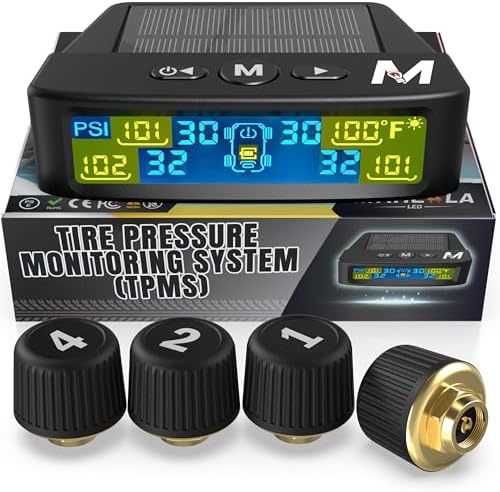
Marcala’s TPMS set of four sensors helps you monitor tire pressure and temperature in real time while driving, with updates every second. The bright color LCD uses auto-dimming for easy viewing, powered by dual solar and USB charging, and offers six alarm modes. Built for trailers, RVs, campers, trucks, and towing setups, the sensors support monitoring 1-4 wheels up to 98 PSI with IP67 waterproof protection.

The Tymate TM12 RV TPMS delivers real-time tire pressure and temperature monitoring with a stable 433Hz display for safer long-distance driving. It supports simultaneous monitoring across vehicle and trailer zones, includes six alarm modes for pressure, temperature, leakage, battery, and signal loss, and features easy DIY installation with auto calibration. Power is supplied via USB-C charging or solar recharging, with a wide 0–144 PSI range and up to 50 ft signal coverage for RVs and towable trailers.
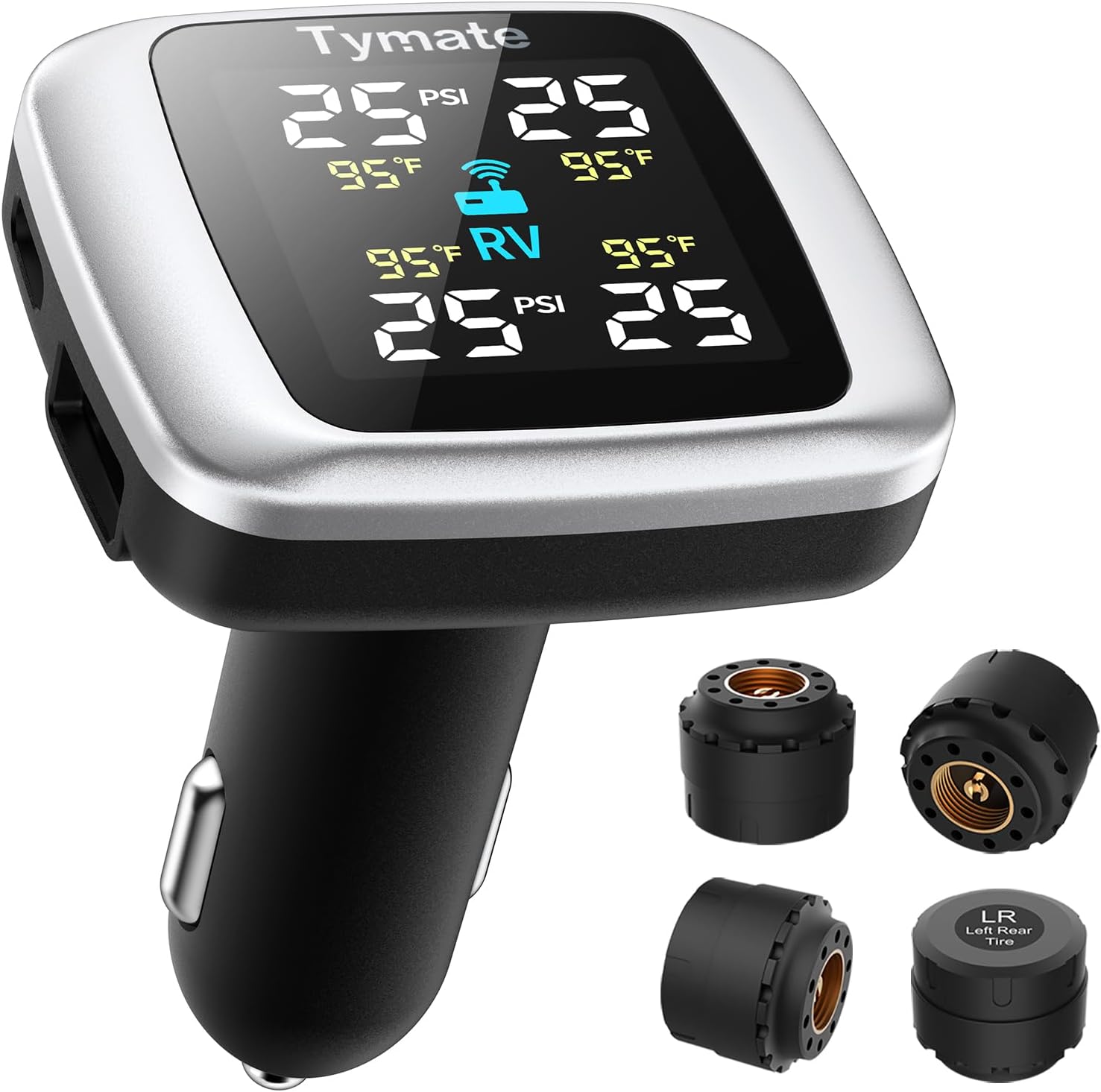
Tymate TM7 is a wireless tire pressure monitoring system that delivers real-time pressure and temperature readings for safer driving. It includes four external sensors, a bright color LCD display with adjustable backlight, and six alarm modes for high/low pressure, fast leakage, high temperature, and sensor signal or battery issues. The system covers a wide 0–144 PSI range and plugs into your vehicle’s cigarette lighter socket for quick DIY setup.
Costs to Include in Your Comparison
- Tire price: Specialized construction and limited size availability can increase the purchase price.
- Mounting and balancing: Some run-flats require equipment and technicians experienced with stiff sidewalls.
- TPMS service: Sensors, valve kits, programming, or a compatible monitoring system may add cost.
- Replacement logistics: A matching tire may be difficult to source quickly outside major cities.
- Inspection after pressure loss: The tire must be assessed for hidden internal damage.
- Spare strategy: Keeping a full-size spare reduces the cargo-space benefit but improves remote-travel resilience.
Are There Guaranteed Long-Term Savings?
No. You may avoid a tow or an unsafe roadside wheel change in some puncture events, but you may also face higher purchase, service, and replacement costs. Fuel savings should not be assumed because tire weight, rolling resistance, pressure, tread, vehicle load, and driving conditions all affect consumption.
Replacement and Repair Costs
Repairability depends on the tire maker’s policy, the puncture location and size, how far the tire was driven with low pressure, vehicle load, speed, and internal condition. Michelin states that a professional must remove the tire for inspection and that sidewall damage or a tire damaged by being driven flat may require replacement.
Do not accept an external plug-only repair without internal inspection. If one or two tires need replacement, follow the vehicle and tire manufacturer’s rules for matching type, size, load index, speed rating, tread pattern, and tread depth.
Drawbacks of Run-Flat Tires on Your Hilux
- Firmer ride: Reinforced sidewalls may transmit more impact over broken pavement and corrugations, although comfort varies by tire and suspension.
- Limited Hilux-sized choices: The required size, load rating, terrain pattern, or commercial construction may not be offered as a run-flat.
- Remote availability: A matching replacement may be hard to find during rural or cross-border travel.
- Hidden damage: The tire may look supported after pressure loss even when internal damage has occurred.
- Off-road limitations: Rocks, sharp edges, sidewall cuts, and rim damage can exceed the tire’s temporary-mobility capability.
- Pressure management: Intentional airing down should not be attempted unless the tire and vehicle manufacturers specifically approve it.
- Higher service complexity: Mounting, TPMS work, and inspection may require a specialist.
Run-Flat vs. Standard Tires for a Hilux
| Factor | Run-Flat Tire | Standard Tire With Spare |
|---|---|---|
| After pressure loss | Limited mobility within the tire maker’s speed and distance limits | Stop safely and install the spare or request assistance |
| TPMS | Required for safe use | Recommended and fitted on many vehicles, but tire use does not depend on run-flat detection |
| Ride | May feel firmer | Usually offers more choices for comfort and terrain |
| Remote travel | Useful only if the damage is survivable and service is within range | A full-size spare can restore mobility after many common failures |
| Availability | Often fewer suitable sizes and tread patterns | Broader pickup, all-terrain, and commercial choices |
| Best match | Mostly paved driving near qualified tire service | Remote work, off-road use, towing, or maximum tire choice |
[Products Worth Considering]

The TYAMATE TM8 solar-powered wireless TPMS delivers real-time tire pressure and temperature monitoring with six alarm modes for safer driving. A vibrant color LCD display shows readings clearly while windshield mounting keeps it hands-free and easy to read. With a wide 0–87 PSI range, strong 433.92 MHz signal transmission, and quick sensor pairing, it’s ideal for RV, sedan, SUV, MPV, and truck use.

Milton S-921 pencil tire pressure gauge helps you maintain optimal tire pressure for passenger cars with accurate readings in PSI and kPa. It features a built-in deflator valve for convenient pressure adjustments, plus a single chuck head and nylon indicator bar for easy use on the go. Built from durable plated brass and designed for reliable performance, it’s a practical road trip and cold-weather maintenance tool.

Steelman white tire marking crayons provide high-contrast, semi-permanent marks for repairing and inspecting tires and equipment. They write on wet or dry, smooth or coarse surfaces including rubber, metal, glass, and wood, making them ideal for puncture location and damage outlining. The lead- and zinc-free crayons resist weather and fading yet wipe away when you no longer need the marks.
Maintenance Tips for Run-Flat Tires
- Use the placard pressure: Toyota advises checking the cold pressure shown on the driver’s-door label or in the owner’s manual. Toyota Australia recommends checking tire pressure regularly and before relying on the vehicle for travel.
- Check pressure cold: Measure before driving or after the vehicle has been parked long enough for the tires to cool.
- Check before load changes: Confirm the approved pressure before towing or carrying a heavy payload.
- Test TPMS: Investigate warning lights promptly and replace failed sensors or batteries as required.
- Inspect the tread and sidewalls: Look for cuts, bulges, exposed cords, uneven wear, embedded objects, or impact damage.
- Rotate as specified: Follow the Hilux owner’s manual and tire maker’s rotation guidance rather than a universal mileage interval.
- Maintain alignment and balance: Correct pulling, vibration, steering-wheel shake, or irregular wear promptly.
- Inspect after any low-pressure operation: Even a short pressure-loss drive can create internal damage that is not visible outside.
How to Choose the Right Run-Flat Tires for Your Hilux
- Read the tire placard. Record the original size and recommended cold pressure for the front and rear axles.
- Check the owner’s manual. Confirm replacement requirements and any guidance for TPMS, towing, payload, and wheel fitment.
- Match the service description. Choose a tire with approved size, load index, speed rating, and construction.
- Confirm run-flat markings and limits. Ask for the exact maximum speed and distance after pressure loss.
- Verify TPMS operation. Do this before installation, not after the first pressure warning.
- Discuss real use. Tell the installer about loads, towing, road surface, annual distance, climate, and remote travel.
- Check local replacement supply. Make sure a matching tire can be sourced where you normally drive.
- Choose a spare plan. Decide whether to retain the full-size spare, especially for off-road or rural trips.
- Use a qualified installer. Run-flats can be harder to mount and must not be damaged during fitting.
Pro Tip: Ask the installer to write the approved cold pressure, load index, emergency speed limit, emergency distance limit, and repair policy on your invoice. Keep a photo of the tire sidewall and the instructions on your phone.
[Products Worth Considering]

Monitor tire tread wear with a smart, color-coded depth gauge that shows clear condition ranges at a glance. The bar is range marked for fast, easy readings, helping you maintain safer traction and performance. Each gauge is portable with a pocket clip, and the set includes 20 units for daily use and sharing.

Malco tire mounting and demounting lubricant is a ready-to-use tire lube formulated to reduce friction during tire installation for passenger cars, light trucks, farm tires, and heavy-duty equipment. It provides rust-inhibiting protection to help reduce corrosion on rims and wheels, and helps support proper tire bead seating during inflation to reduce air leakage. The silicone-free, soap-free formula is whitewall safe to help prevent discoloration on whitewall tires and sensitive sidewall markings.

This VEVOR tire bead breaker uses a slide-hammer impact and wedge tip to separate tire beads from rims quickly and efficiently without damaging hub surfaces. The long handle and sturdy steel construction help reduce user strain while providing reliable, portable tire changing for cars, trucks, and more. Ideal for home mechanics and repair shops handling multiple vehicle tire sizes.
Who Should Consider Run-Flat Tires?
Run-Flats May Suit You If
- You drive mostly on paved roads near tire shops.
- Your exact Hilux specification has an approved run-flat option with adequate load capacity.
- Your TPMS is fully functional.
- A roadside wheel change would be difficult or unsafe for you.
- You accept a potentially firmer ride, higher cost, and fewer replacement choices.
Standard Tires May Be the Better Choice If
- You regularly drive off-road, on worksites, or in remote regions.
- You need light-truck, commercial, mud-terrain, or high-load tire specifications not available as run-flats.
- You tow or carry heavy loads and cannot confirm an approved run-flat fitment.
- You frequently air down tires for terrain, subject to vehicle and tire guidance.
- You prioritize easy replacement, broad tread choice, ride comfort, or lower purchase cost.
Frequently Asked Questions
Can you put run-flat tires on any Toyota Hilux?
No. The exact tire must meet the Hilux’s approved size, load capacity, speed rating, wheel, and use requirements. The vehicle also needs functioning TPMS. Confirm fitment with Toyota guidance and a qualified tire professional.
How far can a Hilux drive on a punctured run-flat tire?
Many run-flat systems allow up to 50 miles or 80 km at a maximum of 50 mph or 80 km/h, but the exact tire’s marked limit controls. Heat, load, speed, road damage, and driving style may reduce the available distance.
Do run-flat tires need TPMS?
Yes. Bridgestone states that run-flat tires must be used with TPMS because reinforced sidewalls can mask a major pressure loss.
Can a punctured run-flat tire be repaired?
Sometimes, but not automatically. Repair depends on the manufacturer’s policy, puncture location and size, distance driven, speed, load, and internal damage. The tire must be removed from the wheel and inspected by a trained professional.
Should you remove the Hilux spare after fitting run-flats?
Not automatically. A spare can still help after a sidewall cut, damaged wheel, multiple punctures, or a failure beyond the run-flat range. Keeping a full-size spare is especially useful for remote, off-road, towing, or worksite travel.
Conclusion
Run-flat tires can add useful temporary mobility to a Toyota Hilux, especially for paved driving near qualified tire service. They are a good choice only when the exact fitment meets Toyota’s size and load requirements, the TPMS works, and you understand the pressure-loss limits. For remote work, towing, or off-road travel, standard truck tires with a full-size spare may offer better availability, terrain choice, and recovery flexibility.
Sources
- Toyota Australia FAQs – correct tire-pressure checks and use of the vehicle placard or owner’s manual.
- Bridgestone Tire FAQs – TPMS, inflation, mixing, and pressure-loss operating limits for run-flat tires.
- Michelin Run-Flat Tire Guide – how reinforced sidewalls work and why post-loss inspection matters.
- Michelin Tire Repair Criteria – puncture location, internal inspection, and conditions that require replacement.
- U.S. Tire Manufacturers Association Replacement Guidance – size, load index, speed rating, and replacement-position guidance.
- Continental Run-Flat Technology – typical 80 km distance and 80 km/h maximum after a puncture.