
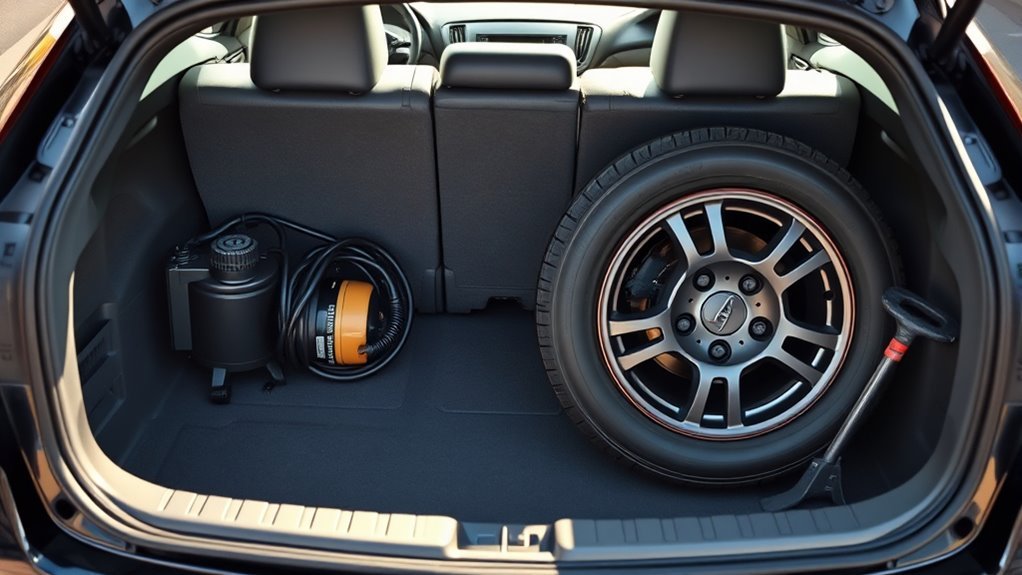
Choosing between a Tire Mobility Kit (TMK) and a spare tire for your Hyundai Sonata comes down to one question: do you want the lightest, quickest option for a small tread puncture, or the more dependable backup for a wider range of tire failures? A TMK saves space and can help with minor punctures, but it is temporary and limited. A spare tire takes up more room, yet it gives you a better chance of getting moving again after damage a sealant kit cannot handle.
Quick Answer
A tire mobility kit is best for small tread punctures when you are close to help. A spare tire is better for road trips, remote driving, sidewall damage, larger punctures, or any flat where sealant will not hold. For the most confidence, carry a spare and keep the TMK as a backup inflator.
Key Takeaways
- A TMK is compact and fast, but it is mainly for minor tread punctures, not sidewall cuts, blowouts, shredded tires, or wheel damage.
- A spare tire is the safer choice for long drives, rural roads, late-night travel, and any trip where roadside help may be delayed.
- A compact spare is still temporary, so follow the speed and distance limits printed in your Sonata owner’s manual and on the tire label.
- Check your Sonata’s exact equipment by model year and trim because Hyundai’s flat-tire setup can vary.
Should You Rely on a Tire Mobility Kit or a Spare Tire?
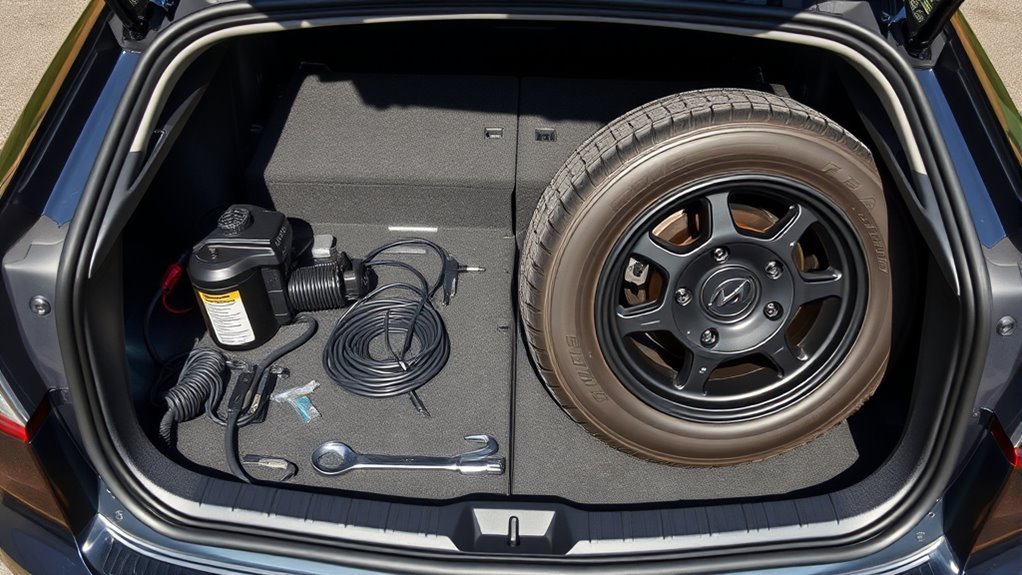
For everyday city driving, a tire mobility kit can be enough if the problem is a small puncture in the tread and the tire still holds air after sealant and inflation. It is easy to store, does not require jacking up the car, and can help you reach a tire shop without changing a wheel on the shoulder.
For highway driving, rural roads, bad weather, or long trips, a spare tire is the stronger choice. A TMK cannot solve every flat. If the tire has a sidewall cut, a large puncture, a blowout, a damaged valve stem, a bent wheel, or a tire that has been driven flat, sealant may not work at all. A spare tire gives you a physical replacement wheel-and-tire assembly, which is why many Sonata owners prefer it for peace of mind.
Warning: Do not keep driving on a flat tire to “make it home.” Driving on a flat can damage the tire, wheel, suspension, and steering components. If the tire fails while you are moving, keep control, slow gradually, and pull off the road only when it is safe.
Check Your Specific Hyundai Sonata First
Before deciding what to carry, open the trunk and confirm what your Sonata actually has. Depending on model year, trim, market, and previous ownership, it may have a tire mobility kit, a compact spare, a full-size spare, or missing tools. Also check the official Hyundai owner’s manual resource for your exact year and trim.
A complete spare-tire setup is more than a tire. You also need the correct wheel, jack, lug wrench, hold-down hardware, and any wheel-lock key required for your lug nuts. A TMK should include the compressor, hose, sealant bottle or cartridge, power cord, and instructions. If anything is expired, missing, damaged, or unfamiliar, fix that before your next trip.
What Is a Tire Mobility Kit and How Does It Work?
A Tire Mobility Kit is a compact flat-tire aid that usually includes an air compressor and tire sealant. The compressor pushes sealant and air through the valve stem. The sealant coats the inside of the tire and may temporarily seal a small puncture in the tread area.
The main advantage is convenience. You do not have to remove the wheel, loosen lug nuts, lift the car, or handle a dirty spare tire. That can be helpful in traffic, rain, darkness, or tight urban parking. The tradeoff is that the repair is temporary. After using sealant, you still need a tire professional to inspect the tire, clean the wheel if needed, check the TPMS sensor, and decide whether the tire can be repaired or must be replaced.
Note: Do not assume one distance limit applies to every Hyundai Sonata. Follow the speed, distance, pressure, and use limits printed in your owner’s manual and on the tire mobility kit label.
What a Tire Mobility Kit Can and Cannot Fix
A TMK is useful only in the right situation. It is not a universal spare tire replacement.
| Likely TMK Use Case | Small tread puncture from a nail or screw, tire still on the rim, no major visible damage, and you only need to reach a repair shop. |
| Poor TMK Use Case | Sidewall cut, shoulder damage, blowout, large puncture, bent rim, valve-stem failure, tire separated from the wheel, or tire driven flat for too long. |
| Best Next Step | Use the kit only if conditions match the instructions, then drive carefully to a tire shop. If the kit cannot inflate or seal the tire, call roadside assistance. |
Hyundai Sonata Spare Tire Benefits
A spare tire gives you a replacement wheel-and-tire assembly when the damaged tire cannot be sealed. That makes it more dependable than a TMK for many real roadside problems. It is especially useful when you are far from a tire shop, driving at night, traveling with family, or crossing areas where towing may take a long time.
Reliability in Emergencies
Spare tires are more versatile because they do not depend on sealant plugging the damage. If the flat tire is torn, punctured in the sidewall, or no longer able to hold air, a spare may still get you moving. A full-size spare can offer the most normal driving feel when it matches the vehicle’s tire size and load rating, but it still needs proper inflation, tread depth, and condition.
Space Efficiency Considerations
The downside is space. A spare tire, jack, and tools take up room and add weight. A tire mobility kit is smaller and can free up storage space in the spare-tire well. Still, trunk-space benefits vary by Sonata generation and trim, so avoid relying on a universal percentage claim.
Compact Spare vs. Full-Size Spare
Not all spare tires are equal. A compact spare, often called a donut, is designed for temporary use. It can help you leave the roadside, but it is not meant for normal driving, high speeds, long distances, heavy loads, or extended highway use. Follow the limit printed on the spare and in your owner’s manual.
A full-size spare is closer to a normal tire, but it still must match the correct size, wheel fitment, load rating, and drivetrain needs. If your Sonata uses different tire sizes or special wheels, confirm compatibility before buying an aftermarket spare kit.
Pro Tip: Add your spare tire to your monthly tire-pressure routine. The NHTSA TireWise guide recommends checking all tires, including the spare, when they are cold.
[Products Worth Considering]

These M14x1.5 closed-end chrome lug nuts are a one-piece replacement designed for secure fitment on compatible GM, Ford, and select Chrysler/Dodge models. Featuring a 60-degree conical seat and anti-rust chrome plating, they help resist corrosion and maintain a bright look for everyday driving. Built for long-term durability, they include OEM-style part references and are backed by 12 months of support.

The Dr.Roc spare tire tool kit helps you release, lower, or raise your spare tire with reliable extension tools and a lug nut wrench. It is made from rustproof automotive-grade steel and includes an organized carry case for convenient storage. Designed for compatibility with select GM models from the late 1990s through 2019, it uses upgraded extension components to install and remove spare tires with less hassle.

This spare tire tool kit is designed for the 2004 to 2018 Ford F-150 to help you loosen and tighten wheel lug nuts and manage the spare tire and provided jack functions from underneath the vehicle. It includes the lug nut wrench and extension pieces plus a convenient storage carrying case for organized transport. The jack itself is not included.
Key Differences Between Tire Mobility Kits and Spare Tires
The biggest difference is the type of failure each option can handle. A TMK is a temporary sealing and inflation tool. A spare tire is a temporary replacement wheel. The TMK wins on size, weight, and ease of use. The spare wins on reliability and range of usable scenarios.
| Category | Tire Mobility Kit | Spare Tire |
|---|---|---|
| Best For | Minor tread punctures near help | More flat-tire scenarios, including many cases where sealant will not work |
| Main Limit | Cannot fix sidewall damage, blowouts, large holes, or wheel damage | Requires correct tools, safe lifting, storage space, and physical wheel change |
| Space | Small and light | Bulkier, especially with jack and tools |
| After Use | Tire and TPMS need professional inspection; sealant may need replacement | Damaged tire still needs repair or replacement; compact spare must be removed soon |
[Products Worth Considering]

The Airmoto portable tire inflator quickly and accurately fills car, truck, SUV, motorcycle, and bicycle tires up to 120 PSI with auto shut-off when your target pressure is reached. Its large LCD, multi-unit pressure display, and digital gauge make it easy to dial in settings and verify readings, while the built-in LED flashlight helps in low light. The included polyurethane hard carrying case and storage mesh pocket keep the inflator and accessories protected and organized.

The TYAMATE TM8 solar-powered wireless TPMS delivers real-time tire pressure and temperature monitoring with six alarm modes for safer driving. A vibrant color LCD display shows readings clearly while windshield mounting keeps it hands-free and easy to read. With a wide 0–87 PSI range, strong 433.92 MHz signal transmission, and quick sensor pairing, it’s ideal for RV, sedan, SUV, MPV, and truck use.

Upgrade your wheels with MIKKUPPA closed-end lug nuts designed for reliable fit and corrosion resistance. The one-piece, cold-forged and heat-treated steel construction helps resist rust and stripping, while the integrated finish delivers a durable black appearance. Built to OEM standards with a conical 60-degree seat, these nuts provide a secure solution for compatible Ford, Honda, Jeep, and Chevrolet models.
Real-World Scenarios: When Each Option Excels
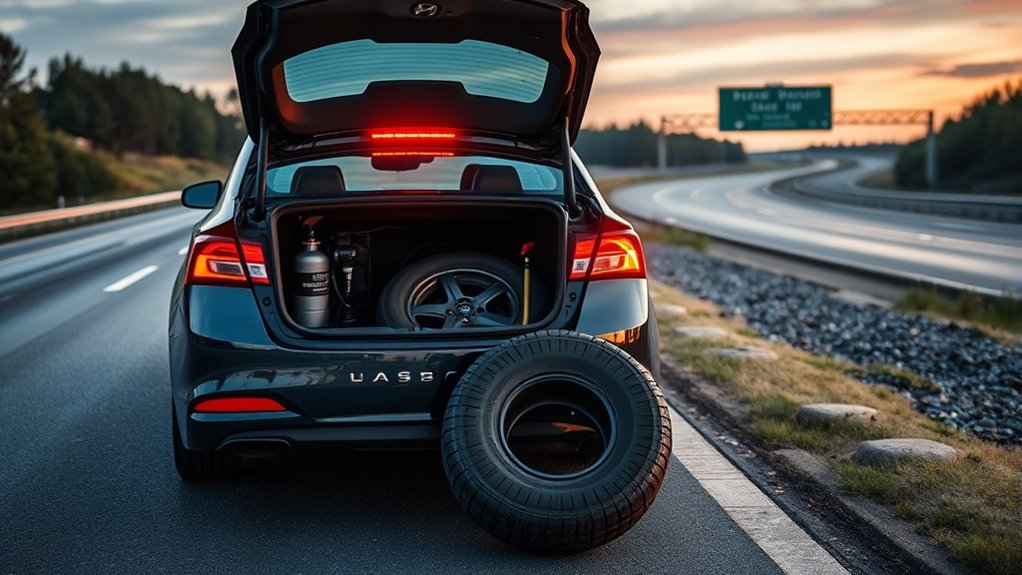
Your driving environment matters. A TMK makes more sense if you mostly drive in town, have cell service, and are usually near tire shops. A spare tire makes more sense if you commute on highways, travel with kids, drive rural roads, or take long trips.
| Scenario | Better Choice | Why |
|---|---|---|
| Small nail in tread near town | TMK | Fast temporary inflation may get you to a nearby tire shop. |
| Sidewall cut from pothole or curb | Spare tire | Sealant usually cannot repair structural sidewall damage. |
| Highway blowout | Spare tire or roadside assistance | A shredded tire cannot be sealed safely. |
| Long road trip | Spare tire plus TMK | The spare handles more failures; the compressor can help with low pressure. |
Cost Breakdown: Comparing Tire Mobility Kits and Spare Tires
A tire mobility kit is usually cheaper upfront because it has fewer parts. A complete spare tire setup costs more because it may require a wheel, tire, jack, lug wrench, foam organizer, hold-down hardware, and sometimes dealer-specific fitment. Prices vary widely, so the smarter comparison is not just purchase price. It is total usefulness.
[Products Worth Considering]

This AUTOWN flat tire repair kit is designed for quick, reliable puncture repairs using a plug kit and spiral probe tool to simplify installation. Built for durability and safe handling, it offers strong adhesion and flexibility to help maintain tire air tightness. With a portable storage case and a multi-vehicle approach, it’s suitable for cars, motorcycles, ATVs, tractors, lawn mowers, RVs, jeeps, and trucks.
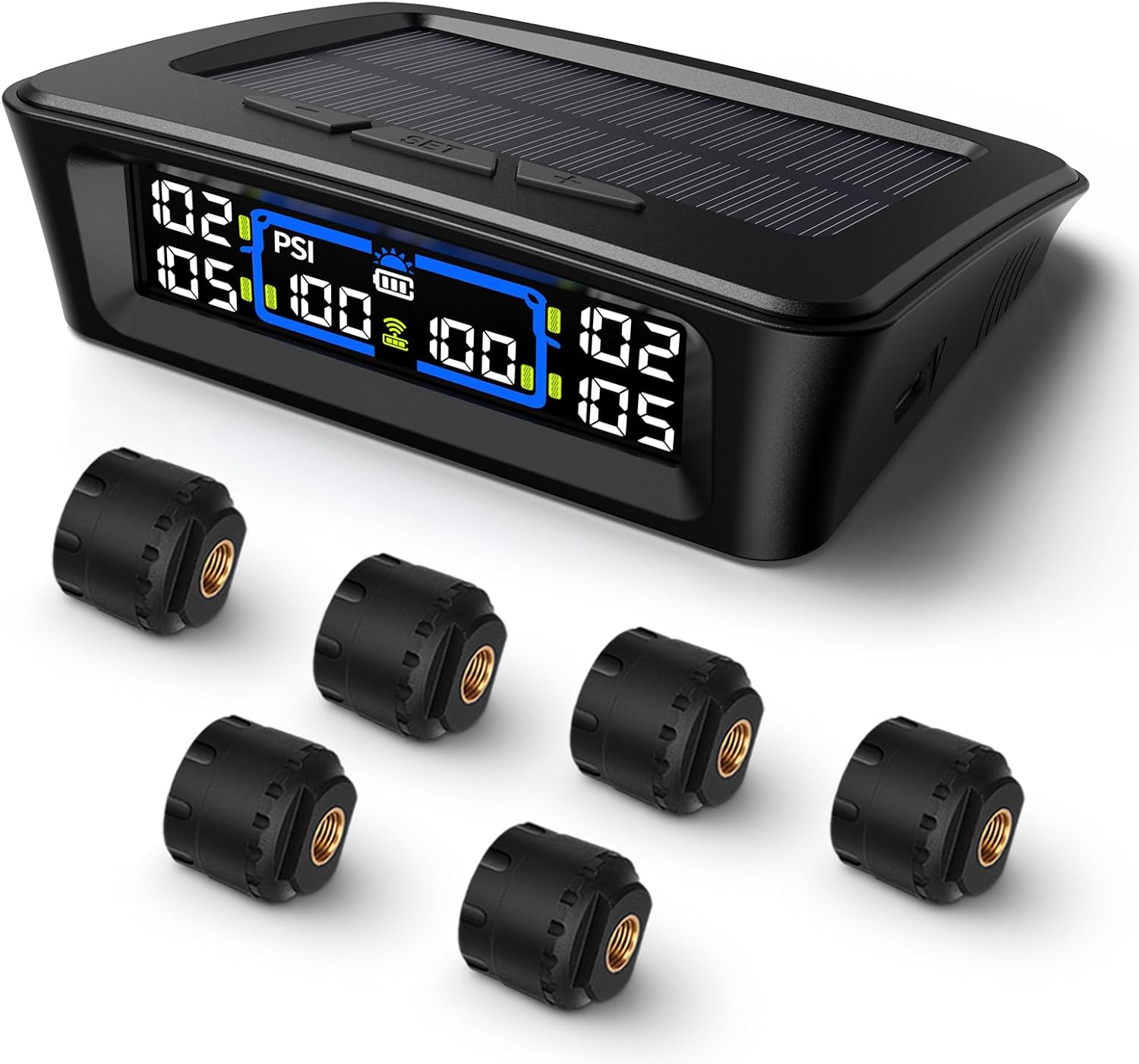
The Tymate TM12 RV TPMS delivers real-time tire pressure and temperature monitoring with a stable 433Hz display for safer long-distance driving. It supports simultaneous monitoring across vehicle and trailer zones, includes six alarm modes for pressure, temperature, leakage, battery, and signal loss, and features easy DIY installation with auto calibration. Power is supplied via USB-C charging or solar recharging, with a wide 0–144 PSI range and up to 50 ft signal coverage for RVs and towable trailers.

This tire repair kit provides fast emergency puncture repair without removing the tire from the rim, helping you get back on the road quickly. Its screw plug system is designed for punctures in both tread and sidewall and includes a complete patch plug tool set with essential accessories. A portable storage bag makes it easy to carry for cars, trucks, SUVs, motorcycles, and heavy-duty applications.
Cost of Spare Tires
A spare tire can be a better long-term value if you drive far from help or want a backup for damage a TMK cannot solve. The key is buying the correct parts. A spare that does not fit your Sonata, clear the brakes, match the lug pattern, or support the vehicle load is not a safe upgrade.
Price of Mobility Kits
A mobility kit costs less and uses less space, but the sealant may expire or need replacement after use. After sealant is injected, the tire still needs professional inspection. The tire may be repairable, or it may need replacement depending on the damage and how far it was driven while low.
Long-Term Financial Implications
If you rarely leave urban areas, a TMK may be enough and may save money. If you take long trips, a spare can reduce the chance of needing a tow for a failure sealant cannot fix. The best financial choice depends on your driving pattern, roadside-assistance coverage, and tolerance for being stranded.
Space Savings: Which Option Is Better?
The tire mobility kit wins on space. It is smaller, lighter, and easier to store than a spare tire and jack. That can matter if you use the trunk often or prefer a lighter emergency setup.
The spare tire wins on capability. It uses more room, but it covers more flat-tire scenarios. For many Sonata drivers, the best compromise is a compact spare for real emergencies plus a small compressor for routine low-pressure issues.
How Safe and Reliable Are Each Option?
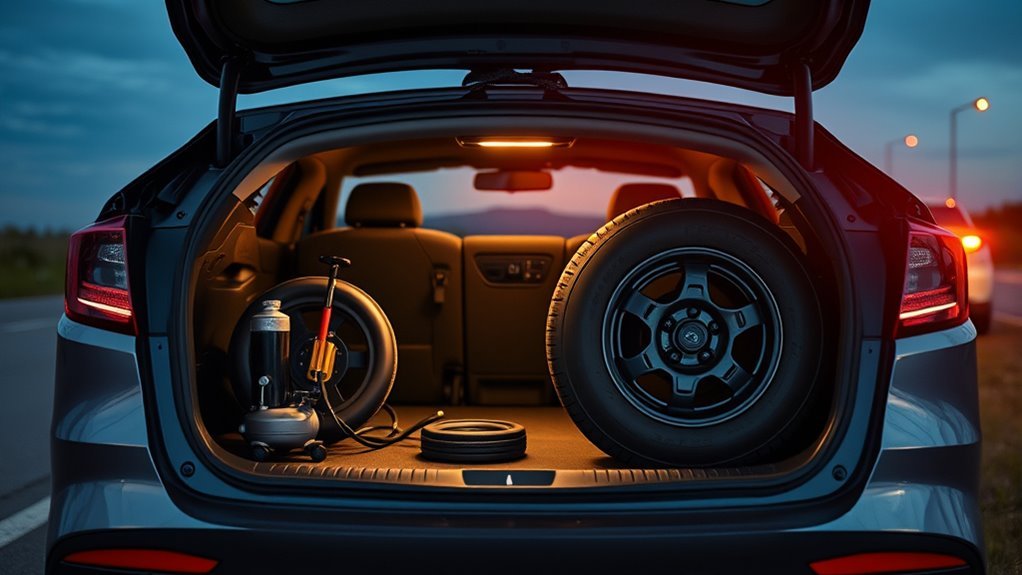
Both options can be safe when used correctly, and both can be unsafe when used outside their limits. A TMK is safe only when the tire damage matches the kit instructions. A spare tire is safe only when it is properly inflated, undamaged, compatible with the vehicle, and used within its limits.
Do not treat the Tire Pressure Monitoring System as your only tire check. TPMS is helpful, but regular pressure checks still matter. The NHTSA TireWise tire safety guide recommends routine tire-pressure checks, tread checks, and attention to tire aging and visible damage.
Tire equipment is only useful if it is complete, inflated, unexpired, and familiar before the flat happens.
Road-Trip Checklist Before You Go
- Confirm whether your Sonata has a TMK, compact spare, full-size spare, or missing equipment.
- Read the flat-tire section in your exact Hyundai Sonata owner’s manual.
- Check tire pressure when tires are cold, including the spare if equipped.
- Inspect tread depth, sidewalls, and visible cracks, cuts, bulges, or uneven wear.
- Make sure the jack, lug wrench, wheel-lock key, compressor, and sealant are present.
- Check the sealant expiration date and replace it if expired.
- Save roadside-assistance information in your phone before traveling through remote areas.
After Using a Tire Mobility Kit or Spare
After using a TMK, drive carefully and go directly to a tire shop within the kit’s limits. Tell the technician that sealant was used. The tire, valve stem, wheel, and TPMS sensor may need inspection and cleaning.
After installing a compact spare, avoid treating it like a normal tire. Keep speed and distance low, avoid hard braking or fast cornering, and replace it with a proper repaired or new tire as soon as possible. After installing a full-size spare, still have the damaged tire inspected and confirm the spare is suitable for continued use.
Hyundai Sonata User Experiences: Insights From Owners
Sonata owners usually split into two groups. Drivers who stay near town often appreciate the TMK because it is light, simple, and does not steal trunk space. Drivers who take long highway trips often prefer a spare because it feels more dependable when help is far away.
The practical answer is not the same for everyone. If your worst-case flat is a slow leak near home, the TMK may be enough. If your worst-case flat is a sidewall cut 80 miles from the nearest open tire shop, a spare tire is the better backup.
Frequently Asked Questions
What are the disadvantages of tire mobility kits?
The main disadvantage is limited usefulness. A tire mobility kit is mainly for minor tread punctures. It usually will not help with sidewall damage, blowouts, large holes, wheel damage, or a tire that has been driven flat. Sealant also creates extra cleanup work for the tire shop and may need replacement after use.
Is a tire repair kit worth buying?
Yes, a tire repair kit can be worth buying as a backup inflator and temporary aid for small tread punctures. It is not a full replacement for a spare tire if you drive long distances, travel in remote areas, or want protection from tire damage sealant cannot fix.
Can I add a spare tire to a Hyundai Sonata that came with a tire mobility kit?
Often, yes, but you need the correct wheel, tire size, jack, wrench, and storage hardware for your Sonata’s year and trim. Confirm fitment with your owner’s manual, Hyundai dealer, or a trusted tire professional before buying a kit.
Will tire sealant ruin my TPMS sensor?
Not always, but sealant can make inspection and cleanup more complicated. After using a TMK, tell the repair shop that sealant was used so they can inspect the tire, wheel, valve stem, and TPMS sensor properly.
Should I carry both a spare tire and a tire mobility kit?
For long trips, carrying both is the strongest setup. The spare handles more serious tire failures, while the compressor can help with low pressure or a slow leak. Just make sure both are complete, usable, and stored securely.
Conclusion
A tire mobility kit is convenient, compact, and useful for minor tread punctures, but it is not a complete flat-tire solution. A spare tire takes more space, yet it is the better choice for road trips, remote driving, sidewall damage, blowouts, and situations where sealant will not hold. For most Hyundai Sonata owners who value reliability, the best setup is a properly fitted spare tire, correct tools, and a working compressor or TMK as a secondary backup.
Sources
- Hyundai Manuals & Warranties — official owner’s manual lookup by Hyundai vehicle year, model, and trim.
- NHTSA TireWise Tire Safety — tire pressure, tread, aging, TPMS, maintenance, and blowout safety guidance.
- NHTSA Recalls — recall lookup for vehicles, tires, and safety equipment.
- U.S. Department of Transportation — federal transportation safety authority behind NHTSA tire-safety resources.

![[2026NEW] 5000A Jump Starter with Air Compressor (150PSI)](https://m.media-amazon.com/images/I/71oG4PFNsmL._AC_SL1500_.jpg)