
Changing the tire diameter on your Toyota Tacoma changes how far the truck travels during each wheel rotation. If the new tires are larger than the size the vehicle was calibrated for, the speedometer and odometer usually read low: your actual speed and distance are higher than the dashboard shows. The exact error depends on your original tire size, not on a universal percentage.
Quick Answer
Larger-diameter tires normally make a Tacoma’s speedometer and odometer under-report. Calculate the percentage change from the original tire diameter, verify it with GPS or a measured route, and use a model-year-compatible calibration method when available. TPMS initialization is separate and does not correct speed or mileage readings.
Key Takeaways
- A larger rolling diameter makes indicated speed and mileage lower than actual speed and distance.
- The error percentage depends on the Tacoma’s original tire size, trim, model year, and the new tire’s measured rolling diameter.
- TPMS initialization resets the pressure-monitoring benchmark; it does not recalibrate the speedometer or odometer.
- Use the door-jamb placard and owner’s manual to confirm approved tire size, load capacity, and cold inflation pressure.
- Document the change and correction factor so service intervals, fuel-economy records, and resale mileage remain understandable.
At a Glance
| Time Required | 10–20 minutes to calculate and verify; calibration time varies |
| Difficulty | Easy for checking; moderate or professional for electronic calibration |
| Tools Needed | Tire-size calculator, GPS speed display or measured route, and a compatible calibration tool if supported |
| Cost | No cost for calculation and GPS verification; hardware or shop labor varies by model year |
Odometer Accuracy in Toyota Tacoma
Your Tacoma estimates road speed and distance from vehicle-speed data calibrated around the original tire circumference. A larger tire covers more ground per revolution. Until the calibration is corrected, the truck counts fewer revolutions over a given real-world distance, so the indicated speed and odometer mileage are normally lower than the actual values.
Toyota Tacoma factory tire sizes vary by model year and trim. For example, Toyota lists several different 17- and 18-inch tire sizes for the 2024 Tacoma, so you cannot apply one percentage to every truck. Check the driver-side Tire and Loading Information label and the owner’s manual before comparing sizes. Keeping matching tires on all four positions also supports predictable handling and drivability.
Warning: Do not select an upsized tire by diameter alone. Confirm wheel width, clearance, load index or load range, cold inflation pressure, and full-lock suspension clearance. A tire that fits while parked can still rub or overload components while turning, braking, carrying cargo, or compressing the suspension.
How Tire Size Impacts Odometer Accuracy
Tire-size error is a circumference ratio. Because circumference changes in the same proportion as diameter, you can estimate the correction with the tire’s overall diameter:
Error percentage = (new diameter ÷ original diameter − 1) × 100
For a larger tire, multiply the displayed speed or odometer distance by the diameter ratio to estimate the actual value. This calculation uses nominal sidewall dimensions, so a GPS check is still useful because tread depth, load, pressure, and manufacturer construction can slightly change the real rolling circumference. Choosing the correct tire and wheel size also helps protect clearance and load compatibility.
Tire Size Changes Impact
A 285/70R17 tire has a nominal diameter of about 32.71 inches. The percentage change depends on what it replaces:
| Original Size | Nominal Diameter | Change to 285/70R17 | Actual Speed at 60 mph Indicated |
|---|---|---|---|
| 265/70R17 | 31.61 in. | About +3.5% | About 62.1 mph |
| 265/65R17 | 30.56 in. | About +7.0% | About 64.2 mph |
| 245/70R17 | 30.50 in. | About +7.2% | About 64.3 mph |
These are mathematical examples, not fitment recommendations. Use the exact placard size from your Tacoma and confirm the new tire’s published or measured diameter.
A tire that is 3.5% larger makes 100 displayed miles equal roughly 103.5 actual miles until the vehicle is recalibrated.
Calibration Methods Available
Calibration support varies by Tacoma generation, powertrain, and model year. Possible routes include a model-compatible electronic calibrator, supported tuning software, or a dealership or specialty shop with the correct service equipment. Do not assume a generic scan tool can change tire circumference simply because it can read OBD-II trouble codes.
Before buying a device, verify that its manufacturer explicitly lists your exact Tacoma year, engine, transmission, and tire-size adjustment function. Some products only read data, clear codes, or change unrelated settings.
Odometer Discrepancy Management
If immediate calibration is unavailable, manage the difference with a documented correction factor:
- Record the original placard tire size and the new tire size.
- Calculate the nominal diameter ratio.
- Compare indicated speed with GPS at several steady speeds on a safe, level road.
- Compare the odometer with a known route or highway distance markers.
- Apply the correction factor to fuel-economy and maintenance records.
- Keep installation and calibration receipts with the vehicle records.
This approach does not repair the dashboard reading, but it gives you a defensible record of actual distance until proper calibration is completed.
How to Identify and Address Mileage Discrepancies With Larger Tires
Start with the tire size printed on the driver-side placard, not a size taken from another Tacoma. Then compare it with the new tire’s dimensions. If the new diameter is larger, expect the truck to travel farther than the odometer reports.
- Confirm the baseline: Photograph the placard and record the original tire size, load rating, and recommended cold pressure.
- Calculate the ratio: Divide the new diameter by the original diameter.
- Test speed: At a legal, steady speed, compare the dashboard with a reliable GPS display. Use a passenger to read the device or mount it safely.
- Test distance: Compare a longer odometer trip with a known route. A longer route reduces rounding error.
- Correct or document: Use compatible calibration equipment or retain the correction factor in your records.
- Reset tire monitoring when required: Follow the model-year owner’s manual for TPMS initialization or sensor registration.
Maintain the appropriate cold pressure for the actual tire and vehicle load. Proper tire pressure supports safe load carrying, predictable handling, and repeatable rolling-diameter checks.
Pro Tip: Test at more than one speed. GPS can briefly lag during acceleration, hills, curves, or weak satellite reception, so compare readings only while holding a steady speed in a safe location.
[Products Worth Considering]

The UYYE TPMS relearn tool helps activate and relearn tire pressure monitor sensors quickly, typically in minutes. It supports TPMS learn mode resetting using a simple three-step process: enter learn mode, position the tool near the valve stem, and press the learn button. Designed for specific GM models, it streamlines sensor programming and reduces trips to dealers or tire shops.

The Big Rig Defense Tire Thumper is a truck tire pressure checker that lets you quickly check multiple tires by giving them a firm whack. Listen for a reassuring thump and feel the stick bounce when a tire is fully inflated, helping you get back on the road safely. It features a comfortable, glove-friendly handle and a secure wrist strap for confident use on busy routes.

The Tymate TM12 RV TPMS delivers real-time tire pressure and temperature monitoring with a stable 433Hz display for safer long-distance driving. It supports simultaneous monitoring across vehicle and trailer zones, includes six alarm modes for pressure, temperature, leakage, battery, and signal loss, and features easy DIY installation with auto calibration. Power is supplied via USB-C charging or solar recharging, with a wide 0–144 PSI range and up to 50 ft signal coverage for RVs and towable trailers.
Effective Solutions for Speedometer and Odometer Calibration
The best solution is the one confirmed for your exact truck. A calibration method should correct both the indicated speed and accumulated distance, preserve normal diagnostic operation, and avoid creating warning lights or conflicts with other vehicle modules. Also confirm that the new tire’s load index or load range is suitable for the Tacoma’s axle loads.
[Products Worth Considering]

Replace your worn or missing TPMS sensors with pre-programmed, direct-fit sensors for compatible Ford, Lincoln, and select Mazda models. Each sensor comes ready to activate with a scan tool, helping restore accurate tire pressure monitoring and trouble-free installation. Built with a long-life CR2032 battery and tested before factory release, this set provides dependable performance with a one-year warranty.

Keep your tires properly inflated with this analog VONDIOR tire pressure gauge, designed for fast, easy readings without batteries. The swiveling, two-axis hose and large glow dial help you measure at any tire angle with instant visibility. Built with a protective rubber shield, it supports durable, low-maintenance use for cars and trucks.

Masoll Gen 2 external TPMS sensors are a DIY replacement set of 4 for select GM vehicles made after 2006, helping you shut off the TPMS warning light quickly. Simply screw the sensors onto the tire valves and sync to your car ECU using the included EL-50448 relearn tool. Dual-frequency 315/433 MHz design provides OEM-level performance with accurate readings and replaceable batteries for about two years.
Calibration Methods Overview
- OEM-supported service procedure: Ask a Toyota dealer or qualified shop whether your model year allows tire-size customization through approved service software.
- Vehicle-specific calibrator: Use only a device whose documentation confirms support for your exact Tacoma and the required tire-size range.
- Compatible tuning platform: Some model years may support tire-size correction through tuning software, but compatibility, emissions rules, and warranty implications must be checked first.
- Documented correction factor: When electronic correction is not available, retain a verified ratio for speed awareness, maintenance, and mileage records.
Aftermarket Tools Options
The original article named several products without proving Tacoma compatibility. A safer comparison focuses on capability rather than brand:
| Tool Type | What It May Do | What to Verify |
|---|---|---|
| Vehicle-specific calibrator | Changes the tire-size or speed signal setting | Exact year, trim, powertrain, supported diameter range |
| Tuning software | May alter tire-size and drivetrain parameters | Licensing, emissions legality, module compatibility, rollback process |
| Professional scan/service equipment | May access supported manufacturer configuration functions | Whether Toyota exposes an adjustable tire-size value for that model year |
| Generic OBD-II code reader | Reads or clears common diagnostic codes | Usually not a tire-size calibrator; do not assume configuration access |
| GPS app or navigation unit | Verifies real-world speed and route distance | Stable signal, steady speed, safe mounting, repeated checks |
Professional Services Benefits
A qualified dealer or specialty shop can check tire clearance, load compatibility, TPMS operation, diagnostic faults, and available calibration procedures together. Ask for before-and-after verification at a known speed and request written documentation of any configuration change.
Professional help is especially valuable when the truck has suspension changes, axle regearing, advanced driver-assistance features, or a tire size far outside the original range.
Note: Toyota instructs owners to initialize the tire pressure warning system when tire pressure conditions or tire size change. That procedure establishes the TPMS pressure benchmark; it should not be presented as speedometer or odometer recalibration.
The Impact of Regearing on Speedometer Accuracy
Axle regearing changes the relationship between engine speed and wheel speed. A numerically higher axle ratio generally raises engine RPM at a given road speed and can restore some acceleration or towing response lost to heavier, larger tires.
However, tire circumference remains the direct geometric cause of speedometer and odometer error. Whether a gear-ratio change also requires an electronic setting depends on how that Tacoma model year calculates vehicle speed and how the calibration system is designed. Do not assume regearing automatically fixes the tire-size error. Verify the dashboard reading after both changes and follow model-specific service information. Cold-weather tire pressure changes can also alter rolling radius slightly, although they are not a substitute for correcting a major size difference.
[Products Worth Considering]

Masoll M13 TPMS monitors tire pressure across RV and trailer applications and helps protect safety on the road. Set your reference pressure for auto alarm triggers, while the system automatically calibrates as you inflate or deflate. Solar charging with intelligent sleep/wake keeps operation efficient, and the color LCD provides clear readings in day or night driving.
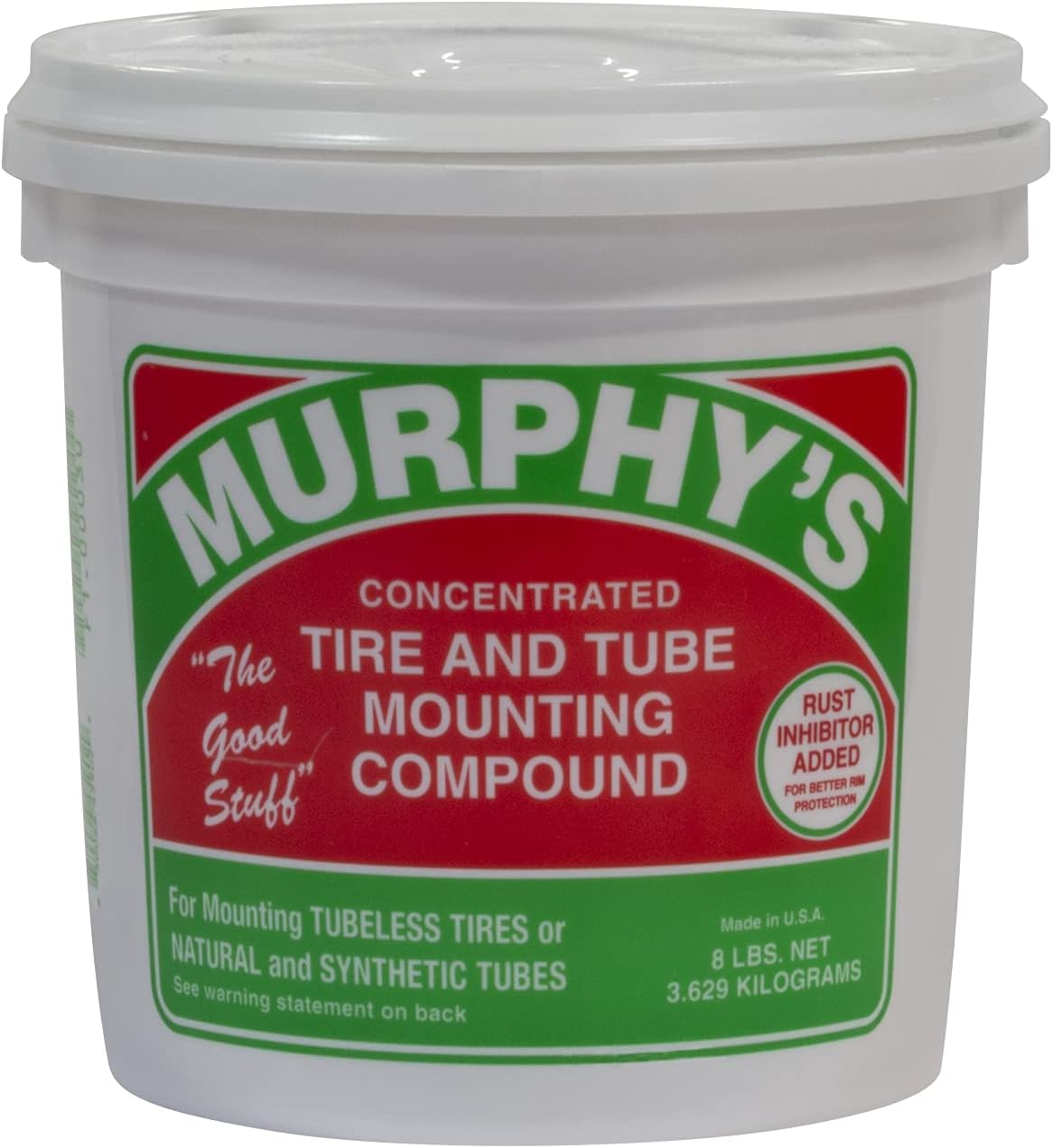
A concentrated tire and tube mounting compound designed to help simplify mounting rubber tires and tubes on passenger, semi truck, construction, and OTR applications. Its ultra-thick formula packs beads effectively and includes rust inhibitors to help protect against corrosion during use.

The AICEL TPMS relearn tool helps you quickly reset or relearn tire pressure sensors after replacement, tire rotation, or resolving tire pressure alarms. It provides an activation reset function so your vehicle’s TPMS can operate optimally, saving time and money on frequent visits to an auto shop. Designed for easy use on most vehicles, it works by placing the tool near the valve stem and using the learn button.
How Upsized Tires Affect Fuel Efficiency and Vehicle Performance
Upsized tires can change fuel use, acceleration, braking, steering feel, ride, and off-road clearance. The result is not a guaranteed 1–2 MPG loss. It depends on total tire-and-wheel weight, tread design, rolling resistance, aerodynamic changes, inflation pressure, driving speed, and whether the effective gearing moves the engine into a more or less efficient operating range.
- Rotating mass: A heavier tire and wheel require more energy during acceleration and braking.
- Rolling resistance: Tread compound, construction, pressure, and deformation affect how much energy the tire consumes.
- Effective gearing: A larger diameter reduces engine RPM at a given road speed but may make the truck feel slower or require more throttle.
- Clearance and handling: Added height may help off-road clearance, while extra width or mass can affect steering response and rubbing risk.
- Fuel-economy math: An uncorrected odometer makes calculated MPG look worse because the truck traveled farther than the displayed miles show.
Use the corrected distance when calculating fuel economy. Maintain the appropriate tire pressure rather than inflating by guesswork, and never exceed wheel, tire, or vehicle limits.
What You Need to Know About Warranty Issues and Odometer Inaccuracies
Changing tire size does not automatically erase the entire vehicle warranty. In the United States, warranty coverage generally cannot be conditioned on using only a specified brand of parts or service unless an applicable exception exists. However, a manufacturer may deny coverage for damage it can reasonably attribute to an incompatible modification or related installation.
Protect yourself with clear records:
- Save the original tire-size and pressure information.
- Keep tire, wheel, suspension, gearing, and calibration invoices.
- Record the installation mileage and calculated correction factor.
- Document GPS or measured-route verification.
- Ask the dealer to explain any denied claim in writing and identify the modification-related cause.
Do not alter, roll back, or misrepresent the displayed odometer. When selling the truck, disclose a known calibration difference and provide your records. The effect of tire size on mileage calculations is another reason to preserve accurate documentation.
Community Insights and Resources for Accurate Calibration
Owner forums can help you discover model-year-specific options, but community reports should be treated as leads rather than proof. Confirm every tool or procedure with official documentation, a reputable installer, and a before-and-after test.
- Owner’s manual: Use it for approved tire information, TPMS procedures, warnings, and maintenance data.
- Door-jamb placard: Use it as the baseline for original tire size, load information, and cold inflation pressure.
- Device manufacturer documentation: Confirm exact Tacoma compatibility before purchase.
- Qualified tire or Toyota service professional: Verify clearance, load capacity, sensors, and available calibration.
- GPS or measured route: Independently confirm the final result.
The original tire diameter remains the baseline for calculating error, even when owners with similar builds report different dashboard results.
Frequently Asked Questions
Can larger tires affect my Tacoma’s safety features?
They can affect speed and distance calculations, clearance, handling, braking feel, TPMS behavior, and the operating assumptions of some vehicle systems. The effect depends on model year and how far the new size differs from Toyota’s specification. Confirm fitment and calibration before regular driving.
How do I choose the right tire size for my Tacoma?
Start with the Tire and Loading Information label and owner’s manual. Then verify wheel width, overall diameter, load index or load range, pressure requirements, suspension and body clearance, spare-tire compatibility, and the effect on speedometer accuracy.
Will changing tire size void my vehicle’s warranty?
Not automatically. A modification does not normally cancel every warranty protection, but coverage may be denied for a failure caused by an unsuitable tire, wheel, calibration, or related modification. Review the warranty guide and keep complete installation records.
How often should I recalibrate after changing tires?
Check calibration whenever the effective rolling diameter changes. Recheck after installing a different size, switching wheel-and-tire sets with different diameters, changing to a substantially different worn or new tire, or modifying a system that affects the vehicle-speed calculation.
Do certain tire brands keep the odometer more accurate?
Brand alone does not determine odometer accuracy. The important factor is actual rolling circumference compared with the size used for vehicle calibration. Two tires with the same labeled size can still differ slightly in measured diameter and revolutions per mile.
Does resetting TPMS fix the speedometer and odometer?
No. TPMS initialization or sensor registration manages tire-pressure monitoring. It does not change the tire-circumference value used for indicated speed and accumulated mileage.
Conclusion
Larger tires do not create one fixed Tacoma odometer error. They usually make the speedometer and odometer read low, and the amount depends on the original and new rolling diameters. Calculate the ratio, verify it on the road, separate TPMS setup from speed calibration, and use a confirmed model-specific correction method. Proper records protect your maintenance schedule, fuel-economy calculations, warranty discussions, and resale disclosure.
Sources
- Toyota 2024 Tacoma maintenance data — factory tire sizes, pressures, and wheel specifications vary by configuration.
- Toyota 2024 Tacoma initialization list — TPMS initialization requirements after tire-pressure or tire-size changes.
- NHTSA TireWise — tire-size, load, placard, inflation, TPMS, and replacement-tire safety guidance.
- Federal Trade Commission warranty guidance — limits on conditioning warranty coverage on specified parts or services.
- U.S. EPA Green Vehicle Guide — tire construction and rolling resistance affect vehicle energy use and fuel efficiency.

