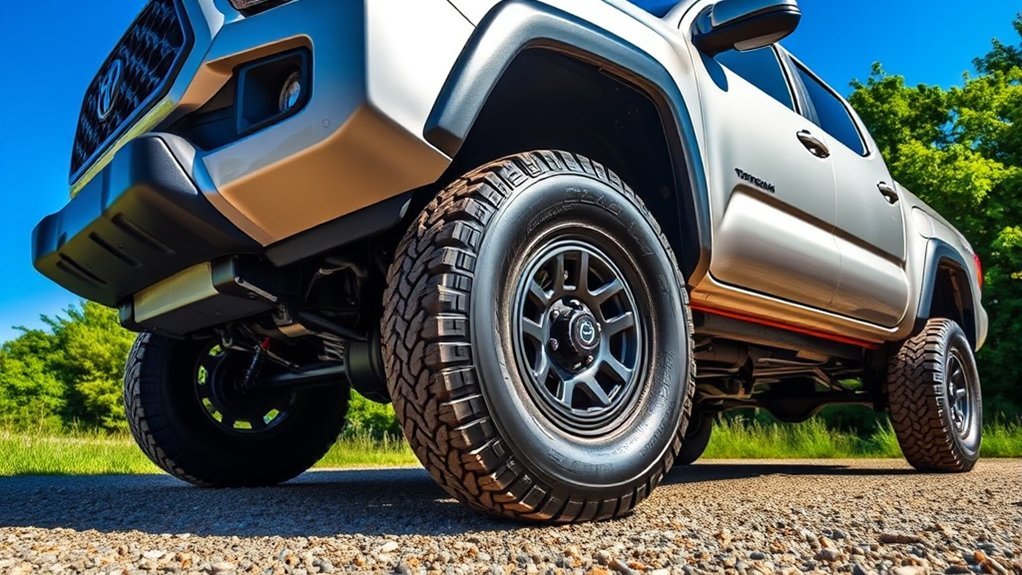
Toyota Tacoma tire clearance depends on more than one number on the sidewall. The safest tire size for stock suspension depends on your Tacoma generation, trim, wheel width, wheel offset, alignment, mud flaps, and the exact tire model you choose. A mild tire upgrade can work well, but oversized tires can rub at full steering lock, during suspension compression, or when the truck is loaded for trail use.
Quick Answer
For the least rubbing risk on stock Tacoma suspension, stay close to your factory tire diameter and confirm the size on the driver-door tire placard. Many mild upgrades in the 31- to 32-inch range can work, but 285/70R17-class tires often need careful wheel offset, trimming, alignment changes, or a lift depending on the generation and setup.
Key Takeaways
- There is no single “largest tire” that fits every Tacoma on stock suspension.
- Use the tire placard and owner’s manual as your starting point, then compare overall diameter, width, load index, and speed rating.
- The common 3% guideline applies mainly to overall diameter or rolling circumference, not tire width.
- Wheel offset and backspacing can make the same tire fit cleanly on one Tacoma and rub badly on another.
- A lift kit adds clearance, but it does not guarantee no rubbing at full lock or during off-road suspension compression.
At a Glance
| Time Required | 15–30 minutes to check tire size, placard specs, and clearance points before buying tires |
| Difficulty | Easy for research; moderate if trimming, alignment, or lift work is needed |
| Tools Needed | Tire size calculator, flashlight, tire pressure gauge, tape measure, and your driver-door tire placard |
| Cost | Free to check fitment; tire, alignment, trimming, or lift costs vary by build |
Understanding Stock Toyota Tacoma Tire Sizes
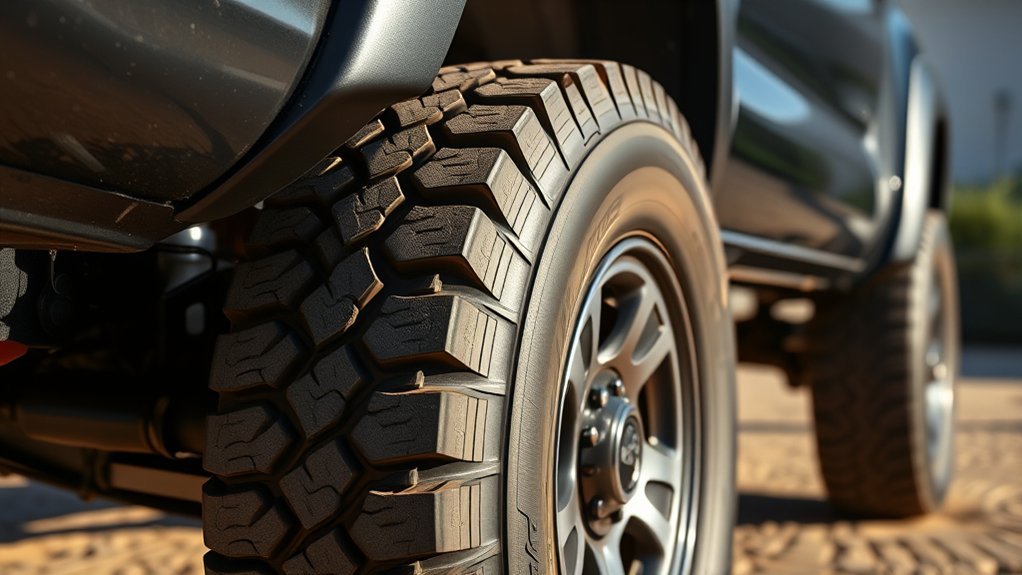
Start with the tire information placard on the driver-side door jamb. That placard shows the original tire size and recommended cold tire pressure for your exact Tacoma. The National Highway Traffic Safety Administration recommends using the original tire size or another manufacturer-recommended size, and checking the tire placard or owner’s manual when choosing replacement tires.
Stock Tacoma sizes are not the same across all years. Many 2016–2023 Tacomas used factory sizes such as 245/75R16, 265/70R16, 265/65R17, or 265/60R18 depending on trim. Current 2024+ Tacoma models use different factory sizes, including 245/70R17, 265/70R17, 265/65R18, and 265/70R18 depending on trim and package. Always confirm your own truck before buying tires.
Note: A tire marked 265/70R17 is not automatically the same size in real life across every brand. Tread depth, sidewall shape, shoulder lugs, and casing design can make one tire rub when another tire with the same printed size clears.
What the Tire Size Numbers Mean
A size like 265/70R17 tells you three important things:
- 265 is the section width in millimeters.
- 70 is the aspect ratio, meaning the sidewall height is 70% of the tire’s width.
- 17 is the wheel diameter in inches.
For clearance, the most important measurements are overall diameter and width. Diameter affects ride height, gearing, speedometer accuracy, and clearance at the front and rear of the wheel opening. Width affects clearance to the upper control arm, fender liner, mud flap, body mount area, and suspension components.
The Real 3% Tire Size Rule
The common “3% rule” is best understood as a guideline for overall tire diameter or rolling circumference. Staying within about 3% of the factory tire diameter helps reduce speedometer, odometer, gearing, ABS, traction-control, and clearance problems. It is not a guarantee that the tire will clear.
Width is separate. A tire can stay close to stock diameter but still rub because it is wider, mounted on a lower-offset wheel, or has aggressive sidewall lugs. That is why two Tacoma owners can run the same tire size and have different results.
Warning: Do not choose a tire by diameter alone. Confirm load index, speed rating, wheel width compatibility, cold tire pressure requirements, and physical clearance before driving at highway speed or off-road.
Safe Tire Upgrades
A safe tire upgrade keeps the truck predictable on the road and avoids rubbing during normal steering and suspension movement. For many stock Tacomas, the safest choice is staying with the original size or moving only slightly larger. Mild upgrades are more likely to work when you keep factory-style wheel offset and avoid overly wide tires.
Maintaining Stock Specifications
Stock specifications exist for a reason. Toyota engineers the tire size, wheel size, pressure, braking behavior, traction-control calibration, and payload rating as a system. If you change tire size, keep the replacement tire’s load rating at least equal to the original tire and determine the correct pressure for the new tire size. Federal TPMS language also notes that when tires differ from the placard size, the correct inflation pressure for those tires should be determined.
Popular Tire Sizes for Stock Tacoma Suspension
The table below gives practical guidance, not a guarantee. Always test fit your exact wheel and tire combination.
| Tire Size | Approx. Diameter | Stock-Suspension Fitment Notes |
| 245/75R16 | About 30.5 in. | Factory size on many older SR/SR5 trims; low rubbing risk when used with correct wheels. |
| 265/70R16 | About 30.6 in. | Common factory-style size for many 2016–2023 TRD Off-Road and TRD Pro models. |
| 265/65R17 | About 30.6 in. | Common factory-style 17-inch size on older TRD Sport-style setups. |
| 265/70R17 | About 31.6 in. | Factory size on some 2024+ trims and a mild upgrade on some older setups. Check full-lock clearance. |
| 275/70R17 | About 32.2 in. | Possible on some builds, but rubbing risk rises. Wheel offset, mud flaps, and tire model matter. |
| 285/70R17 | About 32.7 in. | Aggressive for stock suspension. Often needs trimming, alignment changes, different offset, or lift support. |
[Products Worth Considering]

Keep your tires properly inflated with this analog VONDIOR tire pressure gauge, designed for fast, easy readings without batteries. The swiveling, two-axis hose and large glow dial help you measure at any tire angle with instant visibility. Built with a protective rubber shield, it supports durable, low-maintenance use for cars and trucks.

These aluminum alloy tire valve stem caps with an O-ring seal help protect valve stems from corrosion while adding a clean, stylish look to your vehicle. The universal fit works across cars, trucks, motorcycles, bicycles, and more, making them an easy upgrade for everyday driving and off-road use. Installation is quick, and the included four-pack keeps all your tires dressed and protected.

This ALL-TOP auto-stop tire deflator valve kit lets you air down off-road tires quickly without watching pressure, automatically stopping when your preset PSI is reached. Each valve is individually calibrated for reliable performance with an acceptable +/- 2 PSI tolerance. The adjustable deflator range covers 10 to 30 PSI and includes four valves plus valve caps and a zipper pouch for easy setup on trucks, SUVs, RVs, UTVs, and powersports.
How to Prevent Rubbing With Larger Tires
Rubbing usually shows up in five places: the mud flap, front fender liner, rear of the front wheel well, upper control arm area, and bumper or crash-bracket area on newer trucks. Before buying tires, compare your planned diameter and width against your factory size. After installation, check clearance with the truck on level ground and again while turning.
- Turn the steering wheel fully left and right. Look for contact at the front and rear of the wheel well.
- Back up while turning. Some rub only appears in reverse at full lock.
- Check both sides. Small alignment and body-panel differences can make one side tighter.
- Inspect the upper control arm area. Wider tires and low-offset wheels can reduce inner clearance.
- Check after trail driving. Suspension compression can reveal rubbing that never appears in the driveway.
Pro Tip: If you are between two tire sizes, choose the smaller size for a daily-driven stock Tacoma. It usually keeps steering lighter, MPG better, braking more predictable, and rubbing fixes cheaper.
[Products Worth Considering]
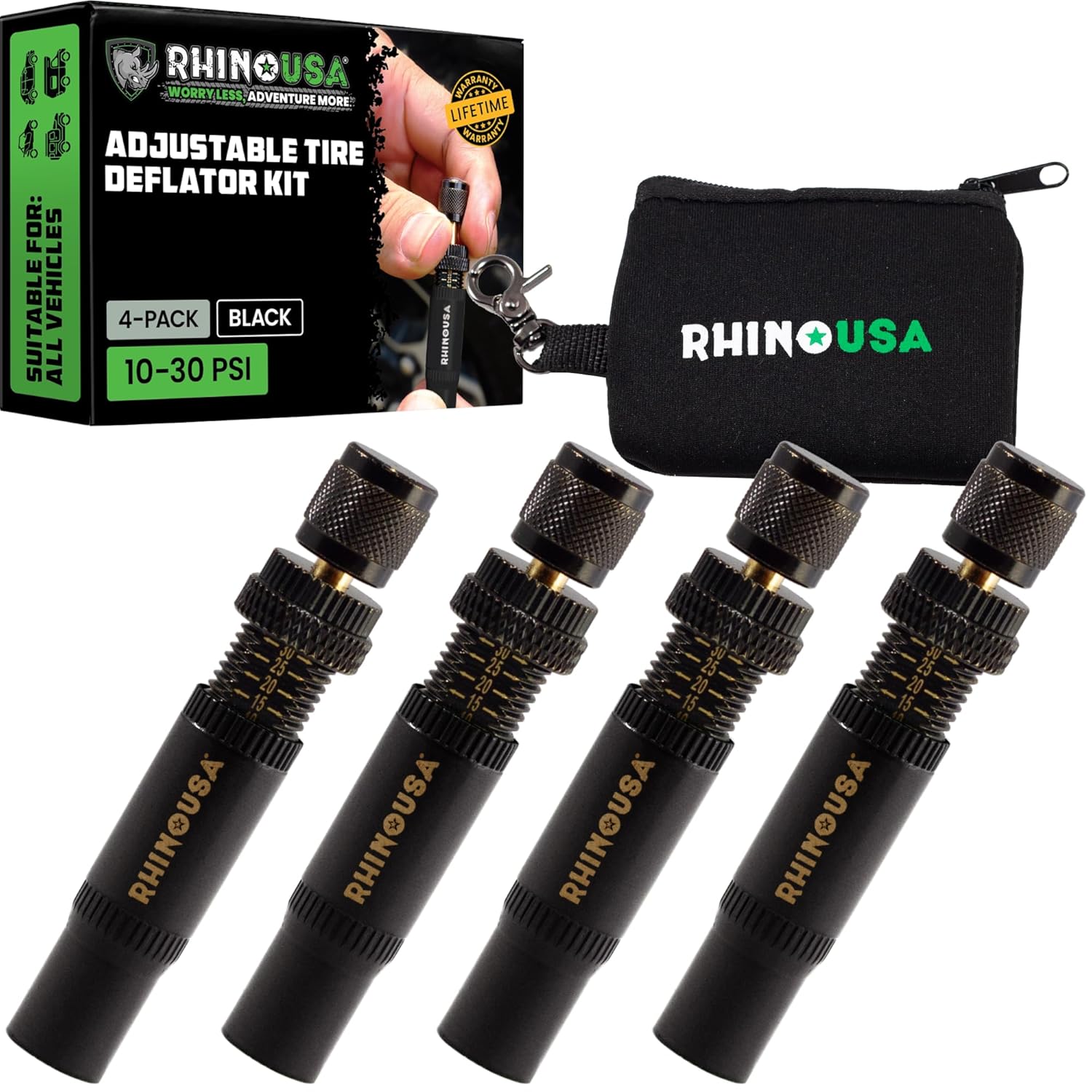
Use the Rhino USA adjustable tire deflators to air down all four tires at once by screwing one deflator onto each valve stem, letting you step away while the tires reach your preset pressure. Each deflator independently adjusts across a 10–30 PSI range with laser-etched indicators for quick setup and verification, making it ideal for beach, sand, and rocky off-road trails.

Replace worn or missing TPMS sensors with a pre-programmed 4-pack designed for compatible GM vehicles. These 315MHz sensors provide real-time tire pressure monitoring and alert you if pressure is too high, too low, or if a rapid air leak occurs. Most installations are ready with minimal relearn effort after mounting, helping improve safety and driving confidence.

Upgrade your ride with a 2-pack set of 26x1.95 folding mountain bike tires built for dependable traction on mud, rocks, and trail surfaces. A reinforced puncture-resistant layer helps protect against sharp debris, while included butyl inner tubes provide strong sealing and shock absorption. Ready for fast swaps with included tire levers and universal sizing for most bikes.
Wheel Offset and Backspacing Matter
Wheel offset is one of the biggest reasons Tacoma tire fitment advice gets confusing. A lower-offset wheel pushes the tire outward, which can improve upper control arm clearance but increase fender-liner and mud-flap rubbing. A higher-offset wheel keeps the tire tucked inward, which can reduce fender contact but create inner clearance problems with wider tires.
If you are keeping stock suspension, avoid combining a much wider tire with an aggressive low-offset wheel unless you are prepared for trimming. Factory-style offsets usually give the most predictable fitment for mild tire upgrades.
Lift Kits vs. Stock Suspension: Key Differences
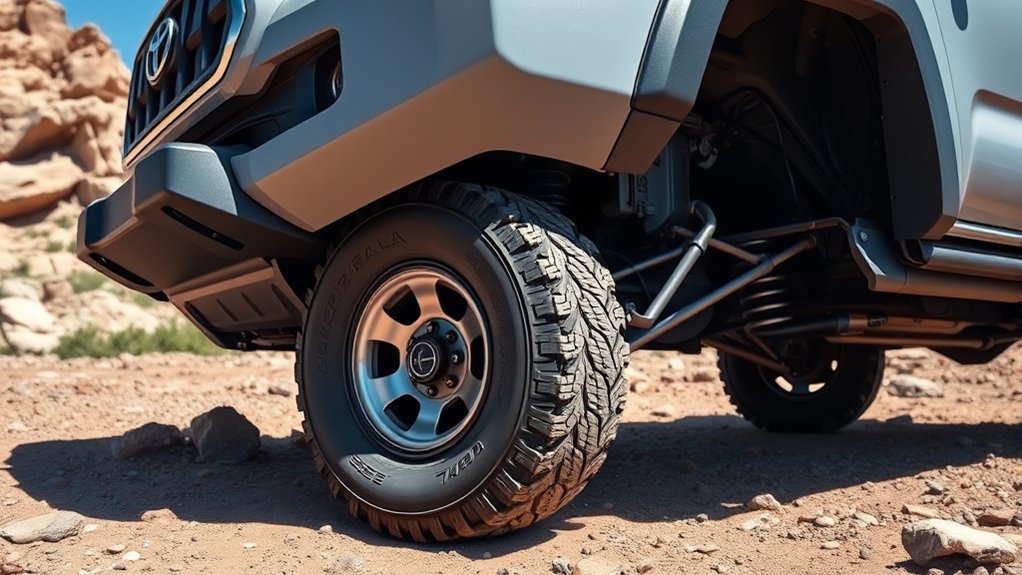
A lift kit increases static ride height, which can help clear taller tires. For example, the Toyota Genuine Tacoma TRD Lift Kit is listed as a 2-inch front and 1-inch rear lift with TRD-tuned Bilstein shocks on compatible older Tacoma models. That added height can help with approach angle and tire clearance, but it does not automatically solve every rubbing point.
Improved Ground Clearance
Larger tires are the only modification that raises the axle and differential housing. A suspension lift raises the body and frame, but the lowest axle-related points still depend on tire diameter. That means a lift and tire upgrade work best as a planned system, not as separate guesses.
Enhanced Off-Road Capability
For trail use, tire choice matters as much as tire size. A good all-terrain tire in a moderate size can outperform a bigger highway tire on dirt, gravel, rocks, and snow. If your Tacoma is a daily driver, balance off-road traction with road noise, wet braking, winter performance, and tire weight.
Tire Size Flexibility
A lift gives you more room to work with, but wheel offset, alignment, and tire shape still decide whether the tire clears at full compression. For aggressive sizes like 285/70R17, plan for a professional alignment and expect possible trimming even if the truck has a mild lift.
What Affects Tire Performance and Ride Comfort?
Oversized tires can change how your Tacoma drives. Heavier tires can reduce acceleration, increase braking distance, lower fuel economy, and make the transmission hunt more often. Taller tires also change effective gearing, while wider tires can add steering weight and road noise.
Ride comfort depends on sidewall height, load range, tire construction, and pressure. An LT tire with a heavy-duty load range may be tougher off-road, but it can ride firmer than a P-metric or standard-load tire. For a mostly street-driven Tacoma, avoid buying more tire than you need.
The best Tacoma tire size is not always the biggest one. It is the largest size that clears safely, carries the right load, keeps the truck predictable, and matches how you actually drive.
Off-Road Tire Size Considerations for Your Tacoma
Off-road drivers often want more sidewall, stronger construction, and better tread bite. That can mean moving to an all-terrain or rugged-terrain tire instead of jumping straight to a much larger size. Before choosing, decide what matters most: mud traction, rock protection, snow performance, highway comfort, or fuel economy.
For sand and rocks, a taller sidewall can help because you can air down more comfortably. For tight trails, too much width can hurt by catching fender liners and throwing more debris. For overlanding, weight matters because tires, wheels, armor, passengers, water, and cargo all count against payload.
[Products Worth Considering]

Upgrade your 2024-2026 Tesla Model 3 Highland with REEVAA all-weather mud flaps designed for seamless fit along the original body lines. The set of four delivers strong splash protection against mud, gravel, and road debris while using OEM-grade durable materials. Installation is non-destructive with original hole positions and snap-in clips, and the aerodynamic design helps minimize impact on efficiency.

The SAFELIFE dial tire tread depth gauge measures tread depth in 1/32 inch increments with clear, easy-to-read 2-inch dial face. Color zones using a traffic light system help you quickly judge whether tread is low, marginal, or ample for safer driving. Built with a durable zinc cast body and a metal detect probe for precise, comfortable use across cars, motorcycles, trucks, and buses.

The TYAMATE TM8 solar-powered wireless TPMS delivers real-time tire pressure and temperature monitoring with six alarm modes for safer driving. A vibrant color LCD display shows readings clearly while windshield mounting keeps it hands-free and easy to read. With a wide 0–87 PSI range, strong 433.92 MHz signal transmission, and quick sensor pairing, it’s ideal for RV, sedan, SUV, MPV, and truck use.
Key Recommendations for Maximizing Your Tacoma’s Off-Road Performance
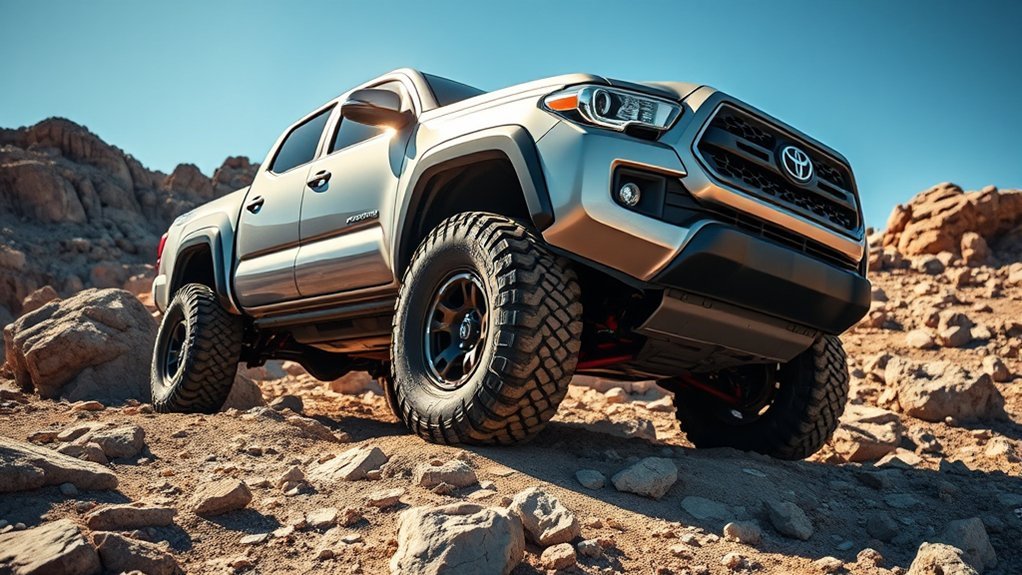
For a stock-suspension Tacoma, start with a conservative tire size and a quality all-terrain tread. Keep wheel offset close to factory unless you have a specific reason to change it. After installation, get an alignment and inspect for rubbing before taking the truck on a long trip.
Also check tire pressure when the tires are cold. NHTSA recommends checking tire pressure at least monthly and using the vehicle’s tire information placard, certification label, or owner’s manual for the recommended pressure. If you change tire size, work with a qualified tire shop to confirm the correct pressure, load rating, and TPMS behavior.
Note: If your Tacoma has aftermarket bumpers, sliders, skid plates, roof racks, campers, or constant cargo, recheck payload and tire load capacity. Added weight can change ride height, braking, and tire-pressure needs.
Frequently Asked Questions
What happens if you put oversized tires on a stock suspension Tacoma?
Oversized tires can rub the fender liner, mud flaps, body mount area, bumper area, or suspension components. They can also affect speedometer accuracy, braking, acceleration, fuel economy, gearing, TPMS behavior, and steering feel. The bigger the tire, the more important wheel offset, alignment, and test fitting become.
Does tire size affect the oil I should use in my Toyota Tacoma?
No. Tire size does not change the engine oil specification. Use the oil grade listed in your Tacoma owner’s manual. Larger or heavier tires can increase drivetrain load, but they do not change the factory engine-oil requirement.
Will 285/70R17 tires fit a Tacoma with stock suspension?
Sometimes, but it is not a safe blanket recommendation. On many stock-suspension Tacomas, 285/70R17 tires can require trimming, alignment changes, different wheel offset, or a lift. Tire model, wheel specs, generation, mud flaps, and suspension compression all affect the result.
Is 265/70R17 a good Tacoma tire size for stock suspension?
It can be a good size, especially because it is a factory size on some newer Tacoma trims and a mild upgrade for some older wheel setups. Still, check your original tire size, wheel offset, load index, and full-lock clearance before assuming it will fit every Tacoma.
Do I need to recalibrate my speedometer after installing larger tires?
If the new tire’s overall diameter is meaningfully different from stock, your speedometer and odometer can read differently. Small changes may be minor, but larger tire upgrades may need recalibration or at least a GPS speed check.
Conclusion
For Toyota Tacoma tire clearance with stock suspension, the smartest move is to stay close to your factory diameter, avoid excessive width, and keep wheel offset reasonable. Mild tire upgrades can work well, but there is no universal “biggest tire” for every Tacoma. Check the door placard, compare diameter and width, confirm load rating and pressure, and test clearance at full lock before heading off-road. If you want aggressive 33-inch-class tires or wider fitment, plan for possible trimming, alignment changes, or a quality lift kit.
Sources
- NHTSA Tire Safety Brochure — tire size selection, tire placard use, pressure checks, and tire safety basics.
- Toyota Owners 2026 Tacoma Maintenance Data — current Tacoma tire-size references and vehicle specification context.
- Toyota Genuine Tacoma TRD Lift Kit — Toyota lift-kit specifications and compatibility notes.
- 49 CFR 571.138 Tire Pressure Monitoring Systems — TPMS and tire inflation pressure label requirements.