
Toyota Tundra Tire Rubbing After Lift Kit: Causes and Clearance Fixes
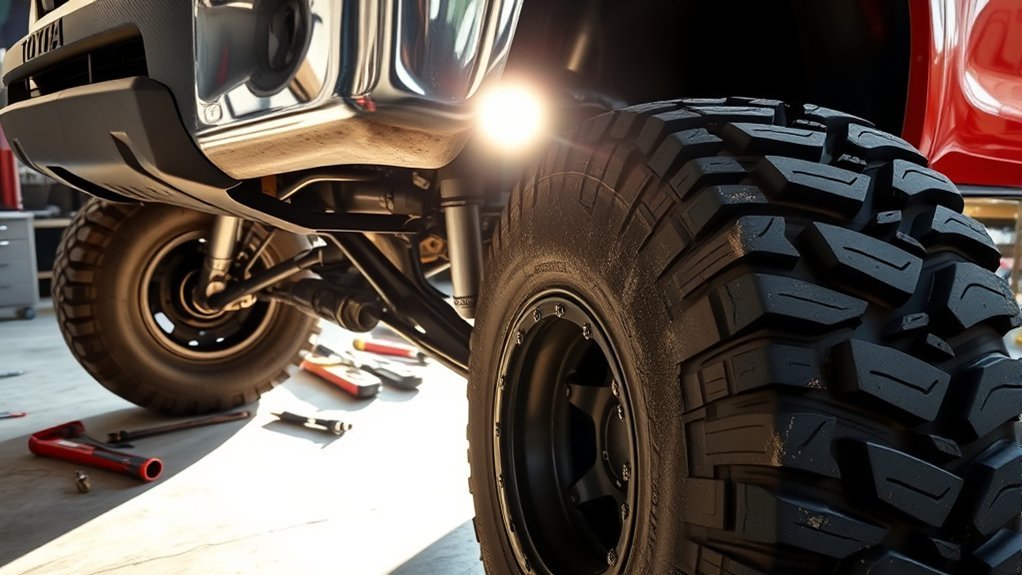
Tire rubbing after lifting a Toyota Tundra usually means the new wheel, tire, alignment, and suspension combination does not have enough clearance at every steering angle and suspension position. The correct repair depends on where contact occurs. Before buying spacers, trimming parts, or changing tires, identify the exact rub point and verify your truck’s model year, trim, lift components, wheel specifications, and tire dimensions.
Quick Answer
Tundra tire rubbing after a lift usually comes from a mismatch among tire width or diameter, wheel width and offset, alignment, and clearance at the liner, mud flap, body mount, sway bar, or upper control arm. Find the contact point first, choose the least invasive correction, and verify clearance at full steering lock and suspension compression.
Key Takeaways
- A lift alone does not guarantee clearance for a wider or taller tire.
- Wheel offset can move a tire away from an inner suspension part while making outer wheel-well rubbing worse.
- There is no universal Tundra tire size, wheel offset, or spacer thickness that guarantees a rub-free fit.
- Check clearance at full lock in both directions and during controlled suspension compression.
- Do not remove the sway bar, grind suspension parts, or cut structural components merely to clear a tire.
At a Glance
| Time Required | 20–45 minutes for an initial inspection; longer if an alignment or parts change is required |
| Difficulty | Moderate diagnosis; professional installation and alignment recommended for fitment changes |
| Tools Needed | Flashlight, washable chalk, tape measure, tire-pressure gauge, phone camera, and a helper |
| Cost | The basic inspection can cost nothing; the final cost depends on whether the truck needs liner work, alignment, different wheels, different tires, or approved suspension parts |
Warning: Stop driving and have the truck inspected if rubbing exposes tire cords, cuts deeply into a sidewall, creates a bulge, contacts a brake hose or steering part, restricts steering, or causes repeated heavy impacts. Never crawl beneath a truck supported only by a jack.
What Causes Tire Rubbing After Installing a Lift Kit?
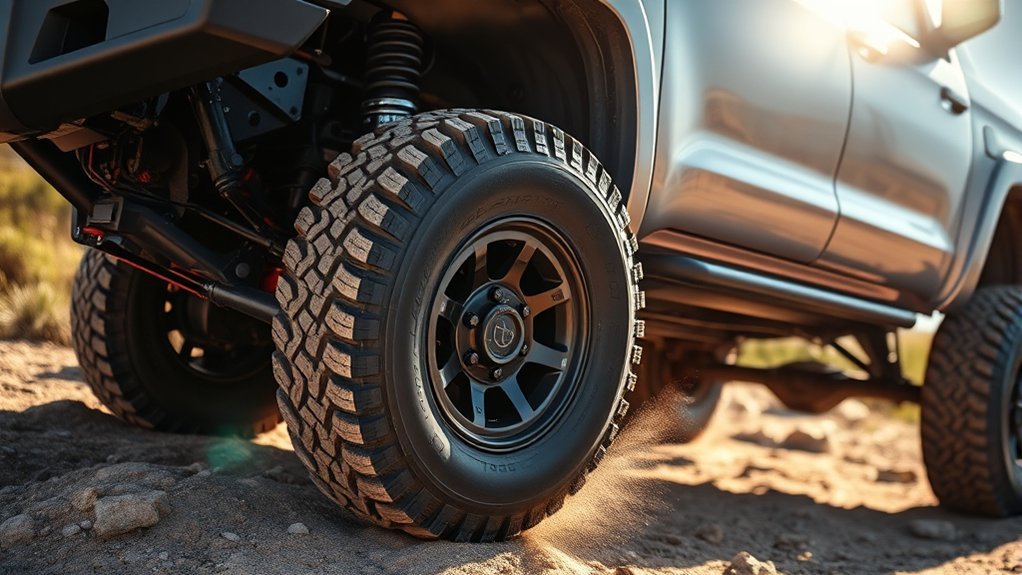
A lift creates more space between the axle or suspension and the body at normal ride height, but it does not automatically create enough clearance at full steering lock or during suspension compression. Rubbing usually appears after several fitment changes interact.
- Tire diameter: A taller tire reaches farther forward, rearward, and upward in the wheel opening.
- Tire width: A wider tire moves closer to both inner suspension parts and outer bodywork.
- Actual tire construction: Two tires with the same labeled size can have different measured section widths, tread widths, and mounted diameters.
- Wheel width: Changing wheel width alters the tire’s installed shape and the position of both wheel lips.
- Wheel offset and backspacing: These measurements determine how far inward or outward the assembly sits.
- Alignment: Caster, camber, and toe affect the tire’s position as the steering moves.
- Lift design: Spacers, coilovers, complete suspension systems, and Toyota’s TRD lift do not use identical steering and suspension geometry.
- Flexible parts: Fender liners and mud flaps may bend toward the tire at speed or after their mounting clips loosen.
Tundra fitment also varies by generation, trim, and suspension equipment. Toyota’s official TRD 3-inch Tundra lift raises the front approximately 3 inches and the rear approximately 2 inches on applicable 2022-and-newer 4×4 trucks. Toyota lists exclusions that include TRD Pro, TRD Sport, Adaptive Variable Suspension, and air-suspension configurations. Verify the truck by model year, trim, VIN, and installed part number rather than assuming every Tundra uses the same clearances. See Toyota’s official TRD Tundra lift information and the correct Toyota owner’s manual for the vehicle.
Note: The TRD Off-Road Package and the TRD 3-inch suspension lift are separate configurations. Confirm which suspension equipment is actually installed before comparing fitment advice.
[Products Worth Considering]

Universal magnetic jack pad with aluminum grooved design to protect vehicle pinch welds during lifting. Durable nylon pad inserts are upgraded and secured with screws to resist damage and keep in place. Designed to fit most single vehicle pinpoint welds for safer, stable jacking when changing tires, repairs, or performing oil changes.

EVOULTES heavy duty tire inflator with an integrated gauge delivers accurate pressure readings from 10–120 PSI, helping you inflate, deflate, and check tires in one tool. The 16.5-inch extended dual-head air chuck with swivel base reaches hard-to-access dual wheel valves on trucks and RVs. A brass trigger core and side-mounted air release valve make operation smooth, with standard 1/4" NPT threading and quick-connect compatibility for easy setup.

This portable cordless tire inflator delivers fast, efficient inflation for cars, motorcycles, bikes, and sports balls with a digital pressure gauge. Use the one-click PSI preset with auto shut-off for accurate, hands-free topping to your target pressure up to 150 PSI. It’s compact and rechargeable with a built-in emergency LED light plus valve adapters and accessories for quick, ready-to-go use.
Signs Your Toyota Tundra Tires Are Rubbing
A rubbing tire does not always make a loud noise. Inspect the truck when you notice any of these symptoms:
- Scraping, grinding, or rapid tapping during tight turns
- Noise only when reversing with the steering turned
- Polished, dusty, or freshly scraped areas inside the wheel well
- Black tire marks on the liner, mud flap, frame, sway bar, or control arm
- Grooves, cuts, scuffing, or missing rubber on a tire shoulder or sidewall
- A loose or distorted fender liner
- Steering that hesitates or feels restricted near full lock
- Vibration, pulling, a crooked steering wheel, or uneven tread wear
- Contact that appears only with passengers, cargo, a trailer, or off-road articulation
Check the tire’s tread and sidewall closely. The National Highway Traffic Safety Administration recommends professional attention when a tire develops cuts, cracks, bulges, scrapes, irregular wear, noise, or vibration.
Immediate Actions to Take When You Notice Rubbing
- Reduce steering angle and speed. Do not keep forcing the tire against the contact point.
- Park on level ground. Set the parking brake and allow hot brakes and wheels to cool.
- Inspect all four tires. Look for sidewall damage, exposed cords, cuts, bulges, or unusual tread wear.
- Record the truck’s setup. Note the model year, trim, lift brand and height, wheel diameter and width, wheel offset, spacer thickness, tire brand, tire model, and full tire size.
- Photograph the marks. Clear photos help a tire, alignment, or suspension technician identify the contact path.
- Avoid unnecessary driving. Heavy contact or tire damage requires professional inspection before normal use.
Inspect Tire Clearance and Find the Contact Point
The exact contact location determines the correct repair. A change that creates more room on one side of the tire can remove room from the other side.
- Clean the suspected contact areas and tire shoulder.
- Apply a thin layer of washable chalk to the liner, mud flap, sway bar, control arm, or other suspected area.
- With a helper watching from a safe position, turn the steering slowly from center to full left and full right.
- Move forward and backward a few feet at walking speed while repeating the steering check.
- Reinspect the chalk for a fresh contact line.
- Measure the smallest clearance with the wheels straight and near full lock.
- Have a qualified shop check clearance during controlled suspension compression. A parked, unloaded truck may appear clear even when the tire rubs over dips or bumps.
Common front contact points include:
- Front bumper edge or lower valance
- Front or rear portion of the plastic fender liner
- Mud flap and its mounting bracket
- Body mount or cab-mount area
- Frame or pinch-weld area
- Sway bar
- Upper control arm
- Brake hose, ABS wiring, or retaining brackets
Pro Tip: Mark the steering-wheel position at the moment contact begins. A rub that starts before full lock is more serious than a light liner touch at the final fraction of steering travel.
Adjust Suspension, Wheel, and Liner Components
Match the correction to the contact point instead of adding more lift automatically.
- Loose liner or mud flap: Replace missing clips, reposition the liner, or use an application-specific liner kit.
- Minor plastic contact: Careful reshaping or limited trimming may help, provided wiring, fasteners, and structural material remain protected.
- Sway-bar or upper-control-arm contact: A narrower tire, different wheel width, revised offset, or application-specific suspension component may be required.
- Outer fender or rear wheel-opening contact: A narrower tire, smaller diameter, more inward wheel position, alignment correction, or approved body-clearance change may help.
- Body-mount, frame, brake-hose, or steering contact: Stop and seek professional fitment advice. Do not grind or cut structural, braking, or steering parts.
A leveling kit or additional lift may change ride-height clearance, but it does not guarantee clearance during full steering or full compression. It can also create new alignment, driveline, and safety-system considerations.
Consult Professional Alignment Services
Have the alignment checked after installing a lift, changing steering or suspension parts, changing wheel position substantially, or noticing pulling and uneven wear. Ask for the before-and-after measurements instead of accepting only a verbal statement that the truck is “in spec.”
- Caster: Can move the tire forward or rearward in the wheel opening and affect rubbing during turns.
- Camber: Changes the top of the tire’s inward or outward position.
- Toe: Affects steering response and tire wear.
- Steering-wheel center: An off-center wheel may indicate that the alignment or steering geometry still needs correction.
NHTSA notes that wheel alignment is important for vehicle safety and tire life. Alignment should be combined with an inspection of tire condition, steering parts, suspension parts, and inflation pressure.
Solutions to Prevent Tire Rubbing: Spacers vs. Lift Kits
Wheel spacers and lift kits solve different clearance problems. Neither should be selected until the contact point is known.
| Option | What It Changes | When It May Help | Main Limitation |
|---|---|---|---|
| Wheel spacer | Moves the wheel and tire outward | Measured contact with an inner suspension component | Can worsen fender, liner, mud-flap, or body-mount contact |
| Suspension lift | Raises normal ride height and may change suspension geometry | A complete, engineered application requiring more ride-height clearance | Does not guarantee clearance at full steering or compression |
| Different wheel | Changes width, offset, backspacing, and sometimes tire shape | The existing wheel places the tire too far inward or outward | Brake, stud, hub, fender, and load compatibility must be verified |
| Narrower or smaller tire | Reduces the tire envelope | The current tire is too wide or tall for the available space | Load capacity, speed rating, wheel range, and inflation must remain suitable |
If a spacer is used, it should be vehicle-specific, properly centered, compatible with the hub and wheel, and installed according to its manufacturer’s torque and inspection instructions. Do not stack spacers. Have stud engagement, wheel-nut seating, brake clearance, fender coverage, and the final alignment checked professionally.
How to Pick the Best Wheel Offset for Your Tundra
Wheel offset is the distance between the wheel’s mounting surface and its centerline. Positive offset generally positions the wheel farther inward. Lower positive offset, zero offset, or negative offset generally moves it outward.
The best offset is not the number that creates the most tire poke. It is the wheel position that preserves safe clearance on both the inner and outer sides throughout steering and suspension travel.
- To increase sway-bar or upper-control-arm clearance: Moving the wheel outward may help, but outer-body clearance must be rechecked.
- To reduce fender, liner, or body-mount contact: Moving the wheel inward may help, but inner suspension clearance must be rechecked.
- Compare wheel width: A +18 offset on an 8-inch wheel does not place both wheel lips in the same location as +18 on a 9-inch wheel.
- Compare backspacing: Backspacing helps show how close the inner wheel edge will sit to suspension and steering parts.
- Check brake clearance: Offset alone does not confirm that the spokes and barrel clear the brakes.
- Test the complete assembly: Tire model, actual dimensions, alignment, and suspension configuration matter as much as the offset number.
Do not choose a new wheel solely from another owner’s offset. Match the complete wheel-and-tire specifications and confirm fitment for your exact model year and trim.
[Products Worth Considering]

The JACO FlowPro Tire Inflator measures, inflates, and airs down tires up to 100 PSI with battery-free operation and ±2% accuracy after calibration. It features a glowing pressure dial for night visibility, a heavy-duty steel build with a hybrid hose, and a precision push-to-inflate thumb trigger. The patented Lightning Air Chuck locks on for a secure seal, and the kit includes quick-connect hardware for easy inline use with your air compressor.
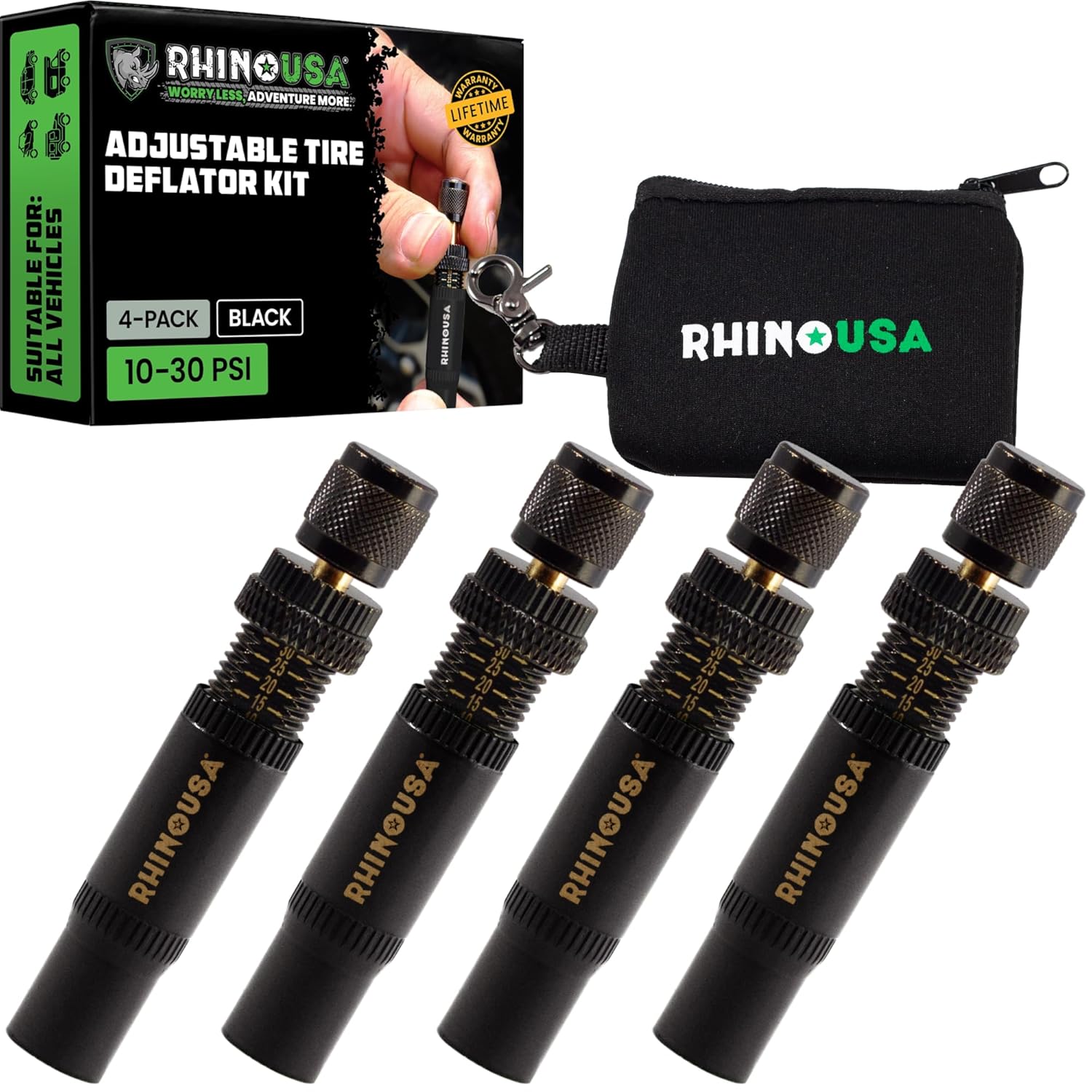
Use the Rhino USA adjustable tire deflators to air down all four tires at once by screwing one deflator onto each valve stem, letting you step away while the tires reach your preset pressure. Each deflator independently adjusts across a 10–30 PSI range with laser-etched indicators for quick setup and verification, making it ideal for beach, sand, and rocky off-road trails.
Best Tire Sizes to Prevent Rubbing on Your Tundra
There is no single oversized tire that is guaranteed not to rub on every lifted Tundra. The safest starting point is the original size on the driver-door placard or another size approved for the vehicle. NHTSA recommends using the original tire size or another size recommended by the vehicle manufacturer. Michelin likewise advises using the manufacturer-specified size or an approved alternative and not reducing load-carrying capacity.
Use these checks before changing size:
- Confirm the complete size, including any LT designation and load range.
- Meet or exceed the required load index and use an appropriate speed rating.
- Check the tire manufacturer’s measured diameter, section width, tread width, and approved rim-width range.
- Verify the required cold inflation pressure for the replacement setup.
- Confirm TPMS compatibility and initialization requirements.
- Check spare-tire compatibility and storage clearance.
- Account for tire chains if they are used.
A 285/65R20 is nominally narrower than a 35×12.5 tire and may create more side clearance in some setups, but it is still a tall tire and is not a universal no-rub solution. Actual dimensions vary by tire model. Review how tire markings and dimensions work and have the proposed assembly checked against the truck before purchase.
Real-World Tire Modification Outcomes
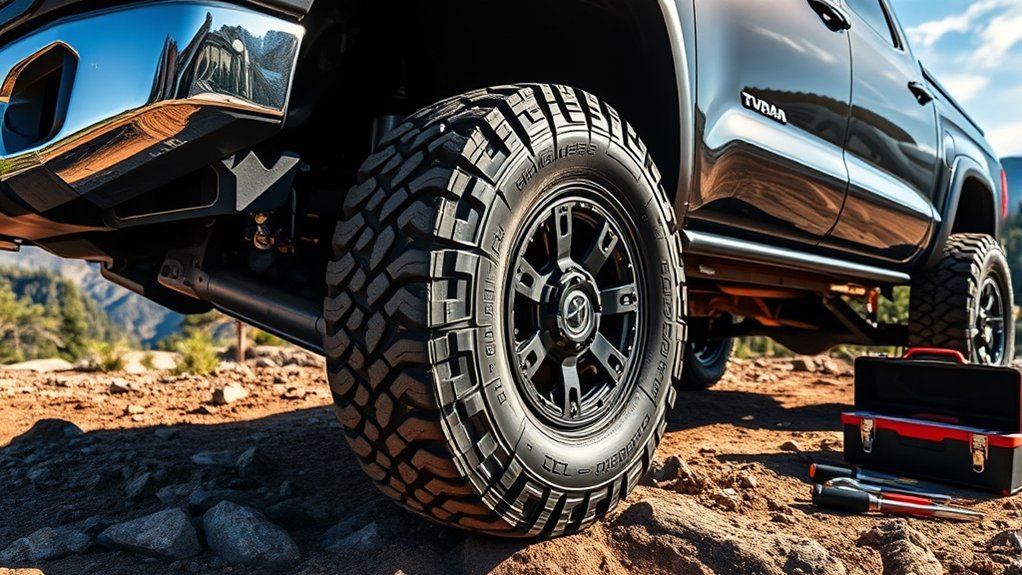
Tundra owners often report that a change solves one contact point but creates another. These patterns are useful for diagnosis, but they are not guaranteed fitments:
- Moving a wheel outward can eliminate sway-bar or upper-control-arm contact while causing new liner or body-mount rubbing.
- A narrower tire may clear both inner and outer components even when its overall diameter remains similar.
- A smaller-diameter tire usually adds clearance at the front, rear, and top of the wheel opening.
- Repositioning a loose liner or mud flap can solve light rubbing without changing the wheel or tire.
- Alignment changes can move the tire within the wheel opening, but alignment should remain within safe specifications.
- A setup that clears on level pavement may still rub with cargo, towing load, bumps, or off-road articulation.
Record the complete setup whenever comparing another truck: model year, trim, suspension, lift height, wheel width, offset, tire brand and model, measured tire dimensions, spacer thickness, and alignment readings. Without those details, a “no rubbing” report has limited value.
Warning: Do not remove the sway bar from a street-driven Tundra merely to clear a tire. Correct the wheel, tire, alignment, or approved suspension configuration instead.
Importance of Proper Alignment After Suspension Work
Alignment affects handling, tire wear, steering-wheel position, and the tire’s location inside the wheel opening. It should be checked after lift installation, steering or suspension work, wheel-position changes, or any repair intended to correct rubbing.
| Alignment Item | Possible Symptom | Recommended Action |
|---|---|---|
| Caster | Tire sits too far forward or rearward during steering | Measure both sides and adjust only within appropriate specifications |
| Camber | Inner or outer shoulder wear and reduced side clearance | Correct camber and inspect suspension parts |
| Toe | Feathered wear, wandering, or unstable steering | Set toe and center the steering wheel |
| Ride height | Different clearance on the left and right sides | Check spring seating, lift components, load, and suspension condition |
After alignment, ask for a printout and repeat the full-lock clearance test. An alignment that improves tire wear is not automatically a rubbing repair unless the contact is also gone.
Cost-Effective Fixes for Long-Term Tire Rubbing
Start with the lowest-risk correction that directly addresses the measured contact point:
- Replace missing liner fasteners. A loose liner can move into the tire even when the original setup previously cleared.
- Reposition a mud flap or flexible liner. This may solve minor plastic contact without changing suspension geometry.
- Correct alignment. Improper caster, camber, or toe can worsen clearance and tire wear.
- Use a narrower tire. Reducing section or tread width may create clearance on both sides.
- Use a smaller-diameter tire. This adds room around more of the tire’s travel path.
- Select a better wheel position. Change width, offset, or backspacing only after measuring inner and outer clearance.
- Use an application-specific spacer only when justified. It should correct measured inner contact without creating unsafe outer contact.
- Use approved suspension parts. Replace mismatched or incorrectly installed lift components rather than adding improvised parts.
Avoid spending money on additional lift before confirming that ride height is the actual limitation. More lift may not fix sway-bar, upper-control-arm, brake-hose, or full-lock contact.
How to Verify the Fix Before Normal Driving
- Confirm tire pressure when the tires are cold.
- Check wheel and spacer installation according to the component manufacturer’s instructions.
- Turn from full left to full right while stationary and while rolling slowly forward and backward.
- Check clearance with the truck loaded as it is normally used.
- Have suspension compression and articulation checked safely by a qualified shop.
- Drive at low speed and listen for contact over gentle dips and turns.
- Reinspect the tire, liner, suspension, and wheel well for fresh marks.
- Recheck alignment, steering-wheel center, and wheel-fastener torque as required.
Do not consider the repair complete until the tire clears brake hoses, ABS wiring, steering parts, suspension parts, bodywork, and liners throughout the expected range of steering and suspension movement.
Frequently Asked Questions
Why is my Tundra tire rubbing on the suspension?
The tire may be too wide, the wheel may sit too far inward, the wheel width or backspacing may be unsuitable, or the alignment may position the tire close to the sway bar or upper control arm. Find the exact contact mark before changing parts.
Can I drive my Tundra if the tire is rubbing?
Light contact with a flexible liner still needs prompt correction. Stop driving if the tire has a cut, bulge, exposed cords, deep sidewall wear, restricted steering, or contact with a brake hose, steering part, or structural component.
Will adding more lift stop tire rubbing?
Not necessarily. Additional lift may improve normal ride-height clearance but may not correct contact at full steering lock, with the suspension compressed, or against an inner steering or suspension component.
Do wheel spacers stop Tundra tire rubbing?
A spacer can improve clearance from an inner component by moving the tire outward. It can also create new contact at the fender, liner, mud flap, or body mount. Use one only after measuring both sides of the tire’s clearance.
What wheel offset prevents rubbing on a lifted Tundra?
There is no universal offset. The correct value depends on wheel width, tire dimensions, model year, trim, lift, alignment, brake clearance, and whether the current contact is on the inner or outer side of the tire.
Will 285/65R20 or 35-inch tires fit without rubbing?
Either size may fit some Tundras and rub on others. Check the tire manufacturer’s actual dimensions, the wheel width and offset, the truck’s suspension and alignment, and clearance during full steering and suspension compression.
Should I remove the sway bar to stop tire rubbing?
No. Removing the sway bar changes vehicle handling and should not be used as a routine tire-clearance fix on a street-driven truck. Correct the tire, wheel, alignment, or approved suspension setup instead.
Conclusion
Tire rubbing after lifting a Toyota Tundra is a fitment problem, not proof that the truck simply needs more lift. Identify whether the tire contacts an inner suspension part, an outer wheel-well surface, or both. Then correct the tire size, wheel position, alignment, liner, or approved suspension configuration that caused that specific contact. Finish with full-lock, compression, loaded-clearance, and tire-damage checks before returning to normal driving.
Sources
- Toyota: Tundra TRD 3-Inch Lift Kit — official lift height, components, compatibility, exclusions, and Toyota Safety Sense information
- Toyota Owner’s Manuals — model-year and vehicle-specific tire, TPMS, modification, and safety guidance
- NHTSA TireWise — tire-size, damage-inspection, maintenance, balancing, and alignment guidance
- Michelin: Changing Tire Size or Specifications — manufacturer-size and replacement-capacity guidance
- Michelin: Tire Load and Speed Ratings — service-description and load-capacity guidance

Related Articles
Toyota Tundra Tire and Wheel Package: What to Consider Before Buying
Unlock the secrets to choosing the perfect tire and wheel package for your Toyota Tundra—essential tips await to enhance your ride.
Read More
Do Bigger Tires Void a Toyota Tundra Warranty? Magnuson-Moss Act Explained
Bigger tires might not void your Toyota Tundra warranty, but understanding the Magnuson-Moss Act is crucial—discover how to protect your investment effectively.
Read More
Toyota Tundra Tire Rack Setup: Garage Storage Ideas for Seasonal Sets
Better tire storage for your Toyota Tundra awaits—discover essential tips to maximize space and protect your seasonal sets in the garage!
Read More