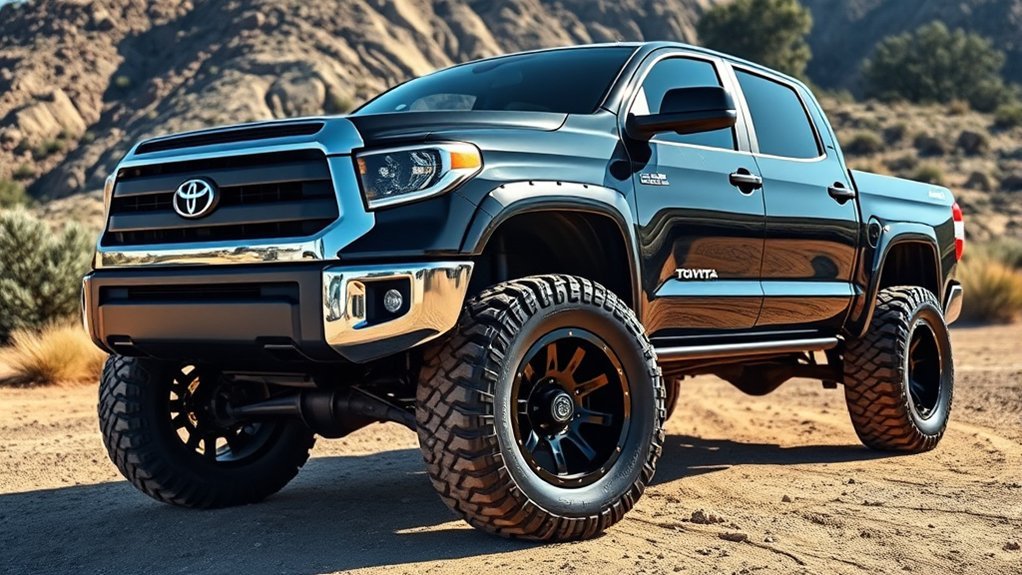
Yes, 35-inch tires can fit on a Toyota Tundra, but they are rarely a simple bolt-on upgrade. The right setup depends on your Tundra generation, tire width, wheel width, offset, alignment, lift height, and how much trimming you are willing to do. A narrow 35-inch tire is easier to clear than a 35×12.50, and a truck used off-road needs more clearance than a street-only truck.
Quick Answer
Most Toyota Tundras need about 2.5 to 3 inches of front lift, proper wheel offset, an alignment, and some trimming to run 35-inch tires without rubbing. A 35×11.50 is usually easier than a 35×12.50. Always test full-lock steering and suspension compression before assuming the setup clears.
Key Takeaways
- A 3-inch front lift improves your odds of fitting 35s, but it does not guarantee a rub-free setup.
- Tire width matters as much as height. A 35×12.50 usually needs more trimming than a 35×11.50 or metric near-35 size.
- Lower-offset wheels add inner clearance but can create more bumper, fender, and liner rub.
- Check load index, speed rating, tire pressure, alignment, TPMS function, and spare-tire fit before daily driving or towing.
At a Glance
| Time Required | 1 day for a basic tire/lift install; longer if trimming, alignment correction, or test fitting is needed |
| Difficulty | Moderate to advanced; trimming and alignment should be handled by an experienced shop if you are not comfortable cutting or adjusting suspension geometry |
| Tools Needed | Tape measure, floor jack, jack stands, torque wrench, trim tools, cutting tool, edge trim, paint for exposed metal, and a professional alignment rack |
| Cost | Varies widely by tire brand, wheel choice, lift kit, labor, trimming, and alignment; get a written quote before ordering parts |
Start With Your Tundra Generation and Stock Tire Size
Before buying 35s, confirm your exact model year, trim, wheel size, and door-jamb tire placard. Toyota’s 2024 Tundra brochure lists stock tire options such as 245/75R18, 265/70R18, 265/60R20, 265/50R22, 265/70R18 all-terrain tires, 265/60R20 Falken Wildpeak all-terrain tires, and 285/65R18 Falken Wildpeak all-terrain tires on TRD Pro. That means even the larger factory options are still smaller than most true 35-inch tire setups.
This guide applies most directly to modern 2022-and-newer Tundras because those trucks are often discussed with TRD Pro, TRD Off-Road, and Toyota’s dealer-installed TRD lift kit. Older Tundras can also run 35s, but the clearance points, cab mount shape, wheel offsets, and trimming needs are different enough that you should verify fitment for your specific generation.
Warning: Do not choose a tire only because the diameter fits. The tire must also have a suitable load index, speed rating, wheel-width approval, and pressure requirement for your truck’s weight, use, and towing needs.
User Experiences With 35-Inch Tires on Tundra
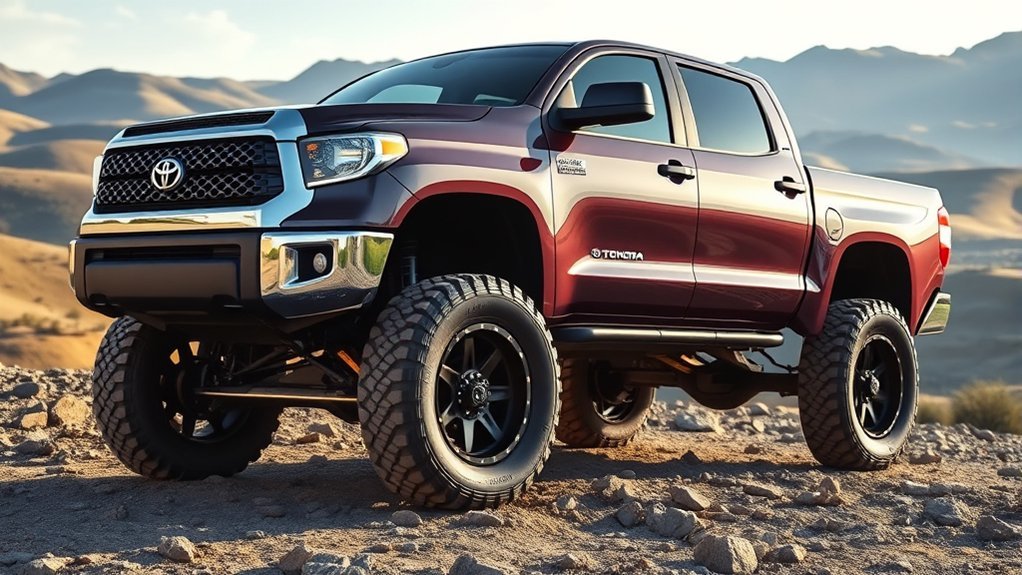
Many Tundra owners successfully run 35-inch tires, especially when the truck has a front lift or leveling kit, a sensible wheel offset, and careful trimming. The most common problem is rubbing at the rear of the front fender liner, mud flaps, bumper corners, skid-plate edges, or body/cab mount area during full-lock turns.
A street-driven truck may seem fine in a parking lot but rub hard when the suspension compresses on a trail. That is why the final test should include full steering lock in both directions, reverse turns, driveway angles, and suspension compression if you plan to off-road.
For most owners, the easiest path is a moderate 35-inch tire, a wheel that does not push the tire too far outward, and a quality alignment. The hardest path is a wide 35×12.50 on a low or negative-offset wheel because that combination increases the tire’s swing arc and often forces more trimming.
Understanding Lift Kit Options for 35-Inch Tire Fitment
A lift gives the tire more room vertically, but it does not solve every clearance problem. Rubbing usually happens because the tire moves forward, backward, inward, and outward while steering and cycling through the suspension travel.
Toyota’s TRD 3-inch lift kit for applicable 2022-and-newer Tundras provides a 3.0-inch lift in front and 2.0-inch lift in back. It includes Bilstein shocks, Roush forged upper control arms, and related hardware. Toyota also notes that this kit is not compatible with TRD Pro, TRD Sport, trucks with Adaptive Variable Suspension, or trucks with air suspension, so verify compatibility before ordering.
[Products Worth Considering]

This spare tire tool kit is designed for the 2004 to 2018 Ford F-150 to help you loosen and tighten wheel lug nuts and manage the spare tire and provided jack functions from underneath the vehicle. It includes the lug nut wrench and extension pieces plus a convenient storage carrying case for organized transport. The jack itself is not included.

This manual duck head tire changer kit makes tire installation and removal simpler by letting you embed the duck head into the tire with applied pressure. The integrated design and durable steel construction help reduce friction and improve efficiency and safety during use. Suitable for 16–21 inch wheels, it’s convenient for cars, trucks, SUVs, and ATV tires, with 24-hour after-sales support.

These universal tire valve stem caps help protect valve cores from dust, debris, and moisture while helping maintain stable tire pressure. The corrosion-resistant metal construction and sealed design provide reliable protection in road grime, mud, and winter conditions. Twist-on installation makes them quick to fit on cars, SUVs, trucks, and motorcycles.
Common Fitment Expectations
| Setup | 35-Inch Fitment Expectation |
| Stock suspension | Usually not recommended for true 35×12.50 tires. Narrow near-35 metric tires may work on some trucks, but rubbing is likely without careful wheel choice and trimming. |
| Leveling kit | Can work with some narrower 35-inch or near-35 sizes, but 35×12.50 often rubs unless offset, caster, and trimming are dialed in. |
| 2.5–3-inch front lift | Best starting point for most 35×12.50 setups. Still expect alignment work and possible liner, mud-flap, bumper, skid-plate, or body/cab mount clearance work. |
| Aggressive low-offset wheels | More likely to rub the outer bumper, fender liner, and flare area. Looks wider but usually requires more trimming. |
Note: A lift kit can change suspension angles. After installation, get a professional alignment and recheck torque after the shop’s recommended break-in mileage.
How Wheel Offset Affects Tire Fitment
Wheel offset is one of the biggest reasons two Tundras with the same tire size can fit completely differently. A higher positive offset tucks the tire inward. A lower or negative offset pushes the tire outward. Neither is automatically better.
More inward offset can create contact near the upper control arm or inner liner. More outward offset can make the tire swing into the bumper, fender liner, mud flap, or flare when turning. That is why offset should be chosen with tire width, wheel width, lift height, and alignment in mind.
[Products Worth Considering]
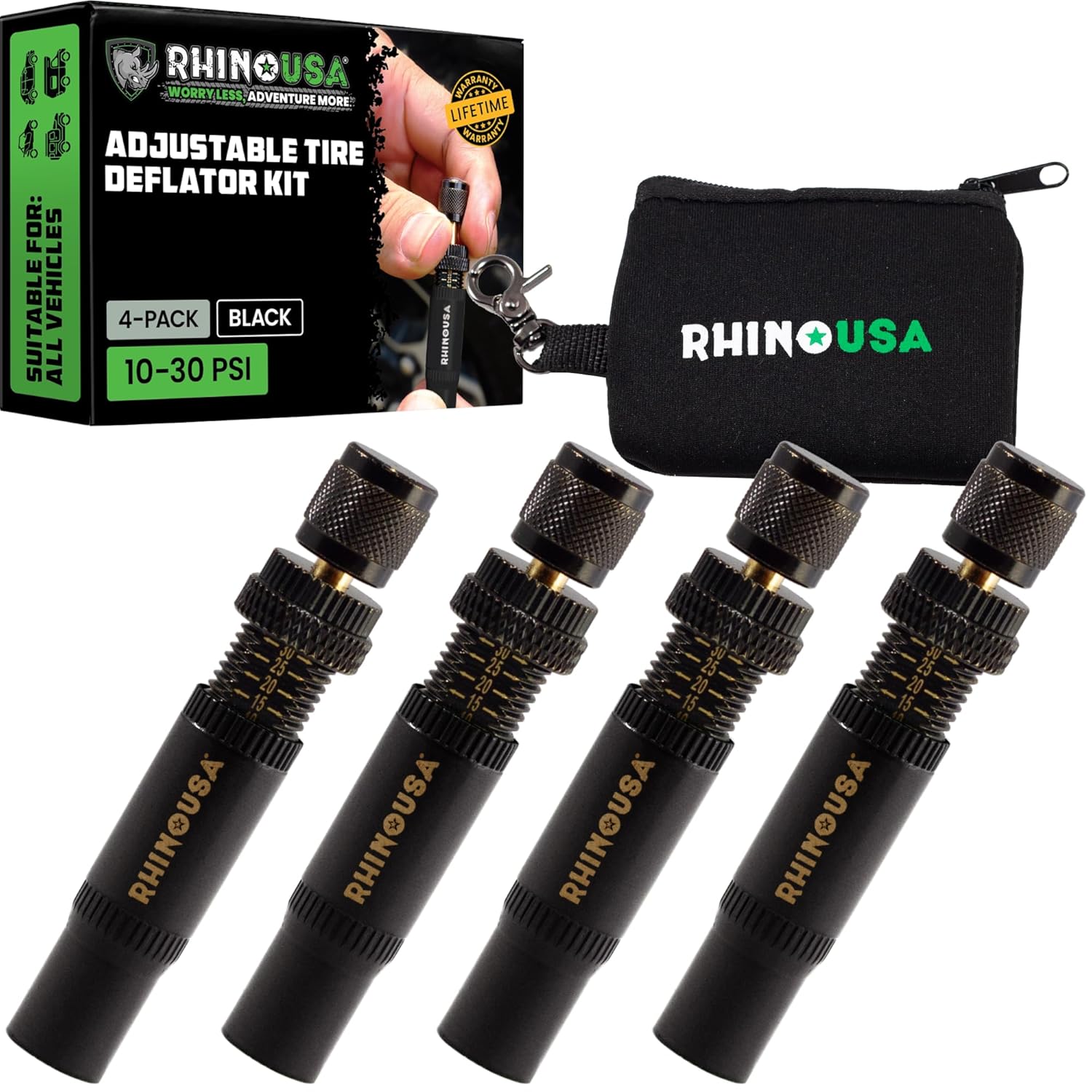
Use the Rhino USA adjustable tire deflators to air down all four tires at once by screwing one deflator onto each valve stem, letting you step away while the tires reach your preset pressure. Each deflator independently adjusts across a 10–30 PSI range with laser-etched indicators for quick setup and verification, making it ideal for beach, sand, and rocky off-road trails.

Replace worn or missing TPMS sensors with a pre-programmed 4-pack designed for compatible GM vehicles. These 315MHz sensors provide real-time tire pressure monitoring and alert you if pressure is too high, too low, or if a rapid air leak occurs. Most installations are ready with minimal relearn effort after mounting, helping improve safety and driving confidence.

These aluminum alloy tire valve stem caps with an O-ring seal help protect valve stems from corrosion while adding a clean, stylish look to your vehicle. The universal fit works across cars, trucks, motorcycles, bicycles, and more, making them an easy upgrade for everyday driving and off-road use. Installation is quick, and the included four-pack keeps all your tires dressed and protected.
Backspacing and Tire Clearance
Backspacing measures from the wheel mounting pad to the inner lip of the wheel. Less backspacing pushes the wheel outward; more backspacing pulls it inward. For many 35×12.50 Tundra setups, an 8.5- to 9-inch-wide wheel is easier to package than a very wide wheel because it keeps the tire shape more controlled.
- Use the tire manufacturer’s approved rim-width range before mounting any tire.
- Test both inner clearance and outer clearance; solving one side can create a problem on the other.
- Do not assume another owner’s offset will work unless your lift, tire, wheel width, and alignment are similar.
Offset Impact on Rubbing
A mild positive offset often gives a cleaner fit than a highly aggressive stance. If the tire sticks far outside the fender, it usually needs more trimming at the bumper and liner. If the tire sits too far inward, it may rub the upper control arm or inner wheel well.
For a daily-driven Tundra, start conservative. Choose the narrowest tire that meets your traction goal, avoid extreme wheel poke, and plan on a test fit before cutting. For a trail-focused Tundra, prioritize clearance at full compression over parking-lot appearance.
What to Expect When Trimming for Clearance
Trimming is common with 35-inch tires, but the amount depends on the exact setup. Start with removable or low-risk areas before cutting metal. The most common spots to inspect are:
- Front mud flaps
- Rear section of the front fender liner
- Front bumper corner or lower valance
- Skid-plate edge
- Wheel-well plastic tabs and push clips
- Body/cab mount area on setups that still rub after liner and bumper trimming
After trimming, smooth sharp edges, protect exposed metal, and secure loose liner sections. A clean liner relocation often looks better and lasts longer than simply cutting large pieces away.
Pro Tip: Mark rub points with painter’s tape, drive slowly in forward and reverse at full lock, then inspect the tape. This shows the exact contact points before you cut.
How to Test for Rubbing Before You Call It Done
A proper fitment check takes more than turning the steering wheel in the driveway. Use this sequence before daily driving, towing, or going off-road:
- Check static clearance: Look at the upper control arm, brake lines, fender liner, bumper, mud flap, and skid plate with the truck parked level.
- Turn full lock both ways: Check forward and reverse. Rubbing can appear only in reverse because the suspension loads differently.
- Compress the suspension: Drive slowly over a driveway angle or ramp and recheck the same areas.
- Inspect after the first drive: Look for shiny plastic, fresh rubber marks, or scraped metal.
- Recheck after alignment: Caster changes can move the tire in the wheel opening and change rubbing points.
Safety, Load Rating, and Daily Driving Checks
Large tires change more than appearance. They can affect braking feel, steering response, acceleration, fuel economy, towing confidence, and speedometer accuracy. NHTSA advises checking the owner’s manual or Tire and Loading Information Label for the correct tire size, and the U.S. Tire Manufacturers Association says replacement tires should match the size, load index, and speed rating recommended by the vehicle or tire manufacturer and should not have lower load-carrying capacity.
Before committing to 35s, confirm these items:
- The tire’s load rating is appropriate for your truck, passengers, cargo, and towing use.
- The wheel width is approved for the tire size.
- The tire pressure is set based on the tire, load, and professional guidance, not only the maximum sidewall pressure.
- The TPMS sensors work correctly after the wheel/tire change.
- The spare tire is usable, safely mounted, and close enough in diameter for emergency use.
- The truck has been aligned after lift, wheel, or tire changes.
A rub-free parking-lot test is not the same as a safe fitment. The real test is full-lock steering, reverse turns, suspension compression, and loaded driving.
Getting Ready for Off-Roading With 35-Inch Tires
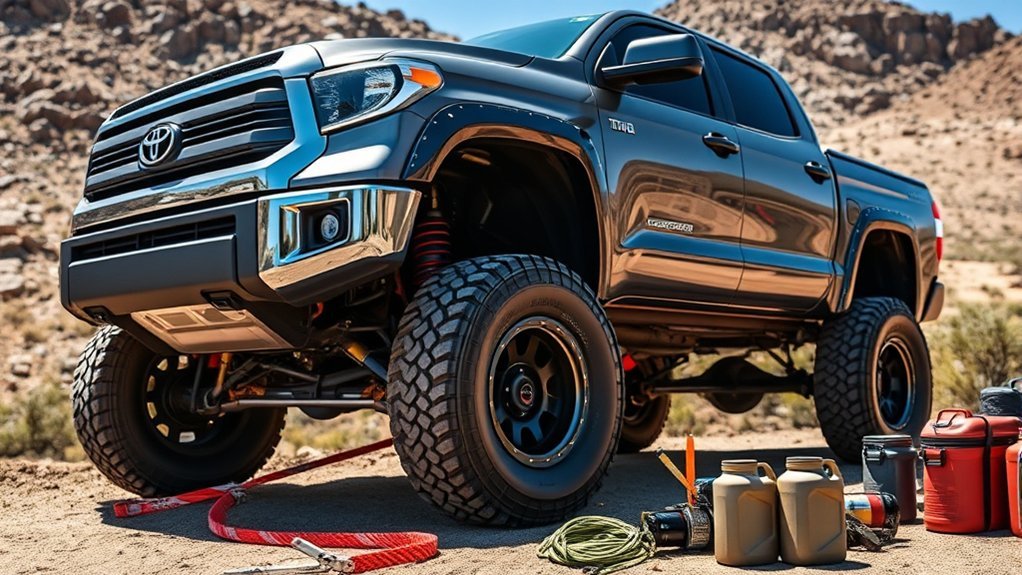
Off-roading adds a margin of movement that street driving does not. The tire can stuff into the fender, turn while compressed, and contact the liner or bumper even if it cleared on pavement. If you plan to use your Tundra on trails, leave more clearance than a street build.
Before a trail trip, check the sidewalls, lug torque, spare tire, jack, recovery points, and tire repair kit. If you air down, use a pressure that matches the terrain, tire construction, and wheel setup, then air back up before highway driving. Toyota also warns that off-roading is inherently dangerous and abusive use can cause personal injury or vehicle damage, so drive within the limits of the truck and the conditions.
Best Tire Brands for 35-Inch Fitment
The best 35-inch tire for a Tundra is the one that matches your actual driving. A heavy mud-terrain may look aggressive, but it can be louder, heavier, and less pleasant on long highway drives. A mild all-terrain may ride better and still give enough trail traction for camping, snow, gravel, and light mud.
[Products Worth Considering]

Keep your tires properly inflated with this analog VONDIOR tire pressure gauge, designed for fast, easy readings without batteries. The swiveling, two-axis hose and large glow dial help you measure at any tire angle with instant visibility. Built with a protective rubber shield, it supports durable, low-maintenance use for cars and trucks.

The 22800 wheel stud installer makes replacing wheel studs quick and secure, saving time and effort during tire service. It uses a ratchet or impact wrench to pull new studs firmly into place, helping when existing studs are too long. Compatible with most automotive wheels and light-duty truck wheel studs, it’s designed for easy, tool-assisted installation.

Secure a full-size spare on your trailer with this powder-coated steel spare tire mount bracket. It fits most 4-, 5-, and 6-lug wheel bolt patterns and mounts to trailer tongues up to 4 in wide and 5 in tall. Built for reliable carry with a max 150 lb load rating and includes zinc-plated hardware for straightforward installation.
Top Tire Brands
Toyo Open Country A/T III, BFGoodrich All-Terrain T/A KO3, and Nitto Ridge Grappler are common choices for Tundra owners who want a strong all-terrain or hybrid-terrain tire. Compare the actual specs before buying because a “35-inch” tire may measure closer to 34.5 to 35.0 inches depending on brand, size, and load range.
- Toyo Open Country A/T III: Good all-terrain choice for drivers who want balanced road manners and trail traction.
- BFGoodrich All-Terrain T/A KO3: Strong option for owners who prioritize all-terrain durability and snow-rated capability.
- Nitto Ridge Grappler: Hybrid-terrain option for drivers who want a more aggressive look and off-road grip than a mild all-terrain.
Performance in Off-Roading
For off-road use, focus on tread pattern, sidewall strength, puncture resistance, and whether the tire performs in your actual terrain. Rock, sand, mud, snow, and gravel all reward different tread designs. Also consider tire weight. Heavier 35s can make the truck feel slower, reduce fuel economy, and increase strain on brakes and suspension parts.
Noise Level Comparison
Noise depends on tread pattern, tire wear, rotation schedule, inflation, and road surface. In general, mild all-terrain tires are quieter than hybrid-terrain and mud-terrain tires. If highway comfort matters, read owner reviews for your exact tire size, not just the tire model, because load range and size can change ride quality.
Frequently Asked Questions
Will 35s rub on a leveling kit?
They can. A leveling kit may clear some narrow 35-inch or near-35 metric tires, but a true 35×12.50 often rubs during full-lock turns or suspension compression. Wheel offset, caster, bumper shape, mud flaps, and liner position all matter.
Can I fit 35-inch tires on stock Tundra wheels?
Sometimes, but it depends on the wheel width, tire width, and inner clearance. Stock-style positive offset can tuck the tire inward, which may help outer fender clearance but can create inner liner or upper-control-arm clearance issues. Always check the tire manufacturer’s approved rim-width range.
Is 35×11.50 easier to fit than 35×12.50?
Yes. A narrower 35-inch tire usually has an easier time clearing the fender liner, mud flap, bumper, and body/cab mount area. If you want the height of a 35 but less trimming, a narrower 35 or metric near-35 size is usually the smarter choice.
Do I need aftermarket upper control arms?
Not always, but aftermarket upper control arms can help restore alignment range after a lift and may improve clearance depending on the design. If your alignment shop cannot achieve safe specs after lifting the truck, UCAs may be necessary.
Will 35-inch tires affect my speedometer and fuel economy?
Yes. Larger and heavier tires can change speedometer and odometer accuracy, reduce fuel economy, slow acceleration, and increase braking effort. Some trucks may be recalibrated with aftermarket tools, but availability depends on model year and equipment.
Will bigger tires affect warranty or Toyota Safety Sense?
They can. Any suspension, tire, or wheel change may affect warranty decisions, driver-assistance calibration, and vehicle behavior. Toyota states its TRD lift kit was engineered to remain compatible with Toyota Safety Sense on applicable trucks, but it also lists model exclusions. Ask your Toyota dealer and installer before modifying the truck.
Conclusion
Fitting 35-inch tires on a Toyota Tundra is realistic, but the cleanest results come from planning the whole package instead of buying tires first. For most 35×12.50 setups, expect about 3 inches of front lift, a careful wheel offset, a professional alignment, and some trimming. If you want fewer clearance problems, consider a narrower 35-inch tire or a metric near-35 size.
The best final check is simple: test the truck at full steering lock, in reverse, and with the suspension compressed. If it clears there, has the right load rating, and drives straight after alignment, your Tundra is much closer to being ready for daily driving and off-road use.
Sources
- Toyota 2024 Tundra eBrochure — OEM tire options, TRD Pro tire listing, and off-road cautions
- Toyota USA Newsroom: Tundra TRD 3-inch Lift Kit — TRD lift height, included parts, warranty notes, and compatibility exclusions
- NHTSA Tire Safety — tire size, tire ratings, tire maintenance, and safety guidance
- U.S. Tire Manufacturers Association: Replacing Tires — replacement tire size, load index, speed rating, and load-carrying guidance
- Toyo Open Country A/T III — all-terrain tire product information
- BFGoodrich All-Terrain T/A KO3 — all-terrain tire product information