Choosing the right wheel width for your Toyota Tundra is not just about stance. The right width helps the tire sit correctly on the rim, keeps the sidewall supported, reduces rubbing risk, and helps the truck feel stable on-road and off-road. The best choice depends on your tire size, tire width, wheel offset, suspension setup, and the approved rim-width range from the tire manufacturer.
Quick Answer
For many Toyota Tundra setups, a 9- to 9.5-inch-wide wheel is the safest all-around choice for 35×12.50 tires. Many 37×12.50 tires also list an 8.5- to 11-inch approved rim range, but a 9.5- or 10-inch wheel is often a better fit for larger, heavier off-road builds. Always confirm the exact tire maker’s approved rim-width range before buying.
Key Takeaways
- Do not choose wheel width by tire height alone. A 35×12.50 and a 35×13.50 need different wheel-width thinking.
- For many 35×12.50 tires, 8.5 to 11 inches is a common approved rim-width range, with 9 to 9.5 inches working well for many Tundras.
- For many 37×12.50 tires, 8.5 to 11 inches is also common, but 9.5 to 10 inches usually gives better sidewall support on heavier off-road setups.
- Offset and backspacing matter as much as width. A wheel that is too far inboard can hit suspension parts; too far outboard can rub the fender liner, bumper, or mud flap area.
- Check load rating, bolt pattern, center bore, TPMS compatibility, and cold tire pressure before driving on a new setup.
At a Glance
| Best All-Around Width | 9 to 9.5 inches for many 35×12.50 Tundra tire setups |
| Larger 37-Inch Setups | 9.5 to 10 inches for many 37×12.50 tires, after confirming the tire’s approved rim range |
| Must Check | Approved rim width, offset, backspacing, load rating, bolt pattern, center bore, and clearance at full lock |
| Biggest Mistake | Buying wheels based only on tire height instead of the tire manufacturer’s approved rim-width range |
Why Wheel Width Matters for Your Tundra Tires
Wheel width affects how the tire bead seats, how the sidewall stands, and how much clearance you have around the fender liner, upper control arm, bumper, and suspension. A wheel that is too narrow can pinch the tire and make the sidewall bulge. A wheel that is too wide can stretch the tire, expose the wheel lip, reduce sidewall protection, and create extra rubbing.
The key is to match the wheel to the tire’s approved rim-width range. This range is published by the tire manufacturer and is usually based on industry tire-and-rim standards. For example, many 35×12.50R17 and 37×12.50R17 light-truck tires are commonly approved for wheels in the 8.5- to 11-inch range, but the exact range can change by tire model, construction, and load rating.
Warning: Do not use tire sidewall maximum pressure as your daily driving pressure. Use the cold inflation pressure listed on your Tundra’s tire and loading label or owner’s manual, unless a qualified tire professional gives you a verified replacement-tire pressure for your exact setup.
Best Wheel Widths for Common Tundra Tire Sizes
The table below gives practical starting points for popular Tundra tire sizes. These are not a substitute for the tire maker’s spec sheet, but they help narrow the search.
| Tire Size | Practical Wheel Width | Best Use | Fitment Notes |
|---|---|---|---|
| 285/70R17 | 8 to 9 inches | Mild upgrade, daily driving, trail use | Often fits more easily than true 35-inch tires, but offset still matters. |
| 35×12.50R17 | 9 to 9.5 inches | Balanced daily/off-road setup | Many models allow 8.5 to 11 inches; 9 to 9.5 inches gives strong sidewall support. |
| 35×13.50R17 | 9.5 to 10.5 inches | Wide stance, aggressive off-road look | Expect more rubbing risk and more trimming than a 12.50-wide tire. |
| 37×12.50R17 | 9.5 to 10 inches | Lifted Tundra, off-road build | Many models allow 8.5 to 11 inches, but clearance and gearing become bigger concerns. |
| 37×13.50R17 | 10 to 11 inches | Large custom build | Usually needs lift, trimming, careful offset, and a professional test fit. |
[Products Worth Considering]

The SEESII cordless impact wrench delivers high tightening and loosening power for fast wheel bolt and industrial bolt work. Its brushless motor and variable-speed 3 forward/2 reverse modes help you control precision installs and stubborn nut removal. A dual-battery system with rapid charging and an included storage case make it ready for home, car, and jobsite use.

These universal tire valve stem caps help protect valve cores from dust, debris, and moisture while helping maintain stable tire pressure. The corrosion-resistant metal construction and sealed design provide reliable protection in road grime, mud, and winter conditions. Twist-on installation makes them quick to fit on cars, SUVs, trucks, and motorcycles.

These aluminum alloy tire valve stem caps with an O-ring seal help protect valve stems from corrosion while adding a clean, stylish look to your vehicle. The universal fit works across cars, trucks, motorcycles, bicycles, and more, making them an easy upgrade for everyday driving and off-road use. Installation is quick, and the included four-pack keeps all your tires dressed and protected.
Optimal Wheel Widths for 35-Inch Tires
For a Toyota Tundra running 35-inch tires, the most common sweet spot is a 9- to 9.5-inch-wide wheel, especially for a 35×12.50 tire. This width usually keeps the sidewall supported without stretching the tire too much.
That does not mean every 35-inch tire requires the same wheel. A 35×11.50 tire may work better on a narrower wheel than a 35×13.50 tire. The correct answer starts with the tire maker’s approved rim-width range.
- For 35×12.50 tires: many tire models commonly list an approved rim-width range around 8.5 to 11 inches. A 9- or 9.5-inch wheel is a strong middle-ground choice.
- For daily driving: avoid going too wide. A moderate wheel width helps protect the wheel lip and keeps the tire from feeling harsh.
- For off-road use: a slightly narrower wheel within the approved range can help keep more sidewall bulge for wheel protection, especially when airing down responsibly.
- For stance builds: wider wheels and aggressive negative offset can look good, but they increase rubbing, fender poke, and tire-sling risk.
Pro Tip: If you are deciding between a 9-inch and 10-inch wheel for a 35×12.50 tire, choose 9 inches for more sidewall protection and 10 inches only if the tire manufacturer approves it and you want a flatter sidewall shape.
[Products Worth Considering]

This professional wheel and rim brush kit makes it easy to lift brake dust, grime, and dirt from wheels and tires without scratching finishes. The brushes feature soft, metal-free wool heads and a flexible 360-degree rim brush design for reaching hard-to-clean areas. Includes multiple brush types plus accessories for thorough car, motorcycle, and general vehicle detailing.

The Ziopetru adjustable magnetic wheel alignment tool helps you check and restore camber and caster positioning after removing and reinstalling undercarriage components. With a clear leveling/bubble measurement system and an easy zeroing adjustment knob, it supports precise horizontal angle checking. The strong magnetic base mounts to metal surfaces for convenient use at home on cars, motorcycles, trucks, vans, and SUVs.

This 3-piece wheel brush set makes it easy to clean wheels and tires with soft, scratch-free brushes designed for lifting brake dust and grime. The flexible rim brush bends up to 360 degrees to reach hard-to-access areas for a thorough clean, while the comfortable grip helps control during detailing. A dedicated detailing brush supports gentle cleaning for sensitive surfaces, including interior use.
Comparing Wheel Widths for 35-Inch and 37-Inch Tires
When comparing 35-inch and 37-inch tires, the tire’s width matters more than the tire’s height. A 37×12.50 tire can share a similar approved rim-width range with a 35×12.50 tire, while a 37×13.50 tire usually needs a wider wheel.
[Products Worth Considering]

This professional wheel and rim cleaning brush set lifts brake dust, grime, and dirt with soft, scratch-free microfiber and synthetic wool fibers. The rim brush bends up to 360 degrees for easy access to hard-to-reach areas around spokes, lips, and faces. Ideal for thorough cleaning of car, truck, motorcycle, bicycle, RV, and more wheel and tire surfaces.

Replace or upgrade your zero-turn lawn mower tires with a universal fit flat-free tire and wheel assembly in a convenient 2-pack. Smooth tread front-caster style helps turning with reduced turf damage, while flat-free design eliminates the maintenance and downtime of air-filled flats. The included adapter kit supports 5/8-inch axles and hub lengths from 3.4 to 5 inches for compatibility across most ZTR mowers.

Vigorder rubber cement glue delivers superior adhesion and cures quickly within about 30 seconds for seamless rubber bonding. Once cured, it helps provide a strong, durable, waterproof seal that holds up to vehicle weight, pressure, and heat. Suitable for cars, motorcycles, trucks, bicycles, and off-road tires, it’s designed for emergency patch and maintenance repairs.
Optimal Wheel Widths
For many Tundra owners, these are practical starting points:
- 35×12.50 tires: 9 to 9.5 inches is the best all-around range for daily driving and trail use.
- 37×12.50 tires: 9.5 to 10 inches is a strong choice for a lifted truck, but many tire models may also approve 8.5 to 11 inches.
- 13.50-wide tires: look at 10 inches and wider, depending on the tire maker’s spec sheet.
Tire Compatibility Considerations
A tire should only be mounted on a wheel within its approved range. If the wheel is too narrow, the tread can crown and the sidewalls can feel vague. If the wheel is too wide, the tire may lose sidewall protection, ride harsher, and become more vulnerable to wheel damage off-road.
You also need to match the load index and wheel load rating to the Tundra’s weight, payload, and towing use. A large tire with the wrong load rating is not a safe upgrade, even if it physically fits.
Impact on Vehicle Handling
Wheel width changes the tire’s shape. A wider wheel can make steering feel sharper because the sidewall stands more upright. A narrower wheel within the approved range can keep more sidewall bulge, which can protect the wheel and help off-road comfort. Neither choice is automatically better; it depends on how you use the truck.
The best Tundra wheel width is the one that keeps the tire inside its approved rim range, clears the truck at full lock and compression, and matches the way you drive.
The Impact of Wheel Width on Performance
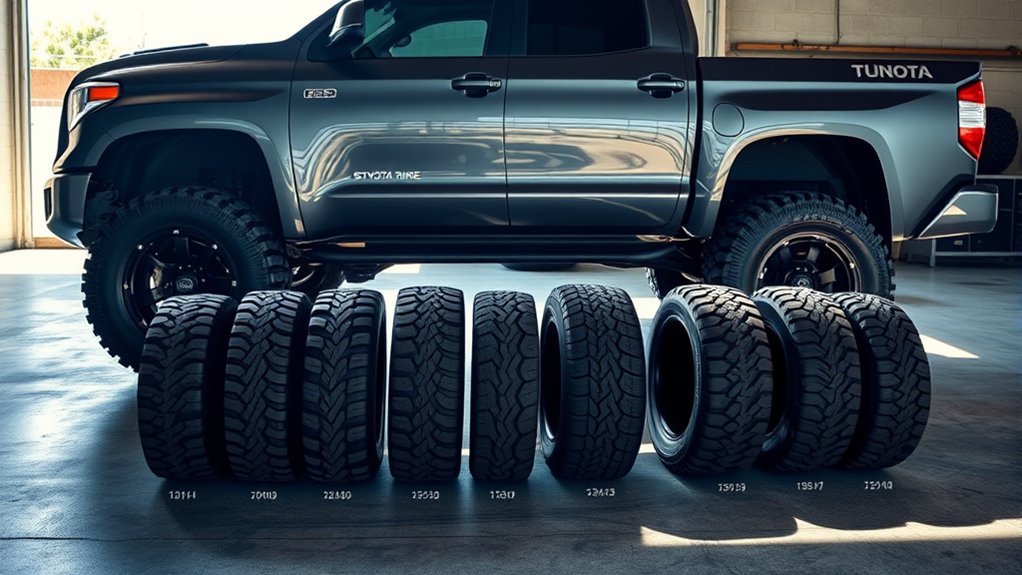
Wheel width affects performance in four main ways: sidewall support, steering response, tread contact, and clearance. A good wheel width helps the tire work as designed. A poor wheel width can make the same tire feel sloppy, harsh, or more likely to rub.
Optimal Tire Contact Patch
The goal is not to make the tire as wide as possible. The goal is to let the tread sit naturally on the road or trail. If the wheel is too narrow, the tire can bulge too much and may not use the tread evenly. If the wheel is too wide, the sidewall may be pulled outward and the tire can lose some impact protection.
For most Tundra owners running 35×12.50 tires, a 9- to 9.5-inch wheel gives a balanced contact patch and good sidewall shape. For heavier 37-inch off-road setups, a 9.5- or 10-inch wheel often feels more controlled, as long as the tire maker approves that width.
Handling and Stability Factors
Handling is also affected by offset, tire pressure, alignment, and suspension geometry. A wider wheel with aggressive negative offset can increase track width and make the truck look more planted, but it can also increase scrub radius, steering effort, and rubbing at the outer fender area.
After changing wheel width or tire size, have the truck aligned and inspect for contact at full steering lock, over bumps, and with the suspension compressed. This is especially important with 35- and 37-inch tires.
How to Select the Ideal Wheel Width for Your Tundra
Use this process before buying wheels for your Toyota Tundra:
- Confirm your Tundra year and generation. Wheel bolt pattern and fitment differ by year. Many 2007–2021 Tundras use a 5×150 bolt pattern, while many 2022+ Tundras use 6×139.7.
- Choose the tire size first. Decide whether you are running a 285/70R17, 35×12.50, 35×13.50, 37×12.50, or another size.
- Check the tire manufacturer’s approved rim-width range. This is the rule that matters most.
- Pick a wheel width near the middle of that range. For many Tundra builds, this means 9 to 9.5 inches for 35×12.50 tires and 9.5 to 10 inches for 37×12.50 tires.
- Match offset and backspacing. Avoid choosing width without checking how far the wheel sits inboard or outboard.
- Verify load rating. The wheel and tire must be rated for the truck, payload, passengers, and towing use.
- Test fit before final installation. Check brake clearance, upper control arm clearance, fender liner clearance, mud flap contact, and bumper/cab mount area.
Note: Stock Tundra wheel width varies by year and trim. Some late-model setups use 18-, 20-, or 22-inch wheels in different widths. Check the wheel stamping, door placard, owner information, or a Toyota dealer before assuming your stock wheels are 8 inches wide.
Offset, Backspacing, and Rubbing
Wheel width tells you how wide the wheel is. Offset tells you where that width sits relative to the hub. That is why two 17×9 wheels can fit very differently if one has a positive offset and the other has a negative offset.
- More positive offset: wheel sits farther inward. This can increase risk of contact with the upper control arm or suspension.
- Zero offset: common middle ground for many aftermarket off-road wheels, depending on the Tundra generation and tire size.
- Negative offset: wheel sits farther outward. This adds stance but increases fender liner, bumper, mud flap, and paint-chip issues.
For 35-inch tires, mild negative offset may be enough depending on suspension and tire width. For 37-inch tires, expect more careful trimming, lift, and alignment work. Do not assume a wheel fits just because another Tundra owner runs the same tire height; tire brand, tread width, wheel offset, and suspension setup can change the result.
Troubleshooting Common Wheel Width Fitment Issues
If your Tundra rubs, wanders, shakes, or wears tires unevenly after a wheel upgrade, do not blame wheel width alone. Check tire pressure, alignment, wheel balance, offset, suspension clearance, and whether the tire is approved for the wheel width.
| Problem | Likely Cause | What to Check | Fix |
|---|---|---|---|
| Rubbing at full turn | Tire too wide, offset too aggressive, or liner/mud flap contact | Fender liner, mud flap, bumper corner, cab mount area | Adjust alignment, trim liner, change offset, or choose narrower tire/wheel |
| Rubbing on suspension | Too much positive offset or too much backspacing | Upper control arm and inner sidewall clearance | Use a different offset or wheel spacer only if professionally approved and safely installed |
| Uneven tire wear | Poor alignment, wrong pressure, or poor width match | Toe, camber, caster, pressure, tread pattern | Alignment and pressure correction after installation |
| Harsh ride | Wheel too wide, pressure too high, or low-profile setup | Cold tire pressure and sidewall shape | Set correct cold pressure and stay within tire-approved rim width |
| Vibration after install | Balance issue, hub fit issue, or tire uniformity problem | Road-force balance, hub-centric fit, lug torque pattern | Rebalance, inspect hub rings if needed, and retorque correctly |
Frequently Asked Questions
How wide are stock Tundra wheels?
Stock Toyota Tundra wheel width depends on the year, generation, trim, and tire package. Many Tundras use factory wheels around 7.5 to 8.5 inches wide, but some packages differ. Check the wheel stamping, tire placard, owner information, or a Toyota dealer before ordering tires for stock wheels.
What wheel width is best for 35×12.50 tires on a Tundra?
A 9- to 9.5-inch wheel is usually the best all-around choice for many 35×12.50 Tundra setups. Many 35×12.50 tires are approved for a wider range, often around 8.5 to 11 inches, but the exact range must come from the tire manufacturer.
Can I run 37-inch tires on 9-inch wheels?
Sometimes, yes, if the exact 37-inch tire is approved for a 9-inch wheel. Many 37×12.50 tires allow 8.5- to 11-inch wheels, but a 9.5- or 10-inch wheel may give better sidewall support for a heavy lifted truck. Always confirm the tire’s data sheet before mounting.
Is a wider wheel better for off-roading?
Not always. A wider wheel can improve sidewall support and steering response, but a slightly narrower wheel within the approved range can protect the wheel lip and keep more sidewall bulge. For off-road use, stay within the approved rim range and choose width based on tire size, terrain, and pressure strategy.
Do I need new wheels for 35-inch tires on a Tundra?
Maybe. Some stock wheels may be wide enough for certain 35-inch tires, but the tire must be approved for that wheel width. You also need enough offset and clearance. If the stock wheel is too narrow or sits too far inward, aftermarket wheels may be the safer fit.
Conclusion
The best wheel width for a Toyota Tundra depends on the exact tire size, not just whether the tire is 35 or 37 inches tall. For many 35×12.50 tires, a 9- to 9.5-inch wheel is the best balanced choice. For many 37×12.50 tires, a 9.5- to 10-inch wheel is a strong starting point, although the approved rim-width range may be wider.
Before buying, confirm your Tundra’s year, bolt pattern, center bore, offset needs, tire load rating, wheel load rating, and the tire manufacturer’s approved rim-width range. Then test fit the setup before final installation. That extra step helps prevent rubbing, poor handling, premature wear, and expensive fitment mistakes.
Sources
- NHTSA TireWise tire safety guide — supports tire size, tire placard, and cold inflation pressure guidance.
- Tire Rack: What Is the Rim Width Range for a Tire? — supports rim-width range and section-width change explanations.
- The Tire and Rim Association — supports industry tire/rim interchangeability standards.
- Toyota Owners Manual: Tundra wheels — supports using recommended wheel sizes and safe wheel replacement guidance.
- BFGoodrich 35×12.50R17 tire size listings — supports checking tire-specific manufacturer fitment data before buying.
- Toyo Open Country R/T tire information — supports checking model-specific tire construction and fitment details.