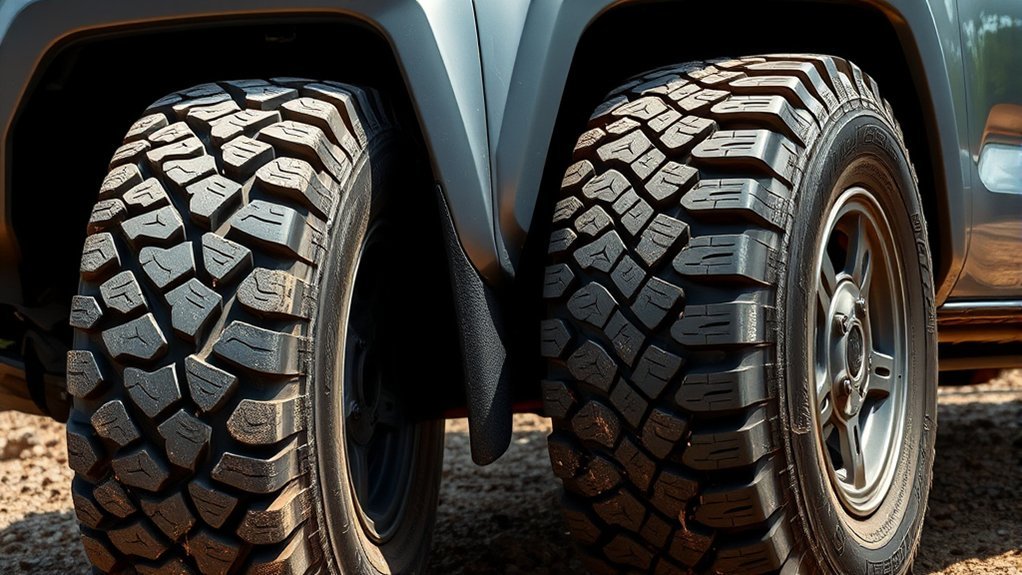
Choosing between Load Range C and Load Range E tires for your Toyota Tacoma is really a choice between comfort, weight, load capacity, and toughness. For most unloaded daily driving, a C-rated light-truck tire usually feels better and is often lighter. For frequent towing, hauling, overlanding weight, or sharp rocky trails, an E-rated tire can make more sense.
Quick Answer
Choose Load Range C for a Tacoma that mostly commutes, runs light trails, and carries normal cargo. Choose Load Range E if you regularly tow, haul near payload, carry armor/overlanding gear, or drive rocky terrain. Do not choose by the letter alone; match the tire size, load index, and cold PSI guidance.
Key Takeaways
- Load Range C is usually the better Tacoma tire choice for daily driving, lighter weight, and a more compliant ride.
- Load Range E is better when the truck works harder: towing, hauling, loaded overlanding, construction use, or rough rocky trails.
- The load index and max load matter more than the letter by itself because capacity changes by tire size and model.
- The PSI stamped on the sidewall is a maximum-load rating, not automatically the correct daily-driving pressure.
- For stock-size tires, start with the Tacoma door placard or Owner’s Manual; for LT tire swaps, use tire-manufacturer load-inflation data or a trusted tire professional.
At a Glance
| Time Required | 10–20 minutes to check your door placard, tire size, load index, payload needs, and tire specs. |
| Difficulty | Easy for normal tire shopping; moderate if your Tacoma has aftermarket wheels, lift, armor, camper weight, or non-stock tire sizes. |
| Tools Needed | Tacoma Owner’s Manual or tire placard, current tire size, load index, payload/towing numbers, tire pressure gauge, and manufacturer tire specs. |
| Cost | The decision costs nothing, but Load Range E tires often cost more and may add weight. Final tire price depends on size, brand, tread, and availability. |
Comparing Load Range C and E Tires for Your Tacoma
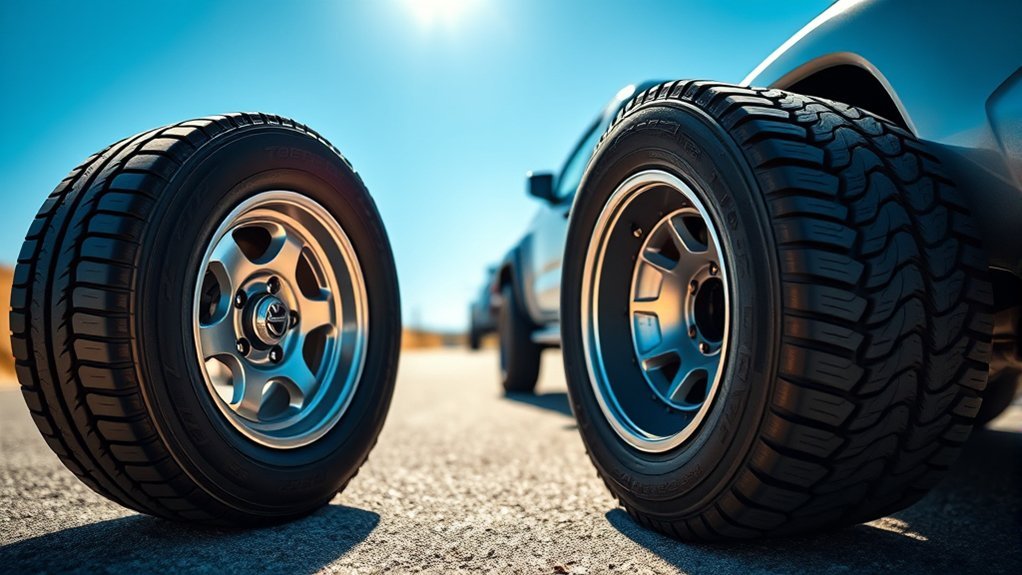
Load Range C and Load Range E are both common light-truck tire options for a Toyota Tacoma, but they are built for different priorities. Load Range C is commonly a lighter-duty LT option that can ride smoother and feel less heavy on the road. Load Range E is a heavier-duty LT option with more load capacity in many comparable sizes, which helps when the truck is loaded, towing, or used in harsher off-road conditions.
The important part is this: do not shop by the letter alone. A tire’s real capacity depends on its size, load index, maximum load rating, construction, and inflation pressure. Tire Rack explains that maximum load is tied to size, construction, and inflation pressure, not just the load-range letter. That means one C-rated tire may be enough for one Tacoma setup, while another Tacoma with armor, drawers, a roof tent, tools, or trailer tongue weight may justify an E-rated tire.
| Factor | Load Range C | Load Range E |
|---|---|---|
| Best fit | Daily driving, lighter loads, mild trails | Towing, hauling, overlanding weight, rocky terrain |
| Ride comfort | Usually smoother and more compliant | Usually firmer, especially when the truck is unloaded |
| Weight | Often lighter | Often heavier, depending on size and model |
| Fuel economy | Usually better if tire size and tread are similar | May reduce MPG because of weight, tread, and rolling resistance |
| Load capacity | Enough for many Tacomas when matched correctly | Higher in many comparable LT sizes |
| Off-road durability | Good for gravel, dirt, sand, and moderate trails | Better suited to sharp rocks, heavy gear, and repeated trail abuse |
Note: A modern “6-ply” or “10-ply” rating does not mean the tire literally has six or ten plies. It is an equivalent-strength rating from older tire construction systems.
[Products Worth Considering]

Upgrade your Toyota’s wheels with durable aluminum alloy valve stem caps that help protect valve cores from corrosion and direct exposure to road grime, clay, water, and snow. Rubber rings improve sealing to help prevent air leakage and maintain stable tire pressure for safer driving. These caps are easy to install or remove without tools and add a unique, stylish look to your car.

These aluminum alloy tire valve stem caps with an O-ring seal help protect valve stems from corrosion while adding a clean, stylish look to your vehicle. The universal fit works across cars, trucks, motorcycles, bicycles, and more, making them an easy upgrade for everyday driving and off-road use. Installation is quick, and the included four-pack keeps all your tires dressed and protected.

Keep your tires properly inflated with this analog VONDIOR tire pressure gauge, designed for fast, easy readings without batteries. The swiveling, two-axis hose and large glow dial help you measure at any tire angle with instant visibility. Built with a protective rubber shield, it supports durable, low-maintenance use for cars and trucks.
How Load Range Affects Tacoma Performance
Load range affects your Tacoma through four main areas: ride quality, steering feel, load capacity, and tire weight. A C-rated tire can make the truck feel more responsive and comfortable when empty. An E-rated tire can feel more stable when the truck is carrying real weight, but it may also feel firmer over potholes, expansion joints, and rough pavement.
Load Range vs. Load Index
Load range is the letter rating, such as C or E. Load index is the numeric service description that tells you how much weight the tire can carry at its rated pressure. When comparing Tacoma tires, check both. Two tires can both be Load Range E but carry different maximum loads because they are different sizes or have different service descriptions.
For a Tacoma, the safest rule is simple: the replacement tire should meet or exceed the required load capacity for your vehicle and use. If your truck is mostly stock and lightly loaded, C may be plenty. If your truck has steel bumpers, sliders, skids, drawer systems, a bed rack, rooftop tent, tools, recovery gear, or a trailer, E may be the safer long-term choice.
Impact on Fuel Efficiency
Load Range E tires are often heavier than similar C-rated tires, and that extra rotating weight can affect acceleration, braking feel, and MPG. The difference is not a universal “one MPG” rule, though. Tire size, tread pattern, compound, inflation pressure, wheel weight, gearing, lift height, and driving speed all matter.
FuelEconomy.gov notes that keeping tires properly inflated can improve gas mileage, while underinflated tires can lower fuel economy by about 0.2% for every 1 PSI drop in the average pressure of all tires. That does not mean you should overinflate an E-rated tire for better MPG. It means you should run the correct cold pressure for your Tacoma, tire, and load.
The right pressure is not the highest number on the sidewall. It is the pressure that safely supports your Tacoma’s actual load while preserving handling, braking, tread wear, and comfort.
Choosing the Right Load Range for Your Tacoma Tires
Start with how your Tacoma is actually used, not how you imagine it might be used once a year. A lightly loaded commuter Tacoma has different tire needs than a Tacoma carrying camping gear every weekend or towing near its limits.
- Check the door placard and Owner’s Manual. Toyota says recommended tire pressure is listed in the Specifications section of the Owner’s Manual or on the tire information placard, usually on the driver’s side door post.
- Write down your current tire size and load index. Do not rely only on “C” or “E.” Match the actual capacity.
- Add your real-world load. Include passengers, bed cargo, tools, armor, camper shell, rack, rooftop tent, water, fuel, recovery gear, and trailer tongue weight.
- Decide where the truck spends most of its time. Pavement and mild forest roads favor C. Loaded towing, hauling, and rocks favor E.
- Use proper cold PSI. For stock-type replacements, use the placard/manual. For LT conversions or non-stock sizes, use tire-manufacturer load-inflation data or ask a tire professional.
Warning: Do not exceed your Tacoma’s payload, axle ratings, tire load rating, or towing limits. A stronger tire does not increase the truck’s legal or mechanical payload capacity.
[Products Worth Considering]

Upgrade your ride with a 2-pack set of 26x1.95 folding mountain bike tires built for dependable traction on mud, rocks, and trail surfaces. A reinforced puncture-resistant layer helps protect against sharp debris, while included butyl inner tubes provide strong sealing and shock absorption. Ready for fast swaps with included tire levers and universal sizing for most bikes.

This tire inflator with pressure gauge delivers long-lasting performance with a durable rubber-protected gauge and sturdy build. The longer hose and 360 swivel air chuck help you seal the valve securely and keep your hands free while measuring, inflating, or deflating. It’s battery-free for reliable use and provides ±2 PSI accuracy in the mid-range for most typical tires, with universal compatibility for 1/4 NPT compressor outputs.

ETENWOLF T300 is a calibrated digital tire pressure gauge for accurate readings from 3 to 200 PSI across light and heavy-duty vehicles. It includes thermal compensation for reliable performance in extreme cold or heat, with an auto shut-off to extend battery life and an LED for easier reading. The sturdy design supports rugged everyday use, making it ideal for pickups, RVs, and industrial applications.
Real-World User Experiences With Load Range C and E Tires
Tacoma owners often describe the same pattern: C-rated tires feel nicer on pavement, while E-rated tires feel more reassuring when the truck is loaded or crawling through sharp rock. That does not mean E is always better. It means E gives up some comfort and weight efficiency in exchange for more load margin and a tougher feel.
- Daily drivers often prefer Load Range C because the ride is less harsh and the tire is usually lighter.
- Weekend trail drivers can do well with Load Range C if the truck is not heavily loaded and the tire has a strong all-terrain construction.
- Overlanders often lean toward Load Range E because gear weight adds up quickly.
- Towing users may prefer E for stability and load margin, especially with tongue weight in the bed area.
- Rocky-terrain drivers often choose E for stronger sidewalls and casing support, but tread design and pressure still matter.
Pro Tip: If your Tacoma is modified, weigh it loaded for a real trip. Many trucks are heavier than owners think once bumpers, skids, sliders, racks, tents, tools, water, and recovery gear are installed.
Why Sidewall Protection Matters for Tires
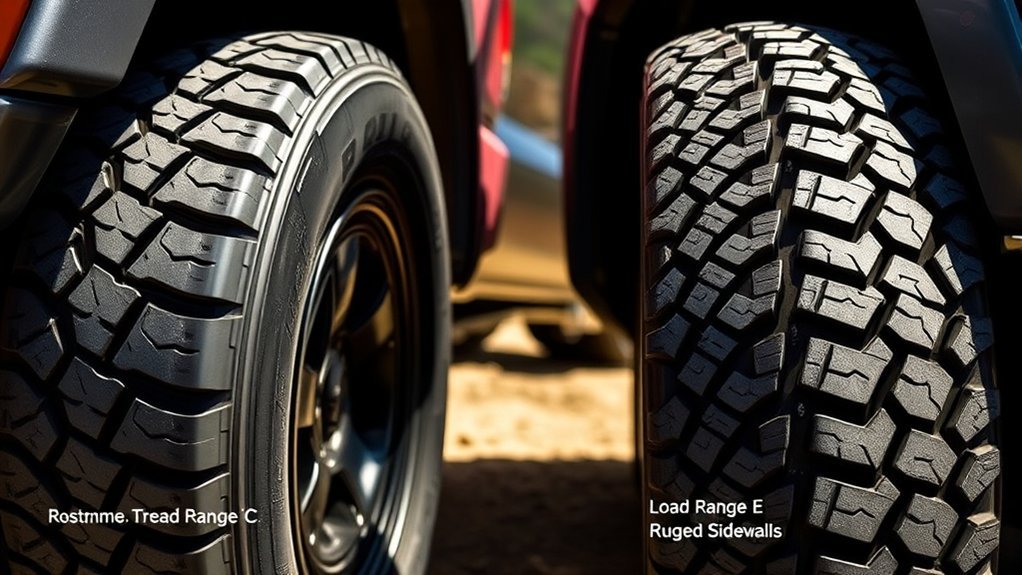
Sidewall protection matters because many off-road tire failures happen where the tire meets rocks, roots, ruts, and trail debris. E-rated tires often have a stiffer casing and higher load capacity, which can help when the truck is heavy or the trail is harsh. But sidewall protection is not just about the load letter.
Look at the tire’s full construction: sidewall design, tread compound, shoulder lugs, tread depth, puncture-resistance features, and the manufacturer’s intended use. A well-built C-rated all-terrain tire can be a better Tacoma choice than a cheap E-rated tire that is too stiff, too heavy, or poorly suited to your terrain.
Enhanced Durability Insights
Load Range E tires can be a smart upgrade when your Tacoma sees repeated abuse: rocky trails, heavy overlanding loads, trailer towing, jobsite use, or long remote trips where a flat is more than an inconvenience. The stiffer casing can add stability under load and can reduce tire squirm when the truck is packed.
For a lightly loaded Tacoma, that same stiffness can feel like a penalty. The truck may ride rougher, the tire may cost more, and the extra weight may dull acceleration. That is why the best tire is the one matched to your truck’s real weight and terrain, not simply the highest load range available.
Puncture Resistance Factors
Thicker or stiffer does not automatically mean puncture-proof. Puncture and cut resistance depend on tire construction, air pressure, tread design, speed, impact angle, terrain, and driver behavior. Airing down too far on a heavy truck can expose the sidewall. Running too much pressure off-road can make the tire less able to conform around sharp edges.
| Tire Type | Sidewall Feel | Best Tacoma Use |
|---|---|---|
| Load Range C | More compliant | Daily driving, light cargo, mild to moderate trails |
| Load Range E | Stiffer and more load-focused | Towing, hauling, rocky trails, heavy overlanding builds |
| Premium all-terrain construction | Varies by model | Best choice when load rating, tread, and terrain all match your use |
Evaluating Weight and Fuel Efficiency of C vs. E Tires
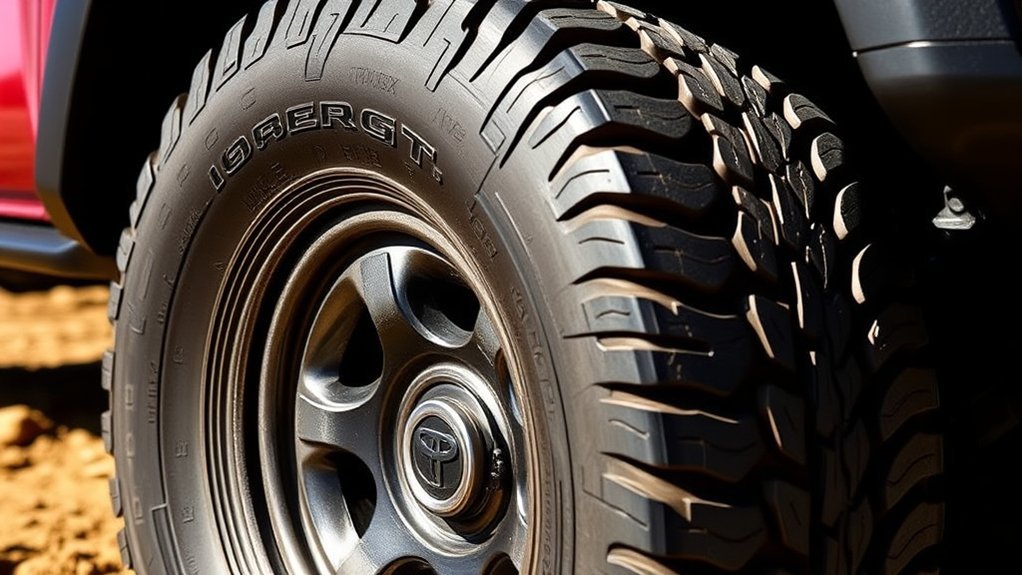
Weight is one of the biggest reasons Tacoma owners hesitate before choosing Load Range E. A heavier tire adds rotating mass. That can affect acceleration, braking feel, ride comfort, and fuel economy. The exact difference depends on the tire size and model, so always check the manufacturer’s spec sheet before buying.
- Load Range C is often lighter and more comfortable for everyday use.
- Load Range E often adds load capacity and toughness, but usually with more weight.
- Aggressive tread can affect MPG as much as, or more than, the load range.
- Incorrect pressure can hurt fuel economy, tread wear, and handling.
- Lift kits and larger tires can add wind resistance, change gearing feel, and further reduce MPG.
If your Tacoma is a commuter with occasional camping trips, Load Range C may provide the best balance. If your Tacoma is always loaded, tows often, or spends time in sharp rocks, the extra weight of E may be worth it.
Debunking Common Myths About Tire Ratings
Tire ratings are often misunderstood. The biggest mistake is assuming that a higher load range automatically means the “best” tire. It means a tire is built for more load in that size and construction category. It does not automatically mean the tire rides better, grips better, stops shorter, lasts longer, or resists every puncture better.
Understanding Load Ratings
Use load range as one part of the decision. Then check the load index, maximum load, speed rating, tire size, wheel compatibility, and manufacturer specs. For a Tacoma, the replacement tire also needs to fit safely without rubbing, overloading the wheel, confusing safety systems, or creating poor handling.
- Load Range C can be ideal for everyday Tacoma use.
- Load Range E can be ideal for heavier loads and tougher work.
- Higher load range usually means a stiffer ride when unloaded.
- Load index confirms actual carrying capacity.
- The sidewall maximum PSI is not automatically the correct daily PSI.
Strength Misconceptions Explained
Load Range E is not a magic shield. A sharp rock, poor line choice, old tire, overloaded truck, or wrong pressure can still damage an E-rated tire. On the other hand, a high-quality C-rated tire can perform very well on a Tacoma that is not heavily loaded. Choose based on the whole tire and the whole truck.
Note: If you replace only one or two tires, match size, construction, load capacity, and speed rating as closely as possible. Mismatched tires can affect handling, braking, traction control, and four-wheel-drive behavior.
Recommended PSI for Load Range C and E Tires
The safest PSI answer is not a single number. It depends on tire size, load, whether the tire is P-metric or LT, the truck’s actual weight, and the tire manufacturer’s load-inflation data.
For stock-size Tacoma tires, start with the Toyota Owner’s Manual or tire information placard. Toyota says the recommended tire pressure is listed in the Specifications section of the Owner’s Manual or on the tire information placard, usually on the driver’s side door post. NHTSA also advises drivers to use the recommended cold inflation pressure on the vehicle placard or certification label.
For aftermarket LT C or E tires, especially if you changed size, ask the tire manufacturer or installer for the correct load-inflation guidance. An E-rated tire may have a high maximum sidewall PSI, but running that maximum pressure on an unloaded Tacoma can cause a harsh ride and uneven wear.
- Daily driving: Use the placard/manual as your starting point for stock-size tires.
- Aftermarket LT tires: Use load-inflation data to match the tire pressure to the truck’s actual axle load.
- Towing or hauling: Pressure may need adjustment within safe limits based on load, tire specs, and manufacturer guidance.
- Off-road use: Airing down can improve traction and comfort, but go too low and you risk sidewall damage or bead loss.
- Routine checks: Check pressure cold with a quality gauge, especially before long trips or towing.
[Products Worth Considering]

The SAFELIFE dial tire tread depth gauge measures tread depth in 1/32 inch increments with clear, easy-to-read 2-inch dial face. Color zones using a traffic light system help you quickly judge whether tread is low, marginal, or ample for safer driving. Built with a durable zinc cast body and a metal detect probe for precise, comfortable use across cars, motorcycles, trucks, and buses.

This ALL-TOP auto-stop tire deflator valve kit lets you air down off-road tires quickly without watching pressure, automatically stopping when your preset PSI is reached. Each valve is individually calibrated for reliable performance with an acceptable +/- 2 PSI tolerance. The adjustable deflator range covers 10 to 30 PSI and includes four valves plus valve caps and a zipper pouch for easy setup on trucks, SUVs, RVs, UTVs, and powersports.

The 22800 wheel stud installer makes replacing wheel studs quick and secure, saving time and effort during tire service. It uses a ratchet or impact wrench to pull new studs firmly into place, helping when existing studs are too long. Compatible with most automotive wheels and light-duty truck wheel studs, it’s designed for easy, tool-assisted installation.
User Preferences: Daily Driving vs. Off-Roading
If your Tacoma spends most of its time on pavement, the comfort advantage of Load Range C is hard to ignore. The truck will usually feel smoother, lighter, and more responsive than it would on a heavy E-rated all-terrain in the same general size.
If your Tacoma is built for trail work, towing, or overlanding, Load Range E becomes easier to justify. The added load capacity and stiffer casing can help when the truck is carrying real weight. It is especially useful when a flat tire would be more than a minor inconvenience.
Choose Load Range C If
- Your Tacoma is mostly stock or lightly modified.
- You drive mostly pavement with occasional dirt, gravel, beach, or mild trail use.
- You value ride comfort and fuel economy.
- You rarely tow or haul heavy loads.
- You want a lighter all-terrain setup.
Choose Load Range E If
- You tow regularly or carry heavy bed loads.
- Your Tacoma has armor, sliders, skids, racks, drawers, tools, a camper shell, or rooftop tent weight.
- You drive rocky trails where sidewall support matters.
- You take long remote trips where durability is a priority.
- You are willing to accept a firmer ride and possible MPG tradeoff.
Final Thoughts on Selecting the Best Tires for Your Tacoma
The best tire load range for your Tacoma depends on weight, terrain, and how often the truck works hard. For most daily-driven Tacomas, Load Range C offers the best mix of comfort, efficiency, and capability. For loaded trucks, towing, overlanding, or rocky off-road use, Load Range E can be the better long-term choice.
Before buying, confirm the tire size, load index, maximum load, wheel compatibility, and pressure guidance. Then match the tire to your real driving instead of buying the highest load rating just because it sounds tougher.
Frequently Asked Questions
How do I know which load range my Tacoma requires?
Check your Tacoma Owner’s Manual, driver-door tire placard, current tire size, and required load capacity. Then compare replacement tires by load index and maximum load, not just the C or E letter. If your truck is modified or heavily loaded, ask a tire professional to match the tire pressure and capacity to your actual axle weights.
Can I mix Load Range C and E tires on my Tacoma?
It is best not to mix them. For predictable handling, braking, traction control, and four-wheel-drive behavior, use matching tire size, construction, load capacity, speed rating, and tread type across the set whenever possible. If you must replace fewer than four tires, follow Toyota and tire-manufacturer guidance.
What are the price differences between Load Range C and E tires?
Load Range E tires often cost more because they use heavier-duty construction and are aimed at higher-load applications. The exact difference depends on brand, size, tread pattern, availability, and warranty. Compare the same tire model and size whenever possible.
How does tire load range affect ride comfort?
Higher load ranges usually have a stiffer casing, so they can feel firmer on an unloaded Tacoma. Load Range C usually rides smoother for daily driving, while Load Range E can feel more stable when the truck is loaded or towing.
Are Load Range C tires suitable for towing?
Load Range C tires can be suitable for light or occasional towing if the tire’s load index, maximum load rating, and pressure are correct for the truck and trailer tongue weight. For frequent towing, heavier cargo, or near-limit payload use, Load Range E may provide more load margin and stability.
Is Load Range E overkill for a Tacoma?
It can be overkill for a mostly stock Tacoma used for commuting and light trails. It is not overkill if the truck is heavily loaded, used for regular towing, or driven on sharp rocky terrain. The deciding factor is actual use, not the badge on the sidewall.
Does Load Range E always mean better puncture resistance?
No. E-rated tires often have heavier-duty construction, but puncture resistance also depends on tire model, tread design, sidewall features, compound, pressure, terrain, and driving style. A high-quality C-rated tire can outperform a poorly matched E-rated tire in some conditions.
Should I run higher PSI just because I bought E-rated tires?
No. The sidewall maximum PSI is not automatically the correct daily-driving PSI. Start with Toyota’s placard/manual for stock-size tires. For LT tire swaps or non-stock sizes, use manufacturer load-inflation guidance or a tire professional’s recommendation.
Conclusion
Choosing between Load Range C and Load Range E tires for your Tacoma comes down to how much weight the truck carries and where it drives. C is usually the smarter choice for comfort, lighter weight, and daily use. E is the better fit for heavier loads, regular towing, overlanding builds, and rocky terrain.
The safest final answer is to match the tire to your Tacoma’s actual load, tire size, load index, and pressure requirements. A tougher tire can be valuable, but only when it fits the truck’s real job.
Sources
- Toyota Support — Recommended tire pressure — supports using the Owner’s Manual or tire information placard for Toyota tire pressure.
- Toyota 2026 Tacoma Owner’s Manual — Tire inflation pressure — supports cold-pressure checking guidance.
- NHTSA TireWise — supports tire pressure, placard, tire safety, and routine tire-check guidance.
- Tire Rack — What Is Maximum Load for a Tire? — supports the relationship between maximum load, size, construction, and inflation pressure.
- Tire Rack — Load Ranges and Ply Ratings — supports the explanation that modern ply ratings are equivalent-strength ratings, not literal ply counts.
- FuelEconomy.gov — Gas Mileage Tips — supports the fuel-economy impact of proper tire inflation.