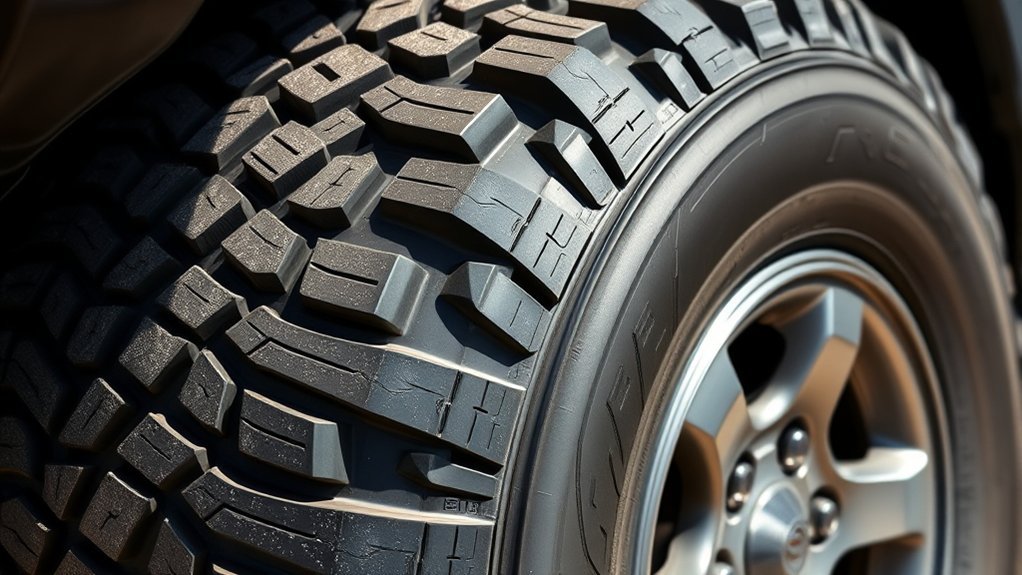
Load Range E tires can be a smart upgrade for a Toyota Tacoma that regularly tows, hauls heavy gear, or spends time on rocky trails. They are not automatically the best choice for every Tacoma, though. The right answer depends on your tire size, load index, wheel rating, driving style, and how much comfort you are willing to trade for extra tire toughness.
Quick Answer
Load Range E tires are worth it for a Tacoma if you tow often, carry heavy camping or work gear, or drive sharp-rock trails. For a mostly stock daily driver, they can feel heavier, firmer, and less efficient than C, D, SL, or XL tires.
Key Takeaways
- Load Range E usually means a 10-ply-rated LT tire with a high maximum cold inflation pressure, but it does not mean the tire has 10 physical plies.
- A Load Range E tire’s real carrying capacity depends on its size, load index, and inflation pressure, not just the letter “E.”
- For towing, payload, overlanding, and rocky off-road use, E-rated tires can add stability and sidewall toughness.
- For daily commuting, they may ride rougher, weigh more, and reduce fuel economy compared with lighter tire options.
- Use your Tacoma’s door-jamb tire placard and owner’s manual as the starting point for size and cold pressure, not the tire’s sidewall maximum.
What Load Range E Means on a Tacoma
A Load Range E tire is commonly described as a 10-ply-rated tire. That wording can be confusing. Modern tires do not need 10 actual body plies to earn that rating. The rating is an old strength category that now tells you about the tire’s load-carrying class and maximum inflation capability.
For many LT-metric tires, Load Range E is associated with a maximum cold inflation pressure of 80 PSI. Wider LT sizes can have different maximum pressures, so always read the tire sidewall and the manufacturer’s specs for the exact tire you are buying. Tire Rack explains that replacement tires should meet or exceed the original tire’s load index and be rated to carry the vehicle’s load. Tire Rack’s load range guide is a useful reference for this.
Warning: The tire’s sidewall maximum pressure is not the same thing as your Tacoma’s recommended daily tire pressure. For normal road use, start with the cold pressure listed on the driver-side door-jamb Tire and Loading Information Label or in your owner’s manual. NHTSA notes that the vehicle manufacturer’s recommended pressure is the correct cold pressure, not the number molded on the tire sidewall.
Why Choose Load Range E Tires for Your Tacoma?
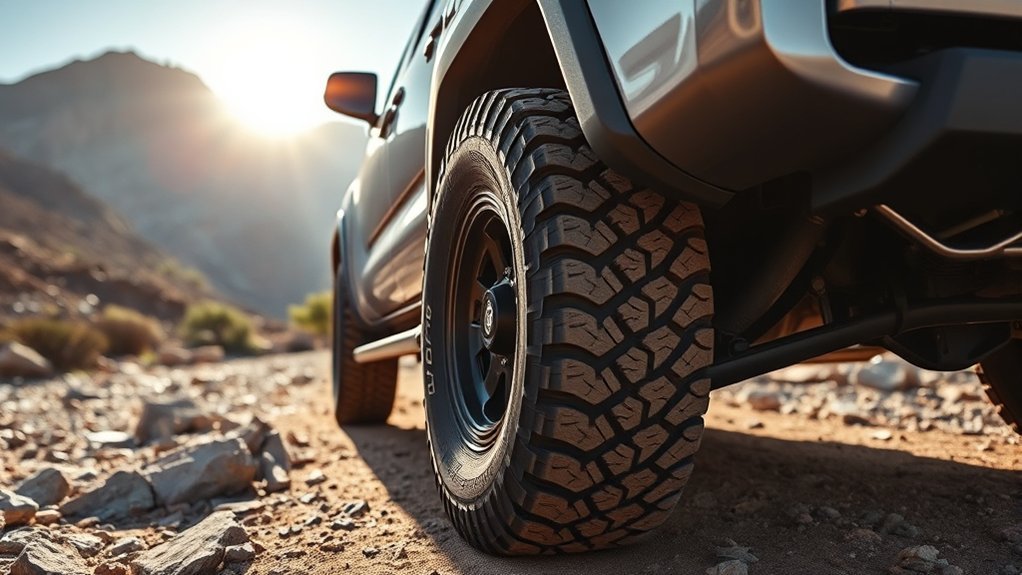
Load Range E tires make the most sense when your Tacoma is doing truck work: towing a trailer, carrying tools, hauling a rooftop tent and recovery gear, or driving rough trails where sidewall damage is a real concern. Their stronger LT construction can feel more controlled under load than a lighter passenger-metric tire.
The biggest benefit is not simply the letter “E.” It is the combination of proper tire size, correct load index, suitable wheel rating, and correct inflation for the load. For example, Falken’s LT load and inflation table lists an LT265/75R16 Load Range E tire at 3,415 lb in single-tire service at 80 PSI, while other sizes have different limits. That is why you should always check the exact size and load index printed on the tire.
Why Load Range E Tires Are Tough and Reliable
Load Range E tires are popular with Tacoma owners because they are built for heavier-duty use than most standard passenger tires. They can be a strong match for trucks that see mixed pavement, gravel, work-site, and trail duty.
Enhanced Durability and Strength
The thicker LT construction of many E-rated tires can help resist cuts, bruising, and punctures better than lighter-duty tires. This is especially useful on rocky trails, gravel roads, construction sites, and remote trips where a tire failure is more than an inconvenience.
- Stronger construction for towing, hauling, and off-road use.
- Better resistance to sidewall damage on rough terrain, depending on the tire model.
- More stable feel when the truck is loaded correctly.
- Good match for overlanding builds with armor, bed racks, rooftop tents, and recovery gear.
- Often available in aggressive all-terrain and hybrid-terrain tread patterns.
Superior Load Capacity
Load Range E tires can carry heavier loads than many C, D, SL, or XL options in the same general category, but the exact number is controlled by the tire’s load index. Discount Tire explains that load index is the more specific number that tells you how much weight a tire can carry when inflated to its load-sustaining pressure. In other words, do not shop by “E” alone. Check the load index, size, and inflation data.
Load Range E tells you the tire is built for heavier-duty service, but the load index and inflation table tell you the actual weight it can safely carry.
Drawbacks of Load Range E Tires: Weight and Comfort Issues
The trade-off is simple: the same construction that makes Load Range E tires strong can make them feel less comfortable on a midsize truck. A Tacoma is lighter than a three-quarter-ton pickup, so an E-rated tire may feel firmer than expected if the truck is unloaded most of the time.
Increased Weight Impact
Load Range E versions of the same tire model are often heavier than SL, XL, C, or D versions. That extra unsprung weight can affect steering feel, braking feel, acceleration, and fuel economy. The exact difference depends on tire brand, size, tread pattern, and wheel setup.
- Heavier tires can make the truck feel slower off the line.
- More rotating weight may slightly reduce fuel economy.
- Steering can feel heavier, especially with larger all-terrain tires.
- Braking distances and suspension feel may change after upsizing.
- Balancing and alignment become more important with heavier tire-and-wheel packages.
Reduced Ride Comfort
The firmer sidewalls of Load Range E tires can transmit more bumps, expansion joints, and washboard road vibration into the cabin. This does not bother every driver, but it is one of the most common complaints from Tacoma owners who switch from lighter stock tires to LT Load Range E all-terrains.
Note: Some drivers lower pressure for comfort when the truck is unloaded, but lowering pressure also lowers the tire’s load capacity and can increase heat buildup if taken too far. Use a load/inflation table and professional tire advice if you want to fine-tune pressure beyond the door placard recommendation.
Load Range E vs. C and D for Daily Driving
If your Tacoma is a daily driver first and a tow rig or trail truck second, Load Range C or D may be the better compromise when available in your size and tread choice. Load Range C tires usually ride softer and weigh less than E-rated tires, while Load Range D sits in the middle.
| Load Range | Common Ply Rating Equivalent | Best For | Tacoma Trade-Off |
| C | 6-ply-rated | Daily driving, mild trails, lighter camping setups | Better comfort, less heavy-duty reserve |
| D | 8-ply-rated | Mixed road use, moderate loads, occasional towing | Good middle ground if available |
| E | 10-ply-rated | Frequent towing, heavy payload, sharp rocks, overlanding builds | Tougher, but usually firmer and heavier |
For many stock or lightly modified Tacomas, the best daily-driver tire is not always the strongest tire on paper. It is the tire that meets or exceeds the required load rating while preserving the ride, handling, and fuel economy you want.
[Products Worth Considering]

These universal tire valve stem caps help protect valve cores from dust, debris, and moisture while helping maintain stable tire pressure. The corrosion-resistant metal construction and sealed design provide reliable protection in road grime, mud, and winter conditions. Twist-on installation makes them quick to fit on cars, SUVs, trucks, and motorcycles.

These aluminum alloy tire valve stem caps with an O-ring seal help protect valve stems from corrosion while adding a clean, stylish look to your vehicle. The universal fit works across cars, trucks, motorcycles, bicycles, and more, making them an easy upgrade for everyday driving and off-road use. Installation is quick, and the included four-pack keeps all your tires dressed and protected.

Keep your tires properly inflated with this analog VONDIOR tire pressure gauge, designed for fast, easy readings without batteries. The swiveling, two-axis hose and large glow dial help you measure at any tire angle with instant visibility. Built with a protective rubber shield, it supports durable, low-maintenance use for cars and trucks.
Real User Reviews of Load Range E Tires for Tacoma
Owner feedback on Load Range E tires is usually mixed because Tacoma builds vary so much. A lightly loaded commuter and a fully equipped overland truck are asking very different things from the same tire.
Common positive reports include better stability when loaded, more confidence on rocky terrain, and stronger sidewalls for trail use. Common complaints include a firmer ride, more road feedback, added tire weight, and possible fuel-economy loss. These results depend heavily on the exact tire model, tread pattern, size, wheel weight, suspension setup, and pressure.
Pro Tip: If your Tacoma is mostly a commuter, compare the same tire model in C, D, E, SL, and XL options before buying. The lighter version may still meet your load needs while riding better on pavement.
How to Choose the Right Load Range E Tire for a Tacoma
Before buying Load Range E tires, confirm that the whole setup works together. A stronger tire does not increase your Tacoma’s GVWR, GAWR, payload rating, or tow rating. Those limits are set by the vehicle.
- Check the door-jamb placard: Confirm the original tire size, cold pressure, and occupant/cargo limit.
- Check the owner’s manual: Use Toyota’s recommended tire size and pressure information as your starting point.
- Match or exceed load index: The replacement tire should meet or exceed the original tire’s required load capacity.
- Confirm wheel rating: Your wheels must be rated for the load and pressure you plan to run.
- Watch tire diameter: Larger tires can rub, affect speedometer accuracy, and change gearing feel.
- Check spare compatibility: A mismatched spare can create problems, especially on 4WD trucks.
- Plan for TPMS: Make sure tire pressure monitoring sensors are transferred, replaced, or relearned correctly.
- Get an alignment: New tires, heavier tires, or changed tire sizes can reveal alignment issues quickly.
[Products Worth Considering]
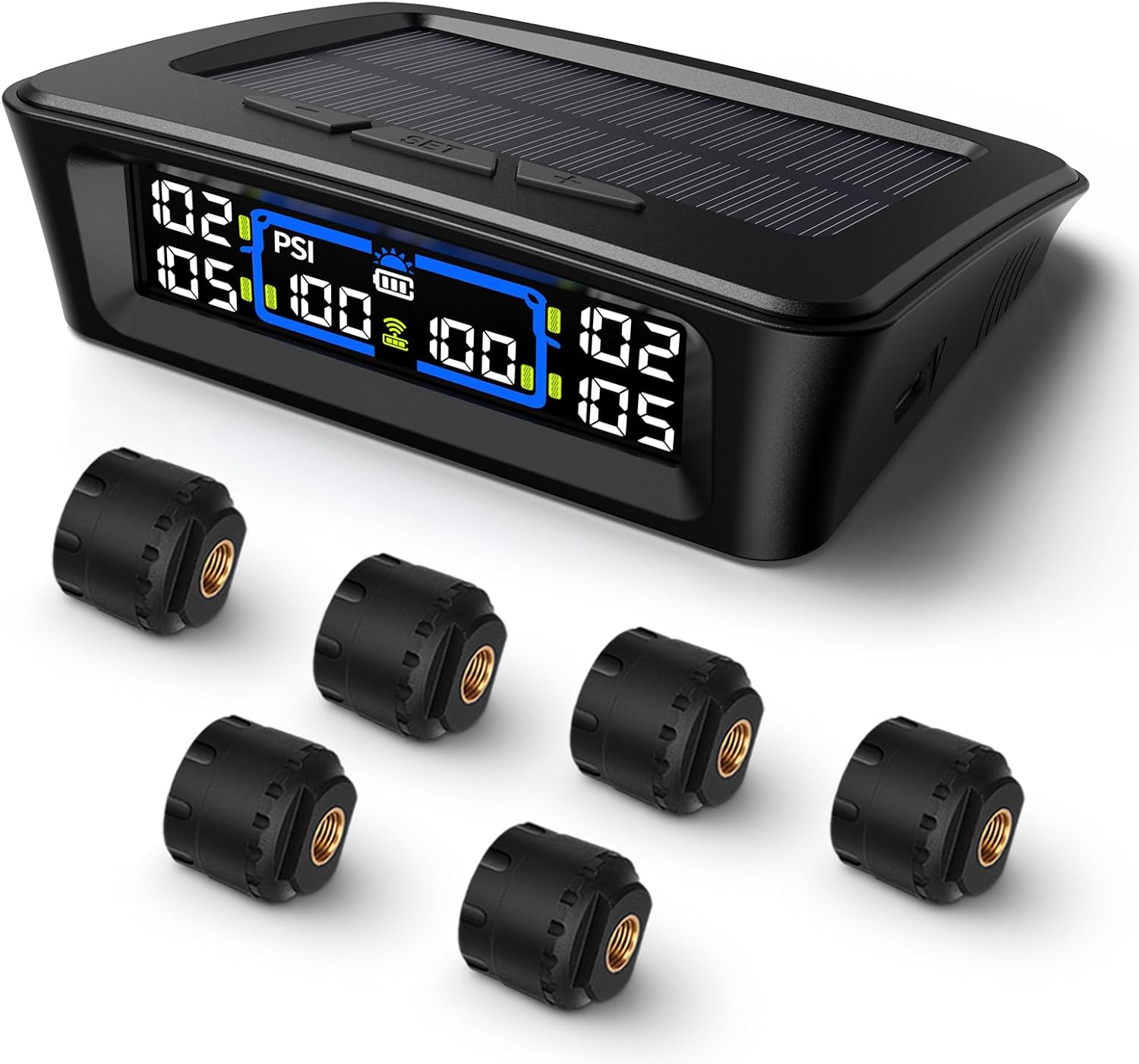
The Tymate TM12 RV TPMS delivers real-time tire pressure and temperature monitoring with a stable 433Hz display for safer long-distance driving. It supports simultaneous monitoring across vehicle and trailer zones, includes six alarm modes for pressure, temperature, leakage, battery, and signal loss, and features easy DIY installation with auto calibration. Power is supplied via USB-C charging or solar recharging, with a wide 0–144 PSI range and up to 50 ft signal coverage for RVs and towable trailers.

Replace worn or missing TPMS sensors with a pre-programmed 4-pack designed for compatible GM vehicles. These 315MHz sensors provide real-time tire pressure monitoring and alert you if pressure is too high, too low, or if a rapid air leak occurs. Most installations are ready with minimal relearn effort after mounting, helping improve safety and driving confidence.

Measure tire tread depth quickly and accurately with this LUMITECO dial gauge that reads in 1/32" increments up to 14/32". The color-coded green/yellow/red zones make it easy to judge tire wear and know when replacement is needed. A rugged, compact design with a protective pouch helps keep the gauge ready for use on cars, trucks, motorcycles, and more.
Essential Maintenance Tips for Load Range E Tires
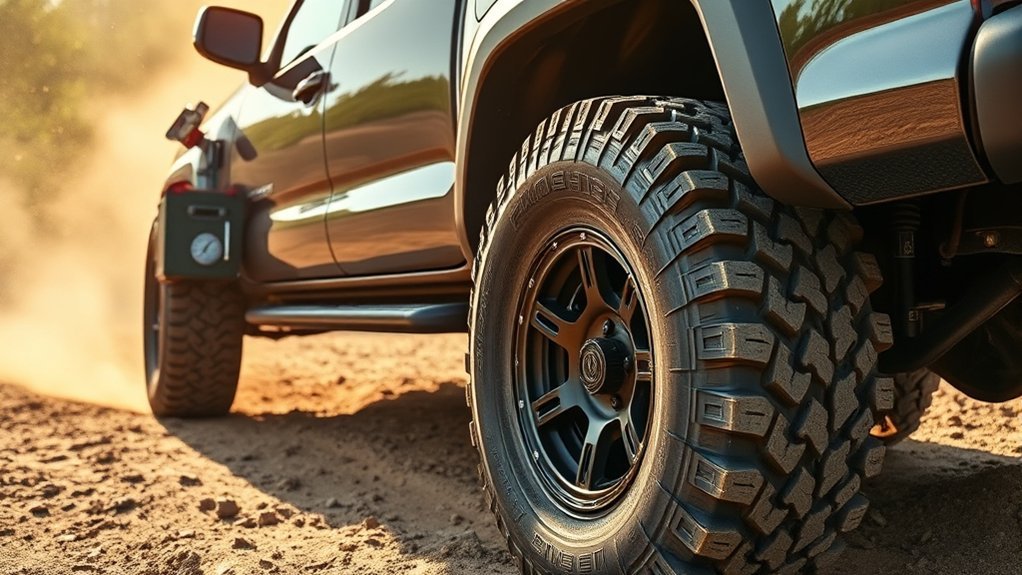
Load Range E tires are tough, but they still need careful maintenance. Because they are often heavier and stiffer, poor pressure, poor balancing, or bad alignment can make them wear unevenly and ride worse.
- Check pressure cold: Measure pressure before driving or after the truck has been parked long enough for the tires to cool.
- Use the placard first: For normal driving, start with the pressure listed on the Tacoma’s Tire and Loading Information Label.
- Adjust for load carefully: When towing or hauling, use tire manufacturer load/inflation data and professional guidance.
- Rotate regularly: Follow the owner’s manual interval; NHTSA notes that tire rotation can help reduce irregular wear and that some vehicles call for rotation every 5,000 to 8,000 miles.
- Inspect sidewalls: Look for cuts, bubbles, cracks, and impact damage after trail runs.
- Monitor tread depth: Replace tires before tread becomes unsafe for rain, snow, or trail traction.
- Balance when needed: If the truck shakes at speed, have the tires and wheels inspected and balanced.
Where to Buy Load Range E Tires
You can buy Load Range E tires from tire shops, Toyota dealers, online tire retailers, and manufacturer-authorized installers. The best place is the one that can verify fitment for your Tacoma, install the tires correctly, balance them well, handle TPMS, and answer load/inflation questions.
Reputable brands such as BFGoodrich, Falken, Goodyear, Toyo, Cooper, Nitto, and others offer LT tires in Tacoma-friendly sizes. Do not choose by brand name alone. Compare the exact size, load index, weight, tread depth, speed rating, winter rating if needed, warranty, road-noise reputation, and real-world use case.
Before purchase, ask the installer these questions:
- Does this size fit my Tacoma without rubbing at full steering lock and suspension compression?
- Does the tire meet or exceed the required load index for my truck?
- Are my wheels rated for the tire’s pressure and load?
- What cold pressure do you recommend for unloaded daily driving and loaded towing?
- Will my spare tire size still be safe to use?
- Do I need an alignment after installation?
[Products Worth Considering]

Upgrade your Toyota’s wheels with durable aluminum alloy valve stem caps that help protect valve cores from corrosion and direct exposure to road grime, clay, water, and snow. Rubber rings improve sealing to help prevent air leakage and maintain stable tire pressure for safer driving. These caps are easy to install or remove without tools and add a unique, stylish look to your car.

Marsflex brand TPMS replacement sensors help restore tire pressure monitoring for compatible Toyota, Lexus, Scion, and Pontiac models. Each sensor is pre-programmed for the vehicle application and includes a long-life battery for up to 8 years of normal use. Designed to replace common OE numbers and requires relearning using a TPMS scan tool after installation.
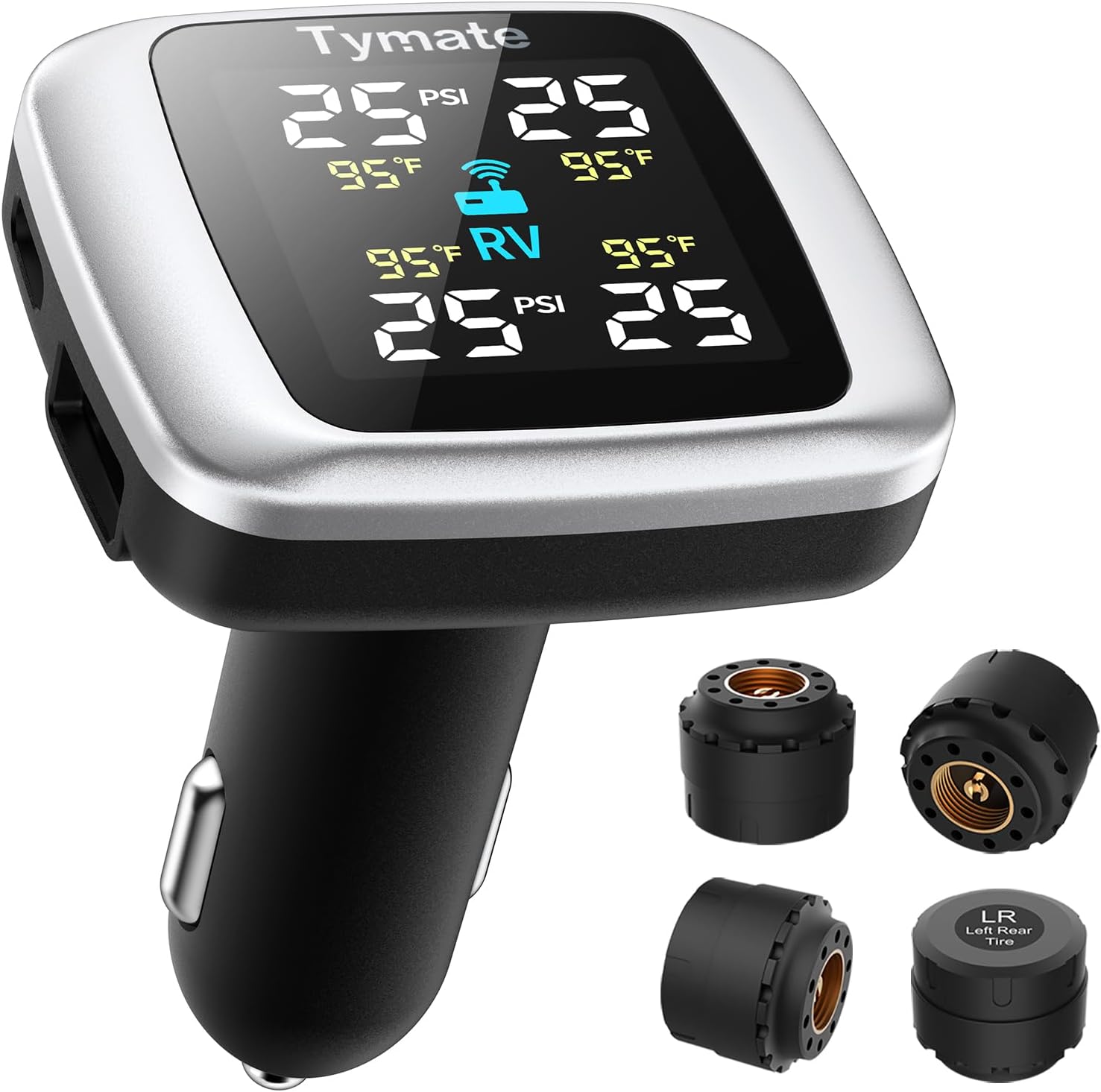
Tymate TM7 is a wireless tire pressure monitoring system that delivers real-time pressure and temperature readings for safer driving. It includes four external sensors, a bright color LCD display with adjustable backlight, and six alarm modes for high/low pressure, fast leakage, high temperature, and sensor signal or battery issues. The system covers a wide 0–144 PSI range and plugs into your vehicle’s cigarette lighter socket for quick DIY setup.
Frequently Asked Questions
What are the disadvantages of Load Range E tires on a Tacoma?
The main disadvantages are a firmer ride, extra tire weight, possible fuel-economy loss, and more road feedback. They can be excellent for towing, payload, and rocky trails, but they may feel overbuilt on a lightly loaded daily-driver Tacoma.
Should I run Load Range E tires at 80 PSI on my Tacoma?
Not for normal driving unless your tire manufacturer, load/inflation data, and vehicle setup specifically call for it. The 80 PSI number is often the tire’s maximum cold inflation pressure, not the Tacoma’s daily recommended pressure. Start with the door-jamb placard and adjust only with proper load data.
Are Load Range E tires better for towing with a Tacoma?
They can be better for towing if they are properly sized, correctly inflated, and matched to the truck’s load requirements. Their stronger construction can feel more stable under load, but they do not increase the Tacoma’s factory tow rating, payload rating, GVWR, or GAWR.
Is Load Range C or D better than E for a daily-driver Tacoma?
Often, yes. If your Tacoma is mostly unloaded and used for commuting, a C, D, SL, or XL tire that meets the required load rating may ride better and weigh less. Load Range E is best when you need the extra toughness for payload, towing, or harsh terrain.
Do Load Range E tires last longer?
Not automatically. Some LT all-terrain Load Range E tires have deep tread and durable compounds, but tread life depends on the specific tire model, alignment, rotation, inflation, vehicle weight, and driving conditions. Load range alone does not guarantee longer life.
Conclusion
Load Range E tires can be a strong upgrade for a Toyota Tacoma that tows, hauls, overlands, or sees rough off-road terrain. They add toughness and load reserve when chosen correctly, but they can also make the truck ride firmer and feel heavier during everyday driving.
The best choice is not always the highest load range. Choose a tire that fits your Tacoma, meets or exceeds the required load index, works with your wheels, matches your real use, and can be inflated safely for both unloaded and loaded driving. When in doubt, use the door-jamb placard, owner’s manual, tire manufacturer data, and a qualified tire installer before making the switch.
Sources
- Tire Rack — What Are Load Ranges / Ply Ratings? — backs up load range, ply-rating, and replacement tire load-index guidance.
- Discount Tire — Load Range vs Load Index — backs up the difference between load range and load index.
- NHTSA TireWise — Tire Safety Ratings and Awareness — backs up cold tire pressure, placard guidance, rotation, balancing, alignment, and tire safety practices.
- Falken Tires — Load Inflation Tables — backs up LT tire load capacity varying by tire size, pressure, and single/dual application.
- Toyota Owners — Manuals and Warranties — source for checking Tacoma owner’s manual information by model year.