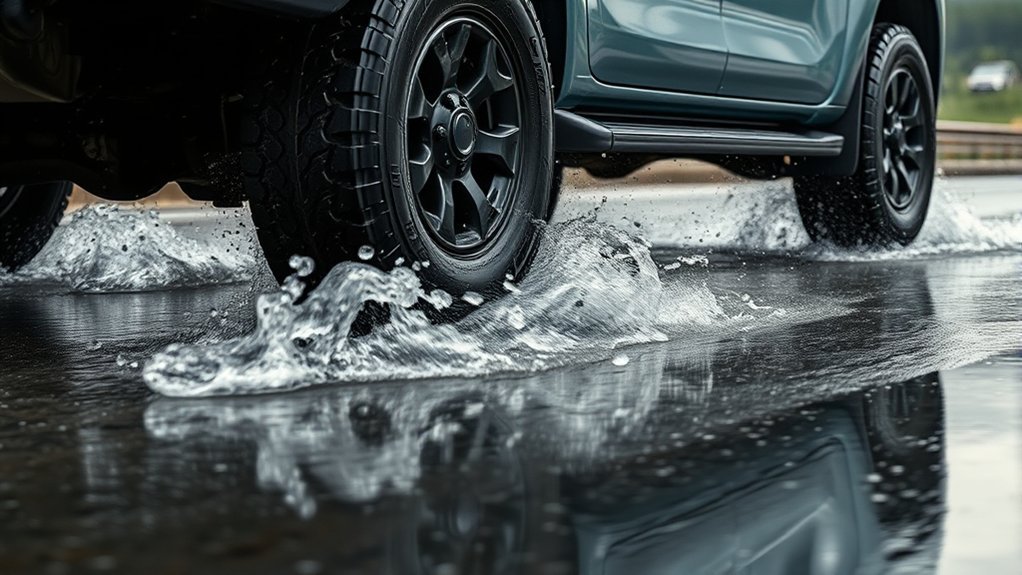
Wet roads expose every weakness in a Toyota Hilux tire: low pressure, shallow tread, worn shoulders, poor wet-braking design, or the wrong tire type for your driving. The safest wet-weather tire is not always the most aggressive-looking one. For rain, focus on water evacuation, wet stopping performance, correct Hilux load rating, and regular maintenance.
Quick Answer
Toyota Hilux tires perform best in wet conditions when they are the correct size and load rating, have enough tread depth, use a compound and tread pattern designed for wet braking, and are inflated to the cold pressure on the vehicle placard. Slow down in standing water because hydroplaning risk rises quickly.
Key Takeaways
- Tread depth, tread design, rubber compound, pressure, and driving speed all affect wet grip.
- Do not choose a tire by “A/T,” “H/T,” or “M/T” label alone; compare real wet-braking data, tire ratings, and your Hilux load requirements.
- Use the tire placard or owner’s manual for the correct size, load index, speed rating, and cold inflation pressure.
- A Toyota Hilux may have a 700 mm wading rating in some markets, but floodwater and fast-moving water are still dangerous.
At a Glance
| Time Required | 10–15 minutes to check tread, pressure, tire size, and load rating |
| Difficulty | Easy for basic checks; professional help recommended for replacement or uneven wear |
| Tools Needed | Tire pressure gauge, tread depth gauge, flashlight, and your Hilux tire placard or owner’s manual |
| Cost | Free if you already have gauges; professional tire inspection is usually low-cost or included during service |
Why Wet Weather Performance Matters for Your Safety
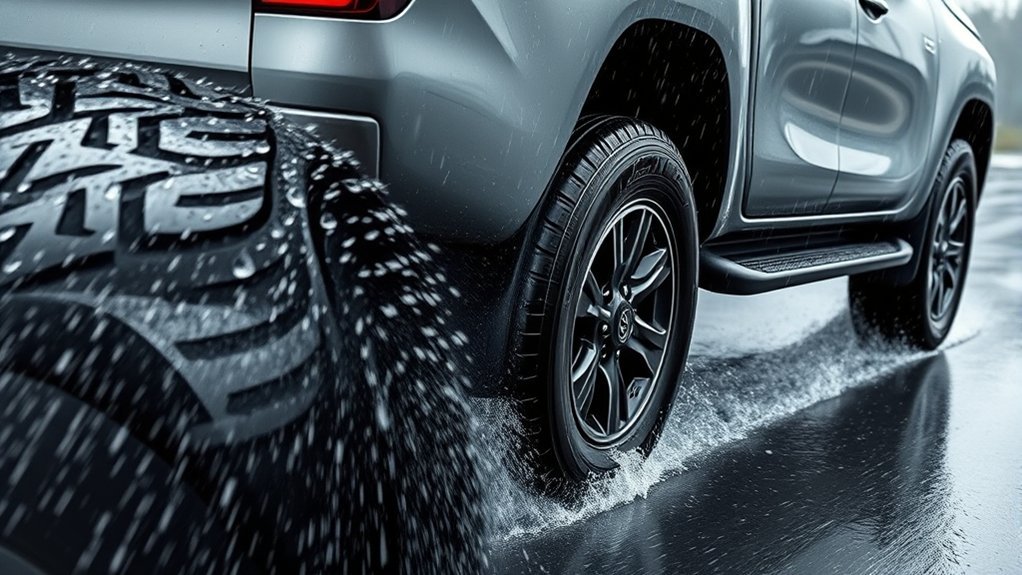
Rain reduces the friction between the tire and the road, so your Hilux needs more distance to stop and more care when turning or changing lanes. The U.S. Federal Highway Administration reports that 75% of weather-related crashes occur on wet pavement and 47% happen during rainfall. That is why tire condition matters before the storm starts, not after the vehicle begins to slide.
Wet-weather safety is not one feature. It is the combined result of tread depth, tread pattern, compound, tire pressure, vehicle load, speed, and road drainage.
Good wet-weather tires help the Hilux keep contact with the road by pushing water away from the contact patch. Poorly maintained tires do the opposite: they leave more water under the tire, reduce braking grip, and increase the chance of hydroplaning.
Warning: Never drive into fast-moving floodwater or water of unknown depth. Even a capable 4×4 can lose traction, float, stall, or suffer electrical and engine damage.
How Tread Design Affects Your Grip in Wet Conditions
Tread design controls how quickly a tire can move water away from the road surface. The most useful wet-weather features are circumferential grooves, lateral channels, and small biting edges called sipes. These help the tire cut through water, maintain road contact, and reduce stopping distance.
[Products Worth Considering]

Measure tyre tread depth precisely with a digital gauge that reads in both MM and inches, helping you monitor safe driving conditions. The large LCD screen is easy to operate, and the compact tool fits for cars, trucks, and motorcycles. It provides high accuracy with a 0-25.4mm range and includes a 1-year warranty for added peace of mind.

Monitor tire tread wear with a smart, color-coded depth gauge that shows clear condition ranges at a glance. The bar is range marked for fast, easy readings, helping you maintain safer traction and performance. Each gauge is portable with a pocket clip, and the set includes 20 units for daily use and sharing.

Measure tire tread depth quickly and accurately with this LUMITECO dial gauge that reads in 1/32" increments up to 14/32". The color-coded green/yellow/red zones make it easy to judge tire wear and know when replacement is needed. A rugged, compact design with a protective pouch helps keep the gauge ready for use on cars, trucks, motorcycles, and more.
Tread Patterns Explained
Different tire categories behave differently on wet pavement, but category names are only a starting point:
| Tire Type | Wet-Road Strength | Watch Out For |
| Highway-Terrain (H/T) | Often quieter and more predictable on sealed roads | Less off-road bite than A/T or M/T tires |
| All-Terrain (A/T) | Balanced option for wet roads, gravel, work sites, and light trails | Wet braking varies widely by model, compound, and siping |
| Mud-Terrain (M/T) | Strong mud and loose-surface traction | Can be noisier and less stable in wet paved cornering because of large tread blocks and fewer sipes |
For wet sealed roads, compare the exact tire model instead of assuming one category is always safer. Look for wet-braking test results, manufacturer wet-performance claims, tread depth, siping, and owner feedback from drivers using the same Hilux size and load range.
Rubber Composition Impact
Rubber composition affects how the tread grips wet pavement. A compound that stays flexible can improve surface contact, but the full design matters: tread pattern, siping, casing stiffness, tire age, and heat buildup all change how the tire feels in rain. A tire with a good compound but worn tread can still perform poorly.
Pro Tip: Use a tread depth gauge, not a guess. Check the inner, center, and outer grooves on every tire because uneven wear can hide on the inside shoulder.
How Toyota Hilux Tire Construction Impacts Wet Performance
A Toyota Hilux may carry tools, passengers, trailers, camping gear, or work equipment, so tire construction matters. Light-truck-rated tires can be the right choice for heavy loads or rough roads, but only if the size, load index, speed rating, and pressure match what your Hilux requires.
Before buying replacement tires, check the tire placard on the vehicle and the owner’s manual. The NHTSA TireWise guide recommends using the vehicle manufacturer’s cold inflation pressure from the tire information placard or certification label. The U.S. Tire Manufacturers Association also advises replacement tires to match the size, load index, and speed rating recommended by the vehicle manufacturer.
Do not assume that a higher load index automatically improves wet grip. A heavier-duty tire may have stronger casing protection, but it can also ride firmer, weigh more, and behave differently in braking. The right tire is the one that meets the Hilux specification and performs well in the wet conditions you actually drive in.
[Products Worth Considering]

The SAFELIFE dial tire tread depth gauge measures tread depth in 1/32 inch increments with clear, easy-to-read 2-inch dial face. Color zones using a traffic light system help you quickly judge whether tread is low, marginal, or ample for safer driving. Built with a durable zinc cast body and a metal detect probe for precise, comfortable use across cars, motorcycles, trucks, and buses.

Accurately measure tire tread depth with a calibrated gauge marked from 0 to 1 inch in 1/32 inch increments. The color-coded bar helps you quickly identify tread condition ranges, supporting safe driving for trucks, motorcycles, automobiles, and passenger vehicles.
Chemical Guys ShineLogic Tire Shine delivers a deep wet black, high-shine finish for rubber tires with a sleek look. It’s designed for durable, one-step application with minimal drips, streaks, or runs, and it helps produce effortless, long-lasting shine. Choose aerosol or trigger spray for easy use on cars, trucks, motorcycles, RVs, and more.
Essential Factors for Safe Handling in Wet Conditions
Wet handling is not only about the tire you buy. It is also about how you maintain it and how you drive when the road is covered with water.
- Check cold tire pressure: Measure pressure before driving or after the tires have cooled. Under-inflation can increase heat, wear, and poor road contact.
- Inspect tread depth: Replace tires before they become too worn for your rainy-season driving. Legal minimum tread is not the same as best wet-weather safety margin.
- Watch uneven wear: Cupping, shoulder wear, or one-sided wear can point to alignment, suspension, or inflation problems.
- Reduce speed before standing water: Hydroplaning risk rises with water depth, speed, worn tread, low pressure, and poor drainage.
- Use smooth inputs: Gentle steering, braking, and throttle help keep the Hilux stable on slippery roads.
- Leave extra distance: Wet braking takes longer, especially with a load or trailer.
Note: There is no single speed where every tire “loses traction.” The Texas Department of Transportation explains that hydroplaning depends on water depth, roadway geometry, vehicle speed, tread depth, tire inflation pressure, and pavement condition.
What Hilux Owners Usually Notice in Wet Driving
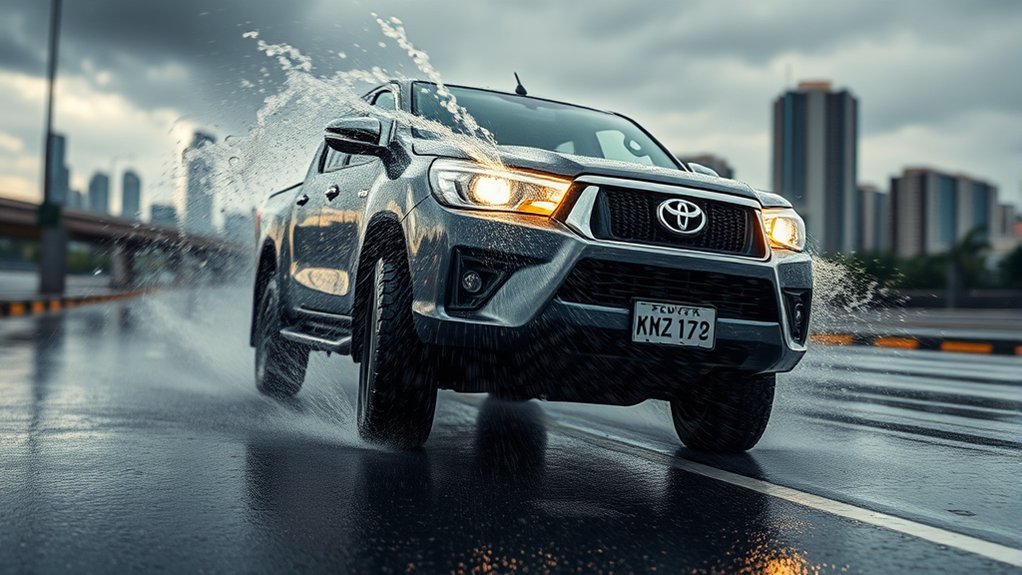
Hilux owners often compare all-terrain options such as Toyo Open Country A/T III, Cooper Discoverer AT3 LT, BFGoodrich All-Terrain T/A KO2, and Firestone Destination A/T2. These can be useful starting points, but do not treat brand reputation or forum comments as proof that a tire is right for your Hilux.
When reading reviews, give more weight to drivers who mention the same tire size, similar load, similar climate, and similar use. A tire that feels secure on a lightly loaded city Hilux may behave differently on a work truck carrying tools or towing in heavy rain.
How to Choose Tires for Rainy Conditions
Use this checklist before buying Toyota Hilux tires for wet weather:
- Confirm the correct size: Match the tire size listed on the Hilux placard or owner’s manual unless a qualified tire professional approves an alternative.
- Match or exceed the required load index: This is especially important if you carry cargo, tow, or drive on rough roads.
- Compare wet traction information: In markets using UTQG, the NHTSA Uniform Tire Quality Grading guide explains that traction grades AA, A, B, and C compare wet stopping ability under controlled conditions on asphalt and concrete.
- Check tread depth when new and during use: Deeper grooves can help move water, but tread pattern and compound still matter.
- Pick the tire type for your real use: Choose H/T for mostly road use, A/T for mixed work and trail use, and M/T only when mud traction matters more than wet-road comfort and braking.
- Avoid mixing tire types: Keep the same size, construction, and similar tread pattern across the axle, and follow the Hilux manual for 4×4 requirements.
- Read current tests and reviews: Look for wet braking, hydroplaning resistance, noise, treadwear, and load feedback from similar vehicles.
[Products Worth Considering]
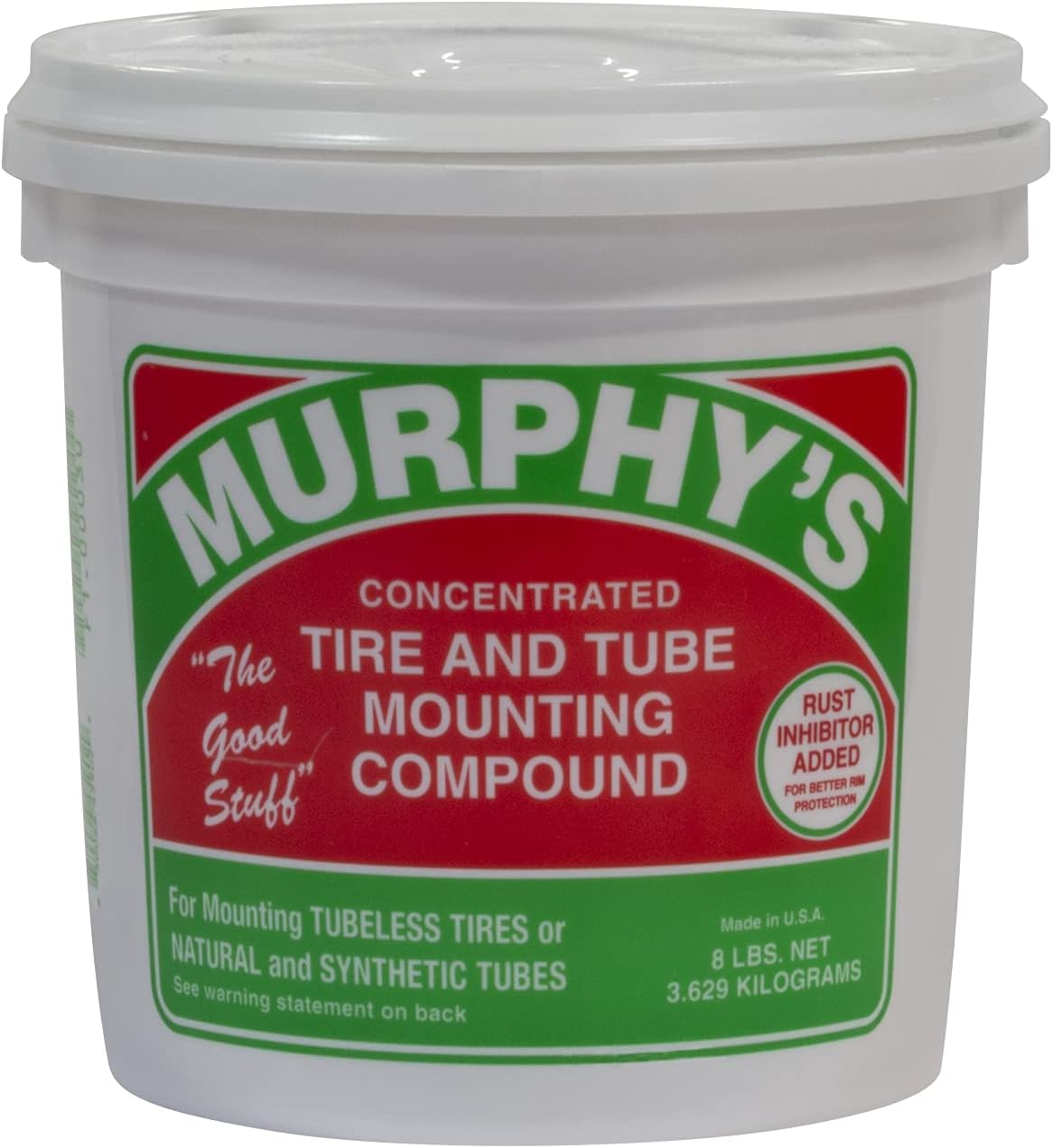
A concentrated tire and tube mounting compound designed to help simplify mounting rubber tires and tubes on passenger, semi truck, construction, and OTR applications. Its ultra-thick formula packs beads effectively and includes rust inhibitors to help protect against corrosion during use.

Upgrade your ride with a 2-pack set of 26x1.95 folding mountain bike tires built for dependable traction on mud, rocks, and trail surfaces. A reinforced puncture-resistant layer helps protect against sharp debris, while included butyl inner tubes provide strong sealing and shock absorption. Ready for fast swaps with included tire levers and universal sizing for most bikes.
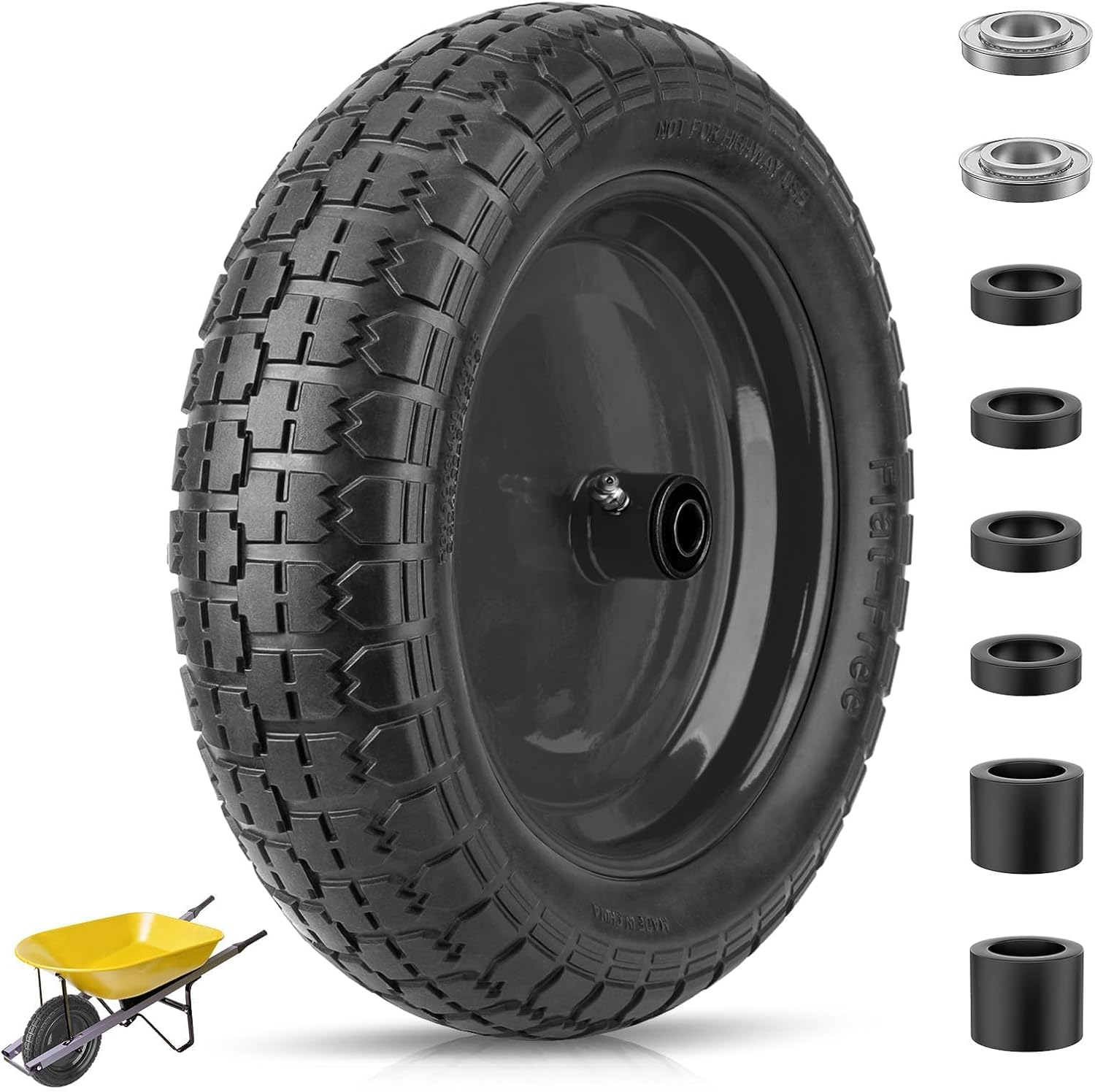
This flat-free TICONN wheelbarrow tire features durable polyurethane foam construction that never needs inflation, helping prevent punctures and reducing maintenance on rough outdoor terrain. With a 300 lb max load capacity and stable steel rim design, it supports safer transport for yard work and hauling tasks. An adapter kit with ball bearings and nylon spacers is included for easier fit and customization across common wheelbarrow and cart axle setups.
Tread Design Considerations
For rainy conditions, look for wide circumferential grooves, lateral channels, and dense siping. These features help clear water and create biting edges on slick pavement. However, do not judge by appearance alone. Two tires with similar-looking tread can perform very differently because of rubber compound, casing design, and tread stiffness.
Rubber Composition Importance
A good wet-weather compound helps the tire stay flexible enough to grip wet pavement. For Hilux owners, the goal is balance: wet braking, durability, puncture resistance, load capacity, and predictable handling. If you drive mostly on wet highways, do not over-prioritize aggressive off-road tread at the expense of wet-road stability.
Toyota Hilux Water Wading and Wet-Road Caution
Toyota UK states that the Hilux can wade through water up to 700 mm deep when conditions allow, but that does not mean every water crossing is safe. Depth, current, hidden holes, soft ground, speed, bow wave, tire grip, and vehicle load all matter.
If you must cross shallow water, enter slowly, keep a steady pace, avoid stopping, and dry the brakes afterward by driving carefully and applying light brake pressure when safe. If the water is fast-moving, muddy, rising, or deeper than you can verify, turn around.
Frequently Asked Questions
How deep can a Toyota Hilux go in water?
Some Toyota Hilux models are rated for water wading up to 700 mm, but you should always check the manual for your exact model and market. Avoid fast-moving water, unknown depths, and floodwater because the vehicle can lose traction, float, stall, or suffer damage.
At what speed do tires lose traction in the rain?
There is no universal speed. Hydroplaning risk depends on speed, water depth, tread depth, tire pressure, pavement condition, vehicle load, and drainage. Slow down before standing water, avoid sudden steering or braking, and increase following distance in heavy rain.
Are all-terrain tires better than highway tires in wet conditions?
Not always. Some highway-terrain tires are excellent on wet sealed roads, while some all-terrain tires trade wet braking for off-road durability. Compare the exact tire model, wet traction data, tread design, compound, and Hilux load rating before choosing.
How much tread depth do I need for safe wet driving?
Use a tread depth gauge and replace tires before they become worn enough to struggle in rain. Legal minimums vary by country, but frequent wet-weather driving usually calls for a larger safety margin than the legal minimum. Also check for uneven shoulder wear.
Can I mix different tire types on my Hilux?
Avoid mixing tire sizes, construction types, load ratings, or very different tread patterns unless the Hilux manual or a qualified tire professional says it is safe. Mixed tires can reduce stability, braking confidence, and 4×4 drivetrain compatibility.
Conclusion
Wet-weather tire performance can make a major difference to how your Toyota Hilux brakes, corners, and resists hydroplaning. Choose tires by real wet-road performance, correct Hilux fitment, load rating, tread design, and maintenance—not by aggressive appearance alone. Check pressure cold, measure tread depth regularly, slow down in standing water, and treat floodwater with caution.
Sources
- Federal Highway Administration: Rain & Flooding — wet pavement and rainfall crash statistics
- NHTSA TireWise — tire pressure, tire placard, and tire safety guidance
- NHTSA Consumer Guide to Uniform Tire Quality Grading — wet traction grades and tire rating context
- Texas Department of Transportation: Hydroplaning — hydroplaning variables and water-depth risk
- Toyota UK: Hilux Wading Through Water — 700 mm wading guidance and safe crossing advice
- U.S. Tire Manufacturers Association: Replacing Tires — replacement tire size, load index, and speed rating guidance