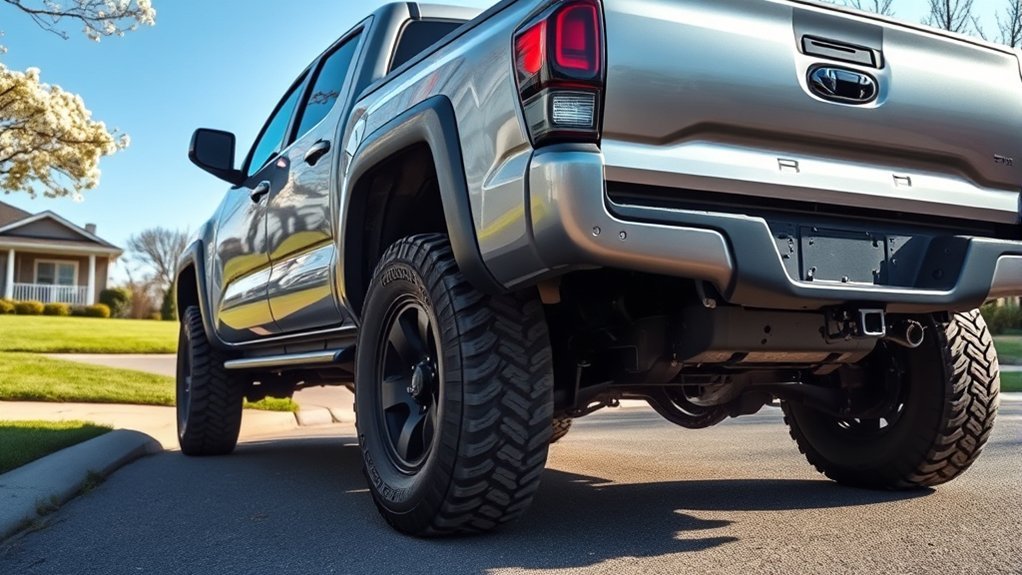
A differently sized spare tire is not automatically unsafe for your Toyota Tacoma. Toyota may supply a narrower spare that has nearly the same rolling diameter as the regular tires. The real danger comes from using a random tire or wheel that does not match Toyota’s approved diameter, load capacity, construction, or fitment. Before driving, identify which type of spare you have and check the instructions for your exact Tacoma year and trim.
Quick Answer
A Toyota Tacoma can use a factory-specified spare even when its printed size differs from the road tires. A random smaller or larger spare is different. Follow the tire sidewall and owner’s-manual limits, keep the truck in 2WD unless Toyota says otherwise, avoid towing and hard driving, and repair the correct tire as soon as possible.
Key Takeaways
- A Toyota-approved spare may be narrower while still having a suitable rolling diameter.
- Compare the full tire size, load index, construction, wheel fit, and inflation pressure, not width alone.
- A substantial diameter difference can affect handling, braking systems, wheel-speed readings, and 4WD components.
- Treat any nonmatching spare as emergency equipment and drive only as far as needed to obtain a proper repair.
Warning: Do not use a tire simply because it bolts onto the hub. An incorrect wheel offset, load rating, diameter, or brake clearance can make the assembly unsafe even when the lug pattern appears to match.
Understanding Toyota Tacoma Spare Tire Differences
The word mismatched can describe several different situations. A spare may differ in width, sidewall height, wheel diameter, tread pattern, load rating, or overall rolling circumference. Some of those differences are expected in a factory spare, while others can create a serious compatibility problem.
For example, Toyota’s official 2024 Tacoma specifications list a 265/70R17 road tire with a 245/75R17 spare on one configuration. The spare is narrower, but its calculated nominal diameter is only about 0.4% smaller. Toyota also lists temporary-spare and fully matching spare configurations for other versions of the truck. This is why the correct answer depends on your year, trim, original tire package, and owner’s manual.
You should still aim for a properly matched set during normal driving. Differences in tire model, wear, diameter, and construction can change how the truck responds and may contribute to premature wear on differentials when a 4WD system continually compensates for unequal wheel speeds.
| Spare situation | What it means | Recommended action |
|---|---|---|
| Toyota-listed spare for your exact configuration | It may have a different width or wheel design but is approved for emergency use. | Follow the manual, sidewall speed limit, pressure, and usage restrictions. |
| Full-size spare matching all four road tires | Best compatibility when the tire also has suitable tread depth and pressure. | Repair the flat promptly and restore the normal rotation pattern. |
| Random tire with a noticeably different diameter | Wheel speed, handling, electronic systems, and drivetrain operation may be affected. | Do not use it unless a qualified tire professional confirms emergency compatibility. |
| Wheel with unknown load rating or brake clearance | It may fit the studs but still be unsuitable for the truck. | Use roadside assistance instead of experimenting. |
How a Mismatched Spare Affects Handling and Stability
A tire with a different rolling circumference turns at a different rate from the other tires. The truck’s ABS, traction-control, stability-control, and 4WD systems may interpret that wheel-speed difference as slipping or unusual vehicle movement.
A narrower or differently constructed spare can also produce less grip than the regular tires. You may notice a change in steering response, braking balance, cornering feel, or stability on wet and loose surfaces.
Steering and Braking Response
A mismatched tire can make the Tacoma pull, feel less settled, or react differently during braking. The effect may be small during gentle driving but become more noticeable during a sudden lane change, hard stop, or evasive maneuver.
- Keep both hands on the steering wheel.
- Leave more distance for braking.
- Avoid abrupt steering, acceleration, and engine braking.
- Slow down before curves rather than braking sharply inside them.
Traction and Grip Differences
Tread depth, rubber compound, tread pattern, and tire type affect grip as well as size. Mixing an all-terrain tire with a highway tire, or a winter tire with an all-season tire, can create an uneven traction balance.
Maintaining a closely matched tire circumference is especially important on a 4WD truck. Even tires with the same printed size can have slightly different real-world diameters because of brand, model, inflation, load, and tread wear.
Electronic System Limitations
A temporary or differently sized spare may affect systems that depend on wheel-speed information. Depending on the model, this can include ABS, traction control, stability control, tire-pressure monitoring, cruise-control functions, and driver-assistance features.
Do not assume a warning light will appear before a problem develops. Many spare tires are not monitored by the truck’s tire-pressure system, so you must check their pressure manually.
What Risks Are Associated With a Smaller Spare?
A smaller printed width does not always mean the spare has an unsuitable diameter. You must calculate or compare the complete size. The first number is tire width, the second is sidewall height as a percentage of that width, and the final number is wheel diameter.
Diameter Difference Example
A 265/70R17 tire has a calculated nominal diameter of about 31.6 inches. A 285/70R17 tire is about 32.7 inches. That is roughly a 3.4% difference, which is much greater than the difference between Toyota’s 265/70R17 road tire and 245/75R17 spare example.
If your Tacoma normally uses an aftermarket 285/70R17 setup, do not assume the original spare remains suitable. Measure the actual mounted circumference or ask a qualified tire shop to verify compatibility.
Drivetrain Strain and Damage
In 4WD, the front and rear axles are expected to travel at compatible rates. A tire with a substantially different circumference can force the drivetrain to absorb a continuous speed difference. This may cause binding, heat, abnormal noise, or additional wear, particularly on dry pavement where the tires cannot easily slip.
Keep the Tacoma in 2WD while using a genuinely mismatched spare unless the owner’s manual for your exact truck specifically instructs otherwise. If 2WD is unavailable, the spare is significantly different, or the truck behaves abnormally, arrange a tow.
Load Rating and Wheel Fit
The spare must support the weight carried by its corner of the truck. A tire with insufficient load capacity can overheat or fail even when its diameter appears acceptable.
The wheel must also have the correct diameter, width, bolt pattern, center bore, offset, lug-seat design, and brake clearance. Never use spacers or improvised hardware to make an emergency wheel fit.
How to Check a Tacoma Spare Before Driving
- Read the tire size. Compare every part of the code on the spare with the road tires and the sizes listed in the owner’s manual.
- Confirm Toyota approval. Check the Tire and Loading Information label, manual, and specifications for your exact model year and trim.
- Check the pressure cold. Use the pressure listed for the spare in the manual or on its label, not the maximum pressure molded on an unrelated tire.
- Inspect the tire. Look for cracks, bulges, exposed cords, cuts, flat spots, severe weathering, or damage caused by storage.
- Verify the wheel. Make sure it seats flat against the hub, clears the brakes, and uses the correct lug nuts.
- Read all restrictions. Look for “TEMPORARY USE ONLY,” a maximum speed, distance guidance, or other sidewall instructions.
If you need instructions for safely raising the vehicle and installing the wheel, follow the Tacoma manual rather than relying on a procedure written for another model. The basic safety principles in this tire-changing guide still reinforce the importance of stable ground, correct jack placement, and proper inflation.
Pro Tip: Photograph the tire placard, spare-tire label, and lug-wrench instructions before a long trip. You will have the correct information even when the truck is dirty, dark, or parked without a mobile signal.
Recommendations for Temporary Use of a Spare Tire
Do not measure temporary-spare use in days. Drive only as far as reasonably necessary to reach a safe repair facility, and replace or repair the normal tire as soon as possible.
- Follow the lowest speed limit printed on the spare or stated in the owner’s manual.
- Use 2WD unless Toyota specifically permits another mode with that spare.
- Avoid highways when a slower, safer route is practical.
- Do not tow a trailer or carry an unusually heavy payload.
- Avoid off-road trails, deep sand, mud, snow, and steep grades.
- Do not use cruise control or driver-assistance features if the truck behaves abnormally or the manual restricts them.
- Stop immediately if you feel binding, pulling, strong vibration, rubbing, overheating, or unstable braking.
Continuing to drive through vibration can damage the tire or other components. Use the checks in this guide to identify tire-related vibration, but arrange professional help when the vibration begins after installing an emergency spare.
Note: A tire-pressure warning light may remain illuminated after you install a spare, and some spare wheels do not contain a registered TPMS sensor. Check the spare with a physical gauge instead of relying only on the dashboard.
When to Replace Your Spare Tire
A spare can age while hanging under the truck even if it has never touched the road. Heat, oxygen, moisture, road salt, dirt, and long-term underinflation can weaken it.
A spare tire is emergency safety equipment. Its condition matters more than how rarely you use it.
- Low tread: Replace the tire when it reaches 2/32 inch of tread, and replace it earlier when damage or uneven wear makes it unsuitable.
- Visible damage: Replace a tire with bulges, exposed cords, deep cuts, severe cracking, bead damage, or deformation.
- Repeated pressure loss: A spare that cannot hold its specified cold pressure needs inspection or replacement.
- Advanced age: Check the last four digits of the DOT code for the manufacturing week and year. Have older spares inspected from six years onward and follow the maximum-age guidance from Toyota and the tire manufacturer.
- Unknown history: Replace a used spare when you cannot confirm how it was stored, loaded, repaired, or driven.
Cold-weather traction is a separate issue from tire age. Review when to use winter tires below approximately 45°F or 7°C, but do not use temperature alone to decide whether a spare needs replacement.
[Products Worth Considering]

Replace your worn or missing TPMS sensors with pre-programmed, direct-fit sensors for compatible Ford, Lincoln, and select Mazda models. Each sensor comes ready to activate with a scan tool, helping restore accurate tire pressure monitoring and trouble-free installation. Built with a long-life CR2032 battery and tested before factory release, this set provides dependable performance with a one-year warranty.

Secure a full-size spare on your trailer with this powder-coated steel spare tire mount bracket. It fits most 4-, 5-, and 6-lug wheel bolt patterns and mounts to trailer tongues up to 4 in wide and 5 in tall. Built for reliable carry with a max 150 lb load rating and includes zinc-plated hardware for straightforward installation.

This ecocstm ratchet wrench is designed to make emergency and routine tire changes faster with a 360° rotating head and quick forward/reverse switching. The extended handle provides extra leverage to reduce effort and hand fatigue, while the adapter helps fit many scissor jacks on cars, SUVs, trucks, and vans. Built for reliable performance with durable construction, it’s a practical travel essential for on-the-road preparedness.
Tire Maintenance Tips for Your Tacoma Spare
Check the spare at least monthly and before towing, carrying a heavy load, driving off-road, or beginning a long trip. Measure pressure when the tire is cold and use the pressure specified for that spare.
- Clean dirt and corrosion from the spare carrier and lowering mechanism.
- Lower the spare periodically so you know the hoist works.
- Check that the valve stem remains accessible and undamaged.
- Inspect both sidewalls, including the side normally hidden against the truck.
- Confirm that the jack, wheel lock, extension rods, and lug wrench are present.
- Recheck lug-nut torque after installing a wheel as directed by the owner’s manual.
Routine tire-pressure checks improve handling and reduce heat buildup. Remember that the pressure molded on a tire’s sidewall is not automatically the correct operating pressure for your Tacoma.
[Products Worth Considering]

This spare tire tool kit is designed for the 2004 to 2018 Ford F-150 to help you loosen and tighten wheel lug nuts and manage the spare tire and provided jack functions from underneath the vehicle. It includes the lug nut wrench and extension pieces plus a convenient storage carrying case for organized transport. The jack itself is not included.

This universal spare tire mount fits 4, 5, and 6 lug trailer wheels with bolt patterns from 4" to 5.5" and helps keep your tire securely locked in place. Its reinforced triangular structure with a sturdy behind plate is designed to handle up to 150 lbs, making it suitable for boat, camper, and RV spare tire mounting. The angled raised design reduces wind resistance and installation is straightforward with different length bolts and no drilling required.

Monitor tire tread wear with a smart, color-coded depth gauge that shows clear condition ranges at a glance. The bar is range marked for fast, easy readings, helping you maintain safer traction and performance. Each gauge is portable with a pocket clip, and the set includes 20 units for daily use and sharing.
How Much Should You Expect to Pay for a Full-Size Spare?
There is no reliable universal price for a Tacoma full-size spare. A tire-only quote does not represent the cost of a complete, ready-to-use assembly.
Your total may include:
- A tire in the approved size, construction, load index, and speed rating
- A compatible steel or alloy wheel
- Mounting and balancing
- A valve stem or TPMS sensor
- TPMS registration or programming when required
- Correct lug hardware
- Testing for brake and suspension clearance
- Possible changes to the under-bed carrier for oversized tires
A basic steel wheel usually costs less than an OEM alloy wheel, but it must still meet the truck’s load and fitment requirements. Low tire prices should not override correct tire selection. Ask for an all-in quote for a mounted, balanced, compatible spare rather than comparing tire prices alone.
[Products Worth Considering]
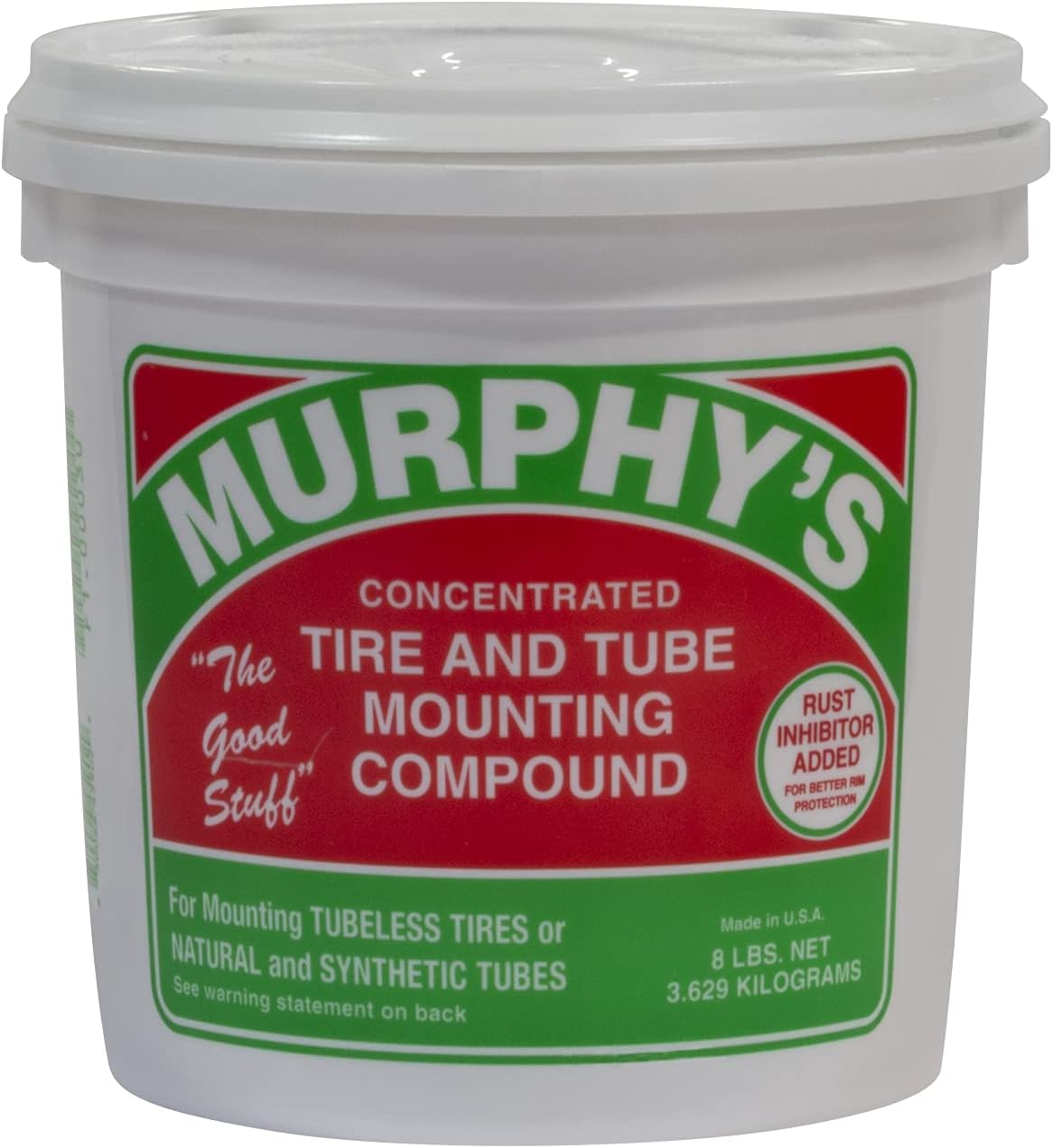
A concentrated tire and tube mounting compound designed to help simplify mounting rubber tires and tubes on passenger, semi truck, construction, and OTR applications. Its ultra-thick formula packs beads effectively and includes rust inhibitors to help protect against corrosion during use.

These aluminum alloy tire valve stem caps with an O-ring seal help protect valve stems from corrosion while adding a clean, stylish look to your vehicle. The universal fit works across cars, trucks, motorcycles, bicycles, and more, making them an easy upgrade for everyday driving and off-road use. Installation is quick, and the included four-pack keeps all your tires dressed and protected.

The Trivd Frol 1/2" air impact wrench delivers high performance torque up to 1500 ft-lbs with a twin hammer impact mechanism for strong, balanced blows. It features an ergonomic grip, compact lightweight design, and quick-stop control with 3 forward speeds up to 8000 RPM plus a reverse speed. Built for demanding automotive repair and tire shop work, the rear exhaust helps keep debris away from the surface.
What Official Guidance Says About Mismatched Tires
Toyota’s specifications show that spare design varies by Tacoma configuration. This confirms that a different printed size is not automatically wrong, but the spare must be the one approved for that vehicle or a professionally verified equivalent.
The National Highway Traffic Safety Administration advises drivers to use the tire size recommended by the vehicle manufacturer and to check the pressure of every tire, including the spare. The U.S. Tire Manufacturers Association also advises against using a smaller replacement tire or one with insufficient load capacity.
Michelin recommends matching tire size, type, construction, and rolling radius carefully on 4WD vehicles. Even when tires share the same printed size, major tread-depth or model differences can change their real circumference.
These recommendations support the same practical rule: verify the spare rather than guessing. Correct tire size and wear compatibility protect predictable handling and reduce unnecessary drivetrain stress.
Frequently Asked Questions
Does a Tacoma spare tire need to show the exact same size?
Not always. Toyota may approve a spare with a different width or wheel design when its rolling diameter, load capacity, and other specifications suit the truck. Use only the spare listed for your exact configuration or an equivalent confirmed by a qualified tire professional.
Can I use a 265/70R17 spare with 285/70R17 tires?
Those sizes differ by roughly 3.4% in calculated nominal diameter, so you should not treat them as a normal matched combination. If the 285/70R17 tires are an aftermarket upgrade, have a tire professional verify the spare setup. Roadside assistance is safer when compatibility is uncertain.
How fast can I drive with a Tacoma spare?
Follow the maximum speed printed on the spare and stated in your owner’s manual. Many temporary spares carry a 50 mph or 80 km/h limit, but you should not apply that number universally to every full-size or factory spare.
Can I use 4WD with a mismatched spare?
Avoid 4WD when the spare has a different rolling circumference unless the manual for your exact Tacoma specifically permits it. A circumference difference can cause drivetrain binding or additional wear, especially on dry, high-traction pavement.
How long can I leave the spare installed?
Only for the shortest necessary emergency trip. Do not plan to use it for a set number of days. Repair or replace the normal tire as soon as you can safely reach a qualified shop.
Can I tow a trailer with the spare installed?
Do not tow with a temporary or mismatched spare unless Toyota’s manual expressly allows it. Trailer weight adds heat and load while reducing your margin for stable braking and handling.
Does the Tacoma TPMS monitor the spare tire?
It depends on the model and spare assembly. Many temporary spares are not monitored like the four road tires. Check the spare manually with an accurate gauge even when no pressure warning appears.
Conclusion
A spare does not have to look identical to be suitable for your Toyota Tacoma. It does need to be approved for the truck or verified for compatible diameter, load capacity, construction, pressure, and wheel fit.
When the spare is temporary or genuinely mismatched, keep your speed low, avoid 4WD, towing, heavy loads, and off-road driving, and travel only far enough to obtain a proper repair. When you cannot confirm compatibility, roadside assistance is safer than risking the truck’s handling or drivetrain.
Sources
- Toyota 2024 Tacoma Maintenance Data — factory tire, spare-tire, inflation-pressure, and wheel specifications for different Tacoma configurations.
- National Highway Traffic Safety Administration TireWise — recommended tire size, pressure checks, tread, tire age, and spare-tire safety.
- U.S. Tire Manufacturers Association: Replacing Tires — replacement size, load capacity, and matching guidance.
- Michelin: Mixing Tires — handling, stability, tread-depth, and AWD or 4WD circumference considerations.