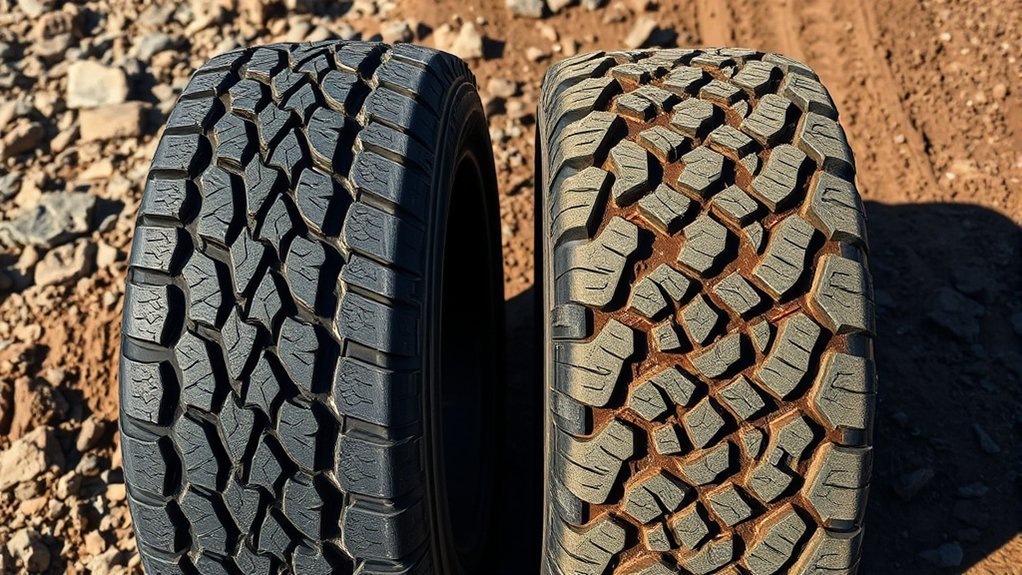
Hybrid-terrain tires, often marketed as rugged-terrain or R/T tires, sit between all-terrain and mud-terrain designs. They suit trucks and SUVs that spend substantial time on pavement but still need stronger traction on gravel, rocks, ruts, and moderate mud. The trade-off is usually more noise, weight, and rolling resistance than a road-focused tire.
Quick Answer
Choose hybrid-terrain tires when you want more off-road bite than a typical all-terrain tire without accepting the full highway noise and roughness of a mud-terrain tire. Choose mud-terrain tires for frequent deep mud or technical trails, and choose all-terrain tires when daily comfort, wet-road manners, and mileage matter most.
Key Takeaways
- Hybrid-terrain is a market category, not a universal performance standard. Compare the exact model and size.
- Hybrid tires usually provide better trail traction than mild all-terrain tires and better road manners than most mud-terrain tires.
- Not every hybrid tire has the Three-Peak Mountain Snowflake symbol. Check the sidewall and the manufacturer’s size chart.
- Match the vehicle placard for size and required load capacity, then consider noise, wet traction, winter needs, warranty, and weight.
- Use the cold inflation pressure on the vehicle placard, not the maximum pressure molded on the tire sidewall.
Understanding Hybrid-Terrain Tires: Features and Benefits
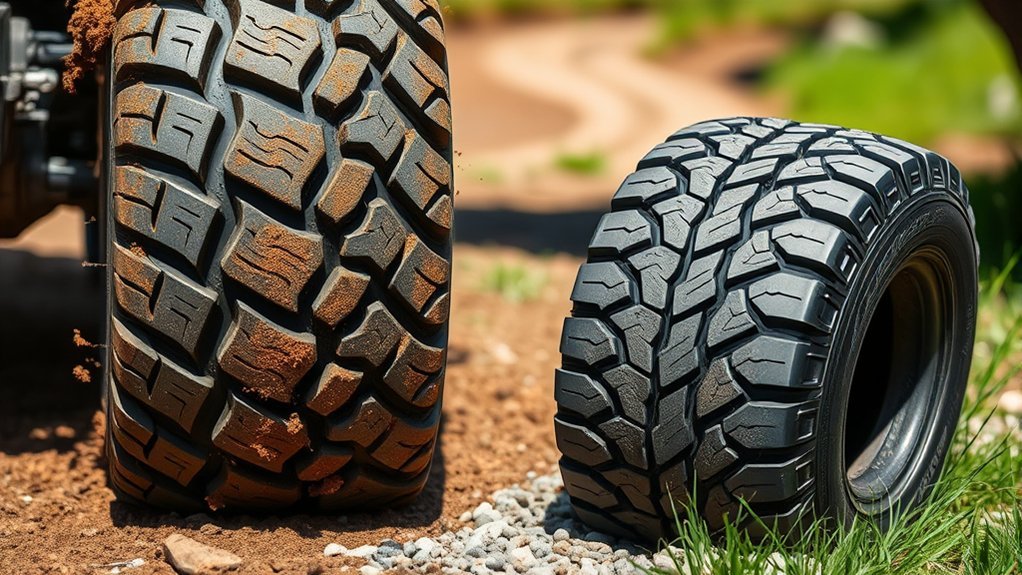
Hybrid-terrain tires combine design ideas from all-terrain and mud-terrain tires. Manufacturers may call them hybrid-terrain, rugged-terrain, rough-terrain, or aggressive all-terrain tires. Those labels do not guarantee a fixed tread depth, sidewall construction, snow rating, noise level, or mileage warranty.
For example, Nitto describes the Ridge Grappler as a hybrid-terrain tire with a variable-pitch tread pattern and mud-clearing grooves. Mickey Thompson calls the Baja Boss A/T an extreme hybrid all-terrain tire. These examples show how the category bridges road use and aggressive trail use, but their ratings and warranties still differ by model and size.
Common hybrid-terrain features include:
- Larger tread blocks and wider voids: These can improve bite and help clear loose material compared with a mild all-terrain pattern.
- Reinforced shoulders or sidewalls: Many models add protection against cuts, chips, and impacts, especially in LT sizes.
- Noise-control tread sequencing: Variable block shapes and pitch patterns can reduce highway drone, although hybrids are rarely as quiet as highway tires.
- Stone or mud ejectors: Raised features in the grooves can reduce stone retention and support tread cleaning.
- Model-specific snow features: Some hybrids add siping and earn a 3PMSF rating, while others do not.
Note: “Hybrid-terrain” is not the same as “hybrid-vehicle tire.” The first describes an off-road tread category. The second may describe a tire optimized for an electrified vehicle.
Hybrid-Terrain vs All-Terrain vs Mud-Terrain Tires
The right category depends on where you drive most often. No tread type wins every test, and performance can vary greatly between products in the same category.
| Factor | All-Terrain | Hybrid/Rugged-Terrain | Mud-Terrain |
|---|---|---|---|
| Best use | Daily driving, gravel, light trails | Mixed highway and more demanding trails | Frequent deep mud, ruts, and technical off-road use |
| Highway comfort | Usually best of the three | Moderate; model-dependent | Usually firmest and loudest |
| Mud clearing | Suitable for light or occasional mud | Better than many all-terrain patterns | Best for deep, sticky mud |
| Wet-road behavior | Often more road-focused | Varies by compound, siping, and size | Can be less predictable than road-focused designs |
| Snow rating | Some models are 3PMSF-rated | Some models and sizes are 3PMSF-rated | Often lacks 3PMSF; verify the exact tire |
| Tread life and warranty | Often strongest mileage coverage | Ranges widely by model and size | Often limited or shorter, but not always |
| Typical compromise | Less grip in deep mud and large rocks | Neither the quietest nor the most extreme | More noise, weight, and road-use compromise |
[Products Worth Considering]

Monitor tire tread wear with a smart, color-coded depth gauge that shows clear condition ranges at a glance. The bar is range marked for fast, easy readings, helping you maintain safer traction and performance. Each gauge is portable with a pocket clip, and the set includes 20 units for daily use and sharing.

Measure tire tread depth quickly and accurately with this LUMITECO dial gauge that reads in 1/32" increments up to 14/32". The color-coded green/yellow/red zones make it easy to judge tire wear and know when replacement is needed. A rugged, compact design with a protective pouch helps keep the gauge ready for use on cars, trucks, motorcycles, and more.

Keep your tires properly inflated with this analog VONDIOR tire pressure gauge, designed for fast, easy readings without batteries. The swiveling, two-axis hose and large glow dial help you measure at any tire angle with instant visibility. Built with a protective rubber shield, it supports durable, low-maintenance use for cars and trucks.
On-Road Performance of Hybrid Tires
Noise and Ride Comfort
A well-designed hybrid tire can remain comfortable on long highway trips. Noise-control features can reduce the steady hum created by large tread blocks. However, a hybrid usually produces more tread noise than a highway tire or a mild all-terrain tire, especially as the tread wears unevenly.
Steering and Braking
Large, flexible tread blocks can make steering feel less precise than it does with a road-focused tire. Wet braking also depends on the rubber compound, siping, tread depth, and vehicle setup. Wide grooves alone do not prove that a tire will resist hydroplaning or stop well in rain.
When comparing passenger-metric sizes, review any available wet-traction information and the model’s specifications. The NHTSA TireWise guide explains that government traction grades measure straight-line stopping performance on wet pavement. They do not replace model-specific testing or correct vehicle fitment.
Fuel Economy and Acceleration
Hybrid tires can be heavier and may have greater rolling resistance than road-focused tires. That can affect fuel economy, acceleration, and braking feel. The exact change depends on tire size, construction, pressure, vehicle weight, and driving conditions.
The best hybrid tire is the one that fits your vehicle’s load requirements and your real driving mix, not simply the tire with the most aggressive tread.
Off-Road Performance by Surface
Gravel and Dirt Roads
Hybrid tires are well suited to gravel, washboard roads, forest tracks, and job sites. Their larger blocks and stronger shoulders can improve stability and resist chipping. Correct pressure and sensible speed still matter because sharp stones can damage any tire.
Rocks and Ruts
Many LT hybrid tires use stronger casing or sidewall construction than lighter passenger-metric versions. This can improve resistance to impacts and cuts. It does not make the tire puncture-proof, and construction can differ between sizes of the same model.
Mud
Hybrid tires can clear moderate mud better than many mild all-terrain tires. Dedicated mud-terrain tires remain the stronger choice for repeated deep mud, sticky clay, and heavily rutted trails because their voids are usually larger and more open.
Sand
Sand performance depends on flotation, vehicle weight, tread shape, and pressure. An extremely aggressive tread can dig downward when too much throttle is used. Follow the vehicle and tire manufacturer’s guidance before reducing pressure, and reinflate before returning to highway speeds.
Warning: Never reduce tire pressure for off-road driving without understanding the tire, wheel, load, and speed limits. Very low pressure can unseat a bead, damage a sidewall, or overload the tire. Reinflation equipment and a pressure gauge are essential.
Snow, Ice, and the 3PMSF Symbol
Some hybrid tires carry the Three-Peak Mountain Snowflake symbol, but it is not standard across the category. Check the exact size because a rating may apply to some sizes and not others.
According to Transport Canada, the mountain-snowflake symbol identifies tires that meet defined snow-traction requirements for severe snow conditions. The symbol does not by itself certify ice grip, wet braking, or cold-weather performance equal to every dedicated winter tire.
If you regularly drive on ice, packed snow, or in sustained freezing temperatures, compare dedicated winter tires as well. Use four matching winter tires to support predictable handling and stability.
Understanding Costs Before Choosing Hybrid Tires
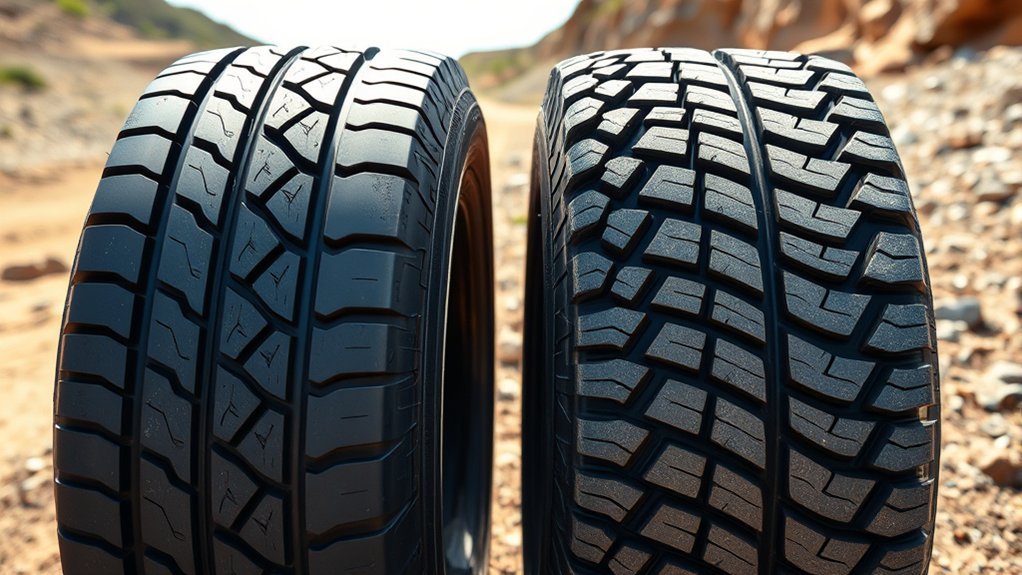
Tire prices change by brand, size, load range, retailer, shipping, and installation. A single fixed price range can mislead you, especially when comparing a common passenger-metric size with a heavy LT or flotation size.
Compare the complete ownership cost:
- Installed price: Include mounting, balancing, valve or TPMS service, disposal fees, and taxes.
- Expected use: A more aggressive tire may be worth the cost when it prevents trail limitations, but it may add road noise and fuel use.
- Warranty terms: Read exclusions, rotation requirements, and whether the exact size receives mileage coverage.
- Replacement availability: Uncommon sizes may cost more or take longer to replace after damage.
- Alignment and rotation: Irregular wear can erase any expected savings from a mileage warranty.
Mileage warranties are not promises that every tire will reach that distance. They are limited warranty terms. Current official examples show why broad claims are risky: the Toyo Open Country R/T lists a 45,000-mile treadwear warranty, while the Mickey Thompson Baja Boss A/T lists different mileage coverage for LT and SUV sizes.
Essential Factors for Choosing the Right Hybrid Tire for Your Vehicle
Start with fitment and safety requirements, then compare performance features. Use this checklist:
- Confirm the approved size: Check the driver-door Tire and Loading Information label and the owner’s manual.
- Meet the required load capacity: Do not install a tire with less load capacity than the vehicle requires. Consider passenger-metric load adjustments and LT load ranges with a qualified tire professional.
- Check the speed rating: Use a rating suitable for the vehicle and its intended use.
- Choose the correct construction: Passenger-metric and LT versions can differ in weight, ride, pressure requirements, and carrying capacity.
- Verify wheel width and clearance: Wider or taller tires may rub suspension, bodywork, or liners. Size changes can also affect gearing and indicated speed.
- Check the exact 3PMSF status: Never assume the whole product line carries the symbol.
- Compare wet-road information: Aggressive appearance does not prove strong rain performance.
- Review weight and warranty: Heavier construction can add durability but may affect ride and efficiency.
Warning: The maximum pressure molded on a tire sidewall is not the normal inflation target. Use the vehicle manufacturer’s recommended cold pressure on the door placard unless a qualified professional has approved a modified setup.
[Products Worth Considering]

The SAFELIFE dial tire tread depth gauge measures tread depth in 1/32 inch increments with clear, easy-to-read 2-inch dial face. Color zones using a traffic light system help you quickly judge whether tread is low, marginal, or ample for safer driving. Built with a durable zinc cast body and a metal detect probe for precise, comfortable use across cars, motorcycles, trucks, and buses.

Accurately measure tire tread depth with a calibrated gauge marked from 0 to 1 inch in 1/32 inch increments. The color-coded bar helps you quickly identify tread condition ranges, supporting safe driving for trucks, motorcycles, automobiles, and passenger vehicles.

This tire inflator with pressure gauge delivers long-lasting performance with a durable rubber-protected gauge and sturdy build. The longer hose and 360 swivel air chuck help you seal the valve securely and keep your hands free while measuring, inflating, or deflating. It’s battery-free for reliable use and provides ±2 PSI accuracy in the mid-range for most typical tires, with universal compatibility for 1/4 NPT compressor outputs.
Situations Where Hybrid Tires Outshine Mud-Terrain Tires
Hybrid tires often make more sense than mud-terrain tires in these situations:
- Daily driving with weekend trails: You need reliable highway manners but regularly encounter gravel, rocks, ruts, or moderate mud.
- Overlanding: Long paved sections connect remote tracks, so road comfort and off-road durability both matter.
- Work trucks: The vehicle moves between highways, construction sites, farms, and unpaved access roads.
- Moderate off-road builds: You want stronger shoulders and a more open tread without the full compromise of a mud tire.
- Mixed-season use: A specific 3PMSF-rated hybrid can add snow capability when a dedicated winter setup is not required by your climate or local rules.
[Products Worth Considering]

The Topeak SmartGauge D2 delivers precise digital tire pressure readings for bikes, motorcycles, and sports equipment up to 250 psi (17 bar). Its rotating SmartHead works with both Presta and Schrader valves, so you can check pressure quickly without adapters. The LCD display makes it easy to read results in psi, bar, or kg/cm² with an included CR2032 battery for immediate use.
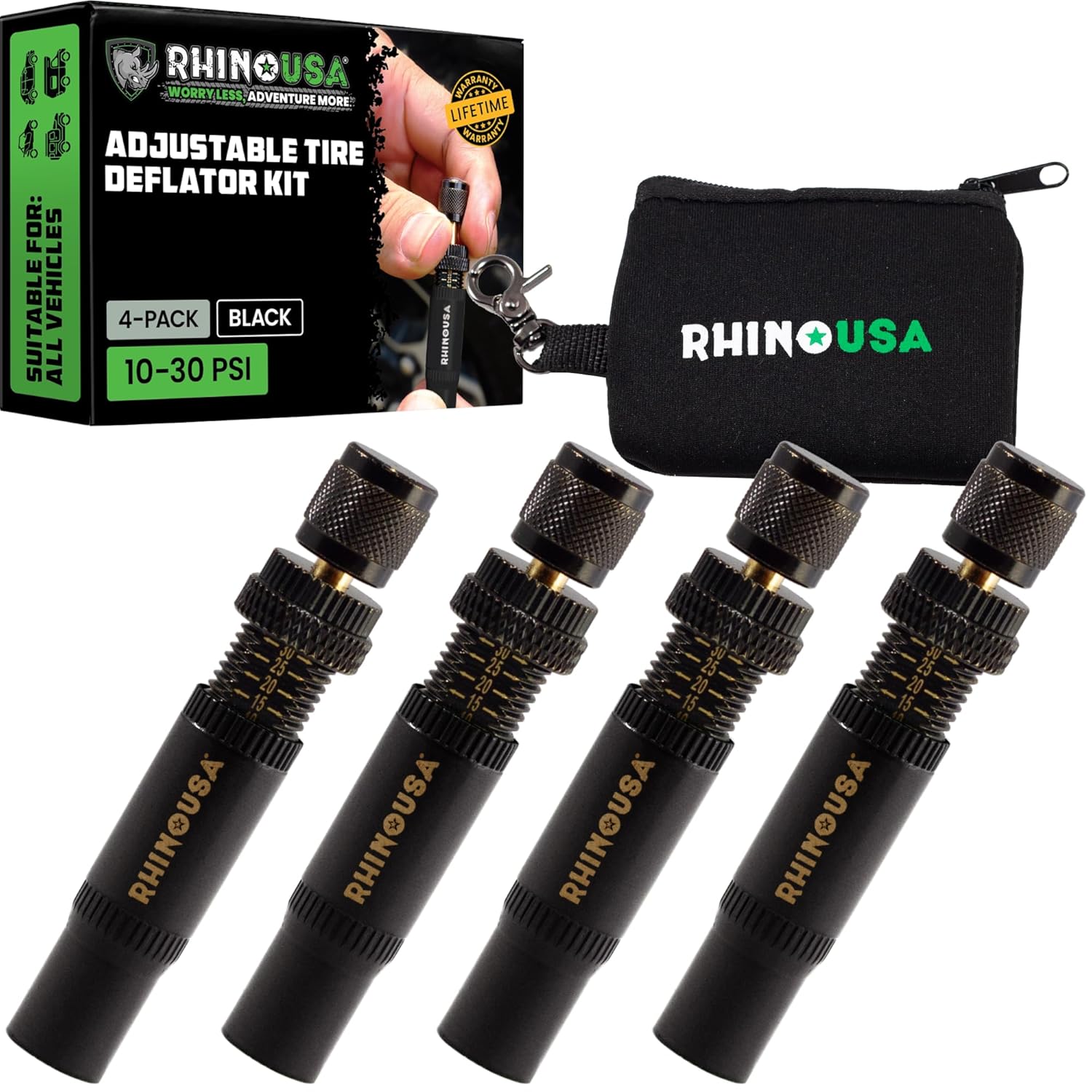
Use the Rhino USA adjustable tire deflators to air down all four tires at once by screwing one deflator onto each valve stem, letting you step away while the tires reach your preset pressure. Each deflator independently adjusts across a 10–30 PSI range with laser-etched indicators for quick setup and verification, making it ideal for beach, sand, and rocky off-road trails.

Upgrade your 2024-2026 Tesla Model 3 Highland with REEVAA all-weather mud flaps designed for seamless fit along the original body lines. The set of four delivers strong splash protection against mud, gravel, and road debris while using OEM-grade durable materials. Installation is non-destructive with original hole positions and snap-in clips, and the aerodynamic design helps minimize impact on efficiency.
When Another Tire Type Is Better
Choose All-Terrain Tires When
- Most of your driving is on pavement.
- Cabin noise, ride comfort, wet-road confidence, and fuel economy are top priorities.
- Your off-road use is mainly gravel roads, campsites, and mild trails.
- You want the widest choice of mileage warranties and road-focused sizes.
Choose Mud-Terrain Tires When
- You frequently drive through deep mud, sticky clay, large ruts, or technical rock sections.
- You accept more road noise, weight, and possible tread-wear compromise.
- Maximum low-speed off-road traction matters more than highway refinement.
Choose Dedicated Winter Tires When
- You regularly face ice, packed snow, and sustained freezing temperatures.
- Winter braking and cold-weather grip matter more than year-round convenience.
- Local law or insurance rules require winter-rated equipment.
How to Maintain Hybrid-Terrain Tires
Aggressive tires can become louder and wear quickly when pressure, rotation, balance, or alignment is neglected. Follow the vehicle and tire manufacturer’s schedules.
- Check all tire pressures at least monthly when the tires are cold.
- Inspect the tread and sidewalls after rough trails for cuts, bulges, embedded stones, and uneven wear.
- Rotate the tires using the approved pattern and interval for your vehicle and tire construction.
- Correct alignment or balance problems when you notice pulling, vibration, cupping, or irregular tread wear.
- Keep records required by the mileage warranty.
- Replace tires that reach the legal wear limit or show damage, aging, or unsafe performance.
Pro Tip: Before buying, write down your approximate pavement, gravel, trail, mud, and winter percentages. That simple driving profile makes it easier to choose between all-terrain, hybrid-terrain, and mud-terrain tires.
Frequently Asked Questions
Are hybrid tires good in mud?
Hybrid tires are usually capable in shallow to moderate mud because they have more open voids than many all-terrain tires. Dedicated mud-terrain tires remain better for frequent deep mud, sticky clay, and severe ruts.
Which is better, mud-terrain or all-terrain tires?
All-terrain tires are usually better for daily driving, light trails, lower noise, and longer highway use. Mud-terrain tires are better for repeated deep mud and demanding off-road conditions. A hybrid tire fits between those two choices.
Are hybrid-terrain tires good for daily driving?
They can be a good daily-driving choice when you accept more tread noise and weight than a road-focused tire. Compare model-specific wet performance, ride comfort, warranty, and user needs before buying.
Do all hybrid tires have the 3PMSF symbol?
No. The rating depends on the exact product and sometimes the exact size. Check the sidewall and the manufacturer’s current specification chart before relying on a tire for severe-snow service.
Do hybrid tires last longer than mud-terrain tires?
Often, but not always. Tread life depends on the compound, vehicle weight, alignment, pressure, rotation, road surface, and driving style. Compare the exact mileage warranty and its conditions instead of relying on the category name.
Can you install hybrid tires on only two wheels?
A matching set of four is the safest general approach because mixed tread patterns, sizes, or constructions can change handling and stability. Follow the vehicle manufacturer’s requirements and consult a tire professional when replacing fewer than four tires.
Sources
- NHTSA TireWise — tire sizing, load information, wet-traction grades, inflation, inspection, and replacement guidance.
- Transport Canada: Using Winter Tires — 3PMSF meaning, winter traction, matching sets, and cold-weather guidance.
- Nitto Ridge Grappler — official hybrid-terrain classification and tread-design features.
- Mickey Thompson Baja Boss A/T — official hybrid all-terrain features, size-specific 3PMSF coverage, and mileage warranties.
- Toyo Open Country R/T — rugged-terrain construction, off-road features, noise control, and warranty information.
Conclusion
Hybrid-terrain tires are a strong middle-ground choice for drivers who split time between pavement and demanding unpaved routes. They usually offer more trail bite than a mild all-terrain tire and better highway manners than a mud-terrain tire. Before buying, verify the exact size, load capacity, pressure requirements, 3PMSF status, wet-road information, weight, and warranty. Choose mud-terrain tires for frequent extreme off-road use, all-terrain tires for road-heavy driving, and dedicated winter tires when ice and severe cold are the main concern.