Disclosure: As an Amazon Associate, we earn from qualifying purchases. If you click a link on this page and make a purchase, we may receive a small commission at no extra cost to you.
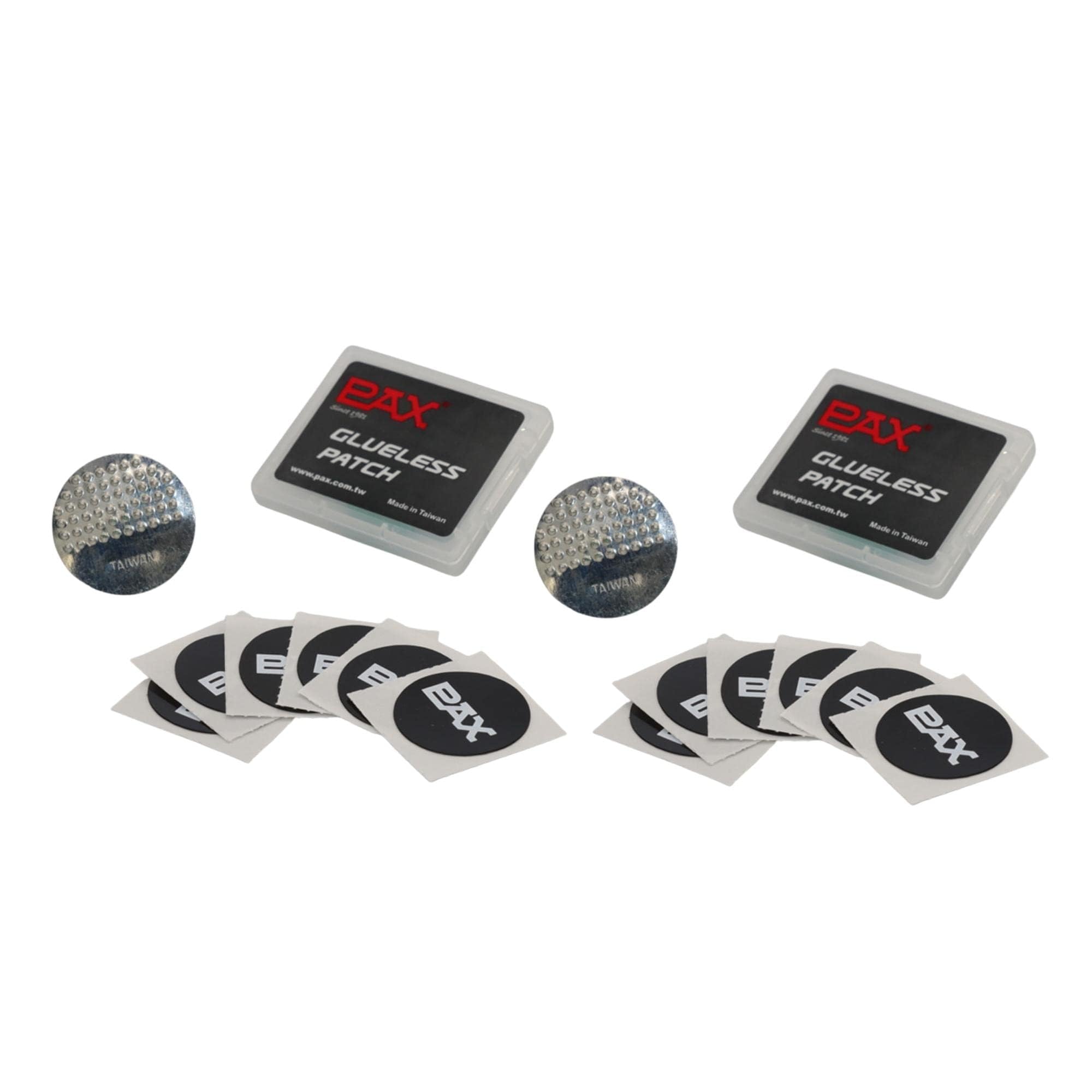
A small puncture can end a commute or trail ride unless you carry a fast way to repair the inner tube. The PAX 14 Pcs Glueless Bike Tire Patch Kit gives you 12 pre-glued, 24 mm round patches and two metal scuffers in two compact boxes, so you do not need a separate tube of rubber cement. Its main strength is quick, low-mess roadside use. Its main limitation is that a glueless patch is better treated as an emergency repair when you ride at high pressure, carry heavy loads, or need maximum long-term reliability.
This review explains what comes in the kit, how to apply the patches correctly, which punctures they can handle, and when a traditional vulcanizing patch or replacement tube is the safer choice.
TL;DR
Quick Verdict
Rating: 8/10, recommended with caveats
Best For: Commuters, recreational riders, BMX riders, and cyclists who want a compact inner-tube repair backup
Bottom Line: The PAX kit is easy to carry and faster to use than a glue-based kit. The 24 mm patches suit small punctures, but they are not designed for torn tubes, damaged tire casings, or every long-term repair.
| Specification | Detail |
|---|---|
| Brand | PAX |
| Product type | Glueless bicycle inner-tube patch kit |
| Total piece count | 14 pieces |
| Included patches | 12 pre-glued round patches |
| Patch diameter | 24 mm (0.94 inch) |
| Surface-prep tools | 2 metal scuffers |
| Package format | 2 compact boxes |
| Compatibility | Standard bicycle inner tubes, including common road, mountain, and BMX setups |
| Best use | Small point punctures and emergency ride-saving repairs |
| Not intended for | Large cuts, split seams, damaged tire casings, or tubeless tire plugging |
Before You Buy: The product title refers to 14 total pieces, not 14 patches. You receive 12 patches and two scuffers. You should also carry tire levers, a pump or inflator, and preferably a spare tube because this kit does not include them.
PAX 14 Pcs Glueless Bike Tire Patch Kit
What Is the PAX Glueless Patch Kit?
The PAX kit is a portable repair set for punctured bicycle inner tubes. Each of its two small boxes contains six round, self-adhesive patches and one metal scuffer. That gives you 12 patches and two preparation tools across the full set.
Unlike a traditional patch kit, it does not require separate vulcanizing cement or drying time. You lightly roughen and clean the tube, center a patch over the hole, press it firmly, and check the seal before reinstalling the tube. This design is most useful when speed, low weight, and simple storage matter more than workshop-level permanence.
Who Should Buy It?
Best For
- Commuters who want a fast repair without carrying liquid cement
- Recreational road, mountain, or BMX riders with standard inner tubes
- Cyclists building a compact saddle-bag or jersey-pocket emergency kit
Skip If
- You need the most durable possible repair for high-pressure or long-distance riding
- Your tire uses a tubeless setup that needs plugs, sealant, or an internal tire boot
- The tube has a large slash, torn valve base, split seam, or multiple nearby holes
[Products Worth Considering]

This chemical vulcanizing cement cures rubber at room temperature, creating a strong bond for reliable tire patch and plug repairs. The fast-drying formula helps reduce vulcanization time, while the built-in brush makes application quick and even. Suitable for car, motorcycle, and bicycle tires, it supports repairs for tubeless tires, outer tires, and inner tubes.

A portable bicycle repair bag built for on-the-go maintenance, pairing a scalable mini tire pump with a multi-tool, crank and bone wrenches, tire levers, and self-adhesive glueless patches. The included patch set helps you quickly seal punctures using the integrated prep/rasp step, while the waterproof nylon bag keeps tools organized and easy to access. Ideal for road, mountain, and home bike emergencies, repairs, and routine adjustments.

This chemical vulcanizing cement promotes rubber vulcanization at room temperature, helping create durable tire repairs without heat. The included brush makes application easy, and the quick-drying formula with accelerators helps the repair cure faster for reliable patch or plug sealing. It’s suitable for cars, motorcycles, and bikes, supporting repairs for both inner tubes and outer tires.
What People Say
Feedback summarized in the source article is mixed but practical. Riders often praise the quick application, small storage size, and lack of messy glue. The repeated concern is adhesion over longer rides, especially when the tube was not cleaned and scuffed well or when the tire runs at higher pressure.
Overall Sentiment: Neutral

Pros and Cons
Pros
- Twelve pre-glued patches cover several small puncture repairs
- Two included scuffers help prepare the tube for better adhesion
- No separate glue tube, curing step, or sticky cleanup is required
- Two compact boxes are easy to split between bikes or repair bags
- The 24 mm round shape gives useful coverage around small point punctures
Cons
- Glueless adhesion can be less durable than a well-applied vulcanizing patch
- The kit does not include tire levers, inflation equipment, or a spare tube
- A 24 mm patch cannot safely repair large cuts, valve damage, or a damaged tire casing
Feature-by-Feature Review
Patch Count and Kit Layout
The most important package detail is the difference between pieces and patches. You get 14 pieces in total: 12 adhesive patches and two metal scuffers. The two-box layout is useful because you can keep one set on your main bike and place the second in another saddle bag, commuter backpack, or home repair drawer.
The set is still incomplete as a full flat-repair system. You need a way to remove the wheel and tire, locate the leak, and reinflate the tube. Depending on your bike, that can mean tire levers, a wrench, a mini pump, or a CO2 inflator.
24 mm Patch Size
Each round patch measures 24 mm, or about 0.94 inch, across. That size gives enough adhesive area around a small thorn, wire, staple, or pinch puncture when you center the hole carefully. The round shape also avoids corners that can lift if the tube flexes.
Patch diameter does not turn a large tear into a safe repair. A slit, split seam, or damaged valve area can continue opening under pressure even when the adhesive appears to hold during a quick hand check.
Ease of Use
Glueless patches remove two slow steps from a traditional repair: applying liquid cement and waiting for it to become tacky. That makes the PAX kit easier to use beside the road, on a dark commute, or during a short trail stop.
Surface preparation still matters. Dust, moisture, tire powder, skin oil, and mold-release residue can weaken the bond. The included scuffer helps create a clean, slightly rough contact area, but you should use light pressure so you do not thin or puncture the tube.
Adhesion and Durability
The adhesive is designed for quick contact, not for correcting poor preparation. A patch can lift at an edge if the tube is wet, dirty, folded, stretched during application, or inflated before you press the full surface firmly.
For a short ride home, a properly applied patch may be all you need. For touring, racing, repeated high-pressure use, or a repair you expect to last for months, a vulcanizing patch or new tube gives you a more conservative long-term option.
Portability and Storage
The lack of a glue tube keeps the repair set compact and avoids the common problem of liquid cement drying out after opening. The two small boxes also protect the patch backings from abrasion and loose dirt in your bag.
Store the kit in a cool, dry place and keep the patch backing sealed until use. Excess heat, direct sun, moisture, or contamination can reduce the reliability of any pressure-sensitive adhesive.
Versatility
The kit is intended for bicycle inner tubes and is marketed for common road, mountain, and BMX use. The deciding factor is not the bike label but the damage type. A clean, small hole in an otherwise sound tube is a reasonable match. A torn tube or damaged tire structure is not.
Do not confuse an inner-tube patch with a tubeless plug or tire boot. A tubeless puncture, sidewall cut, or casing tear needs a repair method made for that location and construction.
How to Use It Correctly
1. Find and Mark the Leak
Remove the tube and add enough air to help locate the hole. Listen and feel for escaping air. When practical, use water to identify bubbles, then dry the tube completely and mark the puncture so you do not lose it during preparation.
2. Check the Tube and Tire
Inspect the tube for more than one hole. Also run your fingers carefully along the inside of the tire and check the tread for the thorn, wire, glass, or sharp edge that caused the puncture. Removing the cause is essential because it can pierce the repaired tube again.
3. Prepare a Flat Contact Area
Deflate the tube fully. Use the supplied scuffer to lightly roughen an area wider than the 24 mm patch. Wipe away loose residue and make sure the surface is clean, dry, and flat.
4. Apply and Press the Patch
Peel the backing without touching the adhesive more than necessary. Center the patch over the marked hole, place it once, and press from the middle toward the edges. Hold firm, even pressure across the whole patch so no edge remains loose.
5. Reinflate and Inspect Slowly
Add a small amount of air and check that the patch stays flat. Reinstall the tube without pinching it under the tire bead, then inflate gradually. Stop if the patch bubbles, shifts, lifts, or continues leaking.
Pro Tip: Circle the puncture before you scuff the tube, and prepare an area slightly larger than the patch. This keeps the hole centered and gives the full adhesive surface a clean contact zone.
Common Mistakes to Avoid
- Applying the patch to a wet, dusty, or oily tube
- Touching most of the adhesive with your fingers
- Scuffing so aggressively that you weaken the tube
- Stretching the tube while placing the patch
- Failing to remove the sharp object from the tire
- Inflating to full pressure before checking the patch edges
Compatibility and Safety
Inner Tubes Only
The PAX patches are for the removable inner tube inside a bicycle tire. They do not plug a tubeless tread puncture, rebuild a cut sidewall, or restore a tire casing that has exposed cords. Use a tubeless repair plug, sealant-compatible method, tire boot, replacement tire, or professional service as the damage requires.
Know When to Replace the Tube
Replace the tube when the valve base is torn, the seam has split, the rubber is cracked or degraded, or the hole is too large for clean adhesive coverage. Multiple old repairs close together can also make replacement more dependable than adding another patch.
Check the Repair Before Riding Fast
After installation, confirm that the tire bead is evenly seated and the wheel spins normally. Begin with a slow, controlled test rather than immediately descending, cornering hard, or riding in traffic. If the tire loses pressure or handling changes, stop and inspect it.
How It Performs in Real Use
Commuting
This is the kit’s strongest use case. You can keep one box on the bike, patch a small tube puncture without opening a glue tube, and continue after a careful pressure check. Its small format is especially useful when you carry only basic tools.
Trail Rides
The kit can save a ride when a thorn or small sharp object punctures a conventional mountain-bike tube. Dirt and moisture make preparation harder, so clean and dry the tube as well as possible. A spare tube remains the faster and more reliable answer when the damage is large or conditions are muddy.
Road and High-Pressure Riding
Road tubes place more stress on the adhesive as pressure rises and the tube flexes against the tire. A PAX patch can serve as an emergency fix, but you should inspect it closely and consider replacing the tube or applying a vulcanizing repair before another demanding ride.
Emergency Backup and Travel
The two-box layout works well for backup storage. Keep one set with your primary bike and the other with a travel bike, family repair kit, or commuter bag. Because the kit is compact, it adds little bulk, but it should supplement rather than replace inflation tools and a spare tube.
Long-Term Cost Benefits
A successful patch lets you reuse an otherwise sound tube instead of discarding it after one small puncture. Twelve patches can therefore reduce the number of replacement tubes you buy, especially when most flats come from simple point punctures.
The value depends on repair quality. A patch that lifts because of rushed preparation costs time and may still require a new tube. You get the best return by using these patches for suitable holes and keeping a traditional kit or spare tube for repairs that need greater durability.
Why Riders Choose
You choose the PAX kit when you value a compact package, quick application, and no separate cement. The 12-patch supply and two scuffers make it more useful than a patch-only envelope, while the split packaging lets you equip two bikes. The tradeoff is that convenience does not guarantee a permanent bond in every tube, pressure range, or riding condition.

Is It Worth the Price?
The PAX kit sits in the budget emergency-repair category. It offers strong value for the price when you want several pre-glued patches, two preparation tools, and two compact storage boxes without the mess of liquid cement.
It is a smart buy for everyday use if your priority is getting home after a small puncture. It is not the best fit if you want one repair method for every flat, since you still need tire-removal and inflation tools, and some damage requires a new tube or a different repair system.
[Products Worth Considering]

Vigorder rubber cement glue delivers superior adhesion and cures quickly within about 30 seconds for seamless rubber bonding. Once cured, it helps provide a strong, durable, waterproof seal that holds up to vehicle weight, pressure, and heat. Suitable for cars, motorcycles, trucks, bicycles, and off-road tires, it’s designed for emergency patch and maintenance repairs.

FANSPRO’s 2-pack 26-inch bicycle inner tubes are built for reliable performance on road and mountain bikes. They fit tire widths from 2.125 to 2.40 inches and use a 48mm Schrader valve for convenient inflation. The set includes two durable tire levers to help you remove and install tubes quickly after a flat.

This Hycline 2-pack mountain bike tire set delivers durable, puncture-resistant performance with a high-grip, aggressive tread designed for traction on hard surfaces and confident handling through mud and soil. Includes matching inner tubes and tire levers for easier everyday maintenance and quicker installation after folding storage. Built for a range of riding conditions with reinforced rubber and nylon cord for wear-resistant reliability.
How It Compares to Alternatives
The Park Tool GP-2 Super Patch Kit is another compact glueless option from a widely known bicycle-tool brand. Slime Skabs are also worth comparing if you want self-adhesive tube patches. Both compete on convenience rather than the curing bond of a traditional kit.
If long-term durability matters more than speed, a glue-based option such as the Rema Tip Top TT04 is the stronger type of alternative. The PAX kit makes the most sense when you want more pre-glued patches split between two small boxes and accept that some repairs should be upgraded later.
[Products Worth Considering]

Wykodra tire plugs provide quick vulcanizing repairs for tubeless tires, helping you seal punctures and get back on the road. The industrial-strength rubber creates a long-lasting, leak-resistant bond and is designed for emergency fixes without removing the tire. Choose between two standard plug sizes with color-matched options for small to larger damage across many vehicles and off-road uses.
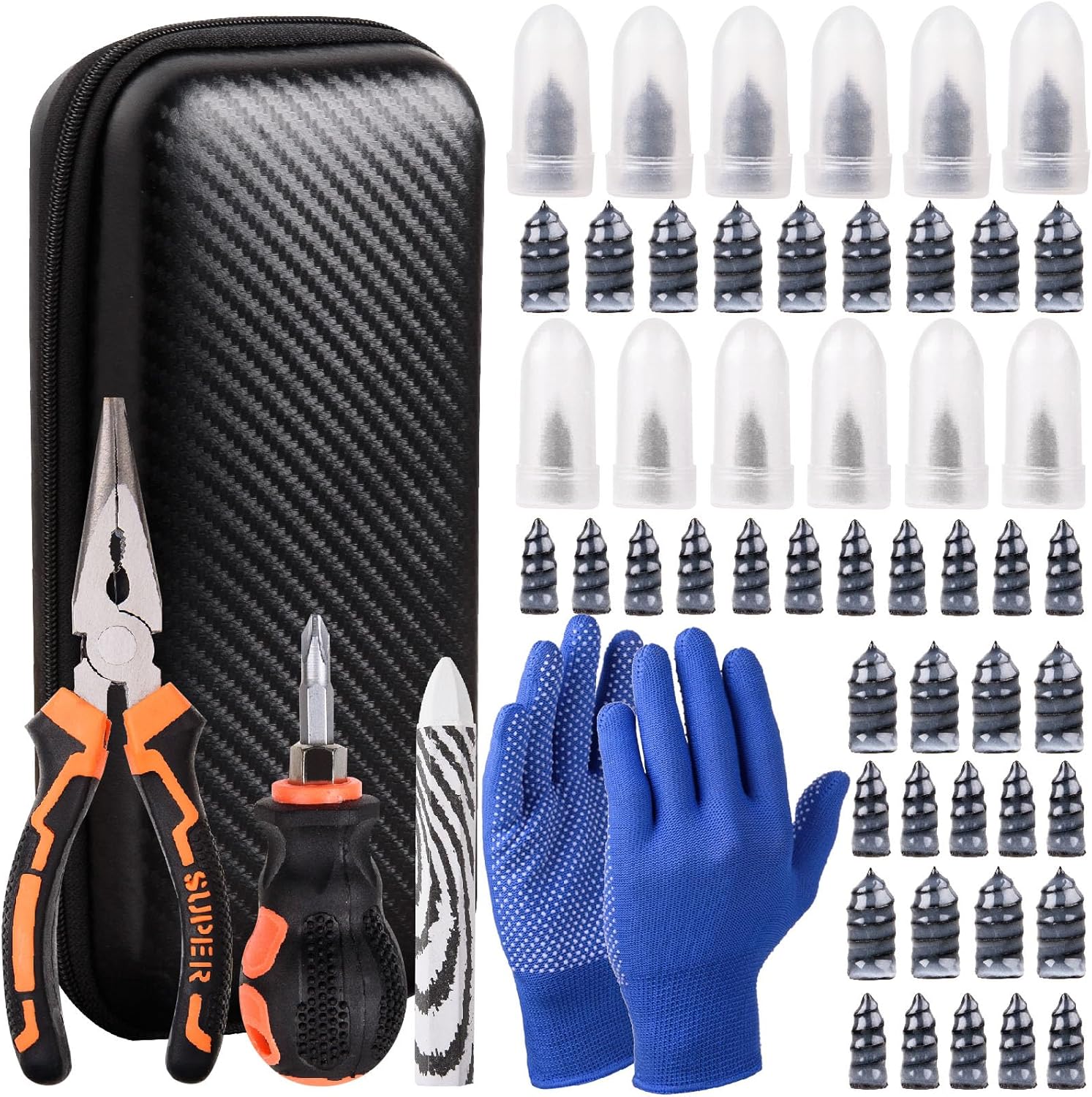
This tire sidewall puncture repair kit fixes flats fast without removing the tire, helping you get back on the road in minutes. It includes self-tapping repair nails, essential tools, gloves, and a portable storage bag for convenient roadside use. Designed for tubeless tires, it helps create a tight, leak-resistant seal for cars, motorcycles, trucks, SUVs, and ATVs.

Replace worn tires quickly with this universal 4.80/4.00-8 tire and inner tube set designed for wheelbarrows and outdoor utility carts. The ribbed tread helps reduce turf damage while the natural rubber construction supports longer service life. Compatible with 15.5-inch outer diameter, 4-inch width, and 8-inch rim diameter wheels, it uses a straight TR-13 valve stem for easy installation. For best results, inflate with a manual pump and do not exceed 25 PSI.
Frequently Asked Questions
Does the kit include 14 patches?
No. The 14-piece count includes 12 pre-glued patches and two metal scuffers. The components are divided between two compact boxes.
Are PAX glueless patches permanent?
They can hold suitable small punctures, but you should treat them as emergency repairs when long-term reliability is critical. High pressure, heat, contamination, poor preparation, and tube flex can reduce adhesion.
What puncture size can a 24 mm patch repair?
The patch is best for a small point puncture that leaves a wide ring of undamaged tube beneath the adhesive. It is not suitable for a long cut, split seam, torn valve base, or hole that continues opening when the tube is inflated.
Will these patches work on road, mountain, and BMX tubes?
They are intended for standard bicycle inner tubes used in those bike categories. The repair depends more on tube condition, hole size, surface preparation, and operating pressure than on the bike label alone.
Can you use them on tubeless tires?
Not as a replacement for a tubeless plug or sealant repair. This kit patches a removable inner tube. A tubeless tread puncture or casing cut needs a method designed for the tire itself.
Do you need to scuff the tube first?
Yes. Light scuffing removes surface contamination and gives the adhesive a better contact area. Use gentle pressure, clear away residue, and make sure the tube is dry before applying the patch.
What else should you carry with this kit?
Carry the tools needed to remove your wheel and tire, plus a mini pump or CO2 inflator. Tire levers and a spare tube give you a backup when the puncture is too large or the patch does not seal.
When should you replace the tube instead?
Replace it when the rubber is cracked, the valve base or seam is damaged, the cut is too large, or several repairs overlap. Replacement is also the conservative choice before demanding high-speed or long-distance riding.
The Bottom Line
The PAX 14 Pcs Glueless Bike Tire Patch Kit is a practical choice for commuters and recreational riders who need a fast, compact repair for small inner-tube punctures. Skip it as your only repair method if you run tubeless tires, ride at demanding pressures, or need maximum long-term durability, because its convenience is strongest as an emergency solution.
Ready to Buy?
Check the latest price, package details, and seller information before you decide.