Disclosure: As an Amazon Associate, we earn from qualifying purchases. If you click a link on this page and make a purchase, we may receive a small commission at no extra cost to you.
A small puncture can stop a bike ride, sideline yard equipment, or leave you deciding whether a damaged tire can be repaired safely. The PAX Universal Heavy-Duty Tire Patch Kit gives you 30 square rubber patches, each measuring 55 x 55 mm, plus rubber cement for traditional inside-surface repairs. Its patch size and quantity are useful, but this is not a complete roadside plug kit and it is not suitable for sidewall damage. This review explains what is included, where the kit makes sense, what tools you may still need, and when a tire should go to a trained technician.
Quick Verdict
Rating: 8.2/10, recommended with safety caveats
Best For: Inner-tube repairs, workshop use, and owners who already have surface-prep and pressing tools
Bottom Line: The large 55 x 55 mm patches and 30-piece count make this a practical bulk kit for repairable rubber punctures. The main tradeoff is that a patch and cement alone do not form a complete industry-approved repair for passenger-car tubeless tires.
Key Specifications
| Specification | Detail |
|---|---|
| Brand | PAX |
| Model | PAX1806-125 |
| ASIN | B0FCS6BXDS |
| Product type | Traditional rubber patch-and-cement repair kit |
| Patch count | 30 patches |
| Patch size | 55 x 55 mm square |
| Adhesive | Rubber cement included; the Amazon listing gives conflicting cement-volume details |
| Listed compatibility | Inner tubes, rubber outer tires, and accessible internal tubeless-tire surfaces |
| Listed item dimensions | 5.39 x 2.72 x 3.03 inches |
| Listed item weight | 5 ounces |
| Not included as a complete system | No tire plug, liquid sealant, spray foam, or injection repair system |
| Best use | Prepared inner-tube repairs and controlled workshop patching |
What Is the PAX Universal Heavy-Duty Tire Patch Kit?
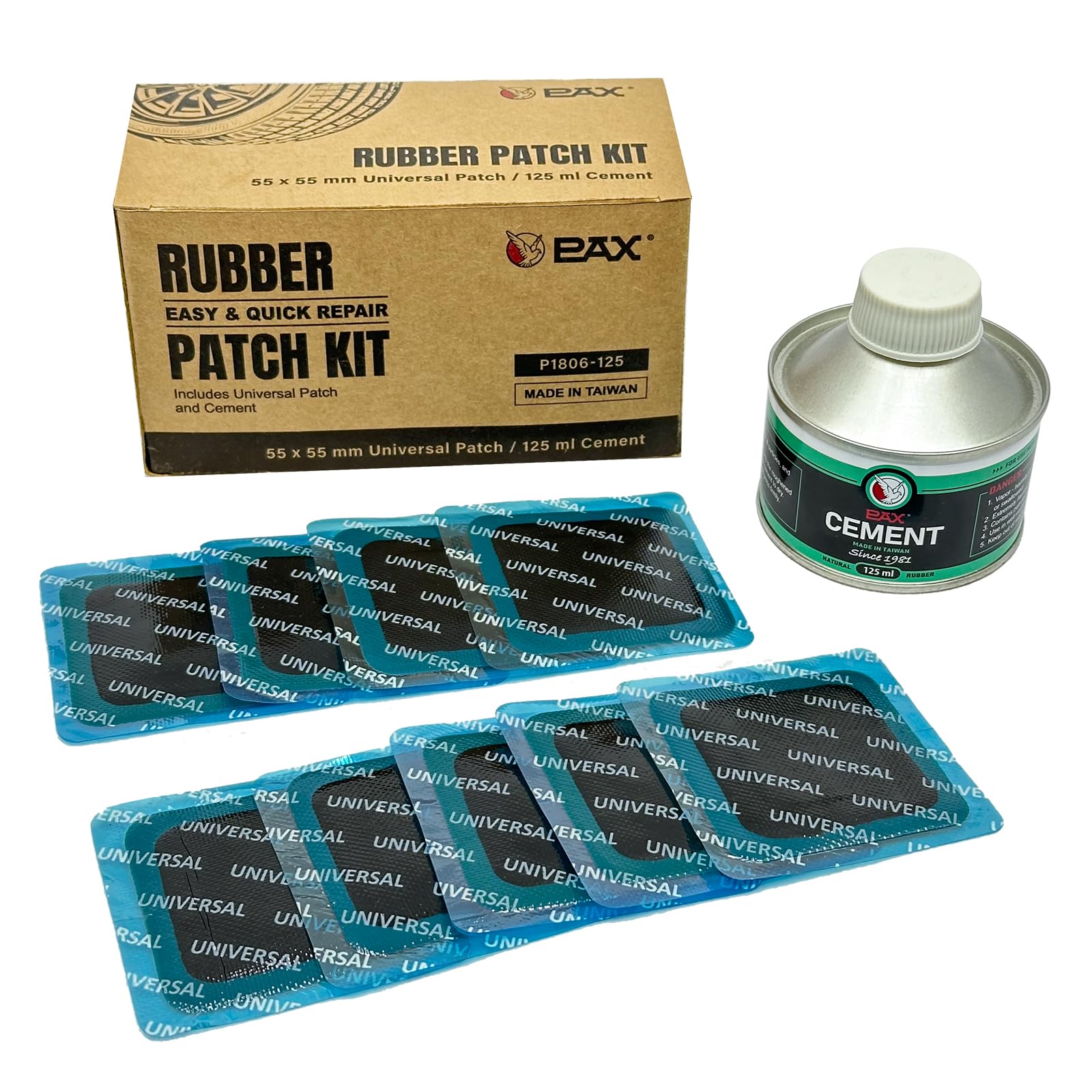
The PAX PAX1806-125 is a bulk patch kit built around 30 thick, square rubber patches. Each patch measures 55 x 55 mm, giving you more coverage than the smaller round patches commonly sold for bicycle tubes. PAX pairs the patches with rubber cement so you can create a traditional bonded repair after locating, cleaning, roughening, and drying the damaged area.
The kit is marketed for bikes, motorcycles, cars, and other rubber tires or tubes. That broad compatibility describes the materials the patches can bond to, not a guarantee that every puncture is safe to repair. The correct method depends on the tire type, puncture location, damage size, and vehicle manufacturer guidance.
Who Should Buy It?
Best For
- Cyclists and equipment owners who repair removable inner tubes
- Home workshops that already have a rasp, cleaner, marker, and patch roller
- Buyers who want 30 larger patches instead of a small emergency assortment
Skip If
- You need an outside-in roadside plug for a mounted tubeless tire
- The puncture is in a sidewall, shoulder, or damaged tire structure
- You want a complete tool kit with a rasp, roller, plug stem, and inspection equipment
Before You Buy: This box supplies patches and cement, not every tool or repair component required for every tire. For passenger and light-truck tubeless tires, industry guidance calls for tire removal, internal inspection, a plug or rubber stem through the injury, and a patch over the inner liner.
What People Say
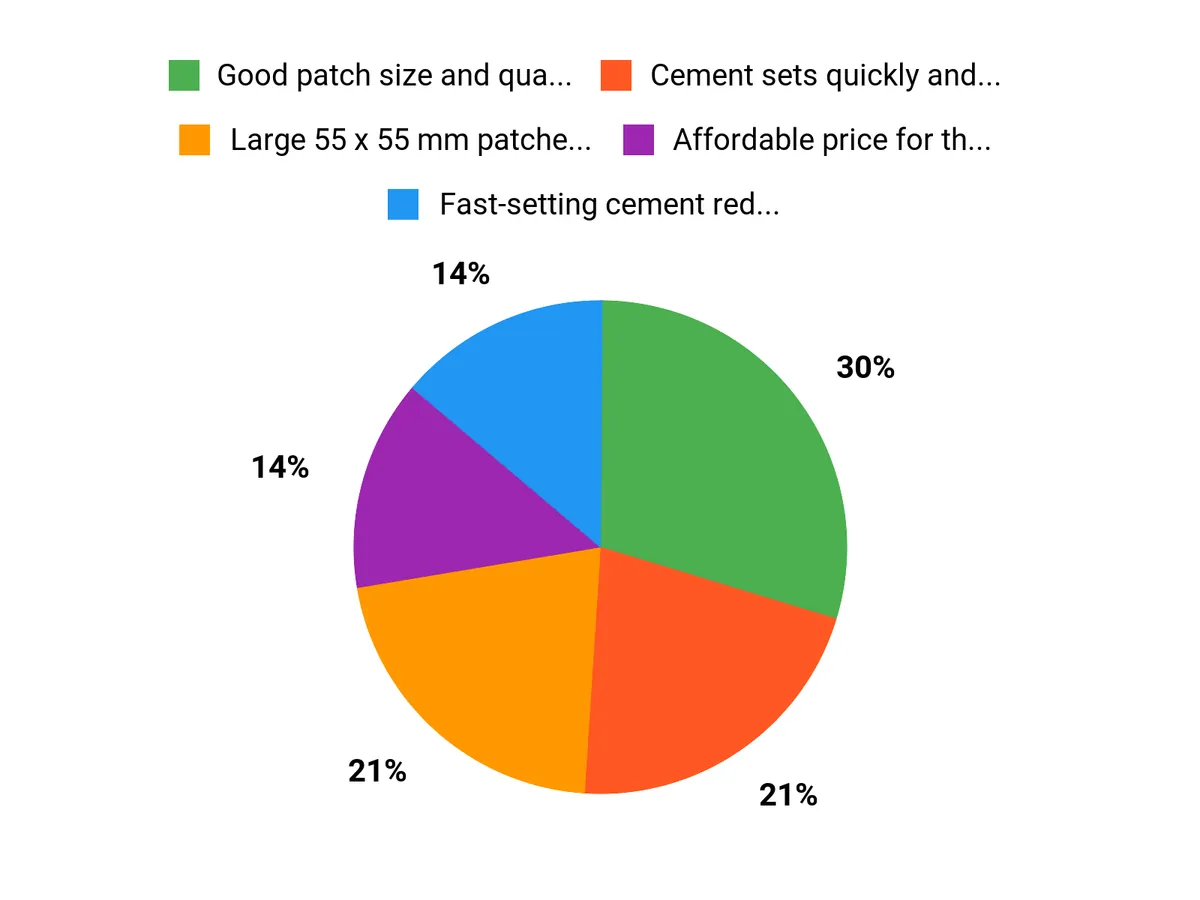
The feedback summarized in the source article is generally positive about patch coverage, adhesive grip, and the number of repairs available in one package. The most useful criticism is also practical: some buyers expected more preparation tools, and listing details have not always been perfectly consistent. Because ratings and review totals change, check the current Amazon page rather than relying on an older score.
Overall Sentiment: Positive, with package-detail caveats

Pros and Cons
Pros
- Thirty patches support repeated repairs instead of one emergency use
- Each 55 x 55 mm patch offers broad coverage for suitable rubber damage
- Rubber cement is included, so you do not need to source adhesive separately
- Works with removable inner tubes and other properly prepared rubber surfaces
- Compact listed dimensions make the kit easy to store in a workshop cabinet
Cons
- Not a complete plug-and-patch system for highway tubeless tires
- Preparation and pressing tools may need to be purchased separately
- The Amazon listing conflicts on the amount of cement included
Patch Size, Build, and Coverage
A 55 x 55 mm square gives you a wide contact area around a puncture. That can be useful on larger inner tubes, mower tubes, and prepared rubber surfaces where a small bicycle-style patch would leave little margin. The square shape also makes it easy to align the patch over a marked repair area.
More patch area does not make unsafe damage repairable. A patch must sit on sound, clean rubber with enough undamaged material around the injury. Cuts, exposed cords, bead damage, sidewall splits, and damage caused by driving while flat require replacement or professional inspection rather than a larger patch.
Rubber Cement and Required Tools
PAX includes fast-drying rubber cement designed to create a high-tack bond between the patch and prepared rubber. The product instructions show the surface being roughened first, followed by an even coat of cement. The cement is allowed to dry before the patch is pressed firmly to remove trapped air.
You should plan on supplying several tools yourself: a marker to circle the leak, a suitable rasp or abrasive for surface preparation, cleaning supplies, and a roller or another approved pressing tool. You may also need tire levers, valve tools, inflation equipment, and a leak-check solution depending on the tube or tire.
Pro Tip: Mark the puncture before removing or deflating the tube, then center the patch over the mark only after the prepared area is clean, dry, and wider than the patch. Follow the cement label for tack and cure times instead of guessing.
[Products Worth Considering]

This chemical vulcanizing cement promotes rubber vulcanization at room temperature, helping create durable tire repairs without heat. The included brush makes application easy, and the quick-drying formula with accelerators helps the repair cure faster for reliable patch or plug sealing. It’s suitable for cars, motorcycles, and bikes, supporting repairs for both inner tubes and outer tires.

Vigorder rubber cement glue delivers superior adhesion and cures quickly within about 30 seconds for seamless rubber bonding. Once cured, it helps provide a strong, durable, waterproof seal that holds up to vehicle weight, pressure, and heat. Suitable for cars, motorcycles, trucks, bicycles, and off-road tires, it’s designed for emergency patch and maintenance repairs.

This chemical vulcanizing cement cures rubber at room temperature, creating a strong bond for reliable tire patch and plug repairs. The fast-drying formula helps reduce vulcanization time, while the built-in brush makes application quick and even. Suitable for car, motorcycle, and bicycle tires, it supports repairs for tubeless tires, outer tires, and inner tubes.
How It Performs in Real Use
For Bicycle Inner Tubes
This is the kit’s clearest use case. You can remove the tube, find the leak, roughen the rubber, apply cement, and press a patch over the puncture on a stable work surface. The 55 mm square size may be larger than necessary for a tiny pinhole, but it gives you generous bonding area on wider tubes.
For Lawn Mowers and Yard Equipment
The larger patches can suit removable tubes used in some mowers, carts, and small equipment. Before repairing, inspect the tire casing and tube for thorns, wire, or sharp debris so the same object does not puncture the repaired tube again. Confirm that the tire or equipment maker permits a tube repair.
For Motorcycle Tubes
The kit can bond to a properly prepared motorcycle inner tube, but the consequences of failure are higher than on low-speed equipment. Follow the motorcycle and tire maker’s repair guidance, inspect the tire casing, and use professional service when you are uncertain about heat damage, pinching, tearing, or puncture location.
For Passenger-Car Tubeless Tires
A square patch by itself is not a complete approved puncture repair. The tire needs to come off the wheel for internal inspection, and a repairable tread puncture generally requires both a stem or plug through the injury channel and an internal patch. Treat this PAX kit as repair material for qualified inside work, not as permission to patch a mounted car tire from the outside.
How to Use It Correctly
- Confirm the damage is repairable. Do not patch a sidewall, shoulder, bead, exposed cord, large cut, or structurally damaged tire.
- Locate and mark the puncture. Remove the object only when you are ready to inspect and repair the damage.
- Clean and dry the area. Dirt, moisture, lubricant, and mold-release residue can weaken adhesion.
- Roughen the bonding surface. Prepare an area slightly larger than the patch without thinning or damaging the rubber.
- Apply an even coat of cement. Follow the product label and let it reach the stated tack condition.
- Apply and press the patch. Center it over the injury and roll or press from the center outward to remove air.
- Allow the repair to cure. Use the cement instructions for timing, then inflate gradually and check for leaks.
Do not use a knife edge as a substitute for the correct rasp or buffing tool. A blade can cut the tube, create a stress point, or leave an uneven bonding surface.
Compatibility and Safety
The product listing describes the patches as suitable for inner tubes, outer tires, and tubeless tires, but safe repair limits come from the tire type and the damage, not from patch size alone. For passenger and light-truck tires, the U.S. Tire Manufacturers Association advises repair only in the tread area when the puncture is no larger than 1/4 inch, or 6 mm. It also calls for removing the tire, inspecting the inside, filling the injury with a rubber stem or plug, and sealing the inner liner with a patch.
Never repair a passenger tire puncture in the shoulder or sidewall. Do not overlap repairs, patch a tire that was damaged by being driven flat, or assume a temporary air-holding result means the tire is structurally safe. Review the tire manufacturer’s limits and use a trained technician when road safety is involved. You can review the USTMA tire repair guidance for the industry criteria.
Storage and Maintenance
Keep the patches flat, clean, and protected from dust. Close the cement container tightly after each use and store it according to the label, away from heat, sparks, flames, and children. Rubber cement is a chemical adhesive, so work with ventilation and avoid skin or eye contact.
Before relying on the kit during a trip, check that the cement has not dried out and that you have the missing tools needed for your tire type. A patch kit without a pump, tire-removal tools, or a way to find the leak may not solve an actual breakdown.
Is It Worth the Price?
The PAX kit sits in the value-oriented bulk-repair category because you get 30 large patches and included cement. It makes the most financial sense when you maintain several inner-tube products or want workshop stock that can handle repeated punctures. One successful tube repair can cost less than replacing the tube or paying for basic shop labor.
The value drops if you expect a complete automotive roadside solution. You may still need prep tools, tire-removal equipment, inflation gear, and professional labor. The product page also lacks a stable featured price and gives conflicting cement-volume details, so compare the current package description before ordering.
[Products Worth Considering]

This Hycline 2-pack mountain bike tire set delivers durable, puncture-resistant performance with a high-grip, aggressive tread designed for traction on hard surfaces and confident handling through mud and soil. Includes matching inner tubes and tire levers for easier everyday maintenance and quicker installation after folding storage. Built for a range of riding conditions with reinforced rubber and nylon cord for wear-resistant reliability.
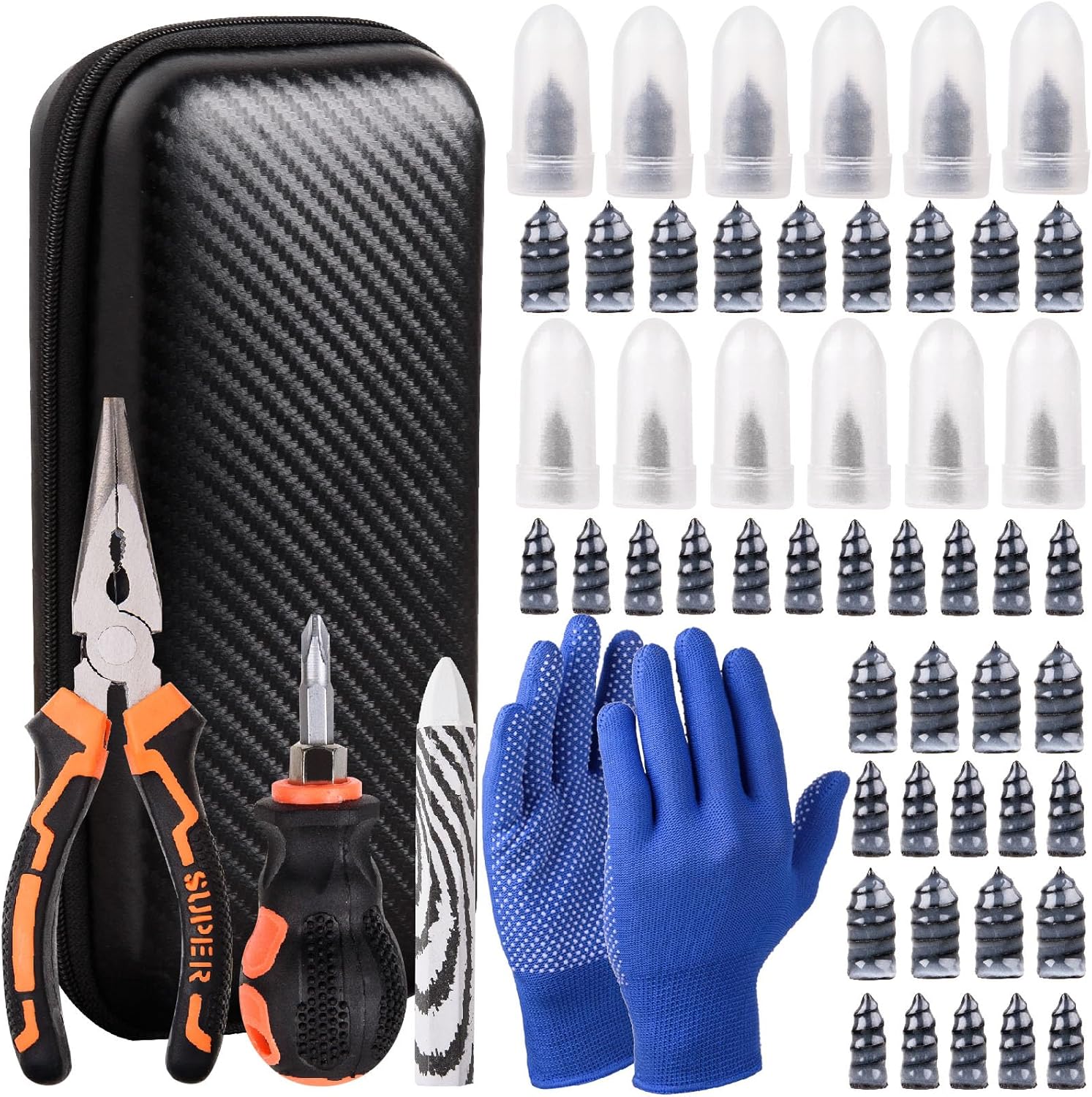
This tire sidewall puncture repair kit fixes flats fast without removing the tire, helping you get back on the road in minutes. It includes self-tapping repair nails, essential tools, gloves, and a portable storage bag for convenient roadside use. Designed for tubeless tires, it helps create a tight, leak-resistant seal for cars, motorcycles, trucks, SUVs, and ATVs.

This self-service tire repair nail kit includes 60 pieces (30 small + 30 large) to help seal punctures quickly without needing an auto shop visit. The nails are designed to fit different hole sizes and provide a tight connection with sealing glue to help prevent air and water intrusion. Suitable for cars, motorcycles, trucks, and other vehicles, it’s an easy, efficient way to patch roadside tire damage.
How It Compares to Alternatives
PAX also sells smaller 32 mm round patches, which are easier to center on small bicycle-tube pinholes and use less material per repair. Its 60 x 110 mm rectangular patches offer more coverage for larger repair areas, but they are sold as patches rather than a compact all-in-one kit. The 55 x 55 mm version sits between those options and suits buyers who want a broad, general-purpose patch size.
For a passenger-car tubeless tread puncture, a professional plug-and-patch combination is the safer comparison because it seals both the injury channel and inner liner after inspection. Choose the PAX kit for prepared rubber patching, not as a substitute for the repair method required by your tire manufacturer.
[Products Worth Considering]

Wykodra tire plugs provide quick vulcanizing repairs for tubeless tires, helping you seal punctures and get back on the road. The industrial-strength rubber creates a long-lasting, leak-resistant bond and is designed for emergency fixes without removing the tire. Choose between two standard plug sizes with color-matched options for small to larger damage across many vehicles and off-road uses.

This 60-piece tire repair nail kit provides a fast, do-it-yourself way to seal punctures on tubeless car, motorcycle, and SUV tires without removing the tire. Simply align, twist clockwise, and finish in seconds for a reliable sealing effect that helps prevent water intrusion. The kit includes tire glue and durable rubber-and-steel repair nails for strong adhesion and long-lasting repairs.

A portable bicycle repair bag built for on-the-go maintenance, pairing a scalable mini tire pump with a multi-tool, crank and bone wrenches, tire levers, and self-adhesive glueless patches. The included patch set helps you quickly seal punctures using the integrated prep/rasp step, while the waterproof nylon bag keeps tools organized and easy to access. Ideal for road, mountain, and home bike emergencies, repairs, and routine adjustments.
Frequently Asked Questions
Will this work on tubeless car tires?
The patch material can be applied to an accessible internal rubber surface, but a patch alone is not a complete industry-approved passenger-tire repair. A trained technician should remove the tire, inspect it, fill the puncture channel with a stem or plug, and patch the inner liner when the damage is within repair limits.
What exactly comes in the package?
The verified listing identifies 30 square 55 x 55 mm patches and rubber cement. The same Amazon page conflicts on the cement volume, so confirm the current package details before buying.
Does it include a rasp and patch roller?
The product listing clearly identifies patches and cement, but it does not verify a rasp or roller as included components. Plan to supply proper preparation and pressing tools unless the seller’s current package list says otherwise.
Can the patches repair a sidewall puncture?
No. Passenger-tire sidewall and shoulder damage falls outside the normal repairable area because those sections flex heavily and carry structural loads. Replace the tire or have it inspected by a qualified tire professional.
Are 55 x 55 mm patches too large for bicycle tubes?
They can work on wider tubes when the patch can lie flat without folding or reaching an awkward seam. For narrow road-bike tubes and tiny pinholes, a smaller round patch may be easier to place cleanly.
How long should the cement dry before patching?
Use the directions printed on the cement container because tack and cure times depend on the formula, temperature, and coat thickness. Apply the patch only when the cement reaches the instructed condition, then allow the completed repair to cure before inflation.
Who should skip this kit?
Skip it when you need an immediate outside-in plug, a complete tool assortment, or a repair for structural tire damage. It is also a poor fit if you are not prepared to remove and inspect the tire or tube correctly.
Why They Buy
Buyers choose this PAX kit mainly for the combination of 30 patches, a larger 55 x 55 mm format, and included rubber cement. It is most appealing as workshop stock for repeated tube repairs, especially when you already own the preparation and inflation tools needed to finish the job correctly.
The Bottom Line
The PAX Universal Heavy-Duty Tire Patch Kit is worth considering when you need a generous supply of large patches for repairable inner tubes and controlled workshop use. Skip it for sidewall damage, structural tire problems, or any passenger-car puncture that has not been removed and inspected. Its strongest feature is the 30-piece 55 x 55 mm patch supply, while its main limitation is that it does not provide a complete plug-and-patch automotive repair system.
Ready to Buy?
Check the latest price, cement quantity, and package details before you decide.