Disclosure: As an Amazon Associate, we earn from qualifying purchases. If you click a link on this page and make a purchase, we may receive a small commission at no extra cost to you.
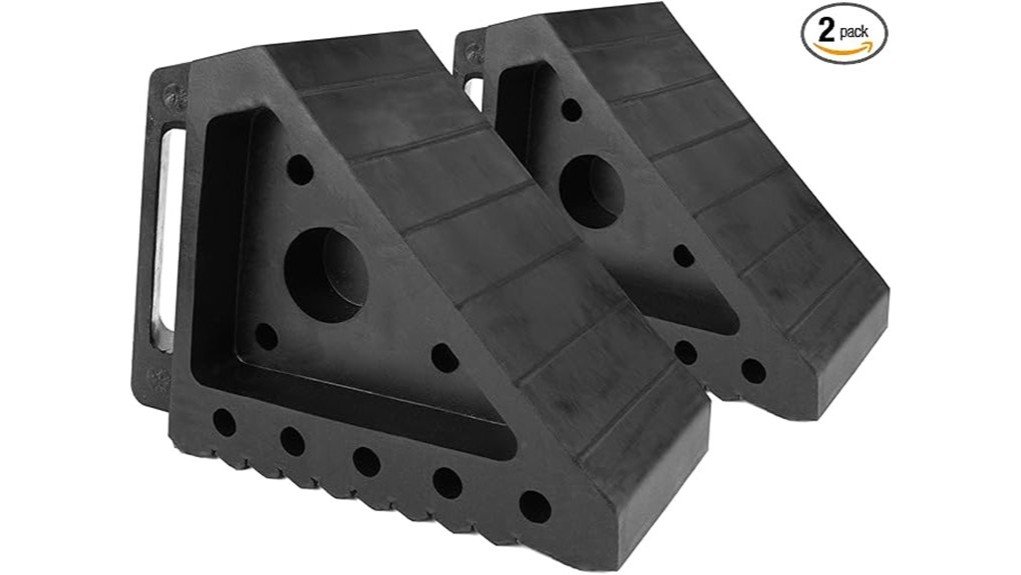
A parked vehicle or trailer can move when the surface slopes, the load shifts, or the parking brake is not enough on its own. The MaxxHaul 70472 Solid Rubber Wheel Chock gives you a simple physical stop with a dense rubber body, a textured grip surface, and a built-in carrying handle. This review explains where the compact 8 x 4 x 6-inch chocks work well, how to place them, and when a larger or purpose-built option makes more sense. The main strength is durable, low-fuss traction, while the main limitation is that the compact footprint may not suit very large tires or specialized applications.
Quick Verdict
Rating: 8.6/10
Best For: Cars, pickups, travel trailers, and RVs that need a compact pair of rubber chocks for parking, storage, or campsite setup.
Bottom Line: The MaxxHaul 70472 is a practical two-pack with solid rubber construction, oil-resistant traction surfaces, and easy-grab handles. It is recommended for routine vehicle restraint, but buyers with oversized commercial tires, aircraft, or motorcycle transport needs should choose a product designed for that specific use.
Key Specifications
| Specification | Detail |
|---|---|
| Brand | MaxxHaul |
| Model | 70472 |
| Product type | Solid rubber wheel chock set |
| Package count | Two chocks |
| Dimensions | 8 inches long x 4 inches wide x 6 inches high per chock |
| Material | Molded solid rubber |
| Grip design | Textured, non-slip, oil-resistant traction surface |
| Handling | Built-in molded handle |
| Color | Black |
| Best use | Cars, trucks, trailers, and RVs on pavement, concrete, gravel, or similar firm surfaces |
What Is the MaxxHaul 70472 Wheel Chock?
The MaxxHaul 70472 is a two-pack of compact rubber blocks designed to sit snugly against vehicle tires and resist rolling. Each chock measures 8 x 4 x 6 inches, so the set is easy to keep in a garage, truck bed, trailer storage compartment, or RV pass-through bay.
Its main selling point is the solid rubber build. Compared with lightweight hollow plastic chocks, the rubber body has more weight, conforms better to small surface irregularities, and resists cracking, crushing, and weather-related wear. A molded handle gives you a clean grip when placing or retrieving each chock.
Key Takeaways
- You receive two MaxxHaul 70472 wheel chocks, each measuring 8 x 4 x 6 inches.
- The solid rubber body is designed for all-weather use and resists oil, cracking, crushing, and deformation.
- A textured traction surface helps the chock grip pavement, concrete, gravel, and smooth garage floors.
- The molded handle makes placement and storage easier without adding loose hardware.
- The compact size works well for common cars, trucks, trailers, and RVs, but specialized or oversized tires may need a larger chock.
Who Should Buy It?
Best For
- Drivers who want a durable two-chock set for a driveway, garage, or storage area.
- Trailer and RV owners who need compact chocks that fit easily in an exterior compartment.
- Home or job-site users who prefer solid rubber over lightweight plastic or resin.
Skip If
- You need a certified aircraft chock or an industrial model with a documented load rating.
- You have very large commercial tires that need a wider, longer footprint.
- You need a motorcycle transport cradle that holds the wheel upright.
Before You Buy: Wheel chocks supplement the parking brake, transmission setting, and proper parking procedure. They do not replace jack stands, approved lifting equipment, or a purpose-built restraint system, and you should never work beneath a vehicle supported only by chocks.
[Products Worth Considering]

Keep your RV, travel trailer, or fifth wheel securely in place with these heavy-duty X-shaped wheel chock stabilizers. Designed to clamp between tires, they reduce side-to-side movement for a steadier, level camping setup. The package includes a ratchet wrench, socket adapter, gloves, and a storage bag for easy installation and transport.

MaxxHaul solid rubber wheel chocks provide dependable vehicle stabilization for cars, trucks, trailers, and RVs across driveways, slopes, garages, and campsites. The molded non-slip traction surface helps prevent tire movement on pavement, gravel, and smooth floors, while the solid rubber resists cracking, crushing, deformation, and weather wear. A built-in handle enables quick, tool-free placement and removal for convenient use in all seasons.

Camco’s RV wheel chocks with an attached rope help keep your travel trailer securely in place for safer unhitching or parking. This 2-pack is compatible with wheels up to 26-inch diameter and features durable UV-resistant construction for reliable outdoor performance. The rope enables quick, safe removal so you can prepare for your next trip with less hassle.
Construction and Durability
The MaxxHaul 70472 uses molded solid rubber rather than a hollow shell. That construction gives each chock enough substance to stay planted during placement and avoids the brittle feel that some plastic chocks develop after long exposure to sun or cold.
The product is described as resistant to cracking, crushing, deformation, weather, and oil. Those properties suit routine outdoor parking and workshop use, but no chock is maintenance-free forever. Inspect the rubber for deep cuts, hardening, missing chunks, or heavy contamination before each use.
Black rubber will show dust less than a bright plastic chock, but it is also less visible in a dark garage or at night. You may want to store the pair in a fixed, easy-to-reach location so they are not left behind or driven over.
Grip and Tire Contact
The molded traction pattern creates more edges for the tire and ground to press against. On clean concrete, pavement, or firm gravel, this helps the chock resist sliding as the tire settles into it.
Surface condition still matters. Water, loose sand, mud, ice, and oil can reduce friction even when the rubber itself is oil-resistant. Clear loose debris, place the broad base flat on the ground, and make sure the curved face contacts the tire rather than stopping short of it.
The 4-inch width is compact and easy to store. It also means you should check that the chock sits squarely under the tread instead of contacting only a narrow shoulder or sidewall area.
Size, Portability, and Storage
At 8 inches long, 4 inches wide, and 6 inches high, each chock is small enough for common vehicle storage spaces while still presenting a tall face to the tire. The pair can fit in many trunk organizers, tool cabinets, trailer boxes, and RV compartments.
The molded handle is built into the rubber body, so there is no rope to fray and no metal eye to rust. You can pick up a dirty chock without gripping the tire-contact face, although gloves are still useful after roadside or job-site use.
Pro Tip: Store both chocks together in a shallow bin or bag near the trailer jack, hitch tools, or garage door. A fixed storage location makes it easier to confirm that both are removed before you drive away.
How It Performs in Real Use
Driveways and Garages
For a parked car or pickup on a firm driveway, the rubber pair is simple to position and does not need assembly. The compact shape is especially convenient when you only have a narrow space between the tire and a wall, cabinet, or garage door.
Trailer Loading and Unloading
Trailers can shift as cargo moves, a coupler is raised, or people step inside. Using both chocks before loading, unloading, or unhitching adds a physical barrier against wheel movement. You should still follow the trailer maker’s parking and stabilization instructions.
RV and Campsite Setup
The solid rubber body works well for routine campsite use because it tolerates rain and rough storage better than many light plastic designs. On loose gravel or soft soil, check the base after the vehicle settles because the chock can sink or tilt. Leveling blocks and stabilizers serve different jobs and should not be treated as substitutes for wheel chocks.
Job Sites and Long-Term Storage
The oil-resistant surface is useful around garages and work areas where small spills may occur. Clean contamination before placement, inspect the contact area, and recheck the chocks after a load change. For commercial fleets or very heavy equipment, use the size and type required by your workplace procedure rather than assuming a compact consumer chock is sufficient.
How to Use It Correctly
- Park on the firmest, flattest area available and keep people clear of the vehicle’s travel path.
- Apply the parking brake, place the transmission in the recommended position, and turn off the engine.
- Identify the direction the vehicle could roll. On a slope, place the chocks firmly against the downhill side of the appropriate tires.
- Set each chock flat, centered under the tread, with the curved face touching the tire.
- For a trailer, chock the wheels before unhitching or changing the tongue height.
- Before departure, remove both chocks, count them, and store them in their normal location.
Always follow the vehicle, trailer, or equipment manufacturer’s instructions because tire size, axle layout, slope, and work conditions can change the correct placement.
Compatibility and Safety
The MaxxHaul 70472 is marketed for cars, trucks, trailers, and RVs. Compatibility depends on more than the vehicle label, since tire diameter, tread width, vehicle weight, slope, and surface all affect performance. The chock should sit squarely beneath the tread and present enough height to resist the expected direction of movement.
This model is not an aircraft-specific safety product, and it is not a motorcycle wheel cradle. A motorcycle may need a stand or transport chock that holds the wheel upright, while aircraft and regulated workplaces may require approved equipment and documented procedures.
Do not use a damaged chock, stack chocks to gain height, or place them on top of loose blocks. Keep hands and feet out of the wheel path, and do not rely on chocks as the only support while lifting or servicing a vehicle.
Pros and Cons
Pros
- Two solid rubber chocks are included.
- Compact 8 x 4 x 6-inch size is easy to store.
- Textured, oil-resistant surface supports grip on common firm surfaces.
- Molded handles simplify placement and retrieval.
- All-weather construction suits garages, driveways, trailers, and campsites.
Cons
- The 4-inch width may be narrow for oversized commercial tires.
- Black rubber is harder to see in low light than a bright safety color.
- No chain, rope, certified load rating, or specialized mounting hardware is stated for this model.
Is It Worth the Price?
The MaxxHaul 70472 sits in the practical, budget-friendly part of the wheel-chock market. You get a matched pair, solid rubber construction, built-in handles, and a compact design without paying for chains, steel hardware, or an industrial-size footprint.
It offers strong value for everyday parking, trailer setup, and home-garage use. The tradeoff is specialization: buyers who need a documented load rating, high visibility, a wider base, or a chain attachment should compare heavier commercial models.
[Products Worth Considering]

ROBLOCK rubber wheel chocks help prevent vehicle rolling with a non-slip grip for trucks, trailers, RVs, and small aircraft. The chocks include three yellow reflective strips to improve visibility in low-light parking and outdoor use. Lightweight and portable design makes them easy to place in front of or behind a tire during camping, loading, or maintenance.

Secure your trailer or RV tires with a scissor-style wheel chock stabilizer that applies opposing force to help prevent wheel shift. It fits tight wheel gaps from 3.5 inches up to 12 inches and works for travel trailers, campers, fifth wheels, toy haulers, and heavy-duty trucks. The surface uses new electrophoretic technology to help prevent rust for reliable travel use.

Secure your parked vehicle quickly with AFA Tooling 4T rubber wheel chocks in a 4-pack for two dual-wheel sets. The ribbed design and textured base grip fast without pounding, so you can chock tires on trailers, RVs, ATVs, and work vehicles with confidence. EZ rustproof handles with rope ties keep the pair together for easy placement and removal, while nylon-reinforced rubber stands up to dirt, ice, salt, and harsh weather.
How It Compares to Alternatives
The larger MaxxHaul 80681 uses a 10 x 8 x 6-inch body, a wider base, and a steel eyebolt for chain attachment, so it is a better match when you want more surface contact and tethering. Buyers Products offers heavier industrial rubber chocks with chain eyes or U-shaped handles for fleet and work-site use.
A lighter Camco plastic wheel chock with a rope can be easier to spot and retrieve around an RV, but the MaxxHaul 70472 makes more sense when you prefer the weight, grip, and weather resistance of solid rubber in a compact two-pack.
[Products Worth Considering]

CircleRoad RV wheel chocks are designed to be installed between two tires to prevent wheel movement and improve parking stability. Built with a rust-proof finish for weather resistance, they help keep your tire position secure during travel trailer and motorhome stops. The package includes a multi-functional ratchet wrench and hex socket for fast installation.
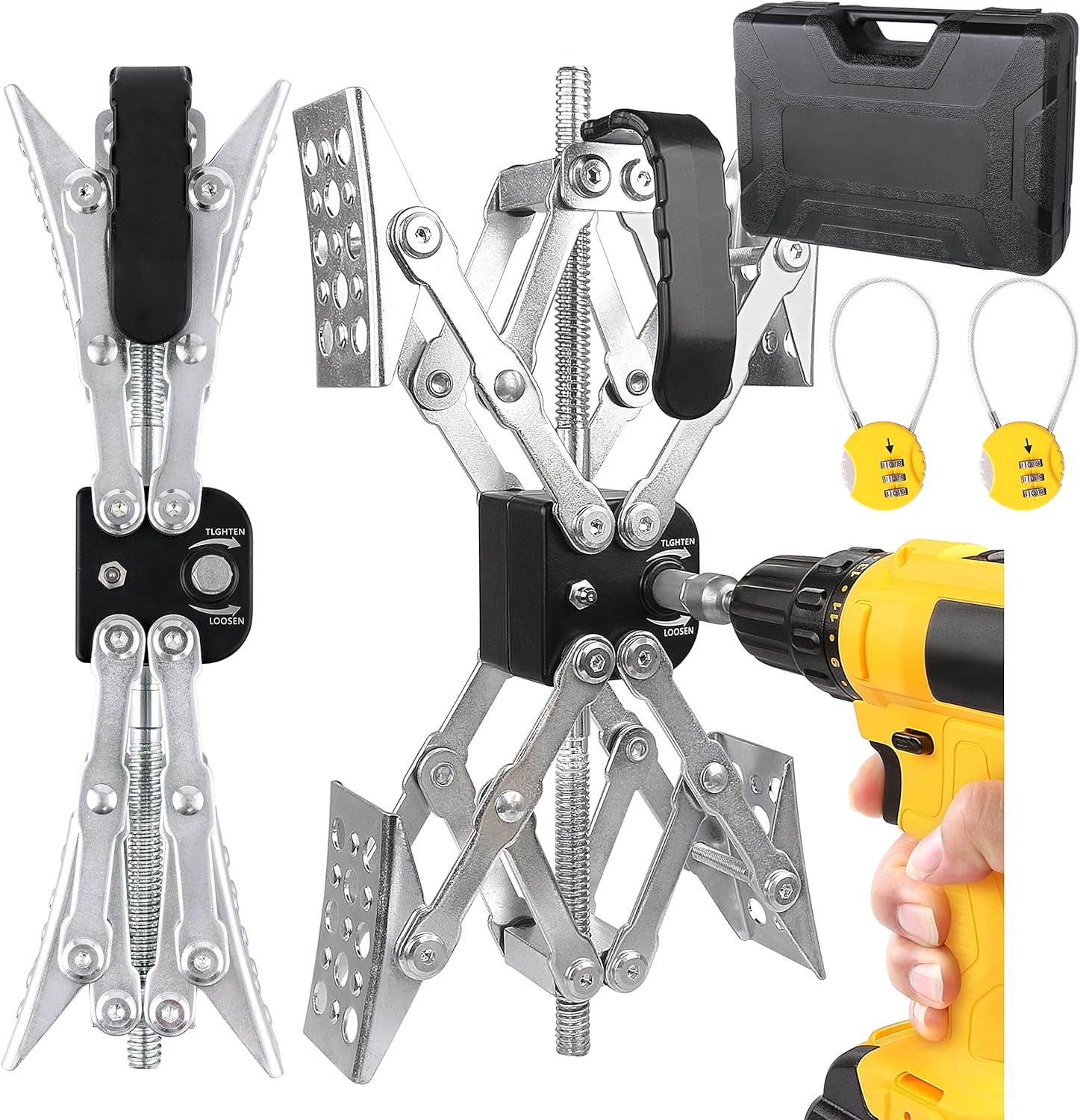
Lock the Maxchock X-style wheel stabilizers between tandem tires to reduce sway and keep your RV travel trailer secure while camping. The adjustable design fits a wide range of wheel gaps, and included hardware lets you install quickly with a power drill. Built from heavy-gauge steel with zinc plating, the chocks include locks and an organizer case for safer, more convenient use.

This professional wheel and tire cleaning brush kit helps you scrub rims, hubs, spokes, and tires with scratch-free, ultra-fine bristles. The brushes can bend 360 degrees for deep reach into crevices, bolts, and intricate wheel details, while the kit supports both wet washing with cleaners and dry dust removal. Easy to rinse, quick to air-dry, and designed for convenient maintenance with hanging holes.
Frequently Asked Questions
Does the MaxxHaul 70472 package include one chock or two?
The 70472 listing is a two-pack. You receive two black solid rubber wheel chocks, which lets you restrain more than one wheel or place a pair according to the vehicle and slope.
What are the dimensions of each chock?
Each chock measures 8 inches long, 4 inches wide, and 6 inches high. Earlier descriptions sometimes list a different height, so check the current model number and listing before ordering a replacement or matching an existing set.
Can these wheel chocks be used on wet or oily surfaces?
The rubber is described as all-weather and oil-resistant, but wetness, oil, ice, mud, and loose debris can still reduce grip. Clean the surface when possible, seat the chock firmly against the tire, and recheck it after the load settles.
Will they work with cars, trucks, trailers, and RVs?
Those are the intended vehicle categories. You should still compare the 4-inch width and 6-inch height with your tire size and use conditions, especially for large commercial tires or steep grades.
How many wheel chocks should you use?
The included pair gives you two points of restraint, but the correct number and position depend on the vehicle, axle layout, slope, and procedure. Follow the vehicle or trailer maker’s guidance and place the chocks in the direction of possible travel.
Are these suitable for motorcycles or aircraft?
They are not a substitute for a motorcycle transport cradle or an aircraft-specific chock. Use purpose-built equipment when the wheel must be held upright, when a certification is required, or when a regulated procedure applies.
Do solid rubber wheel chocks need maintenance?
Maintenance is simple. Brush or rinse away dirt and oil, let the chocks dry, and inspect them for cuts, hardening, deformation, or missing rubber before use.
Can wheel chocks replace jack stands during repairs?
No. Wheel chocks help resist rolling, but they do not support a raised vehicle. Use properly rated lifting and support equipment, follow the vehicle service instructions, and never get under a vehicle held only by a jack or chocks.
The Bottom Line
The MaxxHaul 70472 is recommended for drivers, trailer owners, and RV users who want a compact two-pack of solid rubber chocks with good storage convenience and straightforward placement. Its main strengths are durable rubber, textured grip, and molded handles, while its compact width and lack of specialized hardware make it less suitable for oversized, industrial, aircraft, or motorcycle restraint needs.
Ready to Buy?
Check the latest price, package details, and current product information before you decide.