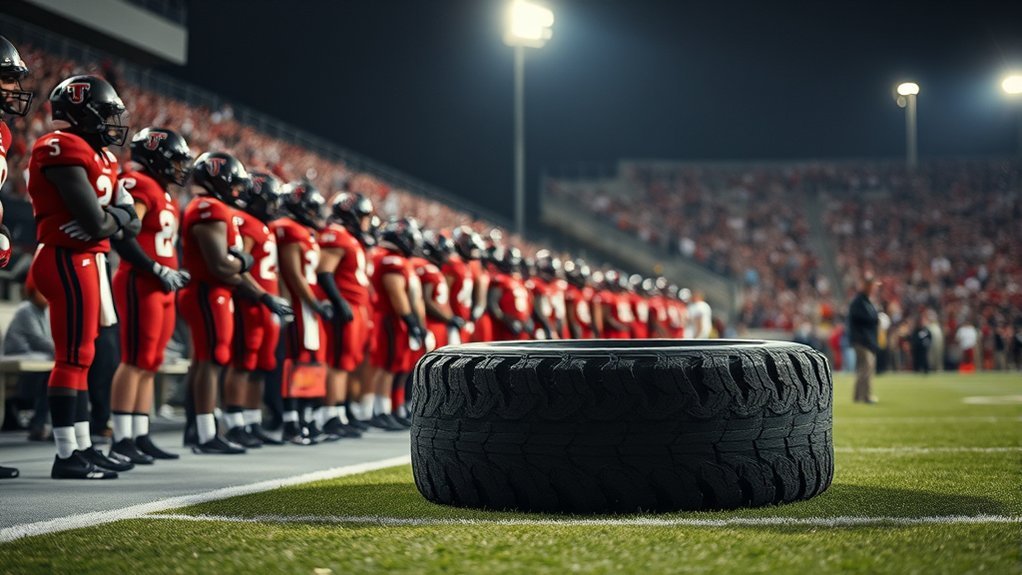
Texas Tech’s sideline tire has become a talking point because it gives fans a simple visual for the program’s message: toughness, strain, and the will to keep going. The exact story around the tire is harder to verify through official public sources, but the symbol fits Coach Joey McGuire’s broader culture of energy, accountability, and physical football.
Quick Answer
Texas Tech has a tire on the sideline because it is widely understood as a toughness symbol. Fans connect it to Joey McGuire’s culture message, physical training, and the idea of pushing through pressure. Some explanations also link it to Creed II-style endurance imagery, but that detail is best treated as fan-reported context unless confirmed by the program.
Key Takeaways
- The tire works as a visible reminder of toughness, resilience, and physical effort.
- Coach Joey McGuire’s Texas Tech program has leaned into culture-building, energy, and accountability since he was hired in 2021.
- The Creed II connection is a useful way to understand the symbol, but public verification is limited.
- Texas Tech fans often turn unusual traditions and sideline symbols into shared identity markers.
- Some older facts in the original discussion need correction, especially the donor, Guns Up, Will Rogers, and tortilla tradition details.
Why Texas Tech Has a Tire on the Sideline
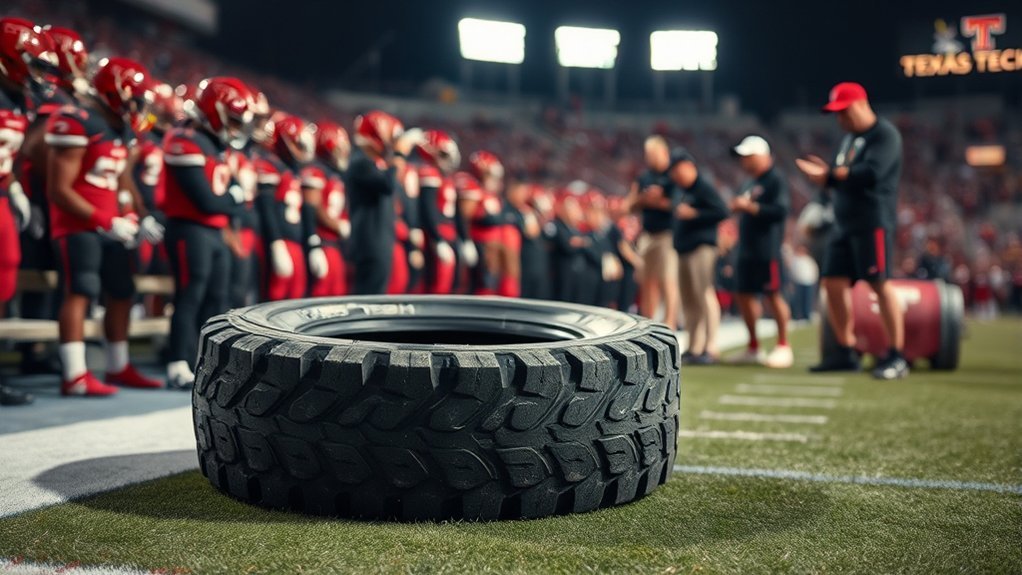
The tire on Texas Tech’s sideline is best understood as a toughness symbol. It gives players and fans a physical object that represents strain, resistance, and the need to keep moving when the game gets hard.
That message fits Joey McGuire’s public identity as Texas Tech’s head football coach. Texas Tech Athletics lists McGuire as the program’s 17th head coach and notes that he was hired on Nov. 8, 2021. His official profile also describes the Red Raiders’ rise under his tenure, including the 2025 Big 12 title and first College Football Playoff appearance.
In that setting, the tire is not just a random prop. It works as a sideline reminder of the kind of team Texas Tech wants to be: physical, disciplined, and hard to break. Even if every detail of the tire’s origin is not publicly documented, the meaning is clear enough for fans to understand.
Note: Public sources confirm McGuire’s role, hiring date, and Texas Tech’s recent football success. The exact sideline-tire origin story, including the full Creed II explanation, should be treated as program lore or fan-reported context unless Texas Tech publishes a direct explanation.
[Products Worth Considering]

TheraTears Dry & Tired preservative-free eye drops provide all-day soothing comfort for dry, tired eyes. The formula contains twice the hydrating ingredient found in the original TheraTears blend, helping relieve discomfort from eye strain and screen fatigue. Convenient single-use vials make it ideal for sensitive eyes and daily eye care.

This inline air pressure regulator helps you precisely control air flow from your compressor with an integrated 0-150 PSI gauge. It improves finish quality by reducing overspray and material waste for automotive spray painting and other pneumatic tools. The universal 1/4 NPT threads make it easy to connect to air hoses, compressors, and spray guns for quick, on-the-fly adjustments.

Join Prime and get ready for Prime Big Deal Days, October 6–7! Unlock exclusive member deals, fast delivery, Prime Video, Prime Reading, and more. Shop limited-time offers, save on popular products, and **join Prime today to start saving before the best deals are gone.**
The Creed II Connection Behind the Tire
Many explanations of the Texas Tech tire mention Creed II, the boxing film where training scenes focus on pain, endurance, and learning to absorb pressure. That comparison makes sense because a tire is a blunt training image. It is heavy, awkward, and hard to carry without effort.
For football players, that message translates easily. A tire can represent contact, fatigue, and the kind of discomfort that shows up late in games. Whether the tire began from a specific movie reference or simply grew into that meaning, the symbol points to the same idea: toughness is built before game day.
The strongest version of the story is not that a tire makes a team tougher by itself. It is that a team can use a simple object to reinforce a standard. Players see it, fans notice it, and the message becomes easier to repeat.
What Joey McGuire Wants Players to Learn
McGuire’s Texas Tech program has been built around visible energy and belief. The tire fits that style because it turns a broad coaching message into something players can see from the sideline.
[Products Worth Considering]

This dual head and ball air chuck set provides closed-flow tire inflation that routes air only through the chuck engaged with the valve. It includes both dual-head and ball-head chucks plus quick plug fittings for easy, fast connections to air lines and compressors. Built for reliable, leak-resistant operation, it’s ideal for filling Schrader valves on bikes, motorcycles, cars, trucks, and more.

This SARDVISA air tool kit bundles essential compressor accessories for fast tire inflation, airflow blow-off cleaning, and pressure checks. It includes a dual head tire inflator chuck, a ball chuck for controlled airflow, a tire gauge, and multiple 1/4" NPT quick-connect fittings and air hose nozzles for versatile use. All connections are designed for reliable sealing to help reduce leaks during everyday car maintenance and dust blowing tasks.

This manual duck head tire changer kit makes tire installation and removal simpler by letting you embed the duck head into the tire with applied pressure. The integrated design and durable steel construction help reduce friction and improve efficiency and safety during use. Suitable for 16–21 inch wheels, it’s convenient for cars, trucks, SUVs, and ATV tires, with 24-hour after-sales support.
Build Toughness Daily
The main lesson is simple: toughness has to be built every day. You do not suddenly become resilient in the fourth quarter. You build that response through practice, repetition, and shared standards.
That is why a sideline symbol can matter. It is not a play call, and it does not replace execution. But it can remind players what they have already practiced: finish the rep, answer contact, and stay together when momentum shifts.
Embrace Pressure Without Flinching
The tire also points to pressure. Football asks players to handle pain, fatigue, noise, and mistakes. A tire is a plain way to show that pressure is not something to avoid. It is something to carry, control, and overcome.
That message works well for fans, too. A sideline object can become a shared shorthand. When supporters see the tire, they do not need a long explanation. They see a team trying to define itself through work.
Turn Symbols Into Standards
A symbol only matters if the team backs it up. For Texas Tech, the tire works best when it connects to real habits: practice intensity, player leadership, tackling, blocking, and late-game focus.
That is the difference between a gimmick and a standard. A gimmick gets attention for a week. A standard keeps showing up when the season gets hard.
The tire’s value is not the object itself. Its value is the message players and fans attach to it: carry the hard thing, keep moving, and finish.
How the Tire Became a Texas Tech Symbol
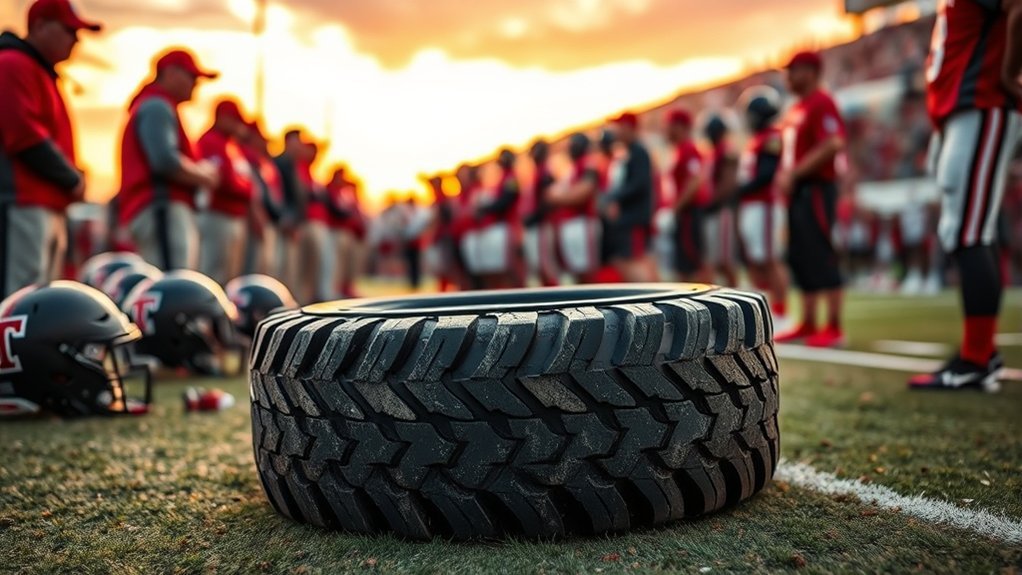
College football programs often use objects, slogans, and rituals to make culture feel real. Texas Tech already has a strong tradition base, from the Double T to Guns Up to the Masked Rider. The tire fits into that world because it is easy to recognize and easy to explain.
Fans do not need a detailed coaching clinic to understand it. A tire looks heavy. It suggests work. It suggests resistance. That is why the object can quickly become part of a team’s visual identity.
[Products Worth Considering]

This 20-piece tire changer kit makes motorcycle and bike tire repairs easier with extended 14.5-inch spoons for leverage and access. Built from CrV steel with a corrosion-resistant chrome finish, it helps resist bending while protecting rims and tubes using smooth rounded spoons and included rim protectors. The all-in-one set includes valve removal and accessory tools for faster tire changes across motorcycles, bicycles, ATVs, and lawn equipment.

This 1/2-inch drive breaker bar delivers powerful leverage for loosening and tightening stubborn lug nuts and automotive fasteners. The 180-degree flex head helps you reach tight spaces at the angle you need, making tire and brake jobs easier. A spring-loaded ball detent design holds 1/2-inch sockets securely while the chrome-moly head provides durable strength for everyday use.
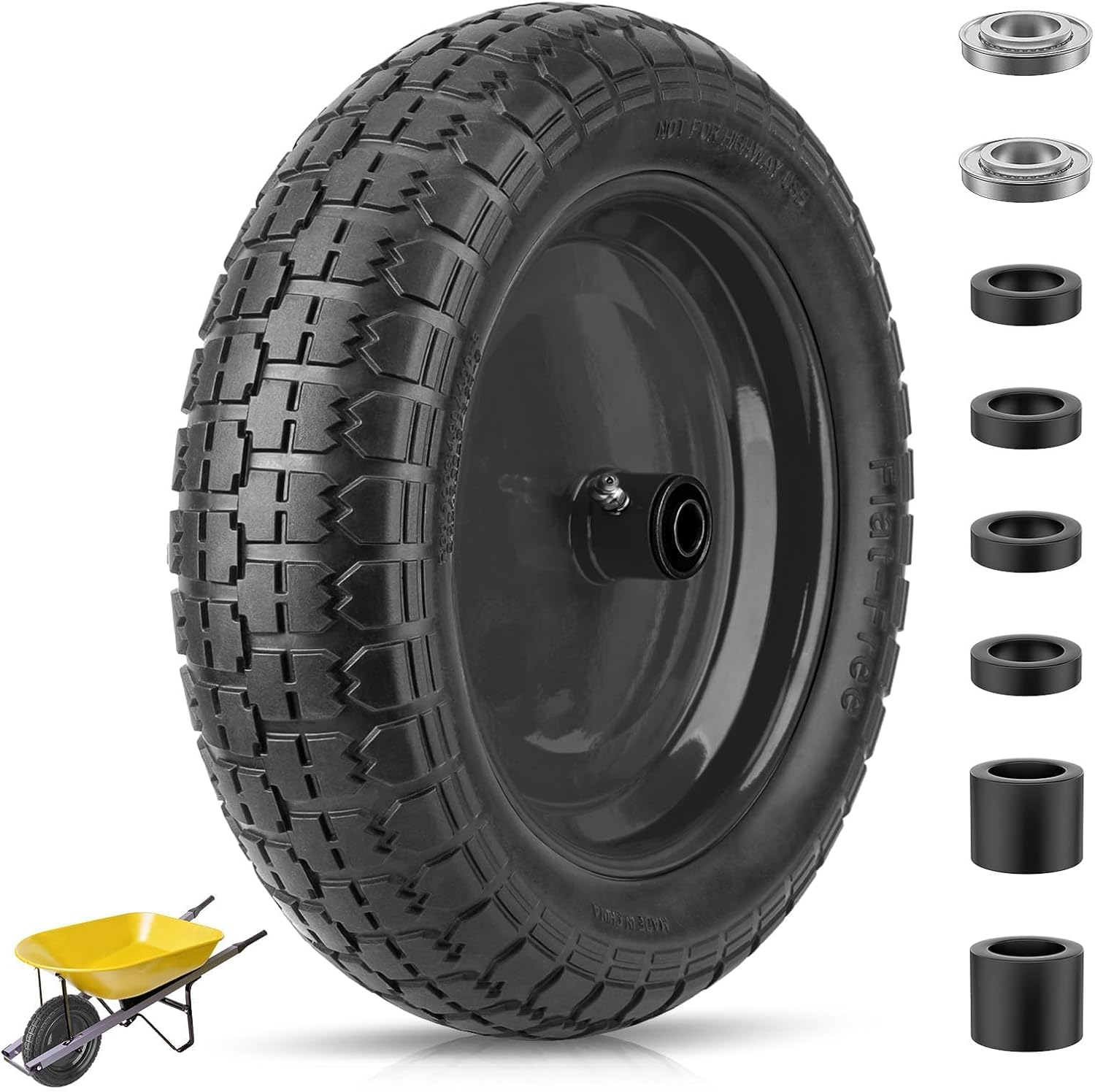
This flat-free TICONN wheelbarrow tire features durable polyurethane foam construction that never needs inflation, helping prevent punctures and reducing maintenance on rough outdoor terrain. With a 300 lb max load capacity and stable steel rim design, it supports safer transport for yard work and hauling tasks. An adapter kit with ball bearings and nylon spacers is included for easier fit and customization across common wheelbarrow and cart axle setups.
Tire as a Toughness Symbol
As a toughness symbol, the tire works because it is not polished or complicated. It feels more like a training tool than a decoration. That roughness is part of the appeal.
- It represents work more than comfort.
- It gives players a visible reminder of effort.
- It lets fans connect a sideline image to team identity.
- It turns an abstract word like “grit” into something physical.
Why the Symbol Caught Fan Attention
The tire caught attention because it looked unusual on a football sideline. Fans naturally ask what an odd object means, and that curiosity helps a symbol spread.
Once fans begin talking about it, the object becomes more than equipment. It becomes a conversation starter. Some fans treat it seriously. Others turn it into jokes. Both reactions help keep the symbol alive.
Why Fans See Toughness in the Tire
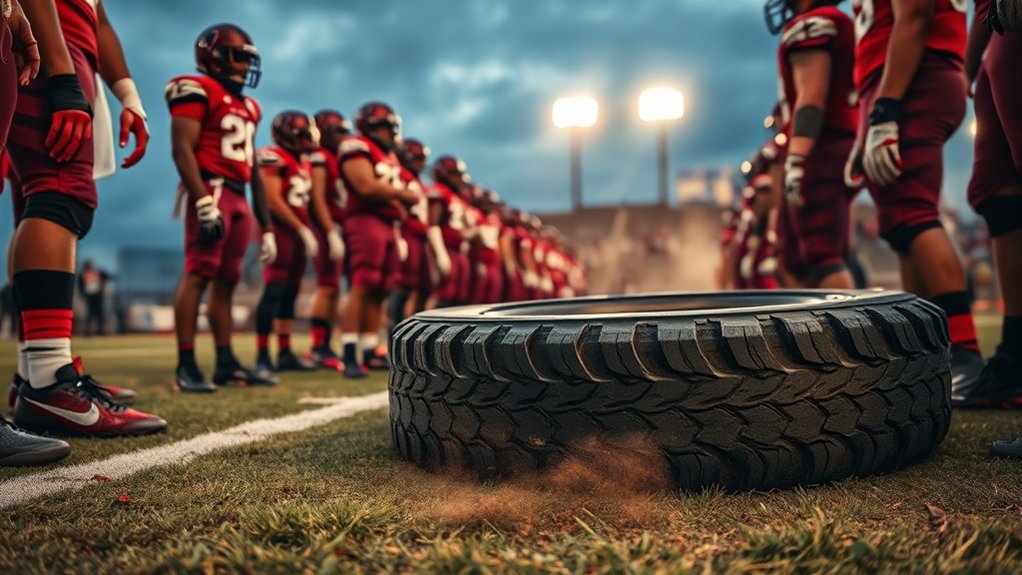
Fans see toughness in the tire because it gives them a clear image for a football idea. Every team talks about being tough, but not every team gives that message a visible object.
For Texas Tech fans, the tire also fits the tone of the McGuire era. The program has leaned into belief, recruiting energy, and a more aggressive football identity. A tire on the sideline matches that message because it feels direct and physical.
- You see effort instead of decoration.
- You see a reminder to keep pushing.
- You see a team trying to own its identity.
- You see a symbol that fans can repeat, debate, and joke about.
Past Texas Tech Sideline Symbols and Traditions
Texas Tech has a long history of turning symbols into school identity. Some are official university traditions, while others come from fan culture or football-specific moments.
Guns Up is one of the clearest examples. Texas Tech’s official traditions page says the sign is made by extending the index finger outward and the thumb upward while tucking the other fingers. The university traces it to alumnus L. Glenn Dippel and says the Saddle Tramps and cheerleaders quickly adopted it in 1971.
The Will Rogers and Soapsuds statue is another major campus symbol. Texas Tech says the memorial was dedicated on Feb. 16, 1950, and remains one of the campus’s best-known landmarks.
The tire is not on the same level as those official traditions, but it works in a similar way. It gives the Texas Tech community something visible to attach meaning to.
What Fan Posts and Social Media Added
Fan posts helped push the tire from sideline curiosity into a wider conversation. When supporters ask about an unusual object, other fans start explaining, joking, and adding their own meaning.
That is how many college football traditions spread. The original reason matters, but the fan reaction matters too. A symbol becomes stronger when people repeat it in their own words.
Because exact social-media reaction counts are hard to verify, the safer takeaway is this: fan discussion helped make the tire recognizable. It gave Texas Tech supporters another way to talk about toughness, culture, and identity.
Why Fans Mentioned Sponsorship
Some fans naturally joked about sponsorship because a tire is easy to connect with tire brands. That does not mean Texas Tech has an official tire sponsorship tied to the sideline symbol.
The joke works because the object is obvious. Fans see a tire, connect it to a brand, and imagine a marketing angle. In college football, unusual traditions often lead to playful sponsorship talk, especially when the symbol gets attention online.
Still, the main meaning stays football-related. The tire is about toughness first. Any sponsorship jokes are secondary fan chatter unless Texas Tech announces something official.
Frequently Asked Questions
Who is the billionaire donor for Texas Tech football?
Recent Texas Tech football and NIL coverage usually points to Cody Campbell, a former Texas Tech offensive lineman, businessman, Texas Tech University System Board of Regents chairman, and major athletics supporter. The original answer naming T. Boone Pickens was not accurate for Texas Tech football; Pickens is most famously associated with Oklahoma State athletics.
What is the deal with Texas Tech and tortillas?
Texas Tech fans became known for throwing tortillas at games, a decades-old tradition tied to student and fan culture. As of October 2025, Texas Tech said it would no longer permit tortilla throwing at opening kickoff because object-throwing penalties could hurt the team.
Why does Texas Tech have a statue of Will Rogers?
Texas Tech’s Will Rogers and Soapsuds memorial honors the famous humorist and public figure. According to Texas Tech, the statue was dedicated on Feb. 16, 1950, by Amon G. Carter, a longtime friend of Rogers, because Carter believed the statue fit the traditions and scenery of West Texas.
What is Texas Tech’s hand gesture?
Texas Tech’s hand gesture is Guns Up. The official version uses the index finger pointed outward and the thumb raised, with the other fingers tucked in to form a gun shape. It is used as a greeting and victory sign among Red Raiders fans.
Conclusion
When you see the tire on Texas Tech’s sideline, you are seeing a simple football symbol with a clear message. It stands for toughness, pressure, and the work players have to carry before they can win on game day.
The exact origin story is not fully documented in public official sources, so it is best to avoid treating every fan explanation as confirmed fact. Still, the tire’s meaning is easy to understand. It gives Texas Tech players and fans a visible reminder to stay physical, resilient, and ready for the hard parts of the game.
Sources
- Texas Tech Athletics: Joey McGuire staff profile — confirms McGuire’s role, hiring date, and current program context.
- Texas Tech University: Guns Up — confirms the official hand gesture and its background.
- Texas Tech University: Will Rogers & Soapsuds — confirms the statue’s dedication date and campus meaning.
- Texas Tech University System: Cody Campbell bio — confirms Campbell’s Board of Regents role, business background, and Texas Tech football history.
- Houston Chronicle: Texas Tech tortilla policy change — supports the 2025 update on tortilla throwing at football games.