
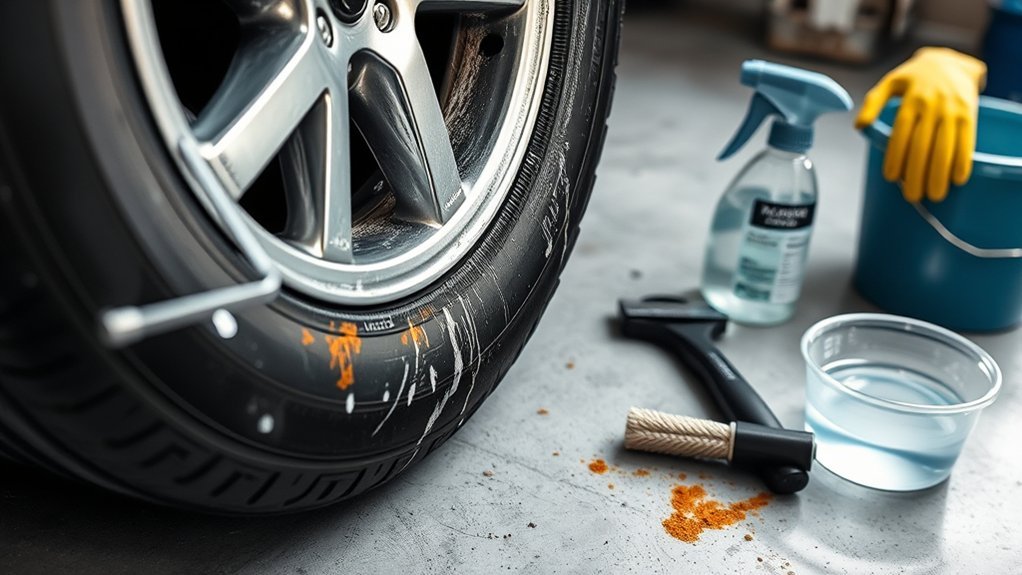
Paint on tires is annoying, but the safest fix is not the strongest chemical on the shelf. Start with the mildest method, test a hidden spot, work in small sections, and rinse the rubber well after every solvent. Fresh overspray often lifts with rubbing alcohol and light scrubbing. Older road paint may need more patience, repeated cleaning, or professional help if the tire starts to swell, soften, crack, or discolor.
Quick Answer
To remove paint from tires safely, test a hidden spot first, then use rubbing alcohol on a cloth and scrub gently with a soft brush or Scotch-Brite pad. Rinse with warm, soapy water. For stubborn paint, use a tiny amount of rubber-safe automotive cleaner or lacquer thinner only as a last-resort spot treatment.
Key Takeaways
- Start with soap, water, and rubbing alcohol before trying stronger cleaners.
- Always spot test on a hidden part of the tire and wait a few minutes before cleaning a larger area.
- Use light pressure on sidewalls and tread so you do not gouge, heat, or roughen the rubber.
- Avoid gasoline, brake fluid, acetone, caustic strippers, and heavy-duty paint removers unless a product label clearly says they are safe for rubber tires.
- Stop cleaning and inspect the tire if you see swelling, cracking, soft spots, deep discoloration, exposed cords, or tread damage.
At a Glance
| Time Required | 10 to 45 minutes, depending on paint age and coverage |
| Difficulty | Easy for fresh overspray; moderate for cured road paint |
| Tools Needed | Gloves, eye protection, bucket, mild car soap, water, rubbing alcohol, microfiber cloths, soft brush, Scotch-Brite pad, tire protectant |
| Cost | Usually $5 to $25 if you already own basic cleaning supplies |
Warning: Many solvents are flammable and can irritate your skin, eyes, or lungs. Work outside or in a very well-ventilated area, wear gloves and eye protection, keep solvents away from flames or sparks, and never soak the tire.
How to Remove Paint From Tires Safely?
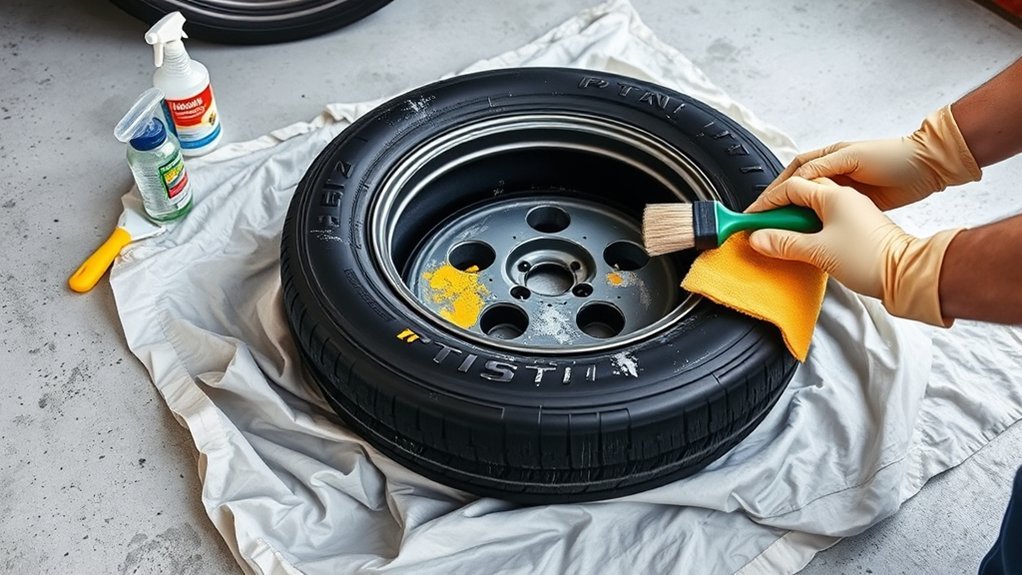
To remove paint from tires safely, follow a least-aggressive-first process. Wash the tire, identify whether the paint is fresh or cured, spot test your cleaner, and clean only a small area at a time. Rubbing alcohol is usually the safest first solvent for fresh paint because it can soften overspray without the same level of risk as harsh paint strippers. Still, rubbing alcohol is flammable, so use only a small amount on a cloth and wash the tire afterward.
If the paint is old, thick, or baked on, do not jump straight to gasoline, brake fluid, acetone, or caustic stripper. Those products can create fire, health, and rubber-damage risks. A small amount of lacquer thinner may help with stubborn paint, but it should be a last-resort spot treatment, not a full-tire soak. If the tire shows swelling, sticky rubber, deep cracking, exposed cords, or heavy sidewall damage, stop and have the tire inspected before driving.
What to Check Before You Start
Before you scrub, look closely at the paint and the tire. Fresh latex or acrylic overspray is usually easier to remove than dried road marking paint. Road paint, enamel, and thick cured coatings may need repeated cleaning sessions. Also check where the paint is located. Paint on the outer tread blocks can often be cleaned with a brush, while paint on the sidewall needs a gentler touch because the sidewall flexes while you drive.
- Fresh overspray: Try soap and water first, then rubbing alcohol if needed.
- Road paint: Let loose flakes wear naturally if the paint is only on the tread face, then clean the remaining spots gently.
- Old sidewall paint: Use repeated light cleaning rather than one aggressive solvent session.
- Paint near bead, valve stem, cracks, or cords: Stop and get a tire professional to inspect it.
Note: A clean tire is not worth a weakened tire. The tire should still look and feel normal after cleaning. Any soft, sticky, swollen, cracked, or deeply discolored rubber is a reason to stop.
How to Remove Fresh Paint From Tires?
Fresh paint is the easiest to remove, especially within the first hour. The goal is to lift the paint before it bonds to the rubber. Do not grind the tire with a wire wheel or harsh abrasive pad. You want controlled pressure, frequent rinsing, and short contact time with any cleaner.
[Products Worth Considering]

Cristal Products Untouchable Tire Shine Spray delivers a deep, wet-look gloss that enhances your vehicle’s tires. It’s quick-drying and spreads smoothly for consistent, streak-free coverage, while forming a protective coating against UV rays, road grime, and weather. Suitable for all tire types, it helps restore dull, faded tires to a showroom-quality finish.

Accurately measure tire tread depth with a calibrated gauge marked from 0 to 1 inch in 1/32 inch increments. The color-coded bar helps you quickly identify tread condition ranges, supporting safe driving for trucks, motorcycles, automobiles, and passenger vehicles.

Measure tire tread depth quickly and accurately with this LUMITECO dial gauge that reads in 1/32" increments up to 14/32". The color-coded green/yellow/red zones make it easy to judge tire wear and know when replacement is needed. A rugged, compact design with a protective pouch helps keep the gauge ready for use on cars, trucks, motorcycles, and more.
Act Fast
Start by rinsing the tire with water to remove loose dirt and wet paint. Mix mild car soap with warm water, then wipe the area with a microfiber cloth. If the paint smears but does not lift, apply rubbing alcohol to a clean cloth and dab the spot. Do not pour alcohol directly onto the tire. After a few short passes, rinse the area again so the solvent and loosened paint do not sit on the rubber.
Use Gentle Solvents First
Rubbing alcohol is the first cleaner to try on most fresh paint spots. Test it on a hidden area, wait a few minutes, and check for dulling, swelling, or color change. If the rubber looks normal, work the painted area with light pressure. A soft brush or a non-scratch scrub pad can help, but let the cleaner soften the paint instead of forcing it with heavy scrubbing.
WD-40 may loosen some fresh overspray, but use it carefully. Spray it onto a cloth rather than soaking the tire, let it sit briefly, then wipe and wash the area with warm, soapy water. Do not leave oily residue on the tread because it can reduce traction until fully washed away.
Rinse and Scrub
After the paint starts to lift, scrub the tire lightly with a soft-bristle brush or Scotch-Brite pad. Work from the outside of the stain toward the center so you do not spread the paint. Rinse often, then repeat the alcohol-and-rinse process only if the rubber still looks normal. Dry the tire with a clean towel when finished.
Pro Tip: If the paint is only on the raised tread face and not deep in the grooves, normal driving may wear some of it away. Clean only what remains instead of over-scrubbing the tread.
How to Remove Old Paint From Tires?
Old paint takes more patience because it has already bonded to the rubber. Start by washing the tire and brushing away loose flakes. Then repeat the mild method: rubbing alcohol on a cloth, gentle scrubbing, and a full rinse. If several light passes do not work, you can move to a product labeled safe for automotive rubber or tires.
Safe Removal Methods
Use this order before you consider anything stronger:
- Wash: Use warm water, mild car soap, and a soft brush.
- Spot test: Try the cleaner on a hidden patch and wait before cleaning the visible area.
- Use rubbing alcohol: Apply it to a cloth and scrub lightly in short passes.
- Use a tire-safe automotive cleaner: Follow the product label and avoid long dwell times.
- Try a tiny amount of lacquer thinner only if needed: Use it on a cloth, touch only the paint, and rinse immediately.
Never soak the sidewall. Tire rubber is built to flex, grip, and resist weather, not to sit under harsh solvents. If a stain remains after safe cleaning, it is usually better to leave a faint mark than to damage the tire.
Stubborn Paint Solutions
For stubborn paint, focus on controlled abrasion and short solvent contact. A Scotch-Brite pad can help lift softened paint, but it should not remove rubber. A plastic scraper can also help with thick drips on the sidewall, as long as you keep it flat and do not dig into the rubber.
| Method | Best Use | Safety Note |
|---|---|---|
| Rubbing alcohol | Fresh overspray and light residue | Use small amounts and rinse well |
| Soft brush | Tread grooves and raised lettering | Avoid heavy pressure on sidewalls |
| Scotch-Brite pad | Small stubborn spots | Stop before the rubber looks scuffed |
| Lacquer thinner | Last-resort spot treatment | Do not soak; rinse immediately |
Professional spot blasting may be an option for a display tire, off-road spare, or non-critical tire, but it is not a casual driveway method. If blasting is considered, it should be done by someone who understands rubber surfaces and can control pressure, distance, heat, and media type. Broad sandblasting can damage rubber, so it should not be your first solution.
Best Tire-Safe Paint Removers
The best paint remover for tires is the mildest product that removes the paint without changing the rubber. In most cases, that means warm soapy water, rubbing alcohol, and light scrubbing. If you buy a cleaner, look for wording such as “safe for tires,” “safe for rubber,” or “automotive rubber safe.” Product labels matter because paint removers vary widely.
Avoid heavy-duty paint strippers made for wood, metal, masonry, or aircraft unless the label specifically approves use on rubber tires. Some paint and coating removers contain aggressive solvents that are not appropriate for tire sidewalls. The U.S. Environmental Protection Agency has restricted methylene chloride in paint and coating removal because of health risks, so do not assume a strong stripper is a safe shortcut.
[Products Worth Considering]
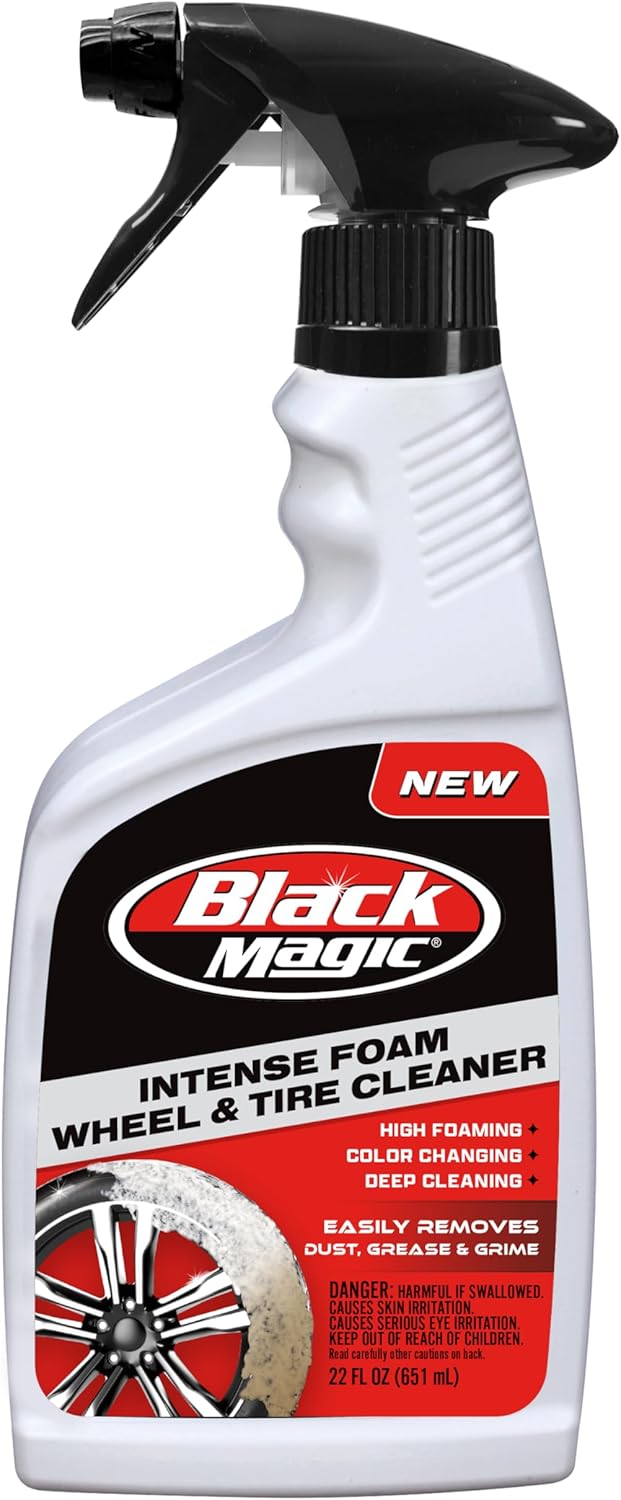
Black Magic Intense Foam Wheel & Tire Cleaner uses a high-foaming action to lift away dirt, grime, and brake dust without scrubbing. The color-changing formula helps show contaminants being dissolved as foam turns from white to brown. Safe for all wheel types and even wheel wells, it leaves a like-new, slick finish with a fresh cherry scent.

Clean wheels and rims with soft feathered bristles that safely remove dirt and road grime while helping restore original luster. The short non-slip handle makes it easy to scrub in tight wheel wells, and the brush is suitable for vehicles and hard-to-reach areas. It can also be soaked and rubbed to help restore bristles to their shape after use.

Black Magic Tire Wet delivers a deep wet-look shine that makes tires appear dark, rich, and freshly detailed. Its long-lasting formula helps resist rain, dust, and road grime for weeks of glossy protection, not days. Apply by spraying onto clean, dry tires—no buffing or wiping required—with a low-sling design to reduce splatter on paint and wheels.
Safe Solvents for Tire Paint
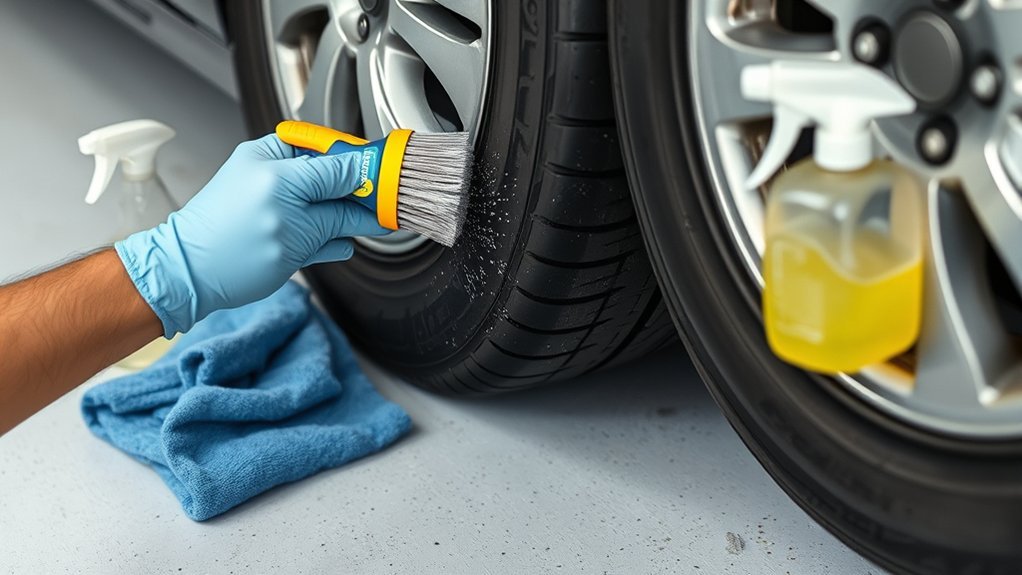
Safe solvent use depends on short contact time, small amounts, and proper cleanup. Rubbing alcohol is a practical first choice because it is easy to control on a cloth. Still, the NIOSH Pocket Guide for isopropyl alcohol lists it as a flammable liquid, so keep it away from heat, sparks, smoking, and open flame.
Lacquer thinner is stronger and less forgiving. It may help on tiny stubborn spots, but it should not be poured on a tire or left to dwell. If you use it, wear gloves, work outside, touch only the paint, wipe quickly, and rinse the area with soapy water. If the tire turns sticky, soft, shiny in an unusual way, or deeply discolored, stop immediately.
Tire cleaning should protect the tire first and improve appearance second. If a method removes paint but changes the rubber, it is the wrong method.
[Products Worth Considering]

This oesee 8-piece wheel care kit helps you clean, scrub, and dry wheels safely with purpose-built brushes and towels. The scratch-free microfiber wheel brush lifts brake dust and grime, while the stiff pro-grip tire brush removes tire browning and embedded dirt. A twist loop microfiber drying towel and an applicator help achieve a streak-free finish and cleaner, more even product application.

The SAFELIFE dial tire tread depth gauge measures tread depth in 1/32 inch increments with clear, easy-to-read 2-inch dial face. Color zones using a traffic light system help you quickly judge whether tread is low, marginal, or ample for safer driving. Built with a durable zinc cast body and a metal detect probe for precise, comfortable use across cars, motorcycles, trucks, and buses.

Monitor tire tread wear with a smart, color-coded depth gauge that shows clear condition ranges at a glance. The bar is range marked for fast, easy readings, helping you maintain safer traction and performance. Each gauge is portable with a pocket clip, and the set includes 20 units for daily use and sharing.
How to Scrub Tire Treads Without Damage?
To scrub tire treads without damage, use a soft brush and let the cleaner do most of the work. The tread is tougher than the sidewall, but it still should not be gouged, overheated, or coated with oily residue. Brush along the grooves, not across them with heavy force. Rinse often so loosened paint and grit do not act like sandpaper.
| Tool | Use | Avoid |
|---|---|---|
| Soft-bristle brush | General tread and groove cleaning | Hard scraping on cracked rubber |
| Scotch-Brite pad | Small spots on raised tread or lettering | Grinding the sidewall surface |
| Plastic scraper | Lifting thick paint drips | Digging into the rubber |
| Warm, soapy water | Final rinse after every solvent | Leaving chemical residue behind |
After cleaning the tread, wash it twice if you used WD-40, alcohol, or any solvent. Let the tire dry fully, then check traction surfaces before driving. If the tread is oily, slick, or still coated, wash again before the vehicle goes on the road.
Chemicals to Avoid on Rubber Tires
When you are removing paint from rubber tires, avoid chemicals that create unnecessary fire, health, or rubber-damage risks. The strongest solvent is rarely the safest choice. Do not use these products as tire paint removers:
- Gasoline: It is highly flammable and creates serious vapor and skin-contact hazards.
- Brake fluid: It is not a tire cleaner and can leave residues you do not want on rubber or nearby painted surfaces.
- Acetone: It is a strong, fast-evaporating flammable solvent and is too aggressive for routine tire cleaning.
- Caustic paint strippers: They can be corrosive and may require neutralizing steps that are not practical on tires.
- Methylene chloride or NMP-type paint strippers: These are not needed for tire cleaning and carry significant health concerns.
- Wire wheels and heat guns: They can gouge, burn, or overheat the rubber.
The OSHA flammable liquids standard is a reminder that solvent fire risk is real. Store solvents closed, use them away from ignition sources, and dispose of solvent-soaked rags according to your local hazardous-waste rules.
How to Clean and Protect Tires After Paint Removal
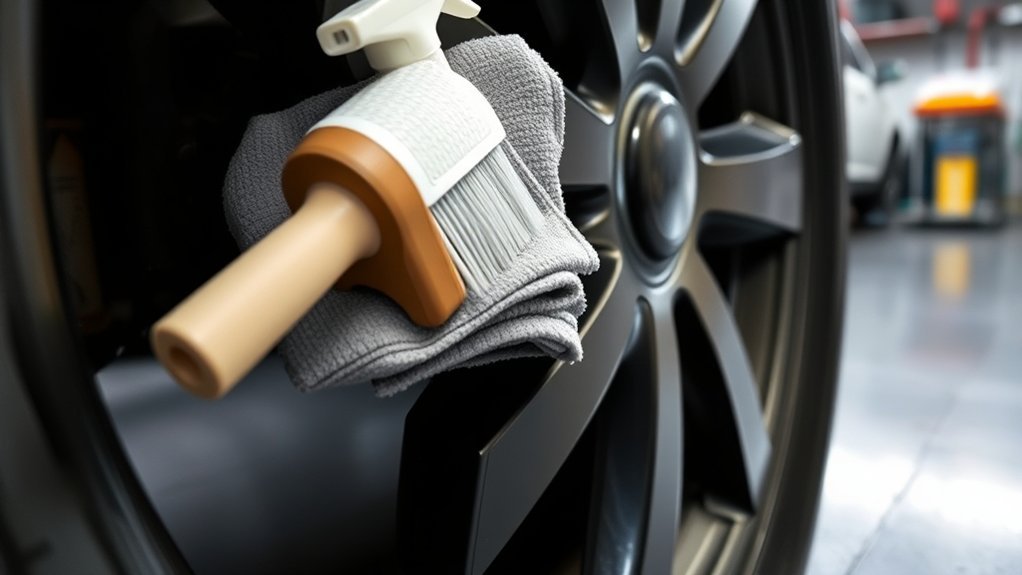
After the paint is gone, rinse the tires thoroughly with warm, soapy water. This step matters because leftover solvent can keep working on the rubber after the stain is removed. Use a mild automotive cleaner and a soft brush, then rinse again until the water runs clear. Dry the tire with a clean towel.
Once the tire is dry, inspect the sidewall and tread. The National Highway Traffic Safety Administration recommends regular tire maintenance because tire condition affects safety, durability, and fuel use. The U.S. Tire Manufacturers Association also recommends regular checks for pressure, tread, rotation, and alignment. If the tire looks normal after cleaning, apply a water-based tire protectant made for automotive rubber. Avoid greasy dressings on the tread face.
When to Stop and Get Help
Stop cleaning and get professional help if the tire has more than cosmetic paint on it. A tire shop should inspect the tire if you notice:
- rubber swelling, softening, bubbling, or stickiness;
- deep sidewall cuts, cracks, or exposed cords;
- paint packed into damaged tread grooves;
- solvent spilled near the bead or valve stem;
- large areas of cured coating that will not come off with mild methods;
- vibration, air loss, or a tire-pressure warning after cleaning.
For normal cosmetic overspray, careful cleaning is usually enough. For structural tire damage, cleaning is not a repair.
Frequently Asked Questions
How do you get paint off a tire without damaging it?
Start with warm, soapy water, then spot test rubbing alcohol on a hidden area. If the rubber looks normal, wipe the paint with alcohol on a cloth and scrub gently with a soft brush or Scotch-Brite pad. Rinse thoroughly after each pass and stop if the tire changes texture, color, or shape.
What is the best thing to get paint off rubber?
For tires, the best first option is rubbing alcohol on a cloth, followed by gentle scrubbing and a soapy-water rinse. For stubborn paint, use a cleaner labeled safe for automotive rubber. Lacquer thinner may work on tiny spots, but it should be a last resort with very short contact time.
Will vinegar remove automotive paint from tires?
Vinegar may help loosen very fresh water-based overspray, but it is not reliable on cured automotive paint, enamel, or road marking paint. If you try it, dab it on briefly, scrub gently, and rinse well. Rubbing alcohol is usually more effective for light paint on tire rubber.
Will WD-40 remove paint from tires?
WD-40 can loosen some fresh overspray, but it should be used sparingly. Spray it on a cloth, wipe the paint, let it sit briefly, then wash the tire thoroughly with warm, soapy water. Do not leave WD-40 on the tread because oily residue can reduce traction until it is cleaned off.
Can road paint on tire tread wear off by itself?
Small amounts of paint on the raised tread surface may wear down with normal driving, but paint packed into grooves or spread across the sidewall should be cleaned carefully. Do not drive if the tire is slick with solvent, visibly damaged, or losing air.
Is it safe to use a pressure washer on painted tires?
A pressure washer can help rinse loosened paint, but use a wide fan tip, keep distance from the sidewall, and avoid blasting the bead, valve stem, cracks, or damaged areas. Too much pressure in one spot can force water into sensitive areas or roughen the rubber surface.
Conclusion
When you remove paint from your tires, choose safety over speed. Start with soap and water, then rubbing alcohol, gentle scrubbing, and frequent rinsing. Use stronger products only in tiny spot treatments, and never use gasoline, brake fluid, harsh strippers, or heavy abrasives. After cleaning, inspect the tire, wash away all residue, and apply a rubber-safe tire protectant. A tire that stays clean, flexible, and undamaged is the real goal.
Sources
- National Highway Traffic Safety Administration TireWise — tire safety, maintenance, tread, and tire-life guidance.
- U.S. Tire Manufacturers Association Tire Care Essentials — tire pressure, tread, rotation, alignment, and inspection basics.
- NIOSH Pocket Guide: Isopropyl Alcohol — rubbing alcohol flammability and exposure precautions.
- NIOSH Pocket Guide: Acetone — acetone flammability and exposure precautions.
- NIOSH Pocket Guide: Gasoline — gasoline flammability and health hazards.
- EPA Safer Choice Label — safer cleaner ingredient, performance, pH, and VOC criteria.

