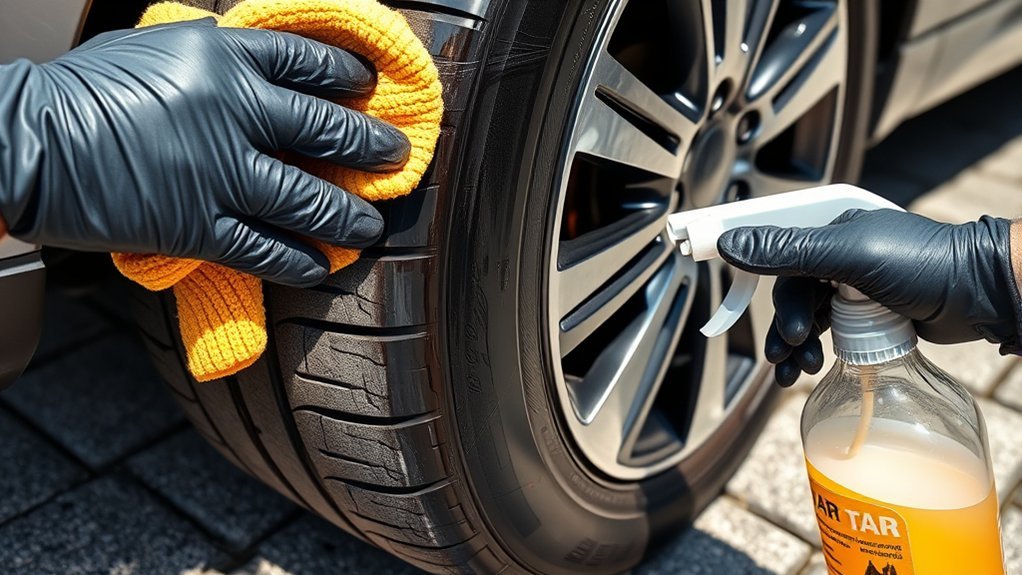
Tar on a tire looks stubborn, but you can usually remove it without damaging the rubber if you work slowly and use the right cleaner. Start with a cool tire, scrape only with plastic, soften the tar with a tire-safe remover, then wash the tire with soap and water. Avoid gasoline, sharp tools, and heavy scrubbing, because those can create a bigger safety problem than the tar itself.
Quick Answer
To remove tar from tires, scrape thick deposits gently with a plastic scraper, apply a tire-safe tar remover, let it dwell for a few minutes, wipe with a microfiber cloth, and wash the tire with soap and water. For stubborn residue, use a small amount of mineral spirits or isopropyl alcohol on a cloth, then rinse thoroughly.
Key Takeaways
- Clean tar only when the tire is cool and parked in the shade.
- Use a plastic scraper, old gift card, or plastic trim tool instead of metal blades or steel wool.
- Start with a tire-safe automotive tar remover before trying stronger solvents.
- Wash the tire with soap and water after using any tar remover so no slick residue remains.
- Skip gasoline, acetone, bleach, brake cleaner, and hot-sun cleaning because they can damage rubber or create fire risks.
At a Glance
| Time Required | 15–35 minutes per tire, depending on how thick the tar is |
| Difficulty | Easy to moderate |
| Tools Needed | Plastic scraper, microfiber cloths, tire-safe tar remover, nylon brush, bucket, water, mild soap, gloves, and eye protection |
| Cost | Usually $0–$20 if you already have basic wash supplies |
Warning: Do not use gasoline, acetone, bleach, brake cleaner, steel wool, wire wheels, or metal blades on tires. These can damage rubber, leave slick residue, or create serious fire and exposure risks. If you use any solvent, work outdoors or in a well-ventilated area, wear gloves, and keep it away from flames, sparks, cigarettes, and hot brakes.
How to Remove Tar From Tires
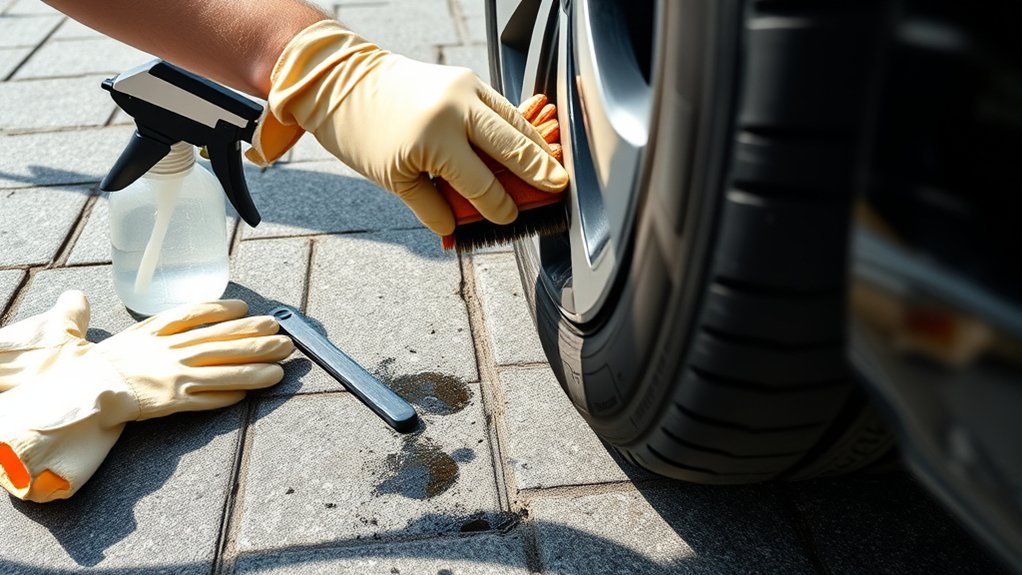
Start with the safest method first. Park on a flat surface, let the tires cool, and work in the shade. Hot rubber and hot asphalt can make tar softer, stickier, and messier, while direct sunlight can make cleaners evaporate too fast.
- Inspect the tire first. Look for cuts, bulges, exposed cord, nails, or pressure loss before cleaning. If you see damage, stop and have the tire checked.
- Remove loose dirt. Rinse the tire or wipe it with a damp cloth so you do not grind grit into the rubber.
- Lift thick tar gently. Use a plastic scraper, plastic putty knife, or old gift card. Keep the tool flat and use light pressure.
- Spot-test the cleaner. Apply your tire-safe tar remover to a small hidden area first, then wait a few minutes and check for fading, swelling, or a sticky feel.
- Apply tar remover. Spray or wipe the cleaner onto the tar, not all over the tire. Let it sit for the dwell time on the product label, usually a few minutes.
- Wipe, do not grind. Use a clean microfiber cloth and short strokes. Fold the cloth often so you do not smear tar back onto the tire.
- Repeat if needed. Heavy tar may need two or three light passes. Repeating is safer than scrubbing hard.
- Wash the tire. Scrub with mild soap and water using a nylon brush, then rinse thoroughly.
- Dry and check for slickness. The tire should feel clean, not oily or tacky. If it still feels slick, wash it again before driving.
Pro Tip: Work in small sections about the size of your palm. Tar spreads easily once it softens, so small sections help you remove it instead of smearing it around the sidewall or tread.
[Products Worth Considering]

This oesee 8-piece wheel care kit helps you clean, scrub, and dry wheels safely with purpose-built brushes and towels. The scratch-free microfiber wheel brush lifts brake dust and grime, while the stiff pro-grip tire brush removes tire browning and embedded dirt. A twist loop microfiber drying towel and an applicator help achieve a streak-free finish and cleaner, more even product application.

This 3-piece wheel and tire brush set makes it easy to clean light, medium, and heavy dirt from wheels, rims, tires, and exterior surfaces. It includes both soft and stiff bristle options for gentle scrubbing and tough grime removal, helping lift brake dust and road buildup. The long-handle design supports comfortable cleaning across cars, trucks, SUVs, RVs, motorcycles, and more, with simple care instructions to restore brush shape.

Clean wheels and rims with soft feathered bristles that safely remove dirt and road grime while helping restore original luster. The short non-slip handle makes it easy to scrub in tight wheel wells, and the brush is suitable for vehicles and hard-to-reach areas. It can also be soaked and rubbed to help restore bristles to their shape after use.
Why Tar Builds Up on Tires
Tar builds up on tires because asphalt binder gets sticky when roads are hot, freshly paved, or recently sealed. As your tires roll over that surface, small tar droplets can transfer to the rubber. They may land on the sidewall, shoulder, tread blocks, or inside tread grooves.
Fresh tar is easier to remove because it has not hardened into the rubber texture yet. Older tar can collect dust, road grit, and brake dust, which makes it look darker and feel rougher. That is why a quick wash after driving through roadwork can save a lot of scrubbing later.
Tools and Products You’ll Need
You do not need aggressive tools to clean tar off tires. In most cases, the safest setup is a plastic scraper, a tire-safe cleaner, microfiber towels, and a final soap-and-water wash.
| Tool or Product | Use | Best Practice |
|---|---|---|
| Tire-safe tar remover | Softens road tar | Read the label and confirm it is safe for rubber or tires |
| Plastic scraper or old gift card | Lifts thick deposits | Keep it flat and avoid digging into the rubber |
| Microfiber cloths | Wipes softened tar | Use clean sections often so tar does not smear |
| Nylon brush | Cleans tread texture and sidewall lettering | Use with soap and water after the tar softens |
| Mild soap and water | Removes cleaner residue | Always use as the final step |
If a tire-safe tar remover does not fully clear the spot, you can use a small amount of mineral spirits or isopropyl alcohol on a cloth for spot treatment. Do not pour solvent onto the tire, and do not soak the tread. These products can be flammable or irritating, so use them carefully and wash the tire afterward.
[Products Worth Considering]

Cristal Products Untouchable Tire Shine Spray delivers a deep, wet-look gloss that enhances your vehicle’s tires. It’s quick-drying and spreads smoothly for consistent, streak-free coverage, while forming a protective coating against UV rays, road grime, and weather. Suitable for all tire types, it helps restore dull, faded tires to a showroom-quality finish.

This wheel brush kit delivers pro-level cleaning at home, lifting dirt, grime, and brake dust to help restore wheel appearance. It includes multiple brush styles and applicator pads for tackling different wheel surfaces, with gentle, metal-free bristles designed to reduce scratching risk. The flat and double-ended brushes are built for comfort and reach, making wheel care easier for cars, trucks, and RVs.

This professional wheel and rim brush kit makes it easy to lift brake dust, grime, and dirt from wheels and tires without scratching finishes. The brushes feature soft, metal-free wool heads and a flexible 360-degree rim brush design for reaching hard-to-clean areas. Includes multiple brush types plus accessories for thorough car, motorcycle, and general vehicle detailing.
How to Remove Stubborn Tar
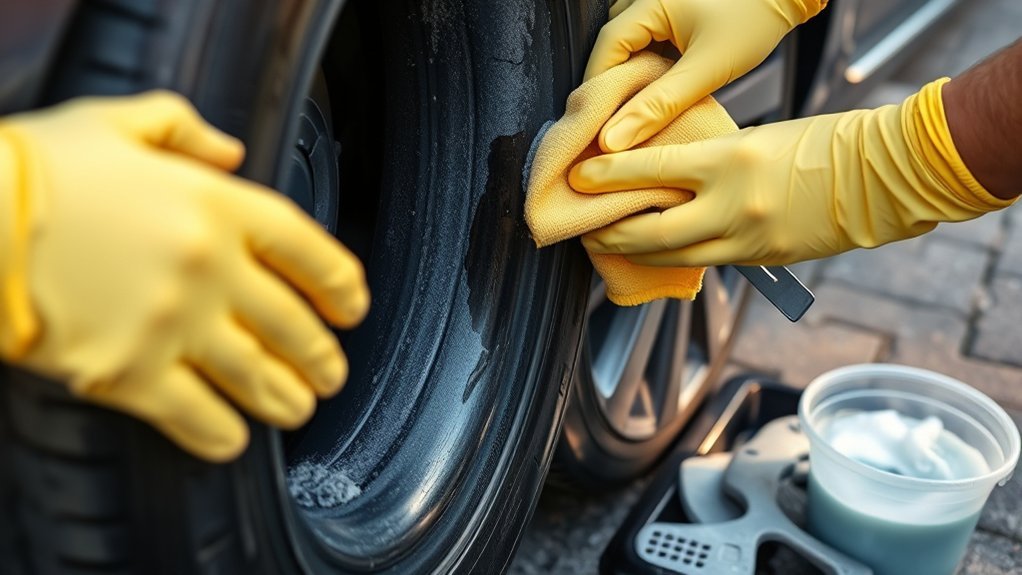
Stubborn tar usually needs more dwell time, not more force. Apply a tire-safe tar remover again, let it sit for the label-recommended time, and wipe the area with a clean microfiber cloth. If the tar is inside tread grooves, use a nylon brush with soap and water after the tar has softened.
For a hard lump, hold a plastic scraper almost flat and shave the top layer little by little. Do not stab, pry, or use the corner of a screwdriver. If the deposit is stuck near a cut, puncture, sidewall bulge, or exposed cord, stop cleaning and have the tire inspected.
[Products Worth Considering]

The Mothers wheel and fender brush is designed for gentle, scratch-free scrubbing to remove road grime and brake dust. Its ergonomic shape and soft triple-flagged bristles deliver maximum coverage, including hard-to-reach wheel wells and undercarriage areas. With rubberized gripping and a protective rubber bumper, it helps clean safely while protecting delicate finishes on wheels, fenders, and bumpers.

Rubber Care delivers a beautiful dark black satin/matte finish on tires and other rubber or plastic surfaces, drying to the touch without oily shine. Its ceramic aircraft-grade formula helps repel dirt and brake dust residue, keeping surfaces cleaner longer. Triple nano ceramic polymer technology provides best-in-industry UV protection, restoring and protecting rubber while also working on weather stripping and de-ice boot care.
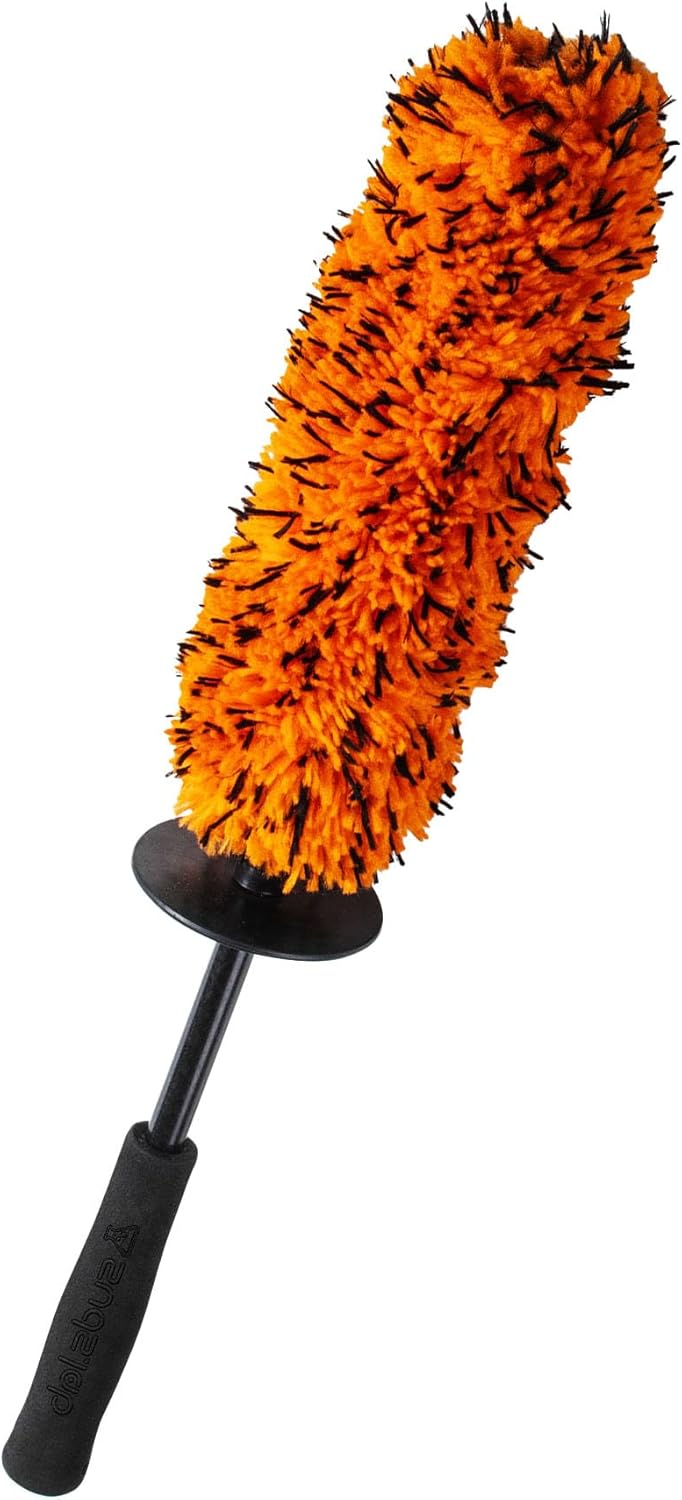
Suds Lab WB Premium Microfiber Cleaning Wheel Brush lifts brake dust, dirt, and grime with ultra-soft microfiber bristles that help prevent scratching and swirling on wheels and paint. It features an ergonomic, non-slip handle for comfortable control and reduced hand fatigue during longer cleaning sessions. Safe for all vehicle types, it also works for multi-purpose detailing like tires, exhaust pipes, door panels, engine bays, and mirrors.
Safe Tar Softeners
The safest first choice is a dedicated automotive tar remover labeled safe for rubber or tires. It is made for petroleum-based road grime and is easier to control than general-purpose solvents.
For small leftover specks, mineral spirits or isopropyl alcohol can help, but only with caution. Apply the liquid to a cloth, press it on the tar briefly, then wipe. Keep the container closed when you are not using it, and keep all solvent-soaked cloths away from heat, sparks, and flames.
Note: A stronger cleaner is not always better. If a product label does not say it is safe for rubber, tires, or exterior automotive surfaces, do not use it on the tire.
Scrape And Wash
Once the tar has softened, scrape only the raised deposits with a plastic tool. Then wipe the residue away with a microfiber cloth. If the cloth turns black and sticky, switch to a clean side before continuing.
Finish by washing the tire with mild soap and water. This step matters because tar removers and solvents can leave residue behind. Scrub lightly with a nylon brush, rinse thoroughly, and dry the tire before checking your work.
What to Avoid When Cleaning Tires
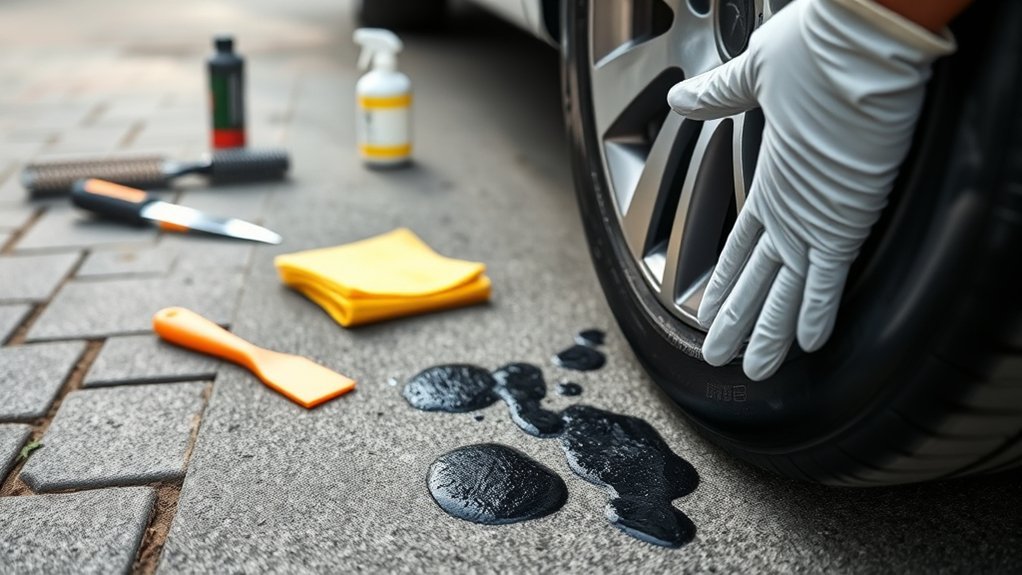
A tire is not the place for harsh shortcuts. Rubber can be damaged by sharp tools, aggressive abrasives, and strong chemicals that were not made for tire surfaces. Even if a harsh cleaner removes tar quickly, it can leave the tire slick, faded, swollen, or weakened.
Harsh Chemicals To Skip
Never use gasoline to remove tar from tires. It is highly flammable and creates unnecessary exposure and fire risks. You should also skip acetone, bleach, brake cleaner, paint thinner not labeled safe for rubber, and strong household degreasers.
- Gasoline: too flammable and unsafe for this job.
- Acetone: can be too aggressive for rubber and nearby finishes.
- Bleach: not needed for tar and can leave damaging residue.
- Brake cleaner: too harsh for tire cleaning and not meant for rubber soaking.
- Unlabeled solvents: risky unless the product clearly says it is safe for rubber or tires.
Scrubbing Mistakes To Avoid
Scrubbing technique matters as much as cleaner choice. Do not use metal scrapers, razor blades, steel wool, wire brushes, or drill-mounted abrasive wheels. These can cut or scar the rubber, especially on sidewalls and tire shoulders.
| Avoid This | Why It Matters | Use Instead |
|---|---|---|
| Metal screwdriver or knife | Can puncture or gouge the tire | Plastic scraper or old gift card |
| Steel wool or wire brush | Can scratch, roughen, or weaken rubber | Nylon tire brush |
| Cleaning hot tires | Cleaner can evaporate fast and tar can smear | Cool tire in shade |
How to Clean Tar From Tread Grooves
Tar in tread grooves needs a lighter touch than tar on a smooth sidewall. First, remove loose stones and dirt by rinsing the tire. Then apply tar remover only to the tarred area and let it soften. Use a nylon brush with short strokes that follow the groove direction.
Do not dig into grooves with a nail, knife, pick, or screwdriver. If a hard black spot in the tread does not soften, inspect it closely. It may be a stone, road debris, or damage rather than tar.
How to Know the Tire Is Clean
The tire is clean when the rubber no longer feels sticky, slick, or oily. Wipe the area with a clean white cloth or paper towel. If it leaves a dark smear, there is still residue on the tire.
After the final rinse, let the tire dry and check the tread and sidewall in good light. The surface should look even, and there should be no shiny solvent film. Drive gently at first, especially if you cleaned tar from the tread area, so any leftover moisture can clear safely.
When to Stop and Get the Tire Checked
Stop cleaning and have the tire inspected if you notice a sidewall bulge, deep cut, exposed cord, slow leak, vibration, or tar stuck around a puncture. Cleaning cannot fix structural tire damage, and scrubbing a damaged area can make the problem worse.
You should also stop if the tire becomes unusually soft, swollen, faded, or sticky after a chemical is applied. Wash the area with soap and water, rinse well, and ask a tire professional to inspect it before normal driving.
How to Keep Tar Off Tires
Keeping tar off tires starts with quick cleaning after roadwork, fresh asphalt, or newly sealed pavement. If you drive through sticky road tar, rinse the tires as soon as practical instead of waiting for the tar to harden.
Fresh tar is easier to remove than hardened tar, so a fast rinse after roadwork can prevent a long cleaning job later.
- Drive around fresh pavement and road-sealing work when you can.
- Wash tires after driving through construction zones.
- Inspect tread grooves and sidewalls before tar hardens.
- Keep tires clean during hot weather, when asphalt residue is more likely to smear.
- Use a tire protectant only if it is made for tires, and keep it off the tread contact patch.
Routine tire washing also makes new tar easier to spot. When the tire is already covered in old grime, fresh tar blends in and gets harder to remove cleanly.
Frequently Asked Questions
What takes tar off a tire?
A tire-safe automotive tar remover is the best first choice. Spray or wipe it on the tar, let it sit for a few minutes, then wipe with a microfiber cloth. For small stubborn spots, mineral spirits or isopropyl alcohol can help if used sparingly on a cloth. Always finish with soap and water.
Does WD-40 remove tar from tires?
WD-40 can loosen some tar, but it is not the best first choice for tires because it can leave an oily film. If you use a small amount as a last resort, wipe it completely and wash the tire with soap and water until the rubber no longer feels slick.
What dissolves asphalt tar?
Asphalt tar is petroleum-based, so tire-safe tar removers, mineral spirits, and isopropyl alcohol can soften it. Use the mildest option that works, apply it only to the tar, and rinse the tire afterward. Do not use gasoline, acetone, brake cleaner, or bleach.
Can Dawn dish soap remove tar?
Dish soap alone usually will not remove thick tar because tar is sticky petroleum residue, not normal dirt. It is still useful after the tar softens. Use dish soap or mild car wash soap for the final scrub so the tire is clean and free of oily residue.
Can tar damage a tire if left on?
Small tar spots usually do not ruin a tire right away, but they can trap grit, make the surface messy, and hide cuts or embedded debris. Heavy tar on tread can also feel slick until it wears or washes away. Remove it early and inspect the tire while you clean.
Is mineral spirits safe on tires?
Mineral spirits can be used carefully for small tar spots, but it should not be poured on or used to soak the tire. Apply a small amount to a cloth, wipe the tar, then wash the tire with soap and water. Wear gloves, avoid fumes, and keep it away from flame.
Conclusion
You can get tar off your tires safely by using patience instead of force. Scrape raised tar with a plastic tool, soften the residue with a tire-safe tar remover, wipe with a clean cloth, and finish with soap and water. For stubborn spots, use mineral spirits or isopropyl alcohol only as a careful spot treatment. If you see tire damage, pressure loss, or a slick film that will not wash away, stop and get the tire inspected before normal driving.
Sources
- CDC/NIOSH Pocket Guide: Stoddard Solvent — supports mineral spirits safety, exposure routes, PPE, and combustible-liquid precautions.
- CDC/NIOSH Pocket Guide: Isopropyl Alcohol — supports isopropyl alcohol flammability and safe handling precautions.
- CDC/NIOSH Pocket Guide: Gasoline — supports the warning not to use gasoline because of flammability and exposure hazards.