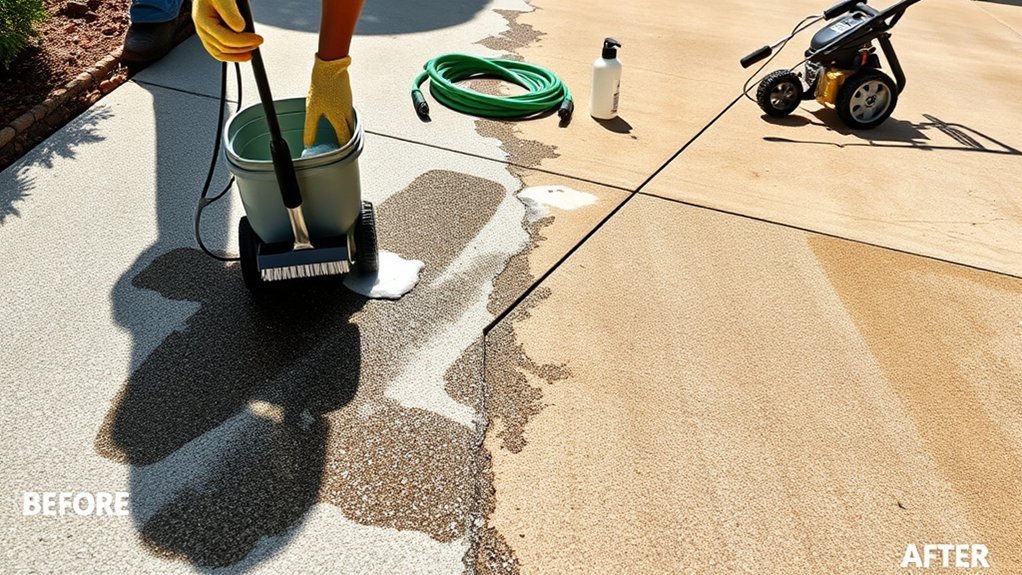
Tire marks on concrete are usually rubber transfer sitting in the surface pores, not a stain you should attack with the harshest chemical first. Start with a concrete-safe degreaser, give it time to work, scrub with the right brush, and rinse fully. If the mark is old or baked in, repeat the process or step up carefully to a pressure washer or stronger cleaner after testing a small spot.
Quick Answer
To clean tire marks off concrete, sweep the area, wet the surface, apply a concrete-safe degreaser, let it dwell for 5 to 10 minutes, scrub with a stiff nylon brush, and rinse thoroughly. For stubborn marks, repeat the process or pretreat before pressure washing with a safe nozzle and distance.
Key Takeaways
- Use a concrete degreaser or alkaline driveway cleaner first, not gasoline, acid, or old paint stripper.
- Let the cleaner stay wet on the mark for 5 to 10 minutes so it can loosen the rubber film.
- Scrub with a stiff nylon brush in overlapping passes, then rinse until no cleaner residue remains.
- Pressure washing works best after pretreating, but too much pressure can scar concrete or strip sealers.
- Prevent new marks with mats, smoother parking habits, fast cleanup, and the right concrete sealer.
At a Glance
| Time Required | 15 to 45 minutes for most spots, longer for old ghost marks |
| Difficulty | Easy to moderate |
| Tools Needed | Broom, hose, bucket, stiff nylon brush, gloves, eye protection, concrete degreaser, optional pressure washer |
| Cost | About $10 to $40 for cleaner and basic supplies, more if renting a pressure washer |
Warning: Do not mix cleaners. Never combine bleach with vinegar, acids, ammonia, or other household cleaners. Avoid gasoline and old solvent paint strippers. The EPA has identified serious health risks with chemicals such as NMP and methylene chloride, so use concrete-safe cleaners instead and follow the product label.
How to Clean Tire Marks Off Concrete
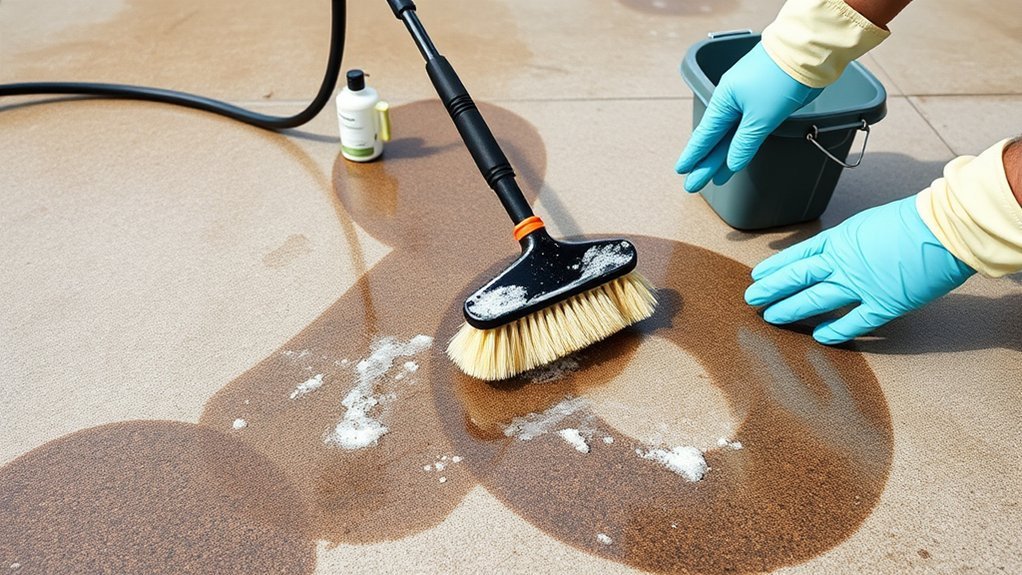
Before you clean tire marks off concrete, check the surface. Plain broom-finished concrete can usually handle a stiff nylon brush and a driveway cleaner. Sealed, stained, stamped, painted, polished, or epoxy-coated concrete needs a gentler test first because strong cleaners and high pressure can dull the finish or lift the coating.
- Sweep loose grit away. Dirt and sand can scratch sealed concrete while you scrub.
- Wet the concrete first. Lightly dampening the surface slows absorption and helps the cleaner stay active on the rubber film.
- Apply a concrete degreaser. Use a concrete-safe degreaser, alkaline driveway cleaner, or oxygen-based concrete cleaner. Cover the full mark, not just the darkest center.
- Let it dwell for 5 to 10 minutes. Keep the cleaner wet. If it dries, add more cleaner or a light mist of water.
- Scrub with a stiff nylon brush. Work in tight, overlapping passes. Avoid wire brushes on decorative or sealed concrete because they can scratch or leave metal marks.
- Rinse thoroughly. Flush the area until the water runs clear and no slippery residue remains.
- Repeat if needed. Two mild passes are safer than one aggressive pass with a harsh solvent.
Note: Keep rinse water out of storm drains when it contains cleaner, oil, grease, or heavy residue. The EPA advises homeowners not to hose oil, grease, toxic chemicals, or household chemicals into streets or storm sewers because runoff can reach local waterways.
Best Cleaners for Stubborn Tire Marks
The best cleaner depends on the concrete finish and how old the mark is. Start mild, then move up only if the stain remains.
| Cleaner Type | Best For | What to Know |
|---|---|---|
| Concrete degreaser | Most driveway and garage tire marks | Best first choice. Let it dwell, scrub, rinse, and repeat. |
| Alkaline driveway cleaner | Rubber film mixed with road grime or oily residue | Wear gloves and eye protection. Do not let it dry on the surface. |
| Oxygen-based concrete cleaner | General driveway cleaning and lighter marks | A good option when you want to avoid chlorine bleach. Follow dilution directions. |
| Butyl-based degreaser | Older, more stubborn rubber transfer on plain concrete | Stronger than general cleaners. Test first and protect nearby finishes. |
| WD-40 or light solvent spot treatment | Small fresh marks only | Use sparingly, then wash with degreaser so oily residue does not remain. |
| Bleach solution | Mold, mildew, or organic discoloration near the mark | Not the main rubber-removal method. Test first, protect plants, and never mix with other cleaners. |
Skip gasoline, brake cleaner, lacquer thinner, and unknown paint strippers. These can create fire, health, coating, and runoff problems while doing little more than spreading residue deeper into the concrete.
[Products Worth Considering]

RecDec pressure washer shower nozzle tips deliver a quick-connect misting spray for car washing, outdoor cleaning, and gentle watering tasks. The stainless steel adapter features instant plug-and-play installation with a 1/4 inch quick connect for compatibility with most high-pressure washers. Choose from multiple screen hole sizes for different spray intensities and easily attach or remove as needed.

Clean wheels and rims with soft feathered bristles that safely remove dirt and road grime while helping restore original luster. The short non-slip handle makes it easy to scrub in tight wheel wells, and the brush is suitable for vehicles and hard-to-reach areas. It can also be soaked and rubbed to help restore bristles to their shape after use.

This oesee 8-piece wheel care kit helps you clean, scrub, and dry wheels safely with purpose-built brushes and towels. The scratch-free microfiber wheel brush lifts brake dust and grime, while the stiff pro-grip tire brush removes tire browning and embedded dirt. A twist loop microfiber drying towel and an applicator help achieve a streak-free finish and cleaner, more even product application.
Remove Tire Marks From Concrete Driveways
Driveway tire marks usually come from warm tires, tight turns, heavy braking, or repeated parking in the same spot. For a concrete driveway, use this method:
- Pre-rinse nearby landscaping. Wet grass and plants before cleaning so accidental splashes are diluted.
- Apply degreaser from the outside inward. This keeps the dark residue from spreading beyond the stain.
- Scrub across the tire mark. Follow the shape of the mark, then scrub across it to lift residue from the texture.
- Rinse from high ground to low ground. Keep dirty water away from clean areas and storm drains.
- Pressure wash only after pretreating. Use a fan tip, keep the nozzle moving, and test first. Avoid a zero-degree nozzle because it can scar concrete and damage sealers.
Pro Tip: If the mark fades but does not disappear, let the concrete dry before judging the result. Wet concrete can hide ghosting, and a second light cleaning often works better than harder scrubbing while the slab is still soaked.
Remove Tire Marks From Concrete Garage Floors
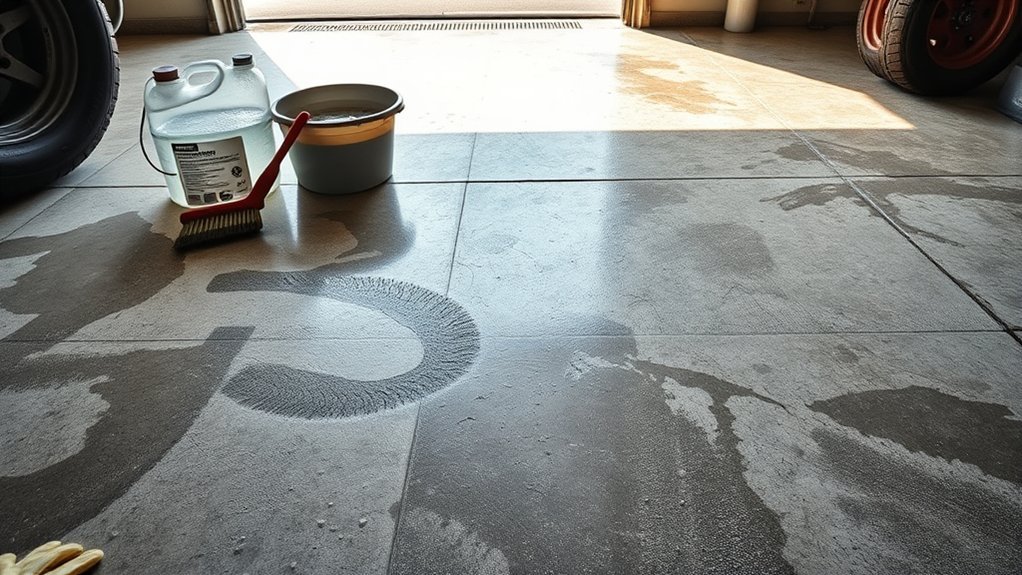
Garage floors need extra care because tire residue often mixes with oil, dust, road salt, and old floor coatings. Ventilate the garage, wear gloves and eye protection, and avoid solvent-heavy cleaners unless the product label says they are safe for your floor.
- Open the garage door. Good airflow matters when using degreasers or spot cleaners.
- Absorb oily spots first. If the tire mark is mixed with oil, use absorbent material before washing.
- Apply a non-filming degreaser. A cleaner that rinses clean is better than a product that leaves shine or residue.
- Scrub with a nylon deck brush. Use short strokes and moderate pressure.
- Rinse and squeegee. Move rinse water out of the garage and dispose of dirty water according to local rules if it contains oil or chemicals.
- Dry the floor fully. A fan can speed drying and help you see whether a second pass is needed.
If the garage floor is epoxy-coated, painted, polished, or sealed, do not use abrasive pads, wire brushes, or strong solvents without checking the coating manufacturer’s cleaning instructions. A cleaner that is safe for bare concrete may dull or soften a coating.
Clean Sealed, Painted, or Decorative Concrete Carefully
Decorative concrete needs a softer approach. Use a pH-neutral cleaner or the mildest concrete-safe degreaser you can find, and test it in a hidden area first. If the test spot turns white, dull, sticky, or lighter than the surrounding area, stop and switch to a gentler cleaner.
- Stamped or stained concrete: Avoid harsh alkaline cleaners unless the sealer manufacturer allows them.
- Epoxy garage floors: Use a non-abrasive cleaner and a soft or medium nylon brush.
- Polished concrete: Avoid acidic cleaners and aggressive pressure washing.
- Concrete pavers: Avoid blasting joints with high pressure because it can displace joint sand.
- Asphalt driveways: Do not treat asphalt like concrete. Solvents can soften or damage asphalt.
[Products Worth Considering]

This 3-piece wheel and tire brush set makes it easy to clean light, medium, and heavy dirt from wheels, rims, tires, and exterior surfaces. It includes both soft and stiff bristle options for gentle scrubbing and tough grime removal, helping lift brake dust and road buildup. The long-handle design supports comfortable cleaning across cars, trucks, SUVs, RVs, motorcycles, and more, with simple care instructions to restore brush shape.

This professional wheel and rim cleaning brush set lifts brake dust, grime, and dirt with soft, scratch-free microfiber and synthetic wool fibers. The rim brush bends up to 360 degrees for easy access to hard-to-reach areas around spokes, lips, and faces. Ideal for thorough cleaning of car, truck, motorcycle, bicycle, RV, and more wheel and tire surfaces.

The SPTA wheel and tire brush kit makes it easy to remove dirt from wheels, rims, and hard-to-reach areas without needing a high pressure washer. Ergonomic handles and soft, chemical-resistant bristles help you clean faster while reducing the risk of scratching. The set is versatile for cars, trucks, motorcycles, bicycles, RVs, boats, and more.
Troubleshooting Stubborn Tire Marks
If the stain remains after one cleaning, use the result to choose your next step instead of guessing.
| Problem | Likely Cause | Fix |
|---|---|---|
| The mark got lighter but stayed visible. | Rubber residue is still in the pores. | Repeat the degreaser dwell and scrub cycle after the concrete dries. |
| A gray shadow remains. | The cleaner removed surface residue but not deeper film. | Use a stronger concrete degreaser or pretreat before pressure washing. |
| The area looks white or hazy. | Cleaner residue, mineral residue, or sealer damage. | Rinse again with clean water. If haze remains on sealed concrete, contact the sealer manufacturer. |
| The spot feels greasy. | WD-40, tire dressing, or oil remains. | Wash with degreaser, scrub, rinse, and absorb any oily residue before repeating. |
| The pressure washer left lines. | Nozzle was too close, too narrow, or moved unevenly. | Clean the full panel evenly from control joint to control joint to blend the appearance. |
[Products Worth Considering]

Cristal Products Untouchable Tire Shine Spray delivers a deep, wet-look gloss that enhances your vehicle’s tires. It’s quick-drying and spreads smoothly for consistent, streak-free coverage, while forming a protective coating against UV rays, road grime, and weather. Suitable for all tire types, it helps restore dull, faded tires to a showroom-quality finish.
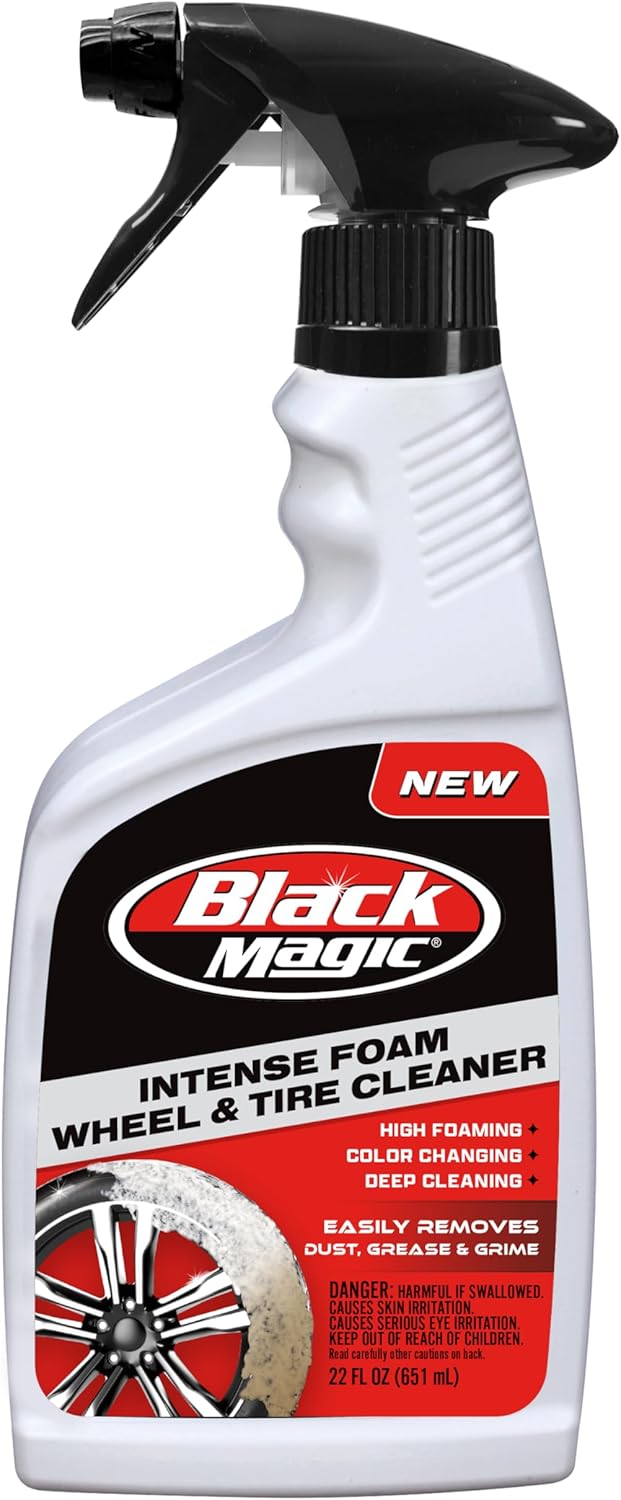
Black Magic Intense Foam Wheel & Tire Cleaner uses a high-foaming action to lift away dirt, grime, and brake dust without scrubbing. The color-changing formula helps show contaminants being dissolved as foam turns from white to brown. Safe for all wheel types and even wheel wells, it leaves a like-new, slick finish with a fresh cherry scent.
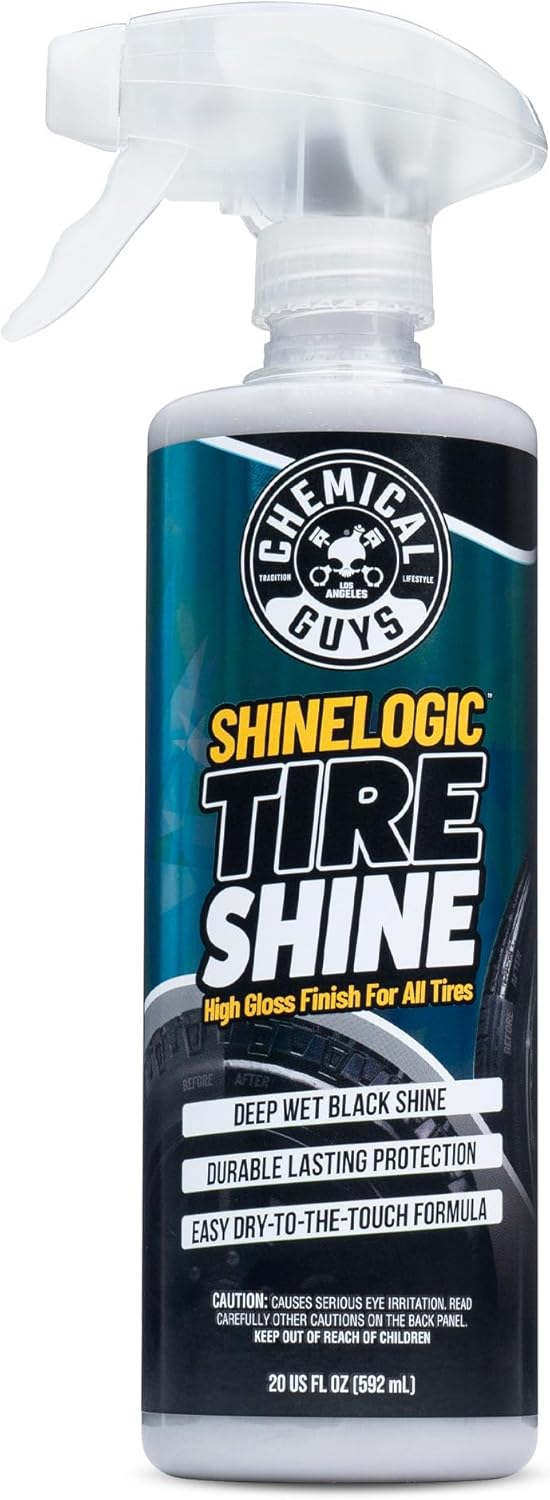
Chemical Guys ShineLogic Tire Shine delivers a deep wet black, high-shine finish for rubber tires with a sleek look. It’s designed for durable, one-step application with minimal drips, streaks, or runs, and it helps produce effortless, long-lasting shine. Choose aerosol or trigger spray for easy use on cars, trucks, motorcycles, RVs, and more.
Prevent Tire Marks From Coming Back
Prevention is easier than repeated deep cleaning. Tire marks return when hot rubber, turning pressure, and porous concrete meet in the same place again and again. Use the guide below:
| Control | Effect | Action |
|---|---|---|
| Fast cleanup | Stops fresh rubber from bonding deeper | Wash fresh marks the same day |
| Parking mats | Blocks direct tire contact | Use mats or runners in repeated parking spots |
| Smoother driving | Reduces rubber transfer | Avoid sharp turns, hard braking, and tire scrubbing |
| Shade and cooling | Lowers hot-tire pickup | Let tires cool before parking on decorative concrete |
| Concrete sealer | Makes cleaning easier | Choose a driveway-safe sealer and follow recoat timing |
A penetrating sealer can help reduce moisture and salt absorption, while a topical coating may offer better stain resistance. However, topical coatings can change the look of the slab and may become slippery if the wrong product is used. Choose a sealer rated for driveways or garage floors, and read the product instructions before applying it.
Frequently Asked Questions
What takes rubber tire marks off concrete?
A concrete-safe degreaser, alkaline driveway cleaner, hot water in a bucket, and a stiff nylon brush remove most rubber tire marks. Apply the cleaner, let it dwell for 5 to 10 minutes, scrub in overlapping passes, and rinse thoroughly. For old marks, repeat or pretreat before pressure washing.
Does WD-40 remove tire marks from concrete?
WD-40 may loosen small fresh tire marks, but it can leave oily residue. If you use it, spray lightly, scrub the mark, then clean the area with concrete degreaser and rinse well. Do not use it as the main cleaner for large areas, sealed concrete, or decorative finishes.
Will Simple Green remove tire marks from concrete?
Simple Green or a similar cleaner can help with light or fresh tire marks, especially when you let it dwell and scrub with a nylon brush. For older rubber transfer, use a concrete-specific degreaser or oxygen-based concrete and driveway cleaner. Always test first on sealed or decorative concrete.
Can you pressure wash tire marks off concrete?
Yes, pressure washing can remove tire marks from plain concrete, but it works better after pretreating with degreaser. Use a fan tip, keep the wand moving, and test a small area first. Avoid a zero-degree nozzle and avoid high pressure on sealed, painted, stamped, or weak concrete.
Will bleach remove tire marks from concrete?
Bleach is not the best first choice for rubber tire marks. It is more useful for mold, mildew, and some organic discoloration. If you use bleach on concrete, dilute it according to the label, test first, protect plants, wear safety gear, and never mix it with vinegar, acids, ammonia, or other cleaners.
Why do tire marks come back after cleaning?
Tire marks come back when warm tires park in the same place, turn sharply, or press rubber into porous concrete. Clean fresh marks quickly, use garage mats or parking runners, avoid sharp steering while stopped, and choose a driveway-safe sealer if you want future cleanup to be easier.
Conclusion
Cleaning tire marks off concrete works best when you start with a safe, simple process: wet the area, apply a concrete degreaser, let it dwell, scrub with a stiff nylon brush, and rinse completely. For stubborn marks, repeat before moving to stronger cleaners or pressure washing. Avoid harsh paint strippers, mixed chemicals, and careless runoff. Once the concrete is clean, use mats, smoother parking habits, and the right sealer to make future tire marks easier to control.
Sources
- U.S. EPA: Risk Management for n-Methylpyrrolidone (NMP) — backs the warning against recommending NMP-based products for DIY tire-mark cleaning.
- U.S. EPA: Risk Management for Methylene Chloride — backs the warning against old or unknown solvent paint strippers.
- U.S. EPA: Basic Information about Nonpoint Source Pollution — backs runoff guidance for oil, grease, toxic chemicals, and household chemicals.
- The Washington Post: Cleaning Moldy Concrete Patios — backs concrete cleaning cautions, testing, PPE, and bleach limitations.
- The Washington Post: Driveway Maintenance and Sealing — backs the difference between penetrating and topical concrete sealers.
- Southern Living: Removing Grease Stains from Concrete — backs degreaser, pressure-washer, PPE, and quick-cleanup guidance for concrete stains.