
What Does Light Truck Tire Mean? Full Explanation & Practical Guide
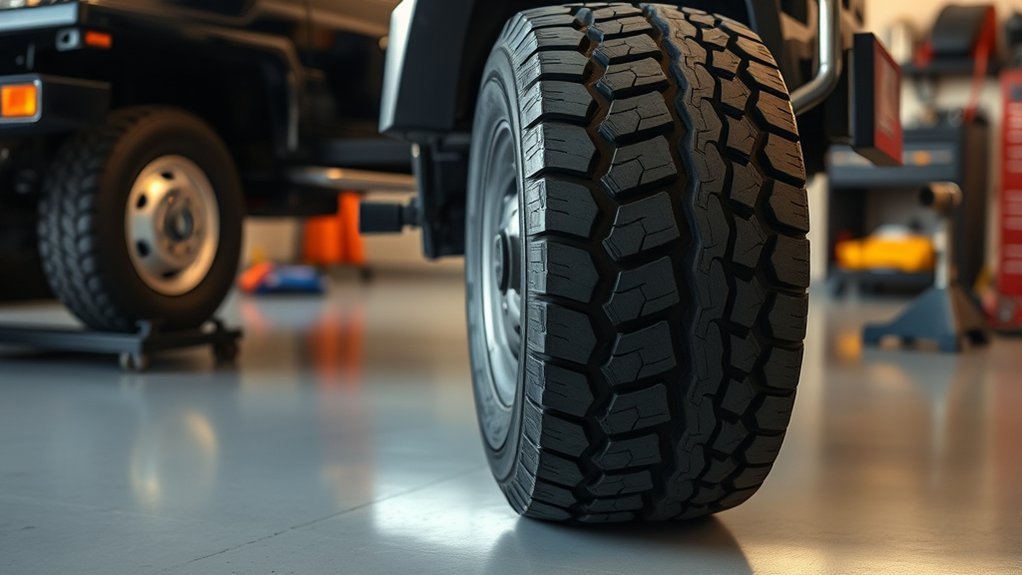
A light truck tire, marked as LT on the sidewall, is built for trucks, SUVs, vans, and multipurpose vehicles that need more load support than a standard passenger tire. LT tires usually have stronger casings, stiffer sidewalls, higher load ratings, and tougher tread options for towing, hauling, gravel roads, and jobsite use. They can ride firmer and sound louder than passenger tires, so the right choice depends on your vehicle placard, load needs, and driving conditions.
Quick Answer
LT on a tire means “Light Truck.” It tells you the tire is designed for heavier-duty use on lightweight trucks, SUVs, vans, and multipurpose vehicles. Choose LT tires when your vehicle placard, towing load, cargo weight, or road conditions call for stronger load support than a passenger tire can provide.
Key Takeaways
- LT means Light Truck, a tire type intended for heavier-duty trucks, SUVs, vans, and multipurpose vehicles.
- LT tires are chosen for load capacity, sidewall strength, towing stability, hauling, and rough-road durability.
- They can ride firmer, weigh more, cost more, and create more road noise than passenger tires.
- The key sidewall details are size, load range, load index, speed rating, maximum load, and inflation pressure.
- Always match the tire to the vehicle placard, owner’s manual, wheel rating, and real load you carry.
What Does LT Mean on a Tire?
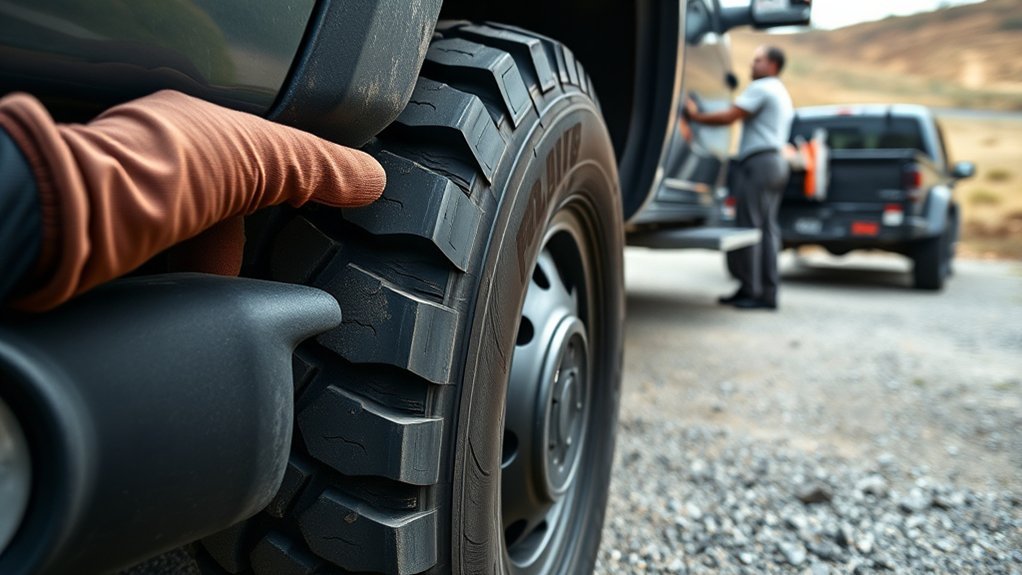
LT stands for Light Truck. In federal tire rules, a light truck tire is a tire the manufacturer designates as primarily intended for use on lightweight trucks or multipurpose passenger vehicles. In everyday terms, it means the tire is built for tougher service than a normal passenger tire.
You may see LT at the start of a metric size, such as LT275/70R18, or at the end of a flotation size, such as 35×12.50R17LT. Both markings tell you the tire is made for light truck service, but the sizing format is different.
LT tires are not just passenger tires with different letters on the sidewall. They are usually built with a stronger carcass, reinforced sidewalls, and load ratings meant for heavier work. That helps when you tow a trailer, carry tools, load a pickup bed, drive on gravel, or run on rough jobsite roads.
Warning: Do not choose tires by appearance alone. A tire that looks rugged can still have the wrong load rating, speed rating, or pressure requirement for your vehicle. Check the Tire and Loading Information Label, the owner’s manual, and the tire sidewall before changing tire type or size.
[Products Worth Considering]

EVOULTES heavy duty tire inflator with an integrated gauge delivers accurate pressure readings from 10–120 PSI, helping you inflate, deflate, and check tires in one tool. The 16.5-inch extended dual-head air chuck with swivel base reaches hard-to-access dual wheel valves on trucks and RVs. A brass trigger core and side-mounted air release valve make operation smooth, with standard 1/4" NPT threading and quick-connect compatibility for easy setup.

This VEVOR tire bead breaker uses a slide-hammer impact and wedge tip to separate tire beads from rims quickly and efficiently without damaging hub surfaces. The long handle and sturdy steel construction help reduce user strain while providing reliable, portable tire changing for cars, trucks, and more. Ideal for home mechanics and repair shops handling multiple vehicle tire sizes.

This portable cordless tire inflator delivers up to 160 PSI with fast 17 L/min airflow to help you quickly top up tires and get back on the road. It features dual power mode, running on a 21V rechargeable battery or a 12V DC adapter for convenient roadside use. An automatic shut-off with digital pressure gauge helps prevent overinflation, and a built-in LED light improves visibility in low-light conditions.
How Do LT Tires Compare With Passenger Tires?
Compared with passenger tires, LT tires are designed for strength first and comfort second. Passenger tires are usually tuned for a smoother ride, lower rolling resistance, lighter weight, and quieter highway driving. LT tires are tuned for heavier loads, stronger sidewalls, and better durability under stress.
| Feature | Passenger Tire | LT Tire |
| Main purpose | Comfort, fuel economy, daily driving | Load support, towing, hauling, rougher use |
| Ride feel | Softer and quieter | Firmer and often louder |
| Sidewall | More flexible | Stiffer and more load-focused |
| Best use | Light-duty commuting and family driving | Trucks, towing, cargo, gravel, work use |
If your truck rarely carries weight and the vehicle placard calls for passenger tires, an LT tire may not improve your daily drive. It can make the vehicle feel harsher, reduce efficiency, and add cost. If you tow, haul, or run near your vehicle’s rated load, the added strength can be worth the tradeoff.
How Do You Read an LT Tire Size?
An LT tire sidewall gives you the details you need before buying. For example, in LT275/70R18 125/122S Load Range E:
- LT means Light Truck service.
- 275 is the section width in millimeters.
- 70 is the aspect ratio, meaning the sidewall height is 70% of the width.
- R means radial construction.
- 18 is the wheel diameter in inches.
- 125/122 is the load index, often shown as single/dual ratings on LT tires.
- S is the speed rating.
- Load Range E shows the tire’s strength class.
You may also see flotation sizing, such as 35×12.50R17LT. In that format, 35 is the approximate overall tire diameter in inches, 12.50 is the approximate section width in inches, R means radial, 17 is the wheel diameter, and LT confirms light truck service.
Pro Tip: Before buying a different LT size, check clearance, wheel width, load rating, speed rating, and the vehicle manufacturer’s recommendations. A larger tire can affect speedometer reading, braking, gearing, fuel economy, and spare-tire fit.
When Do You Need LT Tires?
You need LT tires when your vehicle and use case demand more load support than standard passenger tires provide. The most reliable starting point is the Tire and Loading Information Label on the driver’s door edge or doorjamb. That label lists the original tire size and recommended cold inflation pressure for your vehicle.
LT tires make the most sense when you:
- tow a trailer regularly;
- carry heavy tools, cargo, equipment, or camping gear;
- drive a pickup, work van, large SUV, or multipurpose vehicle that specifies LT tires;
- travel on gravel, rutted, rocky, or construction roads;
- want stronger sidewalls for rough-road use;
- need a tire with a higher load range for the actual weight you carry.
If your vehicle came with LT tires from the factory, stay with a tire that meets or exceeds the original size, load index, load range, speed rating, and inflation requirements unless a qualified tire professional confirms a safe alternative.
Which Vehicles Need LT Tires?
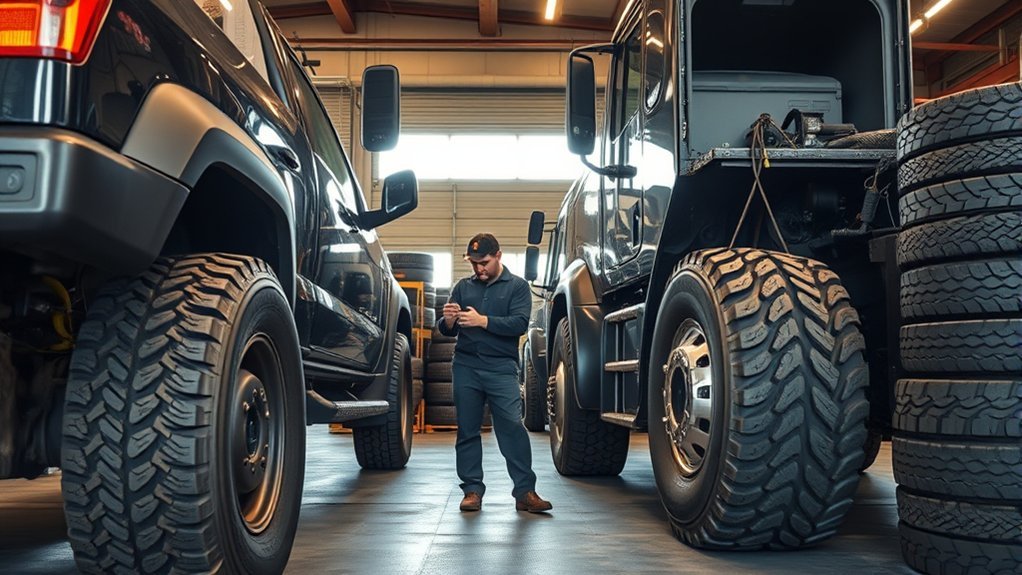
Vehicles that may need LT tires include pickups, full-size SUVs, work vans, commercial vans, and multipurpose vehicles used for towing or hauling. Common examples include many versions of the Ford F-150, Chevrolet Silverado 1500, RAM 1500, Toyota Tundra, Nissan Titan, Ford Super Duty, Chevrolet Silverado HD, RAM HD, and work-oriented vans. The exact need depends on the vehicle trim, wheel package, load rating, and original equipment tire specification.
Some SUVs and crossovers use passenger tires, while some heavier trims or off-road packages may use LT tires. Do not assume that every SUV needs LT tires. A lighter crossover that never tows may ride better and perform more efficiently on the tire type specified by the manufacturer.
Note: The letters on the tire are only one part of fitment. You still need the correct size, load index, load range, speed rating, wheel compatibility, and cold inflation pressure.
What Are the Off-Road Benefits of LT Tires?
When the pavement ends, LT tires can give you a useful durability advantage. Their stronger casing and stiffer sidewalls can help resist bruising, cuts, and impact damage from rocks, ruts, roots, and sharp gravel. Many LT all-terrain and mud-terrain models also use deeper tread blocks and wider voids to improve grip on loose surfaces.
The benefit is not automatic, though. An LT highway tire will not perform like an LT mud-terrain tire. For off-road driving, match the tread type to the surface:
- Highway terrain: best for road comfort, towing stability, and long highway use.
- All-terrain: balanced for pavement, gravel, dirt, mild mud, and trail use.
- Rugged terrain: more aggressive than all-terrain, but usually more road-friendly than mud-terrain.
- Mud-terrain: best for deep mud, loose dirt, and rocks, but usually louder and rougher on pavement.
If you drive in snow, also check for the three-peak mountain snowflake symbol, not just an aggressive tread pattern. LT construction helps with strength, but winter traction depends on tread design, rubber compound, and the tire’s winter rating.
How Do LT Tire Load Range and Load Index Work?
LT tire load range and load index both describe carrying ability, but they do different jobs. The load index is the numeric code tied to the maximum load the tire can carry at the correct inflation pressure. The load range is a letter, such as C, D, E, F, or higher, that identifies the tire’s strength class.
On LT tires, federal marking rules require the tire to show the maximum load rating and the load range letter. You may also see older language such as “6-ply rated,” “8-ply rated,” or “10-ply rated.” That wording is a strength rating, not a promise that the tire physically has that exact number of fabric plies. Modern tire materials can deliver high strength with fewer actual layers.
| Marking | What It Tells You | What To Check |
| Load index | Maximum load code for the tire | Confirm the pounds per tire in the tire maker’s specs or a load table. |
| Load range | Strength class, such as C, D, E, or F | Match or exceed the load range required by the vehicle and real load. |
| Max pressure | Pressure tied to maximum tire load | Do not use sidewall max as your normal pressure unless the vehicle/load setup calls for it. |
The safest rule is simple: each tire must have enough capacity for the axle load it carries, and it must be inflated according to the vehicle maker’s guidance or a proper load/inflation table for your setup.
Why Do LT Tires Ride Differently?
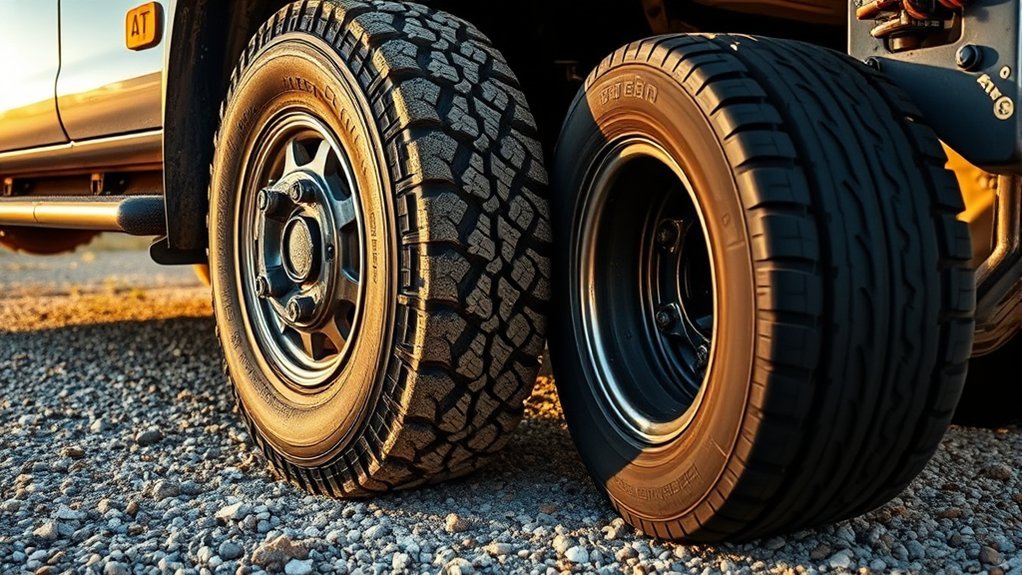
LT tires ride differently because their sidewalls and casings are built to flex less under load. That extra stiffness helps support cargo and towing weight, but it also sends more road texture into the cabin. You may feel sharper impacts over expansion joints, potholes, and broken pavement.
LT tires can also be heavier than passenger tires. More tire weight can affect steering feel, braking response, suspension movement, and fuel economy. Aggressive all-terrain or mud-terrain LT tires may add more tread noise, especially as they wear.
This does not make LT tires bad. It means you should use them when the benefits matter. If your truck works hard, the firmer ride may be a fair trade for load stability and durability. If your vehicle is lightly loaded most of the time, a passenger or XL tire approved for your vehicle may be the better match.
[Products Worth Considering]

This AUTOWN flat tire repair kit is designed for quick, reliable puncture repairs using a plug kit and spiral probe tool to simplify installation. Built for durability and safe handling, it offers strong adhesion and flexibility to help maintain tire air tightness. With a portable storage case and a multi-vehicle approach, it’s suitable for cars, motorcycles, ATVs, tractors, lawn mowers, RVs, jeeps, and trucks.

The JACO FlowPro Tire Inflator measures, inflates, and airs down tires up to 100 PSI with battery-free operation and ±2% accuracy after calibration. It features a glowing pressure dial for night visibility, a heavy-duty steel build with a hybrid hose, and a precision push-to-inflate thumb trigger. The patented Lightning Air Chuck locks on for a secure seal, and the kit includes quick-connect hardware for easy inline use with your air compressor.
What Are the Safety Risks of Using the Wrong Tire?
Using a tire with the wrong size, load rating, speed rating, or inflation requirement can reduce safety. A passenger tire installed where an LT tire is required may overflex, overheat, wear unevenly, or fail under heavy load. An LT tire installed on a vehicle that does not need it may ride poorly and may not match the handling the vehicle was designed around.
Tire Failure Risks
The biggest risk is tire failure under heat and stress. When a tire is overloaded or underinflated, it flexes more than intended. That extra flex builds heat, and heat can contribute to blowouts, tread separation, and loss of control. Heavy cargo, towing, hot weather, high speed, and low pressure can make the problem worse.
Check cold inflation pressure at least monthly and before towing or long highway trips. Also inspect tread depth, sidewall damage, embedded objects, bulges, cracking, and uneven wear. Tires are not safe when tread is worn to 2/32 inch.
Load Rating Mismatch
A load rating mismatch happens when the tire cannot support the actual weight on the axle. This can happen when a truck is fitted with passenger tires that do not meet the required load rating, or when an LT tire has the wrong load range for the trailer tongue weight, cargo, or work setup.
To avoid this, compare your loaded vehicle weight with the tire’s capacity and the axle ratings. For towing, include tongue weight and cargo inside the vehicle. If you are unsure, weigh the loaded vehicle and trailer at a public scale, then confirm the tire choice with a qualified tire professional.
How Do You Choose the Right LT Tire?
Choosing the right LT tire starts with the tire placard, not the tread pattern. The placard and owner’s manual tell you the original size and recommended cold pressure. From there, match the tire to how you actually use the vehicle.
- Check the original tire specification. Confirm size, load index, speed rating, and pressure on the Tire and Loading Information Label.
- Match the load requirement. Choose a tire that can support the vehicle, cargo, passengers, trailer tongue weight, and axle load.
- Choose the right tread type. Highway terrain is best for road use, all-terrain for mixed use, and mud-terrain for more aggressive off-road conditions.
- Confirm wheel compatibility. The wheel must support the tire size, pressure, and load.
- Check climate needs. If you drive in severe winter weather, look for a tire with a three-peak mountain snowflake rating.
- Protect ride quality. Do not choose a higher load range than you need just because it sounds stronger.
- Verify inflation guidance. Use the vehicle placard or a proper load/inflation table, not the sidewall maximum as a default daily pressure.
When you change tire size or type, the safest move is to confirm fitment with the vehicle maker’s guidance, the tire maker’s published specs, and a tire professional who understands load ratings.
When Should You Not Use LT Tires?
You may not need LT tires if your vehicle is a light crossover, minivan, or SUV that uses passenger tires and rarely carries heavy loads. LT tires can make those vehicles ride harsher, use more fuel, and feel less comfortable without adding a real safety benefit.
You should also avoid LT tires if the tire’s speed rating, load rating, size, or pressure requirement does not match your vehicle. A stronger-looking tire is not automatically a safer tire. The safest tire is the one that meets the vehicle’s required specifications and your real driving conditions.
How Should You Maintain LT Tires?
LT tires still need regular maintenance. Stronger construction does not protect you from low pressure, overloading, alignment problems, or worn tread. Use these habits to get safer performance and longer tire life:
- Check cold tire pressure at least once a month and before heavy towing or hauling.
- Use the vehicle placard or approved load/inflation guidance for pressure.
- Rotate tires on the schedule in your owner’s manual, if rotation is allowed for your setup.
- Inspect tread depth and replace tires at or before 2/32 inch of remaining tread.
- Look for cuts, sidewall bulges, cracking, punctures, and uneven wear.
- Check tire age using the DOT date code, especially on vehicles that sit for long periods.
- Check for tire recalls if you notice unusual vibration, separation, or sidewall issues.
Frequently Asked Questions
Are light truck tires good?
Yes, light truck tires are good when you need higher load capacity, stronger sidewalls, towing stability, and better durability on rough roads. They are not always better for comfort. If your vehicle does not tow, haul, or require LT tires, a passenger tire approved for your vehicle may ride better.
Are light truck tires 10-ply?
Some LT tires are called 10-ply rated, especially Load Range E tires, but modern tires do not always have ten actual plies. “Ply rating” is now a strength category. Check the load range, load index, maximum load, and inflation pressure instead of relying only on the phrase “10-ply.”
Is a 70,000-mile tire good?
A 70,000-mile tire can be a good choice if it also matches your vehicle’s size, load rating, speed rating, and driving conditions. Mileage warranties are not guarantees. Real tread life depends on inflation, rotation, alignment, load, road surface, driving style, and maintenance.
Can I put LT tires on an SUV?
You can put LT tires on some SUVs if the size, load rating, speed rating, wheel rating, and pressure requirements are correct. Many lighter SUVs and crossovers are designed for passenger tires, so LT tires may add noise and harshness without improving safety. Check the placard first.
Do LT tires need higher air pressure?
LT tires often use higher pressure when carrying heavier loads, but you should not inflate them to the sidewall maximum for normal driving unless your vehicle and load setup call for it. Use the vehicle placard, owner’s manual, or an approved load/inflation table.
Are LT tires better for towing?
LT tires can be better for towing when your vehicle, trailer tongue weight, and cargo load require the extra load capacity and sidewall support. They are not a substitute for staying within your vehicle’s tow rating, axle ratings, wheel ratings, and tire load limits.
Conclusion
When you choose an LT tire, you are matching the tire to the job, not just the size. LT means Light Truck, and these tires are built for stronger load support, towing stability, hauling, and rougher use. The tradeoff is a firmer ride, more weight, and sometimes more noise.
Before you buy, check the Tire and Loading Information Label, owner’s manual, tire sidewall, load range, load index, speed rating, wheel rating, and inflation guidance. The right LT tire can improve safety and durability under load. The wrong one can hurt comfort, handling, and tire life.
Sources
- NHTSA TireWise Tire Safety Ratings and Awareness — tire size, placard pressure, tread depth, tire maintenance, and safety guidance.
- 49 CFR 571.139, Standard No. 139 — LT tire definition, load rating definition, tire markings, and light-vehicle tire requirements.
- 49 CFR 575.104, Uniform Tire Quality Grading Standards — scope and limits of UTQG passenger tire grading.
- NHTSA Recalls — tire and vehicle recall lookup.

Related Articles
What Are Reverse Mount Wheels? Design Explained
Great-looking reverse mount wheels hide clever multi-piece design details and fitment tradeoffs—discover how they work and whether they’re right for your build.
Read More
Do Bigger Tires Affect Your Odometer Reading?
Installing bigger tires can throw off your odometer and speedometer—here’s why the readings change more than you’d expect.
Read More
Are Expensive Tires Worth It? Cost vs Performance
More than just price, expensive tires can change safety, grip, and long-term value in surprising ways.
Read More