A tire marked 99Y uses a service description that tells you two things: how much weight the tire can carry and the maximum speed category it was tested for. The 99 is the load index, which equals about 1,709 pounds per tire when properly inflated. The Y is the speed rating, which means the tire is rated up to 186 mph (300 km/h) under controlled test conditions.
Quick Answer
On a tire, 99Y means the tire has a 99 load index, rated for about 1,709 pounds, and a Y speed rating, rated up to 186 mph. Match both numbers to your vehicle placard or owner’s manual before buying replacements.
Key Takeaways
- 99 is the tire’s load index and equals about 1,709 lb / 775 kg per tire when properly inflated.
- Y is the tire’s speed rating and equals up to 186 mph / 300 km/h under test conditions.
- 99Y is part of the tire’s service description, not the complete tire size.
- Always match or exceed the vehicle maker’s required load index and speed rating unless the owner’s manual allows another setup.
- Replace tires when tread reaches 2/32 inch, damage appears, or age/service history makes them unsafe.
What Does 99Y Mean on a Tire?
A tire marked 99Y tells you the tire’s load and speed capability. The 99 is the load index, which means the tire can carry about 1,709 pounds when it is properly inflated and used within the tire maker’s limits. The Y is the speed rating, which means the tire is rated for speeds up to 186 mph (300 km/h) in controlled test conditions.
You’ll usually see 99Y near the end of a full tire size, such as 255/35R19 99Y. In that example, the size is 255/35R19, while 99Y is the service description. The service description helps you confirm whether the tire can safely support your vehicle’s weight and performance requirements.
Warning: A Y speed rating is not permission to drive 186 mph. It is a laboratory rating. Real-world safety depends on legal speed limits, tire pressure, tread depth, load, road surface, temperature, alignment, and tire condition.
99Y at a Glance
| Code | 99Y |
| 99 | Load index of 99, equal to about 1,709 lb / 775 kg per tire. |
| Y | Speed rating up to 186 mph / 300 km/h under test conditions. |
| Best fit | Vehicles that require this exact or higher load and speed specification. |
| Check before buying | Vehicle placard, owner’s manual, tire size, load range, and whether the tire is SL or XL. |
What the 99 Load Index Means
The 99 in 99Y is the tire’s load index. A load index of 99 means the tire can carry about 1,709 pounds, or 775 kilograms, when properly inflated. That rating applies per tire, not for the whole vehicle.
Load index matters because every tire must support its share of the vehicle’s weight, passengers, cargo, and forces from braking and cornering. A tire with too low of a load index can run hotter, flex more than intended, wear faster, and become less stable under load.
When replacing tires, use the vehicle maker’s required load index as your baseline. You can usually choose the same or a higher load index, but you should not go lower unless the vehicle manufacturer specifically approves it. The correct replacement size and load information is usually listed on the Tire and Loading Information Label or in the owner’s manual.
What the Y Speed Rating Means
The Y in 99Y is the tire’s speed rating. A Y-rated tire is rated up to 186 mph (300 km/h) under controlled test conditions. This rating tells you the tire has been designed and tested to handle heat and stress at that speed category when the tire is properly inflated, correctly loaded, and in good condition.
Y-rated tires are common on sports cars, performance sedans, and some higher-powered vehicles. They often use construction and compounds aimed at steering response, heat control, and stability. However, a Y rating alone does not guarantee better wet traction, shorter braking, longer tread life, or better ride comfort. Those qualities depend on the tire model, tread design, compound, and UTQG grades.
Think of the Y rating as a minimum requirement to match your vehicle, not a stand-alone measure of tire quality.
Where to Find 99Y on the Sidewall
You’ll usually find 99Y on the tire sidewall near the end of the full size marking. Read the sidewall from left to right. A code such as 255/35R19 99Y means:
- 255 is the tire width in millimeters.
- 35 is the aspect ratio.
- R means radial construction.
- 19 is the wheel diameter in inches.
- 99Y is the load index and speed rating.
The same sidewall may also show the DOT Tire Identification Number, UTQG grades, maximum inflation pressure, load range, treadwear indicators, and construction details. Do not use the sidewall’s maximum pressure as your normal inflation target. Use the vehicle maker’s recommended cold tire pressure from the placard or owner’s manual.
Note: 99Y is separate from the DOT date code and separate from UTQG treadwear, traction, and temperature grades. All of these markings help, but they answer different questions.
How 99Y Compares With Other Ratings
A 99Y tire has a higher speed rating than many common passenger-car tires, such as H, V, and W-rated tires. It also has a load index that fits many larger sedans, performance cars, and some crossovers, depending on tire size and vehicle requirements.
Here is a simple comparison of common speed symbols:
| Speed Symbol | Maximum Rating | Common Use |
| H | 130 mph / 210 km/h | Many sedans and touring tires |
| V | 149 mph / 240 km/h | Sport sedans and performance touring tires |
| W | 168 mph / 270 km/h | High-performance vehicles |
| Y | 186 mph / 300 km/h | Ultra-high-performance vehicles |
| (Y) | Above 186 mph / above 300 km/h, depending on the tire | Special high-speed fitments |
[Products Worth Considering]

The SAFELIFE dial tire tread depth gauge measures tread depth in 1/32 inch increments with clear, easy-to-read 2-inch dial face. Color zones using a traffic light system help you quickly judge whether tread is low, marginal, or ample for safer driving. Built with a durable zinc cast body and a metal detect probe for precise, comfortable use across cars, motorcycles, trucks, and buses.

Measure tyre tread depth precisely with a digital gauge that reads in both MM and inches, helping you monitor safe driving conditions. The large LCD screen is easy to operate, and the compact tool fits for cars, trucks, and motorcycles. It provides high accuracy with a 0-25.4mm range and includes a 1-year warranty for added peace of mind.

Monitor tire tread wear with a smart, color-coded depth gauge that shows clear condition ranges at a glance. The bar is range marked for fast, easy readings, helping you maintain safer traction and performance. Each gauge is portable with a pocket clip, and the set includes 20 units for daily use and sharing.
99Y Vs Lower Ratings
A 99Y tire has more speed-rating headroom than lower-rated tires such as H, V, or W. That can matter if your vehicle was engineered for a Y-rated tire. Installing a lower speed rating can reduce the vehicle’s approved capability and may affect handling, heat control, and warranty expectations.
That does not mean a Y-rated tire is automatically the best tire for every driver. If your vehicle placard calls for a lower rating, you may not need Y-rated tires. In some cases, choosing a tire with a lower but approved speed rating can improve ride comfort, winter traction, or tread life.
99Y Vs Higher Ratings
Y is already near the top of common passenger-car speed symbols. The main higher-speed marking you may see is (Y), where the speed symbol appears in parentheses as part of the service description. A parenthesized rating can indicate capability above 186 mph, but the exact approval depends on the tire model and manufacturer documentation.
Do not choose a higher speed rating just because it looks better. Choose the tire that matches the vehicle’s required size, load index, speed rating, load range, and driving conditions.
Why the Load Index Matters for Safety
The load index matters because it tells you how much weight the tire can safely carry. A 99 load index supports about 1,709 pounds per tire when properly inflated. If the tire’s load index is too low, the tire may overflex, run hotter, and lose stability under passengers, cargo, towing tongue weight, or repeated high-speed use.
Use the vehicle placard and owner’s manual as your first source. The National Highway Traffic Safety Administration advises drivers to check the Tire and Loading Information Label or owner’s manual for the correct tire size and pressure. If you are changing wheel size, tire size, or load range, ask a tire professional to confirm the replacement is suitable.
Why the Y Rating Affects Performance
A Y speed rating tells you that the tire is designed for high-speed heat resistance and stability under test conditions. On vehicles that require Y-rated tires, the rating helps preserve the handling and safety margin the vehicle maker intended.
A Y rating means high-speed capability, but grip, braking, ride comfort, and tread life still depend on the specific tire model and condition.
Performance tires often use stiffer construction and softer compounds than standard touring tires. That can sharpen steering and cornering, but it may also reduce tread life or ride comfort. Compare the tire’s full specifications, including UTQG treadwear, traction, and temperature grades. NHTSA’s Consumer Guide to Uniform Tire Quality Grading explains those grades separately from load and speed ratings.
Can You Mix 99Y Tires With Other Tires?
You should avoid mixing 99Y tires with tires that have different sizes, load indexes, speed ratings, tread patterns, or wear levels unless your vehicle manufacturer allows it. A mismatched set can change steering response, braking balance, traction control behavior, and stability.
If your vehicle uses staggered sizes from the factory, the front and rear tire sizes may differ, but each tire still needs to match the approved specification for its axle. For all-wheel-drive vehicles, matching tire circumference and tread depth can be especially important.
[Products Worth Considering]

The Topeak SmartGauge D2 delivers precise digital tire pressure readings for bikes, motorcycles, and sports equipment up to 250 psi (17 bar). Its rotating SmartHead works with both Presta and Schrader valves, so you can check pressure quickly without adapters. The LCD display makes it easy to read results in psi, bar, or kg/cm² with an included CR2032 battery for immediate use.

Measure tire tread depth quickly and accurately with this LUMITECO dial gauge that reads in 1/32" increments up to 14/32". The color-coded green/yellow/red zones make it easy to judge tire wear and know when replacement is needed. A rugged, compact design with a protective pouch helps keep the gauge ready for use on cars, trucks, motorcycles, and more.
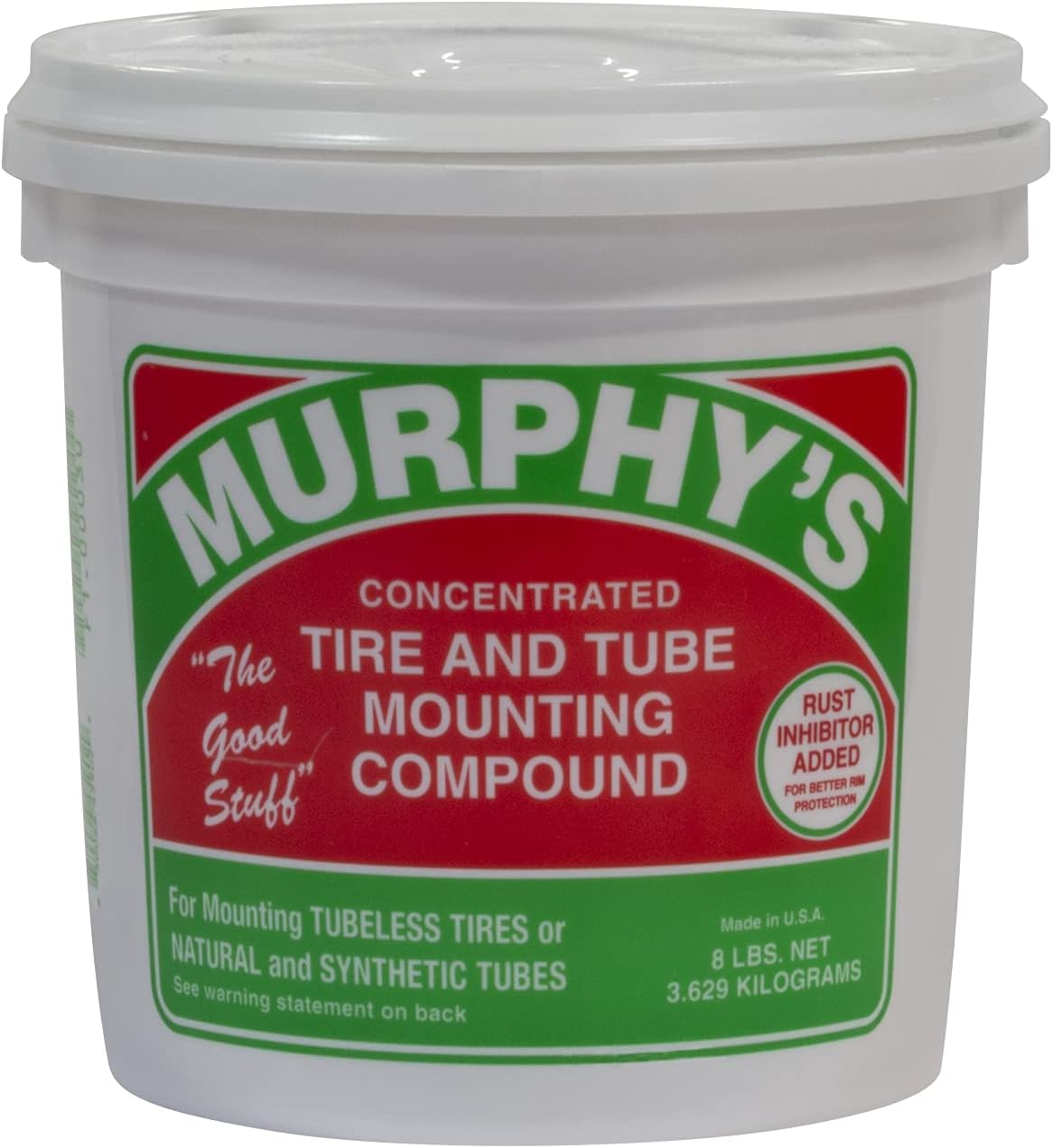
A concentrated tire and tube mounting compound designed to help simplify mounting rubber tires and tubes on passenger, semi truck, construction, and OTR applications. Its ultra-thick formula packs beads effectively and includes rust inhibitors to help protect against corrosion during use.
Mixing Speed Ratings
Mixing speed ratings is not ideal. If one tire has a lower speed rating, the vehicle’s safe speed capability is limited by that lowest-rated tire. You should not assume that three Y-rated tires can offset one lower-rated tire.
- Use the same speed rating on all four tires when possible.
- Follow the owner’s manual if the vehicle uses different front and rear tire specifications.
- Replace mismatched tires as soon as practical if the mismatch was only a temporary solution.
Load Index Matching
Load index matching is just as important as speed-rating matching. If three tires are rated 99 and one tire is rated lower, the lower-rated tire becomes the weak point under load. For balanced braking, predictable handling, and stable weight support, keep all four tires at the required load index or higher.
If you replace only one tire, choose the same size, load index, speed rating, type, and similar tread depth. If the remaining tires are worn, replacing a pair or the full set may be safer.
How to Check Your Tire Specifications
Start with the tire sidewall, then confirm the correct replacement specification from the vehicle. Do not rely only on the old tire, because the previous owner or shop may have installed the wrong tire.
- Read the full sidewall code. Look for the size and service description, such as 255/35R19 99Y.
- Check the driver-side placard. The Tire and Loading Information Label lists the vehicle maker’s approved tire size and cold tire pressure.
- Check the owner’s manual. This is especially important for optional wheel packages, winter tires, staggered setups, or high-performance trims.
- Compare all four tires. Confirm size, load index, speed rating, tread depth, and overall condition.
- Ask a tire professional if changing specs. Upsizing, downsizing, or switching between SL and XL tires can affect pressure and load capacity.
Pro Tip: Take a photo of your current sidewall code and your door-jamb tire placard before shopping. This makes it easier to compare size, load index, speed rating, and pressure without guessing.
[Products Worth Considering]

This manual duck head tire changer kit makes tire installation and removal simpler by letting you embed the duck head into the tire with applied pressure. The integrated design and durable steel construction help reduce friction and improve efficiency and safety during use. Suitable for 16–21 inch wheels, it’s convenient for cars, trucks, SUVs, and ATV tires, with 24-hour after-sales support.
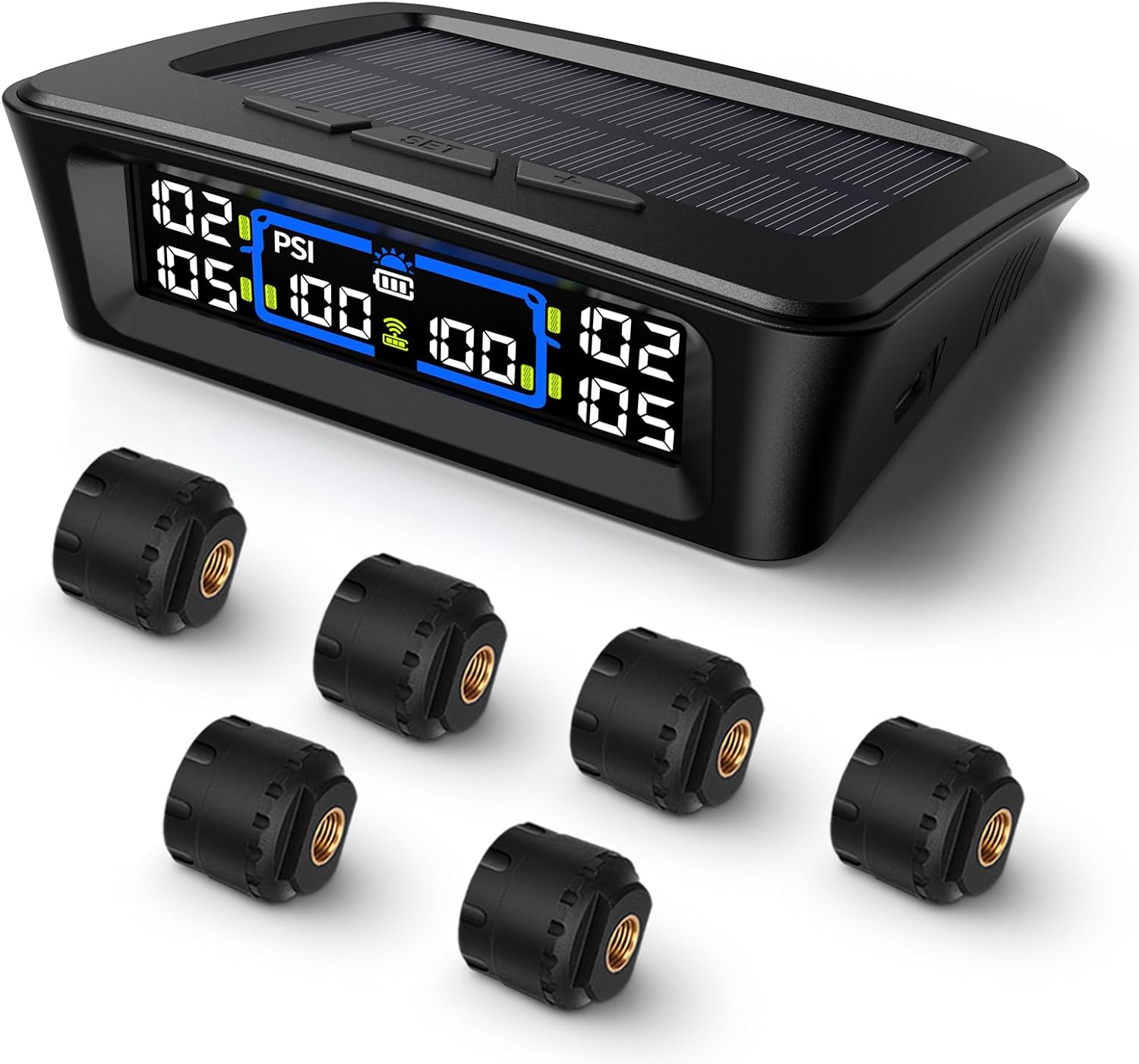
The Tymate TM12 RV TPMS delivers real-time tire pressure and temperature monitoring with a stable 433Hz display for safer long-distance driving. It supports simultaneous monitoring across vehicle and trailer zones, includes six alarm modes for pressure, temperature, leakage, battery, and signal loss, and features easy DIY installation with auto calibration. Power is supplied via USB-C charging or solar recharging, with a wide 0–144 PSI range and up to 50 ft signal coverage for RVs and towable trailers.

Accurately measure tire tread depth with a calibrated gauge marked from 0 to 1 inch in 1/32 inch increments. The color-coded bar helps you quickly identify tread condition ranges, supporting safe driving for trucks, motorcycles, automobiles, and passenger vehicles.
When to Replace 99Y Tires
You should replace 99Y tires when tread depth reaches 2/32 inch, when treadwear indicators are level with the tread, or when cuts, cracks, bulges, exposed cords, vibration, or irregular wear appear. NHTSA says tires are not safe and should be replaced when tread is worn down to 2/32 inch.
Age also matters. You cannot always judge tire aging by appearance. Some vehicle and tire manufacturers recommend replacing tires at six to 10 years regardless of treadwear. Check the DOT Tire Identification Number on the sidewall. The last four digits show the week and year the tire was made.
Tread Wear Signs
Tread depth affects grip, braking, and water evacuation. A 99Y tire with low tread is still unsafe even if its load and speed ratings look impressive on the sidewall.
- Use the penny test. Place a penny into the tread with Lincoln’s head upside down. If you can see the top of Lincoln’s head, replace the tire.
- Check treadwear indicators. If the raised bars are level with the tread, the tire is worn out.
- Look for uneven wear. One-sided wear, cupping, or feathering can point to alignment, balance, suspension, or pressure problems.
Age And Damage
Even with usable tread, a tire can become unsafe from age, heat, sunlight, poor storage, impact damage, or underinflation. Replace the tire immediately if you see sidewall bulges, deep cuts, cracking, exposed cords, bubbles, or repeated pressure loss.
For performance tires, do not stretch service life past the point where grip and structure are compromised. A tire can only deliver its load and speed capability when it is properly inflated, undamaged, and within its useful service life.
Frequently Asked Questions
Are Y-rated tires good?
Yes, Y-rated tires are good when your vehicle requires that speed rating or when you want a tire designed for high-speed stability. They are common on performance vehicles. They are not automatically better for every driver, because ride comfort, tread life, wet grip, and winter traction depend on the specific tire model.
What is a 92Y speed rating?
A 92Y tire has a load index of 92, which equals about 1,389 pounds per tire, and a Y speed rating, which equals up to 186 mph. The speed rating is the same as 99Y, but the load capacity is lower.
What is the difference between 96Y and 100Y tires?
Both 96Y and 100Y tires have the same Y speed rating of up to 186 mph. The difference is load capacity. A 96 load index is about 1,565 pounds per tire, while a 100 load index is about 1,764 pounds per tire.
Is Y or W speed rating better?
Y is the higher speed rating. A W-rated tire is rated up to 168 mph, while a Y-rated tire is rated up to 186 mph. That does not mean Y is always the better choice. The best tire is the one that matches your vehicle’s required size, load index, speed rating, climate, and driving needs.
Can I use a higher load index than 99?
Usually, yes, as long as the tire is the correct size and type for your vehicle. A higher load index can provide more load capacity, but it may also affect ride feel if the tire uses a different construction, such as XL instead of SL. Do not use a lower load index unless the vehicle maker approves it.
Does 99Y mean the tire is run-flat?
No. 99Y only tells you the load index and speed rating. Run-flat tires use separate markings or brand-specific labels, such as run-flat, RFT, ROF, ZP, or similar terms. Check the tire model information before assuming a tire can be driven after pressure loss.
Conclusion
A 99Y tire has a 99 load index, rated for about 1,709 pounds per tire, and a Y speed rating, rated up to 186 mph under test conditions. Those numbers help you match the tire to your vehicle’s weight and performance needs, but they do not replace basic safety checks.
Before buying replacement tires, check your vehicle placard and owner’s manual. Match the required size, load index, speed rating, and load range. Then keep the tires properly inflated, inspect tread and sidewalls regularly, and replace them when wear, age, or damage makes them unsafe.
Sources
- NHTSA TireWise: Tire Safety Ratings and Awareness — tire placard, tire pressure, tread depth, tire aging, and replacement safety guidance.
- National Transportation Library: Consumer Guide to Uniform Tire Quality Grading — UTQG treadwear, traction, and temperature grading context.
- NHTSA Ratings — official tire rating lookup and consumer tire comparison context.
- 49 CFR § 575.104: Uniform Tire Quality Grading Standards — federal tire quality grading regulation.