
A ZR tire is a high-performance radial tire marking used on tires built for sustained speeds above 149 mph (240 km/h). The important detail is that ZR does not give the exact top speed by itself. On modern tires, the final speed symbol in the service description—usually W, Y, or (Y)—tells you the tested maximum speed category.
Quick Answer
A ZR tire is a radial tire made for high-speed performance above 149 mph. In a size like 225/40ZR18 92Y, “ZR” signals high-speed radial construction, while the final “Y” gives the exact speed category: up to 186 mph under specified test conditions.
Key Takeaways
- ZR means the tire is a high-speed radial tire designed for capability above 149 mph (240 km/h).
- The exact speed rating comes from the final service-description symbol, such as W, Y, or (Y).
- Do not confuse “R” in a tire size with the R speed symbol. In a size code, R means radial construction.
- Use your vehicle placard or owner’s manual to match tire size, load index, and speed rating.
- ZR tires suit performance cars and sporty driving, but they may ride firmer or wear faster than comfort-focused touring tires.
What Is a ZR Tire?
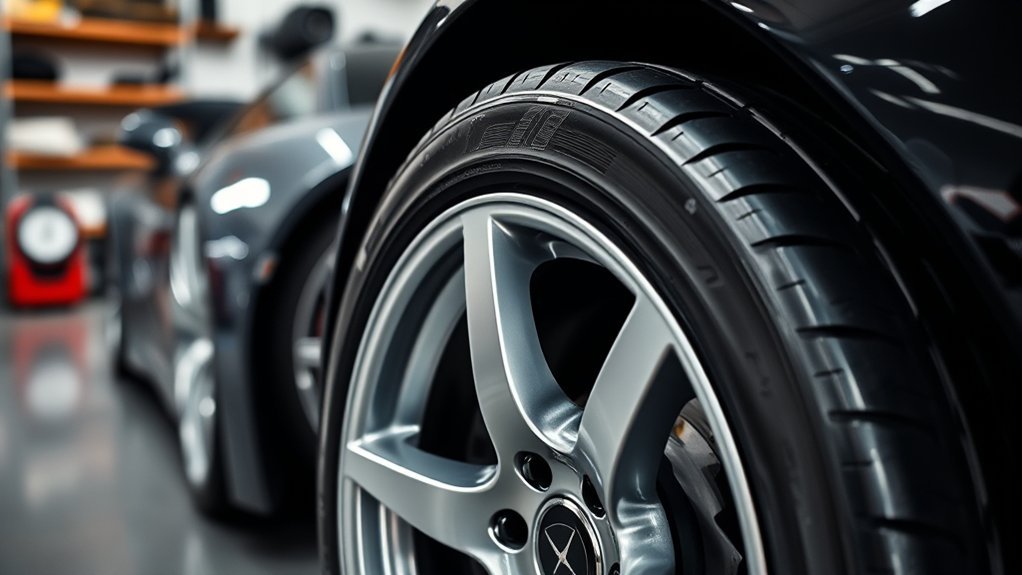
A ZR tire is a radial tire with a high-speed size designation. It appears in tire sizes such as 225/40ZR18, where the Z tells you the tire is in the high-speed category and the R tells you it uses radial construction.
Historically, Z-rated tires were introduced for vehicles capable of speeds above 149 mph. As vehicles became faster, W and Y speed symbols were added to give more precise limits. That is why a modern ZR tire often shows a full service description such as 225/40ZR18 92Y.
The safer way to read a ZR tire is simple: ZR tells you the tire is built for high-speed capability, and the final speed symbol tells you the exact rated category. For example, a W-rated tire is rated up to 168 mph, while a Y-rated tire is rated up to 186 mph under specified test conditions.
Warning: A tire speed rating is not permission to drive that fast. It is a tested capability under controlled conditions with proper inflation, load, and tire condition. Always follow posted speed limits and your vehicle manufacturer’s tire specifications.
ZR, R, and VR Tire Markings
ZR, R, and VR can look similar on a sidewall, but they do not all mean the same thing. The biggest mistake is treating every “R” as a speed rating.
| Marking | What It Means | What To Check Next |
|---|---|---|
| R | In a size like 225/40R18, R means radial construction. | Look after the load index for the actual speed symbol. |
| ZR | High-speed radial designation for capability above 149 mph. | Use the final W, Y, or (Y) symbol for the precise category. |
| VR | Older radial performance marking tied to V-rated capability. | Confirm the current service description and vehicle requirements. |
An R speed symbol does exist, but it is not the same as the R in a tire size. If you see a service description such as 98R, the R is the speed symbol. If you see 225/55R17, the R is the construction type.
[Products Worth Considering]

The SAFELIFE dial tire tread depth gauge measures tread depth in 1/32 inch increments with clear, easy-to-read 2-inch dial face. Color zones using a traffic light system help you quickly judge whether tread is low, marginal, or ample for safer driving. Built with a durable zinc cast body and a metal detect probe for precise, comfortable use across cars, motorcycles, trucks, and buses.

Steelman white tire marking crayons provide high-contrast, semi-permanent marks for repairing and inspecting tires and equipment. They write on wet or dry, smooth or coarse surfaces including rubber, metal, glass, and wood, making them ideal for puncture location and damage outlining. The lead- and zinc-free crayons resist weather and fading yet wipe away when you no longer need the marks.

Measure tire tread depth quickly and accurately with this LUMITECO dial gauge that reads in 1/32" increments up to 14/32". The color-coded green/yellow/red zones make it easy to judge tire wear and know when replacement is needed. A rugged, compact design with a protective pouch helps keep the gauge ready for use on cars, trucks, motorcycles, and more.
How ZR Tire Speed Ratings Work
ZR is best understood as a high-speed category, not a complete speed rating. The final speed symbol is the part that tells you the tire’s precise maximum speed category when the tire is properly inflated, correctly loaded, and in safe condition.
| Speed Symbol | Maximum Speed Category | Common Use |
|---|---|---|
| V | 149 mph / 240 km/h | Sport sedans and performance touring tires |
| ZR | Above 149 mph / 240 km/h | High-speed radial tire size designation |
| W | 168 mph / 270 km/h | High-performance sports cars |
| Y | 186 mph / 300 km/h | Ultra-high-performance cars |
| (Y) | Above 186 mph / 300 km/h | Special high-speed applications approved by the tire maker |
For a source-backed explanation of this system, see Tire Rack’s guide to tire speed ratings and Goodyear’s tire speed rating chart.
ZR Tire Size Examples and Sidewall Codes
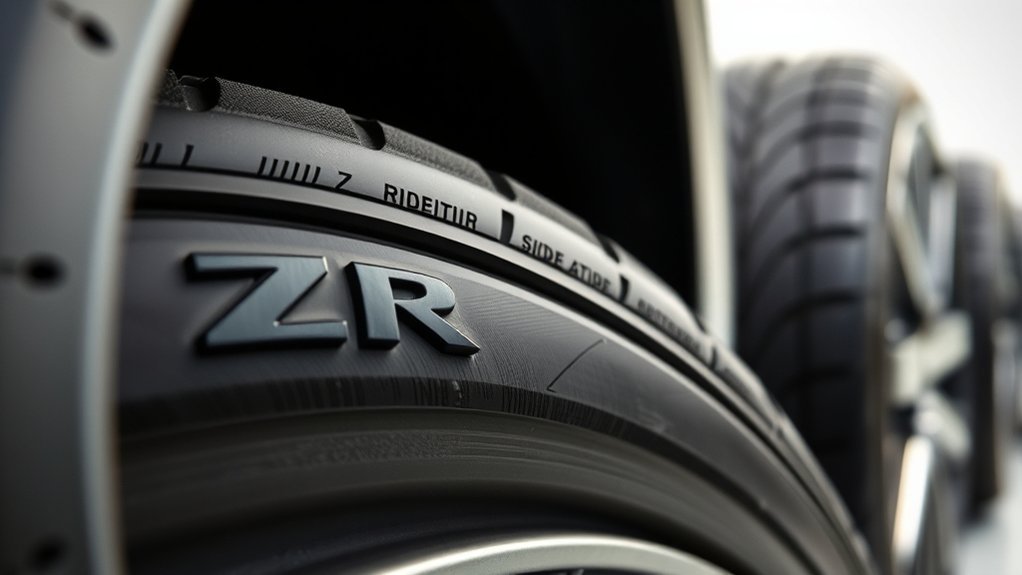
To read a ZR tire correctly, look at the full sidewall code, not only the ZR letters. Here is a common example:
Example: 225/40ZR18 92Y means the tire is 225 mm wide, has a 40% aspect ratio, uses high-speed radial construction, fits an 18-inch wheel, has load index 92, and carries a Y speed symbol.
- 225 — section width in millimeters.
- 40 — aspect ratio, meaning sidewall height is 40% of the tire width.
- ZR — high-speed radial designation.
- 18 — wheel diameter in inches.
- 92 — load index, which must meet or exceed your vehicle requirement.
- Y — speed symbol, rated up to 186 mph under specified conditions.
For replacement tires, check the driver’s door-jamb placard, owner’s manual, or the size printed on the tire you are replacing. Michelin’s tire marking guide explains how tire width, construction, load rating, speed rating, pressure markings, and DOT date codes appear on the sidewall.
Why ZR Tires Are Built for Performance Cars
ZR tires are common on sports cars, performance sedans, high-output coupes, and some premium vehicles because those vehicles need tires that can handle higher heat, sharper steering inputs, and stronger cornering forces than a basic touring tire.
High-Speed Handling
At high speed, a tire has to manage heat, centrifugal force, vehicle load, and cornering stress. A ZR tire with a W, Y, or (Y) rating is built for those conditions. The result is usually quicker steering response, stronger stability, and better control during aggressive acceleration, braking, and lane changes.
Reinforced Tire Construction
Many ZR tires use performance-focused internal construction, belt packages, tread compounds, and sidewall designs. That does not mean every ZR tire is the same. A summer ultra-high-performance ZR tire, an all-season performance ZR tire, and a track-focused ZR tire can feel very different on the road.
Note: “ZR” tells you the tire is in a high-speed radial category, but the tire model, tread compound, load index, UTQG rating, warranty, and season rating determine how it will actually behave in daily driving.
ZR Tire Grip and Heat Resistance
ZR tires are usually chosen for their grip, heat control, and steering precision. Those benefits come from the full tire design, not from the letters alone. The tread compound, tread pattern, internal belts, sidewall stiffness, and inflation pressure all affect how the tire performs.
Grip Under Stress
During hard cornering or braking, a performance tire needs to hold its shape and keep the contact patch stable. ZR-rated performance tires are often built with stiffer structures and stickier compounds than comfort-focused tires, which can improve response and control.
- Compound affects dry grip, wet grip, heat buildup, and wear.
- Tread design affects water evacuation, road noise, and braking feel.
- Sidewall construction affects steering response and ride comfort.
Heat Build-Up Resistance
Heat is one reason speed ratings matter. As speed and load rise, the tire flexes and builds heat. If a tire is overloaded, underinflated, damaged, or driven beyond its rating, the risk of tire damage or failure increases.
| Feature | Effect | Result |
|---|---|---|
| Compound | Controls grip and heat behavior | More predictable handling |
| Sidewall | Resists distortion under load | Sharper steering response |
| Inflation | Controls flex and heat buildup | Better safety and tread wear |
Track-Ready Stability
Some ZR tires are suitable for track days, but not all of them are track tires. If you plan to drive on a circuit, check the tire maker’s track-use guidance, heat-cycle advice, pressure recommendations, and warranty exclusions. A ZR all-season tire and a ZR extreme-performance summer tire are built for different jobs.
Pro Tip: For spirited driving, check tire pressure when the tires are cold before the drive, then inspect tread and sidewalls after. Underinflation increases flex and heat, while overinflation can reduce the contact patch.
ZR Tire Lifespan and Maintenance
ZR tires do not have one universal lifespan. A soft summer performance tire may wear faster than a touring tire, while a performance all-season tire may last longer. Tread life depends on tire model, UTQG treadwear rating, alignment, inflation, rotation pattern, vehicle weight, road surface, and driving style.
To get the most from ZR tires, follow these basics:
- Check cold pressure regularly. At least monthly is the minimum habit; weekly is smart for performance driving or long highway trips.
- Use the vehicle placard pressure. The pressure molded on the sidewall is usually a maximum pressure, not the normal operating recommendation.
- Rotate when allowed. Follow the tire maker and vehicle manufacturer schedule. Some staggered or directional setups limit rotation options.
- Check alignment and balance. Vibration, pulling, cupping, or uneven wear can shorten tire life.
- Inspect tread depth. Replace tires at the legal minimum or sooner when wet grip, age, damage, or performance drops.
- Store seasonal tires correctly. Keep them clean, cool, dry, and away from direct sunlight and ozone sources.
For safety basics, NHTSA’s TireWise tire safety guide is a strong reference for pressure, tread, tire ratings, and replacement guidance.
How To Choose Between ZR and R Tires

The phrase “ZR vs R tires” is common, but it needs careful wording. R in most tire sizes simply means radial construction, while ZR means high-speed radial construction. A tire marked R can still carry a high speed symbol later in the code, depending on the full service description.
Choose the tire that matches your vehicle’s required size, load index, and speed rating—not just the letters in the middle of the size code.
Use this decision guide:
- Start with the vehicle placard. Match the original size, load index, and speed rating unless the owner’s manual or a tire professional approves a change.
- Choose ZR for performance needs. Sports cars and performance sedans often require W, Y, or (Y) tires.
- Do not buy ZR just for looks. A higher speed category can bring firmer ride, higher cost, more road noise, or faster wear.
- Match the axle and vehicle setup. Avoid mixing different speed ratings, load capacities, construction types, or tire categories unless the vehicle maker specifies a staggered setup.
- Match the season. Summer ZR tires are not a winter substitute. If you drive in snow or freezing temperatures, choose a tire approved for those conditions.
[Products Worth Considering]

AstroAI AIRUN H is a compact 12V tire inflator designed for fast, convenient inflation with an easy-to-read digital pressure gauge. Set your target pressure with programmable controls and let the auto shut-off turn off the pump when the preset is reached. It also includes a backlit screen and LED flashlight for nighttime use, with a ToughUltra durability design for longer service life.

Measure tyre tread depth precisely with a digital gauge that reads in both MM and inches, helping you monitor safe driving conditions. The large LCD screen is easy to operate, and the compact tool fits for cars, trucks, and motorcycles. It provides high accuracy with a 0-25.4mm range and includes a 1-year warranty for added peace of mind.

Monitor tire tread wear with a smart, color-coded depth gauge that shows clear condition ranges at a glance. The bar is range marked for fast, easy readings, helping you maintain safer traction and performance. Each gauge is portable with a pocket clip, and the set includes 20 units for daily use and sharing.
How To Choose the Right ZR Tire
When you select a ZR tire, do not treat “ZR” as the only spec that matters. The correct tire must match the whole vehicle requirement.
[Products Worth Considering]

Accurately measure tire tread depth with a calibrated gauge marked from 0 to 1 inch in 1/32 inch increments. The color-coded bar helps you quickly identify tread condition ranges, supporting safe driving for trucks, motorcycles, automobiles, and passenger vehicles.

ETENWOLF’s tire pressure gauge helps you quickly and accurately check tire PSI across cars, trucks, motorcycles, bikes, and more. It’s manually calibrated to ANSI B40.1 Grade A for reliable readings, includes a large glow dial for easy nighttime viewing, and features a 360-degree swivel chuck for use at any valve angle. The gauge also works consistently in extreme hot or cold weather.
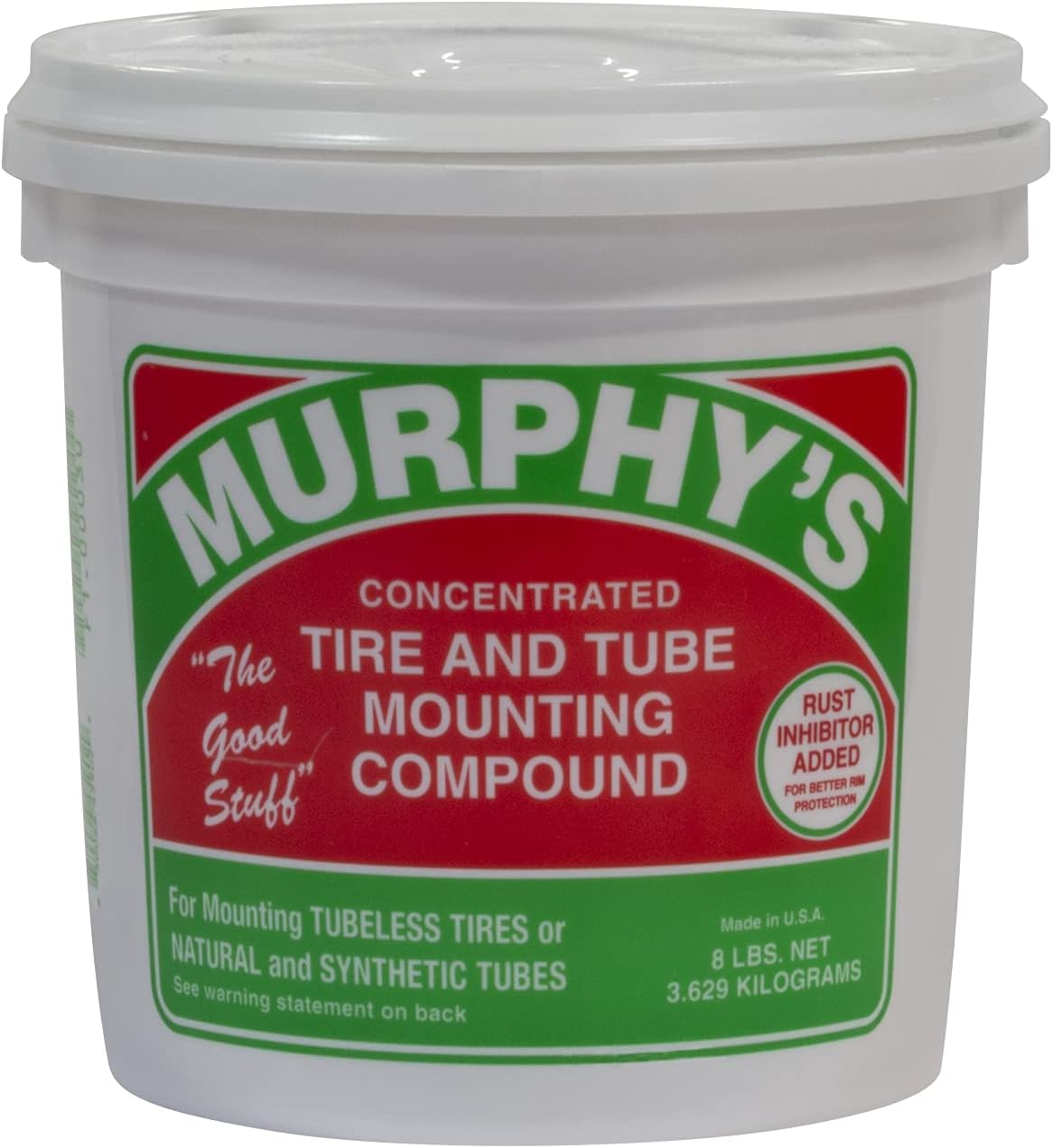
A concentrated tire and tube mounting compound designed to help simplify mounting rubber tires and tubes on passenger, semi truck, construction, and OTR applications. Its ultra-thick formula packs beads effectively and includes rust inhibitors to help protect against corrosion during use.
Check the Load Index and Speed Symbol
The load index tells you how much weight the tire can carry when properly inflated. The speed symbol tells you the maximum tested speed category. Both must meet or exceed the vehicle manufacturer’s requirement unless the owner’s manual gives a specific exception.
Match Your Driving and Climate
If you drive a high-output sports car in warm weather, a ZR summer performance tire may make sense. If you commute in mixed weather, a performance all-season tire may be more practical. If you see snow or freezing temperatures, look for winter-capable tires rather than relying on a summer ZR tire.
Look for OE Markings When Needed
Some performance vehicles use original-equipment tire versions with special markings. These tires may have unique compounds, construction, or tuning for that vehicle. If your car came with an OE-marked tire, check the manual before replacing it with a non-OE version.
Avoid Mismatched Sets
Michelin’s tire-mixing guidance recommends keeping tires consistent in size, type, speed rating, load capacity, and construction unless the vehicle manufacturer specifies otherwise. That matters for braking, steering, stability control, ABS, traction control, and all-wheel-drive systems.
Frequently Asked Questions
What is the difference between a ZR tire and an R tire?
A ZR tire is a high-speed radial tire designation for capability above 149 mph. An R in a normal size code, such as 225/55R17, means radial construction. The exact speed category comes from the final speed symbol after the load index, such as V, W, Y, or (Y).
Does ZR mean the tire is rated for 186 mph?
Not by itself. ZR means the tire is in a high-speed radial category above 149 mph. A final Y speed symbol means up to 186 mph, while a parenthesized (Y) indicates a category above 186 mph under specified conditions.
Can I mix ZR and R tires?
Do not mix tires just because the size looks close. Tires should generally match by size, load index, speed rating, construction, and tire category. If your vehicle uses a factory staggered setup, follow the owner’s manual or tire placard exactly.
Are ZR-rated tires good?
ZR-rated tires are good when your vehicle and driving style call for high-speed performance. They can improve steering response, grip, and stability, but they may cost more, ride firmer, create more noise, or wear faster than comfort-focused touring tires.
Can I put ZR tires on a normal car?
You can usually install a higher speed rating if the tire also matches the correct size, load index, wheel fitment, and vehicle requirements. But a ZR tire may not be the best choice for a normal commuter if comfort, tread life, price, or winter grip matter more than high-speed response.
What does ZR mean on tyres?
ZR on tyres means the tyre is a high-speed radial design intended for capability above 149 mph or 240 km/h. The precise speed category is shown by the final service-description symbol, such as W, Y, or (Y).
Do ZR tires wear out faster?
They can, but not always. Many ZR tires use performance compounds that favor grip over long tread life. The actual wear depends on the tire model, UTQG treadwear rating, alignment, rotation, inflation, vehicle weight, and driving style.
Conclusion
A ZR tire is built for high-speed radial performance, but the ZR marking is only one part of the sidewall code. To choose safely, read the full service description: tire size, load index, and final speed symbol. Match those specs to your vehicle placard or owner’s manual, and choose a tire category that fits your climate, driving style, and comfort needs.
Sources
- Tire Rack — How Do I Check a Tire’s Speed Rating? — ZR, W, Y, and (Y) speed-rating explanations.
- Michelin — Tire Load Rating & Speed Rating Explained — load index, speed rating, and replacement guidance.
- Michelin — How to Read Tire Markings and Sidewall Codes — sidewall code, construction, load rating, speed rating, pressure markings, and DOT date code.
- NHTSA TireWise — tire safety, pressure, tread, ratings, and replacement basics.
- Michelin — Can You Mix Tires? — guidance on matching tire size, type, speed rating, load capacity, and construction.
- Goodyear — Tire Speed Rating — speed-rating chart and ZR notes.