

Wheel diameter can make a noticeable difference to ride comfort, but the wheel itself is only part of the story. On the same vehicle, moving to a larger rim usually means fitting a lower-profile tire so the complete tire stays close to its original diameter. That shorter sidewall often makes steering feel more direct, but it also gives the tire less room to absorb sharp bumps. A smaller wheel usually allows more sidewall cushioning. Tire construction, inflation pressure, wheel weight, width, offset, and suspension tuning can change the result, so wheel diameter should never be judged by itself.
Quick Answer
Yes. On the same vehicle, a larger-diameter wheel usually needs a lower-profile tire to keep the overall tire diameter near factory size. The shorter sidewall flexes less, which can sharpen steering but often makes bumps feel harsher. Smaller wheels usually ride softer, but tire design, pressure, weight, width, and suspension tuning also matter.
Key Takeaways
Key Takeaways
- Larger wheels normally use shorter tire sidewalls when overall tire diameter is kept near factory size, so steering can feel sharper but impacts often feel firmer.
- Smaller wheels usually allow taller sidewalls, which can add cushioning and give the rim more protection from potholes.
- Wheel diameter alone does not determine fuel economy or EV range. Tire rolling resistance, width, aerodynamics, pressure, and total wheel-and-tire weight all matter.
- A bigger wheel does not automatically improve braking. It may provide clearance for a larger brake package, but braking performance still depends on the brakes and tires.
- Overall tire diameter matters more than rim diameter for speedometer accuracy, effective gearing, ABS, traction-control, TPMS, and some AWD/4WD systems.
- Use vehicle- and tire-manufacturer specifications instead of relying on universal “1-inch,” “2-inch,” “3%,” or “105%” rules.
How Wheel Diameter Changes Ride Quality

Wheel diameter affects ride quality mainly through the tire that must be paired with it. If you increase rim diameter while keeping the complete tire close to its factory diameter, the tire needs a shorter sidewall. The U.S. Tire Manufacturers Association describes this common approach as plus sizing: rim diameter increases, tire profile decreases, and overall tire diameter remains near the original specification.
A shorter sidewall usually flexes less during steering and cornering. That can make the car respond more quickly to your inputs, but the tire also has less vertical compliance to absorb potholes, expansion joints, and broken pavement. A smaller wheel generally allows a taller sidewall, giving the tire more room to deform over a bump before the impact reaches the suspension and cabin.
Michelin’s tire-size guidance similarly notes that taller sidewalls generally absorb road impacts better, while lower-profile tires can provide a sharper steering feel.
| Factor | Larger Wheel, Lower-Profile Tire | Smaller Wheel, Taller Tire |
|---|---|---|
| Ride comfort | Usually firmer over sharp impacts | Usually more compliant |
| Steering feel | Often quicker and more direct | Often slightly softer in initial response |
| Pothole protection | Less sidewall between road and rim | More sidewall can provide extra impact protection |
| Weight | May be heavier, but construction matters | May be lighter, but not automatically |
| Efficiency | Can decrease if the package is heavier, wider, less aerodynamic, or has higher rolling resistance | Can improve with a lighter, narrower, low-resistance package |
Wheel Diameter vs. Overall Tire Diameter
This distinction is critical. A wheel marked 18 inches or 20 inches describes the rim diameter at the tire bead seat. Overall tire diameter is the diameter of the complete mounted tire, including both sidewalls.
A properly selected 20-inch wheel-and-tire package can have almost the same outside diameter as an 18-inch package. When that happens, the vehicle’s ride height, wheel revolutions per mile, effective gearing, and speedometer calibration can remain close to the factory setup even though the rim itself is larger.
Note: Wheel diameter alone is not enough to determine whether a new setup will fit or behave correctly. Tire outside diameter, wheel width, offset, brake clearance, load capacity, and the vehicle manufacturer’s restrictions must also be checked.
Why Bigger Wheels Feel Harsher
Bigger wheels often feel harsher because they are commonly paired with lower-profile tires. With less sidewall height, the tire has less room to flex when it strikes a sharp road imperfection. More of that impact can therefore reach the suspension, body, seat, and steering wheel.
The effect is not determined by aspect ratio alone. Tire construction, sidewall stiffness, tread design, load rating, inflation pressure, vehicle weight, and suspension tuning all affect what you feel. Two tires in the same nominal size can ride differently.
A larger rim usually feels firmer because the matching tire has less sidewall to absorb the road—not simply because the metal wheel is larger.
Wheel-and-tire weight can also matter. The assembly is part of the vehicle’s unsprung mass, which the suspension must control as the wheel moves over bumps. Research on vehicle suspension dynamics continues to show that additional unsprung mass can make ride-control demands more difficult. However, you should compare actual assembly weights rather than assuming every larger wheel is heavier; a lightweight forged wheel can weigh less than a smaller but heavy cast wheel.
Wheel diameter by itself also does not automatically change suspension geometry. Geometry can be affected when a modification changes wheel offset, width, overall tire diameter, ride height, or suspension components. A correctly engineered plus-size package can increase rim diameter without materially changing the tire’s outside diameter.
How Wheel Size Affects Range
Wheel size can affect EV range and fuel economy, but the result comes from the complete wheel-and-tire package, not rim diameter alone. Rolling resistance, tire width, tread compound, inflation pressure, aerodynamic drag, and rotating mass can all change when you move from one factory or aftermarket wheel package to another.
The U.S. Environmental Protection Agency identifies low-rolling-resistance tires, lower vehicle weight, and improved aerodynamics as ways to reduce the energy needed to move a vehicle. That is why a smaller wheel package often helps efficiency when it is also lighter, narrower, and aerodynamically favorable—but the smaller diameter is not a guarantee by itself.
Rolling Resistance Changes
Rolling resistance is the energy lost as a tire deforms while rolling. Tire materials, construction, tread, inflation pressure, temperature, load, and dimensions all influence it.
A larger wheel package may use a wider or more performance-focused tire with greater rolling resistance, but another tire of the same size can behave differently. Likewise, a low-rolling-resistance tire on a larger wheel may outperform a less efficient tire on a smaller wheel.
For that reason, avoid assuming that “20-inch equals high rolling resistance” or “18-inch equals low rolling resistance.” Compare the exact tires and, when available, the vehicle manufacturer’s efficiency or range figures for each approved wheel package.
Weight And Aerodynamics
Weight and airflow can be just as important as rolling resistance. A heavier wheel-and-tire assembly requires more energy whenever the vehicle accelerates, while aerodynamic differences become increasingly important as speed rises.
| Change | Possible Effect |
|---|---|
| Heavier wheel/tire assembly | More energy required during acceleration |
| Wider tire | May increase aerodynamic drag and rolling losses depending on design |
| Low-rolling-resistance tire | Can improve efficiency regardless of rim diameter |
| More aerodynamic wheel design | Can reduce high-speed airflow losses |
| Incorrect tire pressure | Can increase energy consumption and affect tire performance |
For maximum range or fuel economy, compare the exact approved wheel and tire combinations rather than choosing by diameter alone.
How Wheel Size Changes Handling and Braking
A larger wheel paired with a lower-profile tire can sharpen steering response because the shorter sidewall generally deflects less during quick direction changes. That can make turn-in feel more immediate and give the driver more direct feedback.
However, sharper response is not the same thing as more grip. Ultimate cornering and braking traction depend heavily on the tire’s compound, tread design, width, temperature, road surface, and available load. A high-quality tire on a smaller wheel can outperform a poor tire on a larger one.
Larger wheels can change steering feel, but the tire—not rim diameter alone—provides the grip that accelerates, turns, and stops the vehicle.
[Products Worth Considering]

The 22800 wheel stud installer makes replacing wheel studs quick and secure, saving time and effort during tire service. It uses a ratchet or impact wrench to pull new studs firmly into place, helping when existing studs are too long. Compatible with most automotive wheels and light-duty truck wheel studs, it’s designed for easy, tool-assisted installation.

This professional wheel and rim cleaning brush set lifts brake dust, grime, and dirt with soft, scratch-free microfiber and synthetic wool fibers. The rim brush bends up to 360 degrees for easy access to hard-to-reach areas around spokes, lips, and faces. Ideal for thorough cleaning of car, truck, motorcycle, bicycle, RV, and more wheel and tire surfaces.

This professional wheel and tire cleaning brush kit helps you scrub rims, hubs, spokes, and tires with scratch-free, ultra-fine bristles. The brushes can bend 360 degrees for deep reach into crevices, bolts, and intricate wheel details, while the kit supports both wet washing with cleaners and dry dust removal. Easy to rinse, quick to air-dry, and designed for convenient maintenance with hanging holes.
Does a Larger Wheel Improve Braking?
Not automatically. A larger wheel can provide enough internal clearance for a larger brake rotor or caliper, which is why some high-performance brake packages require a minimum wheel diameter. But if the brake system itself is unchanged, simply installing a larger wheel does not increase hydraulic pressure, brake torque, pad friction, or rotor capacity.
A heavier wheel-and-tire package also has greater rotational inertia, which the brakes must slow. The actual stopping result therefore depends on the tires, brake system, wheel-and-tire mass, road surface, and electronic controls.
Likewise, wheel diameter does not automatically lower engine rpm at a given road speed. That happens primarily when the overall rolling diameter of the tire increases. Proper plus sizing aims to keep the overall diameter close to the factory specification.
How to Choose the Right Wheel Size
Start with the vehicle manufacturer’s specifications instead of choosing a wheel solely by appearance. NHTSA recommends using the original tire size or another size recommended by the vehicle manufacturer. If you are changing wheel diameter, the tire, wheel, and vehicle must all remain compatible.
- Check the door placard and owner’s manual. Identify the original tire size, recommended cold pressure, and any optional factory wheel sizes.
- Match the tire and rim diameter exactly. An R18 tire requires an 18-inch rim, an R19 tire requires a 19-inch rim, and so on.
- Use an approved rim width. The tire manufacturer’s specification lists the rim-width range on which that tire is designed to operate.
- Keep overall tire diameter within the vehicle manufacturer’s tolerance. Do not treat a general 3% rule as permission to exceed an OEM limit.
- Check load capacity and speed capability. Replacement tires and wheels must safely support the vehicle’s required loads.
- Verify wheel dimensions. Bolt pattern, center bore, offset, wheel width, mounting hardware, and wheel load rating all matter.
- Check brake and suspension clearance. Verify clearance around calipers, rotors, struts, control arms, fenders, and other components.
- Check through full steering and suspension travel. A tire that clears while parked straight ahead can still rub at full steering lock or when the suspension compresses.
- Consider electronic systems. A meaningful change in rolling circumference can affect the speedometer, odometer, ABS, traction control, stability control, TPMS, and AWD/4WD operation.
- Use the vehicle’s specified tire pressure. Do not simply inflate the tire to the maximum pressure molded on its sidewall.
Warning: Do not assume a ±3% tire-diameter change is automatically safe for every vehicle. USTMA advises keeping replacement circumference within the vehicle manufacturer’s accepted tolerance, and it warns that even small outside-diameter differences can cause problems on some 4WD and AWD drivetrains. Follow the owner’s manual and approved fitment information first.
Pro Tip: When comparing two wheel upgrades, record the weight of the complete mounted wheel-and-tire assembly—not just the bare rim. A lightweight larger wheel can sometimes weigh less than a smaller but heavy wheel, and tire weight can change the comparison significantly.
[Products Worth Considering]

This metal-free wheel and tire cleaning brush uses dense, fluffy synthetic wool to safely clean rims, spokes, fenders, and engine areas without worrying about damaging surfaces. Its flexible, comfortable design helps you reach detailed areas while maintaining durability, and the extra absorbent fibers work well with wheel spray cleaners for faster cleanup. Reusable and washable performance helps prevent grime and build-up for cleaner vehicles and easier maintenance at home.

This universal wheel alignment tool helps you accurately restore tire tilt angles after tire or suspension repairs using an adjustable camber gauge. It features a powerful magnetic base that firmly attaches to brake rotors for stationary, slip-free readings, improving consistency during measurement. Built from durable PC plastic, it resists wear and corrosion and is compact enough for car, truck, RV, and motorcycle alignment tasks.

This 3-piece wheel and tire brush set makes it easy to clean light, medium, and heavy dirt from wheels, rims, tires, and exterior surfaces. It includes both soft and stiff bristle options for gentle scrubbing and tough grime removal, helping lift brake dust and road buildup. The long-handle design supports comfortable cleaning across cars, trucks, SUVs, RVs, motorcycles, and more, with simple care instructions to restore brush shape.
How to Estimate Overall Tire Diameter
For a metric tire such as 225/45R18, you can estimate unloaded overall diameter from the numbers printed on the sidewall:
Sidewall height in mm = tire width × aspect ratio ÷ 100
Approximate overall diameter in mm = (wheel diameter in inches × 25.4) + (2 × sidewall height)
This is useful for comparing candidate sizes, but it is still an estimate. Actual measured dimensions vary somewhat by tire model, rim width, inflation pressure, load, and manufacturer, so published tire specifications should be used for final fitment.
How a Tire-Size Change Affects Speedometer Accuracy
If the new tire’s actual rolling diameter is larger than stock, each wheel revolution travels farther. Your actual road speed can therefore be higher than the speed calculated for the original tire. A smaller overall diameter has the opposite effect.
A useful approximation is:
Actual speed ≈ indicated speed × new tire diameter ÷ original tire diameter
For example, if the new tire is 2% larger in overall diameter, an indicated 60 mph corresponds to roughly 61.2 mph before accounting for the vehicle’s original speedometer calibration and real-world tire deflection.
USTMA’s tire replacement guidance notes that overall-diameter differences can affect the speedometer, odometer, ABS, TPMS, traction control, 4WD/AWD systems, and other electronics.
When Smaller Wheels Make More Sense
Smaller wheels can make more sense when your priorities are comfort, rough-road durability, efficiency, winter use, or lower replacement costs. The important condition is that the smaller wheel must still be an approved fit and must clear the vehicle’s brakes and other components.
A smaller rim usually permits a taller tire sidewall while keeping the complete tire near its original outside diameter. That extra sidewall can soften sharp impacts and provide more protection between a pothole and the wheel rim.
For a daily driver on rough pavement, an approved smaller wheel with more tire sidewall is often the simplest route to a more forgiving ride.
A smaller wheel-and-tire package may also reduce unsprung and rotating mass, but check actual weights because this is not guaranteed. Replacement tires in smaller diameters are also often less expensive, although pricing varies by size, tire category, and availability.
Winter use can be another reason to downsize. When the vehicle manufacturer approves a narrower winter fitment, the narrower tire may move through deep snow and slush more effectively than a very wide performance tire. Tire compound and tread design remain more important than wheel diameter alone, so a dedicated winter tire should be selected for the conditions you actually drive in.
There is also a hard limit to downsizing: brake clearance. A vehicle with large calipers or rotors may require a minimum wheel diameter. Never install a smaller wheel unless brake, steering, suspension, load, and tire compatibility have been verified.
[Products Worth Considering]

Clean wheels and rims with soft feathered bristles that safely remove dirt and road grime while helping restore original luster. The short non-slip handle makes it easy to scrub in tight wheel wells, and the brush is suitable for vehicles and hard-to-reach areas. It can also be soaked and rubbed to help restore bristles to their shape after use.

This 3-piece wheel brush set makes it easy to clean wheels and tires with soft, scratch-free brushes designed for lifting brake dust and grime. The flexible rim brush bends up to 360 degrees to reach hard-to-access areas for a thorough clean, while the comfortable grip helps control during detailing. A dedicated detailing brush supports gentle cleaning for sensitive surfaces, including interior use.
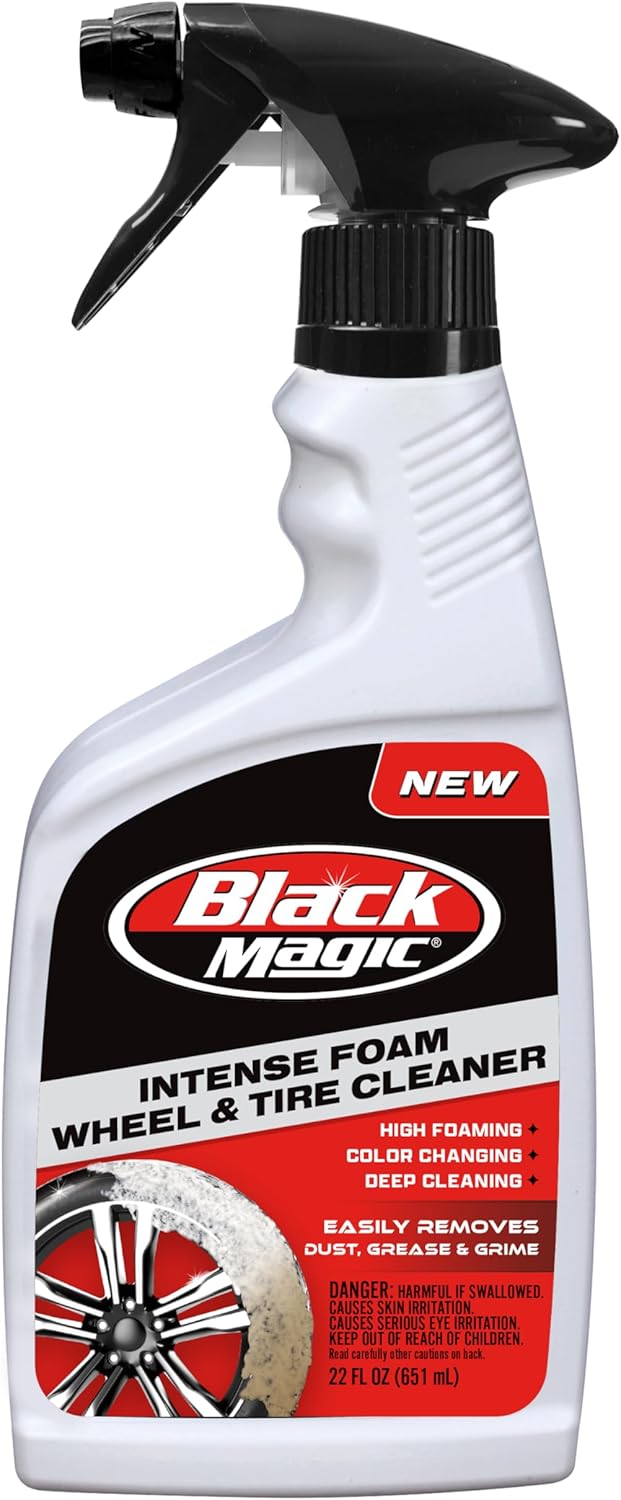
Black Magic Intense Foam Wheel & Tire Cleaner uses a high-foaming action to lift away dirt, grime, and brake dust without scrubbing. The color-changing formula helps show contaminants being dissolved as foam turns from white to brown. Safe for all wheel types and even wheel wells, it leaves a like-new, slick finish with a fresh cherry scent.
Frequently Asked Questions
Does rim size affect ride quality?
Yes. On the same vehicle, a larger rim usually requires a lower-profile tire if overall tire diameter is kept near stock. The shorter sidewall normally provides less cushioning over sharp bumps. Tire construction, inflation pressure, wheel weight, and suspension tuning also affect the final ride.
What is the 3% rule for tire size?
The 3% rule is a common aftermarket rule of thumb that suggests keeping replacement overall tire diameter within roughly 3% of the original size. It is not a universal vehicle-manufacturer limit. USTMA says replacement circumference should remain within the tolerance accepted by the vehicle manufacturer, which can be tighter—especially on some AWD and 4WD vehicles.
What is the 105 rule for rim width?
There is no accepted automotive rule saying a passenger-car rim should equal about 105% of the tire’s section width. For cars and light trucks, use the tire manufacturer’s approved rim-width range. A separate “Rule of 105%” exists in road-bike aerodynamics, where the external rim width is compared with the measured bicycle-tire width; that cycling guideline should not be used to choose an automotive rim.
Do 18 or 20 inch wheels ride better?
If the same vehicle is approved for both sizes and the complete tires have similar outside diameters, the 18-inch setup will usually ride more softly because it can use a taller sidewall. The exact result still depends on tire construction, pressure, wheel-and-tire weight, and suspension tuning.
Do larger wheels improve braking?
Not by themselves. A larger wheel may provide room for a larger rotor or caliper, but simply changing the wheel does not increase brake-system power. Tire grip, brake hardware, wheel-and-tire mass, road conditions, and electronic controls determine the actual stopping performance.
Do smaller wheels improve fuel economy or EV range?
They often can when the smaller package is also lighter, narrower, more aerodynamic, or fitted with lower-rolling-resistance tires. Diameter alone does not guarantee an efficiency gain, so compare the exact wheel-and-tire packages and any manufacturer range or economy data available for your vehicle.
Will changing wheel size affect my speedometer?
Changing rim diameter alone does not necessarily affect the speedometer. The important number is the complete tire’s rolling diameter or circumference. If that changes materially, speedometer and odometer readings can change, and ABS, stability-control, TPMS, traction-control, and AWD/4WD systems may also be affected.
Can I install smaller wheels for a softer ride?
Possibly, if the smaller wheel is an approved fit. It must clear the brake caliper and rotor, use the correct bolt pattern and offset, meet the required load rating, accept an approved tire width, and maintain an acceptable overall tire diameter. Some performance vehicles cannot be downsized because their brakes require a larger wheel.
Conclusion
Wheel diameter can change how a vehicle rides, but most of the difference you feel comes from the tire and the complete wheel-and-tire package. Larger wheels commonly use lower-profile tires that deliver more direct steering but less impact cushioning. Smaller wheels usually allow taller sidewalls that make rough roads more forgiving and may reduce pothole-damage risk.
Efficiency, acceleration, braking, and grip are more complicated. Wheel weight, tire construction, width, rolling resistance, aerodynamics, brake hardware, and overall tire diameter all matter. Before changing size, use the vehicle manufacturer’s approved fitments and confirm tire diameter, rim width, offset, load capacity, brake clearance, suspension clearance, and electronic-system compatibility. Choose the package that suits how and where you actually drive rather than assuming bigger or smaller is automatically better.
Sources
- National Highway Traffic Safety Administration — TireWise — tire sizing, inflation, replacement, and safety guidance.
- U.S. Tire Manufacturers Association — Care and Service of Passenger and Light Truck Tires — rim-width approval, plus sizing, overall-diameter tolerance, clearance, load capacity, and AWD/4WD considerations.
- Michelin — Choosing the Right Tire Size for Your Vehicle — tire sizing, sidewall height, ride comfort, handling, and compatibility.
- U.S. Environmental Protection Agency — Advanced Gasoline and Diesel Vehicles — rolling resistance, vehicle weight, aerodynamics, and efficiency.
- Mechanism and Machine Theory — Vehicle ride-comfort and unsprung-mass research — relationship between unsprung mass and suspension/ride behavior.
- SILCA — Rule of 105% — origin and meaning of the bicycle-aerodynamics rule, distinguishing it from automotive rim-width fitment.
